Coastal Wood Fern (Dryopteris arguta)
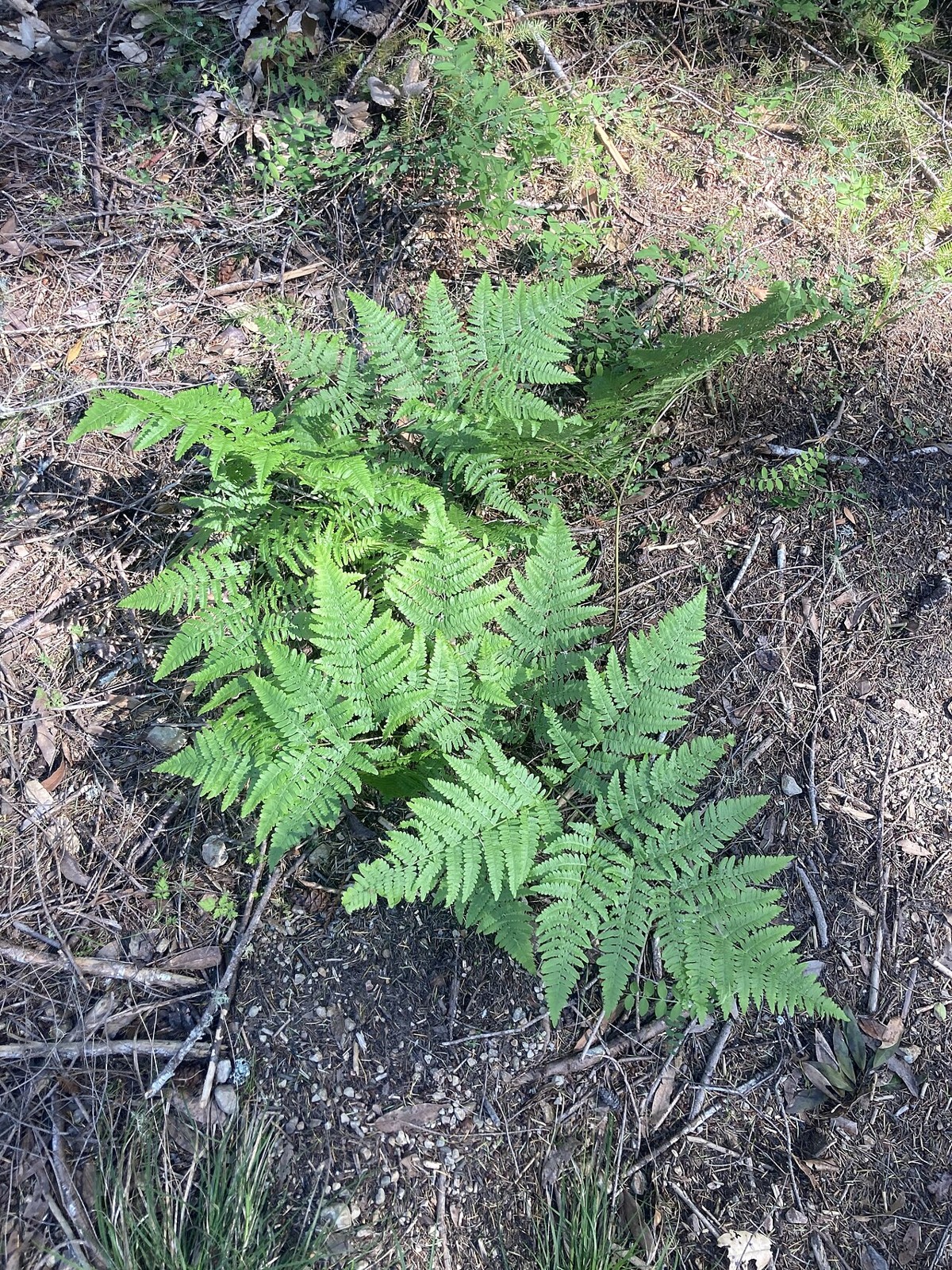
Dryopteris arguta, commonly known as Coastal wood fern, is a sturdy, leathery-leaved fern of California’s and the Pacific coast’s rocky slopes, oak woodlands, and shaded canyon walls. Unlike many ferns that wilt without constant moisture, Coastal wood fern is remarkably drought-tolerant for a true fern, able to hold its tough, glossy fronds through long dry summers in habitats where few other ferns can survive. It belongs to the Dryopteridaceae (wood fern family), the same group that includes the familiar woodland ferns of eastern North America and Europe.
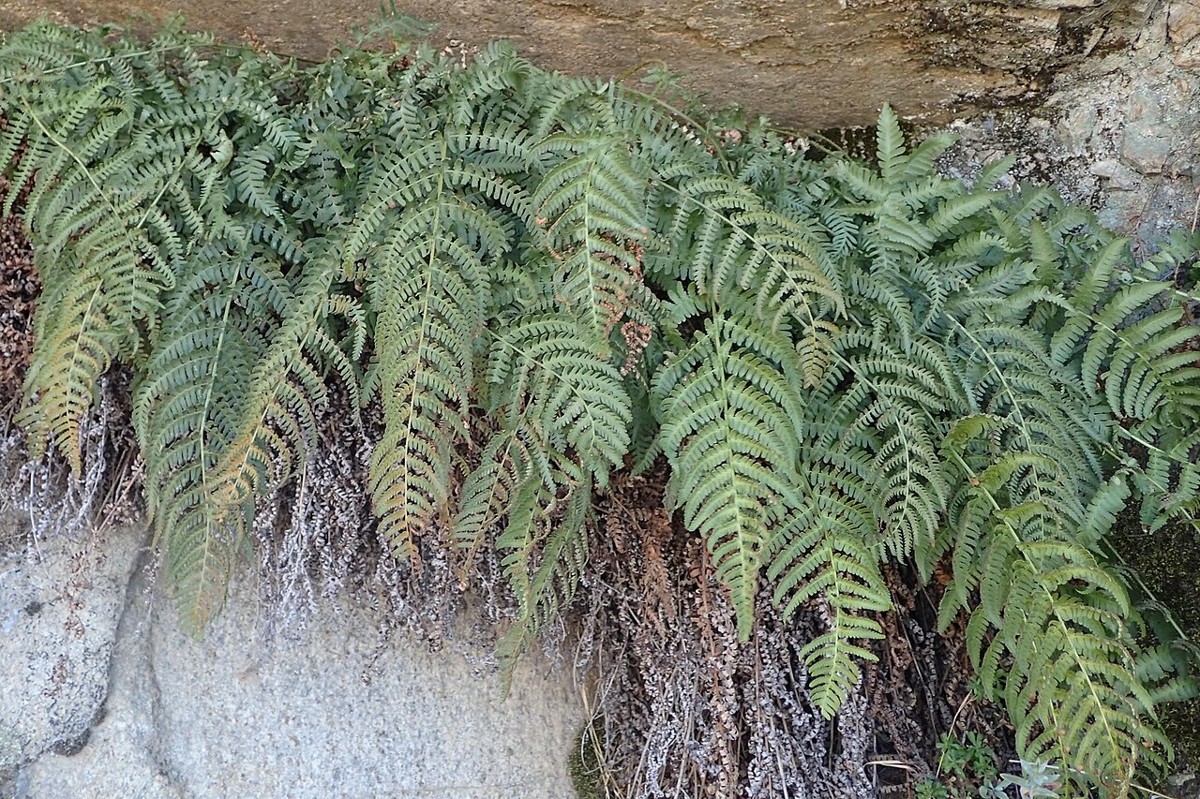
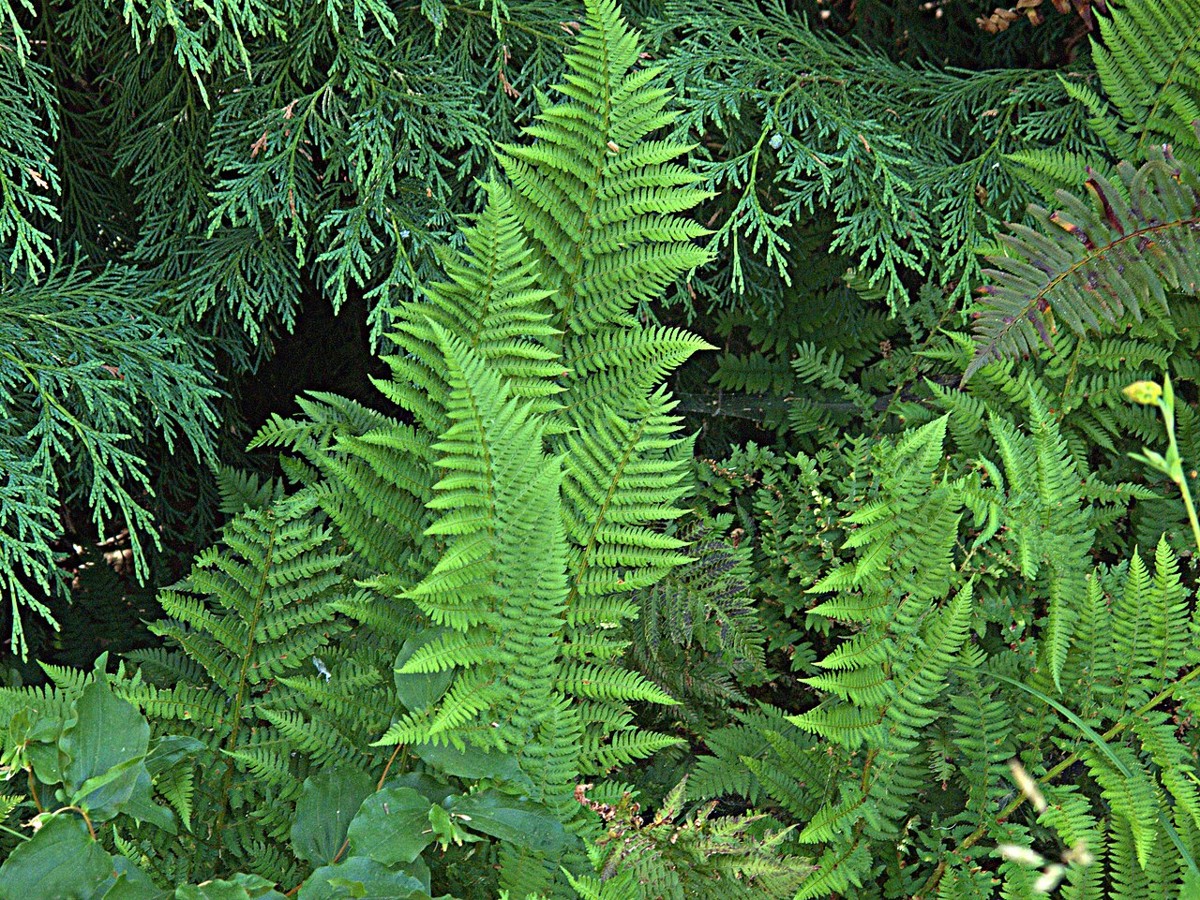
This is a mid-sized, clump-forming fern, with arching, twice-pinnate fronds that typically reach 1 to 3 feet, rising from a short, stout, woody rootstock rather than spreading by long runners. The fronds have a firm, almost leathery texture and a yellow-green to dark green color, often with a slightly bluish or grayish cast that helps distinguish the species from softer, thinner-leaved wood ferns. It favors partial shade on rocky slopes, canyon walls, and beneath oaks and chaparral shrubs, often rooting directly into crevices and talus where soil is thin.
Because it tolerates both the summer drought and the rocky, well-drained soils typical of California’s oak woodlands and coastal ranges, Coastal wood fern has become a dependable choice for native gardeners who want fern structure and texture without the heavy irrigation most ferns demand. It pairs naturally with oaks, manzanitas, and other chaparral and woodland natives, asking only for a bit of shade and good drainage in return for years of handsome, low-maintenance foliage.
Identification
Coastal wood fern is identified by its clump-forming habit, firm and leathery twice-pinnate fronds, and scaly, stout rootstock — traits that together separate it from the thinner, softer-textured ferns often found nearby in moister sites.
Fronds
Fronds are lance-shaped to narrowly triangular in outline, typically 12 to 36 inches long, and twice-pinnate (divided into pinnae that are themselves divided into pinnules), giving the leaf a lacy but sturdy appearance. The texture is notably firm and somewhat leathery compared to many other ferns, and the color ranges from yellow-green to deep green, sometimes with a grayish tone. Fronds arise in a tight, arching clump rather than a spreading row, and they are evergreen to semi-evergreen, often persisting through much of the dry season before the oldest fronds brown off.
Stipes & Rootstock
The stipe (leaf stalk) is covered in pale brown to tan scales near the base, becoming smoother toward the blade. Fronds emerge in a dense cluster from a short, thick, woody rhizome covered in old leaf bases and scales — this stout rootstock is part of what allows the plant to store enough moisture and energy to survive long dry periods.
Sori & Spores
Like other wood ferns, Coastal wood fern reproduces by spores. Round clusters of sporangia (sori) develop on the underside of fertile fronds, each covered by a small kidney-shaped indusium, arranged in rows on either side of the pinnule midribs. Spores typically mature in summer.
Quick Facts
| Scientific Name | Dryopteris arguta |
| Family | Dryopteridaceae (Wood Fern) |
| Plant Type | Perennial Fern |
| Mature Height | 1–3 ft (30–90 cm) |
| Mature Spread | 1.5–2.5 ft, clump-forming |
| Growth Rate | Slow to moderate |
| Sun Exposure | Part Shade to Shade |
| Water Needs | Low to Moderate once established |
| Soil Type | Rocky, gravelly, well-drained |
| Soil pH | Neutral to slightly acidic |
| Bloom Time | None (spore-bearing fern, not a flowering plant) |
| Flower Color | N/A |
| Fall Color | N/A — evergreen to semi-evergreen; oldest fronds brown in late summer |
| Fruit | None (reproduces by spores) |
| Deer Resistant | Yes |
| USDA Hardiness Zones | 7–10 |
Native Range
Coastal wood fern is native along the Pacific coast and nearby ranges, occurring throughout California, up the Oregon coast and lower Cascade and Coast Range country, into the southwestern corner of Washington, and south into Baja California, Mexico. Isolated native populations also occur in central Arizona’s mountains, well east of the main coastal range, reflecting the pockets of suitable shaded, rocky habitat scattered through that state’s higher country.
In Oregon and Washington the species is confined to the country west of the Cascade crest, where mild, moist winters and the shelter of coastal forests and oak woodlands provide the conditions it needs; it is not documented as native to the drier interior east of the Cascades. California holds the core of its range, where it occurs widely from the coastal fog belt to interior foothill woodlands and into the Sierra Nevada foothills.
Typical habitat includes shaded rock outcrops, canyon walls, talus slopes, and the understory of oak woodland, mixed evergreen forest, and chaparral margins, generally below about 5,000 feet. It has even been documented growing in the entrances of lava-tube caves in northern California, a testament to its tolerance of deep shade and rocky, mineral soils. The species favors sites with some shelter from the hottest sun and reliable winter moisture, even where summers are long and dry.
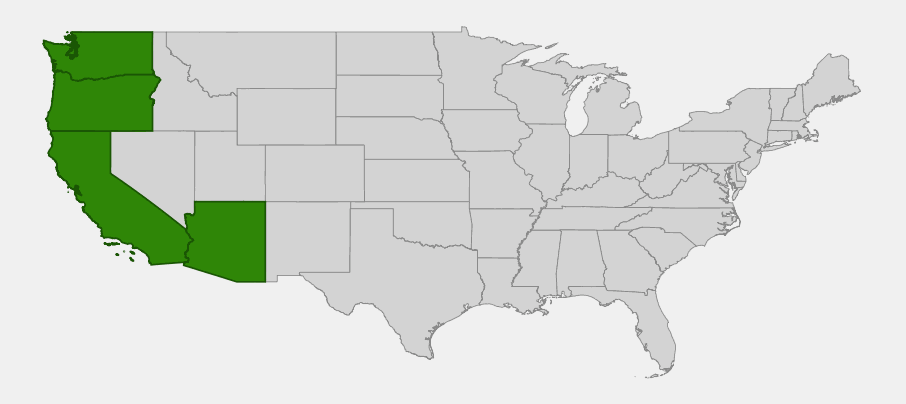
📋 Regional plant lists featuring Coastal wood fern: California & Nevada · Western Oregon & Western Washington · Arizona & New Mexico
Growing & Care Guide
Coastal wood fern is one of the easiest native ferns to grow in a dry-summer climate, as long as it gets some shade and reasonably well-drained footing. Established plants need remarkably little care.
Light
Part shade to full shade is ideal, especially dappled light beneath oaks or on a north-facing slope. In cooler, foggier coastal gardens it tolerates more sun; in hot interior valleys, deeper shade keeps the fronds from scorching through summer.
Soil & Water
This fern prefers rocky, gravelly, or loamy soil with good drainage rather than heavy clay or constantly soggy ground. Water regularly during the first one to two growing seasons to establish the rootstock, then reduce watering substantially — established plants tolerate California’s long dry summers with little to no supplemental irrigation, particularly in shadier sites. A 2-inch layer of leaf-litter mulch helps conserve moisture and mimics its natural woodland floor habitat.
Planting Tips
Plant in fall or winter so the rootstock can settle in before the dry season. Choose a site with afternoon shade, good drainage, and ideally some rock or slope to prevent standing water around the crown. Space plants 18 to 24 inches apart to allow the clumps to fill out. Container-grown plants from native nurseries establish more reliably than wild-collected divisions.
Pruning & Maintenance
Minimal care is needed. Trim away old, browned fronds in late winter or early spring before new growth emerges, to keep the clump looking tidy. Avoid disturbing the woody rootstock once established, as recovery from transplanting is slow.
Propagation
Division of established clumps in fall is the most reliable method for home gardeners, taking care to keep a portion of the rootstock and fronds intact on each division. Propagation from spores is possible but slow, and is more commonly done by specialty native-plant nurseries.
Landscape Uses
- Dry shade gardens under oaks and other established trees
- Rock gardens and crevice plantings on slopes
- Woodland garden understory paired with other California natives
- Oak woodland restoration plantings
- Low-water landscaping where a fern texture is desired without heavy irrigation
- Erosion control on shaded, rocky slopes
Wildlife & Ecological Value
Coastal wood fern’s contributions to wildlife are structural and habitat-based rather than food-based, but they are meaningful in the rocky-slope and oak-woodland communities it inhabits.
For Pollinators
As a spore-bearing fern, Coastal wood fern produces no flowers, nectar, or pollen, and plays no direct role in pollinator diets. Its value to pollinators is indirect, as part of the shaded understory layer that supports a diverse insect community.
For Birds
Ground-foraging birds such as towhees, thrashers, and wrens use fern clumps and the leaf litter around them as foraging and cover habitat, searching for the insects and other invertebrates that shelter there. The dense, arching fronds also provide concealment for birds moving through the woodland understory.
For Mammals
Small mammals and reptiles take shelter among the fronds and in the rocky, leaf-littered habitat the fern favors. Coastal wood fern is not a significant food source for deer or other large browsers, which is part of why it persists well in landscapes with heavy deer pressure.
Ecosystem Role
By establishing on rocky, thin-soiled slopes and canyon walls, Coastal wood fern helps stabilize these sites and adds structural diversity to the oak woodland and chaparral understory. Its drought tolerance allows it to maintain green cover through the dry season in habitats where most herbaceous plants have died back, making it a steady year-round component of these plant communities.
Cultural & Historical Uses
Coastal wood fern does not carry an extensive documented history of use by Indigenous peoples of California and the Pacific coast in the way that food and basketry plants do, but it is a long-recognized and named component of the oak woodland and chaparral landscapes those communities have lived within for millennia, noted in regional botanical and ethnobotanical surveys as a familiar plant of rocky, shaded ground.
Botanically, the species has long attracted interest for its unusual drought tolerance among true ferns; 19th- and 20th-century botanical surveys of California repeatedly single it out as one of the few ferns able to persist through the state’s long dry summers, a trait that continues to be its most noted characteristic in both scientific literature and gardening references.
In more recent decades, Coastal wood fern has become a staple of California native-plant horticulture, valued specifically for the drought tolerance that sets it apart from most ferns offered in the nursery trade, and it is commonly recommended in regional gardening guides as a substitute for moisture-demanding exotic ferns in dry-shade situations.
Frequently Asked Questions
Is Coastal wood fern really drought tolerant?
Yes, remarkably so for a fern. Once established with a season or two of regular watering, it can handle California’s long, dry summers with little to no supplemental irrigation, especially in shaded sites — a trait that sets it apart from most garden ferns.
How do I tell Coastal wood fern from other California ferns?
Look for the firm, leathery, twice-pinnate fronds rising in a tight clump from a stout, scaly rootstock, along with a yellow-green to grayish-green color. Its sturdier texture and drought tolerance distinguish it from softer, moisture-loving ferns like sword fern.
Does Coastal wood fern spread aggressively?
No. It is clump-forming, growing from a stout rhizome rather than spreading runners, so it stays in a tidy, slowly enlarging clump rather than colonizing a bed.
Can it grow in full sun?
It prefers part to full shade and performs best there. In hot interior gardens, full sun will scorch the fronds; in cooler coastal climates it can tolerate more light, especially with consistent moisture.
Is Coastal wood fern evergreen?
It is evergreen to semi-evergreen depending on site conditions, often holding green fronds through much of the dry season before the oldest leaves brown off, to be replaced by fresh growth with fall and winter rain.

Looking for a nursery that carries Coastal wood fern?
Browse our native plant nursery directory: California · Oregon · Washington · Arizona