Deltoid Balsamroot (Balsamorhiza deltoidea)
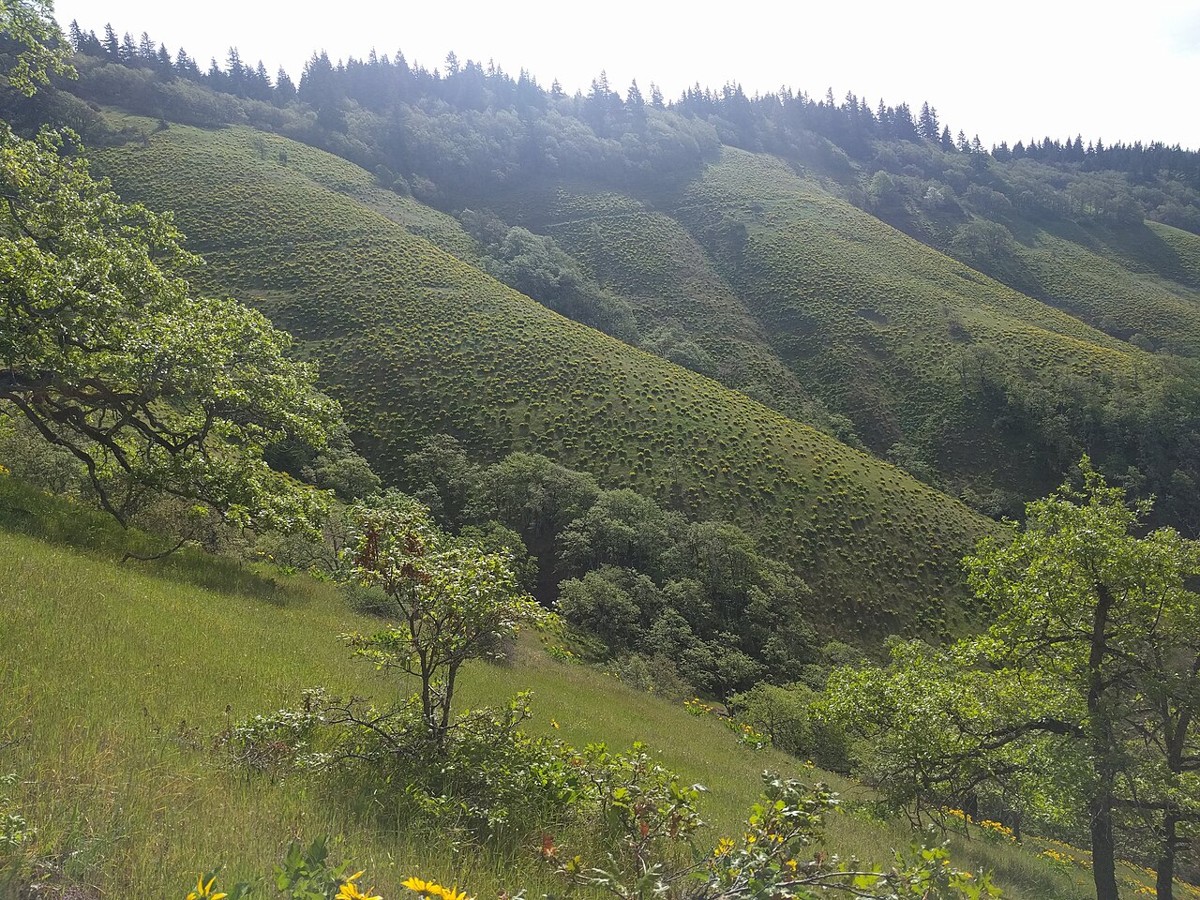
Balsamorhiza deltoidea, commonly called Deltoid balsamroot or Puget balsamroot, is one of the signature spring wildflowers of open grasslands, oak savannas, and rocky slopes west of the Cascades. Each clump sends up a rosette of large, triangular (deltoid) leaves and a cluster of cheerful, sunflower-like yellow blooms that can turn an entire hillside gold for a few weeks each spring. A member of the Asteraceae (sunflower family), it belongs to the same genus as the more widely known arrowleaf balsamroot of the interior West, but Deltoid balsamroot is the species that defines the prairies and bald hills of the Willamette Valley, Puget Sound lowlands, and California’s northern Coast Ranges.
This is a long-lived, deep-rooted perennial, built to survive the same long, dry summers that challenge many other prairie wildflowers. A thick taproot — often extending several feet into the soil — allows established plants to tap moisture long after surface soils have dried out, letting the foliage stay green well into summer in many sites. Plants typically reach 1 to 2 feet tall in bloom, with leaves that can be a foot or more across, giving the species a bold, substantial presence in the landscape even before the flowers appear.
Because it thrives in exactly the lean, sunny, dry-summer conditions that make many ornamental perennials struggle, Deltoid balsamroot has become an anchor plant for native prairie and meadow restoration throughout its range, and a rewarding choice for gardeners willing to give it the room and patience a long-lived taprooted perennial requires.
Identification
Deltoid balsamroot is recognized by its large, triangular basal leaves, bright yellow daisy-like flower heads on leafless stalks, and its low, mounding rosette form rising from a stout taproot.
Leaves
The basal leaves are the plant’s most distinctive feature: broadly triangular to heart-shaped (deltoid), 4 to 12 inches long and nearly as wide, with shallowly toothed to slightly lobed margins. They are grayish-green and covered in fine hairs that give the foliage a soft, slightly felted texture, helping reduce water loss during the dry season. Leaves arise directly from the base of the plant in a rosette; there are no true leaves on the flowering stems themselves, only small bracts.
Flowers
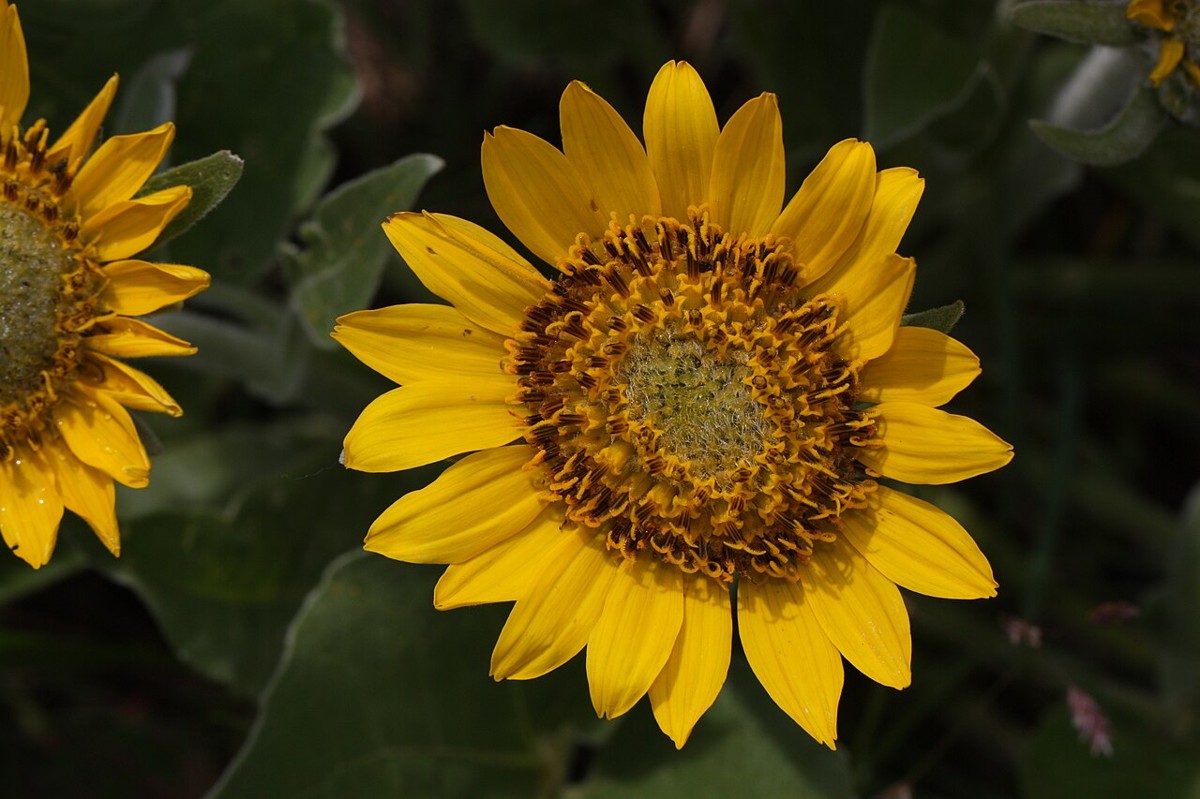
Each plant produces several flowering stems, 8 to 24 inches tall, each topped by a single sunflower-like head 2 to 4 inches across. The ray flowers are bright golden yellow, numbering roughly 13 to 21 per head, surrounding a darker yellow to brownish-yellow disc of tiny central florets. Bloom typically runs from March through June depending on elevation and latitude, often appearing in dramatic, hillside-covering displays in favorable years.
Roots & Growth Form
Beneath the rosette lies a thick, woody taproot that can extend several feet deep, the key to the plant’s drought tolerance and longevity — individual plants can live for decades. Because the root system is so substantial, mature plants resent transplanting and are best established from seed or young container stock placed in their permanent location.
Fruit & Seeds
After flowering, each head produces dry, wedge-shaped achenes (similar to sunflower seeds but smaller), which mature and disperse by early to mid-summer as the foliage begins to die back for the season.
Quick Facts
| Scientific Name | Balsamorhiza deltoidea |
| Family | Asteraceae (Sunflower) |
| Plant Type | Herbaceous Perennial Wildflower |
| Mature Height | 1–2 ft in bloom (8–24 in stems) |
| Mature Spread | 1.5–2.5 ft rosette |
| Growth Rate | Slow (deep taproot takes several years to establish) |
| Sun Exposure | Full Sun |
| Water Needs | Low once established; drought tolerant |
| Soil Type | Well-drained; rocky, gravelly, or clay loam |
| Soil pH | Neutral to slightly alkaline |
| Bloom Time | March – June |
| Flower Color | Bright golden yellow |
| Fall Color | N/A — foliage dies back by mid-to-late summer |
| Fruit | Small dry achenes |
| Deer Resistant | Moderate (deer and elk browse new growth) |
| USDA Hardiness Zones | 6–9 |
Native Range
Deltoid balsamroot is native to the Pacific coast states, occurring through the Puget Sound lowlands and prairies of western Washington, the Willamette Valley and Columbia River Gorge of western Oregon, and south through California’s Coast Ranges and northern Sierra Nevada foothills. It is confined to the country west of the Cascade crest in Washington and Oregon, where it is one of the characteristic wildflowers of the region’s remnant prairies, oak savannas, and balds.
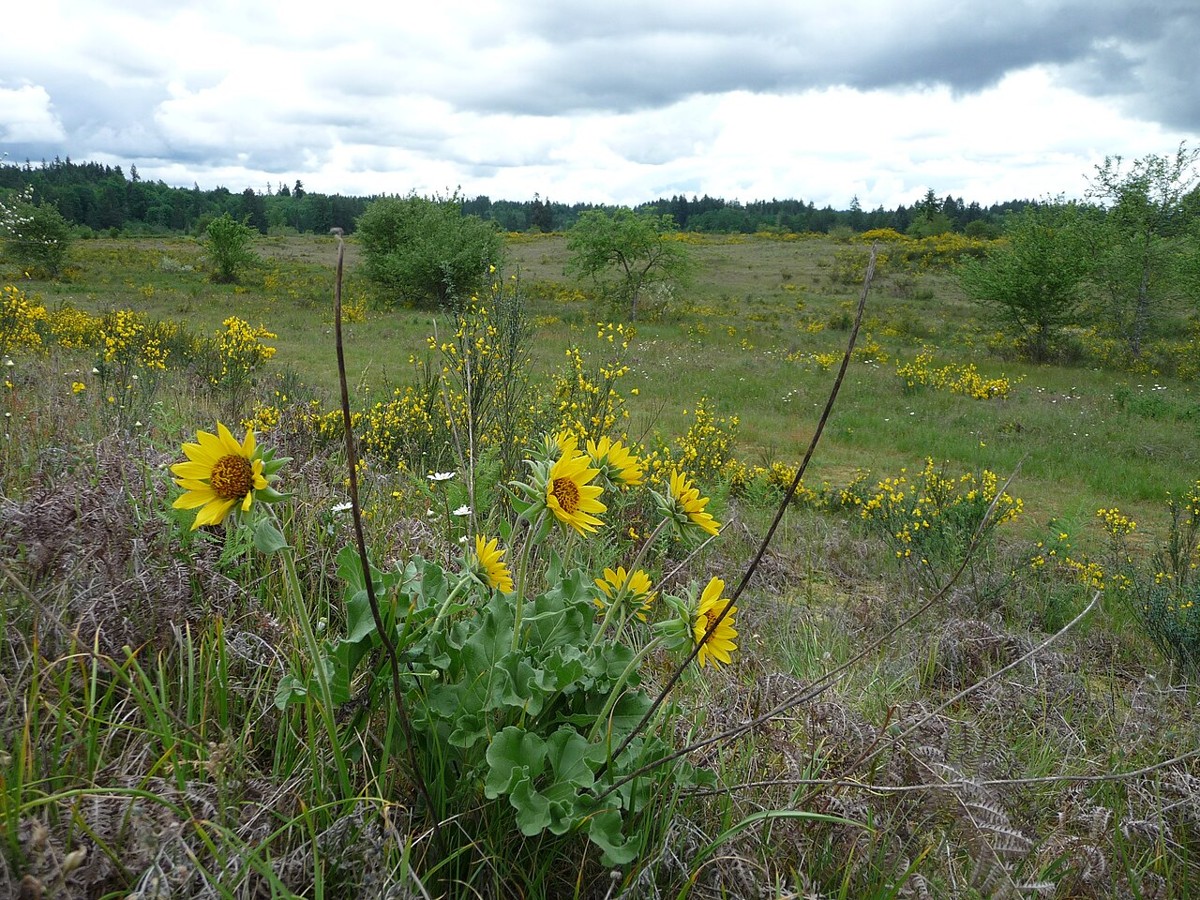
Across this range the species favors open, sunny ground with well-drained soils — rocky outcrops, grassy bald hills, oak woodland edges, and gravelly prairie remnants. It is especially associated with the Garry oak (Oregon white oak) savanna and prairie ecosystems of the Puget Trough and Willamette Valley, two of the most reduced and actively restored plant communities in the Pacific Northwest, where Deltoid balsamroot is often treated as an indicator and anchor species for restoration work.
In California, the species extends through the northern Coast Ranges and into the Sierra Nevada foothills, typically on dry, open slopes and grasslands at low to moderate elevations. Throughout its range it generally occurs from near sea level up to around 5,000 feet, always in full sun and well-drained ground that dries out markedly each summer.
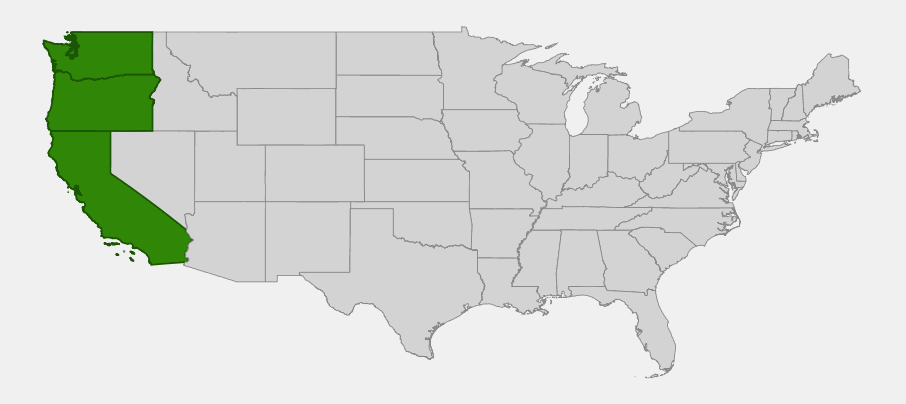
📋 Regional plant lists featuring Deltoid balsamroot: California & Nevada · Western Oregon & Western Washington
Growing & Care Guide
Deltoid balsamroot rewards patience: it is slow to establish because it invests heavily in its deep taproot before putting on much top growth, but a well-sited plant can live and bloom for decades with almost no care.
Light
Full sun is essential. This is a plant of open prairies and bald hills, and it will not perform well, bloom sparsely, or become leggy in shaded or even lightly shaded sites. Choose the sunniest spot available.
Soil & Water
Give it lean, well-drained soil — rocky, gravelly, or clay-loam ground is ideal, and heavy, rich, constantly moist soil is a common cause of failure, particularly from root rot in summer. Water young plants during their first one to two summers to help the taproot establish, then taper off; established plants are drought tolerant and often resent summer irrigation once their roots have reached deeper, naturally available moisture.
Planting Tips
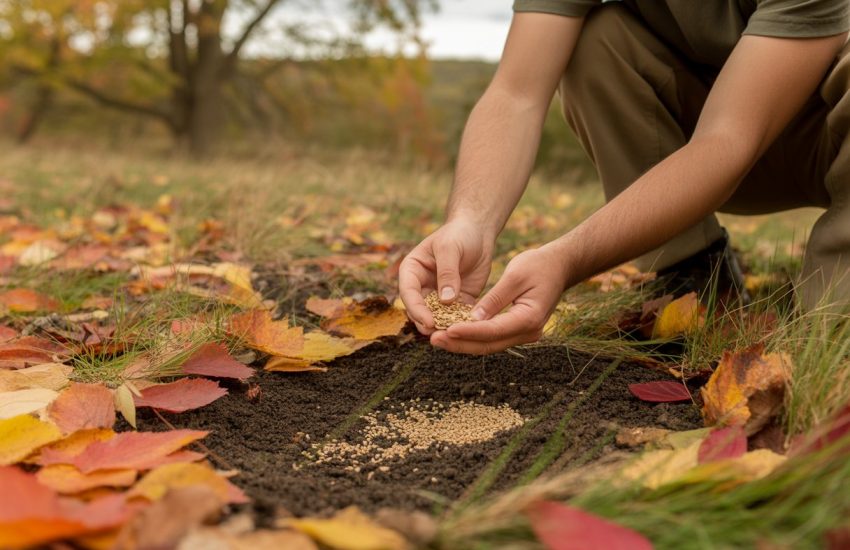
Start from seed sown in fall (many populations benefit from a period of cold, moist stratification over winter) or from young container stock planted while small, since the long taproot makes larger plants very difficult to transplant successfully. Choose the permanent planting site carefully, as mature plants should not be moved. Space plants 18 to 24 inches apart to allow the rosettes room to spread.
Pruning & Maintenance
Essentially none needed. Spent flower stalks can be removed after seed drop if a tidier look is wanted, and the whole plant will naturally die back to the root by mid-to-late summer — resist the urge to overwater a plant that looks dormant, as this is its normal dry-season behavior.
Propagation
Seed is the standard method, sown in fall or after cold stratification, since the deep taproot makes division impractical. Seed-grown plants typically take two to four years to reach flowering size.
Landscape Uses
- Prairie and meadow restoration — a keystone species of Pacific Northwest grasslands
- Oak savanna plantings alongside Oregon white oak
- Dry, sunny slopes and rocky banks where irrigation is limited
- Pollinator gardens as an early-season nectar and pollen source
- Low-water landscaping once established
- Naturalistic wildflower plantings paired with camas and other prairie natives
Wildlife & Ecological Value
Deltoid balsamroot is a foundational species of the oak savanna and prairie ecosystems it inhabits, supporting a wide range of pollinators, birds, and mammals through its early, abundant bloom.
For Pollinators
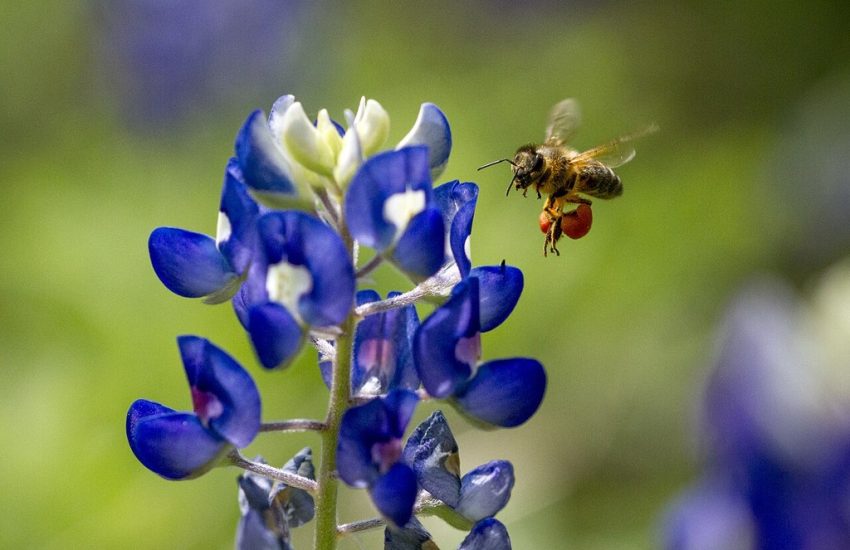
The large, early-season flower heads are an important nectar and pollen source for native bees, including mining bees and bumble bees emerging in spring, as well as butterflies and other flower-visiting insects. In prairie remnants, mass blooms of Deltoid balsamroot can be one of the most significant early pollinator resources of the year.
For Birds
Seed-eating birds, including sparrows and finches, forage on the ripening achenes in summer. The open, sunny habitats where the species grows also support ground-nesting and grassland bird species that depend on healthy prairie structure.
For Mammals
Deer and elk browse the young foliage and flower stalks, particularly in spring, and the plant’s large taproot has historically been dug and eaten by both wildlife and people. Small mammals use the dense rosettes for cover in open grassland habitat.
Ecosystem Role
As one of the signature wildflowers of Pacific Northwest prairie and oak savanna, Deltoid balsamroot plays an outsized ecological role relative to its modest stature. Its deep taproot helps stabilize soil on slopes and contributes to the structure of increasingly rare prairie habitat, and its reliable, abundant spring bloom makes it a cornerstone species in restoration efforts aimed at recovering these highly reduced ecosystems.
Cultural & Historical Uses
Deltoid balsamroot held significant value for Indigenous peoples throughout its range, including Coast Salish and Willamette Valley tribes, who harvested the thick taproots as a food source, typically roasting or steaming them to make the fibrous root more digestible. The young spring shoots and leaves were also gathered and eaten, and the seeds, similar to sunflower seeds, were collected and used as a food resource.
The plant’s prominence in Willamette Valley and Puget lowland prairies — landscapes long maintained by Indigenous burning practices that favored oak savanna and open grassland over encroaching forest — means its abundance in these habitats is closely tied to a long history of deliberate land stewardship, not simply incidental to the natural landscape.
Today Deltoid balsamroot’s primary cultural role is as a flagship species for prairie and oak savanna restoration in the Pacific Northwest, where its dramatic spring bloom is used to mark and celebrate the recovery of these rare habitats, and it remains a popular subject for wildflower photography and native plant gardening throughout its range.
Frequently Asked Questions
Why is my Deltoid balsamroot slow to grow?
This is normal. The plant invests its early energy into developing a deep taproot rather than top growth, so it can take two to four years from seed before you see much foliage and even longer before significant flowering. Patience pays off with a long-lived plant.
Can I move an established Deltoid balsamroot?
It’s not recommended. The long, deep taproot makes mature plants very difficult to transplant successfully. Choose the planting site carefully from the start, using young container stock or direct-sown seed.
Why does the foliage disappear in summer?
This is the plant’s normal dry-season dormancy, not a sign of disease. Deltoid balsamroot dies back to its taproot once the dry season sets in, conserving resources underground, and resprouts with fall or winter rain.
Is Deltoid balsamroot the same as arrowleaf balsamroot?
No, though they’re closely related. Arrowleaf balsamroot (Balsamorhiza sagittata) is the species of the interior West, east of the Cascades, with narrower, arrow-shaped leaves, while Deltoid balsamroot is the coastal species with broader, triangular leaves found west of the Cascade crest.
Do deer eat Deltoid balsamroot?
Yes, deer and elk will browse the young foliage and flower stalks, especially in spring. Established plants generally recover, but young plants in heavily browsed areas may need temporary protection.

Looking for a nursery that carries Deltoid balsamroot?
Browse our native plant nursery directory: California · Oregon · Washington