Wright’s Goldenrod (Solidago wrightii)
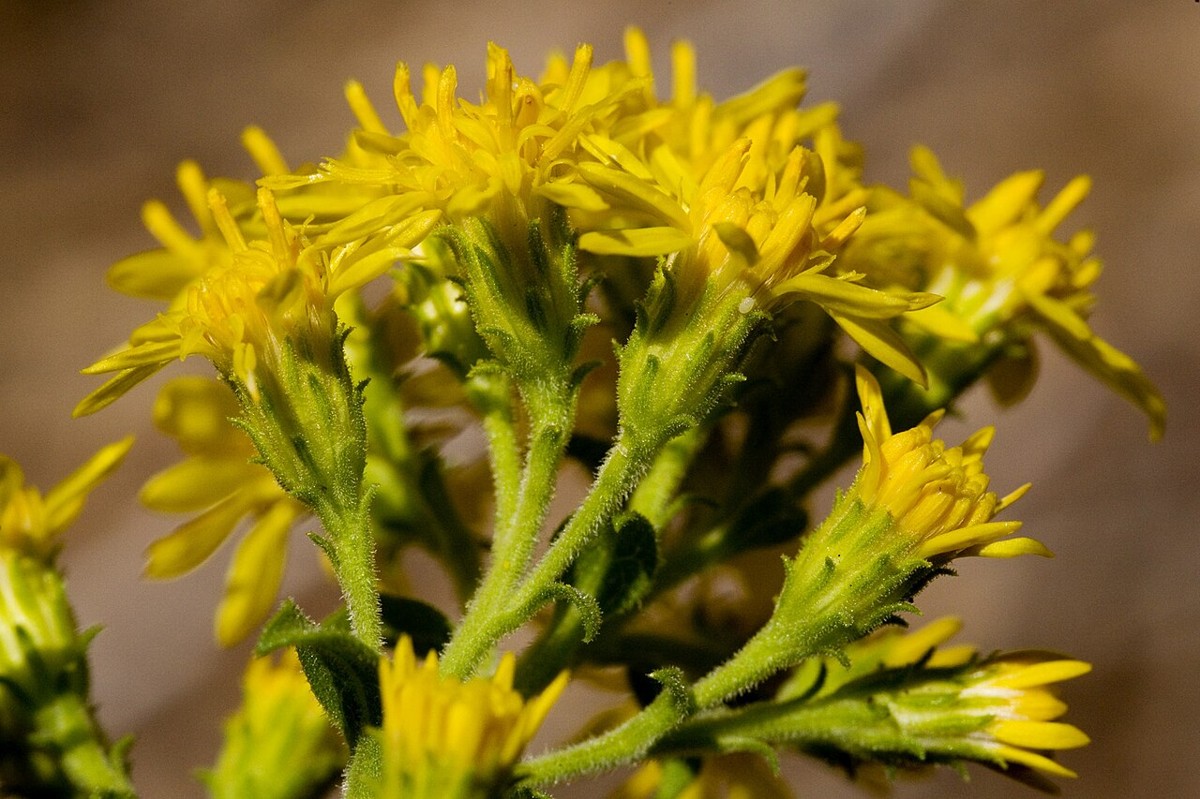
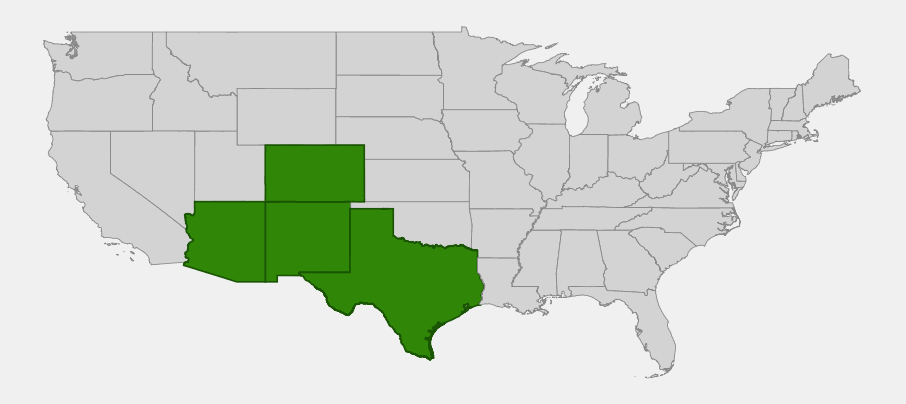
Solidago wrightii, commonly known as Wright’s Goldenrod, is a mountain and woodland goldenrod of the Southwest, found growing in the shade of pines and oaks across the sky-island ranges and mountain foothills of Arizona, New Mexico, west Texas, and the southern edge of Colorado. Unlike the goldenrods of moist eastern meadows, Wright’s Goldenrod is a plant of rocky montane forest openings and canyon slopes, reaching 1 to 3 feet tall with dense, rounded clusters of small, bright yellow flower heads that light up the understory from late summer into fall.
This species grows at surprisingly high elevations for a goldenrod — typically between 3,500 and 9,500 feet — in ponderosa pine and mixed conifer woodlands, oak-juniper foothills, and rocky canyon habitats. It tends to need a bit more consistent moisture and some shade compared to the sun-loving wildflowers of the surrounding desert lowlands, making it a good fit for wooded or partially shaded native gardens in its home range.
Wright’s Goldenrod is native only to the mountainous Southwest and the southeastern fringe of Colorado, and gardeners outside that range — including the much larger range occupied by common eastern goldenrods — should choose a goldenrod native to their own region instead.
Identification
Wright’s Goldenrod is an upright, clump-forming herbaceous perennial, typically 1 to 3 feet tall, with multiple hairy, leafy stems rising from a woody base or rhizomatous rootstock. The stems and flower clusters are noticeably hairy, which helps distinguish it from the many smooth-stemmed goldenrod species found at lower, drier elevations.
Leaves
Leaves are lance-shaped to narrowly oval, toothed along the margins, and arranged alternately up the stem, becoming progressively smaller toward the flowering tips. Basal and lower leaves are larger and often persist through the growing season, while the foliage overall has a somewhat rough, hairy texture.
Flowers
The flower heads are small — each only about ¼ inch across — but are packed densely into flat-topped to slightly rounded clusters (corymbs) at the top of each stem, creating a bold mass of golden-yellow color. Like all goldenrods, each tiny head has both ray and disc florets, both yellow. Bloom time runs from August into October, making Wright’s Goldenrod one of the more reliable late-season nectar sources in its elevation range.
Fruit
The fruit is a small, hairy achene topped with a tuft of bristles (pappus), typical of the aster family, allowing wind dispersal of the tiny seeds once the flower heads dry.
Quick Facts
| Scientific Name | Solidago wrightii |
| Family | Asteraceae (Aster/Daisy) |
| Plant Type | Herbaceous Perennial Wildflower |
| Mature Height | 1–3 ft |
| Growth Rate | Moderate |
| Sun Exposure | Part Sun to Part Shade |
| Water Needs | Moderate |
| Soil Type | Rocky or gravelly woodland soils; well-drained |
| Soil pH | Neutral to slightly alkaline |
| Bloom Time | August – October |
| Flower Color | Golden yellow |
| Drought Tolerance | Good |
| USDA Hardiness Zones | 5–8 |
Native Range
Wright’s Goldenrod is native to the mountains and foothills of the Southwest, found from southeastern Arizona across most of New Mexico and into the Trans-Pecos region of far west Texas, with its range extending north into the southeastern mountains and foothills of Colorado. It grows at elevations roughly between 3,500 and 9,500 feet, well above the desert floor, in the kind of rocky, partly shaded woodland ground found in sky-island mountain ranges.
Typical habitat includes ponderosa pine and mixed conifer forest openings, oak-juniper woodlands, and rocky canyon slopes — a cooler, moister niche than most of the region’s better-known desert wildflowers occupy. It is not documented as native outside this southwestern mountain range.
📋 Regional plant lists featuring Wright’s Goldenrod: Arizona & New Mexico · South and West Texas · Nebraska, Kansas & Eastern Colorado
Growing & Care Guide
Wright’s Goldenrod is well suited to native gardens that mimic its natural mountain-woodland setting — part shade, decent but not excessive moisture, and rocky, well-drained soil.
Light
This species prefers part sun to part shade, reflecting its native habitat beneath open pine and oak canopies. It can take more sun at higher, cooler elevations, but in hot lowland gardens it benefits from some afternoon shade to avoid excessive moisture stress.
Soil & Water
Wright’s Goldenrod grows naturally in rocky or gravelly woodland soils that drain well but retain a bit more moisture than the open desert floor. It appreciates moderate, regular water — more than most desert wildflowers, though still well short of a typical garden perennial — and does best with some organic mulch to mimic the leaf litter of its native forest floor.
Planting Tips
Plant in fall or spring in a partly shaded woodland or rock garden setting, ideally beneath or near trees that provide some canopy. Space plants 12 to 18 inches apart to allow clumps to fill in. It combines well with other montane Southwest natives that share its preference for part shade and rocky, humus-rich soil.
Pruning & Maintenance
Cut stems back in late fall or winter after bloom to tidy the clump for the next growing season. Dividing congested clumps every few years in early spring helps maintain vigor and controls spread. Wright’s Goldenrod has no significant pest or disease issues and needs no fertilizer in reasonably fertile woodland soil.
Landscape Uses
Wright’s Goldenrod fits naturally into woodland and montane garden settings:
- Woodland gardens beneath pines, oaks, or junipers
- Rock gardens at higher, cooler elevations
- Pollinator gardens, as a valuable late-season nectar source
- Naturalized mountain or foothill landscaping within its native elevation range
Wildlife & Ecological Value
Like other goldenrods, Wright’s Goldenrod is a magnet for late-season pollinators at a time when fewer other wildflowers are in bloom at these elevations.
For Pollinators
The dense flower clusters attract a wide range of native bees, honeybees, butterflies, and other beneficial insects through late summer and fall, providing one of the last significant nectar and pollen sources before frost at higher elevations.
For Birds and Other Wildlife
The small seeds, equipped with downy pappus for wind dispersal, provide modest forage for seed-eating birds once the flower heads dry in late fall.
Ecosystem Role
As a late-blooming perennial of mountain woodland understories, Wright’s Goldenrod helps extend the pollinator season in forest openings and canyon habitats, supporting insect populations through the transition into fall when most other montane wildflowers have already finished.
For a Montane Native Garden
In gardens situated at higher elevations within its native range, Wright’s Goldenrod combines well with other shade-tolerant mountain perennials and grasses that share its preference for rocky, humus-rich soil and dappled light, helping recreate the layered structure of a ponderosa pine or oak-juniper woodland understory. Planted in drifts beneath existing trees, it can provide a reliable burst of late-season color exactly when most montane wildflower displays have already faded for the year.
Frequently Asked Questions
Is Wright’s Goldenrod the same as the goldenrod blamed for hay fever?
No — and neither is any goldenrod. Goldenrod pollen is heavy and insect-carried, not airborne, so it is not a significant cause of hay fever. Ragweed, which blooms at the same time, is the actual culprit and is often mistaken for goldenrod.
Will Wright’s Goldenrod spread aggressively like some other goldenrods?
It is generally well-behaved compared to aggressive eastern species like Canada goldenrod. It spreads modestly by rhizome and reseeding, and clumps can be divided every few years to keep them in bounds if needed.
Can Wright’s Goldenrod grow at low desert elevations?
It is adapted to mountain and foothill elevations roughly 3,500 to 9,500 feet, with cooler temperatures and more consistent moisture than the low desert. At low, hot elevations it will likely struggle without significant shade and extra water.
How does Wright’s Goldenrod differ from other Southwest goldenrods?
Its hairy stems and flower clusters, montane woodland habitat, and the characteristic rounded flat-topped flower clusters distinguish it from the smoother-stemmed goldenrods of drier, lower-elevation sites.
Can Wright’s Goldenrod be grown outside Arizona, New Mexico, Texas, and Colorado?
It can be grown in similar cool, part-shaded mountain climates elsewhere, but it is native only to the southwestern mountains and the southeastern Colorado foothills. Gardeners outside this range who want the same ecological value should choose a goldenrod native to their own region.

Looking for a nursery that carries Wright’s Goldenrod?
Browse our native plant nursery directory: Arizona · New Mexico · Texas · Colorado