Wright’s Skullcap (Scutellaria wrightii)
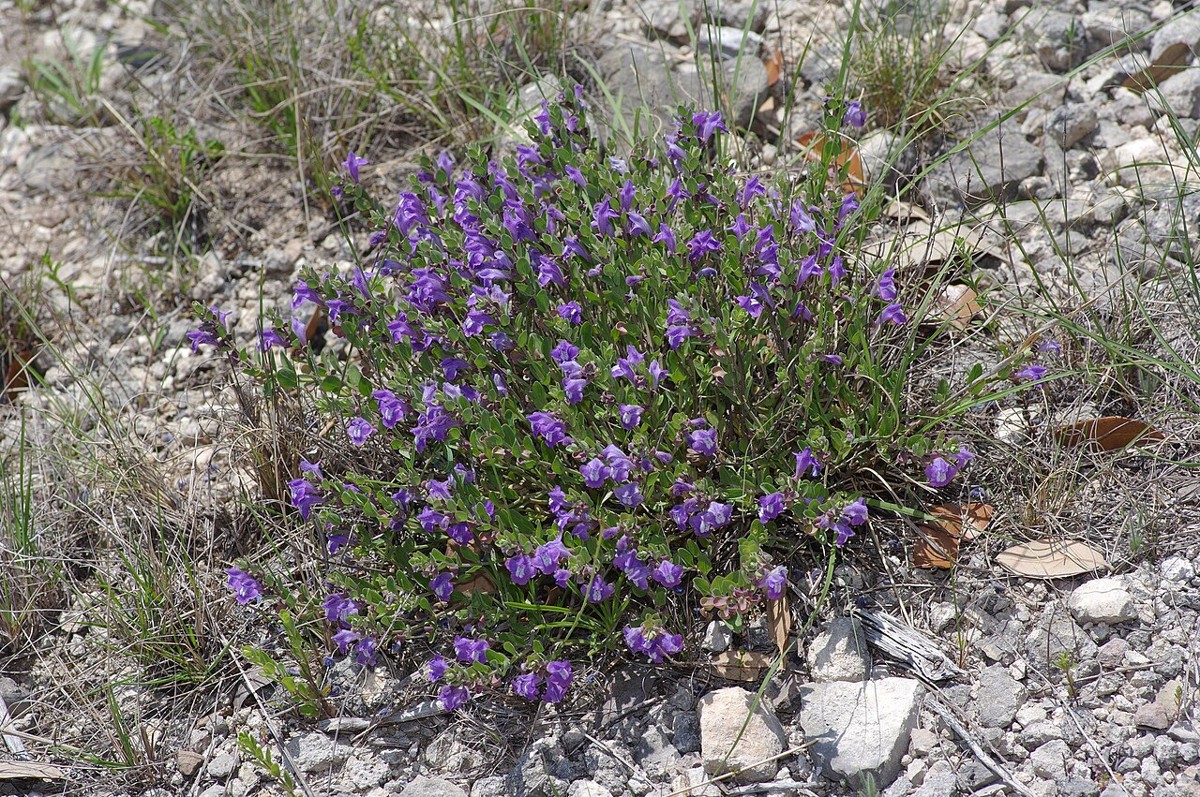
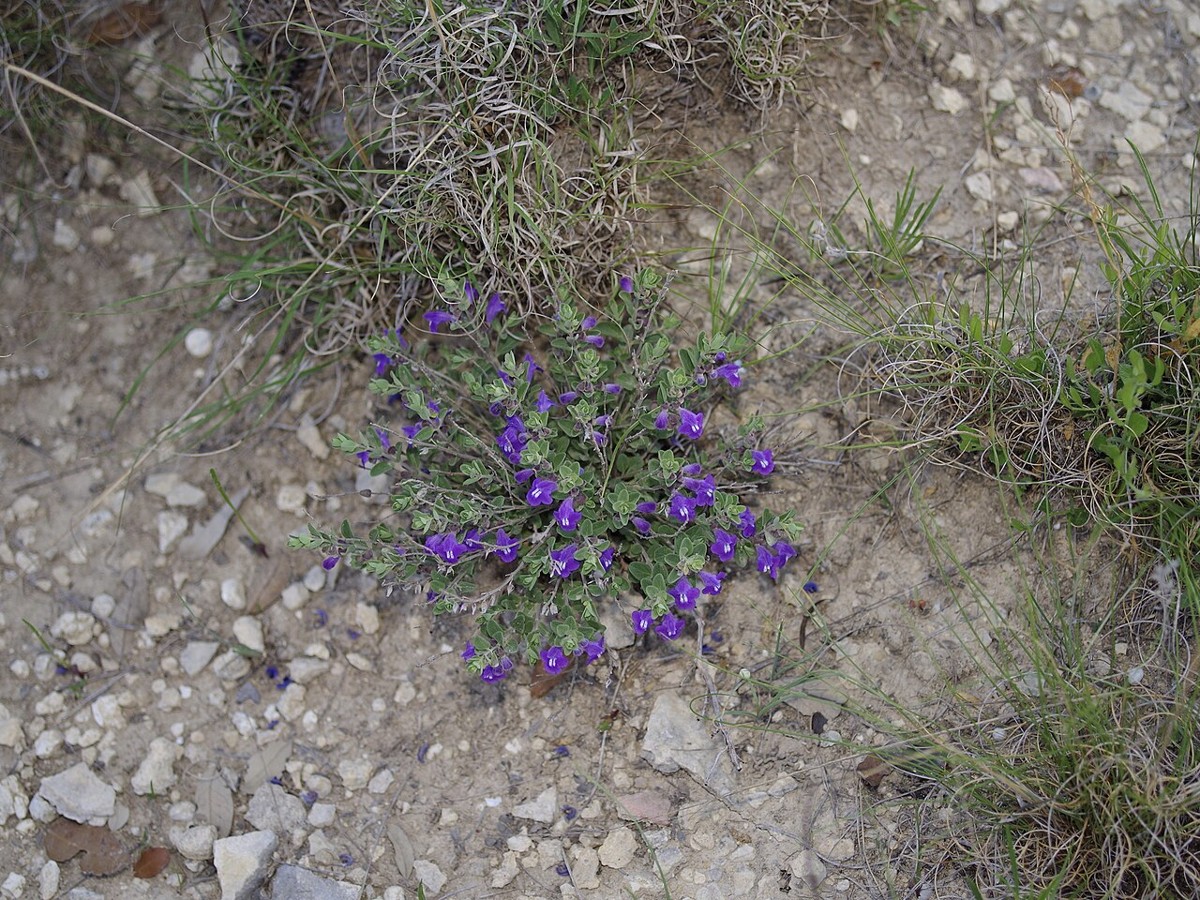
Scutellaria wrightii, commonly called Wright’s Skullcap (also sold as Texas Purple Skullcap), is a tough little evergreen subshrub endemic to the limestone country of central and western Texas. Named for 19th-century botanical collector Charles Wright, this member of the mint family (Lamiaceae) forms dense, rounded mounds barely a foot tall, studded from early spring into summer with small, two-lipped tubular flowers in shades of purple, lavender, and blue, each marked with a bright white “landing pad” on the lower lip.
In the wild, Wright’s Skullcap grows on thin, rocky, limestone-derived soils — exactly the kind of lean, fast-draining ground found on the Edwards Plateau and across the Texas Hill Country and Rolling Plains. Its evergreen foliage, compact habit, and long bloom season have made it a favorite among Texas native-plant gardeners looking for low-water color that holds its shape and interest year-round.
Because Wright’s Skullcap is native only to Texas, gardeners elsewhere should treat it as a regional specialty rather than a widely adaptable native — it is easiest to grow well within or near its home range, where soils and rainfall patterns already suit it.
Identification
Wright’s Skullcap is a low, mounding, woody-based perennial subshrub, typically 6 to 10 inches tall and somewhat wider, with numerous slender branching stems radiating from a central base to form a tidy, rounded clump. The plant is evergreen in mild winters, keeping its small gray-green leaves through much of the year.
Leaves
Leaves are small, opposite, oval to oblong, and gray-green, rarely more than half an inch long, with short stalks and a slightly fuzzy texture typical of many dryland mint-family plants. The foliage is dense enough to give the whole plant a neat, mounded silhouette even when not in bloom.
Flowers
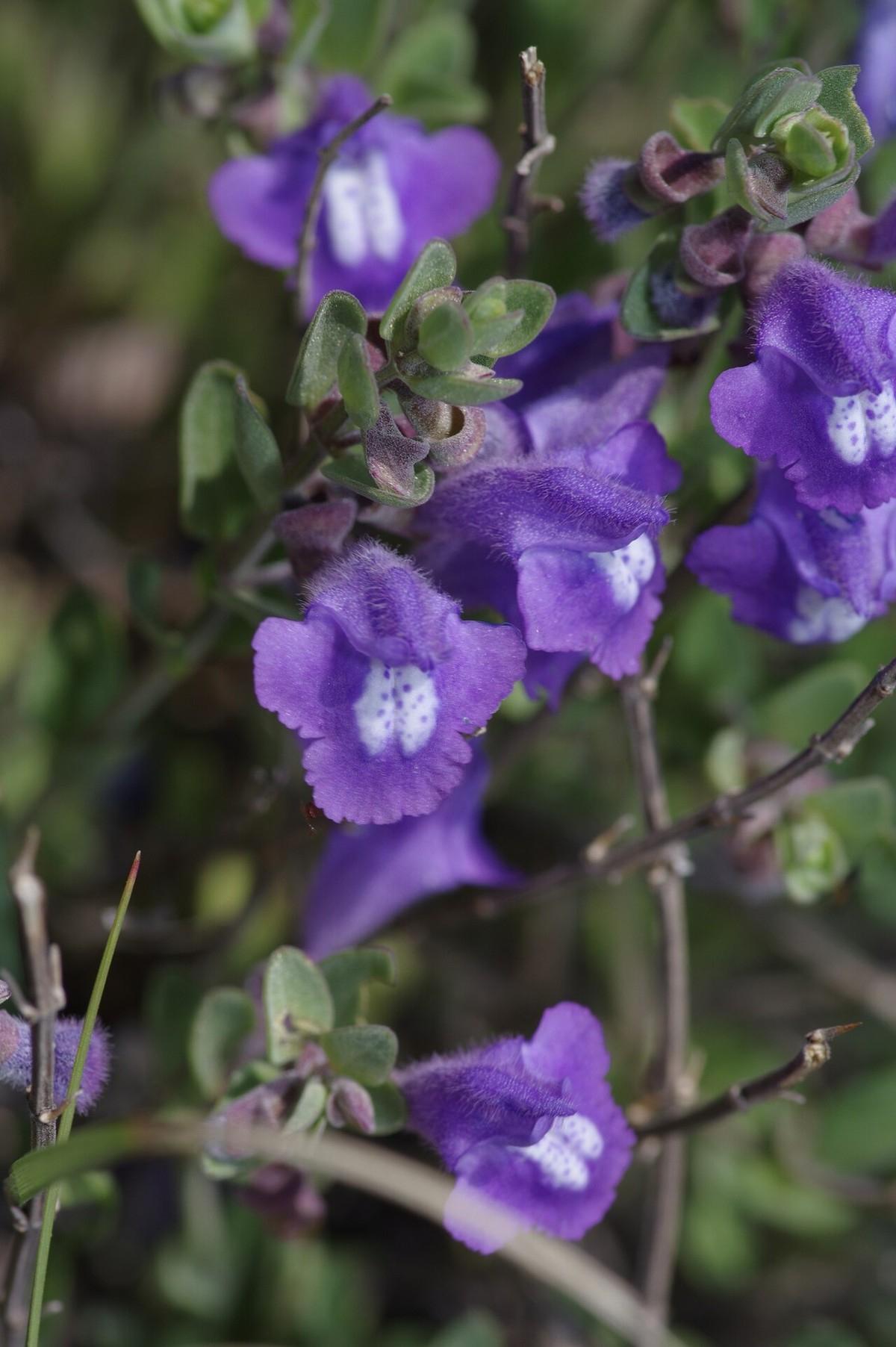
The flowers are the plant’s main attraction: small, tubular, two-lipped blossoms about ½ to ¾ inch long, in shades ranging from violet-blue to rich purple, with a conspicuous white patch marked with fine purple dots on the lower lip — a pattern thought to guide pollinators to the nectar. Flowers are borne in loose spikes at the branch tips and bloom heavily from March through July, sometimes continuing sporadically into fall.
Fruit
Like other mints, the flowers give way to small nutlets — four tiny, hard seeds per flower — that drop near the parent plant, allowing it to slowly colonize suitable rocky ground nearby.
Quick Facts
| Scientific Name | Scutellaria wrightii |
| Family | Lamiaceae (Mint) |
| Plant Type | Evergreen Perennial Subshrub |
| Mature Height | 6–10 in |
| Growth Rate | Slow to Moderate |
| Sun Exposure | Full Sun to Part Shade |
| Water Needs | Low |
| Soil Type | Rocky, limestone-derived; well-drained |
| Soil pH | Neutral to alkaline |
| Bloom Time | March – July |
| Flower Color | Purple, lavender, blue with white-marked lip |
| Drought Tolerance | Excellent |
| USDA Hardiness Zones | 7–9 |
Native Range
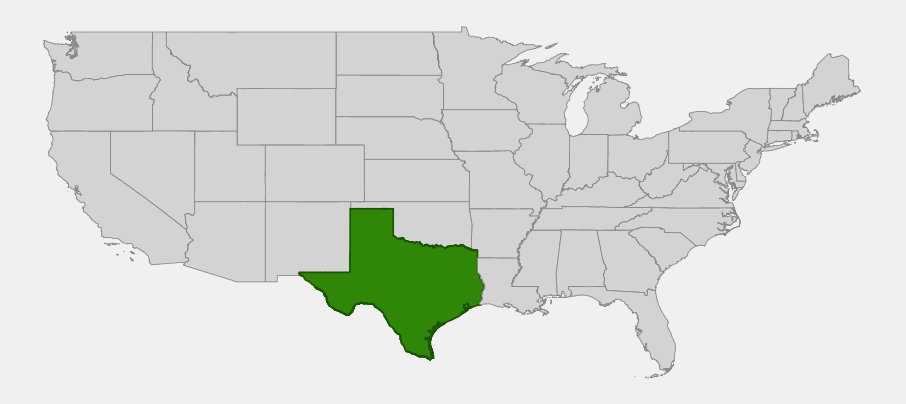
Wright’s Skullcap is endemic to Texas, found on thin limestone and caliche soils from the Edwards Plateau and Texas Hill Country north and west across the Rolling Plains and into parts of the Trans-Pecos. It is strictly a plant of rocky, calcareous ground — bluffs, prairies over limestone, and gravelly slopes — and is not documented as native to any other state.
📋 Regional plant lists featuring Wright’s Skullcap: South and West Texas
Growing & Care Guide
Wright’s Skullcap is easy to please as long as its two basic requirements are met: sharp drainage and full sun to light shade. Once settled in, it needs very little attention.
Light
It performs best in full sun, where it flowers most heavily and holds its tight, mounded shape. In the hottest parts of its range it also tolerates light afternoon shade, which can help foliage stay fresher through the peak of summer.
Soil & Water
This species demands fast drainage above almost everything else. Rocky, gravelly, or limestone-derived soils suit it best, and it is notably drought tolerant once established, needing little or no supplemental water beyond normal rainfall in its native range. Soggy or heavy clay soils are its biggest enemy — poor drainage quickly leads to root rot. If your native soil is heavy, plant it on a raised berm or amend generously with coarse gravel.
Planting Tips
Set out plants in fall or early spring, in a sunny, well-drained spot such as a rock garden, gravel bed, or the top of a dry retaining wall. Give plants 12 to 18 inches of space to fill out into their natural mounded form. Water regularly through the first growing season to establish roots, then taper off — established plants thrive on rainfall alone in most years.
Pruning & Maintenance
A light shearing after the main spring flush of bloom can tidy the mound and often encourages a second round of flowers later in the season. Beyond that, Wright’s Skullcap needs little maintenance — no regular fertilizing, and few pest or disease problems trouble it in well-drained soil.
Landscape Uses
Wright’s Skullcap fits naturally into several low-water Texas garden styles:
- Rock gardens and gravel beds, where its mounded form and long bloom shine
- Xeriscapes and other low-water landscaping
- Limestone or caliche slopes where few other ornamentals thrive
- Border edging for a tidy, evergreen low mound
- Pollinator gardens, as a long-season nectar source
Wildlife & Ecological Value
Wright’s Skullcap’s small but abundant tubular flowers make it a reliable nectar source through a long stretch of the growing season in its native Texas range.
For Pollinators
The tubular flower shape is well suited to native bees and small butterflies, which probe the blossoms for nectar and inadvertently carry pollen between plants. Because it blooms heavily from spring through much of summer, it provides a steady food source when many spring ephemerals have already finished.
Ecosystem Role
As a low, evergreen groundcover of thin limestone soils, Wright’s Skullcap helps stabilize rocky slopes and bluff edges against erosion, and its persistent foliage offers modest year-round cover for small insects in otherwise open, exposed terrain.
For Gardeners Building a Limestone Palette
Wright’s Skullcap pairs especially well with other limestone-adapted Texas natives that share its need for lean, fast-draining soil — plants like Texas betony, zexmenia, and prairie verbena. Grouped together, these species create a low, drought-tough tapestry that stays interesting through most of the growing season without supplemental irrigation, which is part of why Wright’s Skullcap has become a go-to choice for Hill Country rock gardens and limestone-slope plantings.
Frequently Asked Questions
Is Wright’s Skullcap the same as other skullcaps sold for herbal use?
No. Several Scutellaria species, particularly Scutellaria lateriflora (American skullcap), have a history of herbal use, but Wright’s Skullcap is grown purely as an ornamental native plant. This article describes its history as garden folklore and ornamental value, not as medical advice.
Does Wright’s Skullcap stay evergreen in winter?
In mild Texas winters it typically keeps most of its foliage, though it may look a bit ragged after a hard freeze. It usually rebounds quickly with fresh growth in spring.
Why isn’t my Wright’s Skullcap blooming as much as expected?
The most common cause is soil that’s too rich or too wet. This species flowers best in lean, fast-draining, rocky soil with full sun — overly fertile or moist conditions tend to produce more foliage and fewer flowers.
Can Wright’s Skullcap be grown outside Texas?
It can succeed in other hot, dry, alkaline-soil climates with excellent drainage, but it is native only to Texas. Gardeners elsewhere seeking the same ecological value should look for a skullcap species native to their own region.
How do I keep Wright’s Skullcap from getting leggy?
A light shearing after the first flush of spring bloom keeps the mound dense and compact and often triggers a second bloom cycle later in the season.

Looking for a nursery that carries Wright’s Skullcap?
Browse our native plant nursery directory: Texas