Cherokee Sedge (Carex cherokeensis)
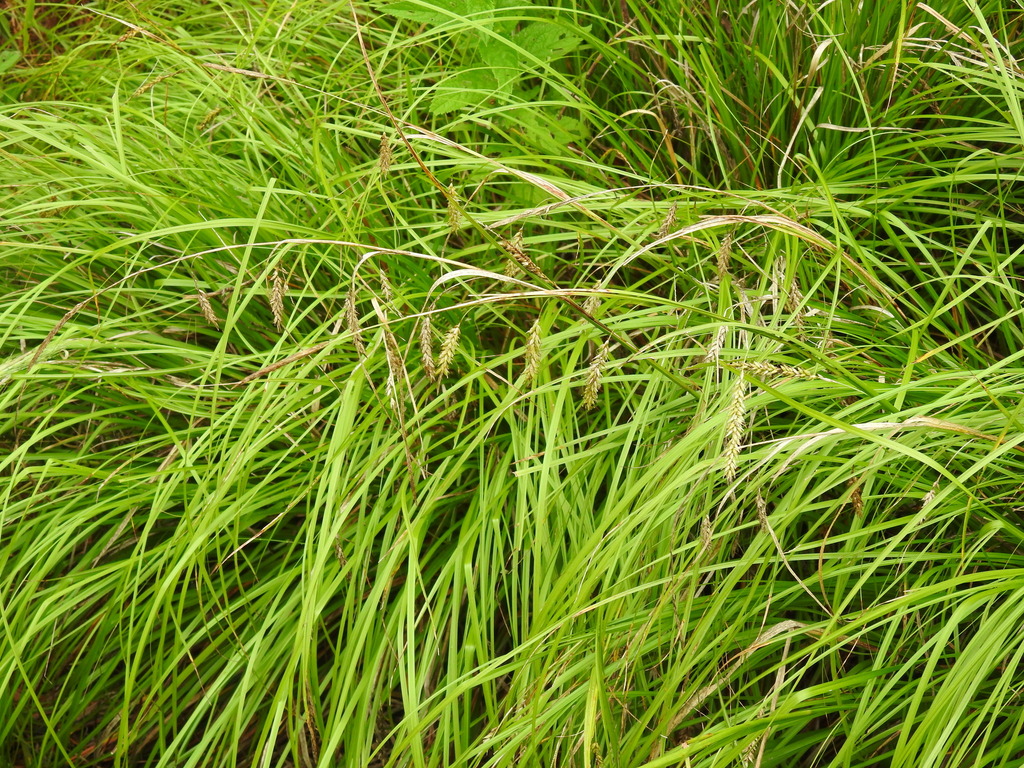
Carex cherokeensis, commonly called Cherokee sedge, is a clump-forming, evergreen to semi-evergreen perennial sedge native to woodlands, stream banks and bottomlands across the south-central and southeastern United States. It is one of the most garden-friendly native sedges, prized for the same qualities that make it common in the wild: a graceful, fountain-like clump of arching, glossy green leaves that holds its shape through drought, shade and ordinary garden abuse.
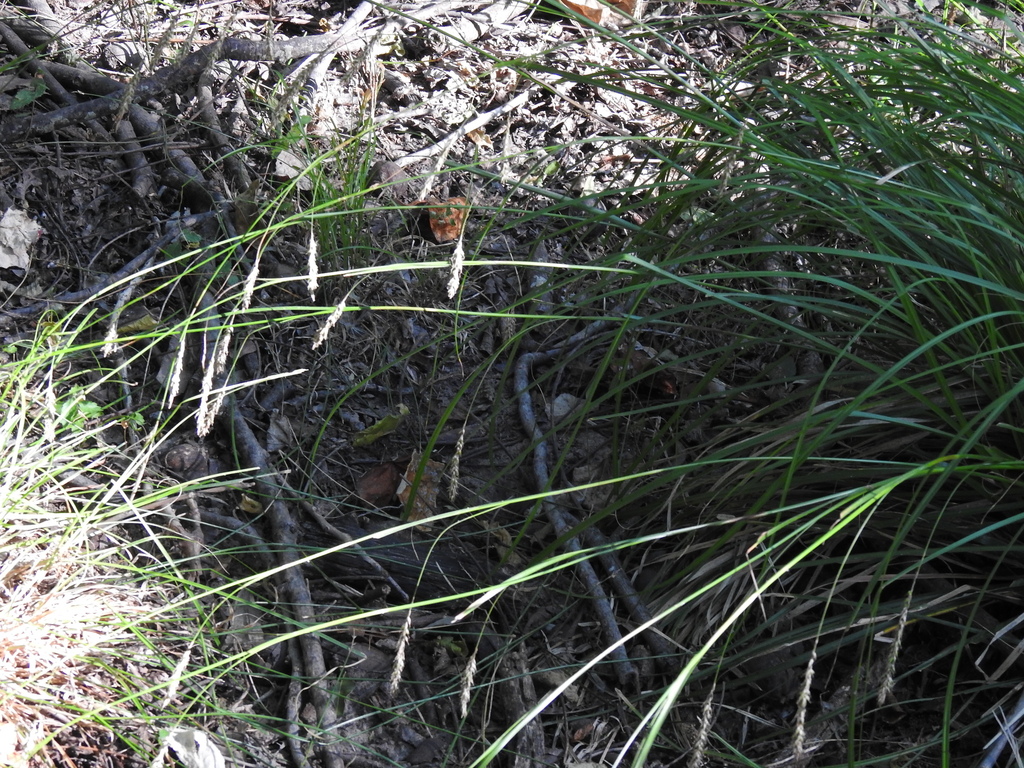
Each clump grows 12 to 20 inches tall and somewhat wider, made up of narrow, strap-like leaves that curve outward and down, giving the plant a soft, flowing texture unlike coarser ornamental grasses. In spring, thin flowering stalks rise above the foliage carrying slender, drooping, straw-colored seed spikes that add a light, airy accent before the foliage takes over for the rest of the season.
For gardeners from Texas to the Carolinas, Cherokee sedge is one of the best native substitutes for shade-garden groundcovers like liriope or mondo grass, with the advantage of supporting local wildlife and asking for far less water once established. It tolerates everything from deep shade to a few hours of sun, and from reliably moist soil to surprising dry spells, which is part of why it has become a staple of native woodland and rain garden design.
Identification
Cherokee sedge grows in dense, rounded clumps from short rhizomes, slowly widening without becoming aggressive or weedy.
Leaves
Leaves are narrow (about 1/4 to 3/8 inch wide), glossy medium to dark green, and arch gracefully outward and downward from the base, forming a low fountain shape 12 to 18 inches tall. The foliage stays attractive through most of the growing season and remains evergreen to semi-evergreen in milder parts of its range, going tan and dormant only in colder winters.
Flowers & Seed Spikes
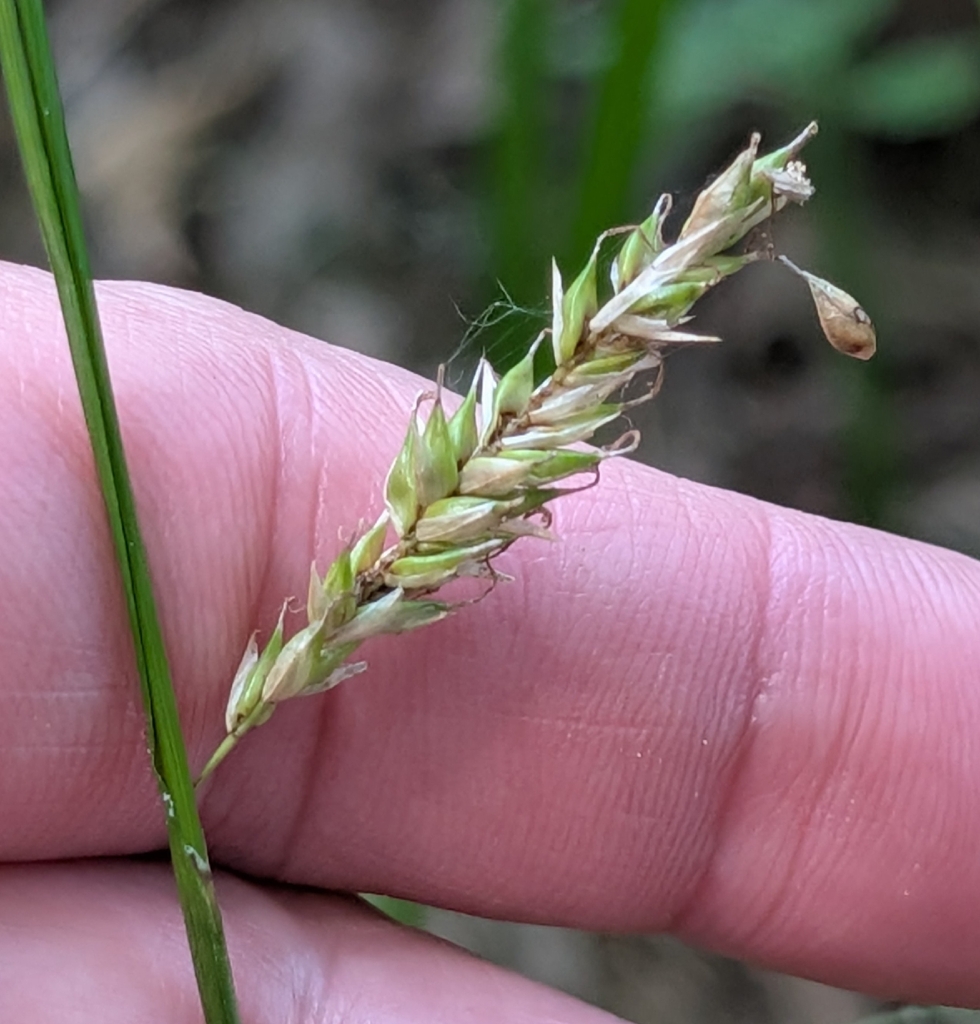
In March and April, flowering stems rise 18 to 24 inches, taller than the foliage, each carrying several slender, drooping seed spikes (technically perigynia-covered female spikes) that start green and ripen to a pale straw tan. The thin, wiry stalks let the spikes nod and sway, giving the plant a light, airy look in bloom that contrasts nicely with the solid mound of leaves below.
Fruit & Seed
Like all sedges, the “seed” is a small achene enclosed in a papery perigynium; the ripe spikes shatter gradually over late spring, dropping seed near the parent clump. Self-sowing is light to moderate, enough to fill in a bed over a few seasons without becoming a problem.
Quick Facts
| Scientific Name | Carex cherokeensis |
| Family | Cyperaceae (Sedge) |
| Plant Type | Evergreen to semi-evergreen perennial sedge |
| Mature Height | 12–20 in in flower |
| Mature Spread | 18–24 in, clumps widen slowly |
| Growth Rate | Moderate |
| Sun Exposure | Part Shade to Shade (tolerates morning sun with moisture) |
| Water Needs | Average to moist; drought tolerant once established |
| Soil Type | Rich, well-drained to seasonally moist loam or clay-loam |
| Soil pH | Slightly acidic to neutral (about 5.5–7.0) |
| Bloom Time | March – April |
| Flower Color | Green ripening to straw tan, inconspicuous |
| Fall Color | Evergreen to semi-evergreen; tan in hard winters |
| Fruit | Tiny achenes in drooping perigynia spikes |
| Deer Resistant | Yes (occasional light browsing) |
| USDA Hardiness Zones | 6–9 |
Native Range
Cherokee sedge is native across a broad swath of the south-central and southeastern United States, from Texas, Oklahoma, Arkansas and Missouri east through Louisiana, Mississippi, Alabama, Georgia, Florida, Tennessee and Kentucky, with outlying populations reaching into the Carolinas and Virginia. It is most frequent and abundant across Texas, Louisiana and the lower Mississippi Valley, where it is a common sight in bottomland hardwood forest.
Typical habitat is moist to seasonally wet woodland, stream and river bottoms, floodplain forest, and the semi-shaded edges of ponds and low areas, almost always with rich, organic soil and at least part shade from a hardwood canopy. It tolerates brief spring flooding and the summer drought that often follows in bottomland sites, which is part of why it handles the feast-or-famine moisture swings of many home landscapes so well. Common companions in the wild include river birch, American elm, boxelder and various hackberries.
Cherokee sedge is not rare or protected anywhere in its range and is not weedy or invasive; it spreads gently by short rhizomes and light self-seeding, staying well-behaved in garden settings.
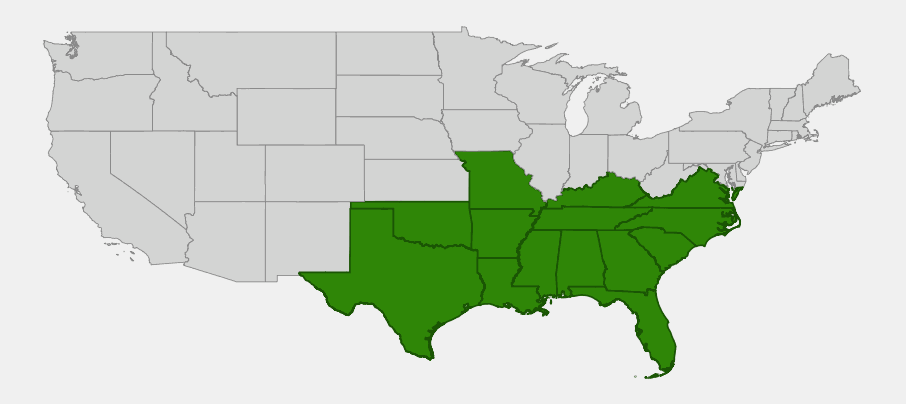
📋 Regional plant lists featuring Cherokee Sedge: South and West Texas · Arkansas, Louisiana, Eastern Oklahoma & Eastern Texas · Georgia, Alabama & Mississippi · Kentucky & Tennessee · North Carolina & South Carolina · Maryland, Virginia & West Virginia · Illinois, Iowa & Missouri
Growing & Care Guide
Cherokee sedge is one of the easiest native sedges to grow, adapting well to ordinary garden conditions far removed from its bottomland origins.
Light
Grow Cherokee sedge in part shade to full shade for the best-looking foliage; this mirrors its natural spot under a hardwood canopy. It tolerates a few hours of direct morning sun, especially with reliable moisture, but hot afternoon sun can scorch the leaf tips in drier soils.
Soil & Water
Plant it in rich, organic soil that holds moisture well; it is naturally suited to the seasonally wet, humus-rich soils of bottomland forest. Keep new plantings consistently moist through the first year. Once established, Cherokee sedge handles surprising drought for a wetland-associated species, though foliage looks its lushest with regular moisture during hot summer weather.
Planting Tips
Set out container plants in spring or fall, spacing clumps 12 to 18 inches apart for a filled-in mass planting within two to three seasons. It transplants easily and establishes quickly compared to many native sedges. A 2-inch layer of leaf mulch helps retain soil moisture and mimics its natural leaf-litter habitat.
Pruning & Maintenance
Very low maintenance. In late winter, before new growth starts, comb or lightly shear off tattered old foliage to tidy the clump; established plants in mild climates may need no cutback at all. No regular fertilizer is needed in reasonably fertile garden soil.
Propagation
Divide established clumps in early spring or fall, replanting divisions immediately to minimize transplant stress. Cherokee sedge also self-sows lightly, and volunteer seedlings can be transplanted or left in place to thicken a planting.
Landscape Uses
- Shade groundcover as a native substitute for liriope or mondo grass
- Woodland gardens under oaks and other shade trees with river birch
- Rain gardens and low spots that see occasional standing water
- Mass plantings and borders for a soft, arching texture
- Erosion control on shaded stream banks and slopes
Wildlife & Ecological Value
As a native groundcover of bottomland forest, Cherokee sedge supports a web of wildlife that ornamental non-native groundcovers cannot match.
For Pollinators
Wind-pollinated and nectar-free, Cherokee sedge instead serves as a larval host plant for several native skipper butterflies, whose caterpillars feed on the leaves. The dense foliage also shelters small beneficial insects that support the broader pollinator food web.
For Birds
Ground-feeding birds eat the small seeds, and the dense evergreen clumps provide low cover and nesting material, especially valuable in winter when other herbaceous cover has died back.
For Mammals
Small mammals use Cherokee sedge clumps for cover and nesting material. Deer browse it only lightly, which is part of why it performs reliably even in landscapes with heavy deer pressure.
Ecosystem Role
Cherokee sedge’s fibrous root system helps stabilize soil on stream banks and in floodplain forest, reducing erosion during seasonal flooding, and its evergreen foliage provides structure and habitat continuity through winter when many woodland perennials are dormant.
Cultural & Historical Uses
Cherokee sedge has no significant documented history of use as a food, fiber or medicinal plant by Indigenous peoples or early settlers; like most sedges, it was a background component of bottomland forest rather than a plant specifically gathered or cultivated.
Its common name reflects its abundance in the historical range of the Cherokee people in the southeastern woodlands, rather than a documented specific use by them. The species was first described botanically from collections in the southeastern United States in the 19th century.
Cherokee sedge’s modern significance is almost entirely horticultural: over the past two decades it has become one of the most widely available and widely planted native sedges in the southern nursery trade, valued by landscape designers and home gardeners alike as an easy, attractive, ecologically useful alternative to non-native shade groundcovers.
Frequently Asked Questions
Is Cherokee sedge evergreen?
In the milder parts of its range (zones 8–9) it stays evergreen or nearly so; in colder areas (zones 6–7) it is semi-evergreen and may go tan and dormant after a hard freeze, greening back up in spring.
How is Cherokee sedge different from other native Carex species?
Cherokee sedge is distinguished by its graceful, strongly arching habit, glossy leaves, and especially its slender, long, drooping seed spikes on tall stalks well above the foliage, a look that is softer and more fountain-like than many clumping or tussock-forming native sedges.
Will Cherokee sedge spread aggressively?
No. It spreads slowly by short rhizomes and light self-seeding, gradually widening a clump or filling in a bed over a few years without becoming invasive or hard to control.
Can Cherokee sedge handle full sun?
It tolerates a few hours of morning sun, especially with consistent moisture, but performs and looks best in part shade to full shade; hot, dry full sun often scorches the leaf tips.
Does Cherokee sedge need regular watering?
Established plants are fairly drought tolerant, but they look their best and stay fullest with regular moisture, especially during hot summer weather, reflecting their bottomland forest origins.

Looking for a nursery that carries Cherokee Sedge?
Browse our native plant nursery directory: Texas, Tennessee, South Carolina & Virginia · Oklahoma & North Carolina · Arkansas & Alabama · Louisiana, Mississippi, Kentucky & Missouri · Georgia & Florida