Gulf Cordgrass (Spartina spartinae)
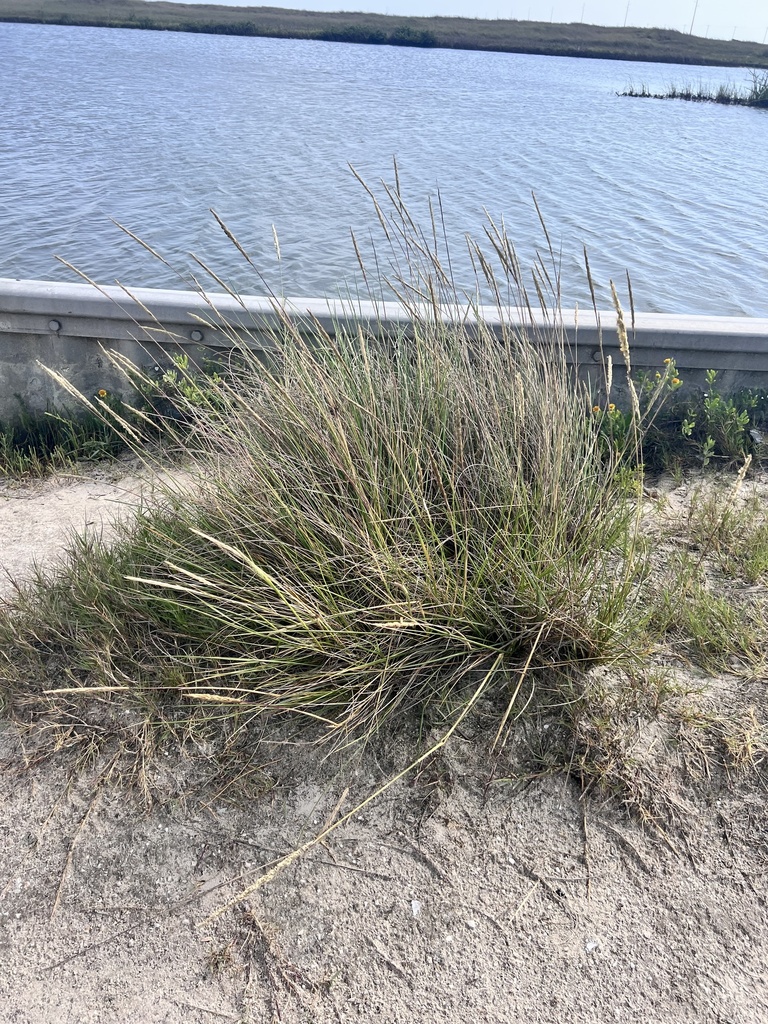
Spartina spartinae (also classified as Sporobolus spartinae), commonly called gulf cordgrass or sacahuista, is a coarse, densely tufted perennial bunchgrass native to the salt flats, marsh edges and coastal prairies of the Gulf of Mexico coast. Unlike its cousin smooth cordgrass, it does not grow in standing tidal water; instead it holds the slightly higher, firmer ground just above the regular reach of the tide, where few other plants can compete with its salt tolerance.
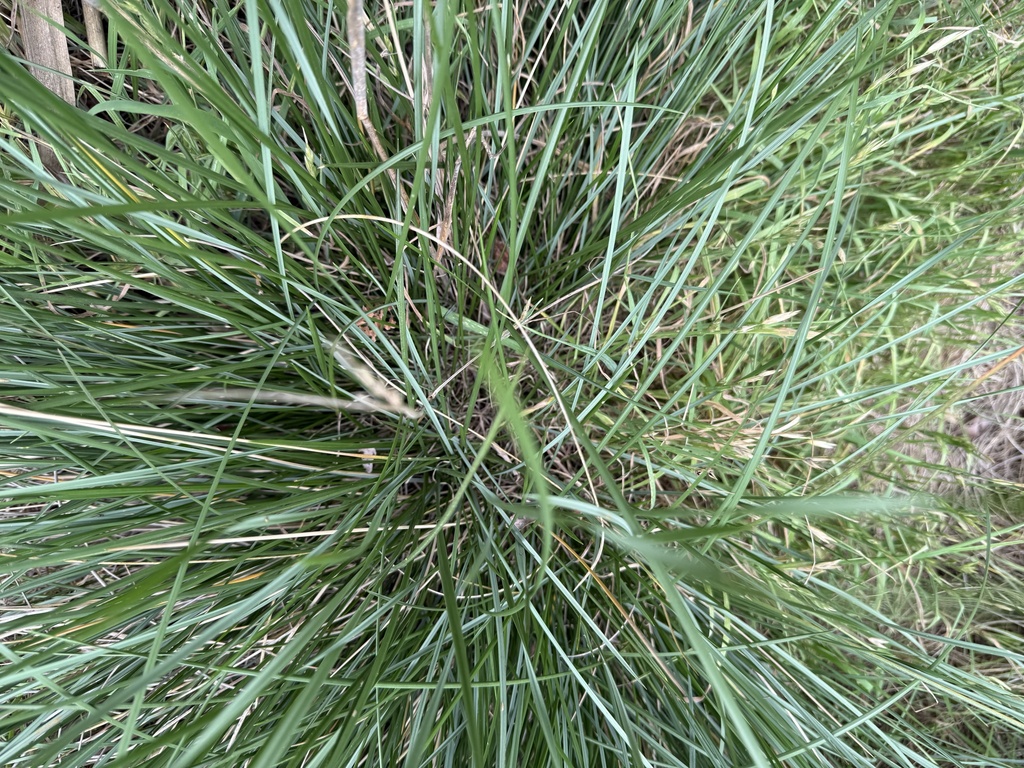
Gulf cordgrass forms tight, rounded, fountain-like tussocks 2 to 4 feet tall and often just as wide, built from hundreds of wiry, sharp-edged leaf blades. In late summer and fall it sends up tall, narrow, spike-like flower stalks well above the foliage. The whole clump is tough enough to withstand salt spray, periodic flooding, strong coastal wind and even fire, which is why ranchers along the Texas and Louisiana coast have long managed it with controlled burns to refresh the forage.
For coastal gardeners, gulf cordgrass is one of the most reliable native grasses for the toughest spots: salty, poorly drained flats, the back edge of a dune, or a low spot that floods after heavy rain. It is not a plant for a manicured border, since its coarse texture and sharp leaf edges are better suited to naturalistic coastal and wildlife plantings.
Identification
Gulf cordgrass grows as a tight bunchgrass with no rhizomes, so each plant stays a self-contained, ever-widening tussock rather than spreading into a turf.
Stems & Leaves
Culms are stout, erect, and 2 to 5 feet tall, rising from a dense basal clump of narrow, stiff, in-rolled leaf blades up to 2 feet long. The blade edges are finely serrated and genuinely sharp enough to cut skin, a trait that gives the plant its common nickname “cutgrass” in some areas and that gardeners should handle with gloves. Old leaf bases persist at the clump’s base, building the tussock higher and firmer over the years.
Flowers
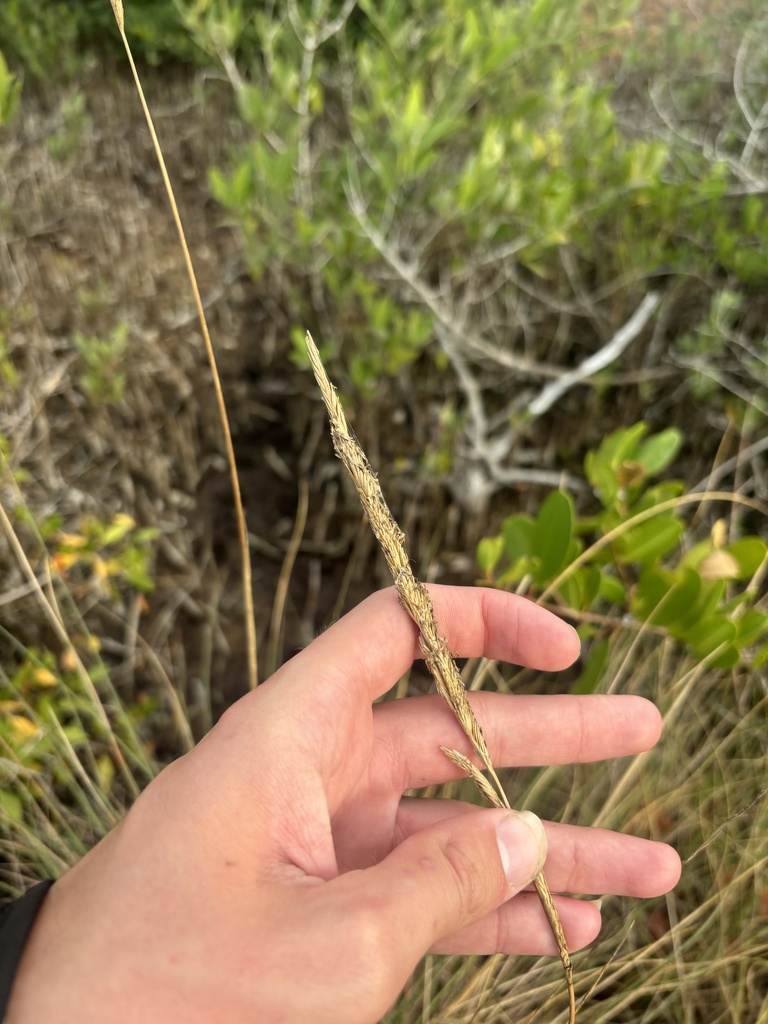
From late summer into fall, narrow, cylindrical flowering spikes 6 to 12 inches long rise well above the foliage on stiff stalks. The tiny spikelets are packed tightly along the spike in overlapping rows, giving it a bristly, somewhat foxtail-like look that dries to a tan-gold color and persists into winter.
Fruit & Seed
Like other cordgrasses, the seed is a small grain enclosed in the persistent spikelet. Seed production can be inconsistent year to year, and because the species spreads mainly by expanding its own tussock rather than aggressive rhizomes, established clumps increase in size slowly and do not run or invade the way its tidal relative smooth cordgrass can.
Quick Facts
| Scientific Name | Spartina spartinae (syn. Sporobolus spartinae) |
| Family | Poaceae (Grass) |
| Plant Type | Warm-season perennial bunchgrass |
| Mature Height | 2–5 ft in flower |
| Mature Spread | 2–4 ft, widening slowly with age |
| Growth Rate | Slow to moderate |
| Sun Exposure | Full Sun |
| Water Needs | Average to wet; tolerates periodic flooding and drought |
| Soil Type | Saline to brackish clay, loam or sand; poorly drained flats |
| Soil pH | Neutral to alkaline (about 6.5–8.5) |
| Bloom Time | August – November |
| Flower Color | Tan to gold, inconspicuous |
| Fall Color | Tan, persisting through winter |
| Fruit | Small grain in persistent spikelet |
| Deer Resistant | Yes |
| USDA Hardiness Zones | 8–11 |
Native Range
Gulf cordgrass is native to the Gulf of Mexico coast of the United States, from the Texas coast east through Louisiana, Mississippi, Alabama and the Florida peninsula, and it continues south through Mexico, the Caribbean and Central America to South America. It is most abundant and forms the most extensive stands along the Texas coast, where it is a defining species of the coastal prairie and salt flat zone.
Typical habitat is the upper edge of salt and brackish marshes, coastal prairies, saline flats, and the firmer ground between tidal marsh and upland, usually just above the regular reach of tides but still subject to occasional storm flooding. It tolerates standing brackish water for short periods but, unlike smooth cordgrass, does not grow in the regularly flooded low marsh. It commonly grows alongside smooth cordgrass at the lower edge of its zone and shares the upper flats with saltgrass, sea oxeye and various saltbushes.
Gulf cordgrass is common and not considered rare or protected within its range. Because it tolerates salt, periodic flooding, wind and fire so well, it is increasingly used in Gulf coast erosion control and habitat restoration projects, including planting programs along the Texas and Louisiana coast.
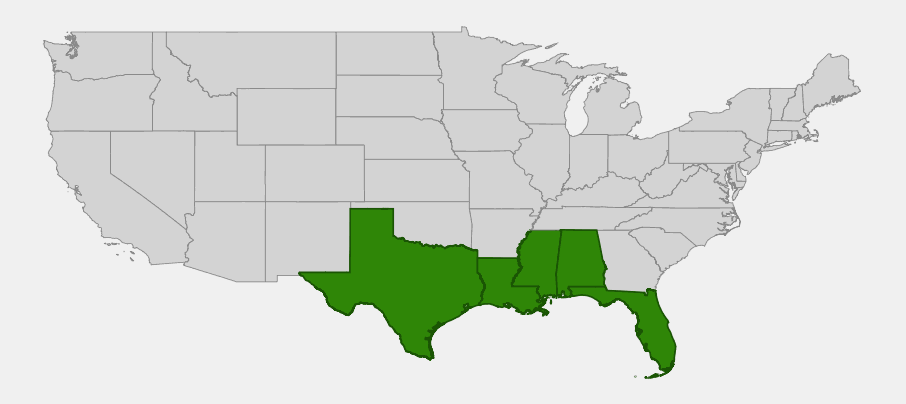
📋 Regional plant lists featuring Gulf Cordgrass: South and West Texas · Arkansas, Louisiana, Eastern Oklahoma & Eastern Texas · Georgia, Alabama & Mississippi
Growing & Care Guide
Gulf cordgrass is extremely easy to grow in coastal conditions that defeat most other plants, as long as it has full sun and a site that is not permanently shaded by taller vegetation.
Light
Plant gulf cordgrass in full sun. It is a coastal prairie and flat species adapted to open, wind-exposed sites, and it thins out and flowers poorly in shade.
Soil & Water
Gulf cordgrass is remarkably tolerant of salt, brackish water, poor drainage and short periods of standing water, which makes it one of the best native grasses for low, salty spots where little else survives. It also tolerates ordinary garden soil and drought once established, but it will not thrive in deep shade or dense, overly rich soil built for typical ornamental beds. No irrigation is needed after the first year in coastal settings with natural rainfall.
Planting Tips
Set out container-grown plants in spring so roots establish before the stress of summer heat and salt spray. Give each clump 3 to 4 feet of room, since tussocks widen over the years and crowd neighboring plants. Wear gloves when handling the plant; the leaf margins are sharp enough to cut unprotected skin.
Pruning & Maintenance
Established gulf cordgrass needs little care. Where used in a managed landscape, cutting the tussock back to 6 to 10 inches in late winter removes old growth and encourages fresh leaves, mimicking the effect of the prescribed burns ranchers have long used on coastal rangeland. Otherwise the tan winter foliage can be left standing for texture and cover.
Propagation
Propagate by dividing mature tussocks in spring, since named selections and most garden plantings are grown this way for reliable results; division clumps should include healthy roots and several growing points. Seed can also be collected in fall, but germination and seedling establishment are slower and less predictable than division.
Landscape Uses
- Salt-flat and brackish low spots where few other plants will grow
- Coastal erosion control on dune backs, bay margins and flood-prone edges
- Naturalistic coastal prairie plantings with smooth cordgrass at the marsh transition
- Wildlife and bird habitat plantings near coastal wetlands
- Wind and visual screening in open, exposed coastal yards
Wildlife & Ecological Value
Gulf cordgrass is a working-class plant in Gulf coast ecosystems, providing cover, forage and shoreline stability where few other species can establish.
For Pollinators
As a wind-pollinated grass it provides no nectar, but its dense basal growth shelters ground-dwelling insects, and the clumps support populations of grass-feeding caterpillars and other insects that feed coastal birds.
For Birds
Marsh and coastal prairie birds, including rails, sparrows and wrens, use dense gulf cordgrass tussocks for nesting cover and foraging, especially where the clumps offer some of the only year-round structure on an otherwise open salt flat.
For Mammals
New spring growth after fire or mowing is palatable and is grazed by cattle and deer, though mature, tough leaves are largely avoided, which is part of why coastal ranchers have traditionally burned stands to refresh forage quality. Small mammals use the tussocks for cover from predators and weather.
Ecosystem Role
Gulf cordgrass tussocks anchor sediment and reduce erosion on the upper edge of salt marshes and coastal flats, buffering more sensitive marsh habitat from wind and wave energy. Its tolerance for salt, flooding and fire makes it one of the resilient backbone species of Gulf coast prairie and marsh-edge communities.
Cultural & Historical Uses
Gulf cordgrass, known locally in Texas as sacahuista, has a long history as rangeland forage along the Gulf coast. Ranchers recognized that while mature leaves are too tough and sharp-edged for livestock to eat, fresh growth after fire is palatable and nutritious, and prescribed burning of gulf cordgrass flats became a traditional coastal ranching practice to improve grazing.
The plant’s tough, fibrous leaves have also been used historically for rough thatching, basketry and cordage in some coastal communities, giving rise to the Spanish-derived name “sacahuista,” though these uses were never as widespread as those of other fiber plants.
In recent decades, land managers and restoration ecologists have turned to gulf cordgrass as a practical tool for stabilizing disturbed coastal ground and rebuilding salt flat and marsh-edge habitat, recognizing the same toughness that once made it rangeland forage as an asset for shoreline resilience.
Frequently Asked Questions
Is gulf cordgrass the same as smooth cordgrass?
No. Gulf cordgrass (Spartina spartinae) grows on firmer ground just above the regular tide line and forms tight, rounded tussocks, while smooth cordgrass (Spartina alterniflora) grows directly in the regularly flooded low marsh and spreads by rhizomes into continuous stands.
Will gulf cordgrass spread aggressively in my yard?
No. It lacks running rhizomes and spreads only by slowly widening its own clump or by seed, so it stays where it is planted rather than invading nearby beds.
Can gulf cordgrass handle standing water?
It tolerates brief, periodic flooding from storms or high tides but is not a true marsh plant and does poorly in constantly saturated or deeply flooded soil; it is best suited to ground that is only occasionally wet.
Why do ranchers burn gulf cordgrass?
Mature leaves become tough, sharp-edged and unpalatable to livestock, but burning removes the old growth and encourages tender new shoots that cattle and deer readily graze, a practice long used on Gulf coast rangeland.
Is gulf cordgrass safe to plant near walkways?
Handle with care: the leaf edges are genuinely sharp and can cut skin, so it is better suited to open beds, buffer zones or coastal plantings away from paths where people brush against it.

Looking for a nursery that carries Gulf Cordgrass?
Browse our native plant nursery directory: Texas · Louisiana & Mississippi · Alabama · Florida