California Manroot (Marah fabacea)
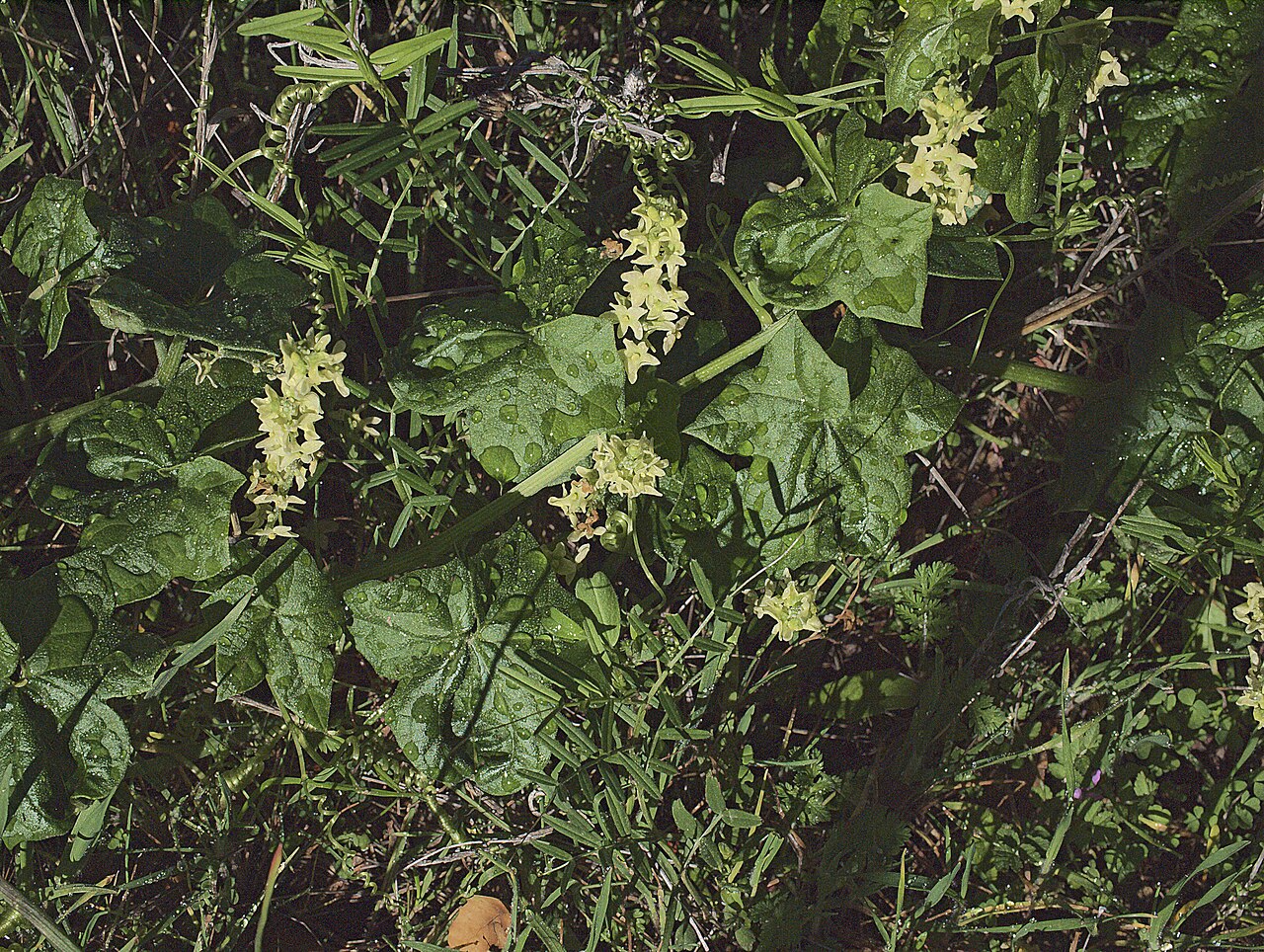
Marah fabacea, commonly called California manroot or California bigroot, is one of the first native vines to green up each year across much of California, sending up fast-growing, prickly-tendriled stems from an enormous underground tuber long before most other plants have broken winter dormancy. A member of the Cucurbitaceae, the cucumber and gourd family, it is instantly recognizable once its spiny, grapefruit-sized fruit appears — and just as quickly gone again, vanishing completely with the first real summer heat.
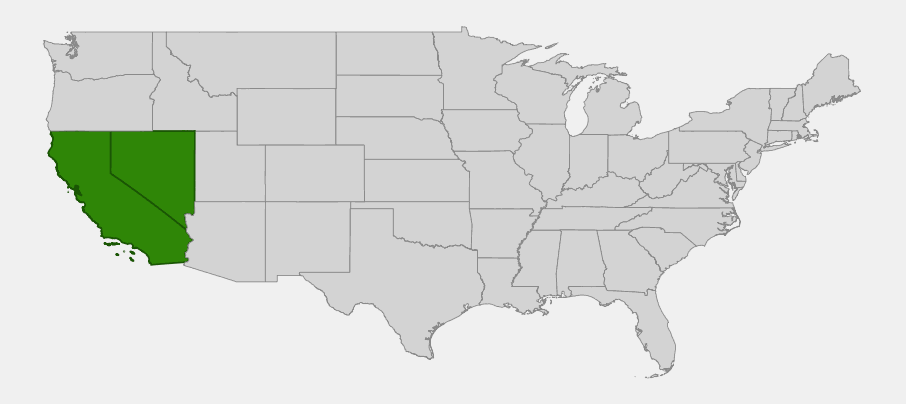
This is a true California specialist, found in nearly every part of the state except the far northwest corner and the driest reaches of the Mojave Desert, with a foothold across the state line into western Nevada. It grows most vigorously along streambanks and in seasonal washes, but it is tough enough to thrive in dry chaparral and oak woodland as well, climbing over shrubs, fences and low trees with the help of coiling tendrils.
California manroot is not a plant for a tidy border — its massive tuberous root, sometimes weighing well over 100 pounds in old plants, makes it essentially permanent once established, and its vigorous spring growth can swallow a small shrub in a matter of weeks. But for naturalizing a slope, covering a chain-link fence, or recreating the look of undisturbed California chaparral and oak woodland, few native vines establish themselves faster or with less summer water.
Identification
California manroot is a herbaceous perennial vine that dies back to its underground tuber every summer and resprouts from the same root each winter or early spring, a pattern typical of plants adapted to California’s Mediterranean climate of wet winters and bone-dry summers. Above ground, it is an annual-looking plant; below ground, the root persists and enlarges for decades.
Stems & Tendrils
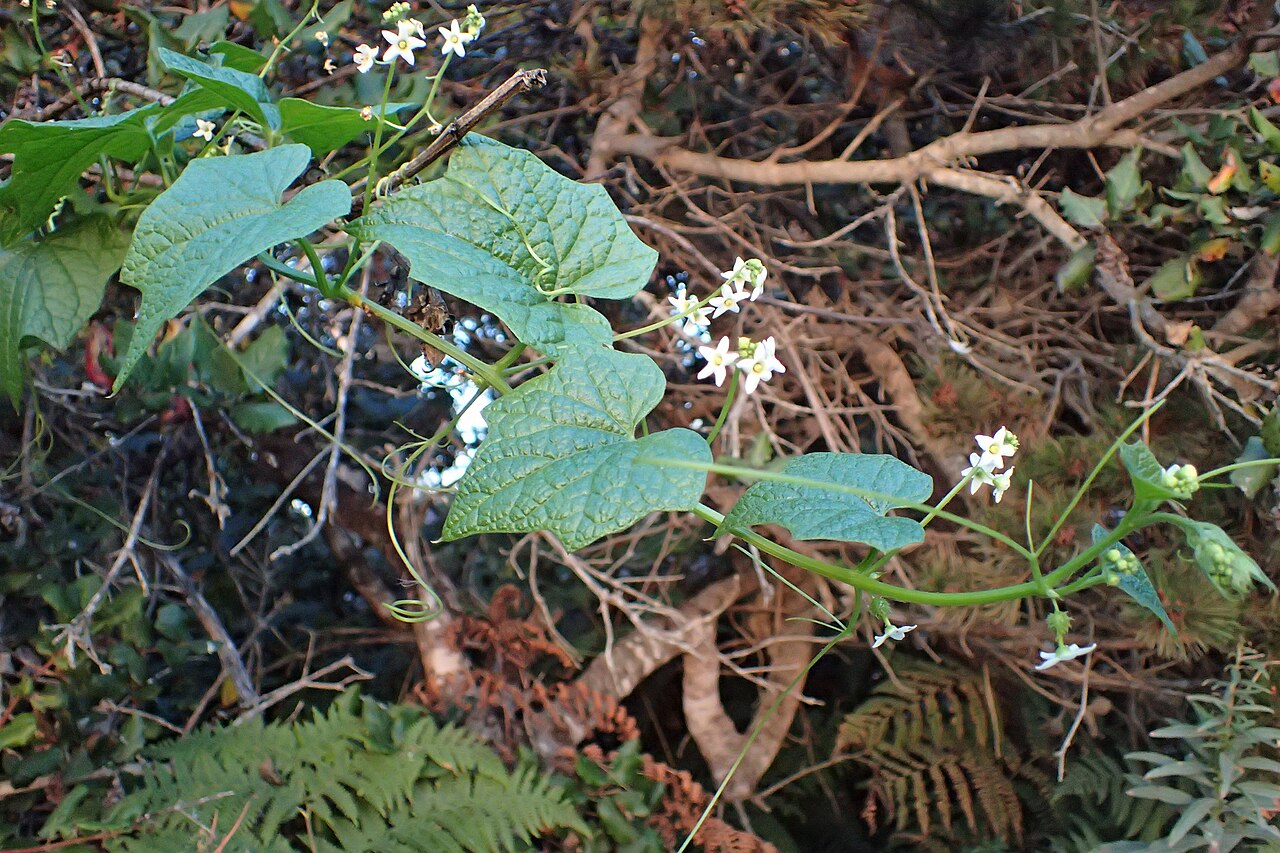
Stems are stout, hairy, and climb or scramble to 20 feet or more in a single season, gripping support with coiling, unbranched tendrils produced opposite the leaves. Without something to climb, the vine simply sprawls across the ground or over low vegetation, forming a dense tangled mat.
Leaves
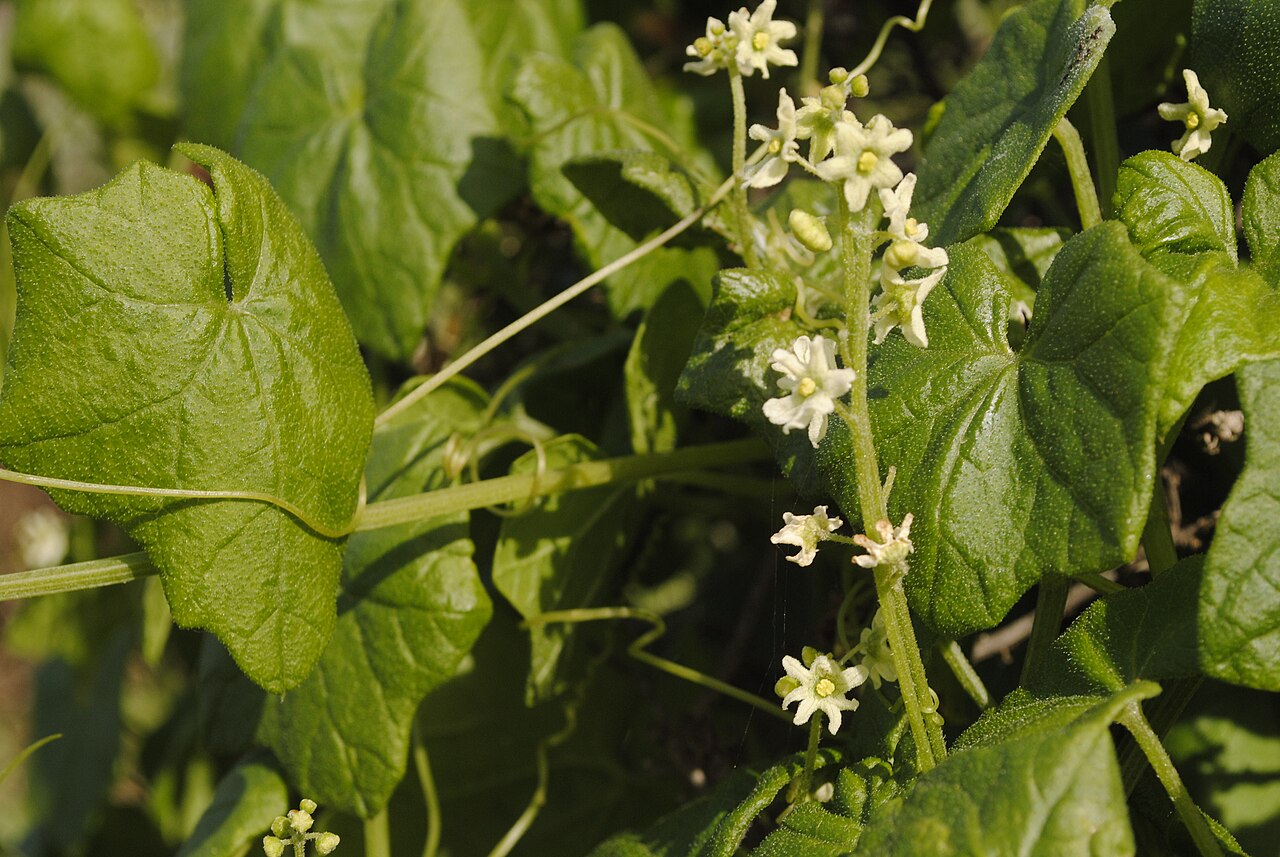
Leaves are rounded in outline with five shallow to moderately deep lobes, somewhat like a small grape or cucumber leaf, and quite variable in size and lobing even on the same plant. They are rough-textured and hairy, mid to deep green, and borne alternately along the stem on long petioles.
Flowers
Male and female flowers are separate but appear on the same plant (monoecious). Male flowers are small, pale yellowish-green to cream, star-shaped, and borne in loose, elongated clusters on a common stalk; female flowers are solitary, similar in color, and recognizable by the swollen, spiny ovary at the base of each bloom. Flowering runs from late winter into spring, and the blossoms are visited by small native bees and other insects, though the plant can also self-pollinate.
Fruit & Seeds
The fruit is the plant’s signature feature: a round to egg-shaped pod 1.5 to 2 inches across, densely covered in soft but noticeable prickles up to ⅓ inch long. Fruits are bright green when young, ripening to straw-yellow by early summer, when they split open explosively to fling out their four large, smooth, dark seeds. Dried, papery husks often persist on the withered vine or on the ground well after the rest of the plant has died back for the year.
Quick Facts
| Scientific Name | Marah fabacea (syn. Marah fabaceus) |
| Family | Cucurbitaceae (Cucumber/Gourd) |
| Plant Type | Herbaceous perennial climbing vine (dies back to a tuber each summer) |
| Mature Height | Climbing to 20 ft or more in a season (dies to the ground annually) |
| Mature Spread | 10–20 ft, sprawling if unsupported |
| Growth Rate | Fast in winter–spring; dormant in summer |
| Sun Exposure | Full Sun to Part Shade |
| Water Needs | Low to moderate; thrives on winter rain alone once established |
| Soil Type | Tolerant of most well-drained soils, from sand to clay |
| Soil pH | Adaptable; roughly 6.0–7.5 |
| Bloom Time | February – April |
| Flower Color | Pale cream to yellowish-green |
| Fall Color | None; foliage withers and dies back by early summer |
| Fruit | Round, spiny green pod ripening yellow, splitting open in early summer |
| Deer Resistant | Yes (bitter foliage) |
| USDA Hardiness Zones | 8–10 |
Native Range
California manroot is native throughout nearly all of California, from the coastal ranges and Central Valley to the lower Sierra Nevada foothills, and it crosses into the far western edge of Nevada as well. It is essentially absent only from the far northwestern corner of California and the hottest, driest parts of the Mojave Desert in the southeast, where the climate is too extreme even for this tough vine.
Within that range, it favors the margins of streams, seasonal washes and arroyos, where its deep tuber can tap residual moisture through the dry season, but it is equally at home scrambling over dry chaparral, coastal sage scrub and oak woodland at elevations up to about 5,000 feet. Because its tuber stores enough reserves to fuel rapid winter growth without reliance on summer rain, it is one of the most drought-adapted vines in the California flora.
Common associates include California sagebrush, toyon, coyote brush and various native oaks in chaparral and woodland settings, while streamside populations often grow alongside willows, California blackberry and mugwort. The species is frequently among the very first plants to leaf out after the first autumn or winter rains, well ahead of most chaparral shrubs.
📋 Regional plant lists featuring California Manroot: California & Nevada
Growing & Care Guide
California manroot rewards gardeners who give it room and then mostly leave it alone. Its entire strategy is built around its enormous root, so success in the garden comes from planting it where that root can stay put permanently and the vine can run each spring without being fought back.
Light
Full sun produces the most vigorous growth and the best flowering and fruiting, but the vine also tolerates part shade, especially along streambanks and under open woodland canopy where it naturally grows. In hot interior gardens, light afternoon shade can reduce stress during the vine’s active growing season.
Soil & Water
This species is remarkably unfussy about soil type, growing in sand, loam or heavy clay as long as drainage is reasonable, since the tuber itself handles moisture storage and the plant is adapted to areas that are bone-dry much of the year. Established plants need little to no summer water, relying on their tuber and whatever is stored from winter rains; occasional deep watering during a prolonged dry spring can extend the growing season slightly, but overwatering through summer dormancy risks rotting the root.
Planting Tips
Choose a permanent spot before planting, ideally near a fence, trellis, large shrub or small tree the vine can climb, since the plant resents being dug up or moved once its tuber begins to enlarge. Plant from seed or a small nursery-grown tuber in fall, as the vine naturally germinates and grows with the first rains. Keep young plants away from prized shrubs that cannot handle being overtopped by fast spring growth, and give it at least several feet of open ground or vertical support to colonize.
Pruning & Maintenance
No pruning is needed during the growing season, since the entire top growth dies back naturally by early summer. Once the vine has yellowed and dried, the dead stems can be cut away and composted or simply left as habitat until new growth emerges the following winter. The plant needs no fertilizer and is essentially pest-free in a garden setting.
Propagation
California manroot is most easily grown from fresh seed collected from the split fruit in early summer and sown directly in fall, since the large seeds germinate readily with the first rains and resent root disturbance from transplanting. Specialty native-plant nurseries occasionally offer young plants in deep pots designed to accommodate the quickly developing taproot; these should be planted out while still young, before the root becomes difficult to move.
Landscape Uses
California manroot fills a role few other native plants can:
- Fast seasonal screening over fences, arbors and chain-link
- Erosion control on dry slopes and banks during the rainy season
- Chaparral and oak woodland restoration plantings
- Winter-interest vine for gardens that go dormant through the dry summer
- Wildlife gardens seeking an early nectar source for native bees
Wildlife & Ecological Value
As one of the earliest native plants to leaf out and bloom each year, California manroot plays an outsized role in the late-winter and early-spring landscape, when few other food sources are available to pollinators and wildlife.
For Pollinators
The small, star-shaped flowers attract native bees and other insects at a time of year when blooming plants are scarce, making the vine a valuable early-season nectar and pollen source. The plant is self-fertile and can set fruit even without insect visitors, but pollinator activity still contributes to its reproduction.
For Birds & Mammals
The foliage and fruit are bitter and can cause vomiting or diarrhea if eaten in quantity, which generally discourages browsing by deer and most mammals, making the vine effectively deer resistant. Dense spring growth does provide cover for small birds and other wildlife moving through chaparral and scrub during the vine’s brief above-ground season.
Ecosystem Role
The massive, long-lived tuber allows California manroot to persist through wildfire, drought and disturbance that would kill less deeply rooted plants, letting it resprout quickly after a burn and helping stabilize soil on disturbed slopes during the vine’s vigorous winter growth phase. Its early, reliable growth cycle also makes it a dependable indicator of the start of the rainy season across much of California.
Cultural & Historical Uses
The common name “manroot” refers directly to the plant’s massive, vaguely human-shaped tuber, which early botanists and settlers found striking enough to inspire the name across the genus Marah. Several California Indigenous groups historically made use of the root’s chemical properties, most notably pounding or mashing the tuber, which contains saponin-like compounds, to stupefy fish in streams and pools for easier harvesting — a technique documented among various tribes for different native plants containing similar compounds.
Despite this historical use, no part of the plant should be considered food or medicine today. The fruit and foliage are bitter and can cause vomiting and diarrhea if ingested, the fruit’s juice can irritate the eyes, and the fine spines on the fruit can irritate skin on contact. Any traditional use of the root as a fish poison reflects its toxicity, not any safe culinary or medicinal application.
In the modern landscape, California manroot’s main cultural role has shifted to native plant horticulture and restoration. Its dramatic, fast-disappearing growth cycle and genuinely massive root have also made it something of a curiosity among native-plant gardeners, who sometimes grow it in large containers specifically to let the tuber’s size become a garden feature over the years.
Frequently Asked Questions
Why does my California manroot disappear every summer?
This is completely normal. The vine is adapted to California’s dry summers and stores all its energy in an underground tuber, dying back to the ground once the dry season begins and resprouting from the same root with the first substantial rain, usually in fall or winter.
Can you eat California manroot fruit or root?
No. All parts of the plant are bitter, and the fruit can cause vomiting and diarrhea if eaten. The fruit’s spines and juice can also irritate skin and eyes. It should be treated strictly as an ornamental and wildlife plant, not a food source.
How big does the root actually get?
Very big. Older plants can develop tubers weighing well over 100 pounds, buried entirely underground, which is why the vine should be planted in its permanent location from the start rather than moved later.
Is California manroot invasive?
It is a vigorous native vine that can quickly cover small shrubs or structures during its spring growth spurt, so it should be sited with some care, but it is not considered invasive outside its native range since it is essentially confined to California and adjacent Nevada and dies back completely each summer.
What should I plant California manroot near?
A sturdy fence, arbor, large shrub or small tree gives it the support it wants to climb, while open slopes let it sprawl as informal groundcover. Avoid placing it next to small, delicate plants that could be overwhelmed by its fast seasonal growth.

Looking for a nursery that carries California Manroot?
Browse our native plant nursery directory: California · Nevada