California Peony (Paeonia californica)
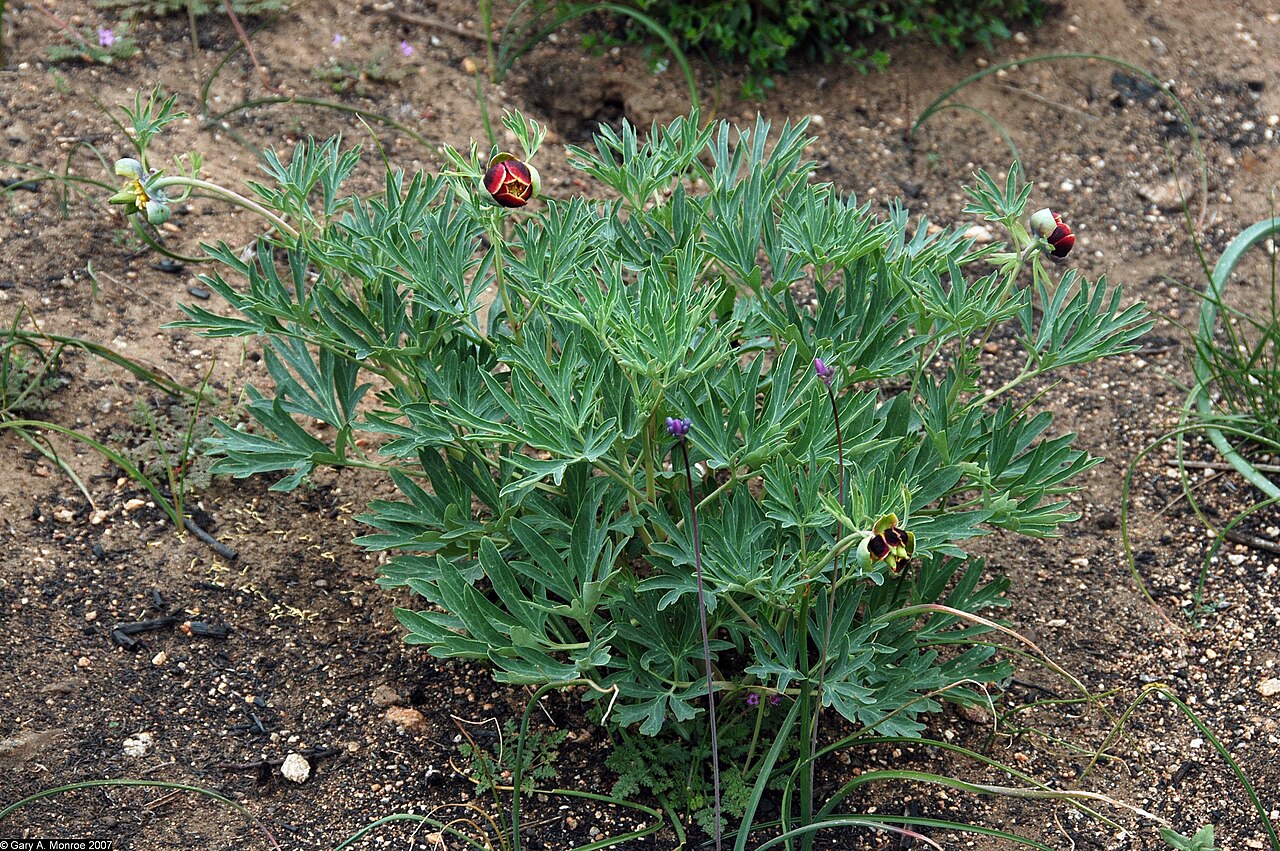
Paeonia californica, the California Peony, is a bushy, winter-growing perennial wildflower found only in the coastal mountains of central and southern California, with a few populations just across the border in northern Baja California, Mexico. Along with its close relative, the western peony (Paeonia brownii), it is one of only two peony species native to North America — a striking fact given that the vast majority of the world’s roughly 30 peony species grow wild only in Europe and Asia. The two North American species are thought to have diverged from a shared ancestor long ago and now occupy separate, non-overlapping ranges: western peony in the interior mountains of the Great Basin and Northwest, and California peony along the state’s coastal chaparral belt.
Unlike the tall, often fragrant garden peonies familiar from cut-flower bouquets, California peony is a modestly sized shrub-like clump with nodding, dark maroon flowers that open from winter into early spring — often as early as December, well ahead of most other California wildflowers. It follows a Mediterranean-climate rhythm: growing through the cool, wet winter months, flowering and fruiting by spring, then dying back to go dormant through the long, dry California summer.
California peony is not rare across its range, and it is an increasingly popular choice for California native gardens, particularly in coastal sage scrub and chaparral-style landscaping. Because it is so specifically adapted to winter rain and summer drought, it rewards gardeners who can resist the urge to water it in summer — normal lawn or border irrigation during its dormant season is one of the most common ways the plant is lost in cultivation.
Identification
California peony forms a rounded, bushy clump of several stems rising from a fleshy rootstock, typically reaching 14 to 28 inches (35–70 cm) tall and about as wide. Unlike its northern relative, it is not notably glaucous (waxy blue-gray); its foliage reads as a fresher, greener gray-green.
Leaves
Each shoot carries seven to twelve compound leaves with deeply cut, finger-like segments that are linear to spoon-shaped and usually come to a pointed tip. Unlike western peony, the leaflet blades narrow only gradually into the leaf stalk, or lack a distinct stalk altogether — one of the clearest field differences between the two North American peonies.
Flowers
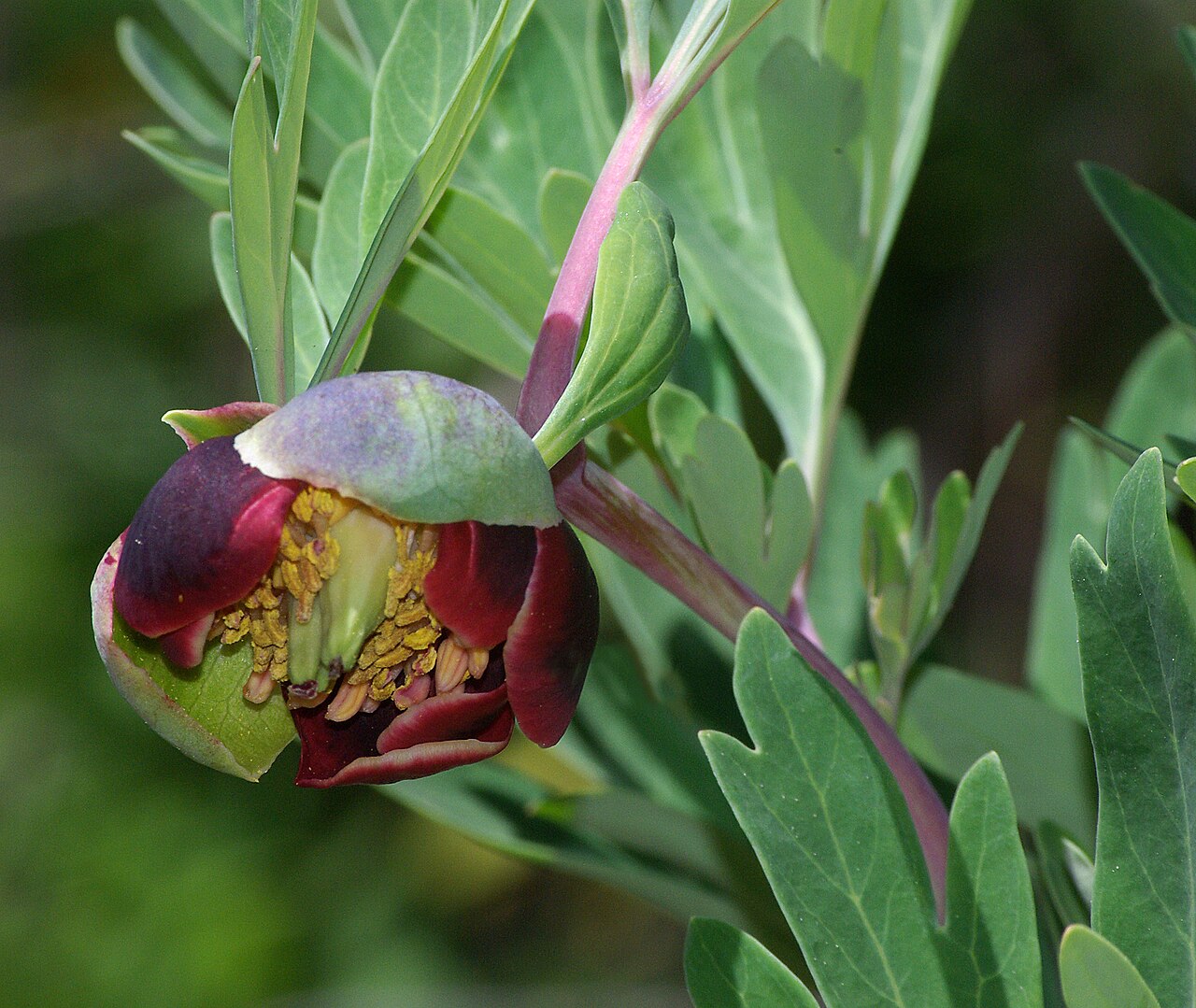
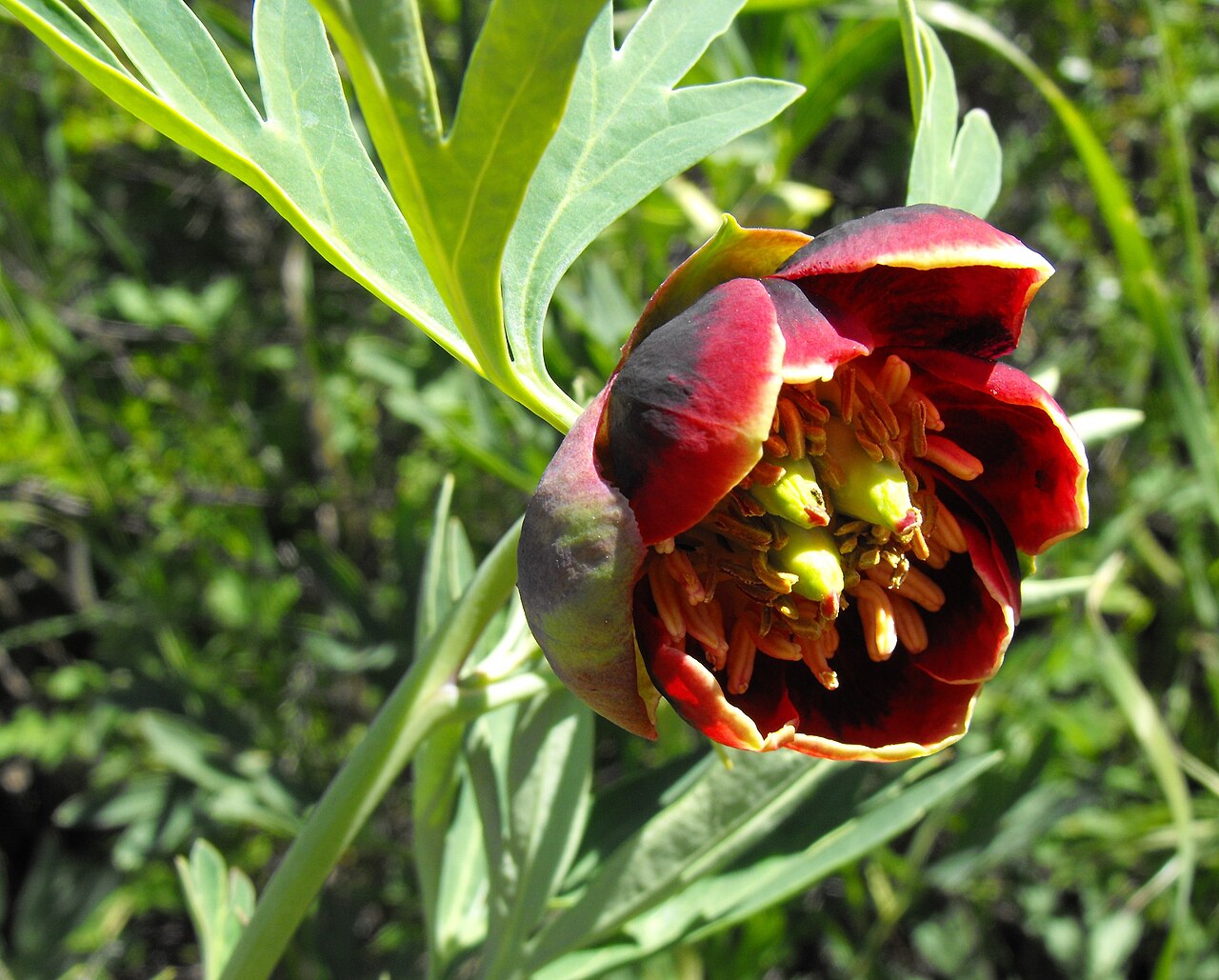
The nodding, cup-shaped flowers appear at the stem tips from roughly December through May, most heavily from January to March. Petals are dark red to purplish, sometimes nearly black, with lighter margins, elliptic in shape and about ⅝ to 1 inch (1.5–2.5 cm) long — notably longer than the sepals, another difference from western peony, whose shorter petals stay hidden within the sepals. Numerous stamens with yellow pollen surround two to five carpels at the flower’s center.
Fruit
Pollinated flowers develop into leathery follicles about 1¼ to 1½ inches (3–4 cm) long, usually two to five per flower, containing slightly curved, dull, coarsely wrinkled seeds about ⅝ inch (1.5 cm) long. By late spring, as California’s dry season sets in, the whole plant yellows and dies back to the rootstock, disappearing above ground until the rains return in fall or winter.
Quick Facts
| Scientific Name | Paeonia californica |
| Family | Paeoniaceae (Peony) |
| Plant Type | Herbaceous perennial wildflower, summer-dormant |
| Mature Height | 14–28 in (35–70 cm) |
| Mature Spread | About as wide as tall; rounded clump |
| Growth Rate | Slow to moderate |
| Sun Exposure | Part Shade to Full Sun |
| Water Needs | Low; winter-wet, summer-dry — no irrigation when dormant |
| Soil Type | Well-drained clay, sand, decomposed granite or serpentine |
| Soil pH | About 6.0–8.0 |
| Bloom Time | December – May (mostly January–March) |
| Flower Color | Dark maroon to nearly black, with lighter margins |
| Fall Color | None; dormant through summer and fall |
| Fruit | Leathery follicles, 2–5 per flower, ripening in late spring |
| Deer Resistant | Generally yes; bitter foliage |
| USDA Hardiness Zones | 8–10 |
Native Range
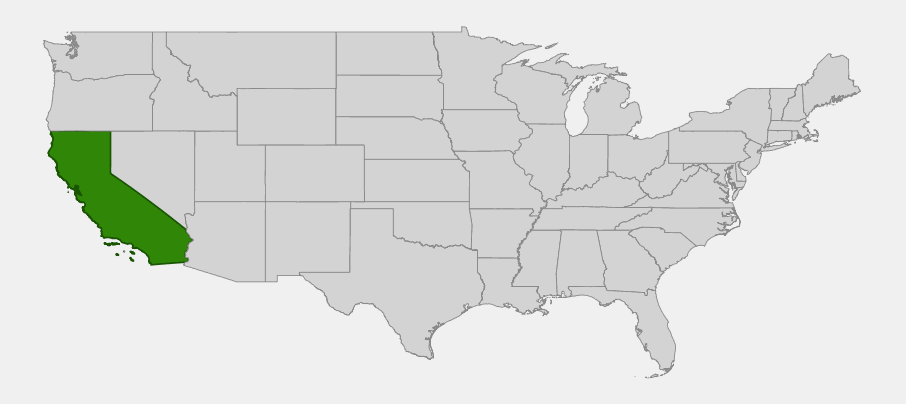
California peony is a California endemic, native only within the state, where it occurs in the coastal mountains from Monterey County south through the Transverse and Peninsular Ranges to San Diego County. It is not native to any other U.S. state. A related population also occurs just across the international border in northernmost Baja California, Mexico, but that is outside the scope of this US-focused guide.
Typical habitat is dry hillsides and slopes in coastal sage scrub and chaparral plant communities of the coastal mountains, often growing as an understory plant beneath taller shrubs rather than in full open ground. It tolerates a range of soil types, including clay, coarse sand, decomposed granite and even serpentine-derived soils that many other plants avoid. The defining feature of its habitat, wherever it occurs, is a Mediterranean rainfall pattern: wet winters that support its growth and bloom, followed by a long, essentially rainless summer that the plant survives by going fully dormant.
Common habitat associates in coastal sage scrub and chaparral include California sagebrush, toyon, laurel sumac, Eastwood manzanita, and various species of ceanothus, flannelbush, buckwheat and scrub oak — the same dry-summer shrub community that defines much of coastal and inland Southern California’s wild landscape.
📋 Regional plant lists featuring California Peony: California & Nevada
Growing & Care Guide
California peony has become a favored plant among Southern California native-garden enthusiasts, prized for flowering so early in the year, but it is genuinely particular about its care. Understanding its winter-wet, summer-dry rhythm is the key to success.
Light
In the wild, California peony often grows tucked beneath the canopy of larger chaparral shrubs, so part shade — especially some protection from the hottest afternoon sun — tends to suit it well in warmer inland gardens. Along the cooler coast, it also grows successfully in more open, sunnier spots.
Soil & Water
This species tolerates a wide range of soils, including clay, coarse sand, decomposed granite and serpentine, as long as drainage is reasonably good. The critical factor is water timing, not soil type: California peony needs some moisture during its winter and early-spring growth period but an absolutely dry summer dormancy. Regular garden watering through summer — the kind many ornamental plants expect — is the single most common way gardeners lose this species; established plants that get normal lawn or border irrigation in the dry season are prone to root rot and decline.
Planting Tips
Plant from containers in fall, at the start of the rainy season, so the roots can establish during the cool, wet months when the species is naturally growing. Site it away from summer-irrigated lawns, vegetable beds or thirsty ornamentals, and group it instead with other chaparral and sage scrub natives that share its need for a dry summer rest. Good drainage is still important even though the plant tolerates heavy soils, so avoid low spots where water collects after storms.
Pruning & Maintenance
Very little upkeep is needed. Once the foliage yellows and the plant goes dormant in late spring, it can be left alone or tidied up, but avoid disturbing the dormant rootstock. No fertilizer is necessary, and the plant has few serious pest or disease problems when grown in appropriate, well-drained conditions.
Landscape Uses
- Coastal sage scrub and chaparral gardens, paired with California sagebrush and laurel sumac
- Dry shade or understory plantings beneath larger native shrubs such as toyon
- Winter-interest gardens, since it flowers well before most other California wildflowers
- Water-wise, no-summer-irrigation landscaping in Southern and Central California
- Specialty native plant collections celebrating California’s two endemic peony relatives
Wildlife & Ecological Value
Flowering as early as December, California peony fills a valuable early-season niche in California’s chaparral and coastal sage scrub plant communities, blooming before most of the state’s spring wildflower display gets underway.
For Pollinators
The nodding flowers, packed with numerous yellow-anthered stamens, provide an early source of pollen for native bees and other insects active during the cooler winter and early-spring months, when few other chaparral plants are in bloom. This timing makes it a disproportionately useful nectar and pollen source for early-flying pollinators.
For Wildlife
The dense, bushy clumps provide some cover for small wildlife moving through chaparral and sage scrub habitat, and the bitter foliage generally discourages browsing by deer and rabbits, helping the plant persist in areas with grazing pressure.
Ecosystem Role
As a winter-growing, summer-dormant perennial, California peony is part of the same drought-avoidance strategy used by many chaparral and sage scrub species: growing and reproducing during the brief window of seasonal rainfall, then retreating underground to survive the long dry season. Its presence as an understory plant beneath taller shrubs adds a layer of structural and seasonal diversity to these plant communities.
Cultural & Historical Uses
California peony does not have the long, documented record of Indigenous medicinal use that its northern relative, western peony, does, though both species share the genus name Paeonia, taken from Paeon, the physician of the Greek gods — a name reflecting the long folk association between peonies and healing across cultures, from ancient Greece to traditional Chinese medicine’s use of unrelated Eurasian peony species.
In modern times, California peony’s primary significance has been horticultural and ecological rather than medicinal: California native plant gardeners and restoration practitioners value it as one of the earliest-blooming wildflowers in the chaparral and sage scrub plant communities it inhabits, and as one of only two peony species found anywhere in North America. No part of the plant should be treated as food or medicine; like other peonies, its roots, foliage and seeds are bitter and are not used as edible plant material.
Frequently Asked Questions
Is California peony the same as the peonies sold at florists?
No. Florist and garden peonies are almost always Paeonia lactiflora hybrids or tree peony cultivars native to Asia, grown for their large, often fragrant, upward-facing blooms. California peony is a much smaller, wild, nodding-flowered species found only in California’s coastal chaparral, and it is not commercially grown for cut flowers. If you’re interested in the traditional garden type instead, see our guide to growing peonies or our overview of white peony varieties — both describe cultivated garden peonies rather than this native wild species, whose care needs are quite different.
How is California peony different from western peony?
The two are each other’s only close relatives and the sole peony species native to North America. California peony grows taller, to about 28 inches, with greener, non-glaucous leaflets that lack a sharply narrowed base, and is restricted to coastal chaparral and sage scrub in central and southern California, blooming earliest of the two species, from winter into spring. Western peony is shorter, has bluish, glaucous leaves with a distinctly narrowed leaflet base, and ranges across the drier interior mountains of the Great Basin and Pacific Northwest, blooming later, mostly April through June.
Why does my California peony disappear after spring?
This is expected, not a sign of trouble. California peony follows California’s Mediterranean climate, growing through the wet winter and blooming by spring, then going fully dormant through the dry summer and fall. The foliage yellows and dies back to the rootstock; resist watering it during this rest period.
Can California peony grow in a regularly irrigated garden?
Not well. It needs summer drought to stay healthy, and regular irrigation during its dormant season — the kind many garden plants require — commonly causes root rot. It does best grouped with other chaparral and sage scrub natives that share the same need for a dry summer and watered separately, if at all, from thirstier plants.
Is California peony toxic?
As with other peonies, the foliage, roots and seeds are bitter and are not eaten. Ingesting peony plant material in quantity can cause stomach upset, so it should not be treated as an edible or medicinal plant; keep pets and children in mind around any peony planting.

Looking for a nursery that carries California Peony?
Browse our native plant nursery directory: California