
Shishigashira Japanese Maple (Acer palmatum ‘Shishigashira’)
Last updated: November 3, 2026
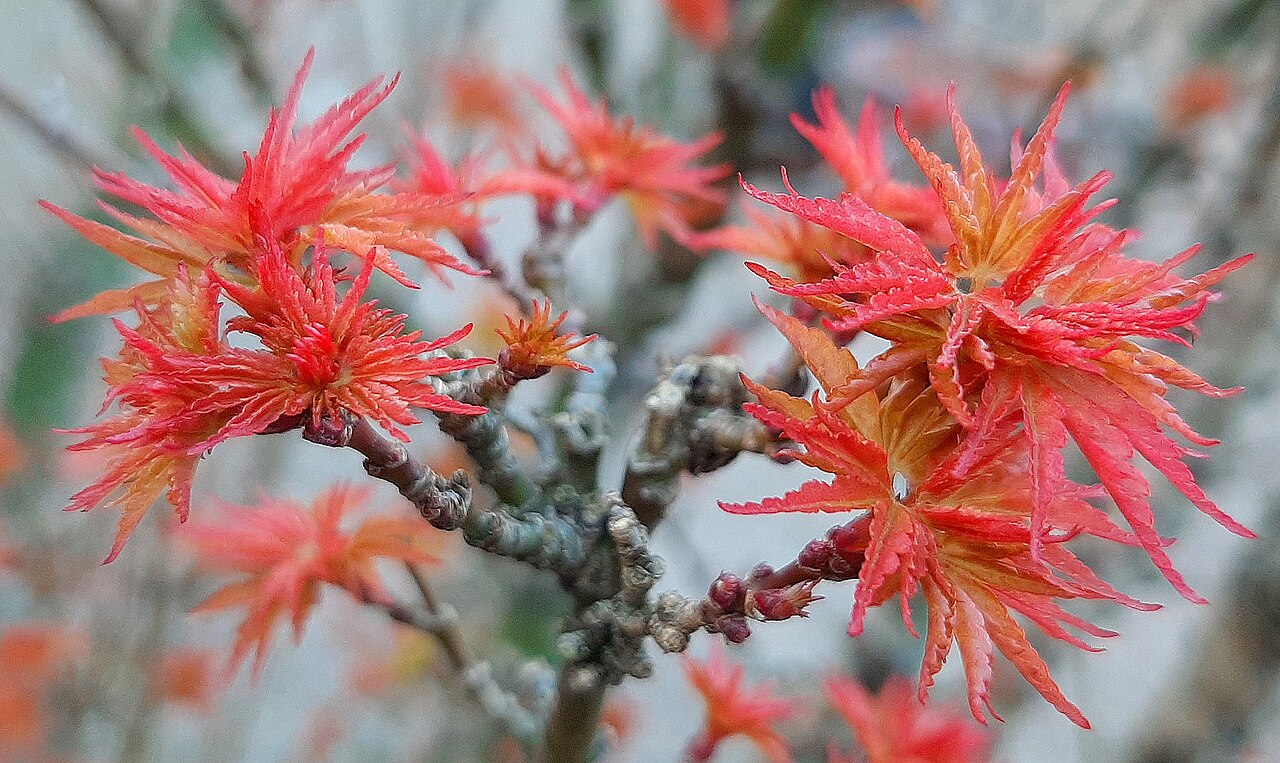
Acer palmatum ‘Shishigashira’ is a dense, slow-growing, upright Japanese maple cultivar known for its unusual, tightly crinkled and curled leaves that cluster thickly along stout, closely spaced branches. The common name, sometimes rendered Lion’s Head or Lion’s Mane maple, refers to the way the congested foliage resembles the stylized mane of a Japanese lion-dog (shishi) carving.
Gardeners grow ‘Shishigashira’ for its unusual, almost sculptural texture rather than fast growth or bold fall color alone; its very slow growth rate and dense, upright-oval habit make it a long-term structural element in the garden, and it is a favored subject for bonsai because of its naturally congested, miniature-looking foliage.
Japanese maple (Acer palmatum) is not native to North America; it is native to Japan, Korea and eastern China. It is not on any federal noxious weed list, but in parts of the eastern United States, particularly the Mid-Atlantic, seedlings of the species can occasionally escape into forest edges. ‘Shishigashira’ is slow-growing and produces fewer seedlings than vigorous green-leafed cultivars, but gardeners near wild areas should still watch for and remove any volunteers, which will not reproduce the parent’s distinctive curled foliage.
Identification
Bark & Stems
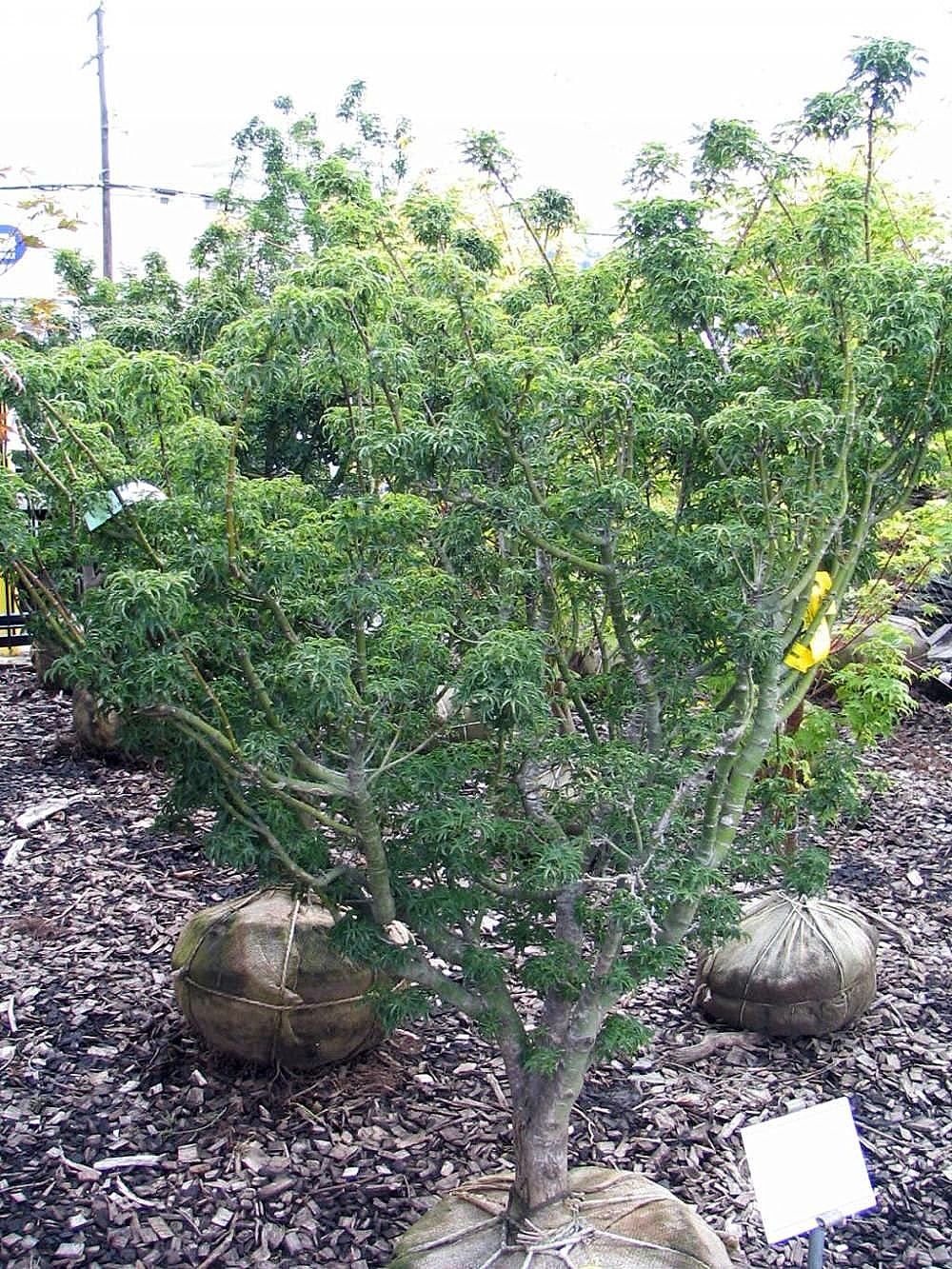
Stems are notably stout and closely spaced for a Japanese maple, gray-brown and thickened at the nodes where leaves cluster densely. The overall habit is upright-oval and dense, quite different from the open, airy branching of many other Japanese maple cultivars.
Leaves
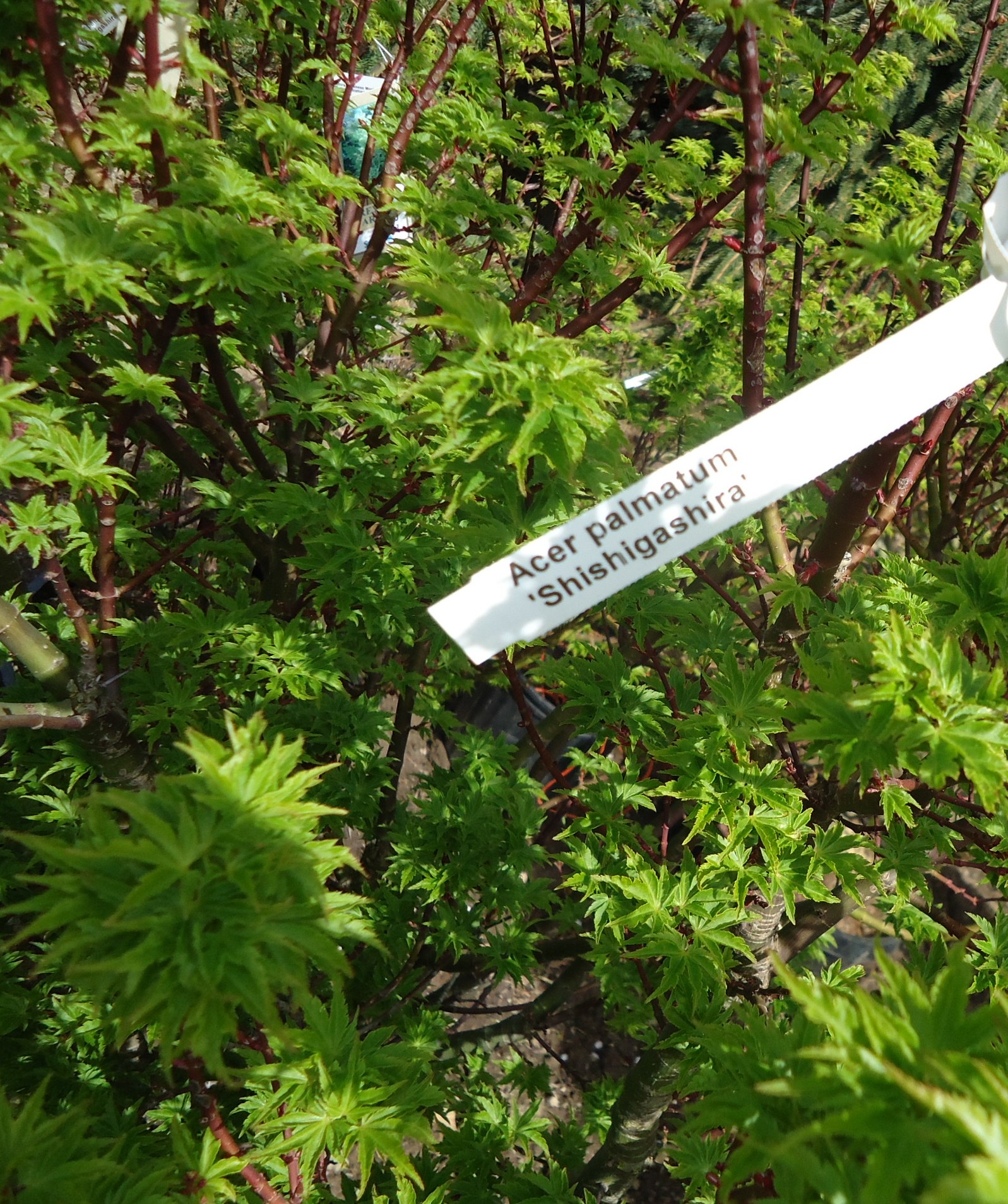
Leaves are the cultivar’s defining feature: small, thick, and tightly crinkled or curled, with five to seven short lobes, clustered in congested whorls at the branch tips rather than spaced evenly along the stem. They are dark green through the growing season and leaf out later in spring than most cultivars, then hold their leaves later into fall, turning orange-red.
Flowers
Small reddish-purple flowers appear in spring, inconspicuous and not a significant ornamental feature.
Fruit & Seeds
Paired winged samaras develop through summer and mature by fall; they are minor, not ornamentally significant, and produced in modest quantity given the cultivar’s slow growth.
Quick Facts
| Scientific Name | Acer palmatum ‘Shishigashira’ |
| Cultivar | Shishigashira |
| Family | Sapindaceae (Maple) |
| Plant Type | Deciduous dense upright shrub/small tree |
| Native to North America | No — introduced from Japan, Korea and eastern China |
| Mature Height | 8–12 ft (can take decades to reach full size) |
| Mature Spread | 6–8 ft |
| Growth Rate | Very slow |
| Sun Exposure | Full sun to part shade (its thick leaves tolerate more sun than many cultivars) |
| Water Needs | Moderate; consistent moisture, well-drained soil |
| Soil Type | Rich, well-drained loam |
| Soil pH | Slightly acidic (5.5–6.5) preferred |
| Bloom Time | Spring (inconspicuous) |
| Leaf / Fall Color | Dark green through the season; orange-red in late fall, held later than most cultivars |
| Fruit | Small winged samaras, minor ornamental value |
| Deer Resistant | Moderately |
| USDA Hardiness Zones | 5–8 |
| Invasive Status | Not federally listed; very slow-growing, limited seed production |
Origin & Where It Grows
The species Acer palmatum is native to Japan, Korea and eastern China. ‘Shishigashira’ is a long-cultivated Japanese selection, named for its resemblance to the curled mane of a shishi (lion-dog) figure common in Japanese art and temple guardian statues, a naming tradition shared with other crinkle-leafed maple cultivars.
In the United States, ‘Shishigashira’ grows well across USDA zones 5 through 8, performing particularly well in the Pacific Northwest, the mid-Atlantic and parts of the upper South and Midwest, where its very slow growth rate allows it to be used as a long-lived structural or specimen planting without quickly outgrowing its space.
Growing & Care Guide
Light
‘Shishigashira’s thick, textured leaves tolerate more sun than many Japanese maple cultivars, so it can handle full sun in cooler climates and benefits from afternoon shade only in the hottest regions of its range.
Soil & Water
Plant in rich, well-drained soil with consistent moisture, especially while the root system is establishing. Established plants are moderately tolerant of short dry spells but perform best with even watering.
Planting Tips
Because of its very slow growth, site ‘Shishigashira’ where its mature size and dense, sculptural texture will be a long-term asset, such as near an entry, patio, or as a focal point in a border; it will take many years to fill its space.
Pruning & Maintenance
Very little pruning is needed given the slow growth rate; remove only dead or damaged wood. Because of its congested branching, the cultivar is a popular choice for light structural pruning in Japanese-style and bonsai plantings.
Propagation
‘Shishigashira’ is propagated by grafting to preserve its distinctive curled foliage and dense habit; seedlings grown from its samaras will not reliably reproduce these traits.
Landscape Uses
- Long-lived specimen or focal point where slow growth and unusual texture are an asset
- Bonsai and Japanese-style garden plantings, thanks to its naturally congested, miniature-looking foliage
- Container growing for patios, given its very slow growth rate
- Structural accent among lower perennial or shrub plantings
Wildlife & Ecological Value
Japanese maple offers limited ecological value in North America compared with native trees: its flowers attract few specialist pollinators, and its foliage supports far fewer native caterpillar and insect species than native maples, since North American wildlife did not co-evolve with it. ‘Shishigashira’s thick, crinkled leaves are even less palatable to foliage-feeding insects than those of plainer cultivars. Dense branching can provide some shelter for small birds, but this is incidental rather than a significant wildlife contribution.
Native Alternatives
If you want a similar look with a plant native to North America, consider these:
- Vine maple (Acer circinatum) — a native Pacific Northwest understory tree with palmate leaves and good fall color, often used the way Japanese maple is used in gardens.
- Red maple (Acer rubrum) — a widespread native shade tree with brilliant red fall color and much greater wildlife and pollinator value than Japanese maple.
- Rocky Mountain maple (Acer glabrum) — a small native maple with lobed leaves and attractive form for western gardens.
- Fringetree (Chionanthus virginicus) — a small native flowering tree that offers a different but comparably ornamental accent, with fragrant spring flowers and strong wildlife value.
History & Uses
‘Shishigashira’ is part of a long tradition in Japanese horticulture of selecting and naming Japanese maple cultivars for unusual leaf texture, a category that also includes other crinkle- and curl-leafed selections. Its name, referencing the stylized lion-dog figures found throughout Japanese art and architecture, reflects how closely Japanese maple cultivar naming is tied to Japanese cultural imagery.
The cultivar has long been valued by bonsai practitioners for its naturally dense, small-leafed, congested growth, which lends itself to the miniature aesthetic bonsai seeks to achieve with far less training than many other maple cultivars require.
Frequently Asked Questions
Is Shishigashira Japanese maple native to North America?
No. Japanese maple (Acer palmatum) is native to Japan, Korea and eastern China. ‘Shishigashira’ is an introduced, very slow-growing cultivar that produces limited seed; while not considered a significant escape risk, gardeners near natural areas should still remove any volunteer seedlings, which will not have the parent’s distinctive curled foliage.
Why is it called Lion’s Head or Lion’s Mane maple?
The common names refer to the way its small, thick, curled leaves cluster densely at the branch tips, resembling the stylized curled mane of a shishi (lion-dog) figure common in traditional Japanese art and temple guardian statues.
How fast does Shishigashira Japanese maple grow?
Very slowly. It can take decades to reach its mature height of around 8 to 12 feet, which makes it a good choice for small spaces and long-term plantings where a slow-growing structural tree is wanted.
Does Shishigashira Japanese maple need shade?
Less than many Japanese maple cultivars. Its thick leaves tolerate full sun reasonably well, especially in cooler climates, though afternoon shade is helpful in the hottest parts of its range.
Is Shishigashira a good maple for bonsai?
Yes, it is a popular bonsai subject because its naturally small, densely clustered leaves and congested branching already resemble a miniaturized tree with relatively little training.

