
Oshio-beni Japanese Maple (Acer palmatum ‘Oshio-beni’)
Last updated: November 3, 2026
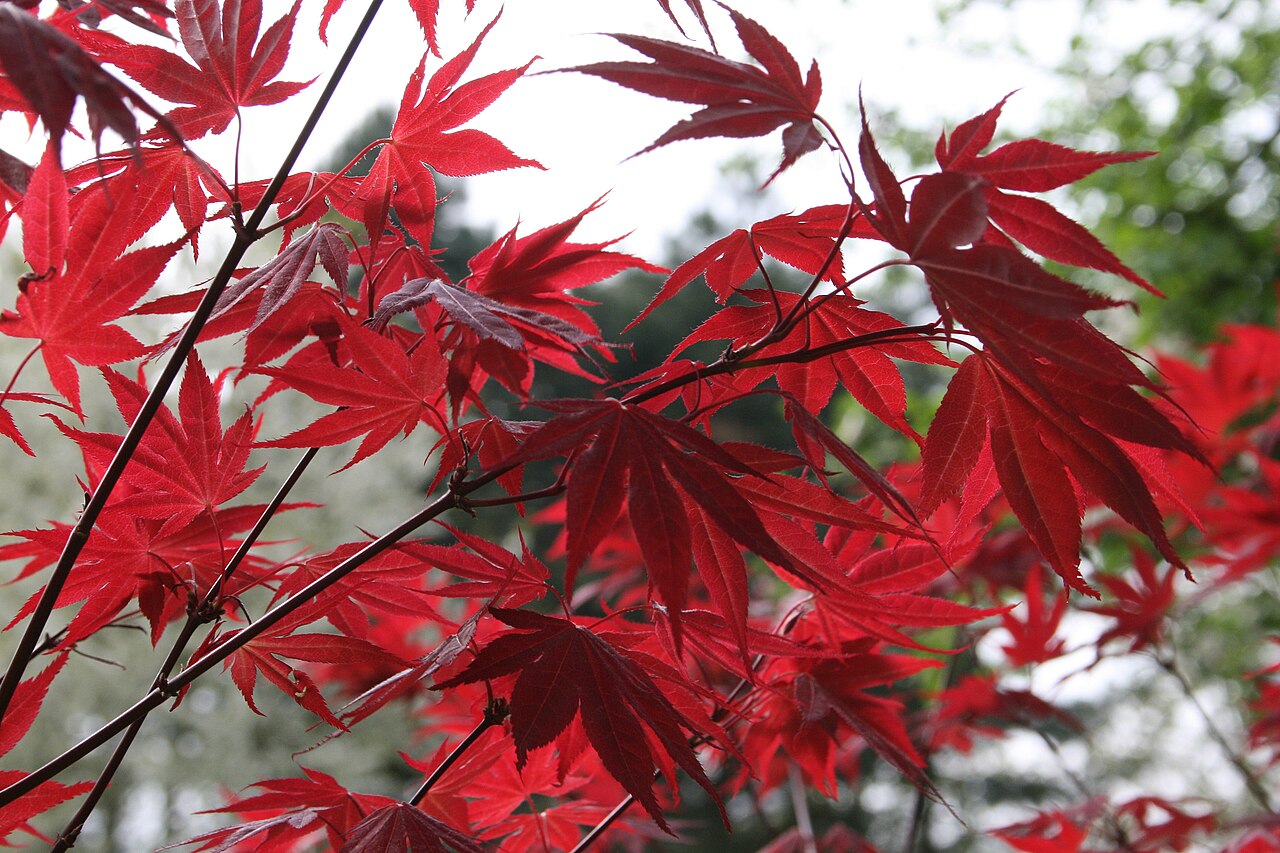
Acer palmatum ‘Oshio-beni’ is an upright, medium-sized Japanese maple cultivar grown for its reddish-orange spring foliage and, notably, its above-average ability to hold reddish tones through summer heat, a trait that sets it apart from red-leafed cultivars that fade to green or bronze once temperatures rise. The cultivar name translates roughly from Japanese as a reference to a deep tide-red color.
Gardeners choose ‘Oshio-beni’ when they want the look of a classic red Japanese maple but in a climate too hot for cultivars like ‘Bloodgood‘ to hold their color reliably through summer. It grows into a medium, upright, tree-form specimen suitable as a focal point or small shade tree, with foliage that shifts from red-orange in spring to a bronzed green in summer and back to bright orange-red in fall.
Japanese maple (Acer palmatum) is not native to North America; it is native to Japan, Korea and eastern China. It is not on federal noxious weed lists, but seedlings of the species can occasionally escape cultivation in parts of the eastern United States, especially the Mid-Atlantic. ‘Oshio-beni’ is a vigorous, seed-producing cultivar, so gardeners near natural woodland edges should plant it away from those areas and remove any volunteer seedlings they find.
Identification
Bark & Stems
Young stems are reddish-brown, maturing to smooth gray-brown bark on an upright, moderately rounded tree form, generally more tree-like than shrubby dwarf cultivars.
Leaves
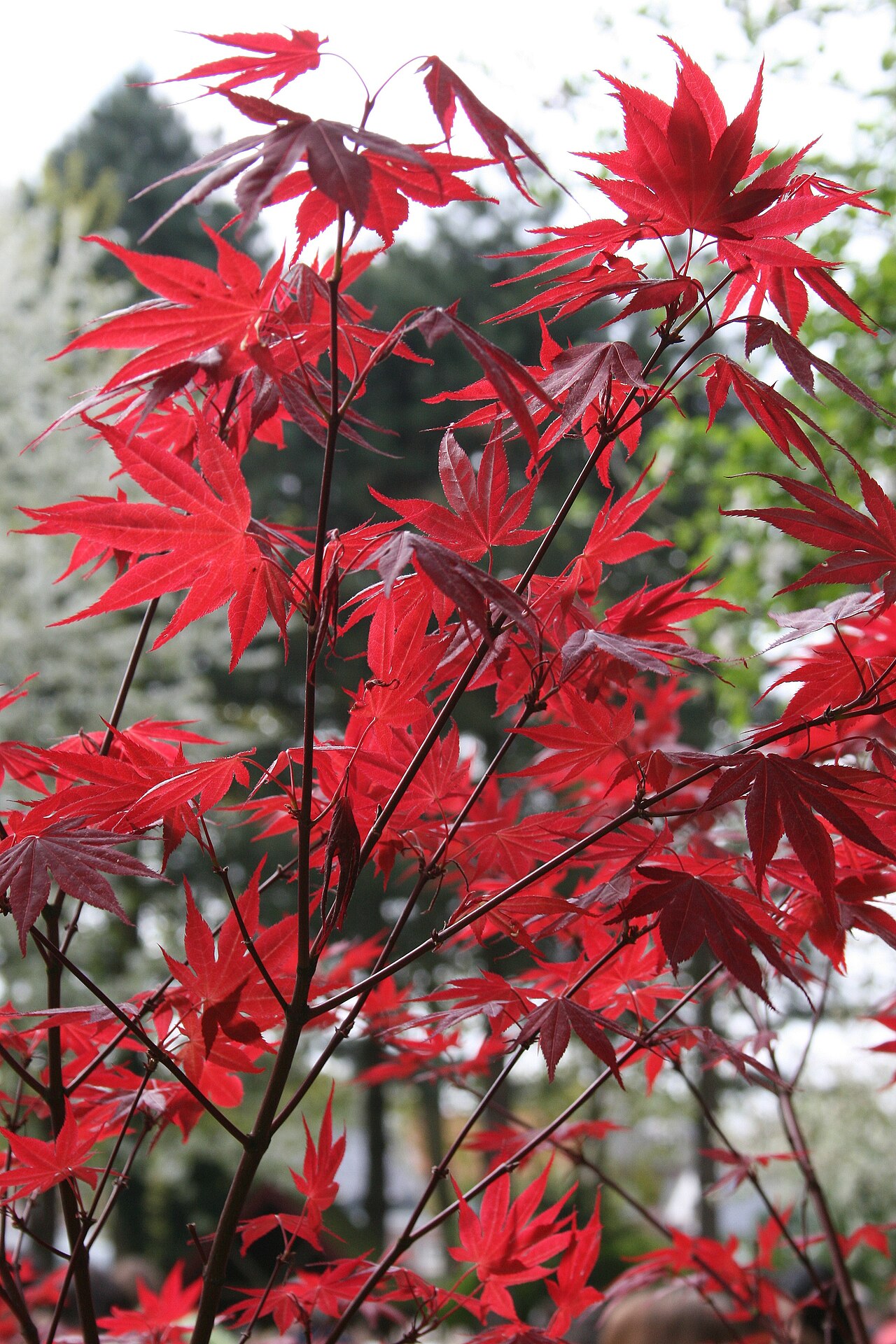
Leaves are palmate with typically seven lobes, 2 to 4 inches across, emerging a warm brick-red to orange-red in spring. Through summer the color shifts toward a bronzed green, holding more red tint than many other red-leafed cultivars especially in hot climates, before turning brilliant orange-red again in fall.
Flowers
Small reddish-purple flowers appear in spring in drooping clusters as the leaves emerge; they are inconspicuous and not a significant ornamental feature.
Fruit & Seeds
Paired winged samaras develop through summer, often with a reddish tint matching the foliage, and mature and disperse by fall.
Quick Facts
| Scientific Name | Acer palmatum ‘Oshio-beni’ |
| Cultivar | Oshio-beni |
| Family | Sapindaceae (Maple) |
| Plant Type | Deciduous upright tree |
| Native to North America | No — introduced from Japan, Korea and eastern China |
| Mature Height | 15–20 ft |
| Mature Spread | 12–15 ft |
| Growth Rate | Moderate |
| Sun Exposure | Full sun to part shade; tolerates more heat and sun than many red-leafed cultivars |
| Water Needs | Moderate; consistent moisture, well-drained soil |
| Soil Type | Rich, well-drained loam |
| Soil pH | Slightly acidic (5.5–6.5) preferred |
| Bloom Time | Spring (inconspicuous) |
| Leaf / Fall Color | Brick-red to orange-red in spring; bronzed green in summer; bright orange-red in fall |
| Fruit | Small winged samaras, often reddish-tinted |
| Deer Resistant | Moderately |
| USDA Hardiness Zones | 5–8 |
| Invasive Status | Not federally listed; a vigorous, normal seed-producing cultivar |
Origin & Where It Grows
The species Acer palmatum is native to Japan, Korea and eastern China. ‘Oshio-beni’ is an older Japanese cultivar, selected and named within the long tradition of Japanese maple breeding for its combination of attractive red tones and, notably, better heat tolerance than many other red-leafed selections of its era.
In the United States, ‘Oshio-beni’ performs well across USDA zones 5 through 8, and its relative heat tolerance makes it a particularly good choice in the warmer parts of that range, including much of the South and lower Midwest, where some other red Japanese maple cultivars struggle to hold color through the summer.
Growing & Care Guide
Light
‘Oshio-beni’ tolerates more sun and heat than many red-leafed Japanese maple cultivars, and generally holds its reddish tones best with several hours of direct sun; in the hottest climates, afternoon shade still helps prevent leaf scorch.
Soil & Water
Plant in rich, well-drained soil with consistent moisture, particularly during the first two growing seasons. It does not tolerate waterlogged soil or extended drought well, especially while young.
Planting Tips
Site ‘Oshio-beni’ where its red spring and fall color will be visible against a contrasting backdrop, such as evergreens or a light-colored wall, and shelter it from strong winds that can scorch leaf edges.
Pruning & Maintenance
Prune during late fall through winter dormancy to shape and remove crossing or crowded branches; avoid heavy summer pruning, which can stress the tree and affect color development.
Propagation
‘Oshio-beni’ is propagated by grafting or cuttings to preserve its distinctive heat-tolerant red coloring; seedlings grown from its samaras will not reliably reproduce these traits, since Japanese maple seedlings vary genetically.
Landscape Uses
- Specimen or small shade tree where red foliage color is wanted through a hot summer
- Focal point in courtyards and entry gardens
- Contrast planting against green conifers or light-colored walls
- A heat-tolerant alternative to red cultivars that fade in warm climates
Wildlife & Ecological Value
Japanese maple offers limited wildlife value in North America compared with native trees: its flowers are mostly self- or wind-pollinated and draw few specialist pollinators, and its foliage supports far fewer native insect and caterpillar species than native maples, since it did not co-evolve with North American wildlife. Small seed-eating birds occasionally take the samaras, and the canopy offers some perching cover, but gardeners seeking a maple that meaningfully supports local food webs should choose a native species instead.
Native Alternatives
If you want a similar look with a plant native to North America, consider these:
- Vine maple (Acer circinatum) — a native Pacific Northwest understory tree with palmate leaves and good fall color, often used the way Japanese maple is used in gardens.
- Red maple (Acer rubrum) — a widespread native shade tree with brilliant red fall color and much greater wildlife and pollinator value than Japanese maple.
- Rocky Mountain maple (Acer glabrum) — a small native maple with lobed leaves and attractive form for western gardens.
- Fringetree (Chionanthus virginicus) — a small native flowering tree that offers a different but comparably ornamental accent, with fragrant spring flowers and strong wildlife value.
History & Uses
‘Oshio-beni’ is an older Japanese cultivar selected for its combination of attractive reddish color and better-than-average tolerance of summer heat, a practical trait valued as Japanese maples were cultivated across Japan’s varied climate zones, from cooler mountain regions to warmer lowland areas.
As red-leafed Japanese maple cultivars became popular in Western gardens, ‘Oshio-beni’ found a niche among gardeners in warmer climates who found other red cultivars fading or scorching, offering a more heat-resilient alternative that still delivers strong seasonal red color.
Frequently Asked Questions
Is Oshio-beni Japanese maple native to the United States?
No. Japanese maple (Acer palmatum) is native to Japan, Korea and eastern China, not North America. ‘Oshio-beni’ is an introduced cultivar that produces seed normally, so it should be planted away from natural woodland edges, and any volunteer seedlings should be removed, particularly in parts of the eastern US where Japanese maple is known to escape cultivation.
How is Oshio-beni different from Bloodgood Japanese maple?
Both are red-leafed upright cultivars, but ‘Oshio-beni’ is generally considered more heat tolerant, holding its reddish color through hot summers better than ‘Bloodgood’, which tends to shift to green sooner in high heat.
How big does Oshio-beni Japanese maple get?
It typically reaches 15 to 20 feet tall with a spread of 12 to 15 feet at maturity, making it a medium-sized tree suitable as a specimen or small shade tree.
Does Oshio-beni need full sun to keep its red color?
It generally holds color best with several hours of direct sun and tolerates more heat than many red cultivars, though afternoon shade is still helpful in the hottest climates to prevent leaf scorch.
Can I grow Oshio-beni from its seeds?
You can germinate the seeds, but the resulting seedlings will not reliably reproduce ‘Oshio-beni’s distinctive heat-tolerant red color, since Japanese maple seedlings are genetically variable; true plants are propagated by grafting.

