Sango-kaku Japanese Maple (Acer palmatum ‘Sango-kaku’)
Last updated: November 3, 2026
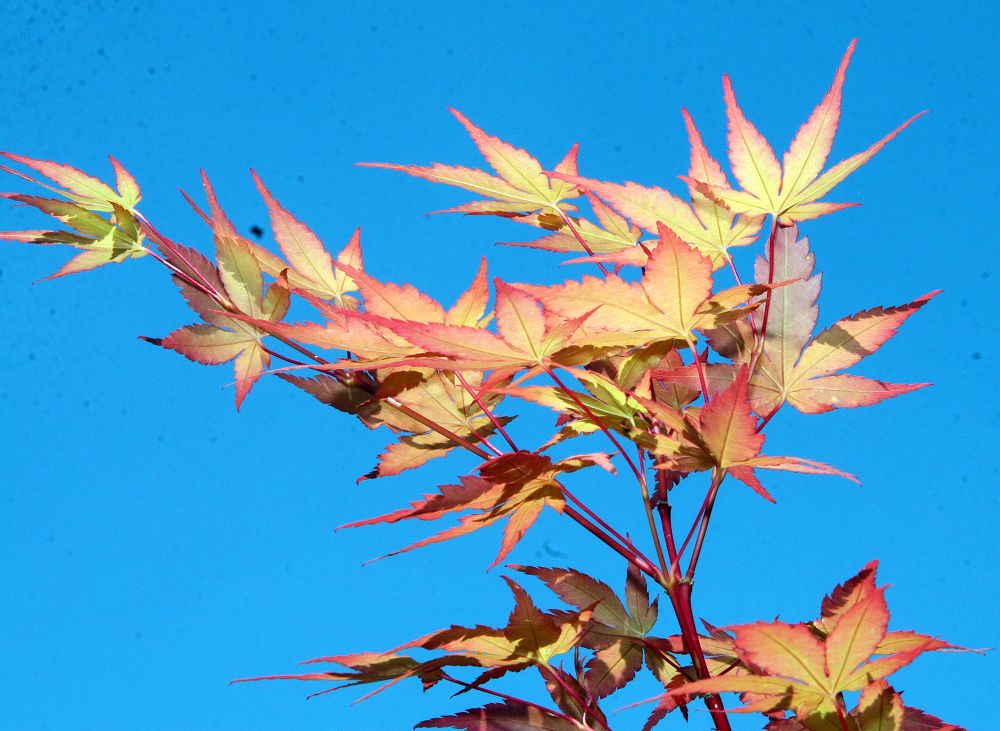
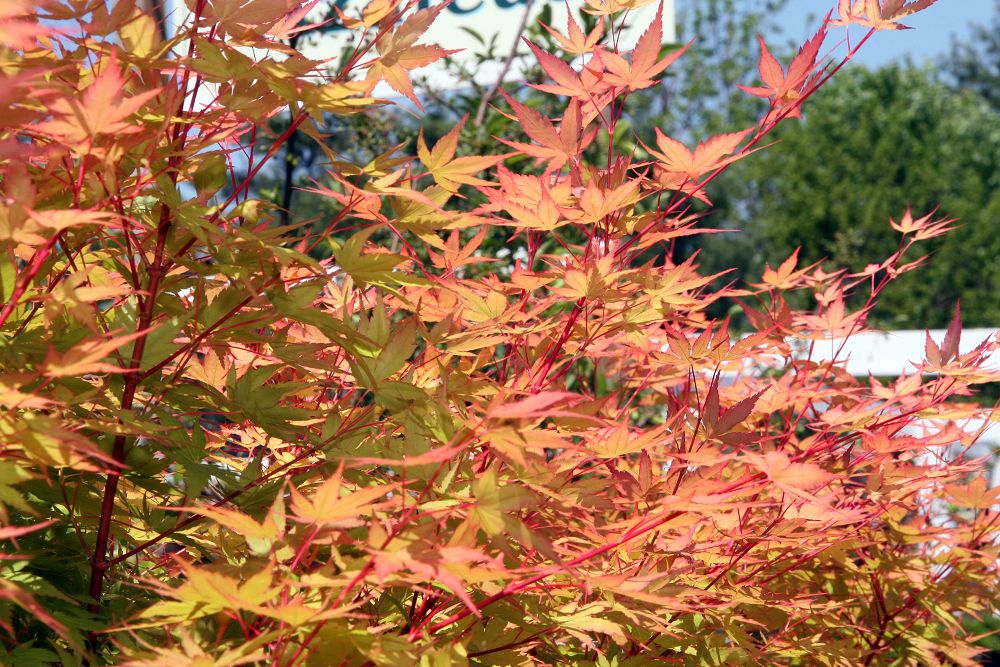
Acer palmatum ‘Sango-kaku’, the Sango-kaku Japanese Maple — widely known as the Coral Bark Maple and also sold under the older name ‘Senkaki’ — is an upright, vase-shaped Japanese maple cultivar grown first and foremost for its bark, not its leaves. Its young stems turn a striking coral-pink to red in fall and winter, glowing against bare branches or snow long after the foliage has dropped, while the leaves themselves put on their own show: light green with reddish edges in spring, green in summer, then gold and soft orange-red in fall.
Gardeners plant Sango-kaku for season-extending color: where most Japanese maples peak only in spring or fall, Sango-kaku adds a genuine winter feature through its bark, making it one of the most popular choices for year-round visual interest in a Japanese maple collection or a small-garden focal point.
Japanese maple (Acer palmatum) is not native to North America — the species is native to Japan, Korea and eastern China — and Sango-kaku is an introduced, cultivated selection of it. It is not on federal noxious-weed lists, but in parts of the eastern U.S., especially the Mid-Atlantic, Japanese maple seedlings occasionally escape cultivation into forest edges. Plant Sango-kaku away from natural woodland borders and remove any volunteer seedlings nearby.
Identification
Sango-kaku grows as an upright, somewhat vase-shaped small tree, often a bit taller and more upright at maturity than cultivars like Bloodgood, with a crown that opens up to show off the colorful stems within.
Bark & Stems
This is Sango-kaku’s defining trait: young twigs and branches turn a vivid coral-pink to red, most intense in fall and winter and on the newest growth, fading toward green-gray on older wood. Because the color is strongest on young stems, nurseries and gardeners often prune to encourage fresh growth and keep the color show vibrant from year to year. This bright stem color is the easiest way to distinguish Sango-kaku from other upright green- or red-leaved Japanese maple cultivars at any time of year.
Leaves
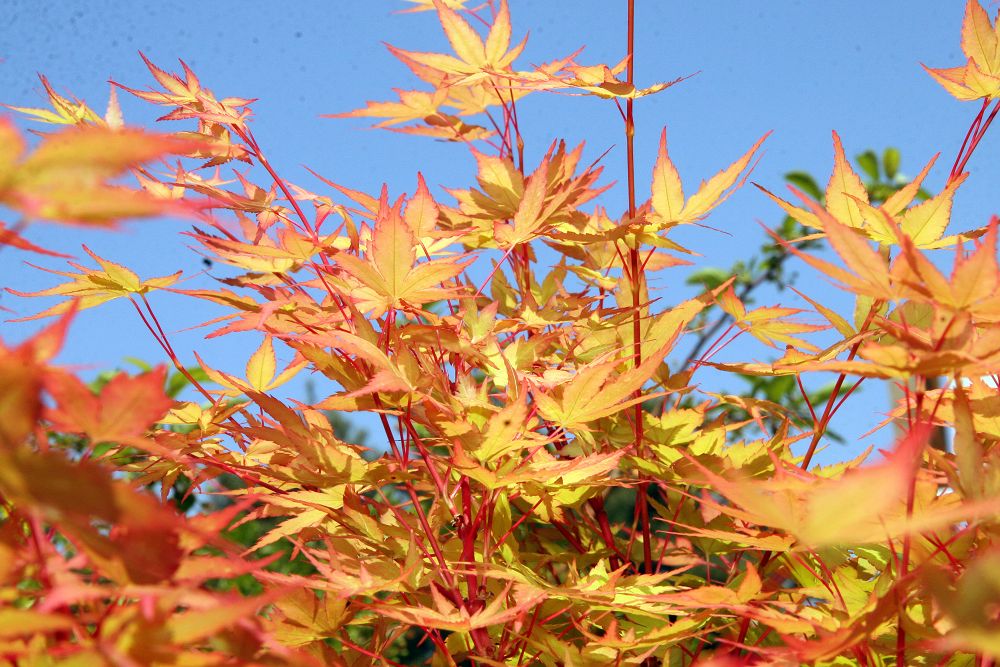
Leaves are palmate with five to seven lobes, 2 to 4 inches across. They emerge light green with reddish margins in spring, mature to a fresh green through summer, and turn gold to soft orange-red in fall — distinctly different from the maroon-red foliage of cultivars such as Bloodgood or Emperor One.
Flowers
Small, inconspicuous reddish flowers appear in spring among the new leaves, pollinated mainly by wind and small insects.
Fruit & Seeds
Paired winged samaras follow the flowers, green tinged with red when young, ripening papery brown by fall. Sango-kaku sets viable seed, so occasional seedlings can appear nearby; they will not reliably carry the parent’s coral bark color.
Quick Facts
| Scientific Name | Acer palmatum ‘Sango-kaku’ |
| Cultivar | ‘Sango-kaku’ (syn. ‘Senkaki’); common name Coral Bark Maple |
| Family | Sapindaceae (Maple) |
| Plant Type | Deciduous small tree |
| Native to North America | No — introduced; species native to Japan, Korea and eastern China |
| Mature Height | 15–25 ft (sources range from about 15 to 25 ft) |
| Mature Spread | 10–20 ft |
| Growth Rate | Moderate |
| Sun Exposure | Full sun to part shade; afternoon shade in hot climates helps prevent leaf scorch |
| Water Needs | Average, consistent moisture; some drought tolerance once established |
| Soil Type | Rich, well-drained loam |
| Soil pH | Slightly acidic (about 5.5–6.5) |
| Bloom Time | Spring, inconspicuous |
| Leaf / Fall Color | Light green spring, green summer; gold to soft orange-red in fall |
| Fruit | Winged samaras, green tinged red, summer into fall |
| Deer Resistant | Mostly — occasional light browsing reported |
| USDA Hardiness Zones | 5–8 (some sources extend to zone 9 with afternoon shade) |
| Invasive Status | Not federally listed; watch for and remove escaped seedlings near wild areas in parts of the eastern U.S. |
Origin & Where It Grows
Acer palmatum is native to the forests and mountain slopes of Japan, Korea and eastern China, where centuries of cultivation produced an enormous range of named garden selections. Coral-barked forms of Japanese maple have long been grown in Japan, where the name “Sango-kaku” translates roughly to “coral tower,” describing the glowing stems; the cultivar was earlier known in the West under the name ‘Senkaki’, and both names are still used interchangeably in the nursery trade.
Sango-kaku was introduced to Western horticulture in the 20th century and quickly became one of the most widely planted Japanese maple cultivars specifically for its winter bark interest — a feature very few other common landscape trees offer.
In U.S. gardens, Sango-kaku grows well across USDA zones 5 through 8, performing best with some afternoon shade in the hottest parts of its range; it is grown throughout the Pacific Northwest, Mid-Atlantic, Midwest and upper South, often sited where its colorful winter stems are visible from windows or along winter walking paths.
Growing & Care Guide
Light
Sango-kaku grows well in full sun to part shade. In hot-summer regions, afternoon shade helps prevent the green summer leaves from scorching, though stem color develops regardless of exposure and shows best once leaves drop in fall.
Soil & Water
Plant in rich, well-drained soil; avoid soggy sites. Water regularly through the first two to three growing seasons; established trees tolerate brief dry spells but look best with consistent moisture, especially in hot climates.
Planting Tips
Plant at the same depth as the nursery container in spring or fall, mulch to conserve soil moisture, and position it where the winter bark display will be visible — near a path, patio or window, and ideally against a dark background or evergreen hedge that makes the coral stems stand out.
Pruning & Maintenance
Because the brightest bark color is on young wood, many growers prune Sango-kaku periodically in late winter, while dormant, to stimulate fresh colorful growth and remove older, duller-colored stems; this also keeps the canopy open and shapely. Avoid heavy summer pruning, which can cause excess sap bleeding and stress.
Propagation
Sango-kaku is propagated commercially by grafting onto seedling rootstock, which reliably preserves the coral bark trait. Seed-grown plants are variable and typically do not reproduce the parent’s distinctive stem color.
Landscape Uses
- Winter interest specimen, sited where its coral stems are visible from the house or a path after leaf drop
- Focal point against dark evergreens or a plain wall that sets off the bright bark
- Near water or stone features, where the color reflects well in winter light
- Patio or courtyard tree, given its moderate mature size
Wildlife & Ecological Value
Sango-kaku offers limited wildlife value compared with native maples. Its spring flowers attract some pollinating insects, and its seeds are eaten occasionally by birds and squirrels, but relatively few native insect species are adapted to use Acer palmatum as a host plant, so it provides little support for native caterpillars and other insect larvae. It is best grown and valued as an ornamental specimen, with native trees and shrubs used elsewhere in the landscape for stronger wildlife benefit.
Native Alternatives
For native trees with notable winter interest, fine form, or good fall color, consider:
- Vine maple (Acer circinatum) — a native with attractive stems and good fall color
- Red maple (Acer rubrum) — some selections show reddish winter twigs along with strong native fall color
- Rocky Mountain maple (Acer glabrum) — a compact native maple for western gardens
- Bigtooth maple (Acer grandidentatum) — drought-tolerant with strong orange-red fall color
- Fringetree (Chionanthus virginicus) — a native small flowering tree for accent use
History & Uses
Coral-barked Japanese maples have a long history in Japanese horticulture, where gardeners have selected and grown forms with colorful young stems for generations as a way to extend visual interest into the dormant season. Sango-kaku, whose name is often translated as “coral tower,” became the standard modern name for this group of selections, succeeding the older name ‘Senkaki’ that is still occasionally used by collectors and specialty nurseries.
Since its wider introduction to Western gardens in the 20th century, Sango-kaku has become one of the most recognizable Japanese maple cultivars, frequently chosen specifically to solve the “boring winter garden” problem that most deciduous ornamentals present once their leaves and flowers are gone.
Beyond ornamental landscaping, container growing and occasional bonsai use, Sango-kaku has no significant food, medicinal or commercial timber value.
Frequently Asked Questions
Is Sango-kaku Japanese maple native to North America?
No. Acer palmatum is native to Japan, Korea and eastern China. Sango-kaku is a cultivated selection of that introduced species, not a North American native plant.
Why is Sango-kaku called the coral bark maple?
Its young stems turn a vivid coral-pink to red, especially in fall and winter, which is its signature feature and the reason for both its Japanese name (roughly “coral tower”) and its common English name.
Does Sango-kaku bark stay colorful as the tree ages?
The brightest color is on young wood; older stems and trunk bark fade toward green-gray. Periodic pruning to encourage fresh growth helps keep the colorful stem display vivid over time.
How big does Sango-kaku Japanese maple get?
Most sources put mature size at about 15 to 25 feet tall and 10 to 20 feet wide, generally a bit more upright than broad-canopied cultivars like Bloodgood.
Is Sango-kaku Japanese maple invasive?
It is not listed as invasive federally, but as an introduced species it can set viable seed, and Japanese maple seedlings occasionally escape cultivation in parts of the eastern U.S. Plant away from woodland edges and remove any volunteer seedlings.