Arbequina Olive Tree (Olea europaea ‘Arbequina’)
Last updated: November 3, 2026
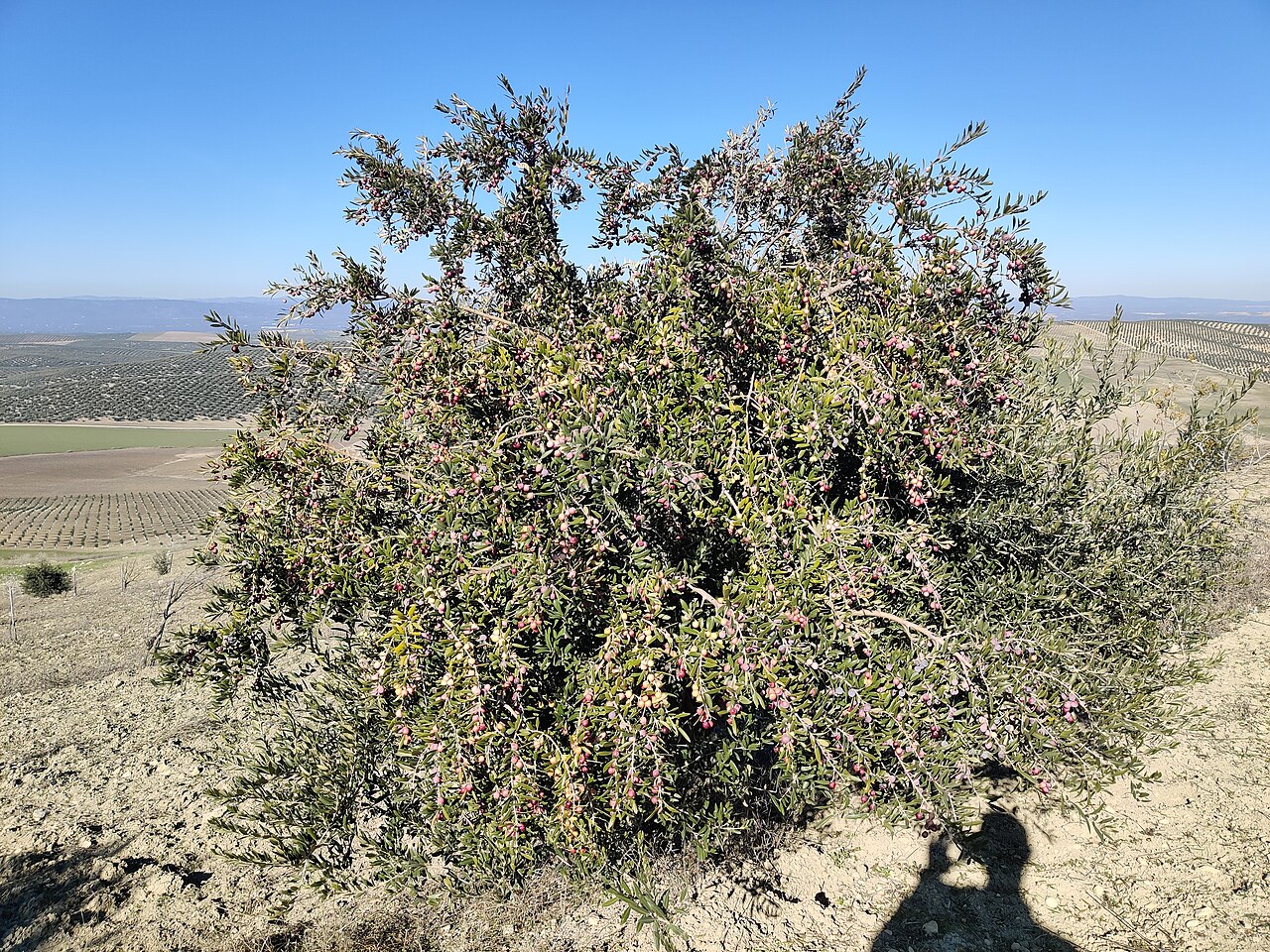
Olea europaea ‘Arbequina’ is a small-leaved, naturally compact olive cultivar prized by gardeners and growers alike for its tidy size, heavy fruiting and cold tolerance that is a notch better than many other olive varieties. Named for the Catalan town of Arbeca, where it has been grown since at least the 18th century, Arbequina produces abundant small, dark fruit with some of the highest oil content of any common olive cultivar, giving it a mild, fruity, slightly almond-and-apple flavor that has made it the single most widely planted cultivar in modern high-density olive oil groves worldwide.
Gardeners grow Arbequina for reasons that go beyond the oil. It stays smaller and denser than most olive cultivars, bears fruit at a young age (often within two to three years), tolerates containers well, and its silvery, weeping foliage looks good as a specimen, hedge, or Mediterranean-garden accent year-round. Because it is self-fertile, a single tree will set a full crop without a second cultivar nearby, which makes it a practical choice for small yards and patios as well as commercial orchards.
Olive (Olea europaea) is not native to North America; it is native to the Mediterranean basin, the Near East and parts of North Africa, and was carried to the Americas by Spanish missionaries and later growers. Arbequina is not on any federal noxious-weed list, but in parts of coastal and central California, birds spread the fruit of fruiting olive cultivars into wildland canyons, where Cal-IPC lists olive as a limited-impact invasive. Gardeners in those regions should harvest the fruit rather than letting it drop and should avoid planting Arbequina directly adjacent to natural open space.
Identification
Arbequina is most easily told apart from other olive cultivars by its small stature, dense weeping branching, and small leaves and fruit. It typically grows as a rounded, multi-stemmed small tree or large shrub rather than the stiffly upright form of cultivars like Mission.
Bark & Stems
Young stems are slender, silvery-gray and slightly four-angled, becoming gray-brown and furrowed with age. Branches arch and weep outward from a short trunk, giving established trees a fountain-like silhouette unless they are staked and pruned upright.
Leaves
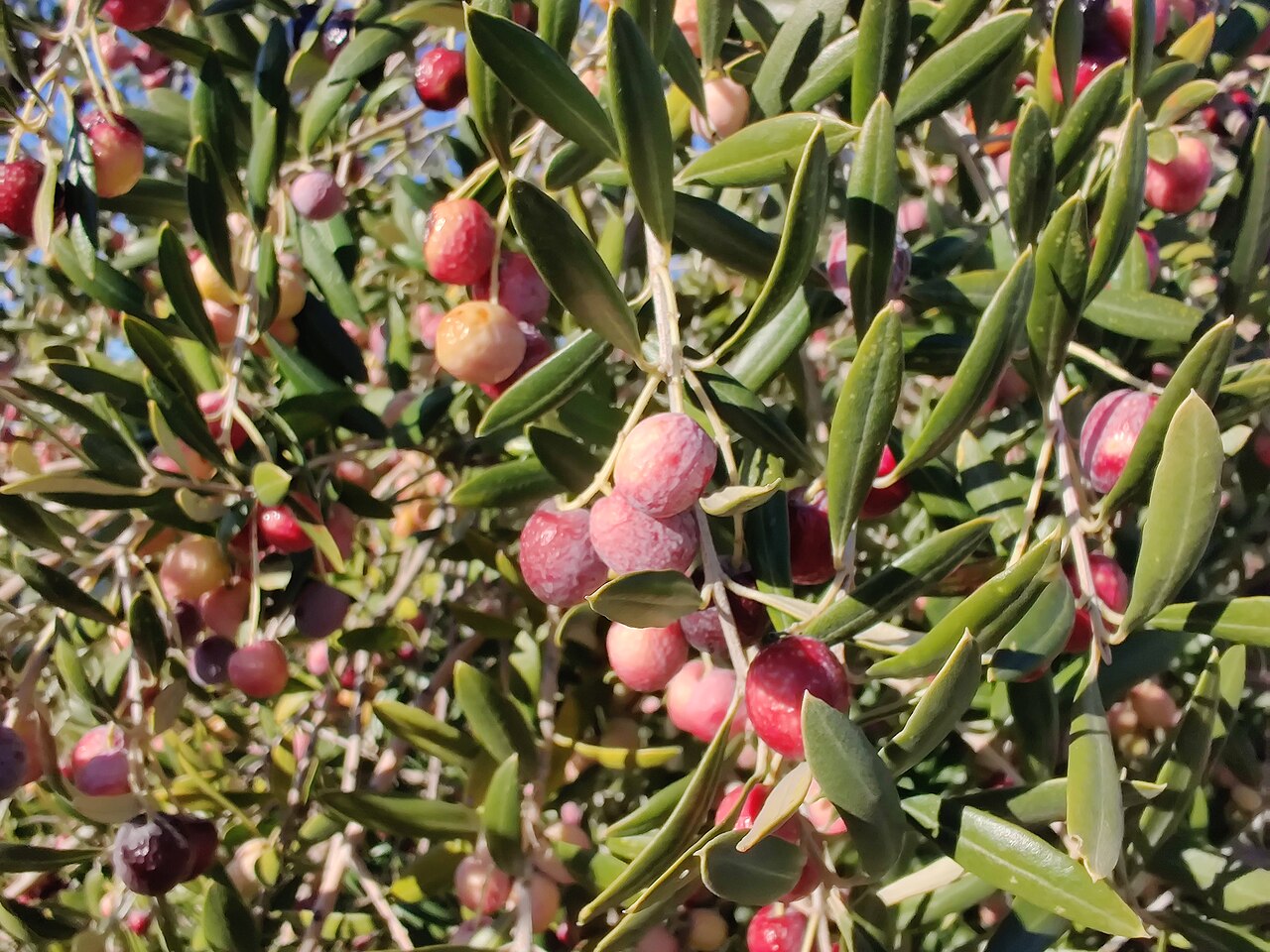
Leaves are narrow and lance-shaped, 1 to 2.5 inches long, smaller than those of many other cultivars. The upper surface is dull gray-green, while the underside is densely covered in fine silvery-white scales that flash in the wind — a classic olive trait shared across cultivars, though Arbequina’s leaves read noticeably smaller and daintier than Mission or Manzanillo.
Flowers
Small, creamy-white, four-lobed flowers appear in short branched clusters (panicles) in the leaf axils in mid-spring. They are wind-pollinated and lightly fragrant, and because Arbequina is self-fertile, the flowers set fruit without a second cultivar present, though cross-pollination with a cultivar such as Frantoio or Koroneiki nearby can boost yield.
Fruit & Seeds
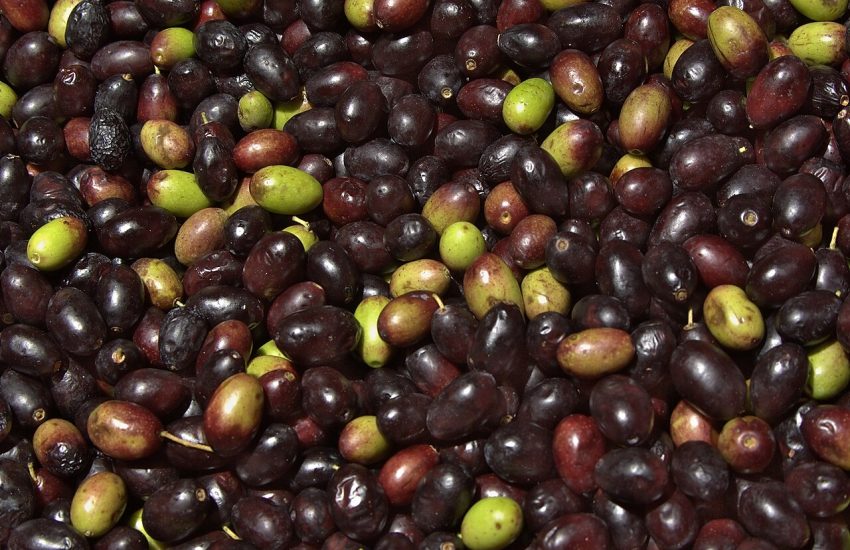
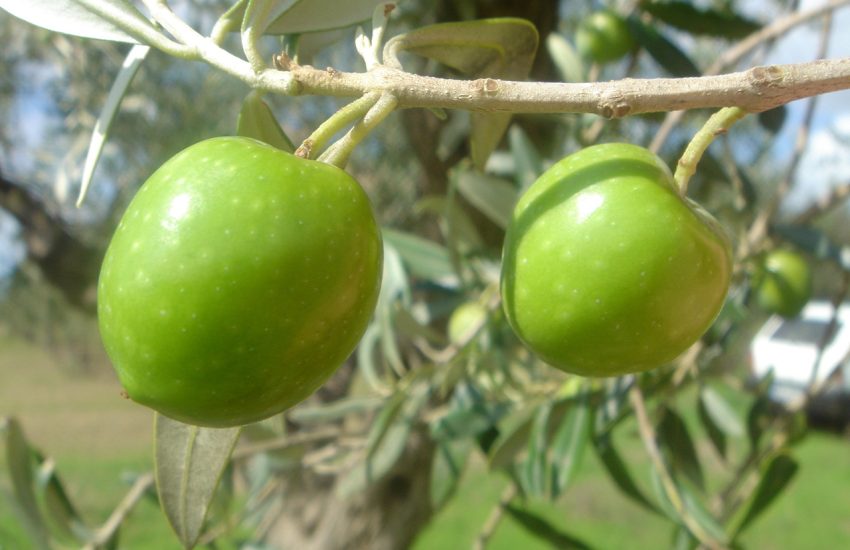
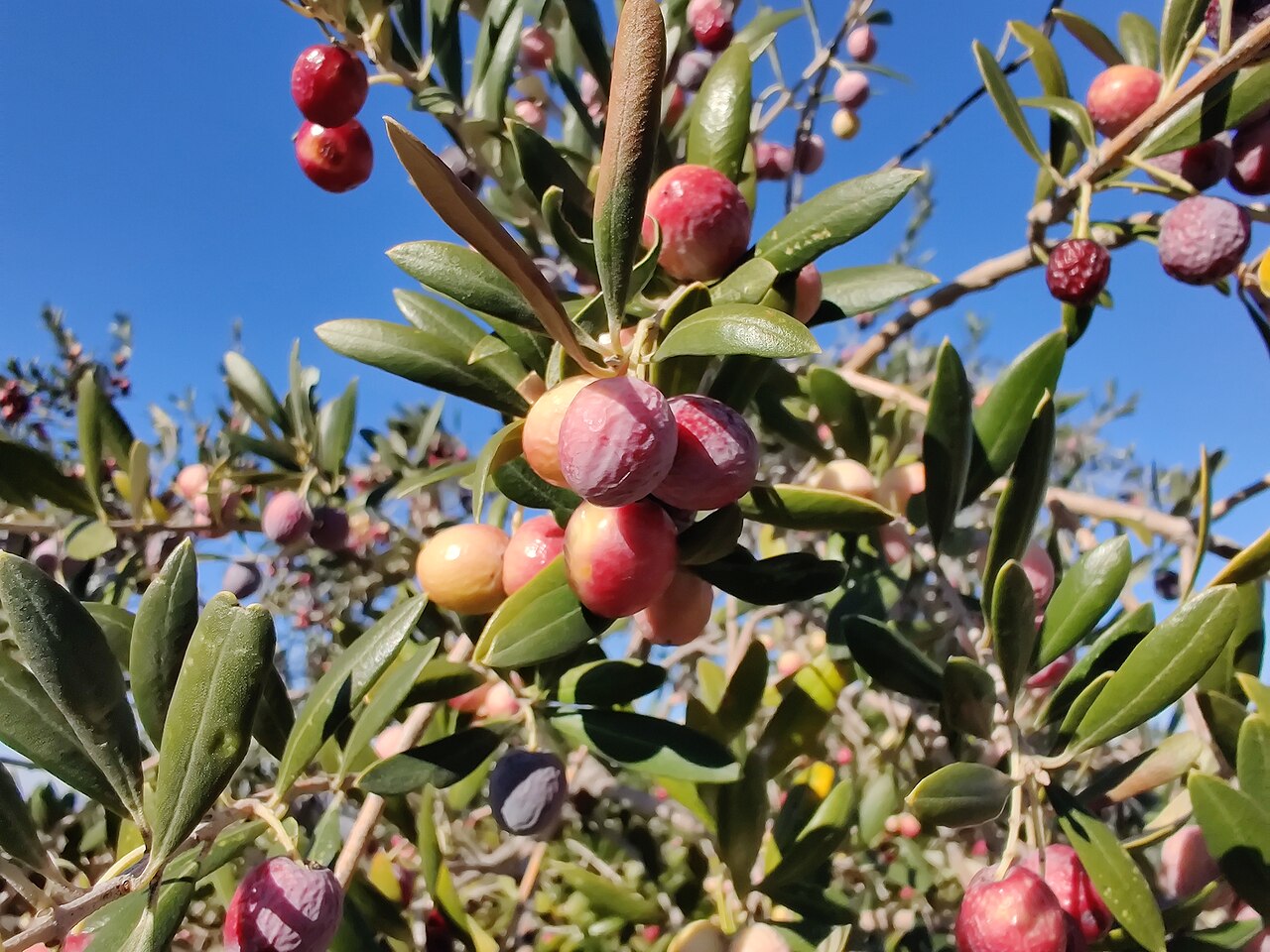
The fruit is notably small for an olive, usually under a gram and a half each (roughly the size of a large pea to small grape), oval, and changes from green to reddish-purple to near-black as it ripens from early fall into winter. Arbequina’s small fruit-to-pit ratio is offset by unusually high oil content, commonly cited in the 18 to 24 percent range, which is what makes it such a valuable oil cultivar despite its size. Raw olives of any cultivar are bitter and must be cured in brine, lye or salt, or pressed for oil, before eating.
Quick Facts
| Scientific Name | Olea europaea ‘Arbequina’ |
| Cultivar | Arbequina |
| Family | Oleaceae (Olive) |
| Plant Type | Evergreen small fruit tree / large shrub |
| Native to North America | No — introduced from the Mediterranean basin; cultivar developed in Catalonia, Spain |
| Mature Height | 10–20 ft unpruned (often kept 6–10 ft as a hedge or container plant) |
| Mature Spread | 10–20 ft, naturally weeping and spreading |
| Growth Rate | Moderate; bears fruit young (often by year 2–3) |
| Sun Exposure | Full sun |
| Water Needs | Low to moderate; drought tolerant once established |
| Soil Type | Well-drained; tolerates poor, rocky or sandy soil |
| Soil pH | 6.0–8.5; tolerates alkaline soils well |
| Bloom Time | April – May |
| Leaf / Fall Color | Evergreen; silvery-gray-green, no fall color change |
| Fruit | Small oval olives (about 1–1.5 g), green ripening to purple-black; high oil content (about 18–24%) |
| Deer Resistant | Yes, generally |
| USDA Hardiness Zones | 8–10 (established wood tolerates brief dips into the upper teens °F) |
| Invasive Status | Not native; not federally listed; Cal-IPC limited-impact concern for fruiting olives in parts of coastal/central California wildlands |
Origin & Where It Grows
The species Olea europaea is native to the Mediterranean basin, stretching from the Iberian Peninsula and southern France through Italy, Greece, the Levant and North Africa, where wild and early-cultivated olives have grown for thousands of years. The Arbequina cultivar itself has a narrower, well-documented home: it takes its name from Arbeca, a small town in the Lleida province of Catalonia, Spain, where farmers have grown it since at least the 1700s.
Arbequina’s modern fame comes from its suitability for dense, mechanically harvested “super-high-density” groves, a growing system pioneered in Spain in the 1990s that depends on a cultivar small and precocious enough to crop heavily on closely spaced trees. That system, and the cultivar behind it, spread quickly to new olive-growing regions and by the 2000s Arbequina had become the leading cultivar in new California and Texas olive oil plantings.
In the United States, Arbequina grows best in California’s Central Valley and coastal valleys, the Texas Hill Country and parts of central Texas, and warm, dry pockets of Arizona, Georgia and the Gulf South, generally wherever winters stay above the upper teens °F and summers are hot and dry. Further north it is grown as a container plant that is moved indoors or into a greenhouse for winter.
Growing & Care Guide
Arbequina is one of the easier olive cultivars for home gardeners, tolerating poor soil, heat, drought and even container culture better than many fruiting trees — the main things it will not forgive are wet feet and hard freezes.
Light
Give Arbequina full sun, at least six to eight hours a day. Less light means fewer flowers and a sparser crop, and in deep shade the canopy thins out and becomes leggy.
Soil & Water
Plant in well-drained soil; olives are notably intolerant of waterlogged roots and are prone to root rot in heavy, poorly drained clay. Sandy, rocky or lean alkaline soils are fine and even preferred over rich, constantly moist ground. Water deeply but infrequently to establish a young tree, then taper off — mature Arbequina is quite drought tolerant, though occasional deep watering during fruit development improves yield and oil quality.
Planting Tips
Plant in spring or fall so roots can establish before extreme heat or cold. Choose a site with good air drainage, away from low frost pockets, since young wood is more cold-sensitive than mature wood. In containers, use a well-drained potting mix and a pot with ample drainage holes, and plan to move the container to a sheltered spot or indoors if temperatures threaten to drop into the teens °F.
Pruning & Maintenance
Prune in late winter after the coldest weather has passed, removing crossing or crowded interior branches to maintain an open, airy canopy that ripens fruit evenly and resists disease. Arbequina takes well to shaping as a hedge, espalier, or small standard, and its naturally compact habit means it needs less aggressive pruning than larger cultivars. Olive trees need little fertilizer; a light annual feeding in spring is usually enough.
Propagation
Arbequina comes true to type only from cuttings or grafted stock, not from seed — seedlings are variable and typically inferior to the named cultivar. Semi-hardwood cuttings taken in summer root with bottom heat and rooting hormone, which is how nurseries and growers reliably multiply the cultivar.
Harvest & Pollination
Arbequina is self-fertile and will set a full crop as a single tree, though planting a second cultivar such as Frantoio, Koroneiki or Arbosana nearby can modestly increase yield through cross-pollination. Chill requirements are modest, generally satisfied by typical winters in zones 8–10. Fruit can be picked green in early fall for a more peppery, bitter oil, or allowed to ripen to purple-black into winter for a milder, fruitier result; either way, raw fruit must be cured in brine or lye, or pressed, before it is edible.
Landscape Uses
- Mediterranean and xeriscape gardens, where its silvery foliage and drought tolerance fit low-water designs
- Clipped or informal hedges and screens, thanks to its compact, dense growth
- Patio and container specimens, including bonsai, since Arbequina tolerates confined roots well
- Small-scale edible landscaping, where its heavy, reliable fruit set suits backyard oil pressing
- Espalier and formal plantings against sunny walls in marginal zones
Wildlife & Ecological Value
Arbequina’s flowers are wind-pollinated rather than insect-pollinated, so they offer little nectar or pollen value to bees and other pollinators, unlike many native flowering trees. The fruit is readily eaten by birds, including robins and other thrushes, which can carry seed into surrounding wildland in parts of coastal and central California — a good reason to harvest fruit promptly rather than let it drop and rot. Compared with native maples, oaks or other regional trees, Arbequina supports very few native insect species, since North American insects did not evolve alongside it.
Native Alternatives
Gardeners outside olive-growing climates, or those who want a similarly tough, silvery-leaved tree with real wildlife value, can consider these native options:
- Desert olive (Forestiera neomexicana) — a tough, silvery-leaved Southwestern native shrub/small tree with a similar drought-tolerant, Mediterranean look
- Texas olive (Cordia boissieri) — a drought-tolerant small tree for hot, dry gardens with showy white flowers and small fruit
- American sweet olive / devilwood (Osmanthus americanus) — an evergreen native relative in the olive family with fragrant flowers
- Fringetree (Chionanthus virginicus) — another native relative in the olive family, grown for its fringe-like spring flowers
History & Uses
Arbequina has been cultivated around Arbeca in Catalonia since at least the 18th century, long valued locally for an oil with a distinctive mild, fruity flavor often described with notes of green apple and almond. For much of its history it remained a regional Spanish cultivar among many, overshadowed internationally by cultivars like Picual and Frantoio.
That changed with the rise of super-high-density olive growing in Spain in the 1990s, a system that plants thousands of trees per acre and harvests them mechanically with grape-harvester-style machines. Arbequina’s small size, early and heavy bearing, and tolerance of close spacing made it the cultivar of choice for this system, and as super-high-density groves spread to California, Texas, Australia, Chile and Argentina through the 2000s and 2010s, Arbequina went from a regional specialty to one of the most widely planted olive cultivars on Earth.
Today Arbequina oil is sold both as a single-cultivar “monovarietal” product prized for its smooth, mild flavor and as a component of blended extra-virgin olive oils. The tree itself has become equally popular as an ornamental and edible-landscape plant for home gardeners in warm climates, including as a container and bonsai subject, well beyond its original commercial role.
Frequently Asked Questions
Is the Arbequina olive tree native or invasive in the United States?
No. Olive (Olea europaea) is native to the Mediterranean basin, not North America. It is not on federal noxious-weed lists, but in parts of coastal and central California, birds can spread the fruit of fruiting cultivars like Arbequina into wildland, where Cal-IPC lists olive as a limited-impact invasive; harvest fruit promptly in those areas and avoid planting next to natural open space.
Does Arbequina need a second tree to produce fruit?
No. Arbequina is self-fertile and a single tree will set a full crop on its own, although planting a second cultivar nearby for cross-pollination can modestly increase yield.
How cold-hardy is Arbequina olive?
Established Arbequina trees generally tolerate USDA zones 8–10, surviving brief dips into the upper teens °F, somewhat better than many other olive cultivars. Young trees and container plants are more cold-sensitive and should be protected or brought indoors during hard freezes.
Can I eat olives straight off an Arbequina tree?
No. Raw olives of any cultivar, including Arbequina, are intensely bitter due to a compound called oleuropein. They must be cured in brine, water, salt or lye, or pressed into oil, before they are palatable.
How long before a new Arbequina tree produces olives?
Arbequina is known for bearing young, often producing a first light crop within two to three years of planting and reaching full production in about five to eight years, faster than many other olive cultivars.