
Picholine Olive Tree (Olea europaea ‘Picholine’)
Last updated: November 3, 2026
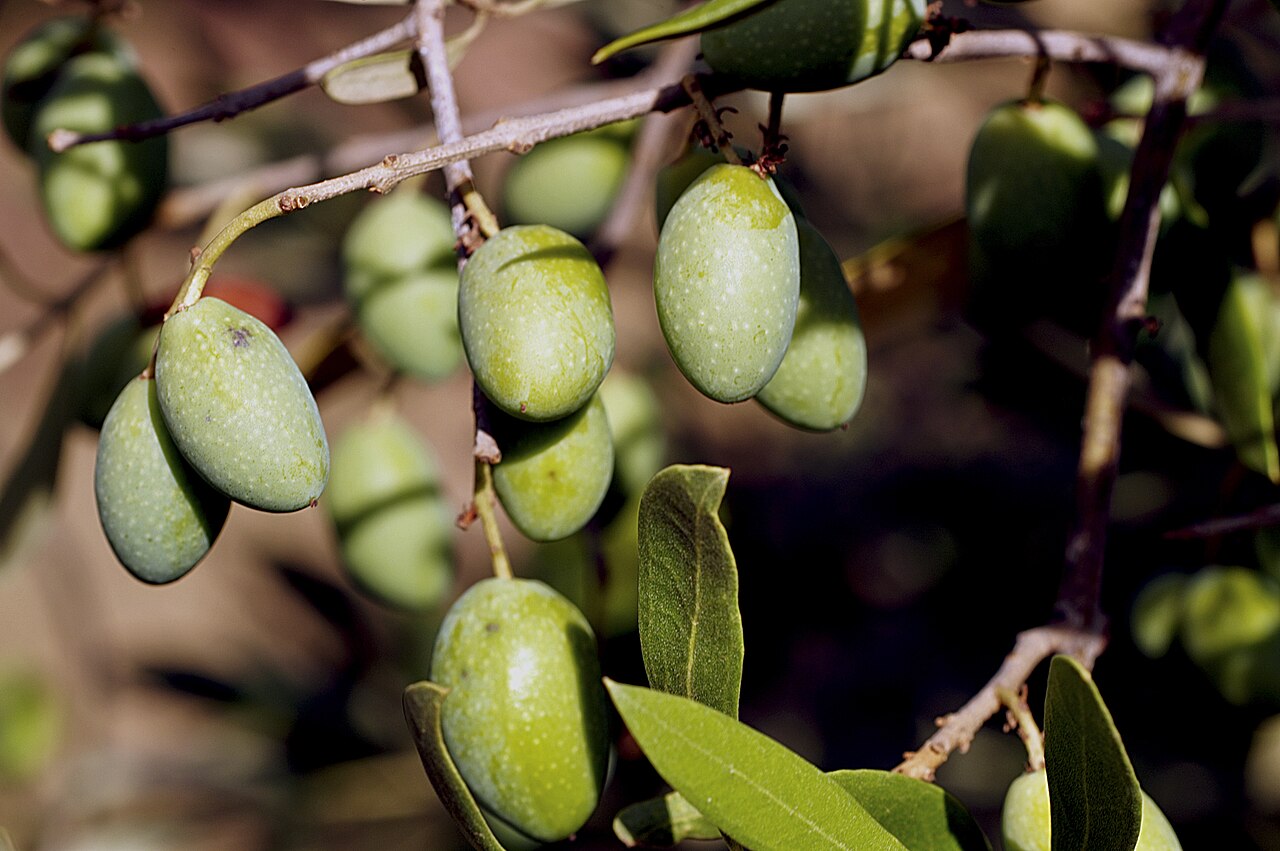
Olea europaea ‘Picholine’, the Picholine Olive Tree, is a classic French olive cultivar grown for its firm, elongated green table olives and for a crisp, slightly peppery oil. It is the signature olive of the Gard department in the Languedoc region of southern France, where it is more properly called Picholine du Languedoc or Picholine de Collias, and it remains one of the most widely planted dual-purpose cultivars in the French olive industry today.
Gardeners grow Picholine for its handsome, open, spreading crown of narrow gray-green leaves, its reliable fruit set, and the particular appeal of making your own brined green olives at home. It is a medium-vigor tree that bears young for an olive, tolerates both cold snaps and drought once established, and produces abundant pale yellow pollen that helps pollinate other cultivars nearby, making it a useful addition to a mixed home orchard.
Olive (Olea europaea) is not native to North America; it is native to the Mediterranean basin, from the Iberian Peninsula and North Africa east through the Levant. It carries no federal noxious-weed listing, but the California Invasive Plant Council lists olive as a limited-impact invasive in parts of California, where birds spread the fruit of fruiting cultivars into oak woodlands and other wildland habitat. Picholine is a fruiting cultivar, so gardeners in coastal and interior California should harvest the crop promptly, avoid planting it next to natural open space, and watch for and remove volunteer seedlings nearby.
Identification
Picholine forms a medium-sized evergreen tree with an open, somewhat irregular, spreading crown rather than the dense dome of some other cultivars. Trees are moderately vigorous and begin bearing relatively early for an olive, often within three to four years from a rooted cutting.
Bark & Stems
Young shoots are gray-green and slightly flexible; as branches age the bark turns the typical pale gray, finely fissured olive bark. The branching habit is more upright and spreading than a true weeping cultivar such as Pendolino, which is one way to tell Picholine apart from pendulous-branched varieties at a glance.
Leaves
Leaves are elliptic-lanceolate, medium in length and width, dull to silvery gray-green above and silvery white and scaly beneath, carried in opposite pairs on the stem. The foliage is somewhat denser and grayer than vigorous oil cultivars like Lucca, giving mature trees a soft, silvery look.
Flowers & Fruit
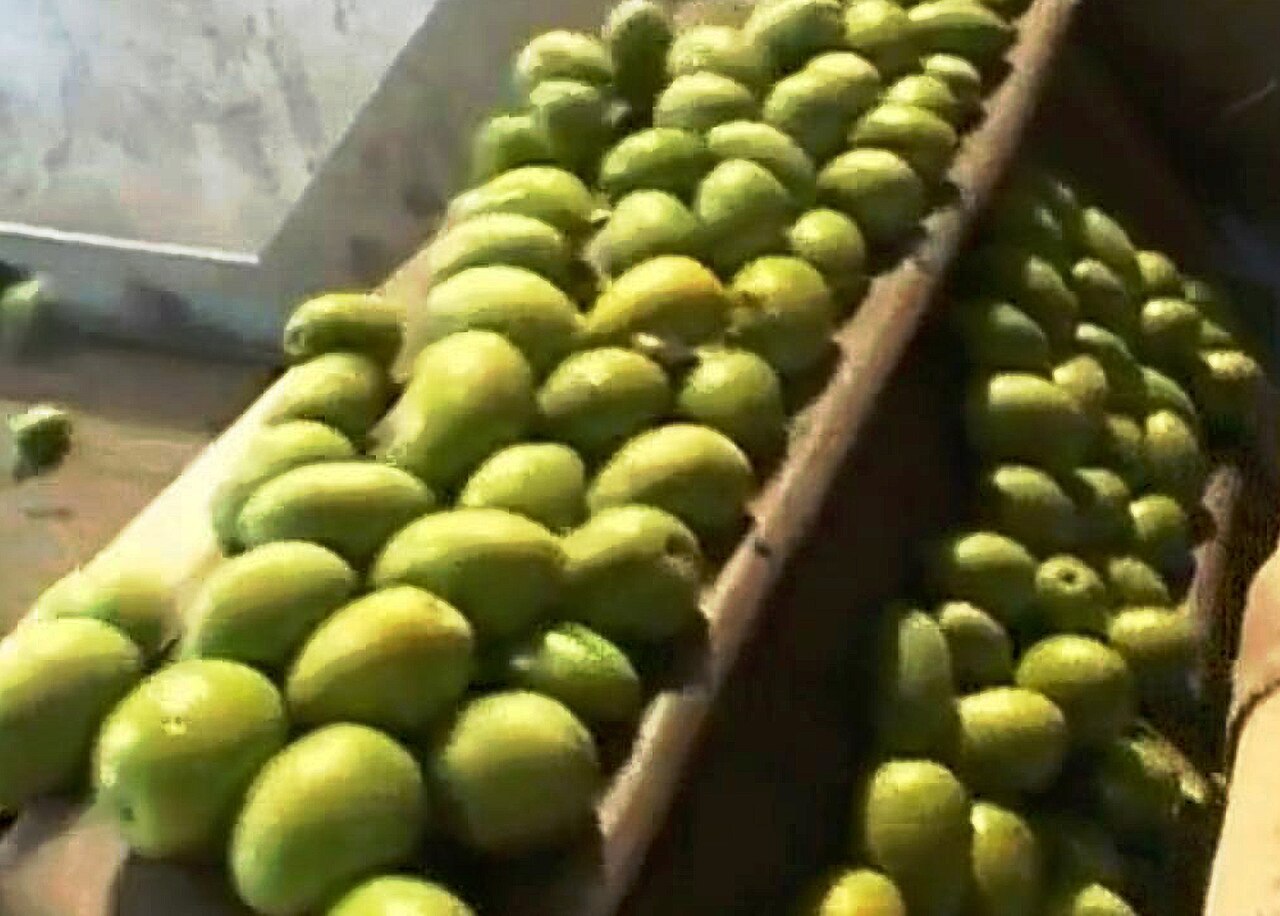
Small creamy-white, four-lobed flowers open in dense axillary clusters (panicles) in late spring; the tree is only partially self-fruitful and sets a markedly heavier crop with a compatible pollinizer such as Lucques, Aglandau, or Olivière nearby. The fruit is the defining trait of the cultivar: medium-sized, 3 to 5 grams, ovoid and slightly asymmetrical with a pointed stone at both ends. Picholine is picked green in autumn for table brining (when it is lye- or brine-cured to remove natural bitterness) and left to darken later in the season if oil is the goal; it never forms a fully black, soft fruit the way some oil-only cultivars do, and its firm flesh holds up well to curing.
Quick Facts
| Scientific Name | Olea europaea ‘Picholine’ |
| Cultivar | Picholine (syn. Picholine du Languedoc, Picholine de Collias) |
| Family | Oleaceae (Olive) |
| Plant Type | Evergreen fruiting tree |
| Native to North America | No — introduced from the Mediterranean basin (France/Spain) |
| Mature Height | 15–25 ft (often kept to 10–12 ft when pruned) |
| Mature Spread | 12–20 ft, open and spreading |
| Growth Rate | Medium; bears relatively young for an olive |
| Sun Exposure | Full sun |
| Water Needs | Low to moderate once established; drought tolerant |
| Soil Type | Well-drained loam, sand or rocky soil; poor wet soils |
| Soil pH | Neutral to alkaline, about 6.5–8.5 |
| Bloom Time | Late spring (May–June) |
| Leaf / Fall Color | Evergreen; gray-green above, silvery beneath year-round |
| Fruit | Medium, 3–5 g, elongated-ovoid; dual-purpose table and oil |
| Deer Resistant | Yes |
| USDA Hardiness Zones | 8–10 (established wood tolerates brief dips into the low 20s°F) |
| Invasive Status | Not federally listed; Cal-IPC limited-impact invasive risk in parts of coastal/interior California for fruiting cultivars |
Origin & Where It Grows
The species Olea europaea is native to the Mediterranean basin and parts of the Near East, where it has been cultivated for oil and food for more than six thousand years. Wild and naturalized olive populations occur from the Iberian Peninsula and North Africa through Greece, the Levant and Iran.
Picholine itself arose in and takes its name from the Gard department of the Languedoc region in southern France, where it has been the dominant cultivar for centuries; the related clone Picholine Marocaine was later selected in Morocco from Languedoc stock and is now the most widely planted cultivar in that country. In France, Picholine fruit from the Nîmes area carries a Protected Designation of Origin (AOC/AOP) for both the table olive and the oil pressed from it.
In the United States, Picholine is grown mainly in California’s olive-growing regions — the Central Valley, the Sierra foothills and parts of the Central Coast — where the Mediterranean climate of warm, dry summers and mild, wet winters mirrors its homeland. It can also be grown as a container or espaliered specimen in protected microclimates of the Pacific Northwest and the warmer parts of the Southeast, brought under cover or into a greenhouse where winters dip below the mid-teens Fahrenheit.
Picholine Origin & Range
| Species Native Range | Mediterranean basin: southern Europe, North Africa, the Levant |
| Cultivar Origin | Gard, Languedoc, southern France (centuries-old selection) |
| Best U.S. Regions | California Central Valley, Sierra foothills, Central Coast; protected sites in the warm Southeast and Pacific Northwest |
| USDA Zones | 8–10 |
| Invasive Status | Not native; limited-impact invasive risk in parts of California (Cal-IPC) for fruiting cultivars |
Growing & Care Guide
Picholine is an easygoing, forgiving olive once it is established, well suited to home orchards and larger containers alike.
Light
Give Picholine full sun — at least six to eight hours a day. Fruit set and oil quality both drop off noticeably in part shade, and the open canopy benefits from all the light it can get to ripen a full crop.
Soil & Water
Plant in well-drained soil; olives are notably intolerant of wet feet and are prone to root rot in heavy, poorly drained ground. Water deeply but infrequently during the first two to three years to establish a deep root system, then taper off — mature Picholine trees are drought tolerant and often need only occasional deep watering through the dry season to size the fruit well.
Planting Tips
Plant in spring after the last frost, in a site sheltered from the coldest winter winds if you are near the hardiness limit. Space trees 12 to 20 feet apart for an orchard planting; a single specimen needs no neighbor to survive, but fruiting improves with a compatible pollinizer such as Lucques or Aglandau within bee range.
Pruning & Maintenance
Prune in late winter to open the canopy to light and air, since Picholine’s naturally spreading habit can get congested; remove crossing branches and suckers from the base. Olives flower and fruit on the previous year’s wood, so avoid heavy mid-season pruning, which removes next year’s crop.
Propagation
Picholine, like all named olive cultivars, comes true only from cuttings or grafting, never from seed — seedlings revert to variable, often inferior wild-type characteristics. Semi-hardwood cuttings taken in summer and treated with rooting hormone under mist root reliably within a few months.
Landscape Uses
- Home orchards where the goal is both brined table olives and a peppery finishing oil
- Mediterranean and drought-tolerant gardens alongside lavender, rosemary and other low-water plantings
- Espalier or large container specimens on patios in borderline-hardy regions
- Windbreak or screen plantings in warm, dry climates
- Pollinizer tree interplanted among self-sterile or weakly self-fruitful oil cultivars
Harvest & Pollination
Picholine is only partially self-fruitful; crops are heavier and more reliable with a compatible pollinizer nearby, and the tree itself produces abundant pollen that benefits neighboring cultivars. For green table olives, pick in early-to-mid autumn while the fruit is still green to straw-colored and firm; for oil, let a portion of the crop hang longer until it begins to color before pressing. Table fruit must always be cured — by brine, lye, water, or dry-salt methods — before eating; raw olives straight off the tree are intensely bitter from natural oleuropein and are not palatable or meant to be eaten uncured.
Wildlife & Ecological Value
Olive flowers are wind-pollinated, not insect-pollinated, so Picholine offers little nectar or pollen value to bees and other pollinators compared with native flowering trees, and it supports very few native North American insects since it did not evolve alongside them. Birds will eat the ripe fruit if it is left unharvested, which is exactly the pathway by which fruiting olive cultivars have naturalized in parts of coastal and interior California — one more reason to harvest the crop rather than let it drop and be dispersed. Beyond that limited role, Picholine functions mainly as a structural, evergreen garden tree rather than a wildlife-support planting.
Native Alternatives
- Desert Olive (Forestiera neomexicana) — a small, tough, silvery-leaved native shrub-tree of the Southwest with a similar fine-textured look and far lower water needs
- Texas Olive (Cordia boissieri) — a small evergreen tree native to South Texas with gray-green leaves and showy white flowers, used much like an ornamental olive in dry landscapes
- American Sweet Olive / Devilwood (Osmanthus americanus) — an evergreen native tree in the olive family (Oleaceae) with fragrant flowers and a similar glossy, fine-leaved form
- Desert Willow (Chilopsis linearis) — a native small tree for hot, dry gardens with a loose, open silhouette reminiscent of a lightly pruned olive
History & Uses
The olive has been cultivated around the Mediterranean since antiquity, and Picholine represents a relatively recent chapter in that long history: French growers in the Gard selected and propagated it as a reliable, firm-fleshed table fruit well suited to the brining traditions of Languedoc, and it had become the region’s dominant cultivar by the nineteenth century. The related Picholine Marocaine, taken to Morocco from Languedoc stock, went on to become that country’s most widely planted olive, a measure of how well the parent cultivar traveled and adapted.
Today Picholine fruit from around Nîmes carries a French Protected Designation of Origin, a formal recognition of the cultivar’s regional identity and quality. In home and small-orchard use in the United States, Picholine is prized for exactly the qualities that made it popular in France: a firm green table olive that holds its shape and crunch through curing, plus a usable, peppery-finishing oil from the same tree.
Frequently Asked Questions
Is Picholine olive tree native to the United States?
No. Olive (Olea europaea) is native to the Mediterranean basin, not North America. Picholine is an introduced, cultivated variety; in parts of coastal and interior California it is considered a limited-impact invasive risk because birds can spread unharvested fruit into wildland areas, so pick the crop and avoid planting it next to natural open space there.
Can I eat Picholine olives straight off the tree?
No. Fresh olives of any cultivar, including Picholine, are extremely bitter and essentially inedible raw because of a natural compound called oleuropein. They must be cured — typically brined, lye-treated, water-cured or dry-salted — before they are palatable.
Does Picholine need another olive tree to produce fruit?
It is only partially self-fruitful, so while a lone Picholine can set some fruit, yields are noticeably better with a compatible pollinizer cultivar, such as Lucques or Aglandau, growing nearby.
Is Picholine used for oil or for table olives?
Both — it is a true dual-purpose cultivar. Growers pick it green in autumn for brined table olives, and a later-harvested, more mature portion of the crop can be pressed for a crisp, slightly peppery oil.
How cold-hardy is a Picholine olive tree?
Established Picholine trees tolerate the typical USDA zone 8–10 range and can shrug off brief dips into the low 20s°F once mature, though young trees and the trunks of all olives can be damaged by hard freezes; gardeners at the cold edge of its range should plant in a sheltered site or grow it in a container that can be moved under cover.

