
Pendolino Olive Tree (Olea europaea ‘Pendolino’)
Last updated: November 3, 2026
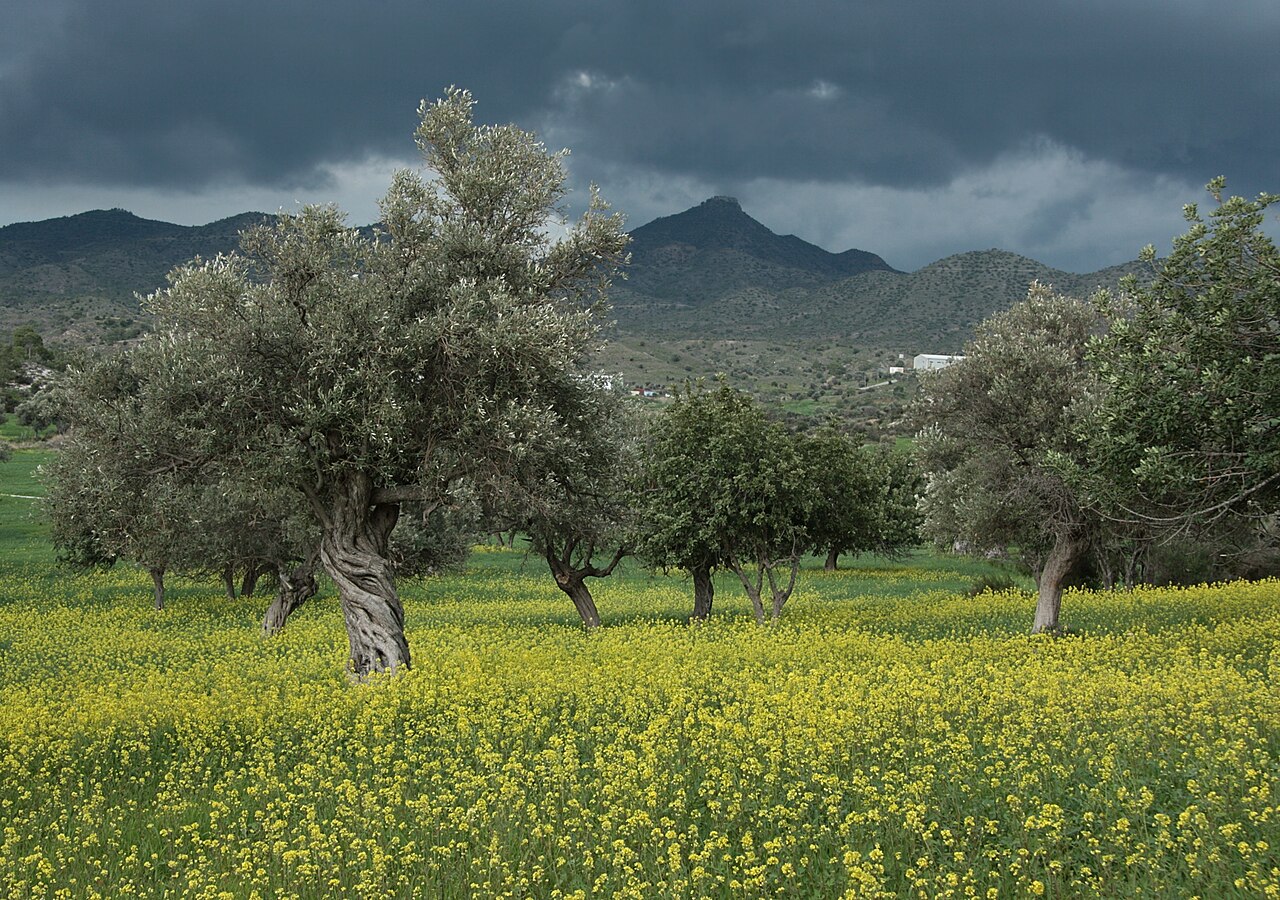
Olea europaea ‘Pendolino’, the Pendolino Olive Tree, is an Italian olive cultivar best known for its distinctive weeping, pendulous branches — the trait that gives it its name, from the Italian for “little pendulum.” It is grown across Italy and increasingly in home orchards worldwide, prized less as a standalone oil producer and more as one of the best all-purpose pollinizer cultivars in the olive world, compatible with a wide range of other varieties.
Gardeners choose Pendolino for its graceful, cascading silhouette, reliable heavy flowering, and the fact that its long, flexible, drooping branches make hand harvesting noticeably easier than with stiffer, upright cultivars. It is also valued for its dependable production of good-quality, abundant pollen, which is why orchardists commonly plant one Pendolino for roughly every ten trees of a main cultivar to improve the whole block’s fruit set.
Olive (Olea europaea) is not native to North America; it is native to the Mediterranean basin. It carries no federal noxious-weed listing, but the California Invasive Plant Council lists olive as a limited-impact invasive in parts of California, where birds spread fruit from fruiting cultivars into oak woodland and other wildland habitat. Pendolino does produce fruit and some viable seed, so California gardeners near natural open space should harvest the crop, avoid planting next to wildlands, and watch for and remove volunteer seedlings.
Identification
Pendolino is a graceful, medium-sized evergreen olive with a growth habit that sets it apart from almost every other cultivar at a glance.
Bark & Stems
The defining trait is in the branches themselves: Pendolino’s shoots are notably long, slender and flexible, arching and drooping under their own weight to give the whole canopy a soft, weeping outline, quite unlike the stiffer, upright branching of a cultivar such as Hojiblanca. Bark on older wood follows the typical gray, finely fissured pattern common to all olive cultivars.
Leaves
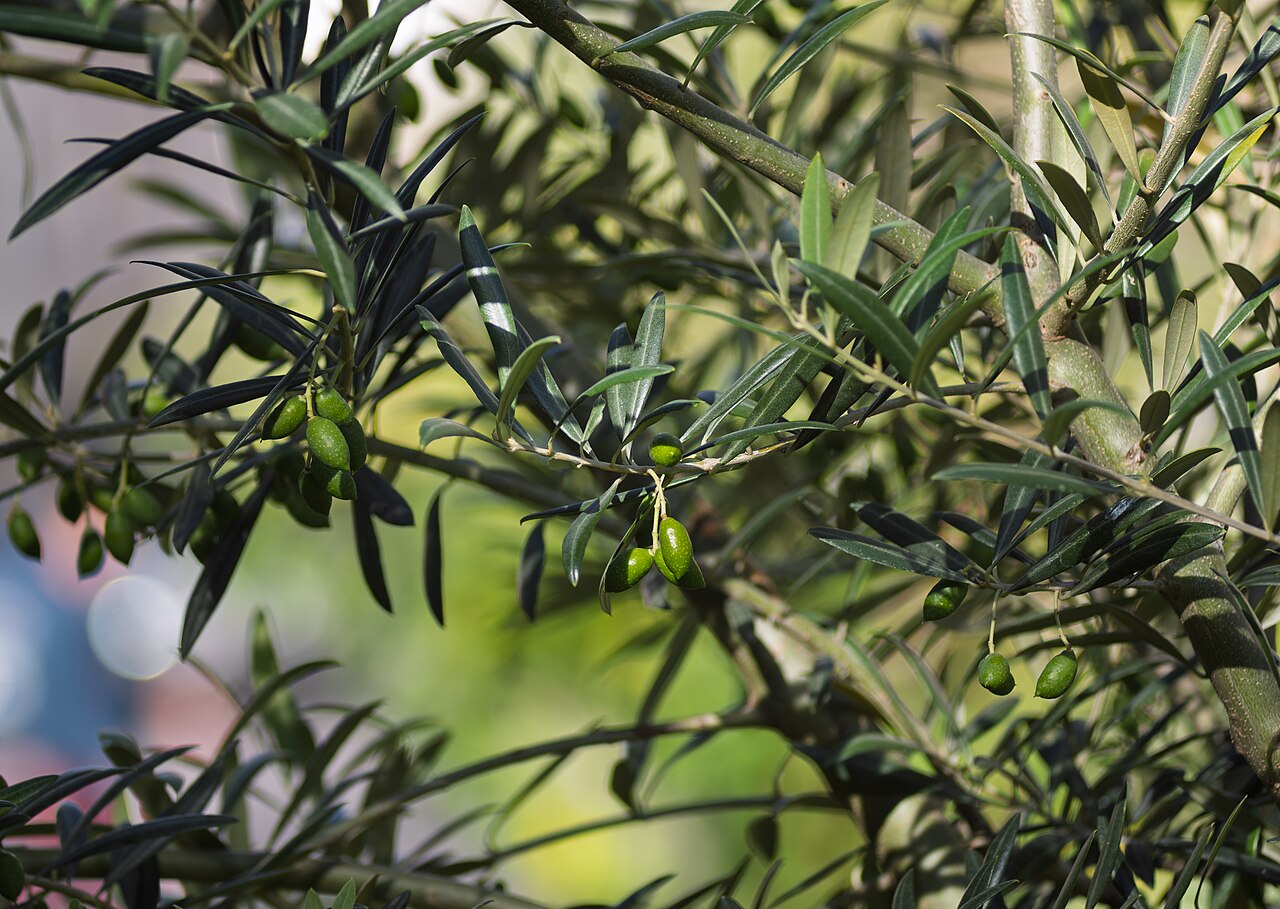
Leaves are narrow and lanceolate, gray-green above and silvery beneath like most olive foliage, carried in opposite pairs along the drooping stems; because the branches hang down, the leaves tend to display in loose, cascading sprays rather than the denser mounded look of upright cultivars.
Flowers & Fruit
Pendolino flowers heavily in late spring, producing abundant, good-quality pollen that makes it one of the most widely used pollinizer cultivars in Mediterranean and California orchards alike; it is considered partially self-fertile but sets noticeably better fruit with a compatible neighbor such as Leccino or Maurino. The fruit itself is small to medium, ripening from green through purple to black from October into November, and the tree is grown mainly for oil rather than table use; oil quality is good, though Pendolino is more valued in a mixed planting for what it does for its neighbors’ yields than for a large crop of its own.
Quick Facts
| Scientific Name | Olea europaea ‘Pendolino’ |
| Cultivar | Pendolino |
| Family | Oleaceae (Olive) |
| Plant Type | Evergreen fruiting/pollinizer tree |
| Native to North America | No — introduced from Italy (Mediterranean basin) |
| Mature Height | 12–20 ft, often lower and wider due to its weeping habit |
| Mature Spread | 12–18 ft, cascading and graceful |
| Growth Rate | Medium; heavy annual flowering |
| Sun Exposure | Full sun |
| Water Needs | Low to moderate once established; drought tolerant |
| Soil Type | Well-drained loam, sand or rocky soil |
| Soil pH | Neutral to alkaline, about 6.5–8.5 |
| Bloom Time | Late spring (May) |
| Leaf / Fall Color | Evergreen; gray-green above, silvery beneath year-round |
| Fruit | Small to medium; mainly pressed for oil; ripens October–November |
| Deer Resistant | Yes |
| USDA Hardiness Zones | 8–10; some mild cold tolerance reported in established wood |
| Invasive Status | Not federally listed; Cal-IPC limited-impact invasive risk in parts of California for fruiting cultivars |
Origin & Where It Grows
The species Olea europaea is native to the Mediterranean basin and the Near East, cultivated there for thousands of years, with wild and naturalized stands from Iberia and North Africa through the Levant and Iran.
Pendolino originated in Italy and has long been grown there as a companion cultivar rather than a stand-alone crop tree, prized specifically for its heavy, compatible pollen and for the way its weeping branches ease manual picking. From Italy it has spread into olive-growing regions worldwide as a near-universal pollinizer choice, interplanted at a low ratio among main production cultivars.
In the United States, Pendolino is grown mainly in California’s Mediterranean-climate districts — the Central Valley, Sierra foothills and Central Coast — almost always as a pollinizer tree scattered through a block of a primary cultivar, though it also makes an attractive single specimen for a home garden thanks to its graceful form. Reports suggest it tolerates cold down to around 10°F once established, making it usable in somewhat cooler microclimates than some other Mediterranean cultivars, though it still needs a true Mediterranean or warm-temperate climate to thrive.
Pendolino Origin & Range
| Species Native Range | Mediterranean basin: southern Europe, North Africa, the Levant |
| Cultivar Origin | Italy |
| Best U.S. Regions | California Central Valley, Sierra foothills, Central Coast; sheltered sites elsewhere in zone 8–10 |
| USDA Zones | 8–10 |
| Invasive Status | Not native; limited-impact invasive risk in parts of California (Cal-IPC) for fruiting cultivars |
Growing & Care Guide
Pendolino is an easy, adaptable olive once established, and its weeping form makes it one of the more ornamental cultivars for a home garden.
Light
Give Pendolino full sun for the best flowering, fruit set and pollen production — at least six to eight hours a day. It tolerates light shade but flowers more sparsely there, which matters if its main job is pollinating neighboring trees.
Soil & Water
Plant in well-drained soil; like all olives, Pendolino is intolerant of waterlogged roots and prone to root rot in heavy, poorly drained ground. Water deeply but infrequently during establishment, then taper off — mature trees handle drought well, though a little supplemental water in summer helps fruit size and keeps the weeping branches from looking stressed.
Planting Tips
Plant in spring after the last frost. In an orchard setting, growers typically scatter one Pendolino for roughly every ten trees of the main cultivar so its pollen reaches the whole block; as a single garden specimen it needs no companion to survive, though fruit set and crop improve with a compatible neighbor such as Leccino or Maurino nearby.
Pruning & Maintenance
Light, selective pruning in late winter keeps the weeping canopy open to light and air without fighting its natural cascading habit — avoid shearing it into a stiff, upright shape, which works against the cultivar’s main appeal. Because the long branches droop low, allow enough ground clearance when planting near walkways.
Propagation
Pendolino, like all named olive cultivars, must be propagated from cuttings or by grafting to come true; seedlings grown from its fruit revert to unpredictable, usually inferior wild-type characteristics and lose the weeping habit that defines the cultivar. Semi-hardwood cuttings taken in summer root reliably under mist with rooting hormone.
Landscape Uses
- Pollinizer tree interplanted among self-sterile or weakly self-fruitful cultivars in a home orchard
- Ornamental specimen where its graceful, weeping silhouette can be appreciated on its own
- Mediterranean and drought-tolerant gardens alongside lavender, rosemary and other low-water plantings
- Espalier or large container specimens in borderline-hardy regions
Harvest & Pollination
Pendolino is partially self-fertile, but its main role in most plantings is as a pollinizer: it produces abundant, good-quality pollen compatible with many other cultivars and is commonly planted at a low ratio throughout a block to lift the whole orchard’s yield. If harvesting fruit for oil, pick from October into November as color shifts from green through purple toward black; because the long branches are flexible, hand harvesting is notably easier on Pendolino than on stiffer-branched cultivars. Any fruit kept for table use must be cured first — brined, lye-treated, water-cured or dry-salted — since raw olives are intensely bitter and not eaten straight off the tree.
Wildlife & Ecological Value
Olive flowers are wind-pollinated, not insect-pollinated, so Pendolino offers little nectar or pollen value to bees and other pollinators despite its own heavy bloom, and it supports very few native North American insects since it evolved outside the continent. Birds will eat ripe fruit if it is left on the tree, which is the pathway by which fruiting olive cultivars have naturalized in parts of coastal and interior California — another reason to harvest any fruit crop rather than let it drop. Its weeping branches do provide some physical cover for small birds in a garden setting, but ecologically it functions mainly as an ornamental and production tree rather than a wildlife-support planting.
Native Alternatives
- Desert Olive (Forestiera neomexicana) — a small, silvery-leaved native shrub-tree of the Southwest with fine texture and far lower water needs
- Texas Olive (Cordia boissieri) — a small evergreen native tree from South Texas with gray-green leaves and showy white flowers
- American Sweet Olive / Devilwood (Osmanthus americanus) — a native evergreen tree in the olive family (Oleaceae) with fragrant flowers and glossy foliage
- Desert Willow (Chilopsis linearis) — a native small tree for hot, dry gardens with a loose, drooping silhouette that echoes Pendolino’s weeping form
History & Uses
Pendolino developed in Italy as olive growers recognized the value of a reliably heavy-flowering, broadly compatible pollen source to pair with Italy’s many self-sterile or weakly self-fruitful main cultivars, such as Frantoio and Leccino. Over time it spread well beyond Italy, becoming one of the most commonly planted pollinizer cultivars in olive-growing regions worldwide, including California, precisely because so few other cultivars are incompatible with its pollen.
Although it can be pressed on its own for a usable oil, Pendolino’s main contribution to an orchard has always been indirect: a few well-placed trees lift the fruit set, and therefore the oil yield, of an entire planting of other cultivars. In home gardens its weeping form has also made it popular as an ornamental olive in its own right, valued as much for how it looks as for what it produces.
Frequently Asked Questions
Is Pendolino olive tree native to the United States?
No. Olive (Olea europaea) is native to the Mediterranean basin, not North America. Pendolino is an introduced, cultivated variety; in parts of California it is treated as a limited-impact invasive risk because birds can spread unharvested fruit into wildland habitat, so pick the crop and avoid planting it next to natural open space there.
Why is Pendolino planted if it isn’t grown mainly for its own fruit?
Pendolino is prized chiefly as a pollinizer: it flowers heavily and produces abundant, good-quality pollen compatible with many other olive cultivars, so a few trees scattered through an orchard of a different main cultivar noticeably improve the whole block’s fruit set.
What makes Pendolino’s branches droop like that?
It is simply a genetic growth trait of the cultivar — the shoots are unusually long and flexible and arch downward under their own weight, giving the tree its name (Italian for “little pendulum”) and its graceful, weeping silhouette.
Does Pendolino need another olive tree nearby?
It is only partially self-fertile, so while it can set some fruit alone, both its own crop and its usefulness as a pollinizer for other trees improve with compatible neighboring cultivars, such as Leccino or Maurino, within bee range.
Can you eat Pendolino olives straight from the tree?
No. Like all olive cultivars, Pendolino fruit is extremely bitter raw due to natural oleuropein and must be cured — typically brined, lye-treated, water-cured or dry-salted — before it is palatable.

