Mission Olive Tree (Olea europaea ‘Mission’)
Last updated: November 3, 2026
Olea europaea ‘Mission’ is the oldest olive cultivar grown in North America, developed not in the Mediterranean but in California itself, from seedling olives planted by Spanish Franciscan missionaries along El Camino Real in the late 1700s and 1800s. Over generations of selection at the missions, one particularly cold-hardy, dual-purpose strain became known simply as “Mission,” and it remains a widely planted cultivar today, valued for olives that work equally well for oil and for curing as table olives.
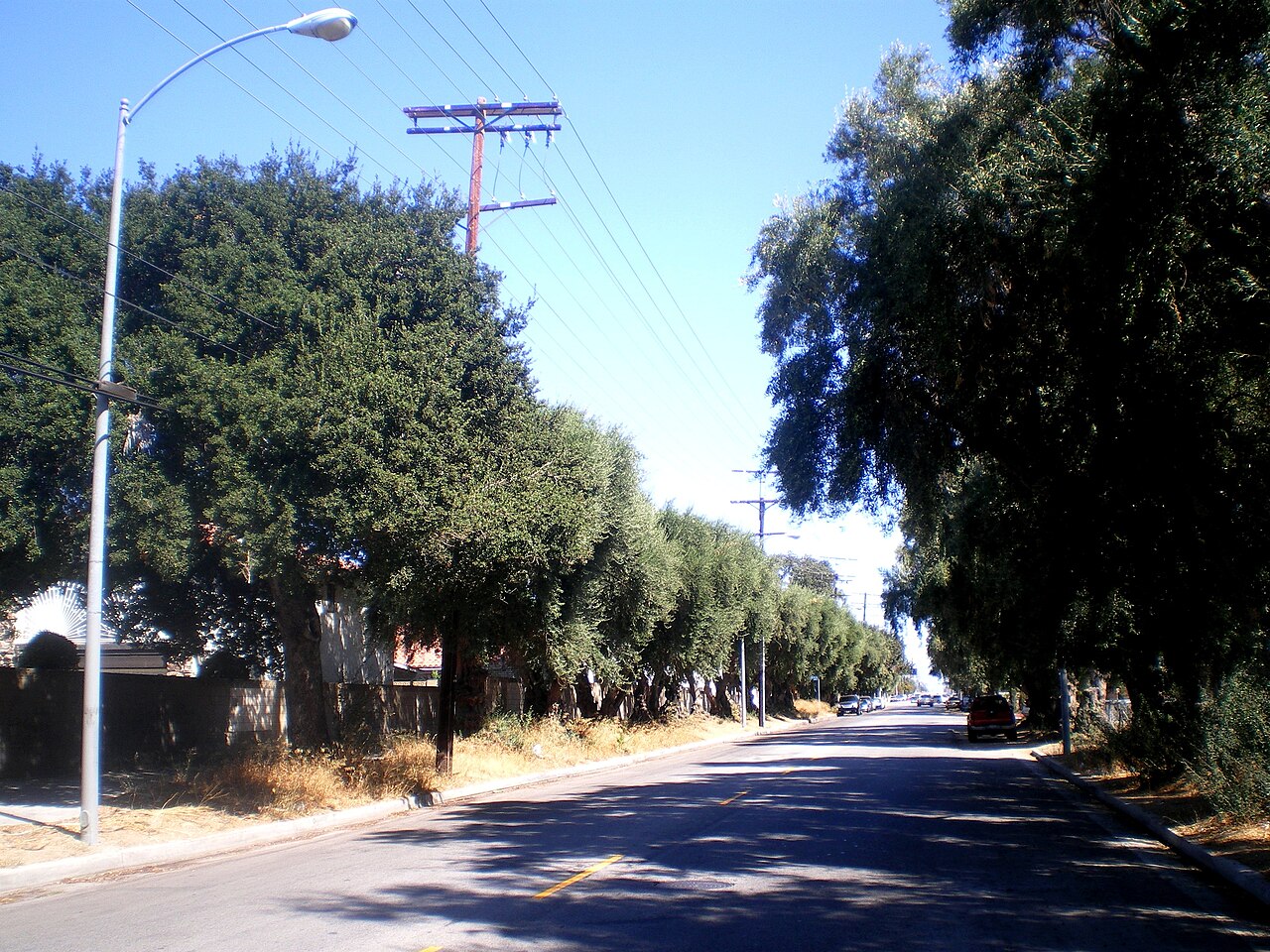
Gardeners and small growers choose Mission for its toughness: it tolerates more cold than many other olive cultivars, adapts to a wide range of soils, and produces a reliable, dual-purpose crop. Its upright, symmetrical form and dense, silvery canopy also make it a handsome shade and specimen tree, and its deep historical roots in California give it a sense of place that few other fruit trees can match.
Olive (Olea europaea) is not native to North America. The species is native to the Mediterranean basin, and even the “Mission” cultivar, despite being selected in California, descends entirely from olive stock carried from Spain. Mission is not on any federal noxious-weed list, but in parts of coastal and central California, birds spread the fruit of fruiting cultivars like Mission into wildland, where Cal-IPC lists olive as a limited-impact invasive. Gardeners in those areas should harvest fruit promptly and avoid planting next to natural open space.
Identification
Mission is a medium to large, upright-growing olive cultivar with a denser, more symmetrical habit than sprawling cultivars like Manzanillo, and noticeably smaller, more elongated fruit than table-focused cultivars.
Bark & Stems
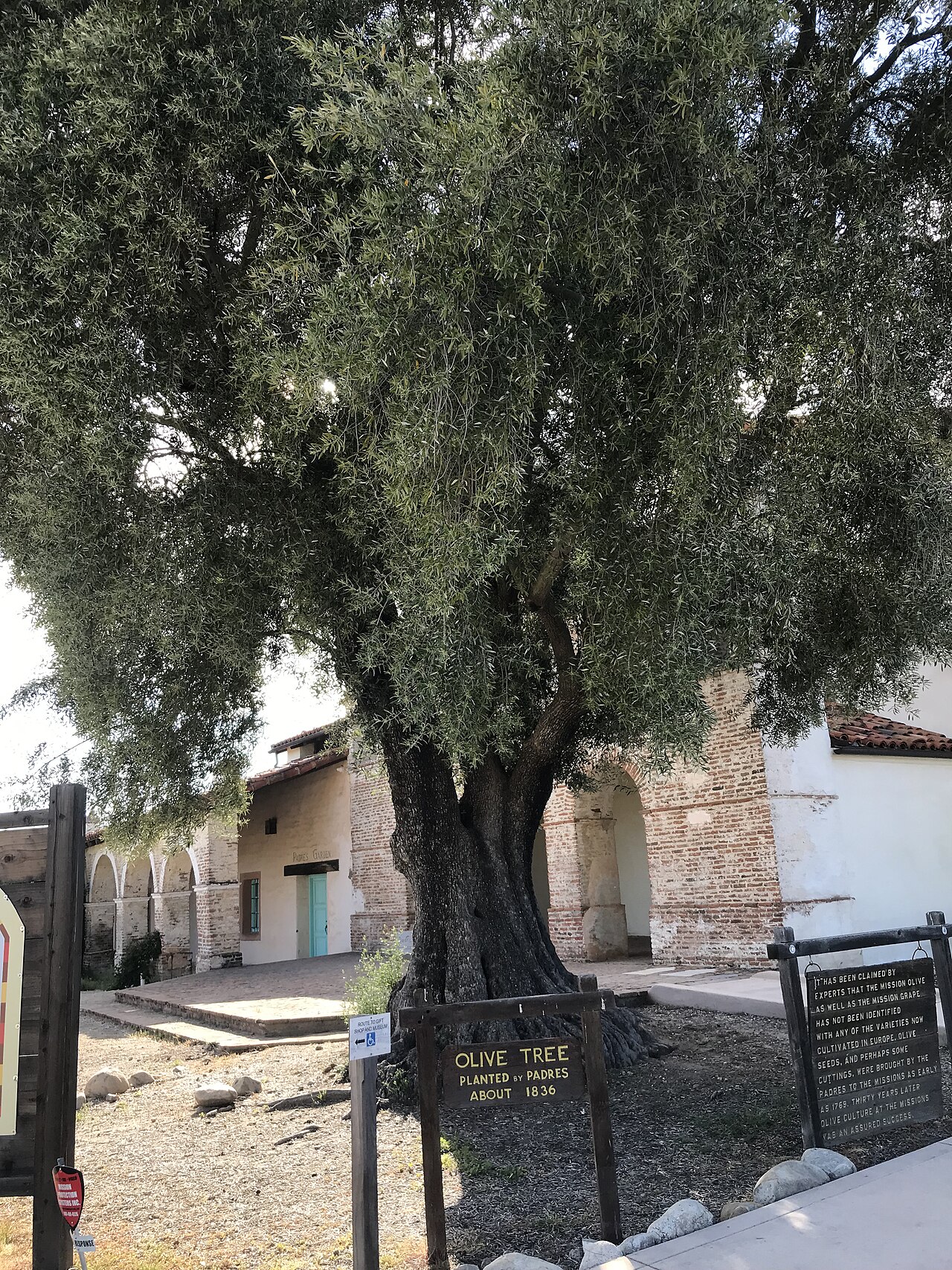
Old Mission trees develop thick, deeply furrowed gray-brown trunks, often multi-stemmed from the base, a look well illustrated by surviving mission-era trees still standing at several California missions today. Younger wood is smoother and gray-green.
Leaves
Leaves are narrow and lance-shaped, 1.5 to 3 inches long, gray-green above with a dense silvery-white scurf beneath, typical of the species. Mission’s canopy tends to read denser and more uniformly rounded than looser cultivars.
Flowers
Small, creamy-white, wind-pollinated flowers form in loose axillary clusters in mid-spring. Mission is considered self-fertile, setting a good crop as a single tree, though cross-pollination with a second cultivar can improve yield.
Fruit & Seeds
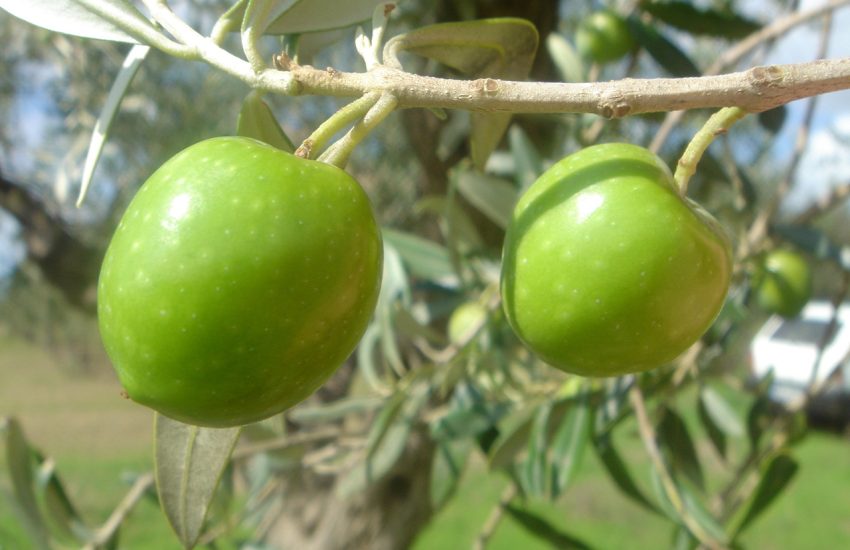
Mission fruit is medium-sized, oval, and turns from green through purplish-red to near-black at full ripeness. It has a relatively high oil content, often cited around 20 to 22 percent, with flesh that separates cleanly from the pit — a trait that has long made it useful for both oil pressing and brine-curing as a black ripe table olive. As with all olives, raw fruit is bitter and inedible until cured.
Quick Facts
| Scientific Name | Olea europaea ‘Mission’ |
| Cultivar | Mission |
| Family | Oleaceae (Olive) |
| Plant Type | Evergreen fruit tree |
| Native to North America | No — species introduced from the Mediterranean basin; cultivar selected from Spanish mission plantings in 18th–19th century California |
| Mature Height | 20–30 ft |
| Mature Spread | 15–25 ft, upright and rounded |
| Growth Rate | Moderate |
| Sun Exposure | Full sun |
| Water Needs | Low to moderate; drought tolerant once established |
| Soil Type | Well-drained; tolerates poor or rocky soil |
| Soil pH | 6.0–8.5; tolerates alkaline soils |
| Bloom Time | April – May |
| Leaf / Fall Color | Evergreen; gray-green with silvery undersides, no fall color change |
| Fruit | Medium oval olives, about 22% oil content, flesh separates cleanly from pit; dual-purpose oil and table use |
| Deer Resistant | Yes, generally |
| USDA Hardiness Zones | 8–10 (somewhat more cold-tolerant than many other cultivars) |
| Invasive Status | Not native; not federally listed; Cal-IPC limited-impact concern for fruiting olives in parts of coastal/central California wildlands |
Origin & Where It Grows
Olea europaea is native to the Mediterranean basin, the Near East and North Africa, with no wild populations anywhere in the Americas. Every olive tree in California, including the Mission cultivar, descends from cuttings or seed carried from Spain.
The Mission cultivar’s story begins with Franciscan missionaries, who planted olive trees, along with grapevines, at missions up and down El Camino Real starting in the late 18th century, beginning with Mission San Diego de Alcalá around 1769. Historians have never definitively traced the exact Spanish or Mexican cultivar(s) those original cuttings came from; over generations of local propagation and selection at the missions, a distinct, relatively cold-hardy, dual-purpose type emerged that came to be called simply “Mission.” Some of those original mission-era trees, planted in the early-to-mid 1800s, still stand today at historic mission sites in California.
In the United States, Mission grows well across California’s Central Valley and coastal valleys, into parts of Arizona and the warmer regions of Texas, and it is somewhat more tolerant of occasional light freezes than many other common olive cultivars, which has helped it persist in a wider range of plantings since the mission era.
Growing & Care Guide
Mission is one of the more forgiving olive cultivars for home gardeners, combining good cold tolerance with the same drought and poor-soil tolerance shared by the species.
Light
Plant Mission in full sun; six or more hours of direct light daily keeps the canopy dense and maximizes flowering and fruit set.
Soil & Water
Well-drained soil is essential — Mission, like all olives, is highly susceptible to root rot in soggy, poorly drained ground. It tolerates sandy, rocky and alkaline soils well. Water deeply but infrequently once established; mature trees are quite drought tolerant, though some supplemental water during bloom and fruit set improves yield.
Planting Tips
Plant in spring or fall, choosing a site with good air drainage away from frost pockets, since Mission grows into a fairly large, upright tree and needs room — plan for at least 15 to 20 feet of clearance from structures and other trees.
Pruning & Maintenance
Prune in late winter to thin crowded interior growth and maintain an open canopy, which improves fruit ripening and air circulation. Mission’s naturally upright, rounded form needs less corrective pruning than sprawling cultivars, but regular light pruning keeps older trees productive. Fertilize lightly in spring; established trees need little supplemental feeding.
Propagation
Mission is propagated from cuttings or grafted onto rootstock; it does not come true from seed, since seedlings vary and generally produce inferior fruit compared with the named cultivar. Semi-hardwood cuttings root with bottom heat and rooting hormone.
Landscape Uses
- Shade and specimen trees, valued for their dense, upright, historic form
- Dual-purpose home orchards, since the same fruit works for both oil and brine-cured table olives
- Mediterranean and xeriscape gardens, suited to low-water landscapes
- Historic and mission-revival gardens, where Mission’s California heritage fits the setting
Harvest & Pollination
Mission is self-fertile and will set a good crop as a single tree, though cross-pollination with a second cultivar can increase yield. Chill requirements are moderate and typically met by winters in zones 8–10. Fruit can be harvested green for brine curing or oil, or left to ripen to near-black for classic California “black ripe” table olives (the canned, mild, oxidized-black style) or for oil pressing. All raw olives must be cured or pressed before eating; they are not edible straight off the tree.
Wildlife & Ecological Value
Mission’s wind-pollinated flowers offer little nectar or pollen value to bees and other pollinators, unlike native flowering trees. Its fruit is readily eaten by birds, which can carry seed into nearby wildland in parts of coastal and central California, making prompt harvest important in those regions. Compared with native California oaks, maples or other regional trees, Mission olive supports very few native insect species, since it has no long shared evolutionary history with local wildlife.
Native Alternatives
For California and Southwestern gardeners who want a similarly tough, historically resonant tree with stronger wildlife value, consider:
- Desert olive (Forestiera neomexicana) — a drought-tolerant Southwestern native with a comparable gray-green, olive-like look
- Texas olive (Cordia boissieri) — a tough native small tree with showy white flowers for hot, dry gardens
- American sweet olive / devilwood (Osmanthus americanus) — a native evergreen relative in the olive family
- Fringetree (Chionanthus virginicus) — a native olive-family relative grown for its fringed spring flowers
History & Uses
The Mission olive is, in a real sense, California’s own olive cultivar. Franciscan missionaries planted the first olive trees at California missions beginning in the late 1700s, bringing cuttings or seed of Spanish origin that were never precisely documented. Over decades of local cultivation and informal selection at the missions, a distinct, cold-hardier, dual-purpose strain emerged, and by the 19th century it was being called the Mission olive. Several individual trees planted at historic missions in that era, some dating to the early-to-mid 1800s, still survive today and are recognized as historic landmarks.
Mission became the dominant olive cultivar in California through the 19th and early 20th centuries, grown both for oil and, increasingly, for the mild, oxidized “black ripe” canned table olive that became a distinctly Californian product. Though it has since been joined and in commercial oil acreage partly overtaken by newer high-density cultivars like Arbequina, Mission remains widely planted for its dual-purpose fruit, its cold hardiness, and its deep connection to California’s agricultural history. The cultivar has also been recognized by the Slow Food movement’s Ark of Taste as a heritage food worth preserving.
Today, Mission olive oil is often marketed for its robust, slightly peppery flavor, distinct from the milder profile of Arbequina, and home growers continue to value the tree for producing a single, versatile crop that can be cured as table olives or pressed for oil in the same season.
Frequently Asked Questions
Is the Mission olive tree native to California?
No. Although the Mission cultivar was selected and developed in California, the species Olea europaea is native to the Mediterranean basin, not North America, and every Mission tree descends from Spanish stock brought over by missionaries. It is not federally listed as invasive, but in parts of coastal and central California, Cal-IPC lists olive as a limited-impact invasive because birds spread fruit into wildland; harvest fruit promptly in those areas.
How cold-hardy is Mission olive?
Mission is considered one of the more cold-tolerant common olive cultivars, generally suited to USDA zones 8–10, and it has historically persisted in plantings slightly outside the warmest olive-growing areas compared with less hardy cultivars.
Is Mission olive good for oil or table use?
Both. Mission is a true dual-purpose cultivar, with high enough oil content (commonly cited around 20–22%) for quality oil, and flesh that separates cleanly from the pit, which also makes it well suited to brine-curing as a table olive.
Can I eat olives straight from a Mission tree?
No. Raw olives, including Mission, are intensely bitter and must be cured in brine, water, salt or lye, or pressed into oil, before they are edible.
Where can I see historic Mission olive trees?
Several California missions, including sites along the historic El Camino Real, still have olive trees planted in the 1800s, some marked with historical plaques noting their planting dates; these old trees are living examples of the cultivar’s origin, even though their exact identity relative to the modern named cultivar is not always certain.