
Seiryu Japanese Maple (Acer palmatum var. dissectum ‘Seiryu’)
Last updated: November 3, 2026
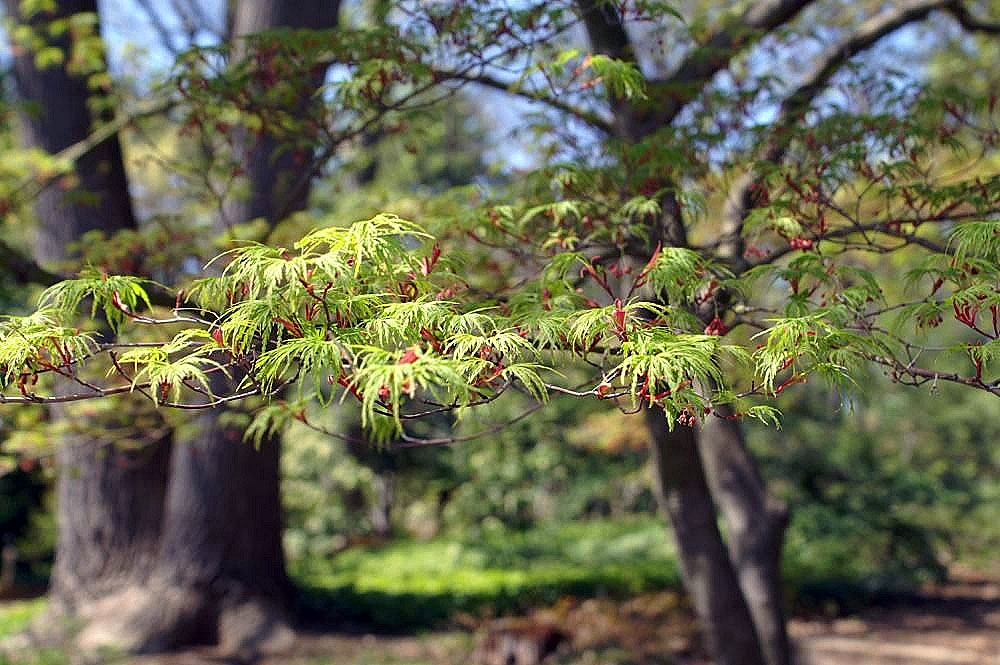
Acer palmatum var. dissectum ‘Seiryu’, the Seiryu Japanese Maple, is a genuine horticultural oddity: it is the only dissectum (laceleaf) Japanese maple cultivar with an upright, tree-like habit rather than the mounding or weeping form typical of almost every other cutleaf selection. Its name means “blue dragon” or “green dragon” in Japanese, a nod to both its finely cut foliage and its unusually vigorous, upright growth for a dissectum.
Gardeners choose Seiryu when they want the delicate, lacy texture of a cutleaf maple without the low, spreading footprint most dissectums demand. Because it grows upright to 10 to 15 feet rather than staying a wide, ground-hugging mound, it works in spots where a typical weeping laceleaf maple would be too sprawling, and its fall color is often described as more vivid than that of the more common green mounding dissectum types.
Japanese maple (Acer palmatum) is not native to North America — it is native to Japan, Korea and eastern China — and Seiryu is an introduced, cultivated selection of that species. It is not on any federal noxious weed list, but in parts of the eastern United States, especially the Mid-Atlantic, seedlings of green-leaved Japanese maples occasionally escape cultivation into forest understories. Plant Seiryu away from natural woodland edges and remove any volunteer seedlings nearby; as a full-size, upright cultivar it can set a modest amount of viable seed, though dissectum types in general tend to set less seed than full-size green forms.
Identification
Seiryu’s biggest identification clue is its silhouette: where almost every other laceleaf Japanese maple forms a low, cascading mound, Seiryu grows as an upright small tree with a vase-shaped to rounded crown, typically 10 to 15 feet tall and 8 to 12 feet wide.
Bark & Stems
Young stems are green to reddish-green, aging to smooth gray-brown bark. The upright branching habit, rather than the bark itself, is the most reliable way to distinguish Seiryu from other dissectum cultivars at any season.
Leaves
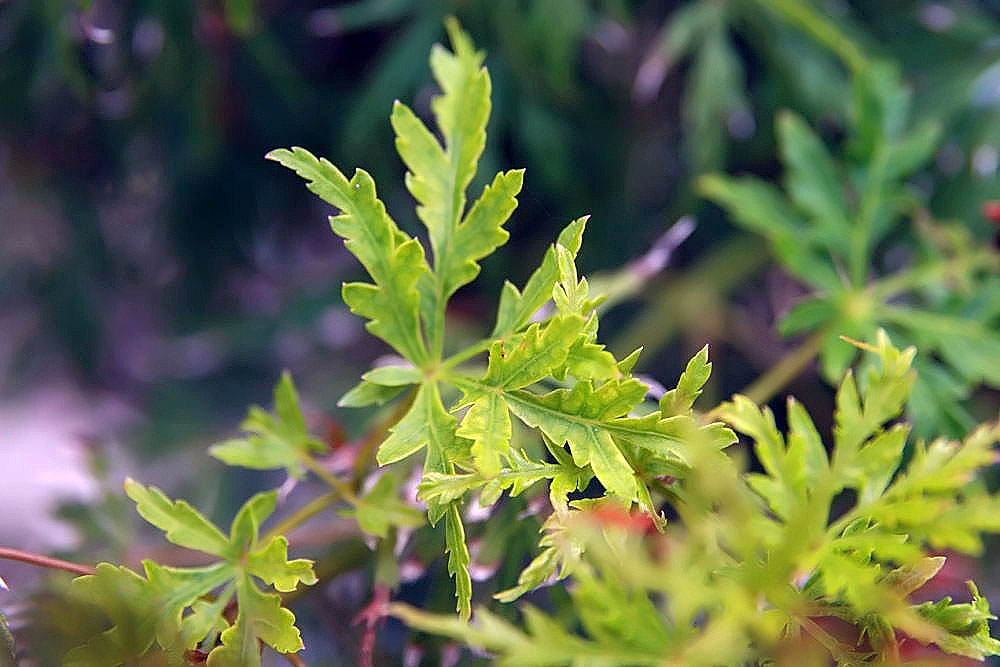
Leaves are deeply and finely dissected into thread-like lobes, smaller than the leaves of most other dissectum cultivars, generally under 2 inches long. New spring growth emerges lime-green with reddish tips, maturing to a soft medium green through summer — a lighter color than most of the common weeping green-leaf dissectums, which tend toward a more uniform deep green.
Flowers
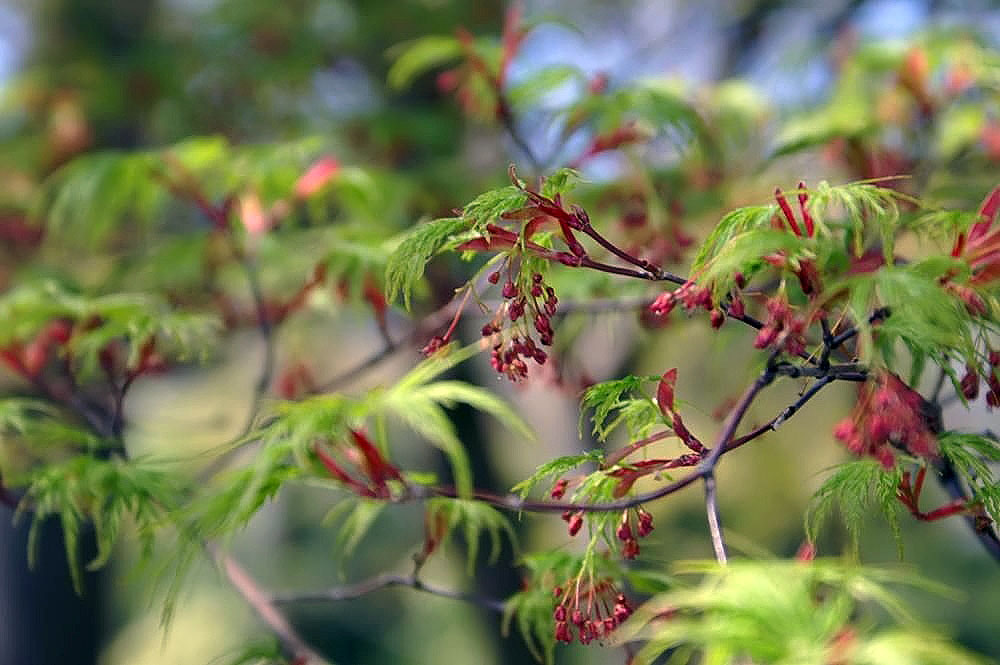
Small, inconspicuous reddish-purple flowers appear in spring in loose clusters, mostly hidden among the lacy foliage; they are wind- and insect-pollinated.
Fruit & Seeds
Flowers are followed by small, paired, winged samaras that ripen from green to brown by fall. Seed set is generally light, as is typical for dissectum-type Japanese maples.
Quick Facts
| Scientific Name | Acer palmatum var. dissectum ‘Seiryu’ |
| Cultivar | ‘Seiryu’ |
| Family | Sapindaceae (Maple) |
| Plant Type | Deciduous small tree (upright dissectum/laceleaf type) |
| Native to North America | No — introduced; species native to Japan, Korea and eastern China |
| Mature Height | 10–15 ft |
| Mature Spread | 8–12 ft |
| Growth Rate | Moderate; notably faster and more upright than most dissectum cultivars |
| Sun Exposure | Full sun to part shade; afternoon shade helps in hot-summer climates |
| Water Needs | Average, consistent moisture; some drought tolerance once established |
| Soil Type | Rich, well-drained loam |
| Soil pH | Slightly acidic (about 5.5–6.5); tolerates close to neutral |
| Bloom Time | Spring (April–May), inconspicuous |
| Leaf / Fall Color | Lime-green with reddish tips in spring, medium green in summer; gold, orange and red fall color |
| Fruit | Small winged samaras, light seed set typical of dissectum types |
| Deer Resistant | Mostly — occasional light browsing reported |
| USDA Hardiness Zones | 5–8 |
| Invasive Status | Not federally listed; watch for and remove escaped seedlings near wild areas in parts of the eastern U.S. |
Origin & Where It Grows
Acer palmatum, the species Seiryu belongs to, is native to woodlands and mountain slopes of Japan, South Korea and parts of eastern China, where it grows as an understory and edge tree. The dissectum (laceleaf) group, of which Seiryu is a member, has been cultivated in Japan for centuries as a distinct line of finely cut-leaf selections, most of which naturally develop a low, weeping form.
‘Seiryu’ stands out within that group as a long-recognized exception with an upright habit, and it has been grown and distributed in Japan and the West for many decades as a way to get dissectum-type foliage texture on a taller, more tree-like plant; exact dating of its original selection in Japan is not consistently documented in Western nursery sources.
In the U.S., Seiryu performs best across USDA zones 5 through 8 — the Pacific Northwest, the Mid-Atlantic, the Ohio Valley, and much of the upper South with some afternoon shade. It can struggle in the hottest, driest parts of zone 8b and warmer without irrigation and afternoon shade.
Growing & Care Guide
Light
Seiryu does well in full sun to part shade. In regions with intense summer heat, afternoon shade helps prevent leaf scorch on its fine-textured foliage, while morning sun still supports good spring and fall color.
Soil & Water
Give it rich, well-drained soil; like other Japanese maples, Seiryu does not tolerate wet feet, so amend heavy clay or plant on a slight mound. Keep soil evenly moist the first two to three growing seasons; established trees handle brief dry spells but look best with regular water during drought.
Planting Tips
Plant in spring or fall at the same depth as the nursery container, and mulch 2 to 3 inches deep, keeping mulch away from the trunk. Choose a site sheltered from strong, drying wind, which can tatter the finely cut leaves.
Pruning & Maintenance
Prune in late fall through winter dormancy to limit sap bleeding; remove dead, crossing or crowded branches to maintain the upright form that makes Seiryu distinctive among dissectum cultivars. Because it grows more vigorously than most laceleaf types, young plants may need more structural shaping in their first years.
Propagation
Seiryu is propagated by grafting onto seedling rootstock, which is how nurseries reliably reproduce its upright habit and fine-cut leaves. Seed-grown plants are unpredictable and typically do not reproduce the parent’s distinctive upright, dissected form, so buy grafted, named plants for true Seiryu characteristics.
Landscape Uses
- Vertical accent where the lacy texture of a dissectum is wanted without a sprawling, ground-hugging footprint
- Specimen or focal tree in beds where a mounding weeping maple would take up too much ground space
- Patio and courtyard tree, since its moderate size and upright form suit smaller landscapes
- Japanese-style and zen gardens, where fine texture and an upright “dragon” form are traditionally prized
- Mixed borders as a textural contrast to broad-leaved shrubs and perennials
Wildlife & Ecological Value
Seiryu offers modest wildlife value compared with native maples such as red maple or sugar maple, which host large numbers of native moth and butterfly caterpillars. Its small spring flowers draw some pollinating insects, and its light seed crop is occasionally eaten by birds and squirrels, but few native insect species are adapted to use Acer palmatum as a host plant. Treat it as an ornamental accent and pair it with native trees and shrubs elsewhere on the property to support local food webs.
Native Alternatives
For gardeners who want fine-textured native foliage or a graceful small upright tree, consider:
- Vine maple (Acer circinatum) — a Pacific Northwest native with a similarly graceful, multi-stemmed form and good fall color
- Striped maple (Acer pensylvanicum) — an eastern native understory tree with distinctive bark and light, airy foliage
- Rocky Mountain maple (Acer glabrum) — a small, upright-growing native maple for western gardens
- Bigtooth maple (Acer grandidentatum) — a drought-tolerant native with strong fall color in a similar size range
- Fringetree (Chionanthus virginicus) — not a maple, but a native small flowering tree of similar scale for accent plantings
History & Uses
Acer palmatum has been cultivated in Japan for well over a thousand years, and the dissectum or laceleaf group has long been treasured for its delicate, fern-like foliage. Most dissectum cultivars naturally form low, cascading mounds, which made Seiryu’s upright habit notable enough to earn it a lasting place in the cultivar lineup as a distinct option for gardeners who want laceleaf texture without a weeping form.
Seiryu has remained a steady presence in both Japanese and Western nursery catalogs for decades, prized by bonsai growers and landscape designers alike for combining fine leaf texture with a more tree-like, space-efficient structure than other dissectums. Its reliable fall color has also made it a favorite for extending seasonal interest in gardens that already feature more common green mounding laceleaf types.
Beyond ornamental landscaping and bonsai use, Seiryu has no significant food, medicinal or commercial timber uses; its value is almost entirely as a garden specimen.
Frequently Asked Questions
Is Seiryu Japanese maple native to the United States?
No. Acer palmatum is native to Japan, Korea and eastern China. Seiryu is a cultivated selection of that introduced species, not a North American native plant.
What makes Seiryu different from other laceleaf Japanese maples?
Seiryu is the only dissectum (laceleaf) cultivar in common cultivation with an upright, tree-like growth habit. Nearly all other cutleaf cultivars form low, weeping or mounding shrubs, while Seiryu grows 10 to 15 feet tall in a more vase-shaped form.
How big does a Seiryu Japanese maple get?
Most sources agree on a mature size of about 10 to 15 feet tall and 8 to 12 feet wide, making it taller than most dissectum cultivars but still a small accent tree for most yards.
Does Seiryu Japanese maple have good fall color?
Yes. Seiryu is often noted for more vivid fall color — a mix of gold, orange and red — than many of the common green mounding dissectum cultivars, which can be a deciding factor for gardeners choosing between laceleaf types.
Is Seiryu Japanese maple invasive?
It is not on federal or most state noxious-weed lists, but as an introduced species it can set some viable seed, and in parts of the eastern U.S. Japanese maple seedlings occasionally escape into wooded areas. Plant away from natural woodland edges and pull any volunteer seedlings you notice.

