Coratina Olive Tree (Olea europaea ‘Coratina’)
Last updated: November 3, 2026
Olea europaea ‘Coratina’, the Coratina Olive Tree, is an olive oil cultivar from the town of Corato in Puglia (Apulia), the heel of Italy, where it is now the single most widely planted olive variety in the region. Gardeners and small growers plant it for one reason above all: the oil. Coratina produces an unusually robust, intensely peppery, grass-and-artichoke extra-virgin oil loaded with polyphenols, the natural antioxidants that give olive oil its sharp bitterness and bite-back burn in the throat. Few cultivars in the world pack more of them into a single fruit.
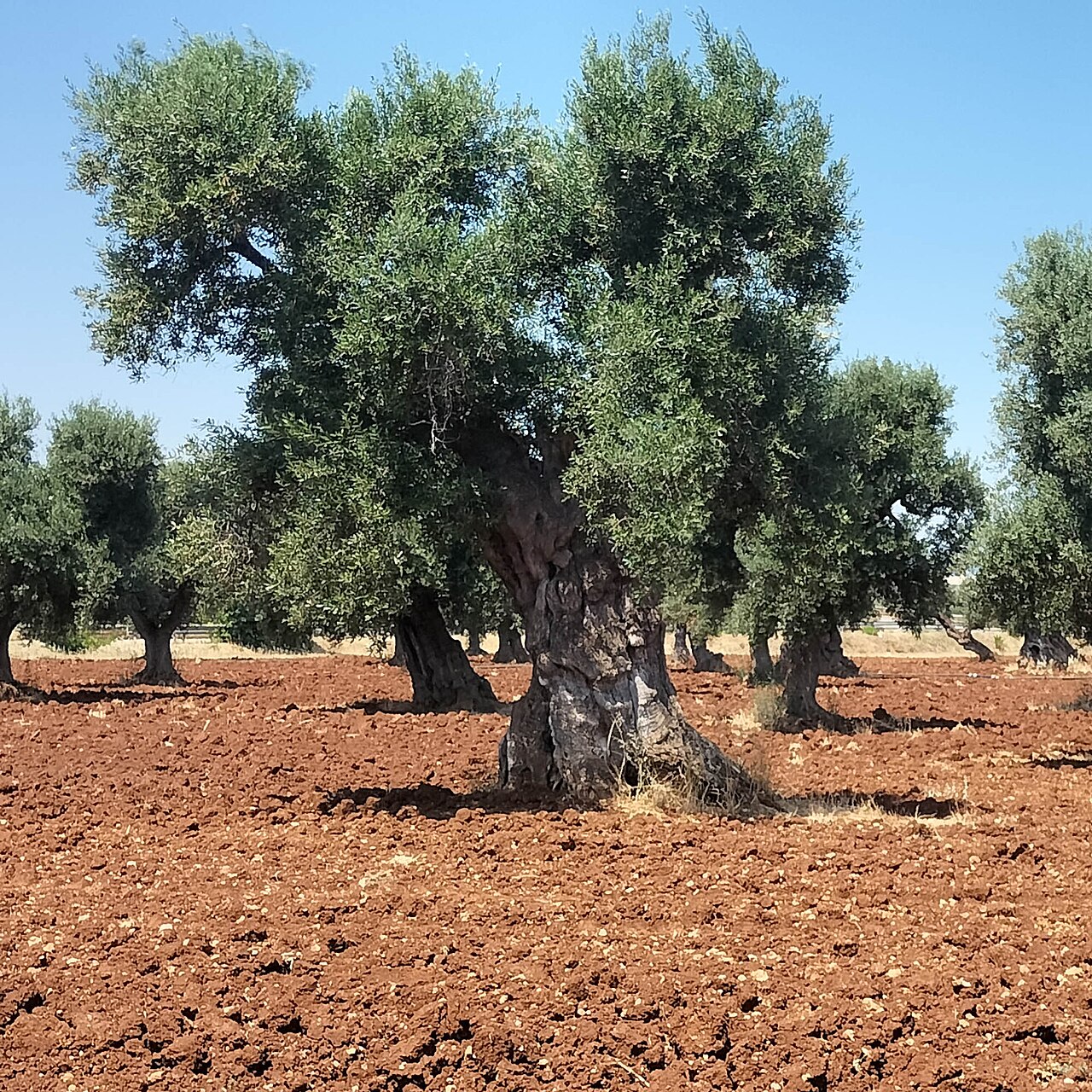
In the landscape, Coratina is a tough, weather-beaten tree: a weak-to-medium-vigor grower with a loose, spreading canopy that looks ancient even at a modest age, with a gray, deeply furrowed trunk. It copes well with the hot, dry, rocky soils of inland Puglia and tolerates cold better than many Mediterranean olive cultivars, which is part of why it has spread far beyond its home province into other parts of Italy and into new olive-growing regions worldwide, including small plantings in the warmer parts of the United States.
Olive (Olea europaea) is native to the Mediterranean basin, the Near East and parts of Africa — not to North America — so Coratina is an introduced, cultivated tree here, not a wild or naturalized one. It is not on any federal noxious-weed list, but in parts of coastal and central California, birds spread the fruit of fruiting olive cultivars into oak woodland and chaparral, where California’s invasive plant council (Cal-IPC) rates olive a limited-impact invasive. Gardeners in those areas should harvest the fruit each year (Coratina’s oil-grade olives make this easy, since the whole point of growing it is to pick and press them) and avoid planting right at the edge of wildland.
Identification
Bark & Stems
Coratina trees develop a gray, rough, furrowed bark on an often leaning or twisted trunk, typical of old-world olive cultivars grown for centuries by coppicing and hard pruning. The growth habit is spreading rather than upright, with a medium-to-dense canopy of slender, silvery-gray branches.
Leaves
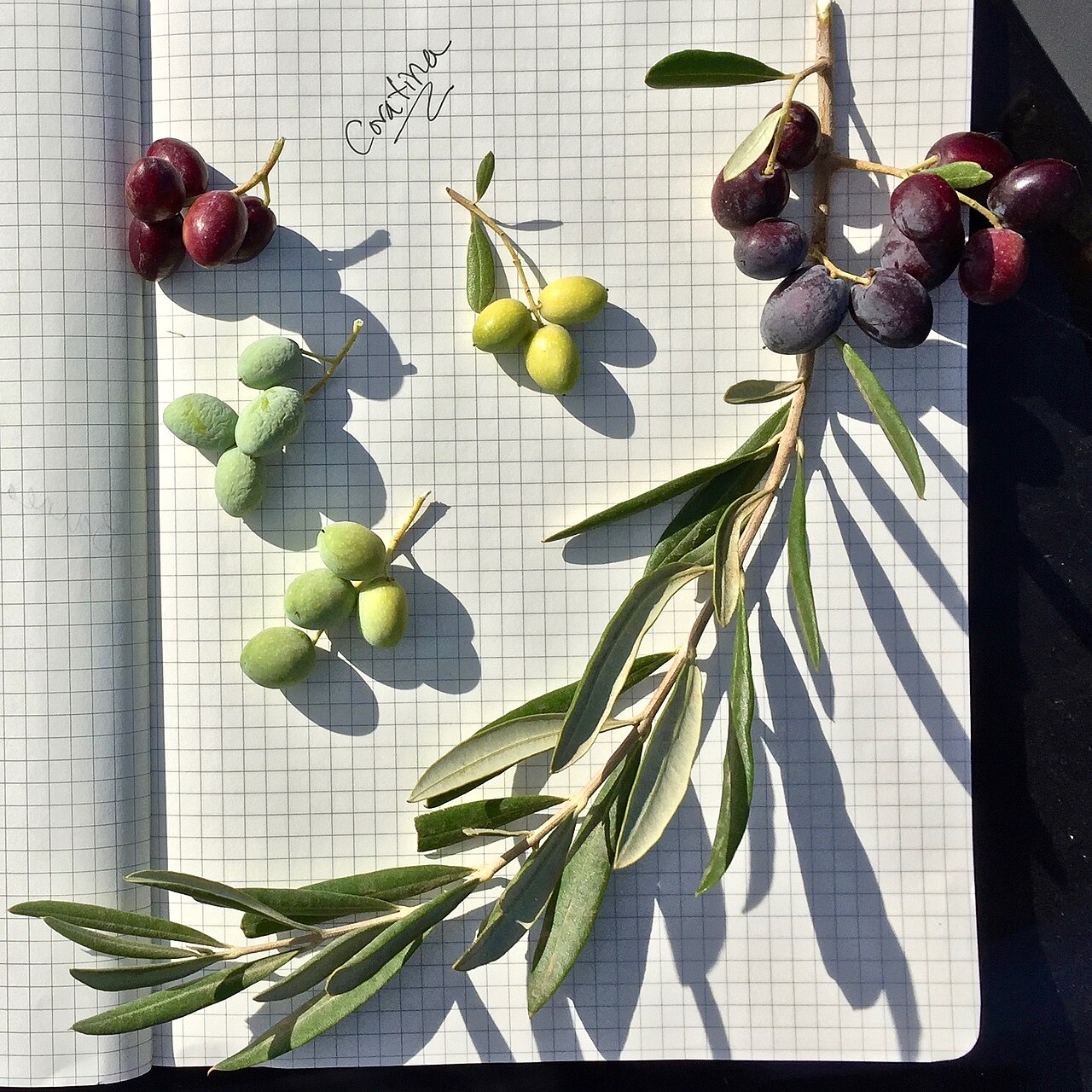
Leaves are long and narrow (lanceolate), of medium width, with a straight midrib, dull dark green on top and silvery, scaly underneath — the classic two-tone olive leaf, though on Coratina the leaves run noticeably longer and slimmer than on broader-leaved cultivars such as Nocellara del Belice.
Flowers
Small, cream-white, four-petaled flowers open in loose clusters (panicles) along last year’s wood in late spring. Flowering is early for an Italian cultivar, but Coratina’s rate of self-fertility is low (ovary abortion runs around 13%), so growers planting it for fruit should interplant a compatible pollinizer, commonly Leccino or another early- to mid-season bloomer, rather than counting on a solo tree to crop well.
Fruit & Seeds
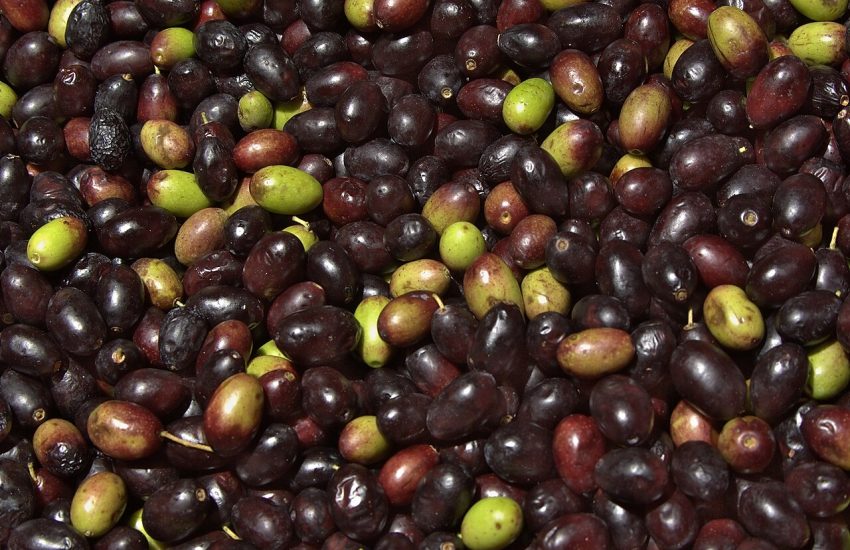
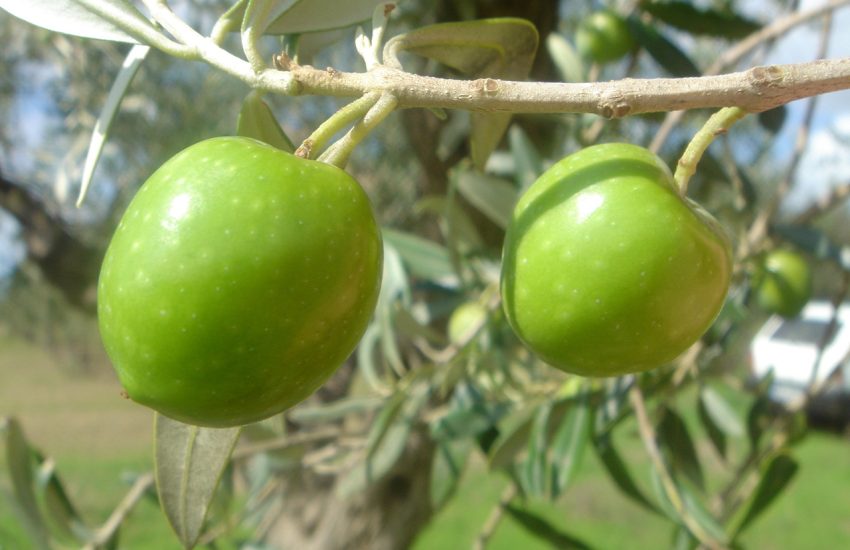
The fruit is large for an oil olive, distinctly elongated-oval with a weakly asymmetric, obtuse tip and a small, rounded base. It ripens from green through a straw-yellow and reddish stage to glossy black, with a medium-low detachment force that makes it come off the tree readily — useful for mechanical and trunk-shaker harvesting. The pit inside is also elongated and relatively large but narrow. Coratina is almost always harvested for oil, not as a table fruit; its claim to fame is an oil yield of 20–23% by weight, high oleic-acid content (around 77%), and exceptionally high total phenol levels, which together give the oil outstanding shelf stability and a hallmark bitter, peppery finish.
Quick Facts
| Scientific Name | Olea europaea ‘Coratina’ |
| Cultivar | Coratina (syn. Cima di Corato, Coratese, Racioppa di Corato) |
| Family | Oleaceae |
| Plant Type | Evergreen broadleaf oil-olive tree |
| Native to North America | No — introduced; species native to the Mediterranean basin and Near East, cultivar developed in Puglia, Italy |
| Mature Height | 15–25 ft unpruned (commonly held at 10–15 ft in managed groves/gardens) |
| Mature Spread | 15–20 ft, open and spreading |
| Growth Rate | Slow to medium; weak-to-medium vigor |
| Sun Exposure | Full sun |
| Water Needs | Low once established; drought tolerant |
| Soil Type | Well-drained, including poor, rocky or clay soils |
| Soil pH | Neutral to alkaline (about 6.5–8.5); tolerant of lime |
| Bloom Time | Late spring (early-flowering for the species) |
| Leaf / Fall Color | Evergreen; gray-green above, silvery below, no fall color change |
| Fruit | Large, elongated oil olive; green to black; oil yield 20–23%; low self-fertility, use a pollinizer |
| Deer Resistant | Yes, generally |
| USDA Hardiness Zones | 8b–10 (considered relatively cold-tolerant for an olive cultivar) |
| Invasive Status | Not native; species rated a limited-impact invasive by Cal-IPC in parts of coastal/central California, where birds spread the fruit of fruiting cultivars into wildlands |
Origin & Where It Grows
Coratina takes its name from Corato, a town in the Bari province of Puglia, in southern Italy. Genetic studies suggest it likely descends from older local varieties including Frantoio, and it has been grown around Corato, Canosa, Andria and the surrounding “Terra di Bari” countryside for generations, long before olive growing was reduced to a handful of commercial clones. Today it covers roughly 70,000 hectares in Puglia alone, by far the largest planting of any single cultivar in the region, and it has spread to other Italian regions and to newer olive-growing countries that prize it for its oil chemistry.
The species itself, Olea europaea, is native to the Mediterranean basin, the Levant and parts of northern Africa, where wild and feral olives still grow on rocky hillsides. Puglia’s climate — hot, dry summers, mild winters, and thin, often rocky or clay-heavy limestone soils — is close to the species’ ancestral habitat, which is part of why Coratina and other Apulian cultivars tolerate drought and poor soil so well.
In the United States, Coratina is grown mainly in California’s oil-olive regions (the Central Valley and parts of the Central Coast), and increasingly in parts of Texas, Arizona and the Southeast where winters stay mild. It needs a genuinely Mediterranean or subtropical climate: hot, mostly dry summers and winters that rarely drop into the teens Fahrenheit, since young wood and foliage are damaged by hard freezes even though the cultivar is considered comparatively cold-tolerant for an olive.
Coratina Origin & Range
| Species Native Range | Mediterranean basin, Near East, parts of northern/eastern Africa |
| Cultivar Origin | Corato area, Bari province, Puglia, Italy |
| Best U.S. Regions | California (Central Valley, Central Coast), southern Arizona, south Texas, Gulf Coast and warmer Southeast |
| USDA Zones | 8b–10 |
| Invasive Status | Not native to North America; limited-impact invasive risk via bird-spread fruit in parts of coastal/central California |
Growing & Care Guide
Coratina rewards the same simple regime that keeps most oil-olive cultivars healthy: full sun, sharp drainage, and restraint with water and fertilizer.
Light
Give it full sun. Olives flower and fruit poorly in shade, and Coratina’s already loose canopy gets even sparser and less productive with less than six to eight hours of direct sun.
Soil & Water
Coratina is forgiving of poor, rocky, or clay-heavy soils as long as they drain; what it cannot tolerate is standing water around the roots, which quickly brings on root rot. Water deeply but infrequently while the tree establishes over its first two to three years, then taper off — established Coratina trees are genuinely drought tolerant and, in fact, often produce more concentrated, higher-polyphenol oil under some water stress in the weeks before harvest.
Planting Tips
Plant in spring after the last frost, in a spot with excellent air circulation and drainage. Because self-fertility is low, plant at least one other compatible olive cultivar nearby (Leccino is a common pairing) if you want a reliable fruit set rather than just an ornamental tree. Space trees at least 15–20 ft apart for a garden specimen, closer in a hedgerow grove managed for oil.
Pruning & Maintenance
Prune in late winter to open the canopy to light and air — olives, including Coratina, fruit on the previous year’s wood, so avoid removing all of last season’s growth. Coratina’s spreading habit benefits from some structural pruning when young to establish strong scaffold branches that can carry a heavy fruit load. Established trees need little fertilizer; a light nitrogen feeding in early spring is usually enough on average soils.
Propagation
Coratina comes true to type only from cuttings or grafts, not seed; seedling olives revert to variable, often poor-quality wild-type fruit. The cultivar roots from cuttings at a medium-high rate (around 40%), which is how nurseries propagate it.
Landscape Uses
- Home oil production for gardeners in zone 8b–10 who want to press their own extra-virgin oil
- Mediterranean and xeriscape gardens, paired with lavender, rosemary and other low-water plants
- Windbreak or screen in hot, dry regions, thanks to its tough, drought-tolerant constitution
- Specimen tree where an old-world, silvery-foliaged accent is wanted
Harvest & Pollination
Coratina has low self-fertility, so for a good fruit set interplant a compatible pollinizer such as Leccino within bee range. Fruit ripens late and the color change from green through purple to black is gradual and uneven across a tree, so commercial growers often harvest Coratina earlier (greener) than fully black-ripe to capture peak polyphenol content and the oil’s signature pungency; home growers pressing for flavor rather than maximum yield can do the same. The medium-low detachment force makes hand-stripping or mechanical shaking relatively easy once fruit is ready. Like all olives, the raw fruit is bitter and inedible off the tree and must be cured (brined, lye-cured, or dry-salted) before eating as a table olive, though Coratina is grown almost exclusively for oil rather than table use.
Wildlife & Ecological Value
Olive flowers, including Coratina’s, are wind-pollinated rather than insect-pollinated, so they offer little nectar reward and support comparatively few pollinators compared with native flowering trees; a handful of generalist bees will visit the blooms opportunistically for pollen. In regions where olive is naturalized, birds such as American robins, European starlings and various thrushes readily eat the ripe black fruit and disperse the seeds, which is part of why unharvested fruiting olive trees pose a mild wildland-spread risk in parts of California — all the more reason to harvest a Coratina tree’s crop rather than let it drop. Overall, Coratina offers far less habitat and food-web value than a comparable native tree of similar size, and it should be considered an orchard and landscape tree first, not a wildlife planting.
Native Alternatives
- Desert Olive (Forestiera neomexicana) — a small, tough native tree/shrub with a similar common name and dry-climate toughness, good for Southwestern gardens
- Texas Olive (Cordia boissieri) — a drought-tolerant small native tree with showy flowers, a good substitute where an olive-type silhouette is wanted in Texas and the Southwest
- American Sweet Olive / Devilwood (Osmanthus americanus) — a native evergreen relative in the olive family (Oleaceae) for the Southeast, with fragrant flowers
- Arizona Rosewood (Vauquelinia californica) — a tough, evergreen, drought-tolerant native small tree for hot, dry Southwestern gardens
- Honey Mesquite (Prosopis glandulosa) — a native, deep-rooted, drought-adapted small tree that fills a similar role in hot, arid landscapes
History & Uses
Coratina rose from a strictly local Apulian variety to Italy’s most-planted olive cultivar on the strength of its oil, not its table fruit. As food scientists in the late 20th century began measuring polyphenol content in olive oils, Coratina consistently ranked among the highest of any cultivar tested, and its oil’s intense bitterness and throat-catching “pungency” — long prized by connoisseurs as a sign of quality and freshness — made it a favorite for monovarietal bottlings and for blending into milder oils to boost both flavor and shelf life.
In its home region, Coratina oil is central to Puglia’s identity as Italy’s largest olive-oil-producing region, used in everything from everyday cooking to the simple bread-and-oil dishes (fresella, bruschetta) that showcase a peppery oil on its own. Table use of Coratina fruit is rare; after curing, which removes the natural bitter compound oleuropein, the olives can technically be eaten, but growers almost always send the crop to the mill rather than the brine barrel.
Frequently Asked Questions
Is Coratina olive a native North American plant?
No. Olea europaea is native to the Mediterranean basin and Near East; Coratina is an Italian cultivar introduced to North America for cultivation. It is not invasive by federal standards, but fruiting olive cultivars are rated a limited-impact invasive by Cal-IPC in parts of coastal and central California, so harvest the fruit and avoid planting next to wildland there.
Does Coratina need a second tree to produce olives?
For best results, yes. Coratina’s self-fertility rate is low, so planting a compatible pollinizer such as Leccino nearby will give a much more reliable fruit set than a single isolated tree.
What makes Coratina oil different from other olive oils?
Coratina has one of the highest polyphenol contents of any widely grown olive cultivar, which gives its extra-virgin oil unusually strong bitterness, a peppery throat-burn, and excellent resistance to oxidation — it stays fresh longer in the bottle than milder oils.
Can I eat Coratina olives straight off the tree?
No. Like all olives, raw Coratina fruit is extremely bitter from natural compounds and must be cured — brined, salt-cured, or lye-treated — before it is palatable. Coratina is grown almost entirely for oil rather than table olives.
How cold-hardy is Coratina compared with other olive cultivars?
Coratina is considered relatively cold-tolerant for an olive cultivar and is generally rated hardy in USDA zones 8b–10, but young trees and new growth can still be damaged by hard freezes, so gardeners at the cold edge of its range should site it in a sheltered, south-facing spot.