Gray’s Lily (Lilium grayi)
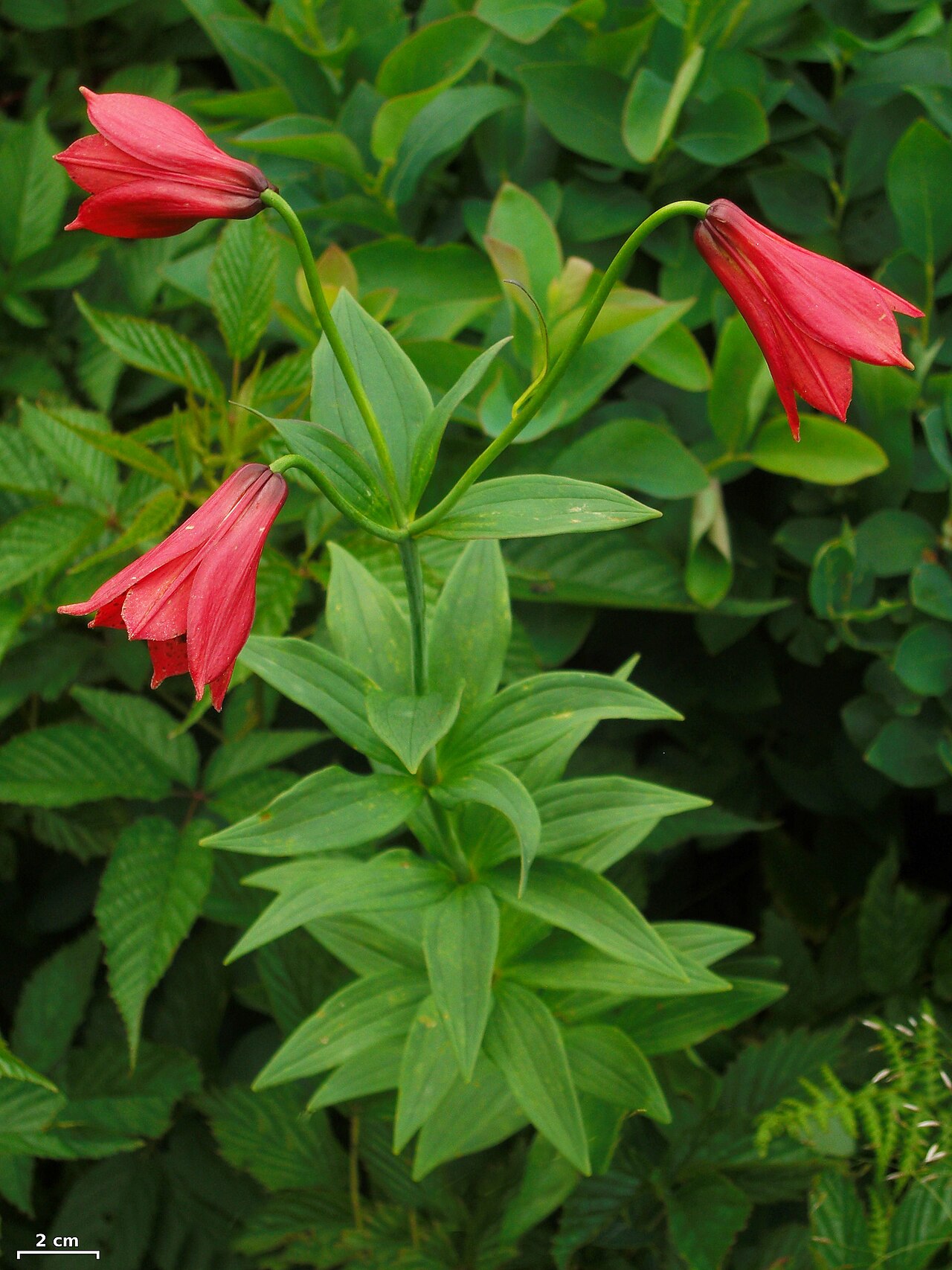
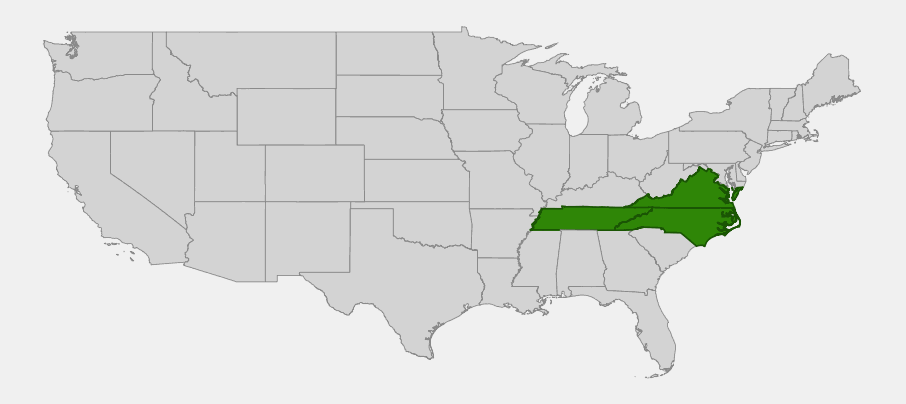
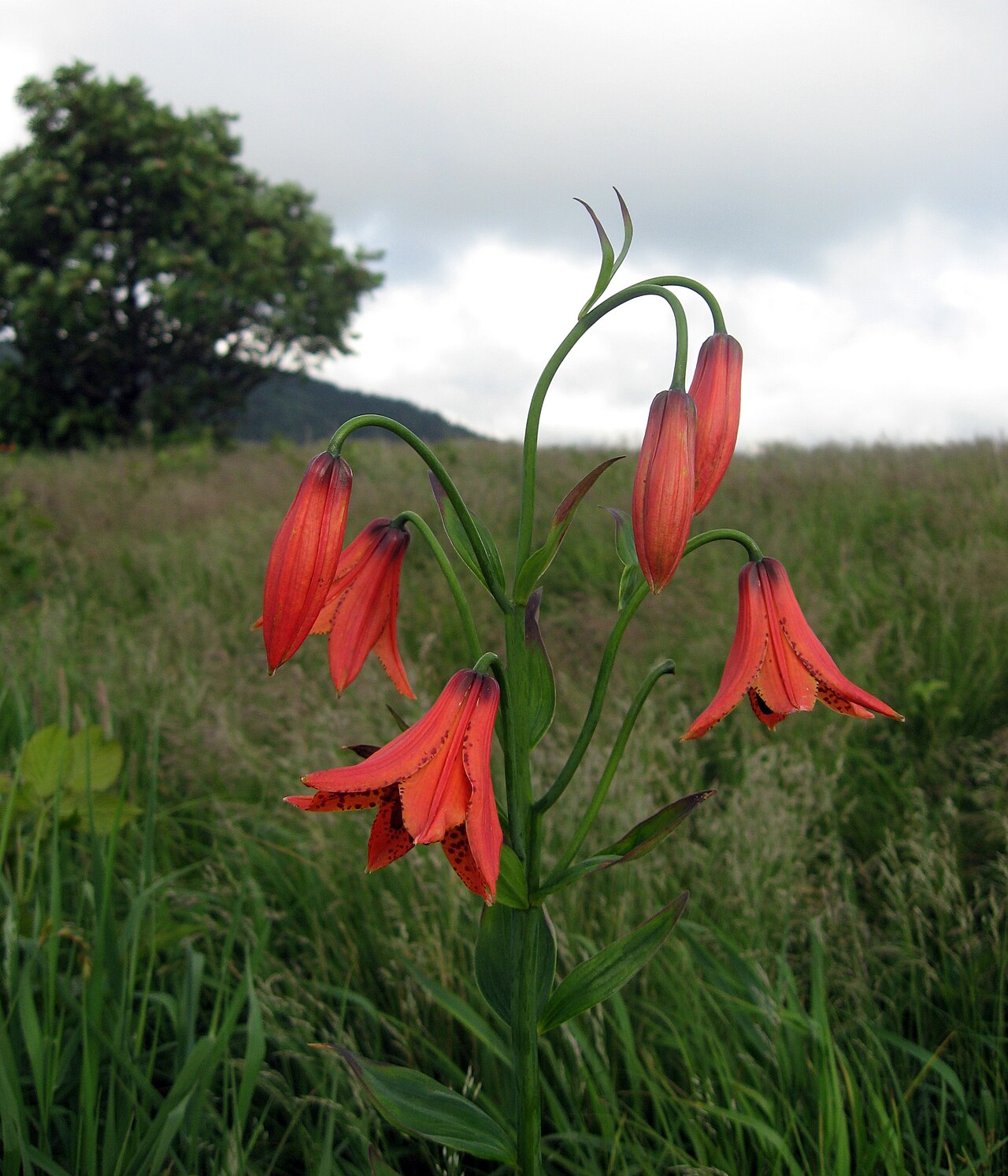
Lilium grayi, commonly called Gray’s Lily, Orange Bell Lily, or Roan Lily, is one of the rarest and most geographically restricted native lilies in North America. It grows nowhere in the world except a narrow band of the southern Appalachians, where southwestern Virginia, northwestern North Carolina and northeastern Tennessee meet. There it rises from high-elevation bogs, seeps, grassy balds and moist meadows, holding a few narrow, bell-shaped, dull red to orange-red flowers that nod rather than flare open the way most lilies do.
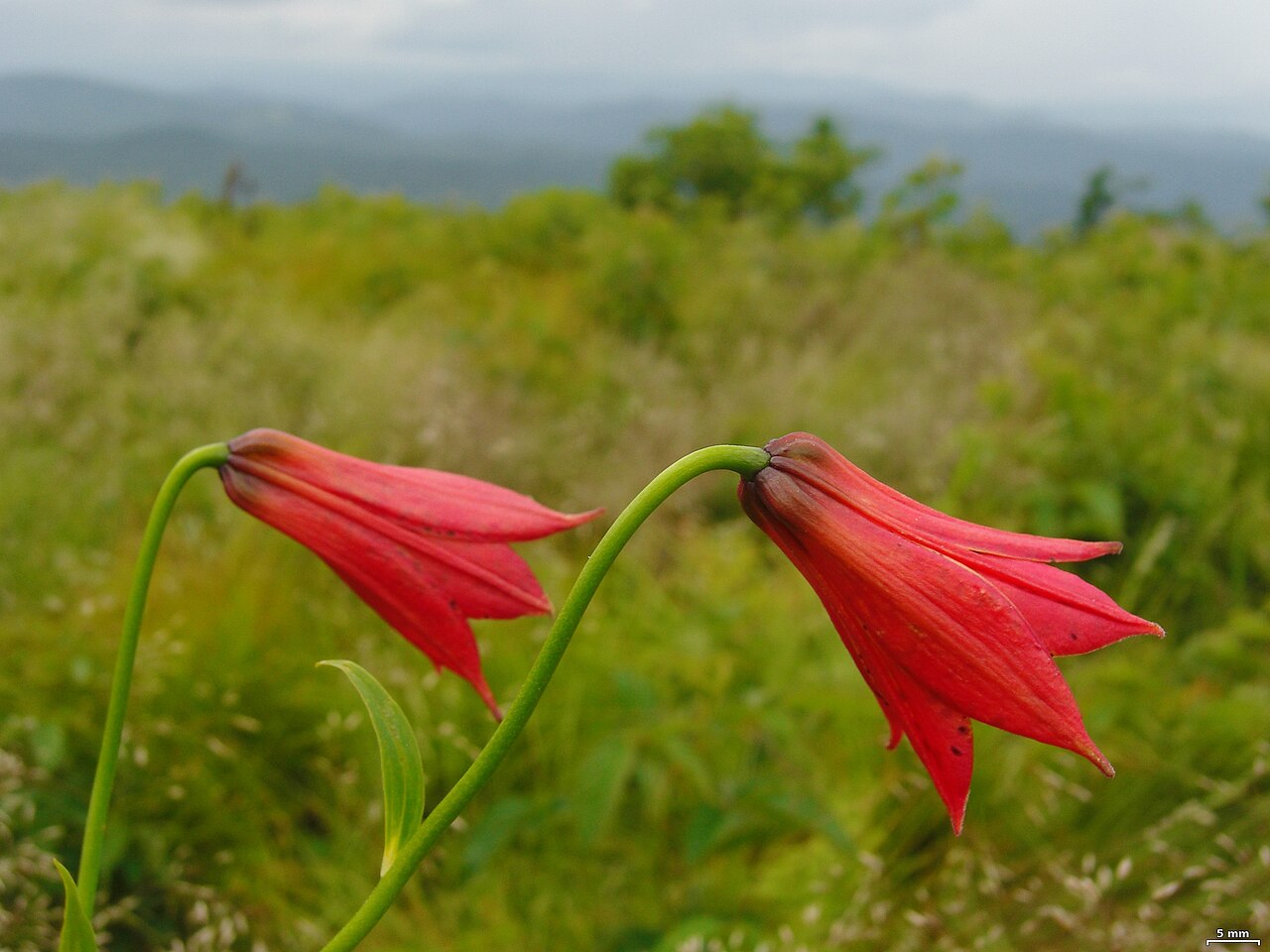
The species is named for Asa Gray, the preeminent American botanist of the nineteenth century, and it is most famous today from Roan Mountain, the grassy highland straddling the Tennessee-North Carolina line, where Gray’s lily still blooms each summer on the open balds. The narrow, half-closed tepals are the clearest way to tell it apart from the similar Canada lily and turk’s-cap lily, both of which open their petals much wider or curl them fully back.
Because it is a true Appalachian endemic found in only three states and restricted to specialized wetland and bald habitats, Gray’s lily is uncommon in the wild and essentially unavailable except from specialty native-plant nurseries that propagate it from seed or division. It is not a plant for casual gardens, but for a high-elevation native wetland or bog garden in its home range, it is an extraordinary and historically significant addition. Never dig this species from the wild; always source nursery-propagated stock.
Identification
Gray’s lily is a slender, unbranched perennial herb growing from a scaly bulb, typically 2 to 3 feet tall though occasionally taller in favorable sites. A single upright stem carries one to several whorls of leaves and is topped by one to a handful of nodding flowers.
Leaves
Leaves are narrow and lance-shaped, 3 to 5 inches long, arranged in two to four whorls of 6 to 12 leaves spaced along the stem, giving the plant a tiered, layered look similar to its close relatives. The leaves are smooth-margined and a somewhat dull, matte green, less glossy than Carolina lily’s foliage.
Flowers
Flowers hang downward to slightly outward on long pedicels, with six tepals that are dull red to orange-red on the outside and yellowish with maroon spotting inside, near the throat. Unlike turk’s-cap or Carolina lily, the tepals of Gray’s lily curve only moderately and never recurve sharply backward, so the flower keeps a narrow, bell-like or trumpet shape rather than opening into a full “Turk’s cap.” Bloom time runs from mid-June into July, with occasional flowers into August at the highest elevations.
Fruit & Seeds
Pollinated flowers form an upright, three-angled capsule that matures and splits in late summer, releasing flat, papery seeds dispersed short distances by wind across the open bald or bog where the plant grows. Seedlings, like those of other native lilies, take several years underground before producing their first flowering stem.
Quick Facts
| Scientific Name | Lilium grayi |
| Family | Liliaceae (Lily) |
| Plant Type | Herbaceous bulb perennial |
| Mature Height | 2–3 ft (rarely to 5 ft) |
| Mature Spread | 6–12 in, single stem |
| Growth Rate | Slow |
| Sun Exposure | Full Sun to Part Shade |
| Water Needs | Consistently moist to wet |
| Soil Type | Moist, acidic, organic-rich; bog or seep conditions |
| Soil pH | Acidic, about 4.5–6.0 |
| Bloom Time | Mid-June – July |
| Flower Color | Dull red to orange-red, yellow-spotted throat |
| Fall Color | None (foliage withers after bloom) |
| Fruit | Upright, three-angled capsule with wind-dispersed seeds |
| Deer Resistant | No (browsing is a documented threat to wild populations) |
| USDA Hardiness Zones | 4–6 |
Native Range
Gray’s lily is a true Southern Appalachian endemic, found only in a small number of counties where southwestern Virginia, northwestern North Carolina and northeastern Tennessee converge, including the Roan Highlands, Grayson Highlands and a handful of other high-elevation sites. It does not occur anywhere else in the world, making it one of the most geographically restricted native lily species in the United States.
The species is tied to high-elevation wetlands and openings: grassy balds, boggy seeps, wet meadows and the edges of spruce-fir forest, typically above 3,000 feet and often well above 5,000 feet on sites such as Roan Mountain. These cool, saturated, acidic soils are uncommon and patchily distributed across the landscape, which is a major reason the species remains so rare.
NatureServe and state natural heritage programs rank Gray’s lily as globally vulnerable to imperiled, and it receives legal protection or tracking status in all three states where it grows. Threats include habitat loss, deer and livestock browsing, trampling on popular balds, and illegal collection of plants and bulbs. Because of this rarity, any garden use of Gray’s lily should rely strictly on nursery-propagated material, never wild-collected bulbs or seed.
📋 Regional plant lists featuring Gray’s Lily: Maryland, Virginia & West Virginia · North Carolina & South Carolina · Kentucky & Tennessee
Growing & Care Guide
Gray’s lily is a specialist plant for a specialist site: a cool, consistently moist, high-elevation or at least high-latitude garden that can mimic its bald and seep habitat. It is not a good match for lowland or hot-summer gardens, but where conditions suit it, it is a conversation-piece native with real conservation value.
Light
In the wild, Gray’s lily grows in full sun on open balds and in part sun along boggy seep edges. Gardens should offer at least a half day of direct sun; too much shade produces weak growth and few flowers, while the cool mountain air at its home elevations means it does not suffer from full sun the way lowland lilies might.
Soil & Water
This species needs consistently moist to wet, acidic, organic-rich soil — conditions found naturally in seeps and bog edges. It will not tolerate the dry, well-drained soil that species like Carolina lily prefer. A constructed bog bed or a naturally damp, high-organic-matter spot near a spring or drainage is the best setting. Good air movement and cool root temperatures, mimicking its mountain origin, help plants persist outside their native elevation.
Planting Tips
Source only nursery-propagated bulbs from reputable native-plant specialists, given the species’ rarity and legal protection in the wild. Plant in fall, setting bulbs about 4 inches deep in a prepared, consistently moist bed. Because Gray’s lily is adapted to cool, high-elevation climates, gardeners outside the southern Appalachians at similar latitude and elevation should expect it to be challenging or short-lived, and should treat any planting as experimental rather than a guaranteed long-term success.
Pruning & Maintenance
Let foliage die back naturally after bloom to recharge the bulb. Protect young plants from deer and rabbit browsing, which is a significant pressure on this species even in the wild; fencing or repellent is often necessary. Avoid any mulch or soil amendment that would dry out or raise the pH of the root zone.
Propagation
Propagation is almost always by seed from ethically sourced nursery stock, sown in fall into consistently moist, acidic medium; germination and growth to flowering size can take several years. Because wild populations are small and legally protected, division of wild bulbs is never appropriate, and even propagated bulbs should be purchased sparingly and only from growers who can document a legitimate, non-wild source.
Landscape Uses
- Constructed bog gardens in cool, high-elevation or northern climates
- Native wetland and seep restoration within its historic range
- Specialty collector and conservation gardens focused on rare Appalachian endemics
- Companion planting with other bog-loving natives in acidic, saturated beds
Gardeners in its home range looking for easier companions can find ideas in our roundups of perennial flowers for Virginia, perennial flowers for North Carolina and perennial flowers for Tennessee, though most of the species featured there are far less particular about soil moisture than Gray’s lily.
Wildlife & Ecological Value
As a rare, localized endemic, Gray’s lily plays an outsized role in the ecology of the specific balds and bogs where it survives.
For Pollinators
The nodding, narrow flowers are visited by ruby-throated hummingbirds, which can hover and feed from the partly closed, bell-shaped blooms, as well as by large bumblebees and swallowtail butterflies that manage to work their way into the flower. This mix of hummingbird and insect pollination is somewhat unusual among eastern native lilies.
For Birds & Mammals
Hummingbirds are the most notable bird visitors, drawn to the red, nectar-rich flowers during their early-summer migration and breeding season. White-tailed deer readily browse the buds and foliage, and uncontrolled deer and feral livestock grazing on balds is one of the documented pressures on wild populations.
Ecosystem Role
Gray’s lily is an indicator species for the rare, high-elevation bald and bog communities of the southern Blue Ridge, habitats that are themselves considered globally significant and increasingly threatened by development, recreation pressure and woody encroachment as balds are no longer maintained by historic grazing or fire regimes. Protecting Gray’s lily populations generally means protecting the entire bald or bog ecosystem around them.
Cultural & Historical Uses
Gray’s lily was first described by botanist Sereno Watson in 1879 and honors Asa Gray, the Harvard botanist who did more than almost anyone else to catalog and interpret the flora of nineteenth-century North America. Its association with Roan Mountain, one of the most storied botanical destinations in the southern Appalachians, made it a species of particular interest to generations of botanists who made pilgrimages to the mountain’s grassy balds.
There is no significant documented history of the species being used for food, medicine or materials by Indigenous peoples or settlers, likely reflecting both its genuine rarity and the specialized, often remote high-elevation habitat it occupies, which kept it largely out of everyday human use.
Today Gray’s lily is primarily significant as a conservation and botanical curiosity: a plant watched closely by state natural heritage programs, studied by ecologists researching bald and bog communities, and sought out by wildflower enthusiasts who hike to Roan Mountain and similar sites each June and July hoping to see it in bloom.
Frequently Asked Questions
Where can I see Gray’s lily in the wild?
The best-known population is on Roan Mountain, straddling the Tennessee-North Carolina border, where it blooms on the grassy balds in late June and July. Stay on marked trails and never pick or dig plants, since this is a rare, tracked species.
Can I grow Gray’s lily outside the southern Appalachians?
It is difficult. Gray’s lily is adapted to cool, high-elevation, consistently wet, acidic conditions, so it generally struggles in hot-summer lowland gardens. Gardeners at similar cool, moist, high-latitude or high-elevation sites may have better success, but should treat it as an experimental planting.
Is Gray’s lily endangered?
It is not listed as federally endangered, but NatureServe ranks it globally vulnerable to imperiled, and it is tracked or protected in Virginia, North Carolina and Tennessee due to its extremely limited range and small population sizes.
How is Gray’s lily different from other red Appalachian lilies?
Its tepals stay mostly closed in a narrow bell shape rather than recurving sharply backward like Carolina lily or turk’s-cap lily. Combined with its restricted range and bog or bald habitat, this makes Gray’s lily reasonably distinctive once you know to look for the partly closed flower shape; see our guide to plants that look like lilies for more comparisons, including the related wood lily.
Where can I buy Gray’s lily bulbs?
Only from specialty native-plant nurseries that can document nursery propagation, never wild-collected stock. Supply is limited given the species’ rarity, so availability varies from year to year.

Looking for a nursery that carries Gray’s Lily?
Browse our native plant nursery directory: Virginia & Tennessee · North Carolina