Siskiyou Iris (Iris innominata)
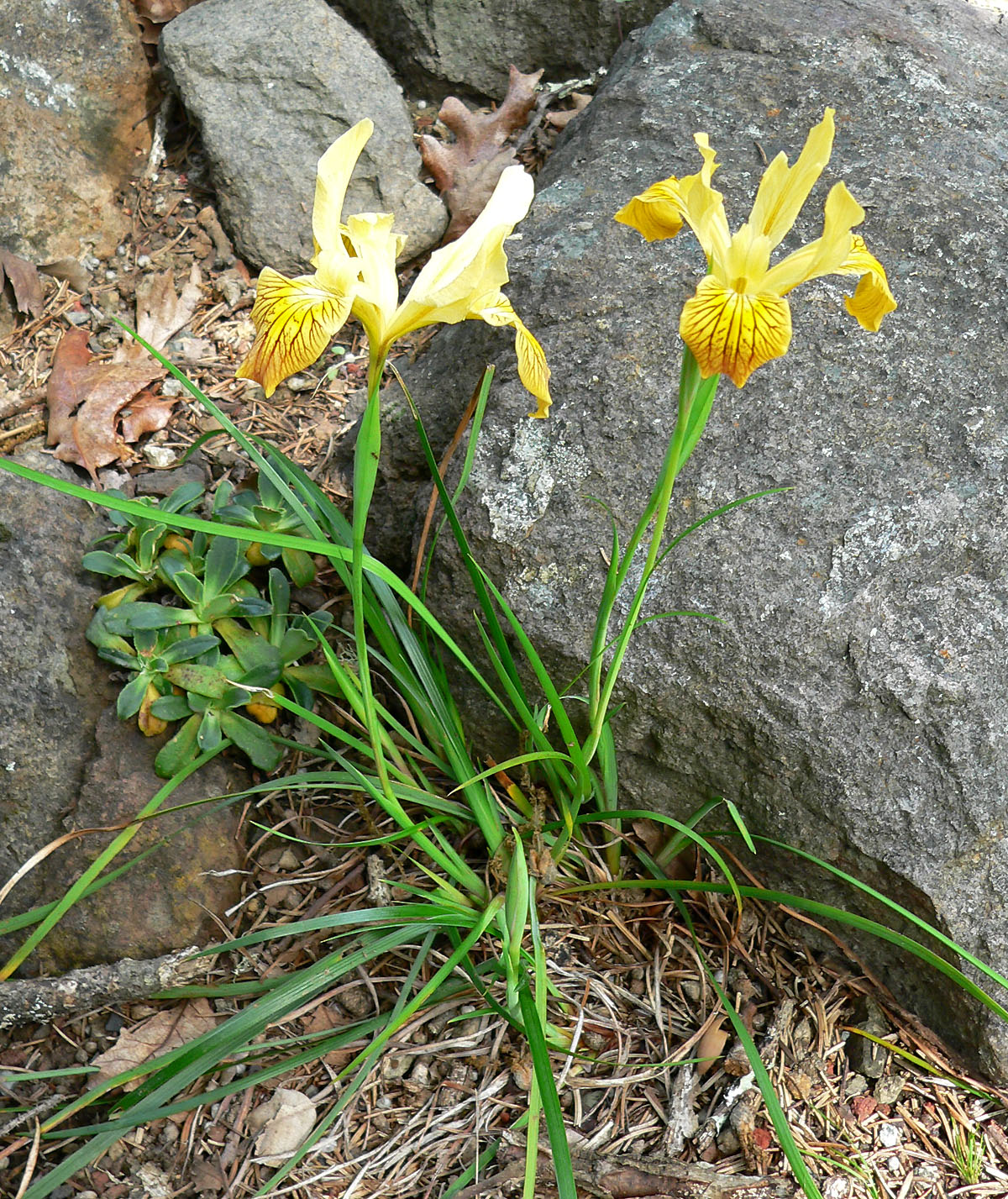
Iris innominata, commonly called the Siskiyou Iris or Del Norte County Iris, is a small, tufted evergreen perennial found in a narrow stretch of the Klamath-Siskiyou region straddling the Oregon-California border. It belongs to the Pacific Coast Iris group (Iris series Californicae), a cluster of closely related western species prized by gardeners for their large, jewel-toned flowers on compact, grassy plants. Some botanists have treated it as Iris tenax subsp. innominata, but USDA PLANTS and most current floras continue to recognize it as its own species, and that is the treatment followed here.
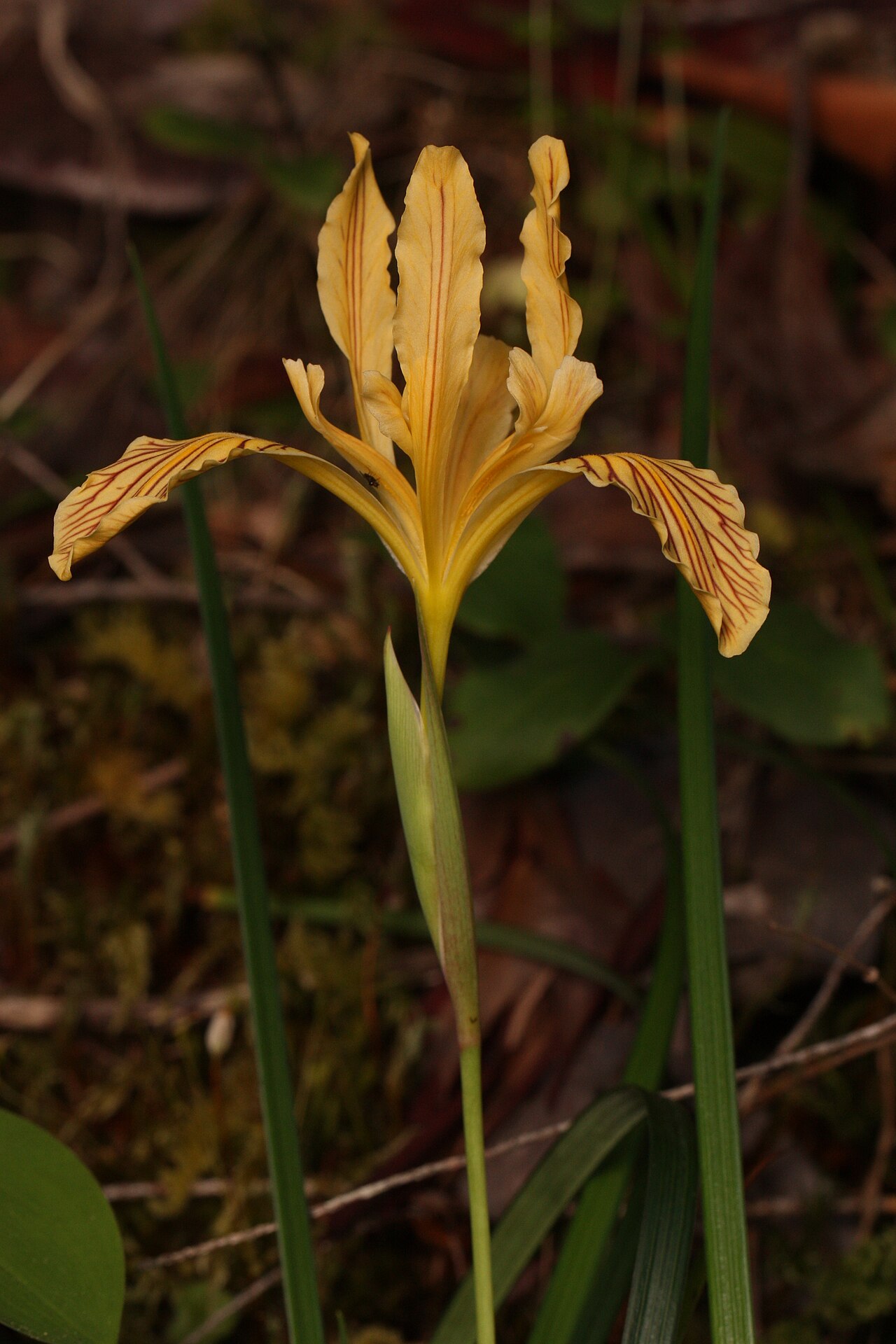
What sets Siskiyou Iris apart from its Pacific Coast Iris relatives is its remarkable color range. A single population can include flowers in deep golden yellow, cream, apricot, light pink, and rich purple, all with the dark veining that gives iris flowers their stained-glass quality. The narrow, grass-like evergreen leaves form dense tufts only 6 to 10 inches tall, making this one of the most garden-friendly of the native irises for small spaces, rock gardens, and woodland edges.
In the wild, Siskiyou Iris is uncommon enough that the California Native Plant Society tracks it on its Inventory of Rare and Endangered Plants (List 4, a watch list for plants of limited distribution). It is not federally listed, but its narrow native range makes thoughtful, nursery-grown planting within that range especially worthwhile for gardeners who want to support a genuinely regional wildflower rather than one of the many hybrid “Pacific Coast Iris” cultivars sold under similar names.
Identification
Siskiyou Iris is a low, clumping perennial that rarely draws attention until it flowers. The rest of the year it reads as a tidy tuft of narrow evergreen leaves, easy to overlook among grasses, duff, and low shrubs on a sunny forest opening or rocky slope.
Leaves
The leaves are linear, dark green, firm-textured, and evergreen, growing in dense fans to about 8 inches (20 cm) long. They are noticeably shorter and stiffer than the leaves of many other Pacific Coast Iris species, giving established clumps a neat, grassy appearance even when not in bloom.
Flowers
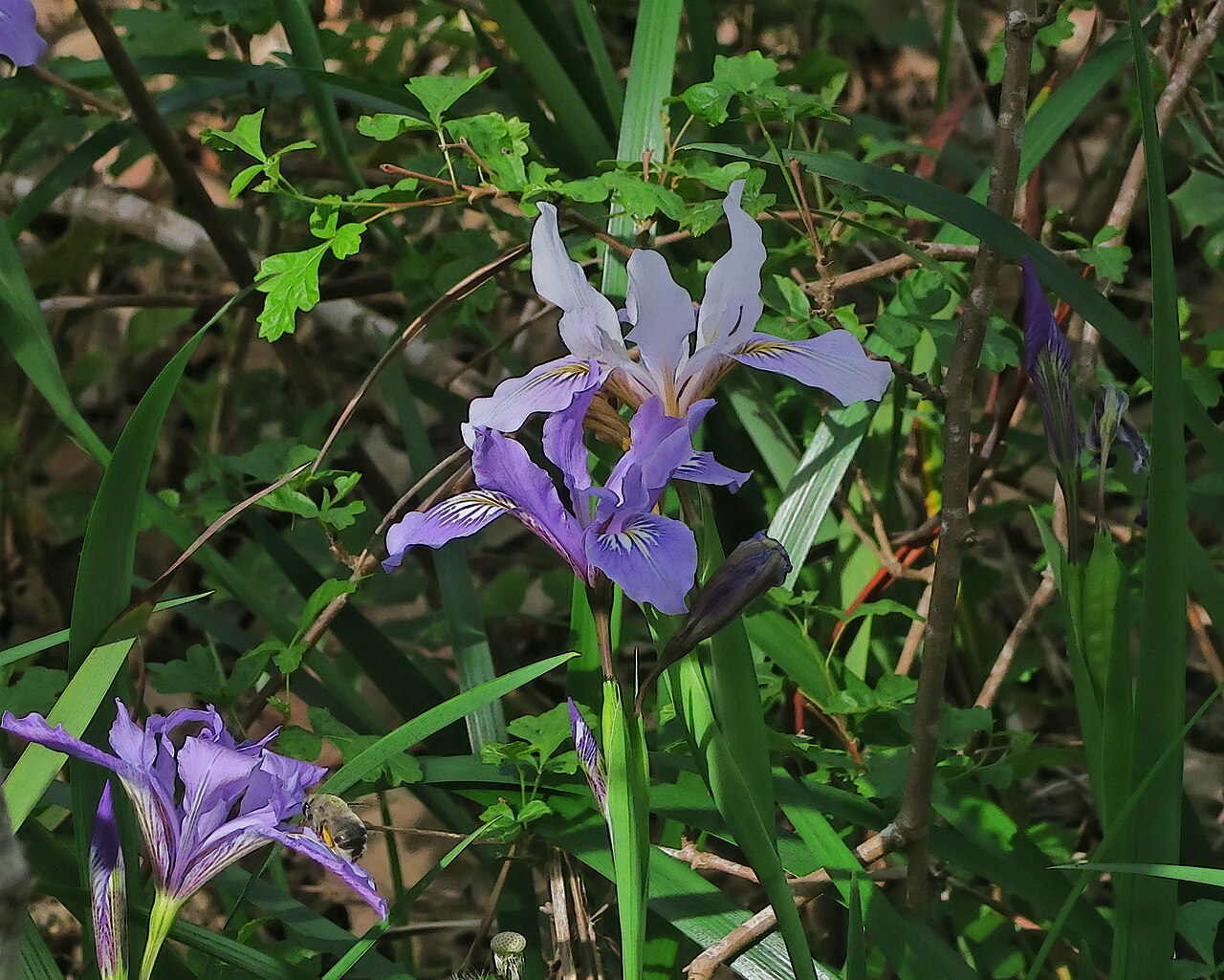
Flowering stems are short, usually only 4 to 6 inches (10–15 cm) tall, and carry one or occasionally two flowers each. The blooms are large relative to the plant, 2 to 3 inches across, with the classic iris form of three outer sepals (“falls”) and three inner petals (“standards”). Color is the plant’s most variable trait: deep golden yellow is most typical, but cream, apricot, pale pink, and violet-purple forms all occur in the wild, usually with a network of darker veins radiating from the throat of each fall. Bloom time runs from April into May, slightly later at higher elevations.
Fruit & Seeds
After flowering, a three-chambered seed capsule develops at the base of the old flower stem, splitting open later in summer to release flattened, light brown seeds. Like other Pacific Coast Irises, Siskiyou Iris spreads slowly by short rhizomes, building into larger clumps over years rather than running aggressively.
Quick Facts
| Scientific Name | Iris innominata (treated by some as Iris tenax subsp. innominata) |
| Family | Iridaceae (Iris) |
| Plant Type | Evergreen Rhizomatous Perennial |
| Mature Height | 6–10 in (15–25 cm) in leaf; flower stems 4–6 in |
| Mature Spread | 10–14 in clumps, slowly expanding |
| Growth Rate | Slow |
| Sun Exposure | Full Sun to Part Shade |
| Water Needs | Low to Moderate; summer-dry once established |
| Soil Type | Well-drained, rocky or gravelly; tolerates serpentine soils |
| Soil pH | 5.5–7.0 (slightly acidic to neutral) |
| Bloom Time | April – May |
| Flower Color | Golden yellow, cream, apricot, pink, or purple, with darker veining |
| Fall Color | Evergreen; no fall color change |
| Fruit | Three-chambered seed capsule |
| Deer Resistant | Yes (bitter, toxic foliage) |
| USDA Hardiness Zones | 7–9 |
Native Range
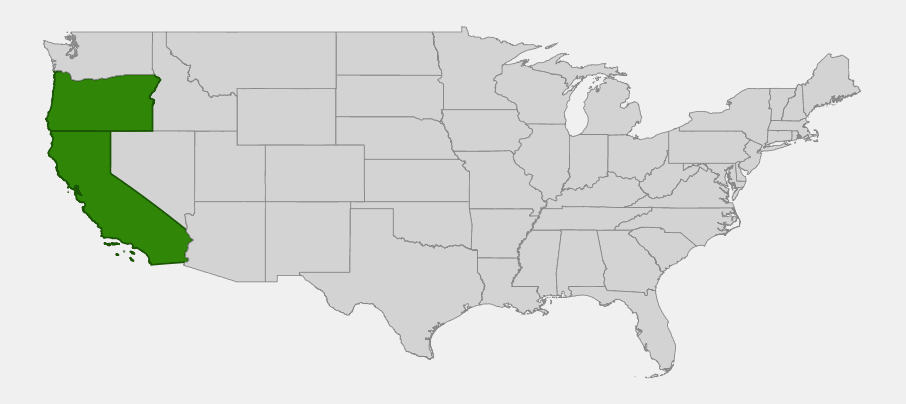
Siskiyou Iris occupies one of the smallest ranges of any Pacific Coast Iris: the Klamath-Siskiyou Mountains of extreme southwestern Oregon and the immediately adjacent corner of northwestern California. In Oregon it is found mainly in Curry, Josephine, and Douglas counties; in California it is essentially limited to Del Norte County, which is why the species carries the alternate common name “Del Norte County Iris.” Outside of this zone, plants sold as Iris innominata in general nursery trade are frequently garden hybrids rather than the true wild species.
Across this range, Siskiyou Iris grows in open to partly shaded sites within mixed conifer and conifer-hardwood forests, often on dry, rocky slopes, road cuts, and forest openings where competing vegetation is sparse. It tolerates the serpentine-derived soils common in the Klamath-Siskiyou region, an area globally recognized for harboring unusual, soil-adapted plant communities. Elevations range from near sea level in coastal drainages up into the mid-elevation mountains of the Siskiyou and Klamath ranges.
Because the species hybridizes readily with neighboring Pacific Coast Irises such as Iris bracteata, Iris chrysophylla (the Slender-tubed Iris), and Iris tenax where their ranges meet, wild populations near the edges of its range can show intermediate traits. Gardeners who want plants representative of true Siskiyou Iris should look for nursery stock propagated from documented wild-collected or garden-tracked lines within its native counties.
📋 Regional plant lists featuring Siskiyou Iris: Western Oregon & Western Washington · California & Nevada
Growing & Care Guide
Within its native climate, Siskiyou Iris is an easygoing, low-water perennial that rewards patience: clumps take a few years to settle in before producing a strong flush of bloom, but established plants need very little attention afterward.
Light
Plant in full sun along the cooler Oregon coast, or in part shade (morning sun, afternoon shade) further inland where summers run hotter. In the wild it is most often found in partial shade at the edge of conifer canopy, so a dappled woodland-edge site usually produces the best foliage color and flowering.
Soil & Water
Good drainage is essential. Siskiyou Iris is naturally adapted to lean, rocky, often serpentine-derived soils and resents heavy clay or soggy winter conditions. Water regularly during the first one to two growing seasons to establish the rhizomes, then taper off; mature clumps handle the region’s dry summers with little or no supplemental water, especially with some afternoon shade.
Planting Tips
Set out container-grown plants in fall so roots can establish over the cool, moist winter months typical of its native range. Space clumps 10 to 14 inches apart to leave room for slow lateral spread. A gravel or crushed-rock mulch mimics natural conditions better than bark mulch and helps prevent crown rot in wetter gardens.
Pruning & Maintenance
Maintenance is minimal. Trim off spent flower stems and any tattered leaves in late summer, and divide congested clumps every four to six years in early fall if more plants or renewed vigor are wanted. Avoid disturbing the shallow rhizomes any more than necessary, since Pacific Coast Irises can be slow to recover from transplanting.
Landscape Uses
Siskiyou Iris earns a place in several garden settings:
- Rock gardens — compact size and drought tolerance suit lean, gravelly beds
- Woodland garden edges — thrives in the light shade at a forest margin
- Native plant borders — striking color range adds interest among grasses and shrubs
- Low-water landscaping — minimal summer irrigation once established
- Containers — compact habit works well in troughs and rock-garden pots
- Deer-prone gardens — foliage is unpalatable to browsing deer
Wildlife & Ecological Value
Siskiyou Iris plays a modest but real role in the plant communities of the Klamath-Siskiyou region, particularly in the dry forest openings and rocky outcrops it favors.
For Pollinators
The large, showy flowers attract native bees, including bumble bees and smaller solitary bees, which push into the tubular flower base to reach nectar and in the process pick up and transfer pollen. The size and landing-pad shape of the falls make the flowers well suited to larger-bodied bees.
For Birds
While the flowers themselves are not a major food source for birds, the dense evergreen foliage provides low ground cover and shelter for small birds foraging through open forest understory, and the seed capsules may be investigated by seed-eating species after they split open.
For Mammals
Deer and other browsing mammals generally avoid Siskiyou Iris; like most true irises, its leaves and rhizomes contain bitter, mildly toxic compounds that discourage grazing, which is part of why it persists well in areas with heavy deer pressure.
Ecosystem Role
As a low, clump-forming evergreen, Siskiyou Iris helps stabilize thin, rocky soils on the slopes and openings where it grows, and its persistence on serpentine and other mineral-poor soils makes it part of the specialized flora that gives the Klamath-Siskiyou region its reputation as a botanical hotspot.
Cultural & Historical Uses
Siskiyou Iris has no significant documented history of medicinal or food use among Indigenous peoples of the region, and like other true irises its rhizomes contain compounds that make them unsuitable for eating — the plant should never be treated as an edible or medicinal herb.
Its modern significance is almost entirely horticultural. Since the early twentieth century, Pacific Coast Irises including Iris innominata and the more widespread Douglas Iris have been sought after by rock-garden and iris specialists for their compact size and exceptional flower-color range, and the species has been used extensively in hybridizing programs to create the many “Pacific Coast Hybrid” iris cultivars now sold commercially. Gardeners who want the true wild species, rather than a hybrid descendant, should buy from native plant nurseries that propagate from seed or divisions of documented wild origin.
Within its home range, the Siskiyou Iris is increasingly recognized as a signature wildflower of the Klamath-Siskiyou bioregion and is featured in regional native plant gardens and wildflower displays as an example of the area’s unusual, soil-adapted flora.
Frequently Asked Questions
Is the “Pacific Coast Iris” I bought at the garden center the same as Siskiyou Iris?
Not necessarily. Many plants sold as Pacific Coast Iris or even labeled Iris innominata are hybrids between several wild species, bred for a wider range of garden colors. True Siskiyou Iris should be sourced from a native plant nursery that specifies wild-type or documented-origin stock.
Why do Siskiyou Iris flowers come in so many colors?
The species has unusually high natural color variation even within single wild populations, ranging from gold and cream to pink and purple. This variability, combined with its tendency to hybridize with nearby iris species, is part of what has made it such a popular parent plant for iris breeders.
Can I grow Siskiyou Iris outside of Oregon and California?
It can succeed in gardens with a similar Mediterranean-type climate — dry summers, mild wet winters — and good drainage, but it is not reliably hardy or well adapted to regions with hot, humid summers or heavy winter rainfall combined with wet soils.
Is Siskiyou Iris endangered?
It is not federally listed, but the California Native Plant Society tracks it as a watch-list species (List 4) due to its naturally limited distribution. It is not currently considered at high risk, but its narrow range makes habitat protection within Curry, Josephine, Douglas, and Del Norte counties important.
How long does it take for a new Siskiyou Iris to bloom?
Newly planted divisions or container plants often take one to three years to settle in and produce a strong bloom, since Pacific Coast Irises resent root disturbance and establish slowly. Patience is rewarded with reliable spring flowering once the clump is established.

Looking for a nursery that carries Siskiyou Iris?
Browse our native plant nursery directory: Oregon · California