
White Ironwood (Hypelate trifoliata)
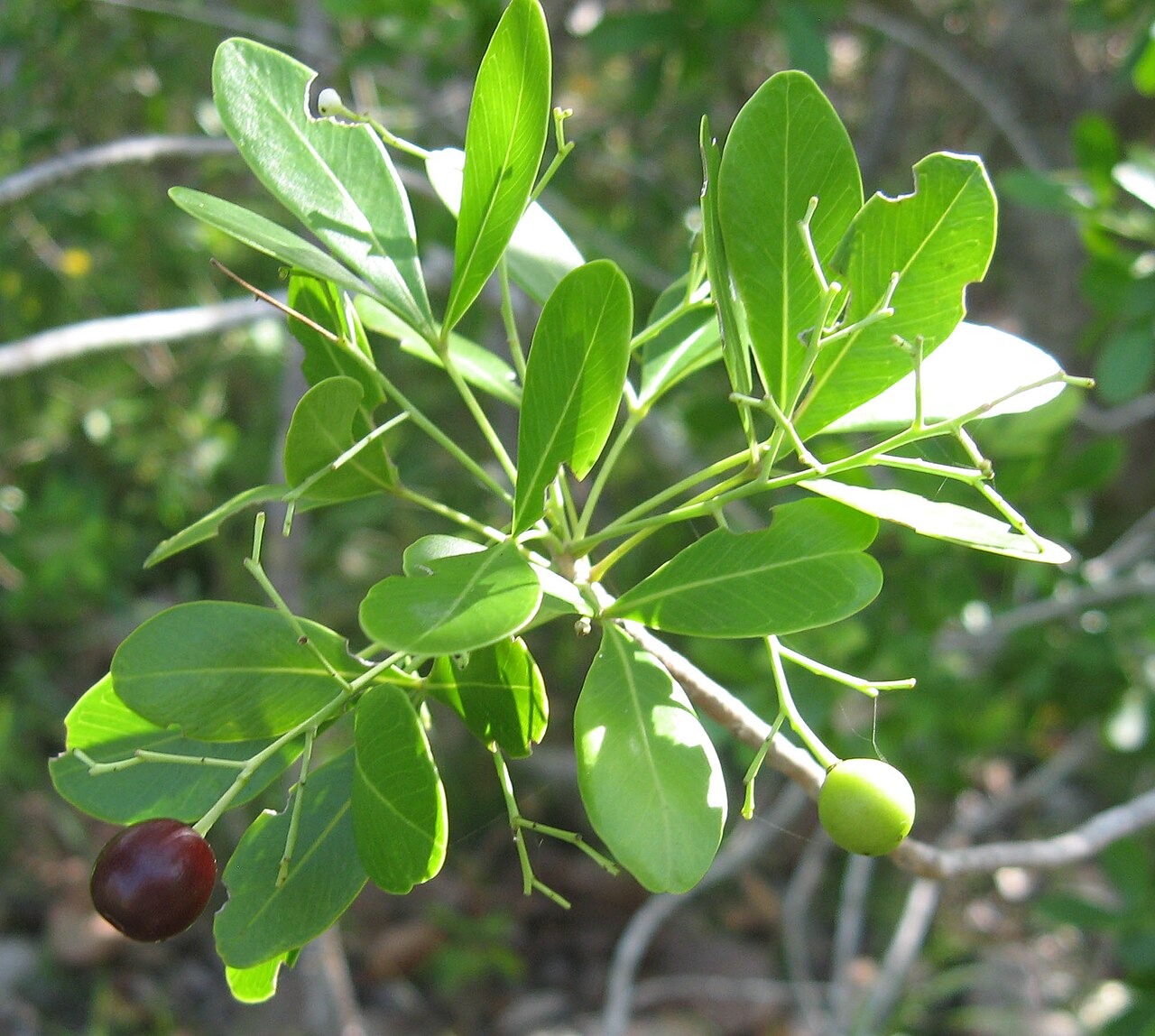
Hypelate trifoliata, commonly known as White Ironwood or Inkwood, is a rare evergreen shrub or small tree native only to the pinelands and hammocks of the Florida Keys and the Long Pine Key area of Everglades National Park in Miami-Dade County. A member of the Sapindaceae (soapberry) family, it is immediately recognizable by its trifoliate leaves — leaves divided into three oblong leaflets — a trait shared by few other South Florida natives.
White Ironwood grows as a dense, evergreen shrub or small tree up to about 40 feet tall under good conditions, with smooth, reddish-gray bark and a crown slightly taller than it is wide. Small, inconspicuous white flowers in spring and summer give way to round fruit that provide significant food and cover for wildlife. The exceptionally hard, dense wood responsible for the “ironwood” name has historically made the tree of interest for small specialty wood items, though it has never been a major timber species given its scarcity.
Because it is native only to a narrow stretch of South Florida pine rockland and hammock habitat, White Ironwood is rarely grown outside of this region, but within it the species makes a tough, drought-tolerant, low-maintenance specimen for a native limestone-soil landscape.
Identification
White Ironwood is an evergreen shrub or small tree, usually slightly taller than broad, capable of reaching about 40 feet in height under favorable conditions, though most wild individuals are considerably shorter.
Bark & Stems
The bark is smooth and reddish-gray, becoming slightly more textured with age. The wood beneath is exceptionally hard and dense, the source of the common name “Ironwood.”
Leaves
The leaves are the easiest identification feature: trifoliate, meaning each leaf is divided into three oblong leaflets roughly 2 inches long, with a glossy, leathery texture. This three-part leaf structure sets White Ironwood apart from nearly all of its hammock and pineland neighbors.
Flowers
Flowers are small, white, and inconspicuous, blooming in spring through summer. They are not showy from a distance but do attract pollinating insects up close.
Fruit & Seeds
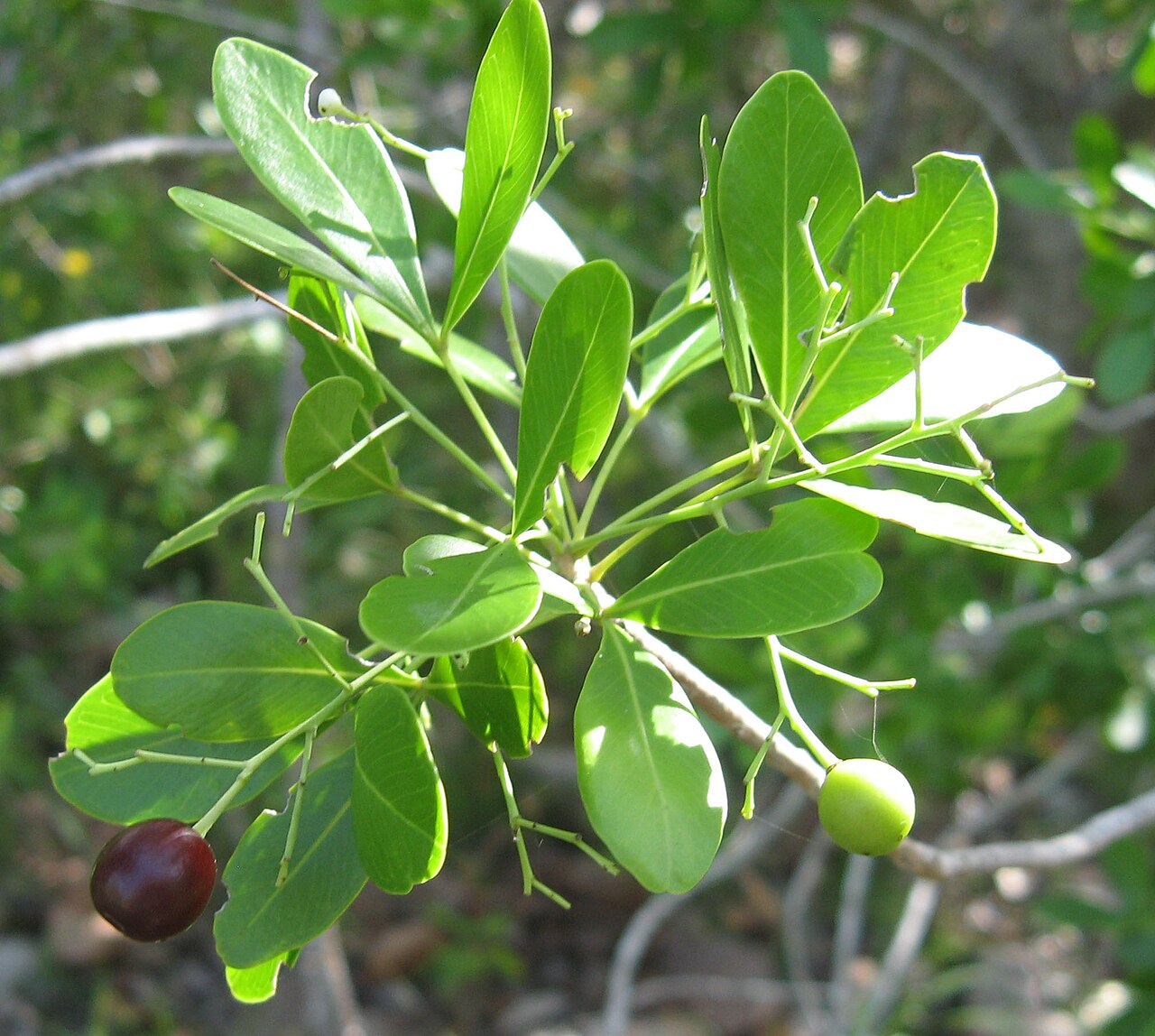
Fruit is small and rounded, ripening from green to dark purple-black, and is an important wildlife food source. Fruiting branches often show both unripe green and ripe dark fruit at the same time.
Quick Facts
| Scientific Name | Hypelate trifoliata |
| Family | Sapindaceae (Soapberry) |
| Plant Type | Evergreen Shrub / Small Tree |
| Mature Height | Up to 40 ft, often much smaller |
| Mature Spread | Slightly narrower than tall |
| Growth Rate | Slow |
| Sun Exposure | Full Sun to Light Shade |
| Water Needs | Low once established |
| Soil Type | Moist, well-drained limestone with humusy top layer |
| Soil pH | Neutral to alkaline |
| Bloom Time | Spring – Summer |
| Flower Color | White |
| Fall Color | None; evergreen |
| Fruit | Small round drupes, green ripening to dark purple-black |
| Deer Resistant | Generally yes |
| USDA Hardiness Zones | 10b–11 |
Native Range
White Ironwood is native to Florida only, and within Florida to just Monroe and Miami-Dade counties: the Florida Keys and the tropical pinelands and hammocks of the Long Pine Key region in Everglades National Park. It is considered a very rare species, rarely grown even by specialty native plant nurseries.
Its preferred habitats are tropical pinelands and hammocks on moist, well-drained limestone soils with a humusy top layer, the same limestone-outcrop conditions that support many of South Florida’s rarest hardwood hammock trees, including Milkbark and Lancewood.
Outside its native Keys and Everglades range, White Ironwood has occasionally been planted ornamentally as far north as Palm Beach County in rich garden soil, but it is not considered native beyond Monroe and Miami-Dade counties, and gardeners further north should not rely on it surviving winter cold outside the subtropical zone.
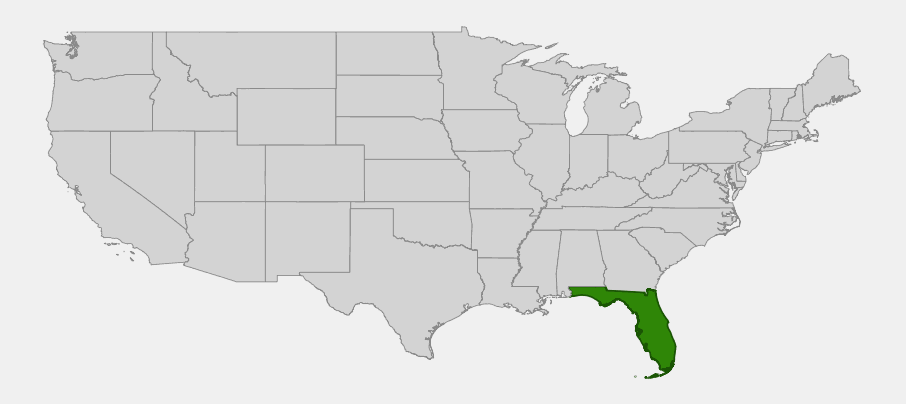
📋 White Ironwood’s U.S. range is confined to Monroe and Miami-Dade counties, Florida, and is not currently covered by any of our regional native plant lists.
Growing & Care Guide
White Ironwood is a tough, drought-tolerant native for gardeners within its native Keys and Everglades range looking for an authentic, low-maintenance limestone-landscape shrub or small tree. Our broader article on the benefits of planting native trees explains why species like this are worth prioritizing over imported ornamentals.
Light
It thrives in full sun to light shade, making it more flexible about light exposure than many of its hammock-interior neighbors, and can handle open pineland conditions as well as partially shaded hammock edges.
Soil & Water
White Ironwood needs moist, well-drained limestone soil with a humusy top layer to get established, but once mature it is highly drought tolerant and needs no supplemental water. It has low tolerance for long-term flooding by salt or brackish water, though it can grow near the coast if protected from direct salt spray by surrounding vegetation.
Planting Tips
Plant in a site with excellent drainage and full sun to part shade. Because the species is so rarely offered commercially, confirm that nursery stock was propagated rather than collected from wild pineland or hammock populations before purchasing.
Pruning & Maintenance
Established White Ironwood needs very little care. Remove dead or storm-damaged branches as needed; the dense, hard wood and slow growth rate mean the plant holds its shape well without regular pruning.
Propagation
Propagation is from seed collected from ripe fruit. Given the plant’s rarity and slow growth, nursery availability is limited, and specialty native plant growers in South Florida are the most reliable source.
Landscape Uses
- Pine rockland and hammock restoration plantings in the Florida Keys and Everglades region
- Drought-tolerant specimen for limestone-based native gardens
- Wildlife shrub border valued for cover and fruit
- Low-maintenance accent once established, needing no irrigation
Wildlife & Ecological Value
White Ironwood is noted for providing significant food and cover for wildlife despite its limited range, making it a valuable addition to any habitat restoration project within its native pineland and hammock zone.
For Birds
The dark, ripening fruit feeds fruit-eating birds that move through Keys and Everglades hammocks and pinelands, while the dense evergreen foliage offers year-round nesting cover.
For Pollinators
The small white spring and summer flowers attract native bees and other pollinating insects, adding to the flowering resources available in South Florida’s pine rockland community.
Ecosystem Role
As a component of two globally imperiled plant communities, pine rockland and rockland hammock, White Ironwood contributes to habitat structure that supports numerous specialized South Florida wildlife species. Gardeners interested in extending this value to a home landscape can find more ideas in our guide to building a wildlife habitat garden.
Cultural & Historical Uses
White Ironwood’s extremely hard, dense wood gave rise to its common name and made it of occasional interest for small specialty wood items historically, though its rarity meant it was never harvested as a significant timber resource. The alternate name “Inkwood” reflects historical use of parts of the plant in producing dark dye or ink-like substances by early Florida settlers and Indigenous peoples, though detailed documentation of this practice is limited.
Botanically, White Ironwood has long been noted by Florida naturalists as a distinctive, identifiable component of the Keys and Everglades pineland and hammock flora, valued more for its role in a rare ecosystem than for any economic product.
There is no reliable record of White Ironwood being used medicinally or as food, and no part of the plant should be assumed safe to eat. Today it is grown almost exclusively for habitat restoration and as a drought-tolerant native landscape specimen.
Frequently Asked Questions
Is White Ironwood endangered?
It is not federally listed, but it is listed as Endangered by the State of Florida, native only to Monroe and Miami-Dade counties and rarely grown even by native plant specialty nurseries.
Can White Ironwood grow outside South Florida?
It is native only to the Florida Keys and the Everglades region, though it has occasionally been grown ornamentally as far north as Palm Beach County in rich soil. It is not reliably cold hardy further north.
Why is it called “Ironwood”?
The name comes from its exceptionally hard, dense wood, a trait shared by several unrelated South Florida hammock trees that carry the “ironwood” common name.
How can I identify White Ironwood?
Look for its trifoliate leaves, divided into three glossy oblong leaflets, which is a distinctive trait not shared by most of its South Florida hammock and pineland neighbors.
Is White Ironwood drought tolerant?
Yes, once established it tolerates drought well and needs no supplemental irrigation, though young plants need consistent moisture while establishing a root system in limestone soil.

Looking for a nursery that carries White Ironwood?
Browse our native plant nursery directory: Florida and nearby states

