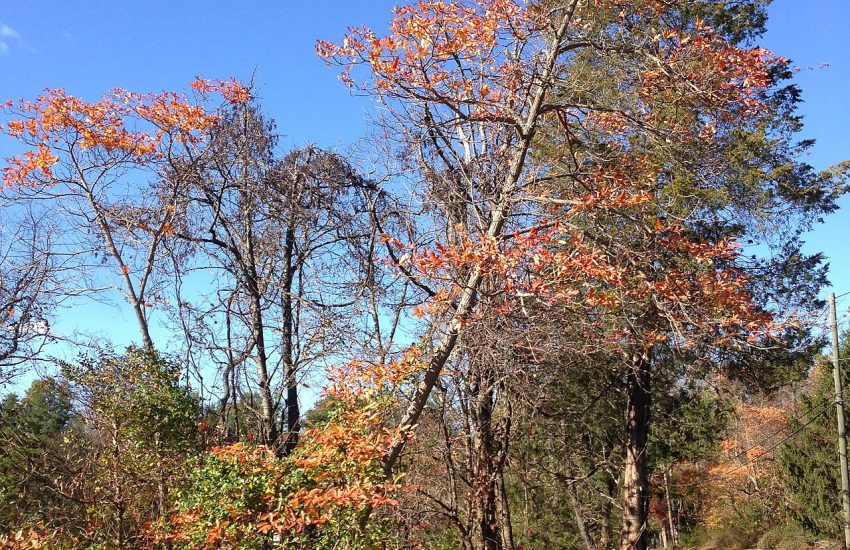
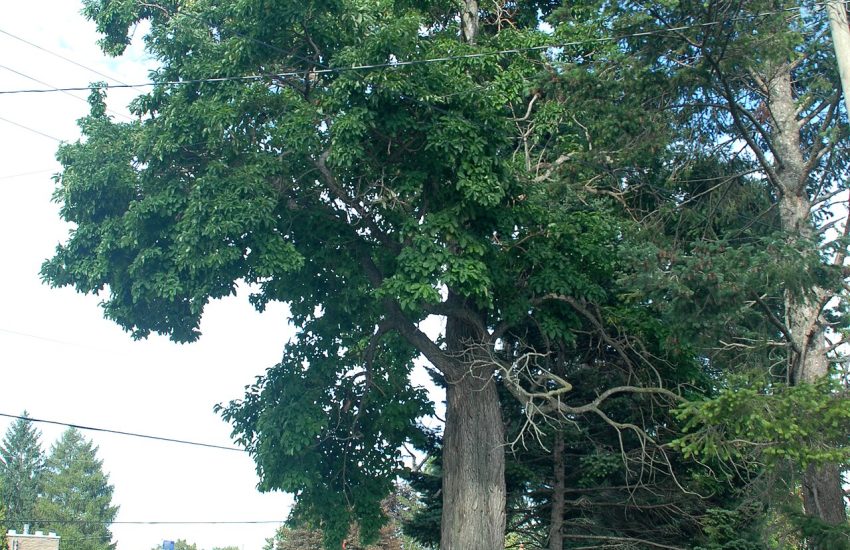
Balsam Willow (Salix pyrifolia)
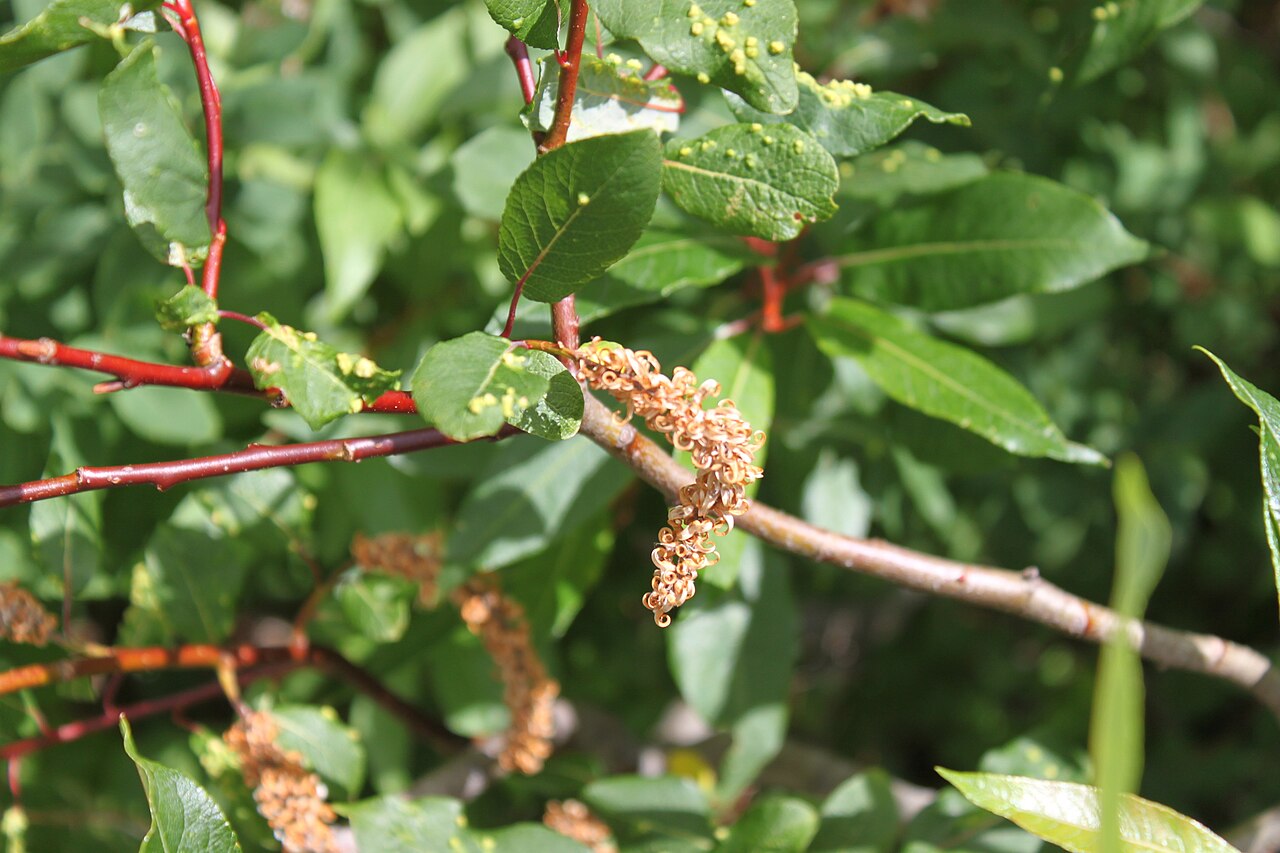
Salix pyrifolia (syn. Salix balsamifera), commonly called balsam willow, is a shrub or small tree of the Salicaceae (willow) family native to the boreal forest zone of Canada, reaching its southern limit in the cold wetlands of the northern Great Lakes states and New England. The common name refers to the sweet, balsam-like fragrance released by the young, gland-dotted leaves when crushed — a distinctive and pleasant trait that sets it apart from most other native willows.
Balsam willow typically grows as a multi-stemmed shrub, occasionally a small single-trunked tree, reaching up to about 16 feet tall. Its glossy, broadly oval leaves, smooth and hairless compared to many willows, and its shiny reddish-brown twigs and buds make it an attractive, easily recognized shrub even in winter. It favors consistently wet ground: bogs, fens, swamp margins, and streamside thickets at the southern, coldest edge of its range.
Because balsam willow is adapted to such cold, wet, northern conditions, it is a specialty plant best suited to restoration and wildlife plantings in the northern tier of its native range rather than general garden use farther south. Where it is native, it is a valuable, low-maintenance addition to bog gardens, wetland plantings, and naturalized shoreline buffers.
Identification
Balsam willow is usually a multi-stemmed shrub 3 to 16 feet (1–5 m) tall, occasionally developing into a small tree under favorable conditions. Its form is generally more upright and less sprawling than many thicket-forming willows.
Bark & Stems
Young twigs are notably shiny, smooth, and reddish-brown to purplish, a conspicuous and attractive trait especially visible in winter. Buds are similarly shiny and reddish, covered by a single scale as in all willows. Bark on older stems becomes gray-brown and slightly furrowed.
Leaves
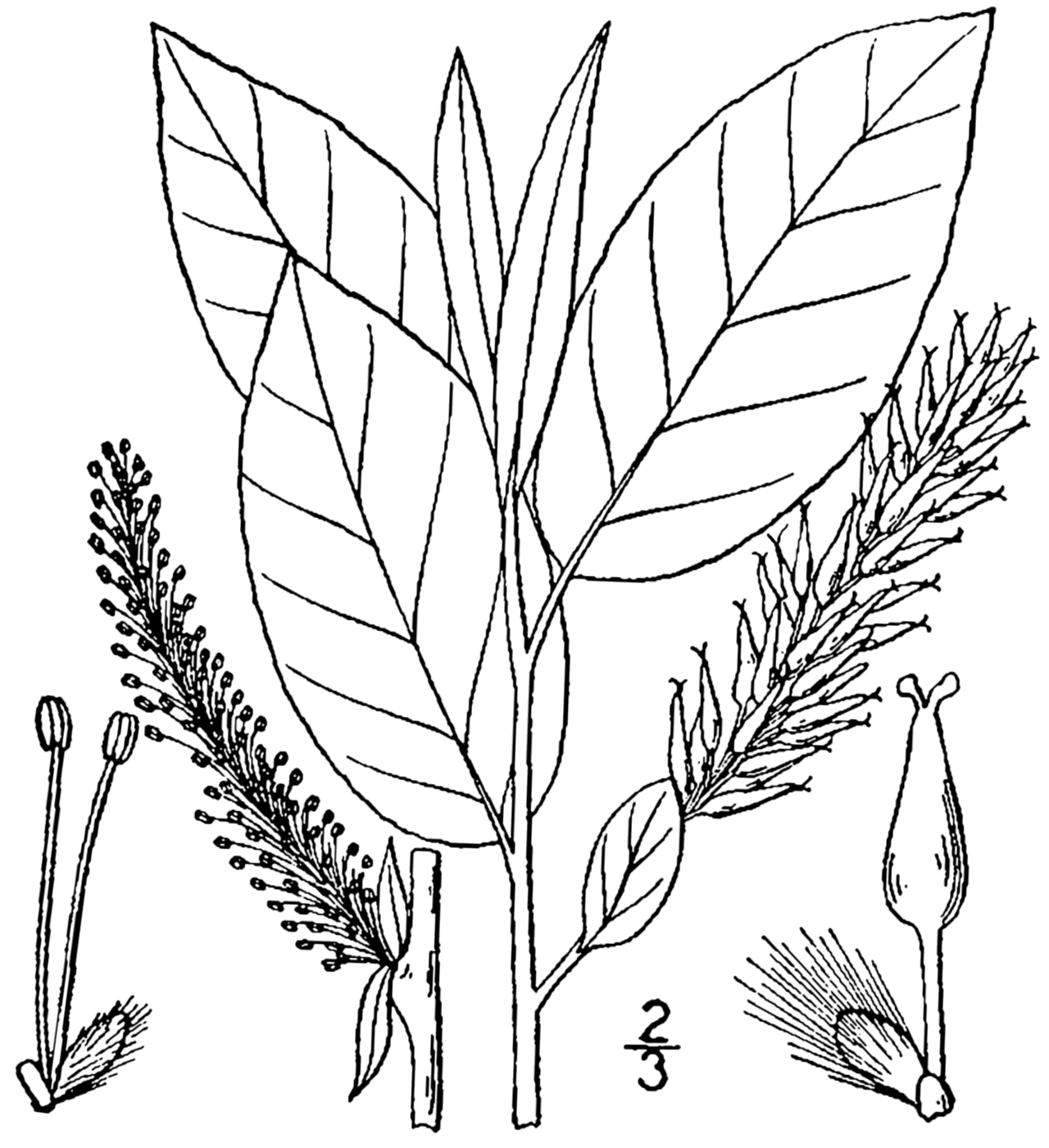
Leaves are simple, alternate, broadly oval to heart-shaped at the base, up to about 4 inches long, hairless and glossy on both surfaces — smoother than most native willows — with fine, shallow teeth or nearly smooth margins. Young leaves are dotted with small resinous glands that release a sweet, balsam-like fragrance when crushed, the source of the common name.
Flowers & Fruit
Like all willows, balsam willow is dioecious, with separate male and female catkins appearing in spring as or just before the leaves emerge. Male catkins are relatively short and yellow with pollen; female catkins lengthen as they mature, producing narrow, hairless capsules that ripen to a maroon-red color before splitting to release cottony, wind-dispersed seed in early summer.
Quick Facts
| Scientific Name | Salix pyrifolia (syn. Salix balsamifera) |
| Family | Salicaceae (Willow) |
| Plant Type | Deciduous Shrub / Small Tree |
| Mature Height | 3–16 ft (1–5 m) |
| Mature Spread | 4–10 ft |
| Growth Rate | Moderate to Fast |
| Sun Exposure | Full Sun to Part Shade |
| Water Needs | High |
| Soil Type | Consistently wet; peaty, boggy, or mucky soils |
| Soil pH | 4.5–6.5 (acidic) |
| Bloom Time | April – May |
| Flower Color | Yellow (male), green (female) catkins |
| Fall Color | Yellow |
| Fruit | Narrow maroon-red capsules with cottony seed |
| Deer Resistant | No (browsed by deer and moose) |
| USDA Hardiness Zones | 2–5 |
Native Range
Balsam willow is a boreal species found across most of forested Canada, from Newfoundland west to British Columbia and north into the southern Yukon and Northwest Territories. It reaches its southern range limit in the United States in a narrow band of cold, wet habitats across the northern Great Lakes states and New England.
Within this southern edge of its range, balsam willow is restricted to consistently cold, wet sites: sphagnum bogs, fens, swamp margins, and the edges of boreal-influenced streams and lakes, often growing alongside black spruce, tamarack, and other classic northern wetland species. It is notably less tolerant of warm summers than many other native willows, which largely confines it to the coolest, wettest microhabitats at its southern limit.
Because of this narrow ecological tolerance, balsam willow is uncommon to rare across much of its U.S. range outside the coldest parts of Minnesota, Wisconsin, Michigan’s Upper Peninsula, and northern New York and New England, and it should be planted only within or very near its documented native range.
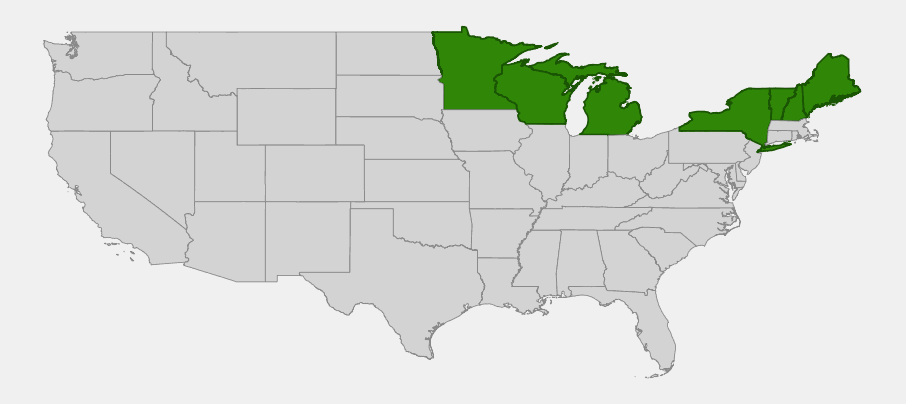
📋 Regional plant lists featuring Balsam Willow: New Hampshire, Maine & Vermont · New York, Pennsylvania & Northern New Jersey · Michigan, Wisconsin & Eastern Minnesota · North Dakota, South Dakota & Western Minnesota
Growing & Care Guide
Balsam willow is easy to grow within its narrow climatic comfort zone, but it genuinely needs cold, wet conditions to thrive — it is not a general-purpose garden willow like the ornamental pussy willow.
Light
Grows best in full sun to light shade. In the open, boggy habitats it favors, full sun produces the most compact, floriferous growth.
Soil & Water
Requires consistently saturated to wet, acidic soil — the kind found in bogs, fens, and swamp margins. It is not a drought-tolerant plant and will struggle or fail on soils that dry out during the growing season. Gardeners outside its narrow cold-wetland comfort zone will have more success with other native willows better suited to average conditions, even where harvested rainwater helps keep a low spot wet.
Planting Tips
Plant container stock or dormant hardwood cuttings in a reliably wet, boggy site in spring. Balsam willow is best reserved for wetland restoration projects, bog gardens, or naturalized shoreline buffers within its documented native range in the northern Great Lakes states and New England, rather than general landscape use farther south.
Pruning & Maintenance
Little pruning is required. Remove dead or damaged stems in late winter; established plants resprout readily from the base if cut back. The species is not known for significant pest or disease problems within its native cold-wetland habitat.
Landscape Uses
Balsam willow is a specialty plant for specific wet, cold-climate settings:
- Bog and fen garden plantings in appropriate northern climates
- Wetland and shoreline restoration within its native range
- Cold-climate streambank stabilization
- Wildlife plantings in boreal-adjacent landscapes
Wildlife & Ecological Value
Within its cold wetland habitat, balsam willow contributes meaningfully to a specialized ecological community.
For Pollinators
Early spring catkins provide nectar and pollen for native bees emerging in cold boreal and near-boreal habitats, where few other flowering plants are active so early in the season.
For Birds
Dense willow growth in bogs and fens provides nesting cover and foraging habitat for wetland and boreal-associated songbirds, including various sparrows and warblers that favor shrubby wetland edges.
For Mammals
Moose and white-tailed deer browse the twigs and foliage, particularly in winter; balsam willow is among the willows contributing to moose winter forage in the boreal and near-boreal wetlands where it grows. Beavers also use willow stems for food and construction material.
Ecosystem Role
As with other native willows, balsam willow is a larval host plant for numerous moths and butterflies, supporting the insect food web that sustains breeding birds in bog and fen habitats. Its presence is also a useful indicator of high-quality, undisturbed boreal wetland habitat, since it does not persist well outside consistently cold, saturated conditions.
Cultural & Historical Uses
Balsam willow has limited documented historical use compared to some other native willows, likely reflecting both its restricted range and the difficulty of working in the remote bogs and fens where it typically grows. Like other willows, its bark contains salicin, related to aspirin, and northern Indigenous peoples made general use of willow bark in traditional preparations for pain and fever — a historical practice, not a modern medical recommendation, and not specifically documented for this species above other regional willows.
The balsam-scented foliage, the source of the common name, has occasionally been noted by foragers and naturalists as a pleasant, identifying characteristic when exploring northern bogs, but the species has not been a significant source of material culture in the way some larger willows have been for basketry or tool-making.
Today, balsam willow is valued mainly by wetland ecologists, native plant restoration specialists, and botanists studying boreal plant communities, where its presence helps characterize high-quality bog and fen habitat.
Frequently Asked Questions
Why is it called “balsam willow”?
The young leaves are dotted with resinous glands that release a sweet, balsam-like fragrance when crushed, a trait distinctive enough among native willows to give the species its common name.
Can I grow balsam willow outside its native range?
It is not recommended. Balsam willow needs consistently cold, wet, acidic conditions and performs poorly outside the boreal and near-boreal wetlands of its native range. Gardeners further south should choose a willow species better adapted to their local conditions.
Does balsam willow need standing water?
It needs consistently saturated to wet soil, such as a bog, fen, or swamp margin, but does not require permanent standing water. It will not thrive on soils that dry out during the growing season.
How can I tell balsam willow from other native willows?
Look for glossy, hairless, broadly oval leaves with a balsam fragrance when crushed, combined with shiny reddish-brown twigs and buds — a smoother, glossier look than most other native willows in the same wetland habitats.
Is balsam willow rare?
It is not globally rare, but it is uncommon across much of its U.S. range because it is restricted to a narrow band of cold, wet habitat at the southern edge of a largely Canadian boreal distribution.

Looking for a nursery that carries Balsam Willow?
Browse our native plant nursery directory: Maine & Michigan · New Hampshire & New York · Vermont · Wisconsin