Tucker Oak (Quercus john-tuckeri)
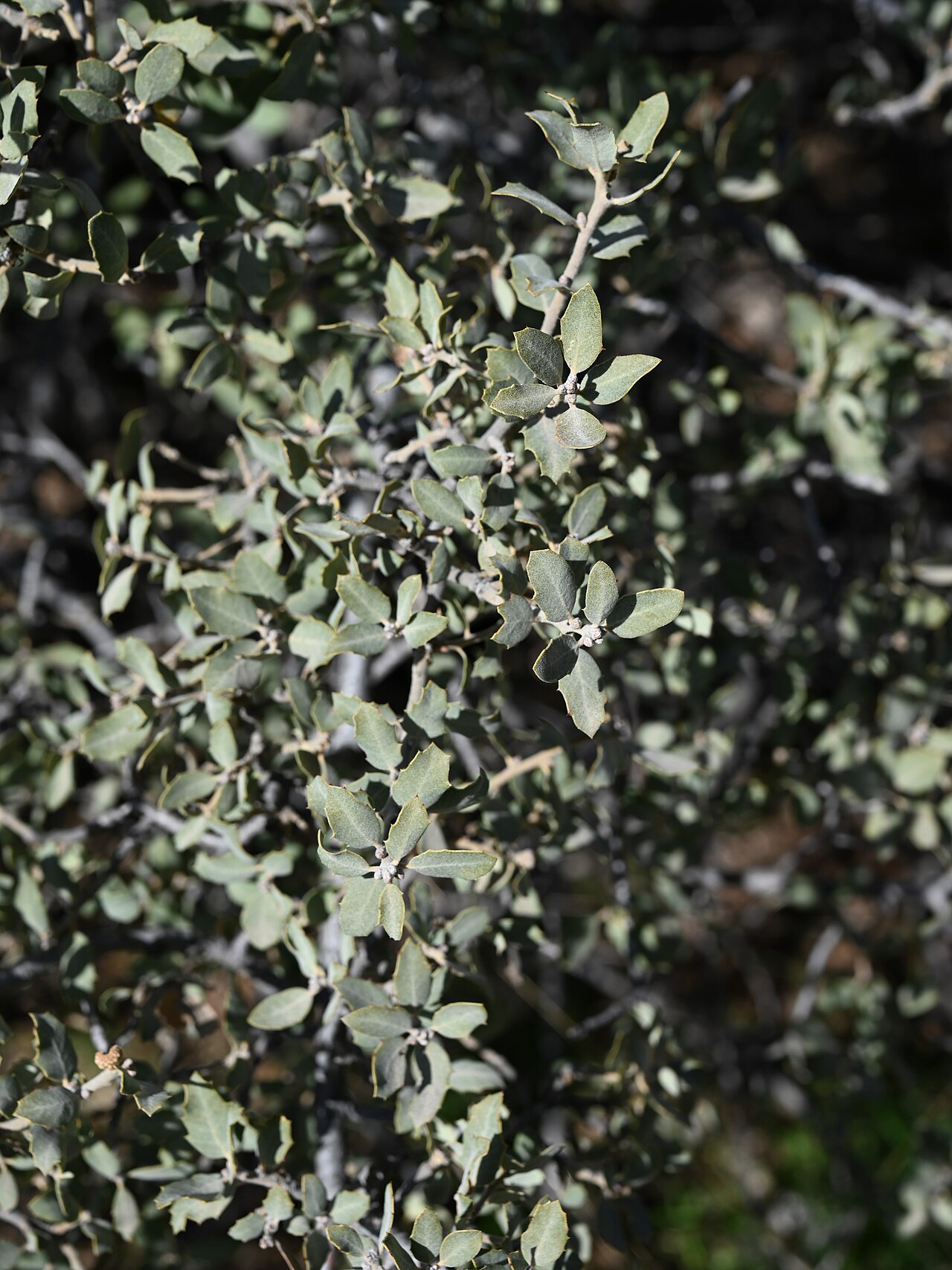
Quercus john-tuckeri, commonly called Tucker Oak or Tucker’s Oak, is a tough evergreen scrub oak native to the dry interior mountains and foothills of California. It typically grows as a dense, rounded shrub, though old individuals in favorable sites can become small trees. The species is named for the 19th-century California botanist John Tucker (not to be confused with later Quercus researcher Dr. John M. Tucker, for whom it is sometimes said to be named in botanical literature).
Tucker oak belongs to the same complex of small-leaved, spine-toothed scrub oaks as California scrub oak, with which it was long confused or combined before being recognized as a distinct species. It is easy to overlook as “just another scrub oak,” but it fills an important niche in dry chaparral and pinyon-juniper woodlands across a wide swath of California’s interior mountains, from the Transverse Ranges near Los Angeles north through the southern Sierra Nevada foothills and east to the edges of the Mojave Desert.
For gardeners in hot, dry interior California, Tucker oak is a resilient, low-water native that asks for almost nothing once established. It is not common in the nursery trade, but where available it makes a durable wildlife hedge or background shrub for xeric landscaping that mimics its native chaparral and woodland habitat.
Identification
Tucker oak grows as a bushy, many-branched shrub typically 6 to 16 feet tall, occasionally becoming tree-like and exceeding 20 feet in sheltered canyons. Its gray or brown branches are covered in short, woolly hairs when young, becoming scaly with age, and the overall growth habit is dense and tangled, well suited to shedding wind and intense sun.
Bark & Stems
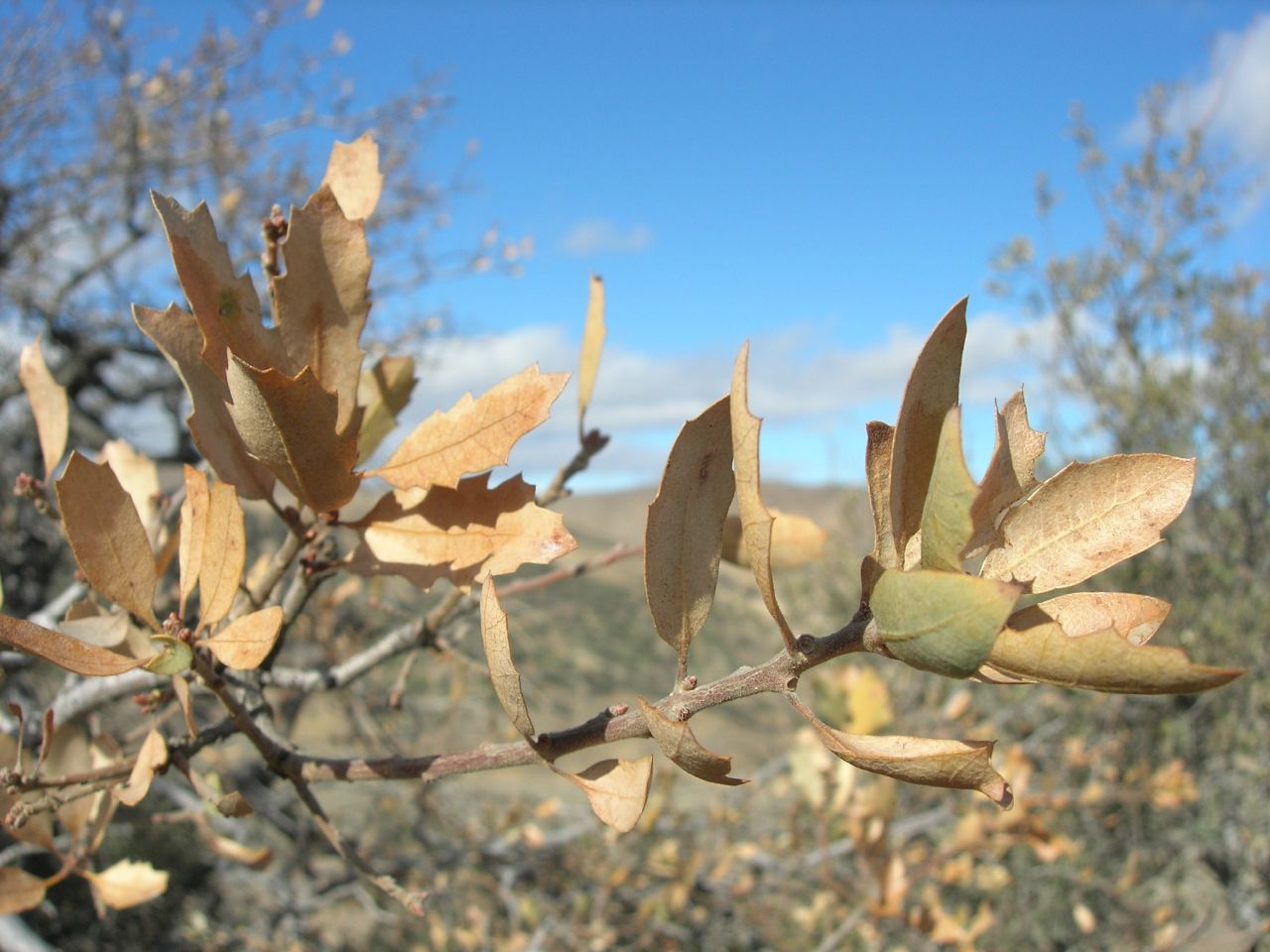
Young twigs are covered in fine, pale, woolly hairs that help reflect sun and reduce water loss; older stems lose this covering and develop scaly gray-brown bark typical of chaparral shrubs.
Leaves
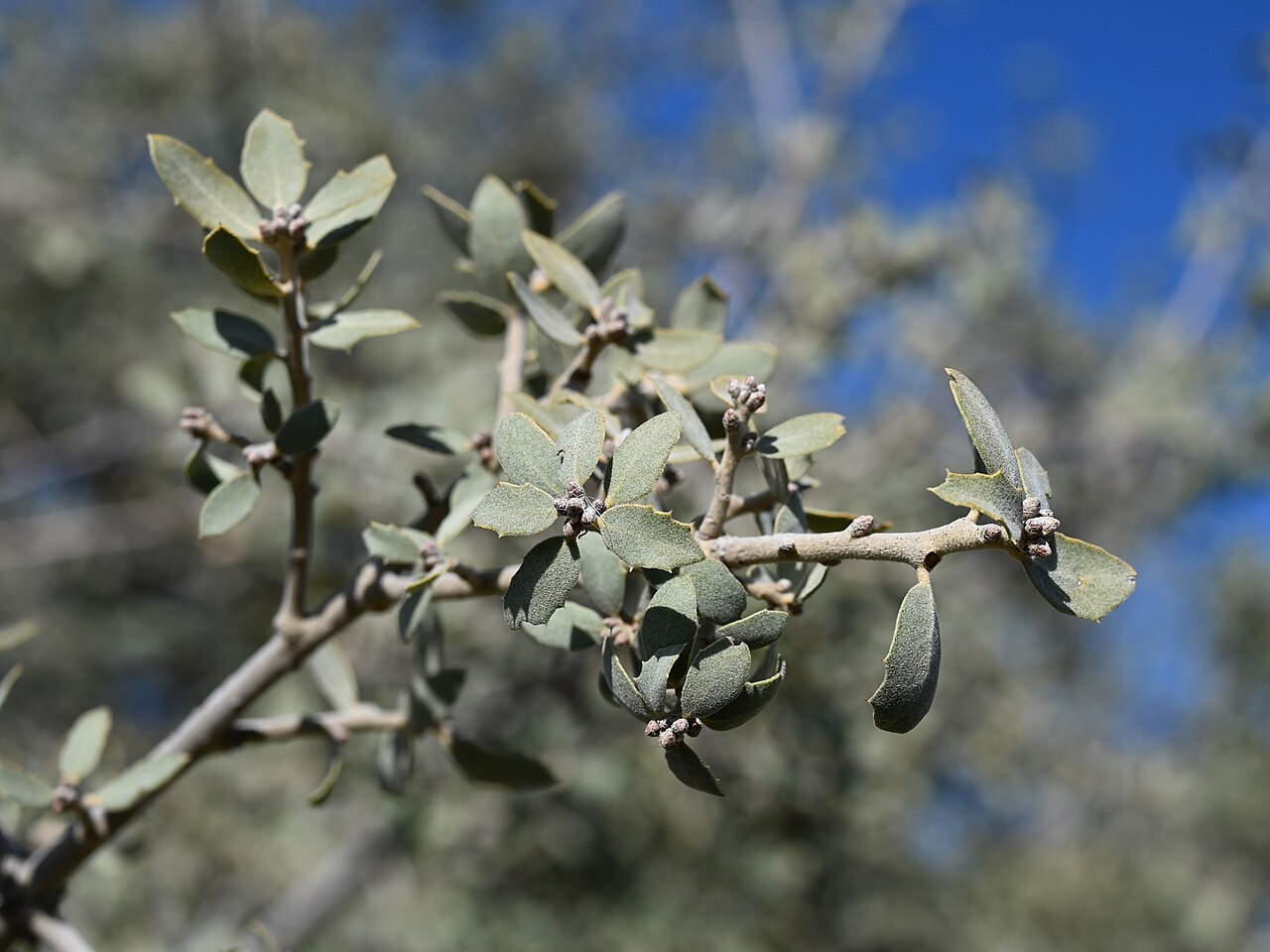
The evergreen leaves are small, leathery, and often brittle, roughly oval and usually under 1.6 inches long, with sharp spine-tipped teeth along the margins. Leaf color ranges from gray-green to blue-green, and the undersides are typically paler and finely hairy, an adaptation that helps the foliage cope with intense inland sun and prolonged summer drought.
Flowers & Fruit
Like other oaks, Tucker oak is wind-pollinated, with inconspicuous cream to green catkins appearing in spring alongside new growth. Acorns mature in a single season, with a thin, shallow cap about ½ to ¾ inch wide topping a nut roughly ¾ to 1¼ inches long.
Quick Facts
| Scientific Name | Quercus john-tuckeri |
| Family | Fagaceae (Oak) |
| Plant Type | Evergreen shrub, occasionally small tree |
| Mature Height | 6–16 ft (to 20+ ft in favorable sites) |
| Mature Spread | As wide as tall; dense, thicket-forming |
| Growth Rate | Slow |
| Sun Exposure | Full Sun |
| Water Needs | Very low once established |
| Soil Type | Dry, rocky, well-drained |
| Soil pH | Slightly acidic to neutral |
| Bloom Time | Spring |
| Flower Color | Cream, green (inconspicuous catkins) |
| Fall Color | None (evergreen) |
| Fruit | Acorns ¾–1¼ in, ripening in one season |
| Deer Resistant | Yes (tough, spiny foliage) |
| USDA Hardiness Zones | 7–9 |
Native Range
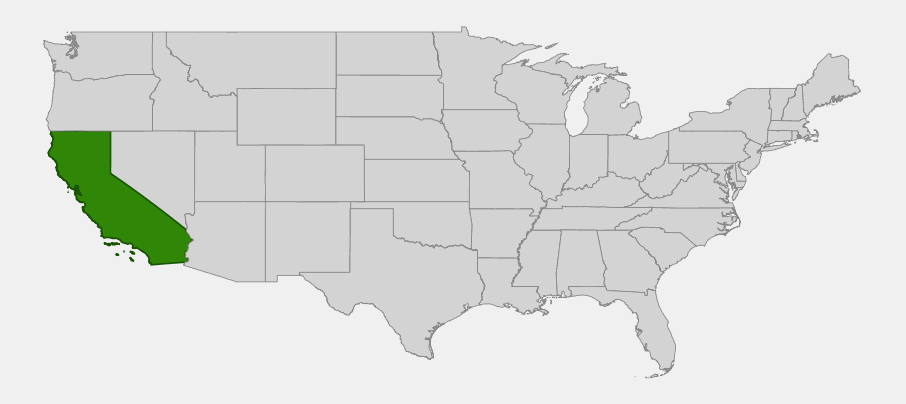
Tucker oak is endemic to California’s interior mountains and foothills. Its range runs from the western Transverse Ranges and southernmost Central Coast Ranges near Los Angeles north through the southern Sierra Nevada foothills, with outlying populations reaching toward the margins of the Mojave Desert. It is a plant of dry, sun-baked slopes rather than the fog-cooled coast.
It grows in chaparral, pinyon-juniper woodland, and the margins of blue oak and interior live oak woodland, typically on dry, rocky slopes at elevations from about 1,000 to 6,500 feet. Because it favors the hot, dry interior rather than coastal California, it tolerates considerably more heat and drought than many of the state’s better-known coastal oaks.
Tucker oak was long lumped together with California scrub oak (Quercus berberidifolia) before botanists recognized it as a separate species restricted to California’s interior ranges; some older floras and nursery records may still list it under the broader “scrub oak” name, so gardeners sourcing plants should confirm the scientific name when buying from a nursery.
📋 Regional plant lists featuring Tucker Oak: California & Nevada
Growing & Care Guide
Tucker oak is built for California’s hot, dry interior, and the same qualities that let it thrive on exposed rocky slopes make it an exceptionally low-maintenance garden shrub once established.
Light
Give it full sun. Tucker oak grows naturally in open chaparral and woodland margins with intense exposure, and it keeps its densest, healthiest form in a sunny spot.
Soil & Water
Plant in well-drained, rocky or gravelly soil; it does poorly in heavy clay that holds water. Water occasionally through the first couple of summers to help roots establish, then stop regular irrigation — mature plants are adapted to long, hot, rainless summers and can suffer from root disease if watered like a typical ornamental shrub.
Planting Tips
Set out container-grown plants in fall or winter ahead of seasonal rains. Choose a site that mimics its native dry, rocky slopes, and avoid low spots where water collects. Because it naturally forms dense thickets, space plants generously if you want individual specimens to keep their shape, or plant closer together for a solid hedge or screen.
Pruning & Maintenance
Very little pruning is needed beyond removing dead wood. Avoid heavy shearing, which disrupts the plant’s naturally dense, rounded form. Tucker oak is otherwise extremely low-maintenance and well adapted to being left alone once it has a few years of growth behind it.
Landscape Uses
- Xeriscaping and waterwise gardens in hot, dry interior California; see our guide to waterwise gardening for hot climates
- Wildlife hedge or screen in foothill and chaparral gardens
- Slope stabilization on dry, rocky hillsides
- Habitat restoration plantings alongside California juniper
- Fire-wise landscaping as part of a defensible-space planting plan, spaced to avoid continuous fuel
Wildlife & Ecological Value
Tucker oak thickets are a valuable component of California’s interior chaparral and woodland ecosystems, offering food and cover in landscapes that can otherwise be sparse and exposed.
For Pollinators
Though wind-pollinated and not a nectar source itself, Tucker oak supports a range of native bees, moths, and other insects whose larvae feed on oak foliage, along with hoverflies and other beneficial insects that shelter in its dense branches.
For Birds
Scrub-jays, acorn woodpeckers, and other woodland birds forage on Tucker oak acorns, and the dense, spiny growth provides secure nesting and roosting cover from predators in open chaparral terrain. Hummingbirds have also been documented visiting the spring catkins.
For Mammals
Acorns are an important fall food source for mule deer, ground squirrels, and other small mammals across its range, and the thickets provide thermal cover and protection from predators in otherwise open, exposed chaparral and woodland habitat.
Ecosystem Role
As a dense, long-lived shrub in dry interior plant communities, Tucker oak helps stabilize rocky slopes, builds soil organic matter through its leaf litter, and adds structural diversity to chaparral and pinyon-juniper woodland that might otherwise be dominated by smaller, more open shrubs.
Cultural & Historical Uses
As with California’s other scrub oaks, Tucker oak’s acorns were historically gathered by Indigenous peoples across its interior California range as part of the broader acorn-based diet common throughout much of Indigenous California, processed by grinding and leaching to remove bitter tannins before cooking.
The species carries an interesting naming history: it honors 19th-century botanical work in California, though for decades it was not clearly distinguished from the similar California scrub oak, and botanical treatments only settled on it as a separate species relatively recently. This taxonomic history means older references and some nursery catalogs may still use outdated names.
Tucker oak has no significant commercial timber history, given its shrubby stature, and its modern relevance is primarily ecological — as a component of dry chaparral and foothill woodland communities that support California’s interior wildlife.
Frequently Asked Questions
Is Tucker oak the same as California scrub oak?
No, though the two were historically confused. Tucker oak (Quercus john-tuckeri) is now recognized as a distinct species found in California’s interior mountains and foothills, separate from California scrub oak (Quercus berberidifolia), which has a somewhat different, more coastal-influenced range.
How much water does Tucker oak need?
Very little once established. It is adapted to long, hot, dry interior California summers and should receive minimal to no supplemental irrigation after its first couple of years in the ground.
Does Tucker oak get big enough to be a shade tree?
Usually not. It typically stays a dense shrub 6 to 16 feet tall, though old specimens in sheltered, favorable sites can become small, tree-like plants exceeding 20 feet. It is better suited to hedging and screening than as a true shade tree.
Is Tucker oak good for wildfire-prone areas?
Like most chaparral shrubs, it can carry fire, so it should be incorporated thoughtfully into defensible space planning — spaced from structures and other dense fuel — rather than planted as a continuous thicket right against a home.
Where can I see Tucker oak in the wild?
It is common in chaparral and woodland in places such as Vasquez Rocks Natural Area and Hungry Valley in Los Angeles County, and across much of the southern Sierra Nevada foothills and western Transverse Ranges.

Looking for a nursery that carries Tucker Oak?
Browse our native plant nursery directory: California