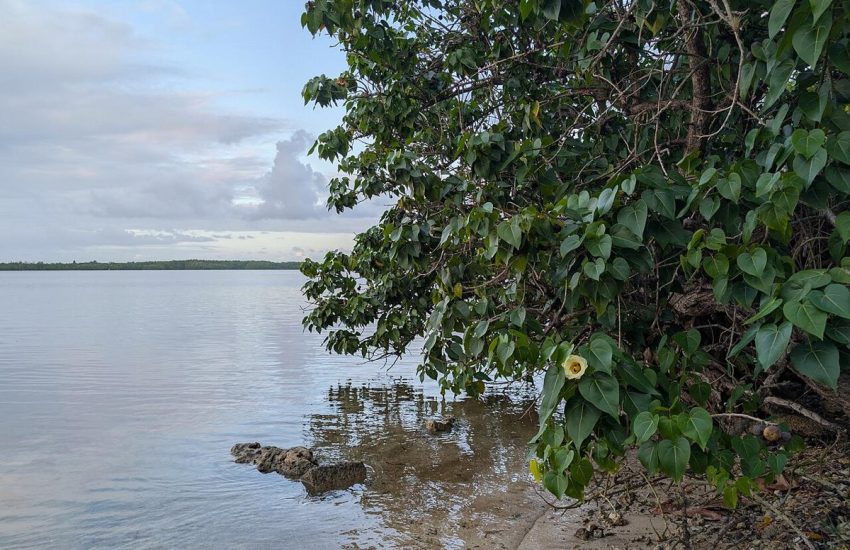
ʻOhe Makai (Polyscias sandwicensis)
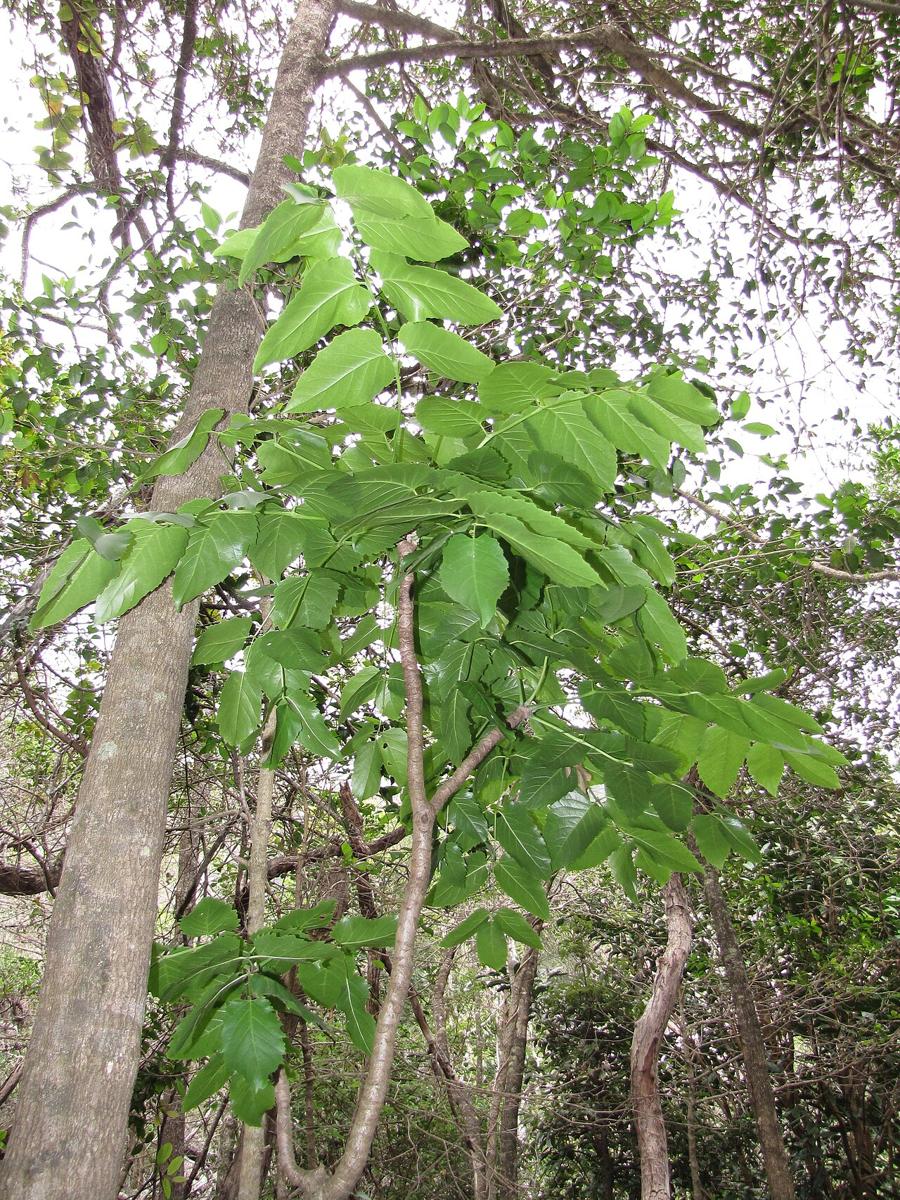
Polyscias sandwicensis, known in Hawaiian as ʻOhe Makai (also ʻOhe kukuluāeʻo or ʻoheʻohe on Niʻihau), is a small to medium tree in the ginseng family (Araliaceae) found only in the Hawaiian Islands. For many years botanists placed it in its own genus, Reynoldsia, and older references and the USDA PLANTS database still list it as Reynoldsia sandwicensis; current taxonomic treatments merge Reynoldsia into the larger genus Polyscias.
ʻOhe makai is one of the signature trees of Hawaiʻi’s lowland dry forest, a habitat type that has lost well over 90 percent of its original extent to development, grazing, and invasive grasses that fuel wildfire. The tree is easy to pick out even from a distance: its smooth, pale gray trunk and open, crooked crown of stout branches stand apart from the surrounding scrub, especially during the dry season when it drops its leaves entirely. It often grows alongside other dry-forest natives such as Wiliwili (Erythrina sandwicensis) in remnant forest patches on several islands.
For gardeners and restoration projects in leeward Hawaiʻi, ʻohe makai offers an unusual silhouette, genuine drought tolerance once established, and a direct tie to one of the state’s most imperiled ecosystems. It is not a plant for wet, windward gardens, but in the right dry, sunny site it is a distinctive and low-maintenance native tree.
Identification
ʻOhe makai grows as a tree 15 to 49 feet (4.6–15 m) tall with a stout, smooth, light gray trunk up to about 2 feet in diameter and a spreading crown of thick, crooked branches. Unlike many Hawaiian trees, it is markedly deciduous — a drought-adapted strategy also seen in Wiliwili — dropping its leaves during the regular summer dry season to conserve water and leafing out again with the rains.
Leaves
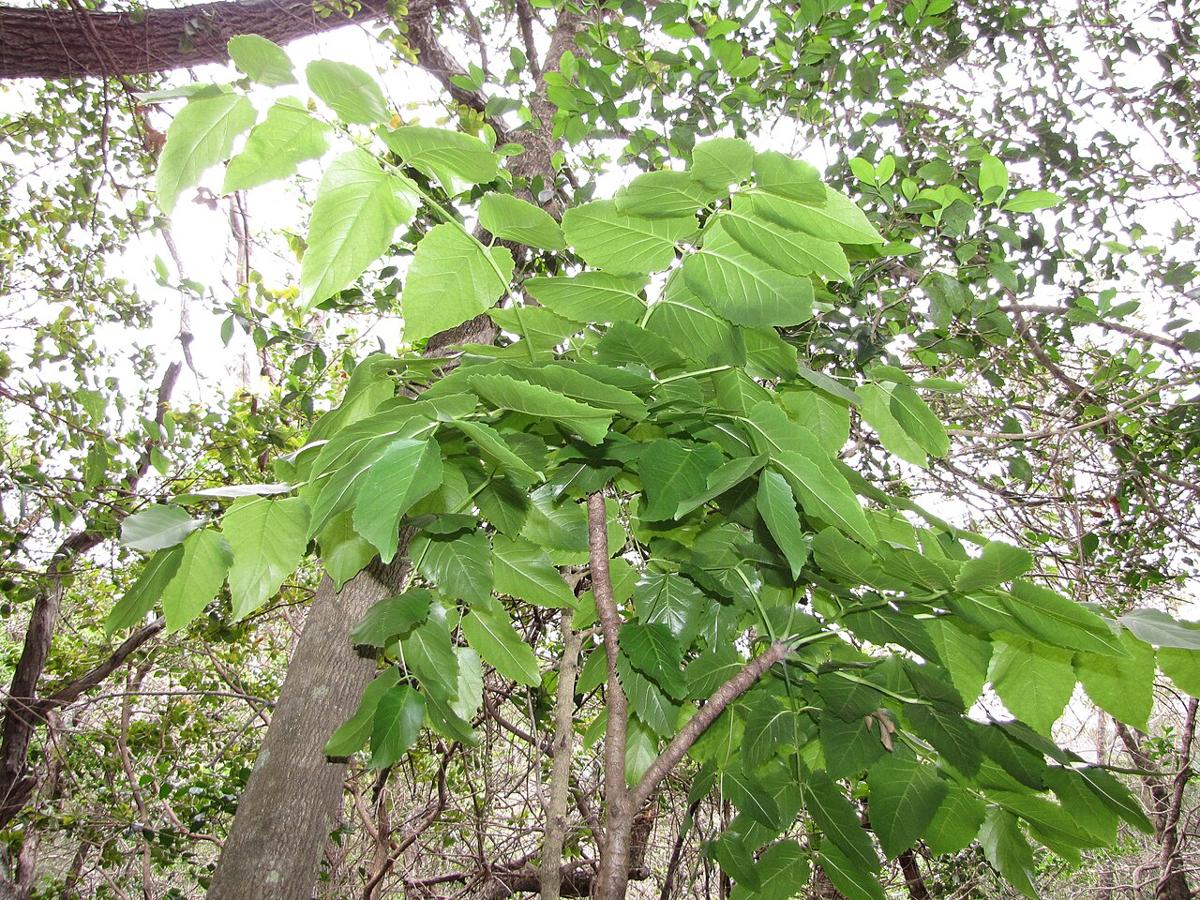
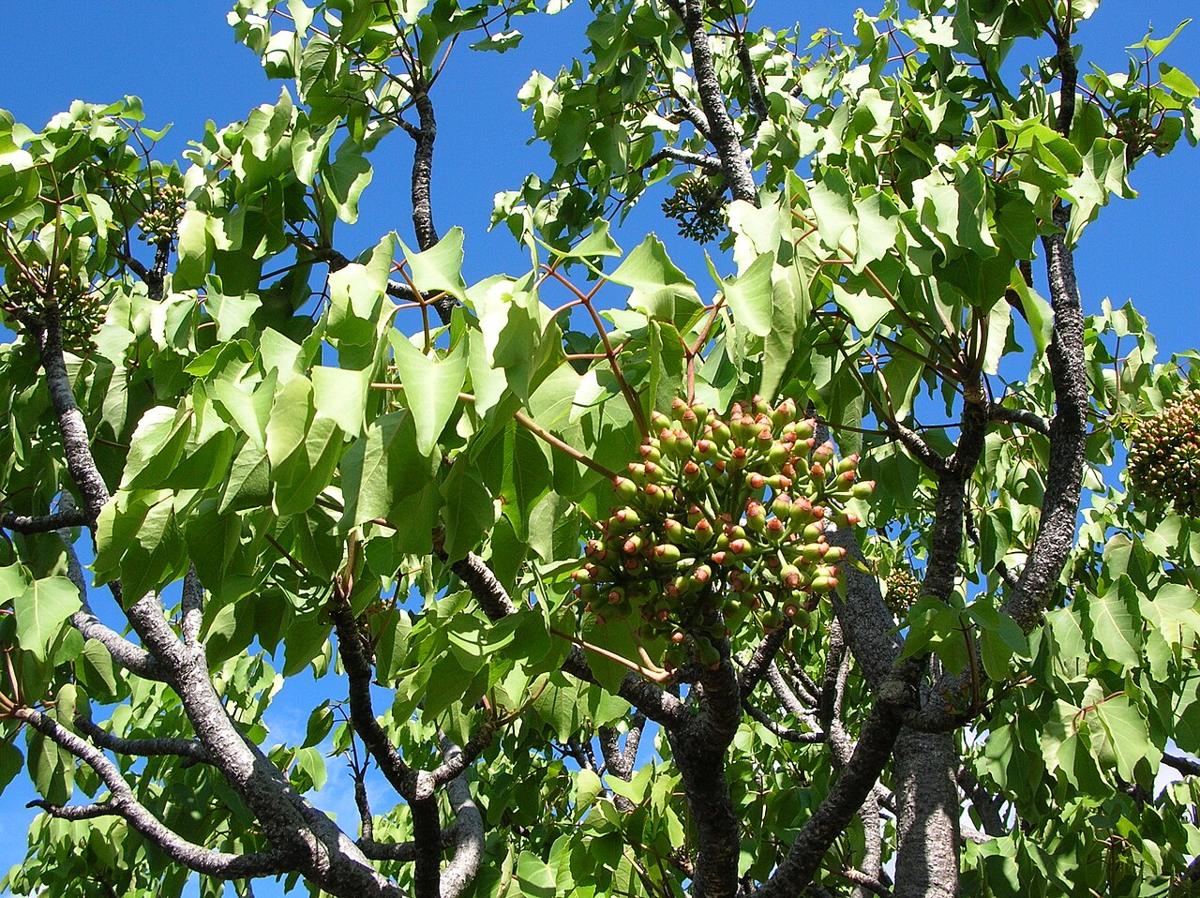
Leaves are large, compound, and clustered toward the branch tips, each made up of several broad, leathery, toothed leaflets up to 6 inches long on a stout petiole. The foliage has a coarse, tropical texture that is quite different from the small-leaved shrubs typical of dry forest understory.
Flowers
Small, greenish-white flowers are borne in branched clusters (umbels) near the branch tips, in the typical ginseng-family arrangement. They are not showy and are easy to miss among the foliage, though they draw small native and introduced insects.
Fruit
The fruit is a small, rounded, several-seeded drupe that ripens from green to dark purple, maturing in dense clusters at the branch tips. Fruiting trees are a reliable identification feature and an important food source for native forest birds that still persist in dry forest remnants.
Quick Facts
| Scientific Name | Polyscias sandwicensis (syn. Reynoldsia sandwicensis) |
| Family | Araliaceae (Ginseng) |
| Plant Type | Deciduous Tree |
| Mature Height | 15–49 ft |
| Growth Rate | Slow to Moderate |
| Sun Exposure | Full Sun |
| Water Needs | Low once established |
| Soil Type | Well-drained, rocky or volcanic dry-forest soils |
| Flower Color | Greenish-white |
| Fruit | Small purple drupe in clusters |
| Special Trait | Drought-deciduous; drops leaves in dry season |
| USDA Hardiness Zones | 10–11 |
Native Range
ʻOhe makai is endemic to Hawaiʻi and has historically been recorded on most of the main islands, growing at elevations of about 100 to 2,600 feet in lowland dry forest and, occasionally, coastal mesic and mixed mesic forest. Like most of Hawaiʻi’s dry forest flora, it is far less common today than it once was, with scattered remnant populations rather than the continuous forest cover early botanists described.
It is not native anywhere outside the Hawaiian Islands, and it is not found in the continental United States.
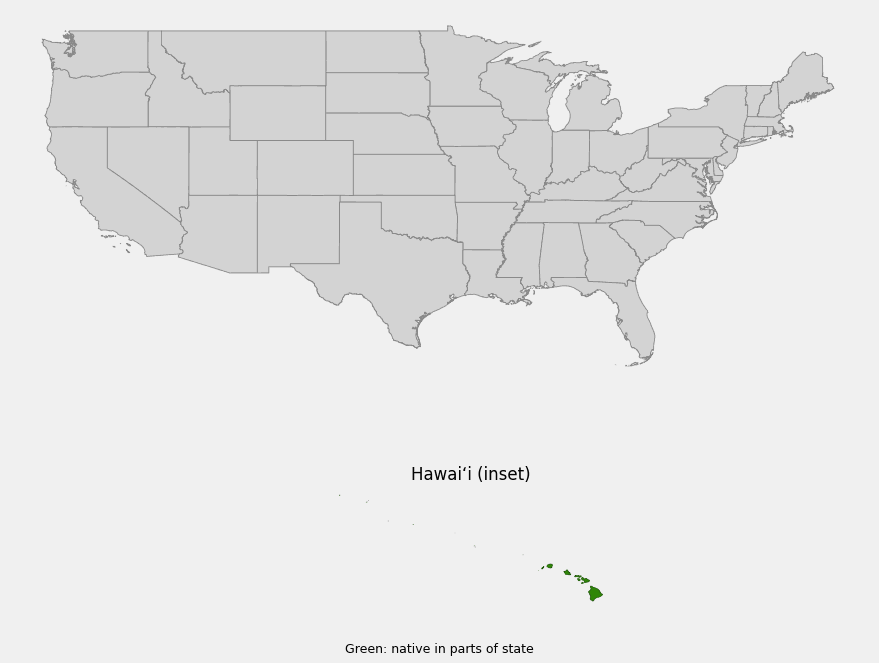
📋 Regional plant lists featuring ʻOhe Makai: Hawaii
Growing & Care Guide
ʻOhe makai suits leeward, dry-climate gardens on the Hawaiian Islands, particularly restoration plantings and native landscapes that embrace a deciduous, open-crowned tree rather than year-round shade.
Light & Site
Give it full sun and an open site with room for a broad, spreading crown. In the wild it grows in exposed, often windy dry-forest terrain, so it tolerates heat and wind well once its roots are established.
Soil & Water
Well-drained, rocky or volcanic soils typical of leeward dry forest suit it best; it does not tolerate heavy, poorly drained, or constantly wet ground. Water young trees regularly to establish a deep root system, then taper off — mature trees are genuinely drought tolerant and expect to lose their leaves during the dry season, which is normal, not a sign of stress.
Planting Tips
Source seedlings from nurseries that specialize in Hawaiian dry-forest natives rather than collecting from the wild, since remaining populations are already fragmented. Give young trees space from irrigation-dependent landscaping, since regular summer water can interfere with the tree’s natural dry-season leaf drop and may encourage fungal problems.
Pruning & Maintenance
Minimal pruning is needed beyond removing dead or damaged wood. Expect the tree to look bare through the dry season; resist the urge to overwater it back into leaf, and let it follow its natural seasonal rhythm.
Landscape & Restoration Uses
- Dry forest restoration plantings on leeward Hawaiian slopes
- Xeriscape native gardens that embrace a deciduous silhouette
- Specimen tree for its distinctive pale trunk and crooked branching
- Mixed native plantings alongside Wiliwili and other dry-forest species
Wildlife & Ecological Value
ʻOhe makai plays a meaningful role in the dry forest ecosystems it still occupies, both as a structural tree and as a food source.
For Birds
The ripening purple fruit clusters draw native and introduced forest birds that feed on the pulp and disperse the seeds, helping the species persist and regenerate in forest fragments where it still grows.
Ecosystem Role
As one of the larger trees of Hawaiian lowland dry forest, ʻohe makai contributes canopy structure and seasonal leaf litter to an ecosystem type that is critically reduced across the islands. Restoring it alongside Wiliwili and other dry-forest associates helps rebuild the layered structure that invasive grasses and repeated fire have stripped from most remaining dry-forest sites.
Cultural & Historical Uses
ʻOhe makai carries several Hawaiian names across the islands, including ʻohe kukuluāeʻo and, on Niʻihau, ʻoheʻohe — a reminder of how widely it was once known across the archipelago’s dry lowlands. Documentation of specific traditional uses is limited compared to better-recorded dry-forest species, but the tree was a familiar part of the lowland landscape that early Hawaiians and later foresters alike recognized by its pale trunk and seasonal bareness.
Today, ʻohe makai is primarily significant as a representative of Hawaiʻi’s most endangered forest type. Conservation groups and native plant nurseries propagate it for dry-forest restoration projects, which also serve as a way of keeping the tree and its Hawaiian names in active use.
Frequently Asked Questions
Why does ʻohe makai lose its leaves?
It is drought-deciduous, meaning it sheds its leaves during the regular summer dry season to reduce water loss, then leafs out again with seasonal rain. This is a normal adaptation shared with other Hawaiian dry-forest trees such as Wiliwili, not a sign of disease.
Is ʻohe makai the same as Reynoldsia sandwicensis?
Yes. Reynoldsia sandwicensis is the older scientific name still used by USDA PLANTS and many older references; current taxonomy places the species in the genus Polyscias as Polyscias sandwicensis.
Can I grow ʻohe makai outside Hawaiʻi?
It is adapted to Hawaiʻi’s dry tropical lowland climate and USDA zones 10–11; it is not suited to temperate mainland gardens or to wet, windward Hawaiian sites.
Is ʻohe makai endangered?
It is not individually federally listed, but it is considered Near Threatened due to the severe historical loss of Hawaiian dry forest habitat, and wild populations should not be disturbed or collected from.
Does ʻohe makai need a lot of water once established?
No — mature trees are drought tolerant and adapted to a pronounced dry season. Overwatering can interfere with its natural leaf-drop cycle.
What does ʻohe makai look like without leaves?
During the dry season the bare crown reveals the tree’s stout, pale gray trunk and thick, crooked branches, a silhouette many Hawaiʻi Island and Maui hikers recognize against the surrounding scrub long before the leaves return with the rains.

Looking for a nursery that carries ʻOhe Makai?
Browse our native plant nursery directory: Hawaii