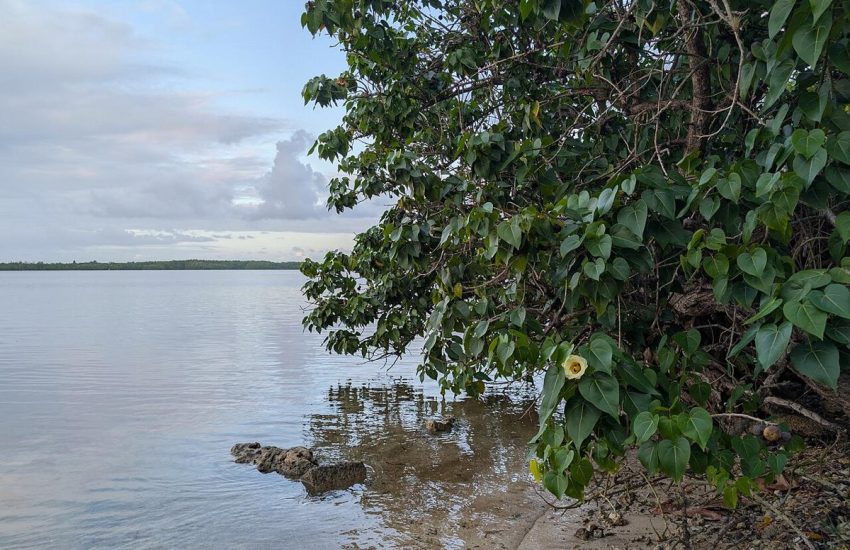
ʻĀlaʻa (Pouteria sandwicensis)
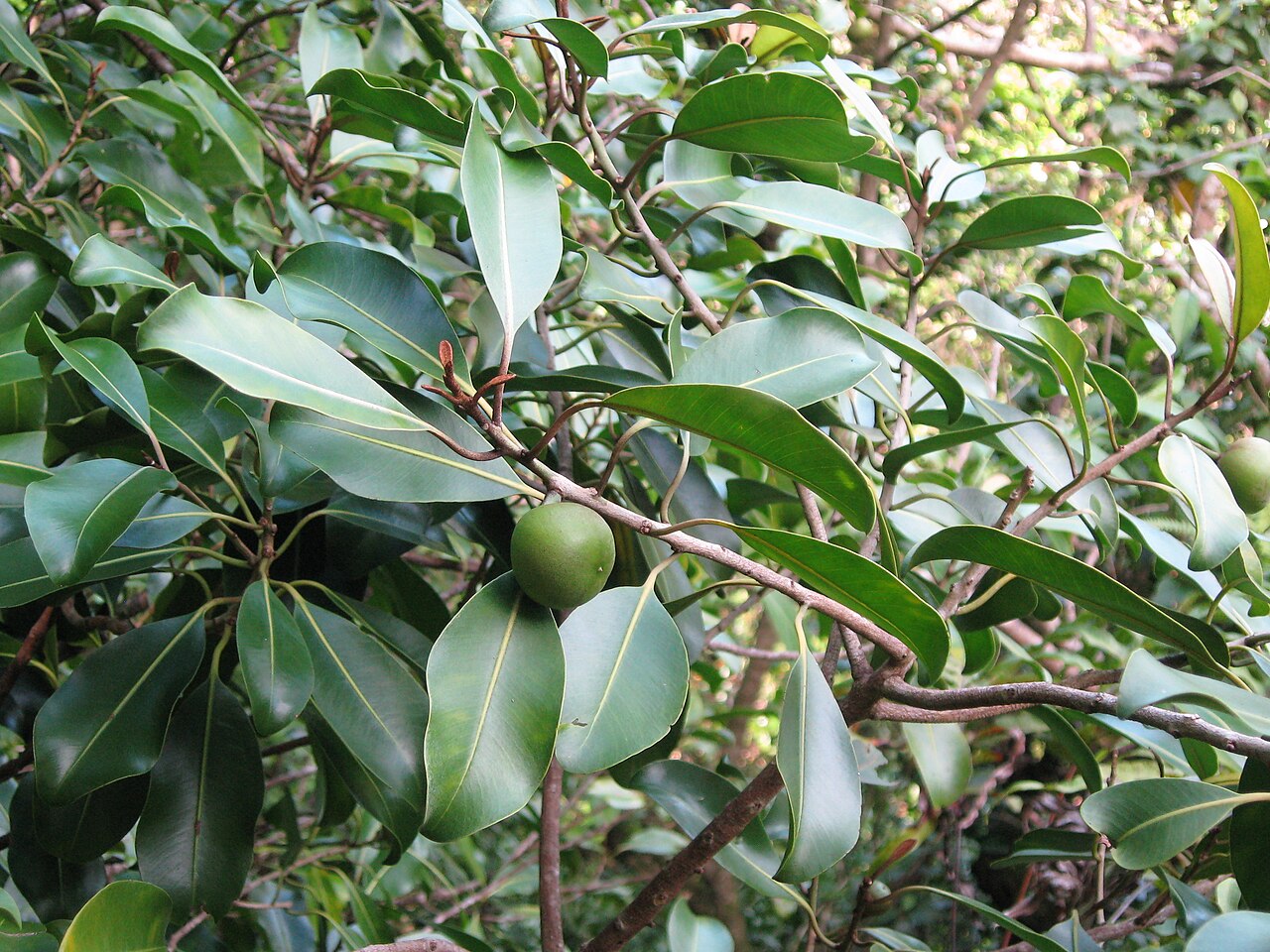
Pouteria sandwicensis — also classified by many botanists as Planchonella sandwicensis — is known in Hawaiian as ʻālaʻa (also āulu or ʻēlaʻa), a mid-canopy forest tree in the sapodilla family (Sapotaceae) found only on the main Hawaiian Islands. It is one of several native trees once prized for its exceptionally hard, dense wood, and today it persists mainly in remnant dry and mesic forest patches, most notably documented in valleys on Maui and in dry forest on Hawaiʻi Island.
ʻĀlaʻa is not a tree most gardeners outside Hawaiʻi will ever encounter, and even within the islands it is a specialty native rather than a mainstream landscape choice. Its glossy, leathery leaves with rusty, felted undersides and its round, fleshy fruit make it a distinctive, if subtle, addition to a native Hawaiian forest garden or restoration planting, and its traditional use as a premier hardwood gives it real cultural weight beyond its quiet appearance.
Identification
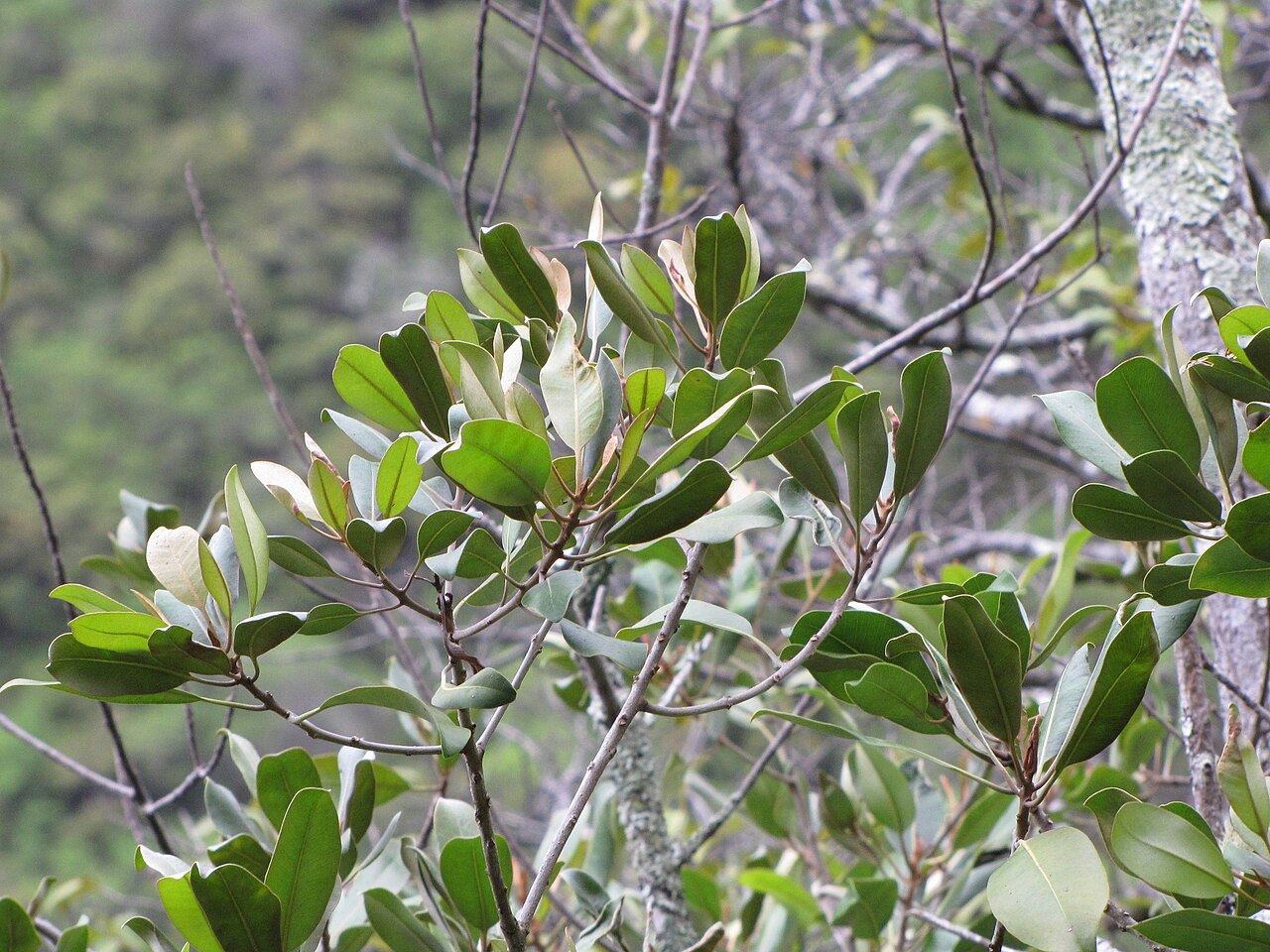
ʻĀlaʻa grows as a tree to about 50 feet (15 m) tall with a trunk up to roughly 16 inches (0.4 m) in diameter. The bark is gray and fissured, revealing an orange inner bark layer where it is cut or damaged.
Leaves
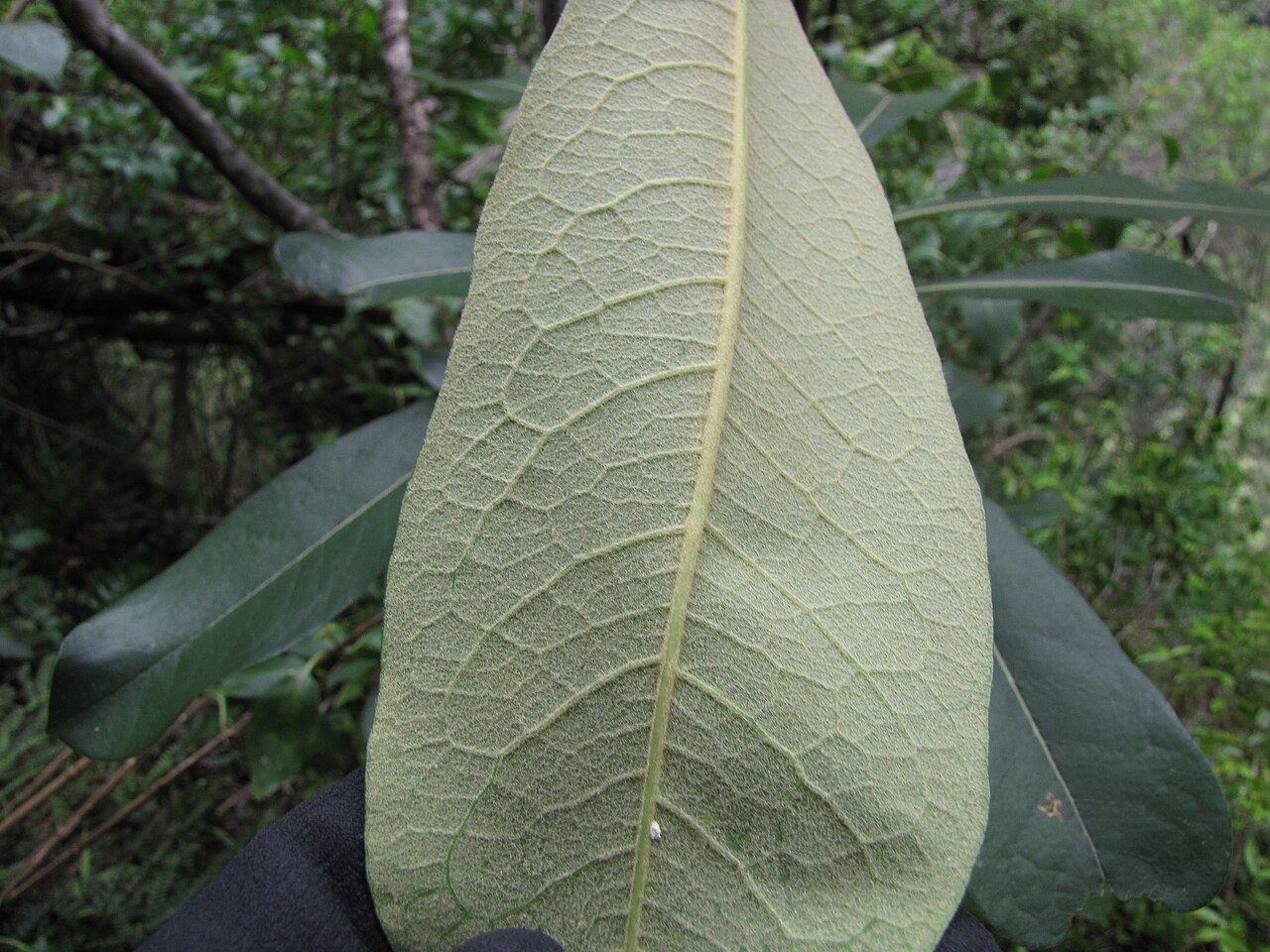
Leaves are alternate, thick, and leathery, 2.4 to 5.5 inches (6–14 cm) long and 1.2 to 2.4 inches (3–6 cm) wide. The upper surface is shiny dark green, while the underside is dull and often covered in fine bronze to rusty-brown hairs — a texture you can feel by running a finger across the leaf underside, and a useful field mark for distinguishing it from other glossy-leaved Hawaiian forest trees.
Flowers
Flowers are small and bell-shaped, borne in clusters of one to four at the leaf axils — inconspicuous compared with showier Hawaiian natives, in keeping with the generally understated flowering habit of the sapodilla family.
Fruit
The fruit is a fleshy berry roughly 1.2 to 1.6 inches (3–4 cm) across, ripening from green to yellow, orange, or purplish-black, and containing one to five seeds. The fruit is not documented as a human food source.
Quick Facts
| Scientific Name | Pouteria sandwicensis (syn. Planchonella sandwicensis) |
| Family | Sapotaceae (Sapodilla) |
| Plant Type | Tree |
| Mature Height | Up to 50 ft |
| Growth Rate | Slow |
| Sun Exposure | Partial Sun to Shade |
| Water Needs | Low to Moderate |
| Soil Type | Well-drained forest soils |
| Flower Color | Pale, bell-shaped, inconspicuous |
| Conservation Status | Uncommon native; not federally listed |
| USDA Hardiness Zones | 10–11 |
Native Range
ʻĀlaʻa is endemic to the main Hawaiian Islands, documented in remnant dry, coastal mesic, and mixed mesic forest on islands including Maui and Hawaiʻi Island, at elevations of roughly 790 to 3,200 feet (240–980 m). It is not native outside the Hawaiian archipelago.
Within these forests it grows as a mid-canopy associate of other native dry and mesic forest trees, including the critically endangered Hawaiian Cotton Tree (Kokia drynarioides) on Hawaiʻi Island, as well as Māmane (Sophora chrysophylla) and ʻAʻaliʻi (Dodonaea viscosa).
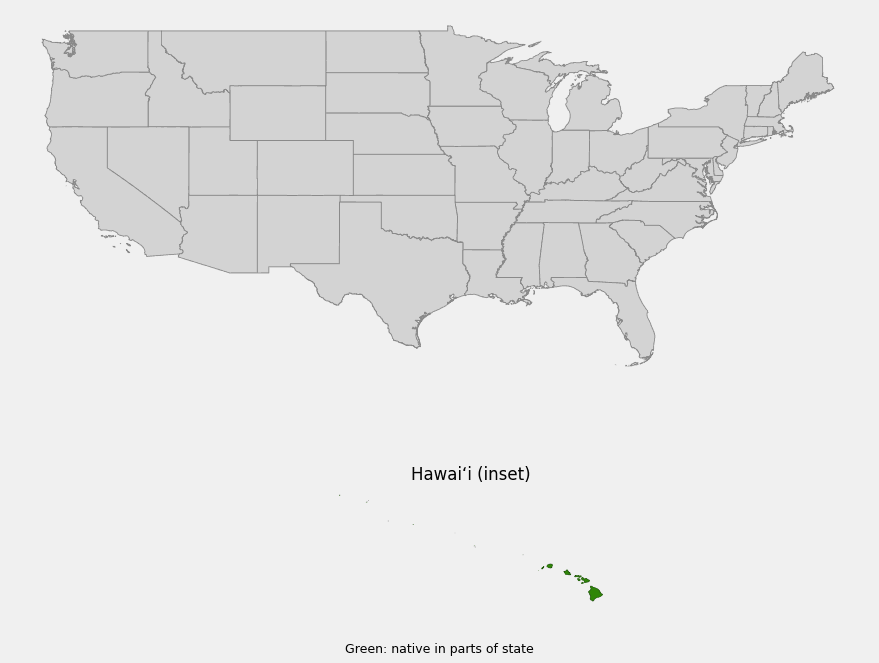
📋 Regional plant lists featuring ʻĀlaʻa: Hawaii
Growing & Care Guide
ʻĀlaʻa is grown mainly by native plant enthusiasts and restoration projects within Hawaiʻi rather than as a general landscape tree, and seedlings can be slow to establish.
Light
It tolerates partial shade to partial sun, consistent with its role as a mid-canopy to subcanopy tree in mixed native forest; it is not adapted to full, unbroken exposure the way some pioneer dry forest species are.
Soil & Water
Well-drained forest soils suit it best, with low to moderate water once established; it does not tolerate waterlogged conditions. Young plants benefit from consistent moisture while establishing.
Planting Tips
As with most specialty Hawaiian natives, ʻālaʻa is best planted as part of a mixed native forest restoration or a dedicated native garden rather than as a stand-alone specimen, since it naturally grows among other canopy and subcanopy trees rather than in isolation.
Pruning & Maintenance
Minimal pruning is needed; as a slow-growing forest tree, it is not suited to hedging or heavy shaping, and established trees are generally low-maintenance once rooted.
Propagation
Propagation is generally from seed collected from ripe fruit; as with many native Hawaiian trees, fresh seed tends to germinate more reliably than stored seed. Seedlings are slow-growing in the early years, which is typical of long-lived forest hardwood species and one reason ʻālaʻa is more often grown through dedicated native plant nurseries than casual home propagation.
Pests & Problems
No major pest or disease issues are well documented specifically for ʻālaʻa, but like other native Hawaiian trees it faces indirect pressure from invasive plants that outcompete seedlings and from feral ungulates that browse understory growth, both of which make natural regeneration difficult outside protected forest areas.
Landscape & Conservation Uses
- Native forest restoration plantings within its historic Hawaiian range
- Mixed native canopy gardens alongside other dry and mesic forest associates
- Specialty native collections for gardeners focused on Hawaiian ethnobotany
Wildlife & Ecological Value
As a fruit-bearing mid-canopy tree, ʻālaʻa’s berries likely once played a role in seed dispersal by native Hawaiian forest birds, a relationship largely diminished today as both native bird populations and the tree’s own forest habitat have contracted across the islands.
Ecosystem Role
ʻĀlaʻa helps fill out the structural diversity of native dry and mesic forest alongside better-known canopy species, contributing to the layered, multi-species forest structure that supports a wider range of native insects and birds than a simplified, single-species stand ever could.
Cultural & Historical Uses
Native Hawaiians highly valued ʻālaʻa for its exceptionally hard, dense, yellow wood streaked with black, which made it a premier choice for demanding construction tasks. It was used in house building, as components for outrigger canoes, and to make digging sticks and spears — applications that depended on wood strong and dense enough to withstand repeated hard use. The tree’s sticky sap also served a practical role, used both as an adhesive and as birdlime for catching birds in traditional feather-gathering practices.
This combination of a tough, workable hardwood and a useful sap made ʻālaʻa an important, if lesser-known, utility tree in traditional Hawaiian forest use, standing alongside other hardwood natives documented in our guides to canopy trees in Hawaii and flowering trees of Hawaii.
Frequently Asked Questions
Is ʻālaʻa the same as Planchonella sandwicensis?
Yes. The species has been classified under both Pouteria sandwicensis and Planchonella sandwicensis by different botanical authorities; both names refer to the same Hawaiian tree.
Can you eat the fruit of ʻālaʻa?
No documented traditional or modern use of the fruit as food exists. The tree’s historical value was in its wood and sap, not its fruit.
How do you identify ʻālaʻa in the field?
Look for thick, glossy dark-green leaves with a dull, rusty-haired underside, gray fissured bark with orange inner bark where damaged, and round fleshy fruit that ripens from green to yellow, orange, or purplish-black.
Why was ʻālaʻa wood so valued?
Its wood is unusually hard and dense with a distinctive yellow color streaked with black, qualities that made it well suited to heavy-use items like house framing, canoe parts, and tools that needed to withstand repeated stress.
Is ʻālaʻa endangered?
It is not federally listed as threatened or endangered, but like most native Hawaiian dry and mesic forest trees, it has become uncommon as its forest habitat has shrunk, and it is primarily found today in remnant forest patches rather than widespread stands.
What other names does ʻālaʻa go by?
In addition to ʻālaʻa, the Hawaiian names āulu and ʻēlaʻa are also used for this species, and it may be listed under either Pouteria sandwicensis or Planchonella sandwicensis depending on the source.

Looking for a nursery that carries ʻĀlaʻa?
Browse our native plant nursery directory: Hawaii