Dahlia Tubers Not Sprouting: How to Inspect Them Without Destroying Growth
Last updated: November 6, 2026
You planted your dahlia tubers weeks ago. The tomatoes are up, the zinnias are up, and one patch of soil is still bare.
It’s tempting to dig the tuber up and poke at it. That can work, but a rough dig can snap off the one shoot that was about to break the surface, or crack the fragile neck that feeds it.
This guide walks through what to check first, how to lift a tuber without damaging new growth, and how to tell a slow tuber from one that will never grow.
The Short Answer
A dahlia tuber that hasn’t sprouted is usually in one of these situations:
- It’s still waking up. Cold soil and late-eyeing varieties can take weeks longer than you expect.
- It has no eye. A “blind” tuber with no piece of crown can look healthy and still never grow.
- The neck is broken or the crown has rotted, cutting the growing point off from its food supply.
- It rotted in cold, wet soil, often after being watered before shoots appeared.
- It dried out in storage and no longer has the reserves to push a shoot.
- It did sprout, but slugs or snails ate the shoot as it reached the surface.
How a Dahlia Tuber Wakes Up
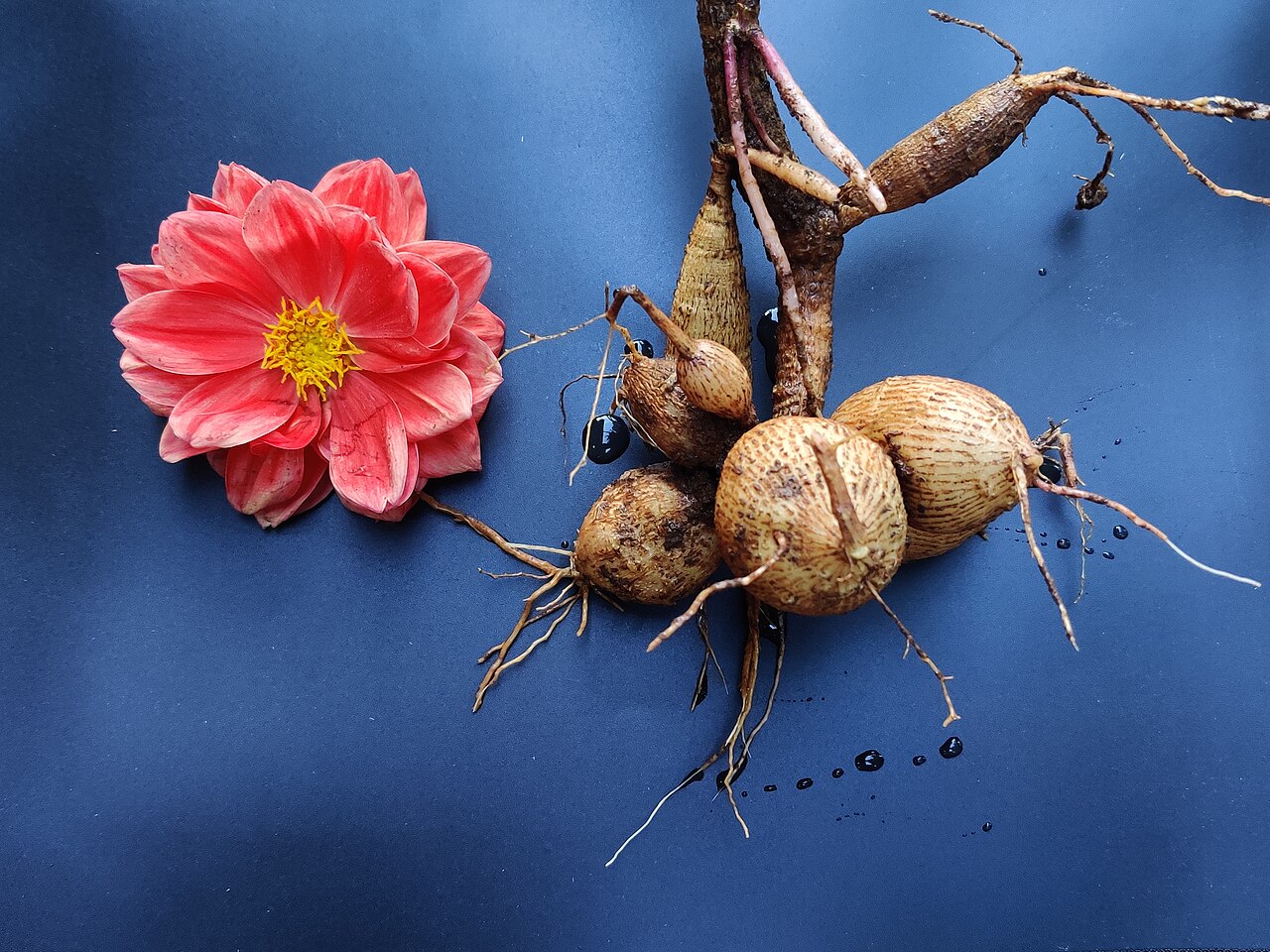
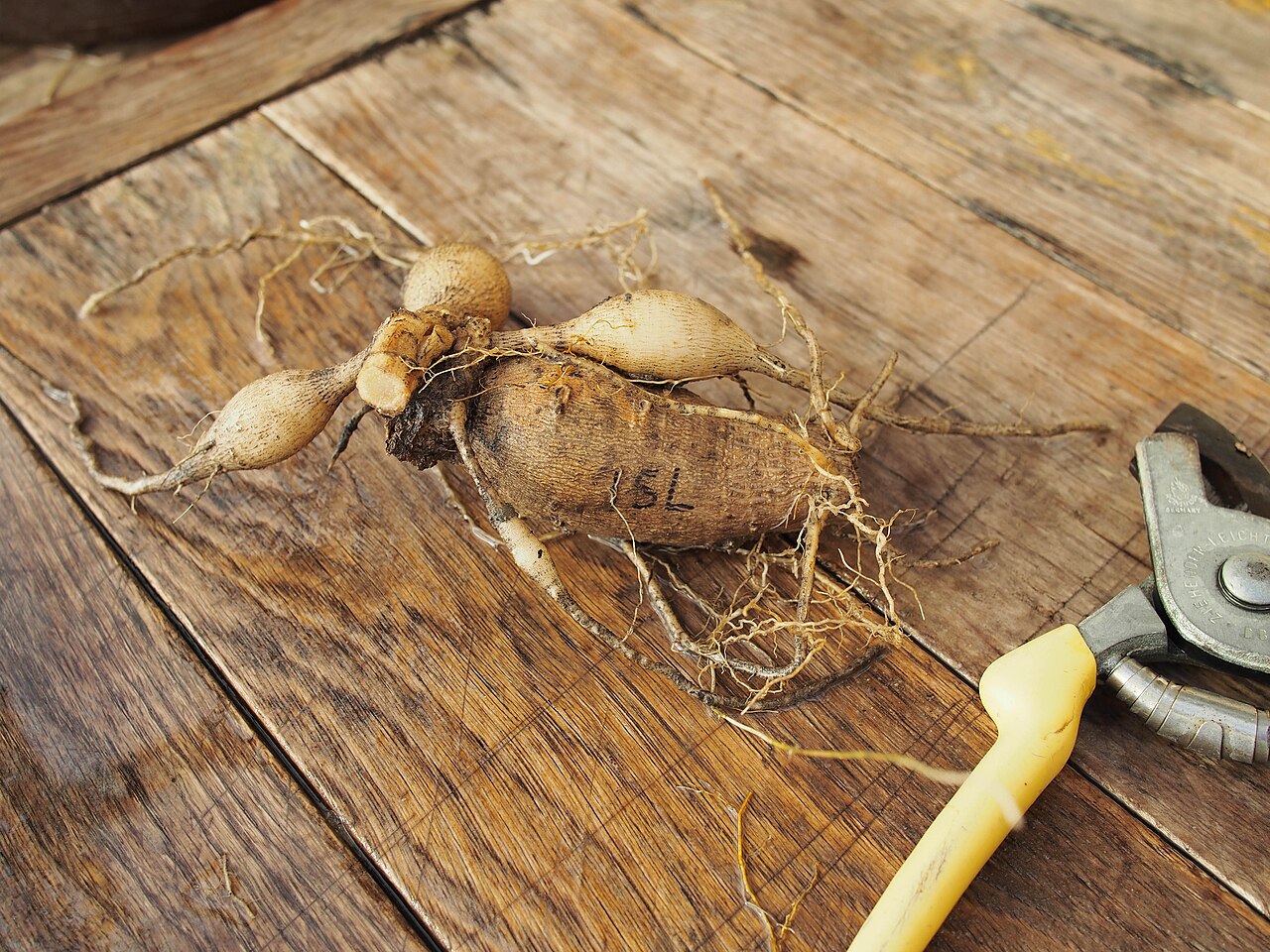
A dahlia “bulb” is really a tuberous root. The UC Master Gardeners of San Luis Obispo County describe it in three parts: the swollen body, a narrow neck, and the crown at the top.
The body stores carbohydrates, water and nutrients. It feeds the young plant until roots and leaves take over.
The crown is the only part that can make a shoot. Eyes, the small growth buds, form there, and the crown needs at least one eye to produce a plant. If the neck between body and crown breaks, the tuber is no longer viable.
Warmth is what wakes those eyes up. The American Dahlia Society suggests moving stored tubers to a warm, dark spot in early spring to encourage eyes, and notes that some varieties are naturally slow to show them.
Know the Parts Before You Dig
| Crown | Knobby top where the tuber joined last year’s stem. Eyes and shoots come only from here. Handle it least. |
| Eye | A small bump on the crown, often pinkish, white or green as it swells. It becomes the shoot. |
| Neck | The narrow link between crown and body. Fragile. A snapped or rotted neck means no plant. |
| Body | The fat storage root. It should feel firm, like a fresh potato. |
| Feeder roots | Fine white roots that grow once the tuber is active. Seeing them is a good sign. |
Check 1: Give It Enough Time and Warmth
Before you dig anything, count the days and think about the weather since planting.
Dahlias are frost-tender and grow poorly in cold ground. The University of Minnesota Landscape Arboretum waits until mid-to-late May to plant there, and our dahlia planting guide recommends soil around 60°F. A cool, wet spell after planting can stall everything.
Varieties differ, too. Some tubers “eye up” late even in storage, and a gardener who planted several cultivars on the same day will often see them emerge weeks apart.
Longfield Gardens, a commercial bulb grower, suggests giving a late tuber until early June in most climates before assuming it lacks a growing point. In a cold spring or a northern garden, adjust that date to how late your soil warmed up.
Check 2: Lift It from the Side, Not from Above
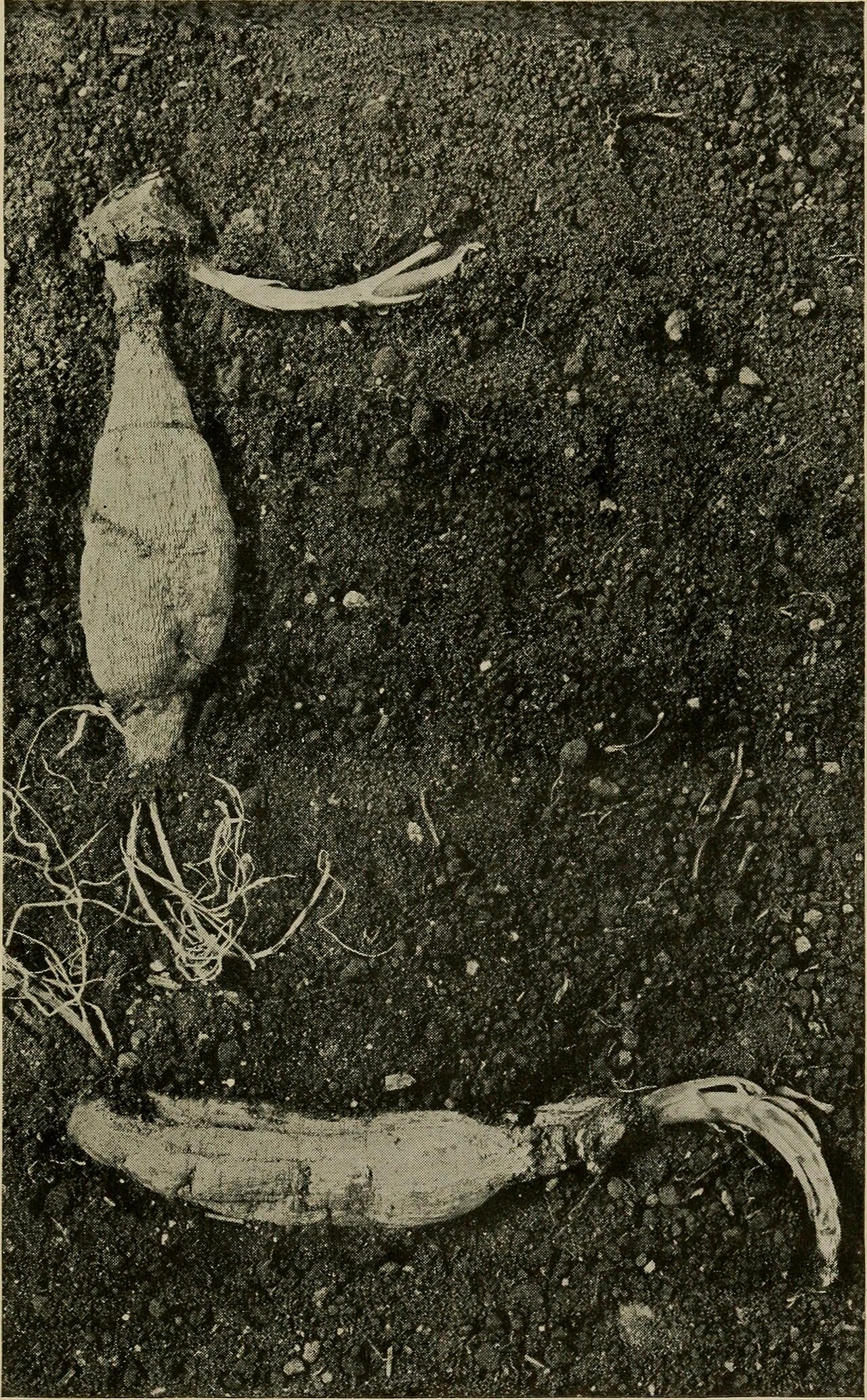
If enough time has passed, it’s reasonable to look. The goal is to see the crown without touching it.
- Find the spot. Use your plant label or stake. If you set a stake at planting, the tuber is right beside it.
- Dig a hand’s width away. Use a trowel or your fingers to open a small hole beside the planting spot, not on top of it. A shoot may be an inch below the surface.
- Work inward gently. Brush soil away from the side until you can see the tuber. Don’t pry it up with the trowel blade.
- Look at the crown end first. If you see a shoot, even a pale one, stop. Firm the soil back and wait.
- Lift only if needed. If there’s no shoot, slide your hand under the tuber and lift it out whole, supporting the neck.
Never pull a tuber up by its old stem. The UNH Extension Yard and Garden Infoline points out that the neck is delicate and easily damaged, and any wound gives rot organisms a way in.
Check 3: Squeeze the Body
With the tuber in your hand, press gently on the fat part. A healthy tuber feels solid and heavy for its size.
Slight wrinkling isn’t a death sentence. A tuber that’s a little soft but still bends rather than snaps usually has moisture left and can rehydrate in warm, moist soil.
If your tubers were already wrinkled when they came out of storage, our companion guide to dahlia tubers shriveling in storage covers how to keep that from happening next winter.
A tuber that feels feather-light, hollow, or snaps like a dry twig has likely run out of reserves. Longfield Gardens suggests a light fingernail scratch on the skin: moist white or cream flesh is alive, while brown, dry or stringy flesh is not.
Check 4: Find the Crown and an Eye
Now look closely at the top of the tuber. You’re looking for a piece of the old stem’s base with at least one small swelling on it.
If you see an eye but no shoot, the tuber is probably just slow. Replant it at the same depth with the eye pointing up, and leave it alone.
If the tuber has a smooth top with no crown tissue at all, it was likely broken off the clump during division. A tuber like that is “blind.” It can stay firm and healthy for months and still never send up a shoot.
This is a common reason a single tuber from a purchased bag or a home division fails while its neighbors grow. Our guide to dividing dahlia tubers shows how to keep a piece of crown with every division.
Check 5: Look for Rot at the Neck and Crown
Rot usually starts where moisture sits: the old hollow stem, the crown, or a wound on the neck.
Signs of rot include soft or mushy tissue, a sour smell, liquid oozing when you press, or black and sunken patches. The American Dahlia Society notes that brown or rusty-colored areas inside the crown usually mean crown rot.
If rot is only at the far tip of the body, you can cut back to clean white flesh with a sterilized knife, let the cut dry, and replant. If the neck or crown is soft, the tuber is a loss.
Discard rotted tubers in the trash rather than the compost. The UC master gardeners also advise discarding any tubers with crown gall, a swollen, warty growth at the crown.
Fuzzy white mold on an otherwise firm tuber is different. It’s usually a surface problem from humid storage and can be wiped off.
Check 6: Review Planting Depth and Early Watering
Depth matters less than people think, but it can slow emergence. Illinois Extension suggests about 6–7 inches deep for tall varieties and 2–3 inches for short ones, while the Minnesota arboretum plants 3–5 inches deep.
A tuber set much deeper than that in heavy, cold soil may take noticeably longer to show. If you find one buried 10 inches down, replant it shallower.
Early watering is a bigger risk. UC Master Gardeners of Placer County advise not watering dahlias after planting until leaves emerge and reach two to three inches, with only an occasional light watering if spring is very dry.
A tuber with no leaves can’t use much water. In cold, soggy ground it is far more likely to rot than sprout. If your bed stays wet for days after rain, heavy soil may be part of the problem; a quick look at soil testing basics can help you plan amendments for next year.
Check 7: Rule Out Something Eating the Shoots
Sometimes the tuber did its job and the shoot disappeared. Slugs and snails are serious pests of new dahlia growth in spring, when shoots are just reaching the surface.
Look for slime trails, ragged holes in nearby leaves, or a shoot stub that ends in a chewed tip. Dig a little and you may find a healthy tuber with a broken-off sprout.
A tuber with a healthy crown will often push a new shoot from another eye. Protect the spot and give it another two to three weeks.
Troubleshooting at a Glance
| Firm tuber, visible eye, no shoot | Still waking up. Replant eye-up and wait for warmer soil. |
| Firm tuber, no crown at all | Blind tuber. It won’t grow; replace it. |
| Snapped or mushy neck | Not viable. Discard. |
| Soft, smelly or oozing body | Rot. Trim if only the tip is affected; otherwise discard. |
| Wrinkled but bendable | Dehydrated but alive. Pre-sprout in barely damp mix. |
| Light, brittle, brown inside | Dried out. Discard. |
| Healthy tuber, chewed shoot stub | Slugs or snails. Protect the spot and wait for a new shoot. |
What to Do Now
If the tuber is firm and has an eye: put it back at the same depth, eye up, and firm the soil gently. Don’t water it unless the soil is truly dry.
If you’re not sure whether it’s alive: pre-sprout it indoors. Set it in a shallow tray of slightly damp potting mix with the crown at or just below the surface, and keep it somewhere around 60–70°F. Longfield Gardens reports that viable tubers usually show shoots within two to three weeks. Plant it out once a shoot appears.
If it’s blind, rotted or brittle: discard it and fill the gap. A potted dahlia from a garden center will still bloom this summer, and our step-by-step tuber planting guide covers setting it in properly.
If it’s late in the season: a tuber that finally sprouts in midsummer may bloom only briefly before frost. It will still build new tubers for next year.
Want something for that spot that won’t need lifting every fall? A native perennial such as purple coneflower blooms through summer and stays in the ground year-round across much of the eastern and central U.S.
A Season-by-Season Plan for Next Year
- Fall: dig after frost blackens the foliage, handle clumps by supporting the whole mass, and keep every division attached to a piece of crown.
- Winter: store tubers cool, above freezing, in a lightly moist medium. Check monthly and remove any that turn soft.
- Late winter: move tubers somewhere warmer for a few weeks to wake up the eyes, then sort them into firm, wrinkled and dead.
- Spring: plant after your last frost once the soil has warmed. Set a stake at planting for tall varieties and mark every spot.
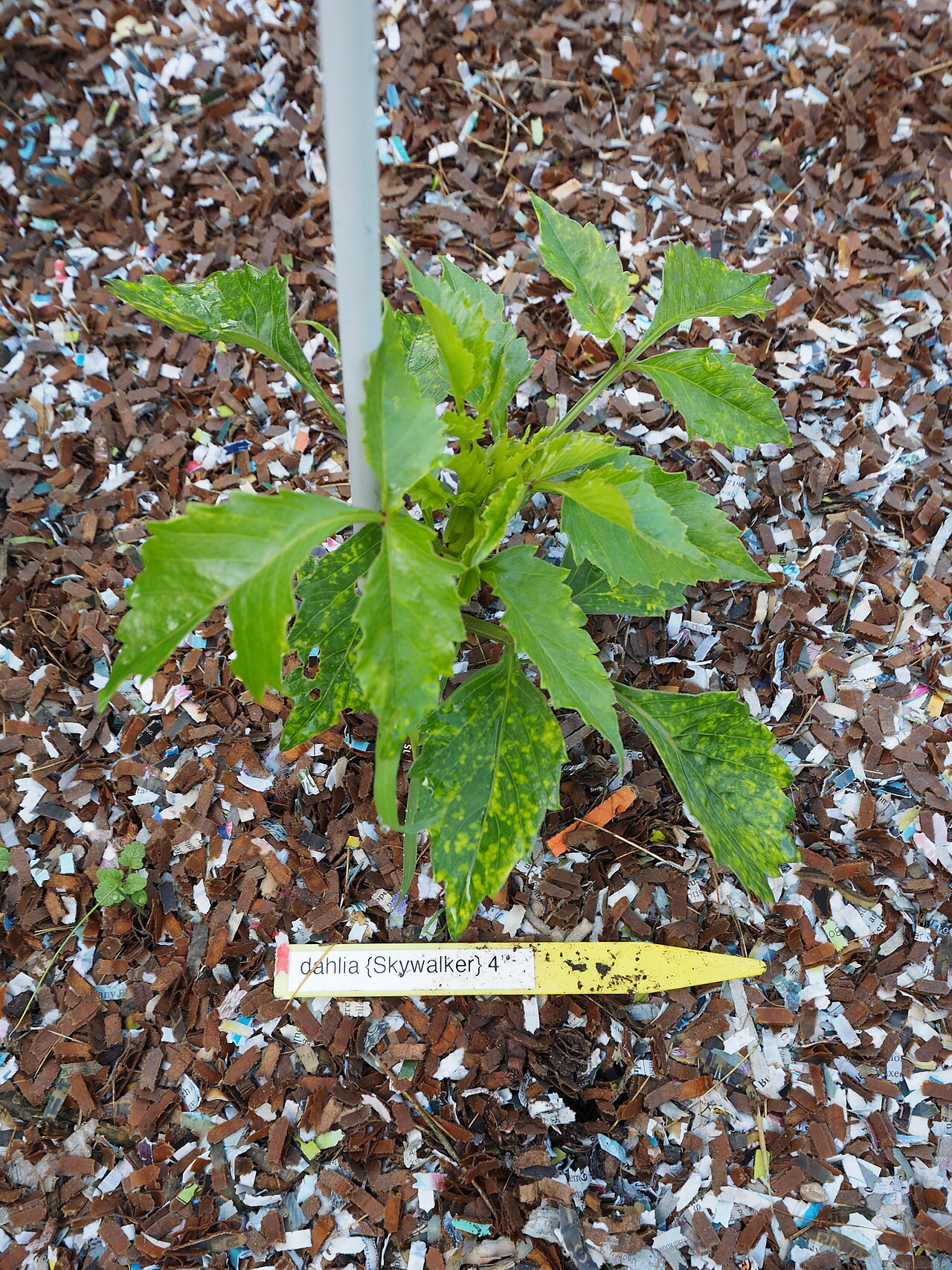
- After planting: hold off on watering until shoots show, then water deeply and regularly. Once plants are a few inches tall, a light layer of mulch helps keep soil moisture even. Watch for slugs as shoots emerge.
For the bigger picture on growing these plants, see our full dahlia growing guide. Gardeners in mild climates who wonder about skipping the digging altogether may find our article on leaving gladiolus bulbs in the ground a useful comparison, since the same frost-depth logic applies.
Frequently Asked Questions
How long do dahlia tubers take to sprout after planting?
It varies with soil temperature and variety. In warm soil, many tubers emerge within a few weeks, while cold soil and late-eyeing varieties can take considerably longer. Pre-sprouted tubers usually show growth soon after planting.
Can a dahlia tuber without an eye still grow?
No. Shoots come only from the crown. A tuber with no crown tissue is blind and won’t produce a plant, no matter how healthy it looks.
Should I water dahlia tubers right after planting?
Usually not. UC master gardeners advise waiting until leaves emerge and reach two to three inches, unless spring is very dry. Water before then mostly raises the risk of rot.
Is it safe to dig up a dahlia tuber to check on it?
Yes, if you dig from the side and look before you lift. Stop as soon as you see a shoot. Support the neck if you do lift it, and replant at the same depth.
Will a wrinkled dahlia tuber still grow?
Often, yes. If it’s still bendable and moist under the skin, it usually rehydrates in barely damp potting mix or warm soil. Brittle, feather-light tubers have usually dried out completely.
Once your plants are up and blooming, regular deadheading keeps new flowers coming until frost.
Sources
- UC Master Gardeners of San Luis Obispo County, Dahlias: Digging, Dividing, and Storing: tuber body, neck and crown; at least one eye per crown; broken necks not viable; late “eye-up” varieties; discarding crown gall.
- American Dahlia Society, Digging, Dividing, and Storing Tubers: crown rot signs, fragile necks, warming tubers in spring to develop eyes.
- UNH Extension, When should I dig up dahlia tubers and how should I store them?: delicate necks and damage leading to rot.
- University of Minnesota Landscape Arboretum, Dahlia Trial Garden: At-Home Gardening & Care: planting time and 3–5 inch depth.
- Illinois Extension, Tender bulbs make for summer delights: planting depth by variety height.
- UC Master Gardeners of Placer and Nevada Counties, Glorious Dahlias (The Curious Gardener, Spring 2016): no watering until leaves reach two to three inches.
- Longfield Gardens, How to Tell if Dahlia Tubers Are Dead or Viable: scratch test, blind tubers, pre-sprouting temperatures and timing.
- Wikipedia, Dahlia: tuberous roots, frost tenderness, slugs and snails on emerging growth.