Air Plant Care While You Travel: A Checklist for Your Home Conditions
Last updated: November 6, 2026
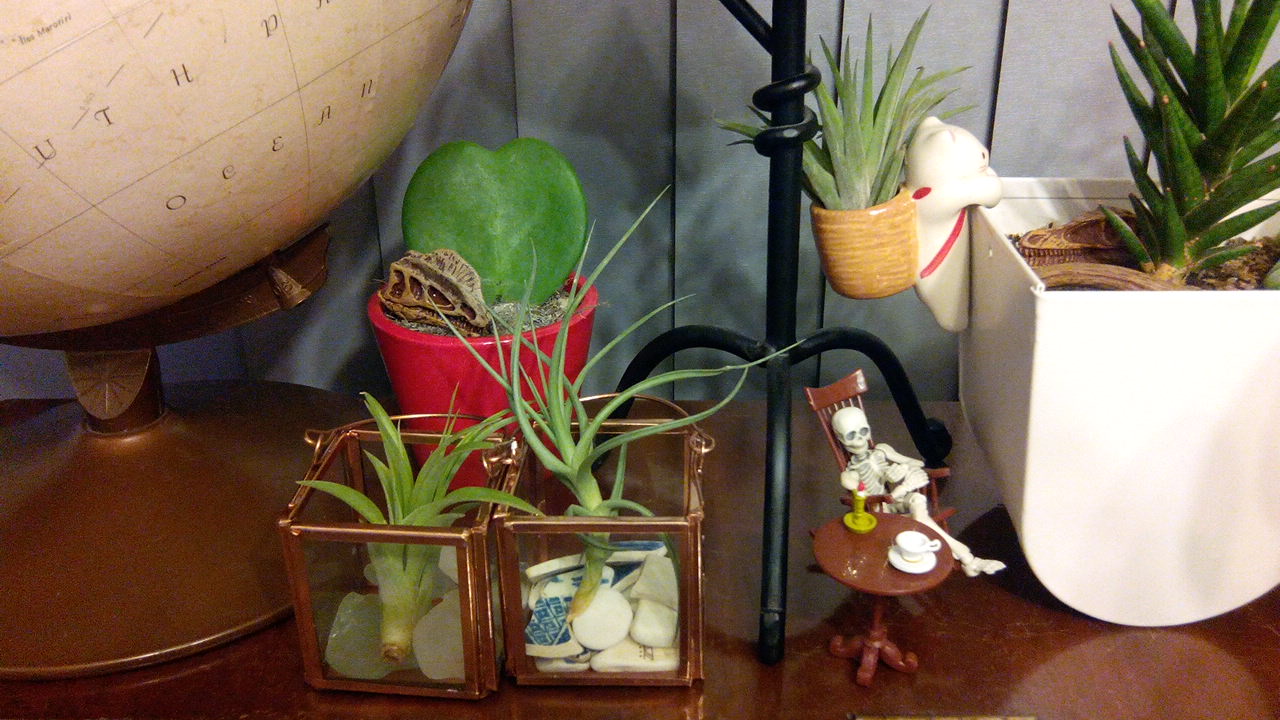
Air plants have a reputation for surviving on almost nothing. That’s partly true. They handle a missed watering better than most houseplants.
But “surviving” isn’t the same as “fine.” A week in a hot, dry apartment can leave them curled and crispy. A week sealed in a humid bathroom can start rot at the base.
How you prepare depends on how long you’ll be away and what your home is like while you’re gone. Use this checklist to match your plan to your conditions.
The Short Answer
- Weekend away: no special prep. Water on your normal schedule.
- About a week: give a thorough soak a day or two before you go, dry the plants completely, and move them out of hot sun and away from vents.
- Two weeks or more: do all of the above, and ask someone to soak and dry the plants once a week.
- Never leave air plants in sealed bags, closed globes or standing water while you’re away.
- Self-watering gadgets made for potted plants don’t work for air plants.
How Long Can Air Plants Go Without Water?
Longer than most houseplants, but not indefinitely. NC State’s Plant Toolbox notes that although air plants cope with drought, they need regular watering, at least once a week, if they are to thrive.
Clemson’s Home & Garden Information Center also recommends watering about once a week, either by misting well or by submerging the plant for 20 to 30 minutes. That weekly rhythm is your baseline. Any trip longer than your normal watering gap needs a plan.
Your home’s conditions change the math. The University of Wisconsin notes that Tillandsia tends to dehydrate in the dry air of most homes. A heated house in winter or an air-conditioned one in summer will dry plants faster than a mild, humid one.
Trip Length vs. Home Conditions
| Up to 4 days | Any home: water on schedule before you leave. Nothing else needed. |
| 5 to 10 days | Dry or heated home: soak before leaving and move plants to a cooler, bright spot. Humid home: a normal soak, dried well, is usually enough. |
| Over 10 days | Any home: arrange a weekly soak-and-dry from a friend or neighbor. |
Check 1: How Dry Is Your Home While You’re Gone?
Start by picturing your home with nobody in it. Will the heat run all day? Will the AC run? Will windows be shut tight?
NC State notes that heating and air conditioning can affect humidity, so air plants may need more water at those times. If the HVAC will be running hard, plan as if the trip is longer than it is.
If your home stays mild and naturally humid, the opposite risk matters more. Plants will lose water slowly, so a heavy soak right before you leave can keep them damp for too long.
Check 2: Where Will the Sun Hit?
Light speeds up drying. Clemson and UF both recommend bright, filtered light rather than direct sun. A spot that’s fine when you water twice a week can be too harsh when nobody’s home to notice.
Before you leave, move plants a little farther from hot, sunny glass. A bright spot with indirect light is ideal. Don’t move them somewhere dark for a long trip, though. Very low light for weeks weakens them.
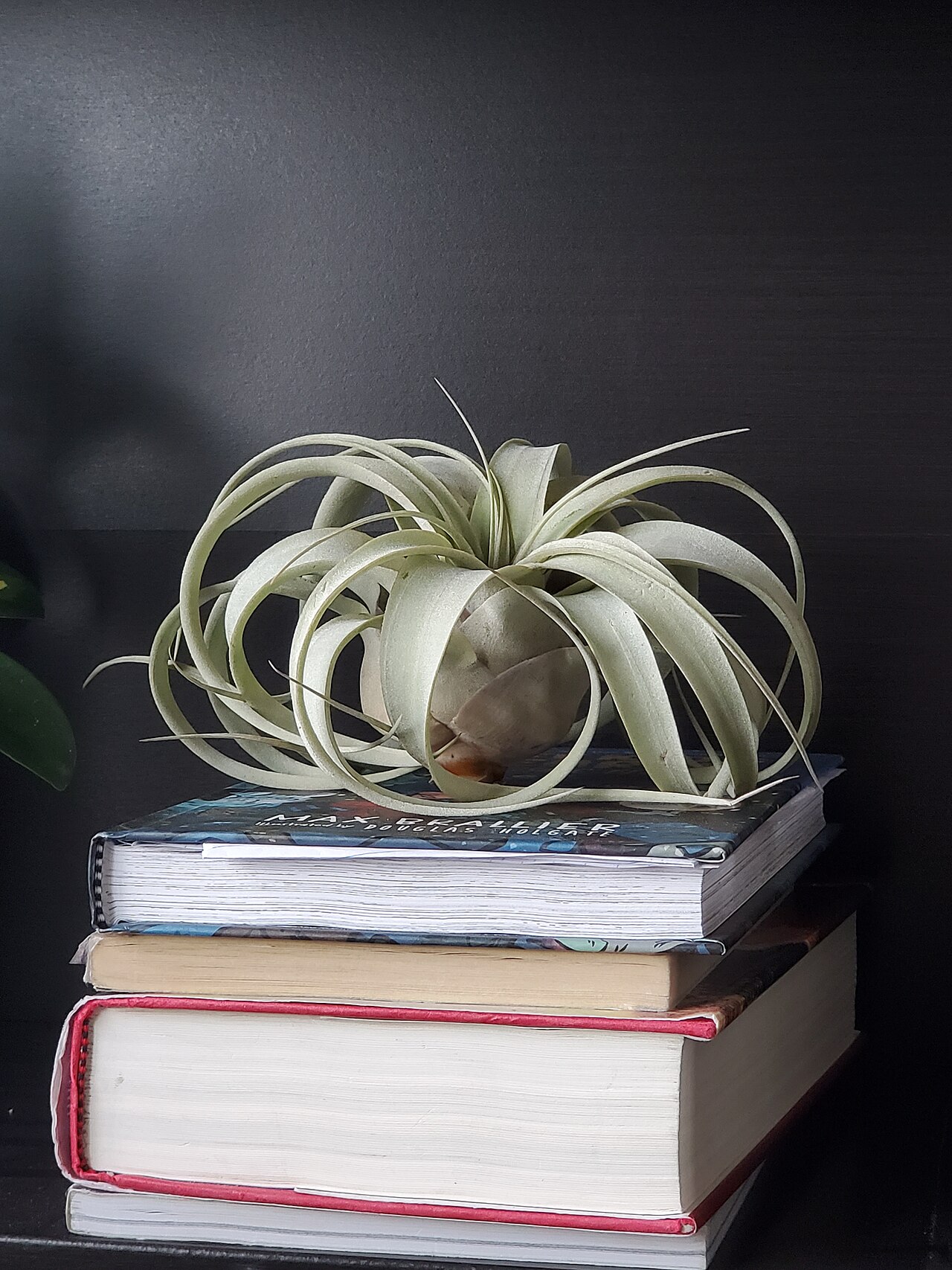
If your plants live under a grow light, leave it on its timer. Our guide to air plants under grow lights covers distances and hours. If plants sit close to a strong lamp, raise it a little for the trip to slow drying.
Check 3: Are Plants Near Vents or Heaters?
Moving dry air is the fastest way to brown tips. Wisconsin’s horticulture guidance notes that when the air is very dry, strong air movement can cause leaf tips to dry out and die.
Look for heating registers, AC vents, radiators and space heaters near your plants. Move plants a few feet away for the trip. Turn off space heaters entirely; that’s a good idea for safety anyway.
Check 4: What Temperature Will the House Hold?
Wikipedia’s Tillandsia article gives a typical range of about 50 to 90°F, with most species growing best between about 68 and 77°F. Frost tolerance varies widely by species.
If you set the thermostat back while traveling, keep it within that range. In summer, a closed-up house can get very warm. A plant on a sunny sill in a hot house will dry out quickly, so move it.
Check 5: Are Your Plants Outdoors?
Many people summer their air plants outside. NC State’s Plant Toolbox notes that T. ionantha can spend the summer outdoors hanging from a tree or a shady trellis, much like it grows in nature. UF recommends light shade and protection from direct sun outdoors.
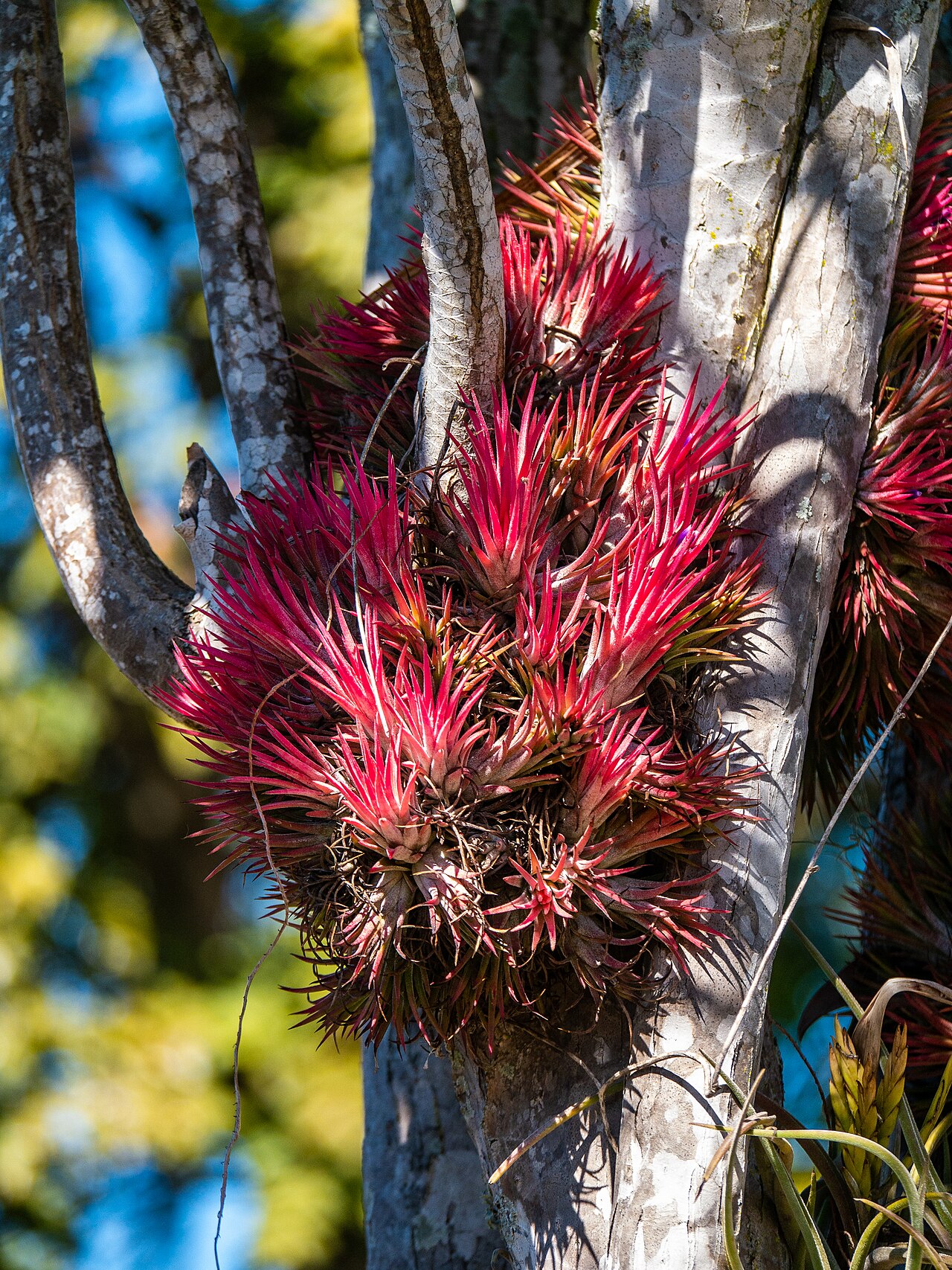
Outdoor plants hanging in open air often manage a trip well, since rain and dew help and air dries them fast. The risks are a dry spell, a heat wave, or a cold night.
Check the forecast for your whole trip. If nights may drop near 50°F, bring plants indoors before you go. Our guide to frost protection for tender plants has more on cold snaps. And make sure outdoor plants hang freely rather than sitting in dishes that fill with rainwater.
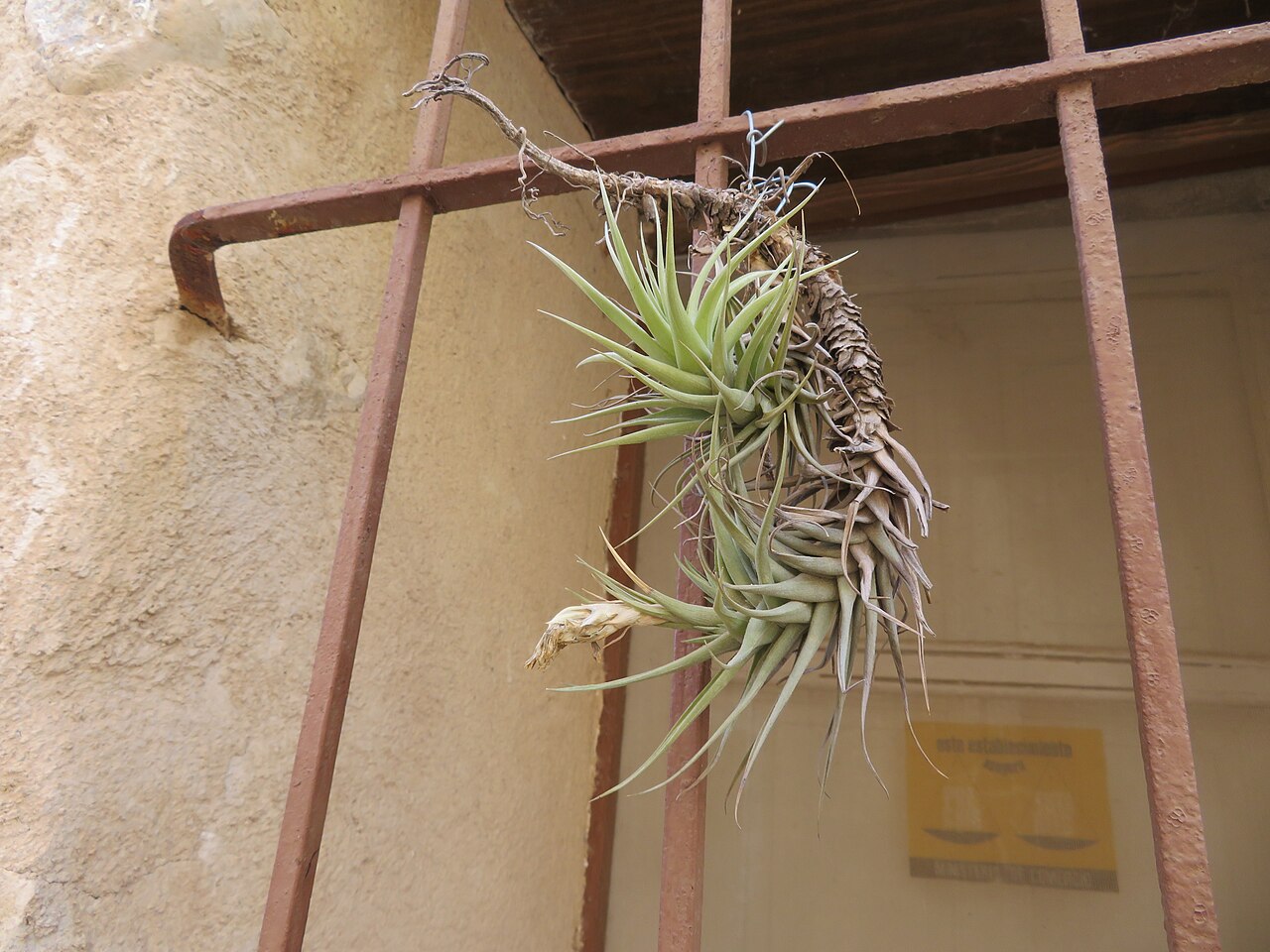
Check 6: Are They in Containers That Trap Water?
Clemson and UF both say air plant display materials shouldn’t hold water. This matters even more when nobody’s around to notice a problem.
Before a trip, take plants out of closed globes, cups and moss beds. Set them on an open, dry surface. Never seal them in a plastic bag to “hold in moisture,” as you might with some potted plants. Trapped humidity around the base invites rot.
Check 7: Skip the Self-Watering Gadgets
Watering globes, wicks and drip systems are designed to keep soil moist. Air plants don’t grow in soil, and their roots only anchor them. The gadgets in our roundup of automatic watering systems for vacation are great for your potted plants, but leave the air plants out of that setup.
Don’t leave air plants soaking in a bowl of water, either. Long soaks keep the base wet and can lead to rot.
Before You Leave: The Prep Routine
- A day or two before departure, soak the plants. Clemson’s 20 to 30 minute soak is a good guide.
- Shake each plant and dry it upside down in an airy spot. Make sure it’s fully dry before you leave. Our guide to drying air plants after watering lists the signs.
- Move plants out of direct sun and away from vents, heaters and drafts.
- Take them out of closed containers and set them on open, dry surfaces.
- Set the thermostat within roughly 50 to 90°F.
- For longer trips, leave written instructions for your plant sitter.
Plant Sitter Card
| How often | Once a week. |
| How | Soak in room-temperature water for 20 to 30 minutes. |
| After | Shake gently, then dry upside down on a towel. |
| Put back when | Leaves look silvery again and no water drips from the base. |
| Don’t | Leave them in water, put them in closed containers, or move them into direct sun. |
When You Get Home
Look over each plant before you water. Clemson lists the signs of an air plant that isn’t getting enough water: curled or rolled leaves, dull color and brown tips.
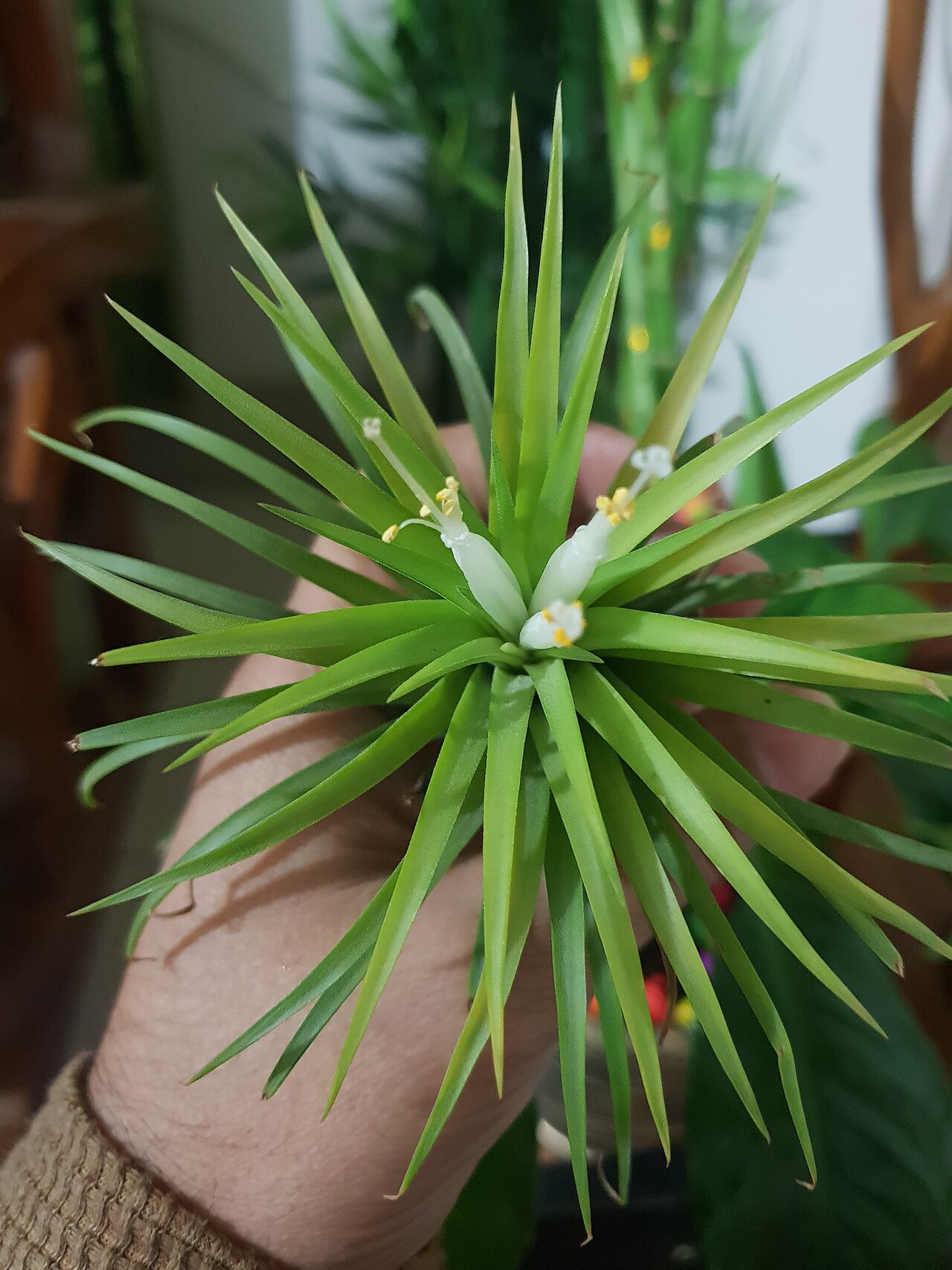
If you see those signs, give the plant a good soak, dry it well, and return to your normal weekly routine. Brown tips won’t turn green again, but new growth should look normal.
If the base looks dark or feels soft, that’s a different problem. Use our guide to air plant brown tips vs. base rot to sort it out. If a plant bloomed while you were away, watch for pups at the base over the coming months; our air plant pups guide explains when to separate them.
A Season-by-Season Travel Plan
- Spring: mild temperatures make trips easy. A soak before you go is usually enough.
- Summer: watch for hot, closed-up rooms and strong sun. Outdoor plants in light shade often do well, but check the forecast for dry spells.
- Fall: bring outdoor plants in before nights turn cool. Move indoor plants away from vents before the heat starts.
- Winter: heated air is the biggest risk. For trips over a week, line up a plant sitter.
For everyday watering, light and feeding, see our complete air plant care guide. If you’d like a native air plant, Spanish moss (Tillandsia usneoides) grows wild in southeastern trees; our Spanish moss care guide covers growing it.
Frequently Asked Questions
Can air plants survive two weeks without water?
Many will survive, but they may come back curled and dull, especially in a dry, heated home. NC State says they need water at least once a week to thrive, so a weekly soak from a plant sitter is the safer plan.
Should I soak my air plants right before leaving?
Soak them a day or two before, not the morning you leave. That gives you time to make sure they’re fully dry before you go.
Can I put my air plants in the bathroom while I’m away?
Only if it’s bright and gets some air movement. A closed, dark bathroom keeps plants damp for too long and doesn’t give them enough light.
Will a humidifier keep my air plants alive while I travel?
It may slow drying, but it won’t replace watering. Don’t leave a humidifier running unattended for days, and keep air plants out of its direct mist.
Can I leave air plants outside while I’m on vacation?
In warm weather, yes, if they hang in light shade with good airflow. Bring them in if nights may drop near 50°F or if extreme heat is forecast.
Sources
- North Carolina Extension Gardener Plant Toolbox, Tillandsia, T. ionantha and T. xerographica: weekly watering, summering outdoors, HVAC effects on humidity.
- Clemson Cooperative Extension Home & Garden Information Center, Air Plants (HGIC 1515): weekly misting or 20–30 minute soak, upside-down drying, signs of underwatering, display materials.
- University of Florida IFAS Gardening Solutions, Air Plant – Tillandsia: bright indirect light indoors, light shade outdoors, mounts that don’t hold water.
- University of Wisconsin–Madison Extension, Wisconsin Horticulture, Bromeliads: Tillandsia dehydration in home air, dry moving air and leaf-tip dieback.
- Wikipedia, Tillandsia: temperature range and species-dependent frost tolerance.