Dahlia Tubers Shriveling in Storage: Moisture and Rot Checks
Last updated: November 6, 2026
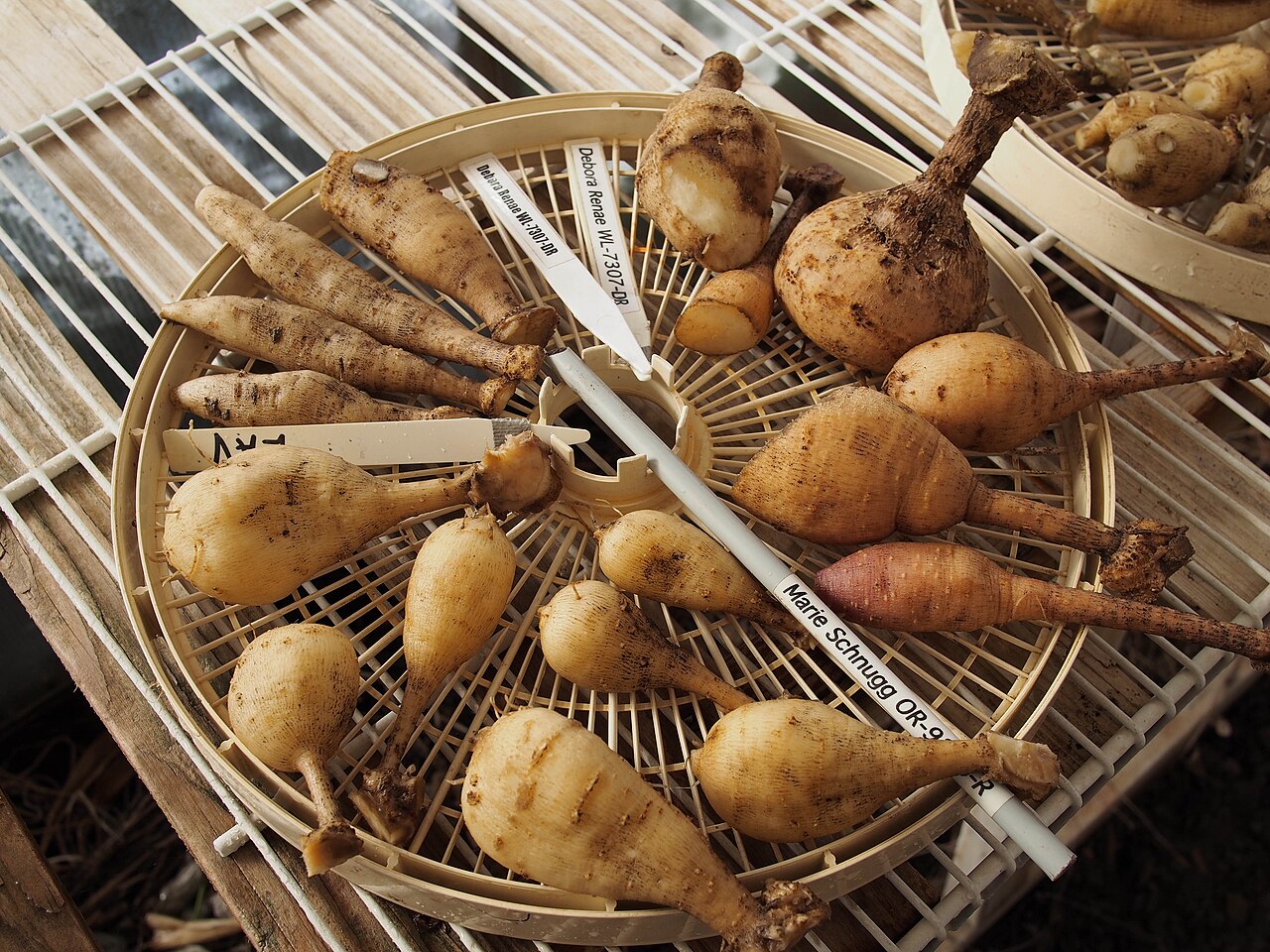
You dug your dahlias in fall, packed them away, and checked on them in January. Some of the tubers now look like raisins.
Others in the same box may be soft, moldy, or smell sour. It’s easy to assume something mysterious went wrong, but shriveling and rot are two ends of the same problem: moisture.
Too little moisture around the tubers and they dry out. Too much, especially when it’s warm, and they rot. This guide shows how to tell which way your storage is drifting and how to correct it before spring.
The Short Answer
Dahlia tubers usually shrivel in storage for one or more of these reasons:
- The storage medium or container lets moisture escape, such as dry peat, an open box, or bare tubers on a shelf.
- The storage space is too warm or too dry, like a heated room or a furnace area.
- They were dried too long or on concrete after washing.
- They were small, thin or immature when dug, so they had little water to start with.
- Rot is hollowing them out from the crown or neck, which can look like shriveling at first.
Why Stored Tubers Lose Water
A dahlia tuber is a fleshy storage root. It holds water and carbohydrates that power next year’s first shoots.
Tubers are thin-skinned. The UC Master Gardeners of San Luis Obispo County note that this thin skin can lead to storage losses of around 20% from rot or dehydration after fall digging.
The fix isn’t to seal tubers away from air or to keep them wet. The American Dahlia Society says most storage methods work about equally well, as long as they keep tubers cool and allow moisture to move between the tubers and the storage medium, while the container keeps that moisture from escaping.
Storage Targets from Extension and Dahlia Society Sources
| Temperature | Above freezing and below about 50°F. The American Dahlia Society’s growers favor a steady 40–45°F. |
| Humidity | Moderate. UC master gardeners suggest roughly 70%. |
| Medium | Lightly moistened vermiculite, wood shavings or sand. Coarse vermiculite is the society’s most common choice. |
| Container | Something that holds moisture in: plastic bags, foam coolers, or boxes lined with thick layers of newspaper. |
| Checks | Every few weeks to monthly through winter. |
Check 1: Squeeze to Tell Shriveling from Rot
Start by sorting what you have. Pick up each tuber and press gently.
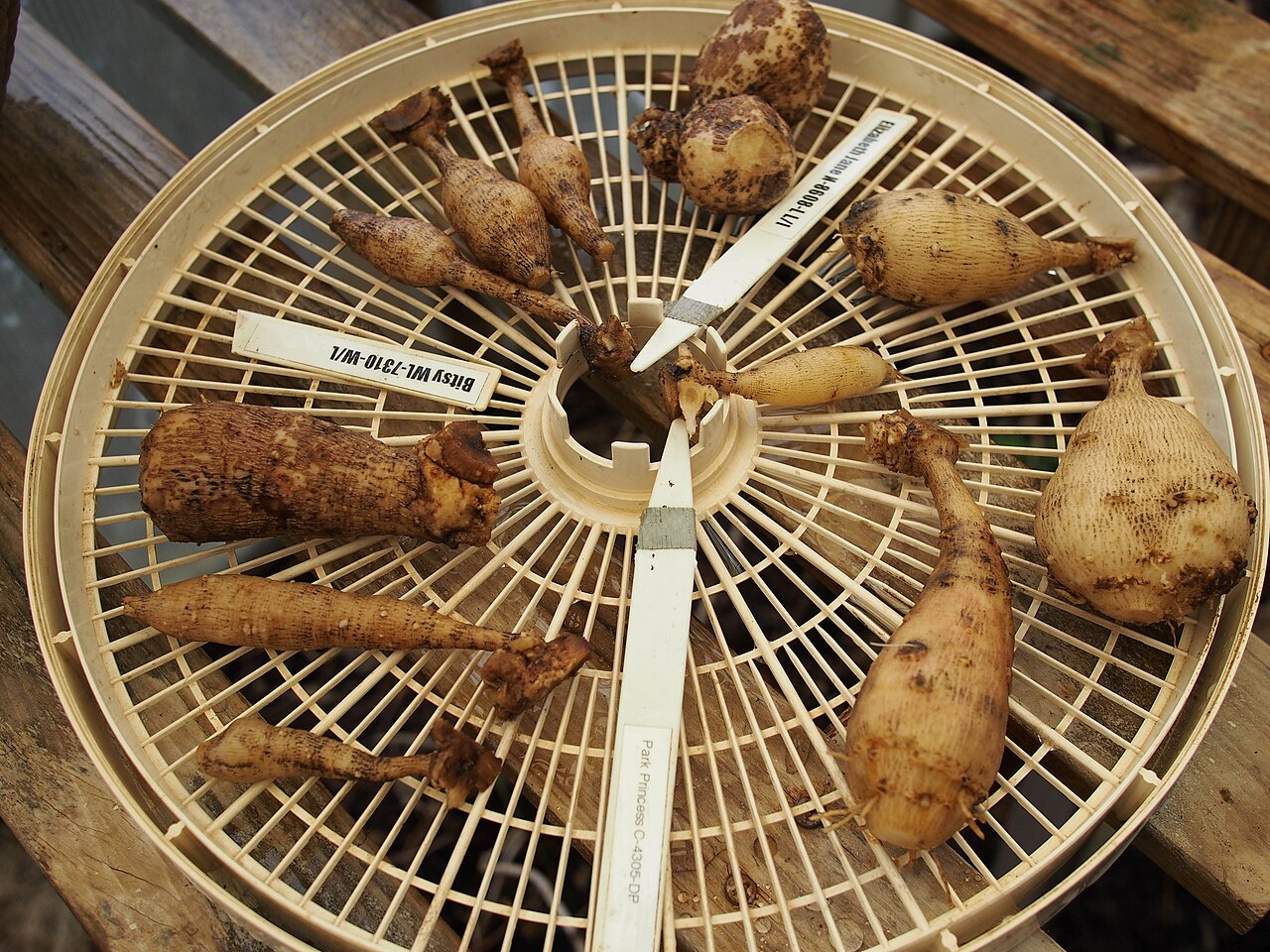
Wrinkled but firm or bendable: the tuber has lost water but is still alive. This is the classic storage shrivel, and it’s usually fixable.
Light, hard and brittle: the tuber has dried out completely. If a light fingernail scratch shows brown, dry or stringy flesh instead of moist white or cream tissue, it’s unlikely to grow.
Soft, wet, or sour-smelling: that’s rot, not shriveling. The American Dahlia Society recommends removing rotting tubers promptly so the problem doesn’t spread to healthy ones in the same container.
Wrinkled with a dark, sunken patch near the crown: look closer. Rot sometimes starts at the neck or crown and makes the tuber collapse from the top down.
Check 2: Feel the Storage Medium
Next, take a handful of the material around the tubers.
If it’s dusty and dry, it’s pulling water out of the tubers instead of buffering them. UNH Extension describes the goal as a material that keeps moisture around the tubers but still allows some air flow.
The medium itself matters. The American Dahlia Society notes that experienced growers warn against peat moss: dry peat tends to shrivel tubers, while wet peat tends to promote rot. Some growers also find that wood chips draw moisture out of roots.
If the medium is soggy or clumping, you have the opposite problem. UNH warns that a little moisture goes a long way, and a medium that’s too wet will likely cause rot.
Check 3: Look at the Container
An open cardboard box in a dry basement is a recipe for shriveled tubers. The box and the medium both lose moisture all winter.
The American Dahlia Society suggests lining wood or cardboard boxes with newspaper at least eight sheets thick and keeping the lid closed. Plastic bags hold moisture better, and the society notes that the smaller and thinner the tubers and the drier your winter air, the more airtight the bag should be.
In very humid storage the balance shifts the other way. Some growers in damp-winter regions pierce small holes in their bags to keep condensation from building up.
Check 4: Review How Long and Where They Dried
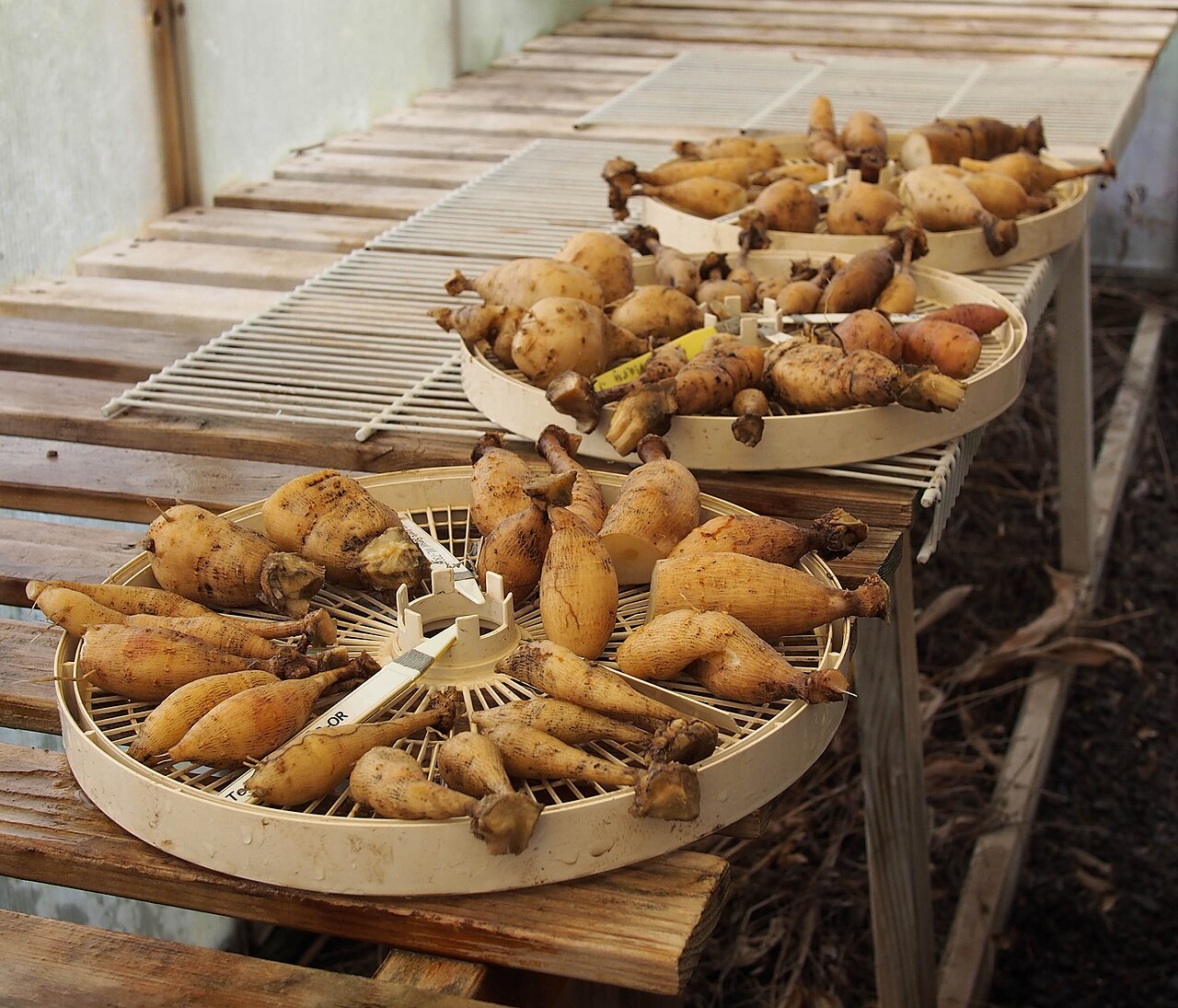
Many shriveled tubers start losing water before they’re ever packed. Washed tubers need a short drying period so their skins aren’t wet when stored.
The American Dahlia Society suggests about 24 hours for small tubers and 24 to 36 hours for medium and large ones, varying with temperature and humidity. UNH suggests a few days in a ventilated spot at 60–70°F, out of direct sun.
Drying surface matters. Both the American Dahlia Society and the UC master gardeners warn against drying tubers on concrete, which draws moisture out and promotes shriveling.
The UC Master Gardeners sum it up well: too much drying causes shriveling, and too little causes rot. Aim for skins that are dry to the touch, not tubers that have started to soften.
Check 5: Take the Temperature
Warm storage speeds up everything you don’t want. The American Dahlia Society notes that higher temperatures encourage fungi and other microorganisms, and prompt tubers to sprout and grow feeder roots too early.
A spot near a furnace, water heater or heated wall can also be much drier than the rest of the basement. Move tubers to the coldest frost-free part of the space, and use a simple thermometer to confirm it stays above freezing.
Freezing is the other limit. The American Dahlia Society is blunt about it: freezing temperatures ruin tubers.
Check 6: Consider Tuber Size and Maturity
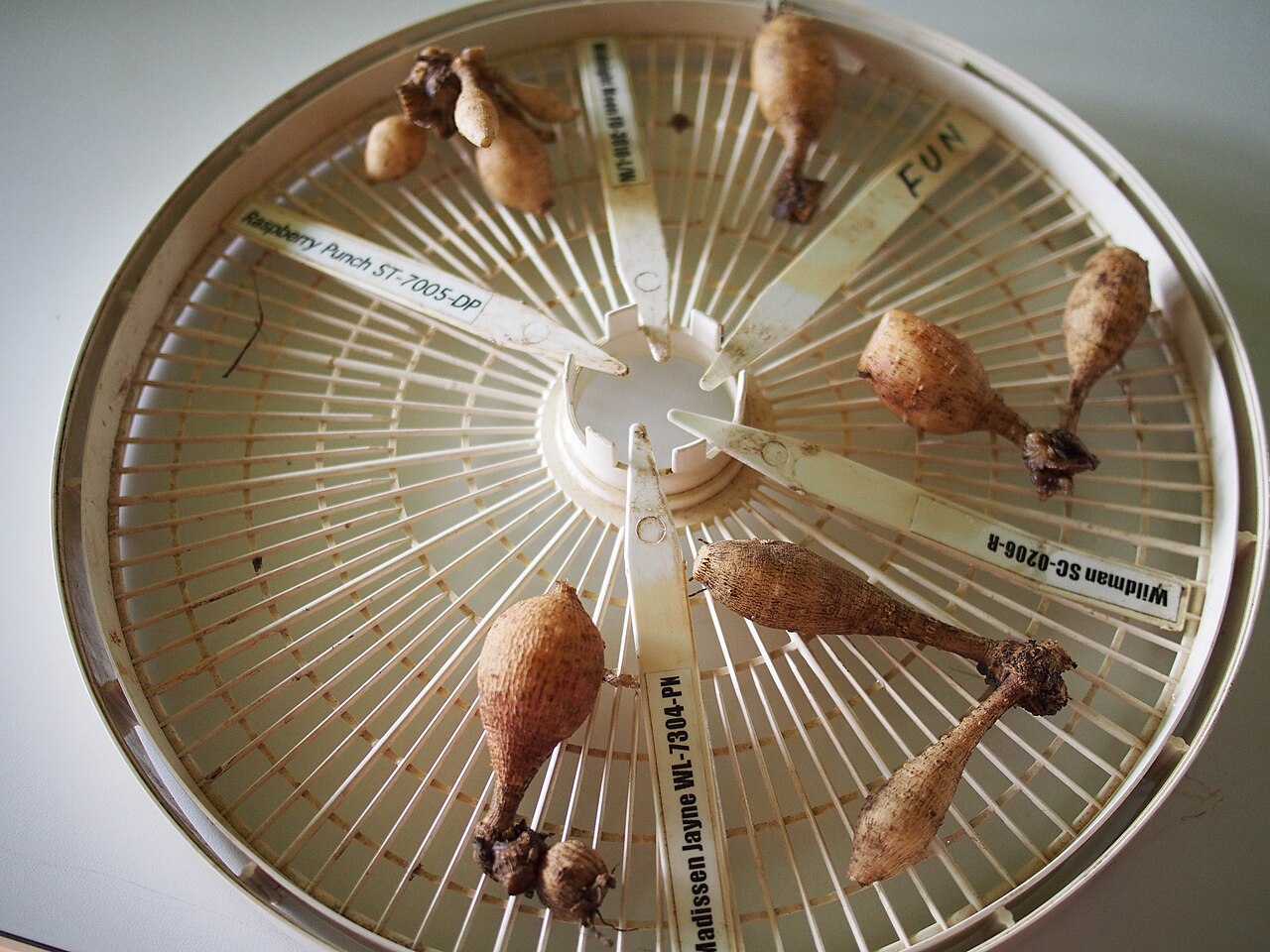
Not every tuber stores equally well. The American Dahlia Society notes that some varieties naturally keep poorly or form sparse, thin tubers.
Small, skinny tubers have little water to spare and shrivel first. Immature tubers from late, partly formed roots are also more prone to rot, so the society recommends letting plants grow as long as practical before digging.
For varieties that keep poorly, the society suggests leaving a few tubers together on a section of crown rather than dividing them fully, or growing a plant in a pot so its roots form in a more compact clump. Our guide to dividing dahlia tubers shows how to cut those small groups so each keeps a piece of crown.
Check 7: Rule Out Rot That Looks Like Shriveling
Rot can masquerade as shriveling. A tuber that’s collapsing from the crown end, with a dark ring or mushy neck, is rotting rather than drying.
Cut the end of a suspect tuber with a clean knife. The American Dahlia Society describes brown or rusty-colored areas in the middle as signs of rot. Cut back toward the crown; if you reach clean tissue that still includes the crown, the tuber can be viable.
Surface mold is less serious. The UC master gardeners suggest brushing it off and moving the tubers somewhere a little drier. Mold on firm tubers is usually a humidity problem; mold with soft tissue underneath is rot.
Clean your knife between clumps. Both the American Dahlia Society and UC master gardeners recommend a 1-part-bleach-to-10-parts-water dip for tools to avoid spreading disease and virus.
Troubleshooting at a Glance
| Wrinkled, firm, medium dry | Too dry. Lightly moisten the medium and close the container. |
| Wrinkled, stored near heat | Too warm and dry. Move to the coldest frost-free spot. |
| Brittle, brown inside | Dead. Discard. |
| White fuzz on firm skin | Surface mold. Brush off and move somewhere slightly drier. |
| Soft, wet or sour | Rot. Remove now; check neighbors. |
| Shriveled from the crown end | Possible crown rot. Cut to check for clean tissue. |
How to Rescue Shriveled Tubers Now
Midwinter, mildly wrinkled: mist the medium lightly or sprinkle in a little water, mix, and close the container. Illinois Extension’s advice for shriveled tubers is simply to water lightly. Check again in two weeks for mold.
Midwinter, in a dry spot: move the container somewhere more humid but still cool. The UC master gardeners recommend exactly that for shriveled tubers.
Late winter or early spring: the American Dahlia Society adds about a teaspoon of water per quart of bag space a week to 10 days before taking tubers out, then moves them somewhere warm to encourage eyes.
At planting time: wrinkled but bendable tubers often plump up once they’re in warm, barely moist soil or potting mix. Don’t soak them in a bucket; that invites rot.
If a rescued tuber still hasn’t sprouted weeks after planting, our guide to dahlia tubers not sprouting explains how to inspect it without damaging new growth.
A Season-by-Season Storage Plan
- Late summer: keep plants healthy and watered so tubers fill out. Stop fertilizing toward the end of the season.
- After frost: let tubers mature in the ground for a while after the first light frost, then dig carefully. Label every clump.
- Cleaning and drying: wash off soil, remove old stem and fine roots, and dry for about a day on racks or wood, not concrete.
- Packing: layer tubers in lightly moist coarse vermiculite or shavings in a container that holds moisture. Keep them from touching where possible.
- Winter: store at roughly 40–50°F and check every few weeks. Adjust moisture based on what you see.
- Late winter: add a little moisture, then bring tubers somewhere warm to wake up before planting.
In mild-winter areas, some gardeners skip storage and leave tubers in the ground under a thick layer of mulch. The same decision comes up with other tender bulbs; see our guide on leaving gladiolus bulbs in the ground for how frost depth factors in.
If you’d rather have summer color with no lifting at all, a hardy native perennial such as purple coneflower stays in the ground year-round in much of the eastern and central U.S.
Frequently Asked Questions
Can shriveled dahlia tubers be saved?
Often, yes. If they’re wrinkled but still bendable and moist inside, add a little moisture to the storage medium or plant them in barely damp mix. Brittle, feather-light tubers with brown, dry flesh usually can’t recover.
Should I soak shriveled dahlia tubers in water?
It’s safer not to. Soaking can push them toward rot. A lightly moistened medium or damp potting mix lets them rehydrate gradually.
What’s the best material to store dahlia tubers in?
Lightly moistened coarse vermiculite, wood shavings or sand all work. The American Dahlia Society reports that coarse vermiculite in plastic bags is the most common method among its growers. Avoid perlite, which doesn’t absorb excess moisture.
How cold should dahlia tubers be stored?
Above freezing and below about 50°F. Many growers aim for a steady 40–45°F. Warmer storage encourages rot and early sprouting.
Why are some of my tubers shriveled while others in the same box are fine?
Size and variety play a big role. Small, thin or immature tubers lose water faster, and some cultivars simply store poorly. Tubers near the top or sides of an open container also dry out first.
For the rest of the growing cycle, see our full dahlia growing guide, our step-by-step tuber planting guide, and our dahlia planting basics.
Sources
- American Dahlia Society, Digging, Dividing, and Storing Tubers: storage temperatures, media, peat and wood chip cautions, container moisture, drying times, concrete, rot checks, tool sanitation, spring rehydration.
- UC Master Gardeners of San Luis Obispo County, Dahlias: Digging, Dividing, and Storing: 40–50°F and about 70% humidity, storage losses, drying balance, shriveled and moldy tuber fixes.
- UNH Extension, When should I dig up dahlia tubers and how should I store them?: curing at 60–70°F, below 50°F storage, moisture with air flow, rot from wet media.
- Illinois Extension, Plant of the Week: Dahlias: storing in damp vermiculite or peat at 35–50°F and lightly watering shriveled tubers.
- Longfield Gardens, How to Tell if Dahlia Tubers Are Dead or Viable: firm vs. brittle tubers, scratch test, avoiding soaking.