
Stoloniferous Pussytoes (Antennaria dioica)
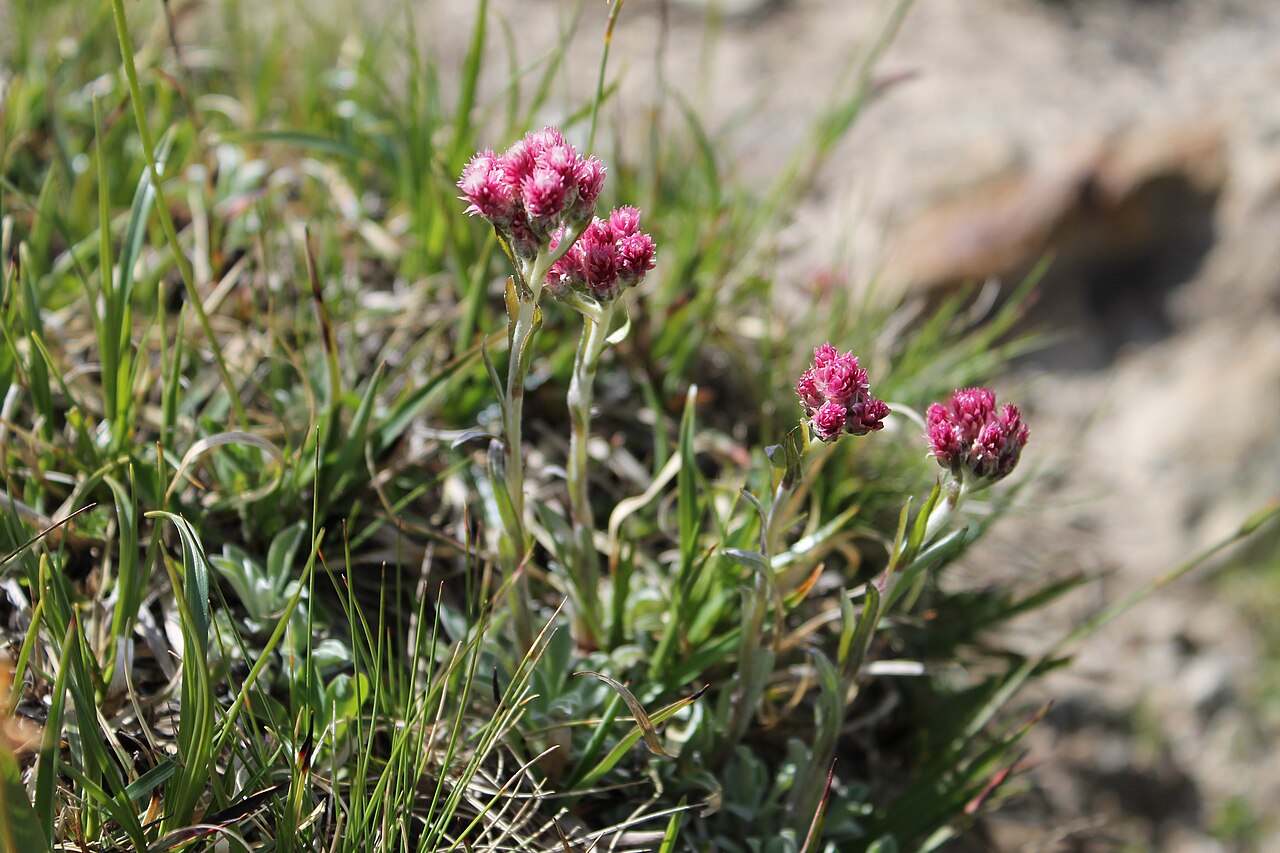
Antennaria dioica, known as Stoloniferous Pussytoes, catsfoot or mountain everlasting, is a tiny, mat-forming perennial of the aster family (Asteraceae). It spreads by short, leafy runners into silvery carpets of spoon-shaped leaves. In summer, clusters of fuzzy, papery flower heads rise on short stems, ranging from white to soft pink and deep rose. It is a widespread Eurasian plant, found from the British Isles across Scandinavia, the Alps and Siberia to Japan. In North America it occurs only at the eastern end of that range, on the Aleutian Islands of Alaska.
That narrow North American range matters. The Flora of North America (FNA) gives its distribution as “Alaska (Aleutian Islands); Eurasia,” and the USDA PLANTS database lists it as native only in Alaska. For more than a century, botanists applied the name A. dioica to many North American pussytoes, which is why older field guides, seed catalogs and garden articles report it from the Rockies, the Midwest and the East. FNA explains that the North American circumscription of A. dioica “has long been debated.” Under the current treatment, nearly all of those plants belong to other, truly native species. The look-alike A. marginata of the Southwest, for example, has been shown by DNA studies to be only distantly related.
If you garden in Tennessee, Ohio or Colorado and want “catsfoot,” the native plant for you is almost certainly a different pussytoes. Good choices include Plantain-leaved Pussytoes, Field Pussytoes, Rosy Pussytoes and Little Pussytoes. True A. dioica belongs in Alaskan gardens and in rock gardens planted with nursery-grown stock. This guide covers how to recognize it, where it grows wild in North America, and how to grow it.
Identification
Stoloniferous pussytoes is a low, evergreen, mat-forming herb. FNA describes wild plants as only 1¼ to 4 inches (3–10 cm) tall in flower. Garden plants in rich soil can reach about 8 inches. The species is dioecious, as its name says: dioica means “two households,” and each plant bears either male (staminate) or female (pistillate) flower heads. Because colonies spread by runners, an entire patch is often a single sex.
Stems & Runners
Plants spread by short, leafy stolons about ¾ to 2 inches (2–5 cm) long that root at the tips and produce new rosettes. Flowering stems are upright, unbranched and covered in white wool. They carry a few small, narrow, sharp-pointed stem leaves (cauline leaves 7–13 mm long, according to FNA), which lack the flat, papery tips (“flags”) found on some related species.
Leaves
The basal leaves form tight rosettes. They are spoon-shaped to diamond-spoon-shaped, about ⅛ to ¾ inch (3–18 mm) long and 3–6 mm wide, with a single main vein and a tiny point at the tip. The key identification feature is the contrast between the two leaf surfaces. The upper surface is green and hairless, and the underside is densely gray-woolly. Many North American pussytoes have woolly upper leaf surfaces as well, so a green, smooth upper face is a useful clue.
Flowers
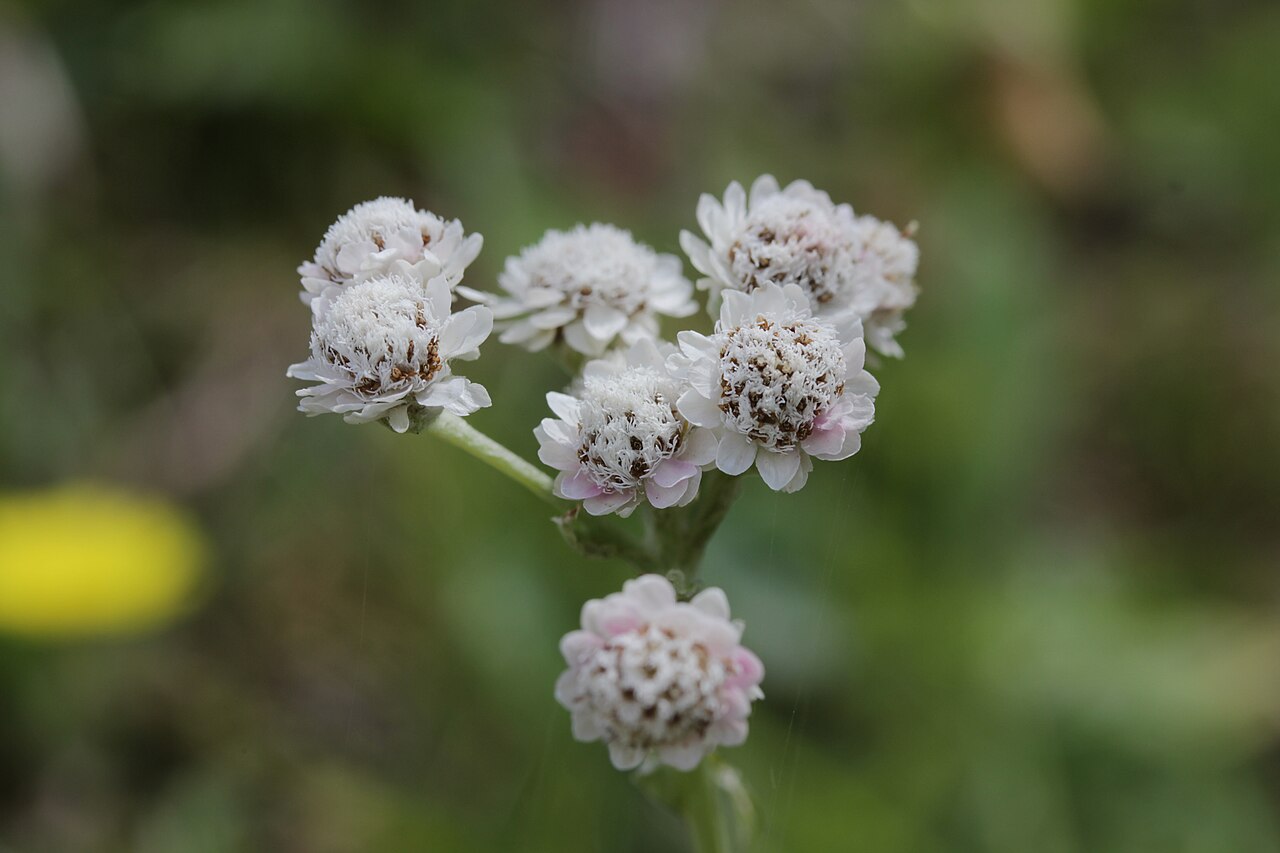
Each flowering stem bears 3 to 7 flower heads in a tight, flat-topped cluster. Like all pussytoes, the heads have no ray petals. Their color comes from the papery involucral bracts (phyllaries), which in this species are tipped dark pink, light pink or white. Male heads are about ¼ inch (5–6.5 mm) tall, with short, rounded bracts and protruding, brush-tipped pappus bristles, the “antennae” that give the genus its name. Female heads are slightly larger, with long, silky pappus. Flowering is in summer, usually June to August in Alaska.
Fruit & Seeds
Female heads ripen into tiny, bumpy (papillate) seeds called cypselae, about 0.5–1 mm long, each topped with a tuft of white pappus bristles about ¼ inch long. In late summer, the seed heads open into soft, fluffy “pussy’s toes,” and the wind carries the seeds across open ground. Male plants set no seed.
Quick Facts
| Scientific Name | Antennaria dioica (syn. Gnaphalium dioicum; A. insularis) |
| Family | Asteraceae (aster family) |
| Plant Type | Evergreen, mat-forming herbaceous perennial |
| Mature Height | 1¼–4 in (3–10 cm) in flower; to about 8 in in cultivation |
| Mature Spread | 6–18 in, spreading by short stolons |
| Growth Rate | Slow to moderate |
| Sun Exposure | Full Sun |
| Water Needs | Dry to medium; sharp drainage essential |
| Soil Type | Lean, sandy, gravelly or rocky soil |
| Soil pH | 5.0–7.5 (acidic to neutral) |
| Bloom Time | June – August |
| Flower Color | White to light pink or deep rose (colored bracts) |
| Fall Color | None; silvery evergreen rosettes |
| Fruit | Tiny cypselae with white pappus, on female plants only |
| Deer Resistant | Yes (woolly foliage seldom browsed) |
| USDA Hardiness Zones | 3–7 |
Native Range
Worldwide, stoloniferous pussytoes is one of the most widespread pussytoes. R. J. Bayer (2000), cited by FNA, describes its range as extending from the British Isles to Japan and into the Aleutian Islands. In Europe it grows on heaths, dry grasslands, moors and mountain pastures, from lowland sand country in the north to subalpine and alpine meadows in the Alps. It is declining in much of lowland western Europe as nutrient-poor grasslands disappear.
In North America, FNA records A. dioica only from Alaska’s Aleutian Islands, on dry slopes in tundra from sea level to about 2,000 feet (600 m). The USDA PLANTS database likewise lists it as native only in Alaska, under the common name stoloniferous pussytoes. The Aleutian populations sit at the eastern tip of the species’ Asian range, which reaches the islands from northeastern Asia. They grow on the windswept maritime heath and dry, well-drained tundra of the island chain, where cool summers, frequent fog and mild, snowy winters match the species’ Eurasian habitat.
All other North American reports of A. dioica, from Canada, the Rocky Mountains, the Midwest and the East, are now treated as other Antennaria species. FNA notes that A. dioica may be a sexual ancestor of the widespread A. parvifolia complex of western North America. The map on this page therefore shades Alaska only. The Lady Bird Johnson Wildflower Center also gives its native distribution as Alaska, Great Britain, Europe and Asia.
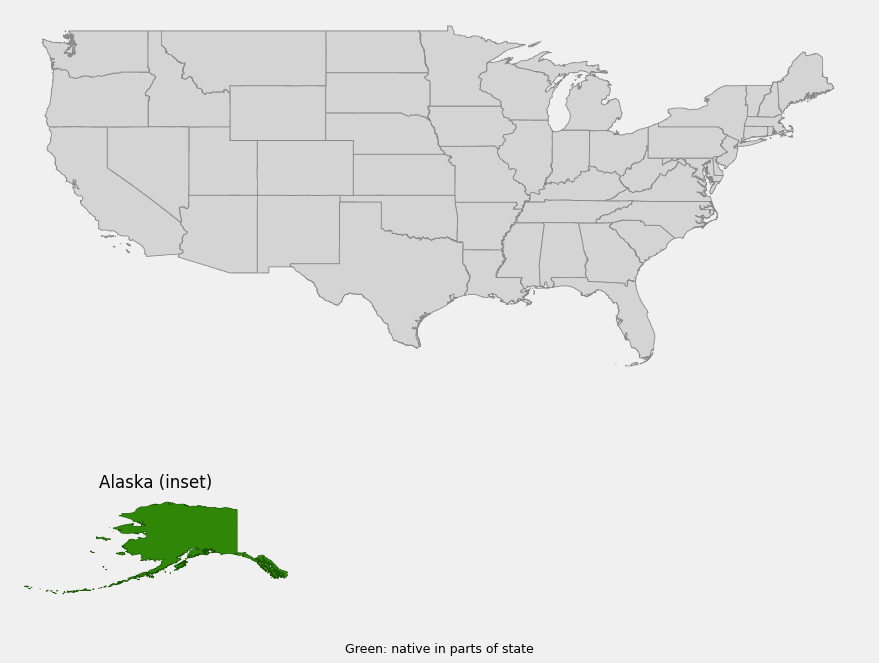
📋 Regional plant lists featuring Stoloniferous Pussytoes: Alaska
Growing & Care Guide
Stoloniferous pussytoes is a classic rock-garden plant in northern Europe, and it grows well wherever it gets sun, cool roots and excellent drainage. It is also widely sold as a garden perennial, often in pink selections such as ‘Rubra’. Remember that in North America this is a native plant only for Alaska. Gardeners elsewhere get the same silvery mats and fuzzy flowers from their local native pussytoes, which are better adapted and support local insects.
Light
Give stoloniferous pussytoes full sun. In the wild it grows on open tundra slopes and heaths with no overhead cover. In shade the rosettes stretch, the mats thin, and flowering declines. In hot-summer climates outside its range, light afternoon shade can help, but the plant generally dislikes heat and humidity.
Soil & Water
The most important requirement is sharp drainage. Plant in lean, sandy, gravelly or rocky soil that never stays wet, especially in winter. Rich soil and fertilizer produce soft, floppy growth and weaken the mats. Slightly acidic to neutral soil is ideal. Water new plants until their runners root. Established mats are drought-tolerant and rarely need watering, except during prolonged dry spells in a sunny rock garden. Heavy clay and standing water cause crown rot, the most common cause of failure. If your soil is heavy, grow it in a raised bed, a crevice garden or a container with gritty mix.
Planting Tips
- Plant in spring or late summer, setting the rosettes level with the soil surface. Never bury the crowns.
- Top-dress around plants with ½ inch of fine gravel or grit to keep the rosettes dry and discourage rot.
- Space plants 8 to 12 inches apart. Their runners will fill the gaps within two or three seasons.
- To get seed, plant both male and female clones. Patches grown from divisions of a single plant will be all one sex.
- Use it among stepping stones, in rock and crevice gardens, on dry slopes, and in troughs with other small alpine plants.
Pruning & Maintenance
Remove spent flower stems after bloom if you prefer a tidy mat, or leave them to drop seed. Pull weeds by hand while they are small, because the low mats are easily shaded out by grasses. Over time the centers of old mats may die out. Lift and replant healthy outer rosettes every few years to renew them. Avoid organic mulches such as bark or compost, which hold moisture against the crowns. Gravel is a better choice.
Propagation
The easiest method is division. In spring or early fall, cut rooted rosettes from the edge of a mat with their runners attached and replant them at once in gritty soil. Seed can be sown on the surface of a well-drained mix in fall or after a few weeks of cold, moist stratification. Seed comes only from female plants that have been pollinated by nearby males. Seedlings are small and slow, but they produce new genetic diversity and a mix of male and female plants.
Landscape Uses
- Silvery evergreen groundcover for Alaskan rock gardens and gravel gardens
- Between stepping stones and along dry, sunny paths
- Crevice gardens, troughs and alpine containers
- Dry-slope stabilization with other low tundra plants
- Dried-flower arrangements (the papery heads hold their color)

Wildlife & Ecological Value
For Pollinators
Because male and female flowers grow on separate plants, stoloniferous pussytoes relies on insects to carry pollen between colonies. The small, nectar-bearing heads are visited by flies, small bees, butterflies and moths. In cool maritime climates such as the Aleutians, flies and bumblebees are the most important visitors. Its summer bloom adds to the limited supply of flowers on open, wind-exposed ground.
Birds
The tiny seeds are of minor value to birds. The low mats provide some foraging habitat for insect-eating ground birds, and the soft, woolly plant material may be used in nest lining, as with other pussytoes.
Mammals
The woolly foliage is rarely browsed. Small mammals may nibble the rosettes, but the plant is of little food value to larger animals, which is one reason it persists on grazed slopes.
Ecosystem Role
Mat-forming pussytoes stabilize thin, gravelly soils on exposed slopes, slow wind and water erosion, and create sheltered microsites where other small plants and invertebrates can establish. In the Aleutians, stoloniferous pussytoes is one of the low herbs that knit together the maritime heath between crowberry and blueberry. Across its range, many pussytoes species are larval hosts for lady butterflies (Vanessa). Where those butterflies occur, the woolly rosettes serve as caterpillar food plants.
Cultural & Historical Uses
In Europe, stoloniferous pussytoes has a long herbal history under names such as catsfoot, cat’s-ear and mountain everlasting. The soft, rounded flower heads were thought to look like a cat’s paw, and the dried heads, which keep their pink and white colors for months, were sold in apothecaries as Flores Gnaphalii or Flores Pedis Cati. They were prescribed in teas for coughs, sore throats and digestive and bile complaints. Its everlasting flowers also made it a popular plant for dried bouquets and winter wreaths.
The plant’s scientific names record botanical history. Linnaeus first described it in 1753 as Gnaphalium dioicum, a cudweed whose flower heads come in two sexes. Joseph Gaertner later moved it into the new genus Antennaria, named for the club-tipped pappus bristles of the male flowers, which resemble an insect’s antennae. Botanists have since used this species and its relatives as a model for understanding asexual seed production (apomixis), which is common in the North American pussytoes.
For North American gardeners, the main lesson of A. dioica is about names. The name was long applied to native pussytoes across Canada and the United States, so many gardening sources still call any small pink pussytoes “Antennaria dioica.” Most garden plants sold under that name are European stock. Outside Alaska, the better native choice is a regional pussytoes from a local native nursery. Inside Alaska, seek out plants grown from Aleutian or other Alaskan sources when possible.
Frequently Asked Questions
Is Antennaria dioica native to the United States?
Only in Alaska, and only in the Aleutian Islands, according to the Flora of North America and the USDA PLANTS database. Older reports from Canada and the lower 48 states refer to other pussytoes species, which were once included under this name.
What native pussytoes should I plant instead outside Alaska?
In the East and Midwest, try Plantain-leaved Pussytoes or Field Pussytoes. In the West, Rosy Pussytoes and Little Pussytoes offer the same silvery mats and pink or white flower heads.
Why doesn’t my pussytoes produce seed?
Stoloniferous pussytoes is dioecious: male and female flowers grow on separate plants. A patch propagated by division from one plant is a single sex, and male plants never set seed. To get seed, grow both male and female plants near each other.
How do I keep pussytoes from rotting?
Plant it in full sun in lean, sandy or gravelly soil with excellent drainage, and mulch with gravel rather than bark. Wet winter soil and heavy clay are the main killers. Raised beds, crevice gardens and containers with gritty mix work well where the soil is heavy.
Are the flowers really pink?
The color comes from the papery bracts surrounding each flower head, not from petals. In stoloniferous pussytoes, the bracts range from white to light pink and deep rose. Pink-flowered selections are common in the nursery trade.

Looking for a nursery that carries Stoloniferous Pussytoes?
Browse our native plant nursery directory: Alaska