
Smooth Strongbark (Bourreria cassinifolia)
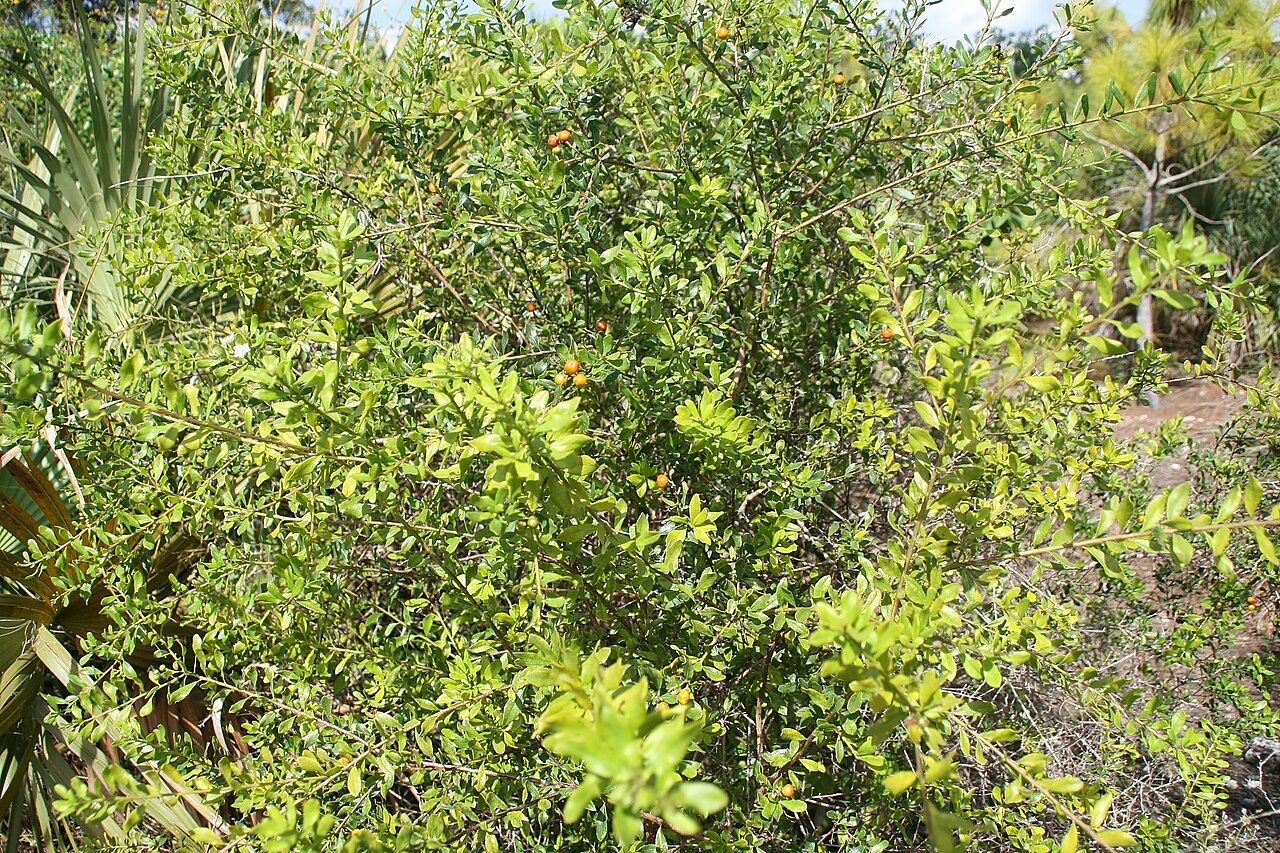
Bourreria cassinifolia, the Smooth Strongbark, also called little strongbark or Bahama strongbark, is a small, densely branched evergreen shrub of the pine rocklands of South Florida. It has small, smooth, glossy leaves, clusters of fragrant white flowers through much of the year, and small, bright orange fruits that birds eat. It belongs to the borage family (Boraginaceae), in the same genus as the larger rough strongbark (B. succulenta).
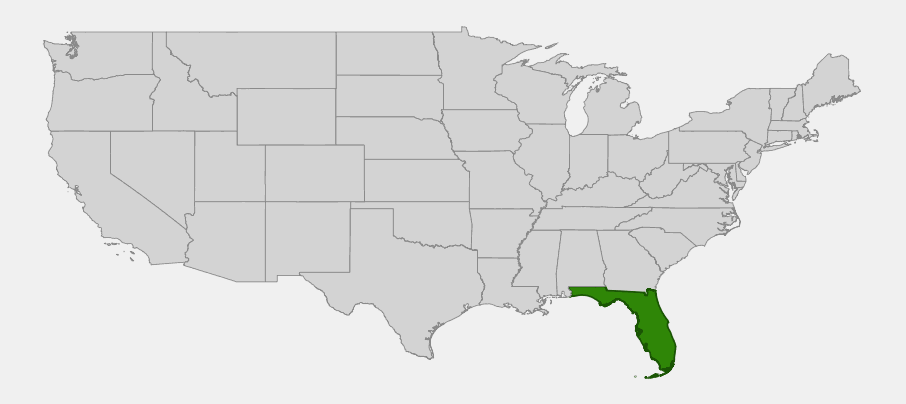
In the United States, smooth strongbark grows only in Florida, where it is listed as Endangered by the state of Florida (FDACS Regulated Plant Index). Beyond Florida, it also occurs in the Bahamas and Cuba. Its Florida populations are in the pine rocklands, a rare, fire-maintained community of slash pine on limestone that once covered much of the Miami Rock Ridge and now survives mostly in small fragments and in Everglades National Park.
For South Florida gardeners, smooth strongbark is an attractive, compact native shrub for sunny, rocky or sandy sites, with year-round interest and value for wildlife. Because it is state-listed, buy only nursery-propagated plants from reputable native plant nurseries, and never dig or collect plants or seeds from the wild. This guide covers how to recognize it, where it grows and how to grow it.
Identification
Smooth strongbark is a modest shrub that is easy to overlook among the dense vegetation of the pine rocklands. Its small, smooth leaves, white tubular flowers and orange fruits distinguish it from most of its neighbors.
Stems & Habit
It is a dense, much-branched shrub, often less than 5 feet tall and occasionally up to about 10 feet. The bark is gray and fairly smooth, and the twigs are stiff, with many short side shoots. Under regular fire, plants stay low and resprout from the base. In gardens and long-unburned sites they become larger, rounded shrubs.
Leaves
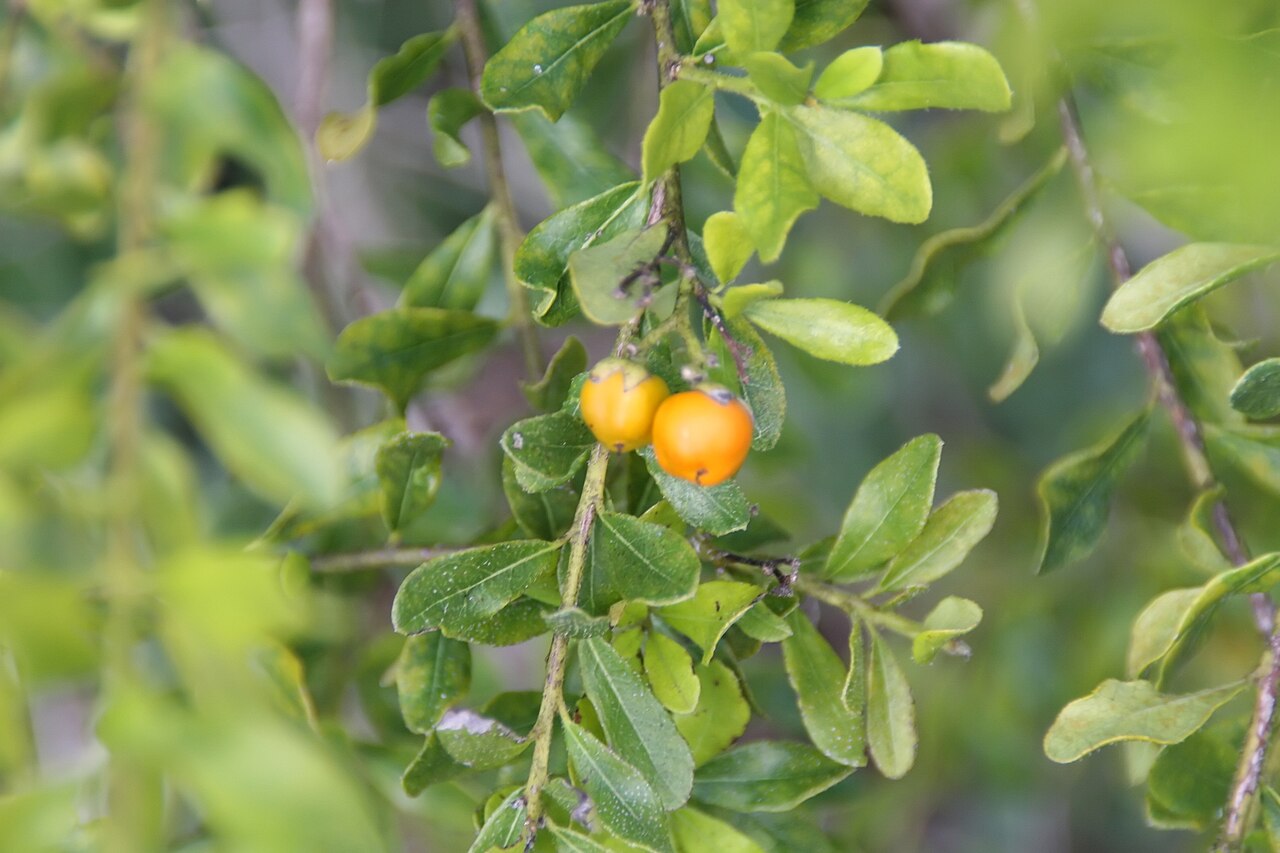
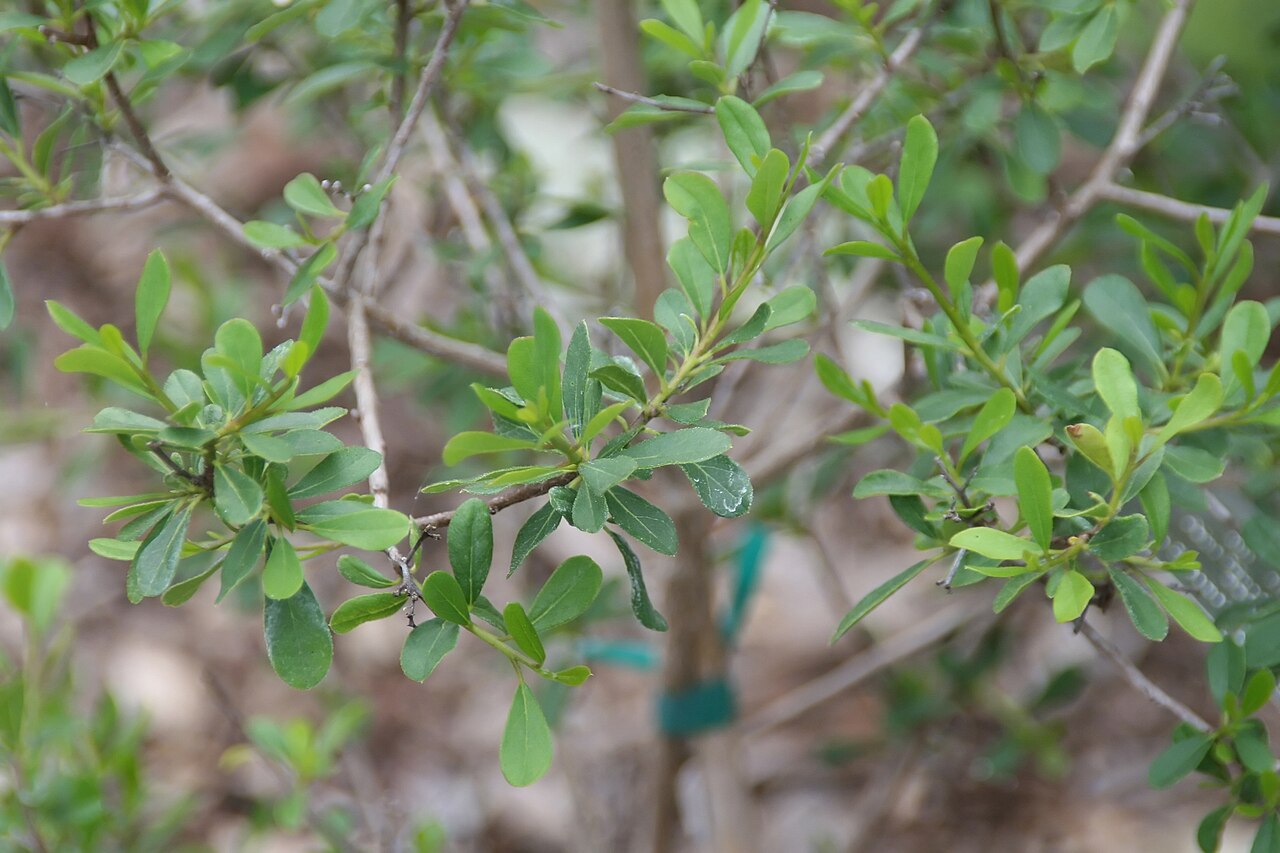
The leaves are alternate, often clustered on short side shoots, and small, usually under about 1 inch long. They are spoon-shaped to obovate, with rounded or slightly notched tips and smooth edges, and are bright to dark green and glossy. The smooth surface separates it from rough strongbark, whose larger leaves are often rough to the touch, and gives the species its common name. The species name cassinifolia compares its leaves to those of Cassine, an old name for some hollies and their relatives.
Flowers
Flowers can appear in any month, with the heaviest bloom typically in spring and summer. They are borne in small clusters at the ends of short shoots. Each flower is white, funnel- to bell-shaped and about half an inch long, with five spreading lobes. They are lightly fragrant and attract a variety of small insects.
Fruit
The fruit is a small, round drupe, about ¼ inch across, ripening from green to bright orange. Each contains a few hard seeds. Fruits are produced over much of the year, so a plant often has flowers and fruit at the same time.
Quick Facts
| Scientific Name | Bourreria cassinifolia |
| Family | Boraginaceae (borage family) |
| Plant Type | Small evergreen shrub |
| Mature Height | 2–5 ft (occasionally to about 10 ft) |
| Mature Spread | 2–5 ft |
| Growth Rate | Slow |
| Sun Exposure | Full sun to light shade |
| Water Needs | Low; drought tolerant once established |
| Soil Type | Well-drained limestone (oolite) rock and sand; tolerates alkaline soil |
| Soil pH | About 7.0–8.5 (neutral to alkaline) |
| Bloom Time | Year-round, mainly spring and summer |
| Flower Color | White |
| Fall Color | None; evergreen |
| Fruit | Small orange drupe |
| Deer Resistant | Unknown; not a common deer food in gardens |
| USDA Hardiness Zones | 10b–11 |
Native Range
Smooth strongbark has a small Caribbean range. It is native to the Bahamas and Cuba, and in the United States it occurs only in South Florida. USDA PLANTS lists it only from Florida, and the Lady Bird Johnson Wildflower Center notes that it is known in North America only in Florida, where it is listed as endangered. It is listed as Endangered by the state of Florida on the FDACS Regulated Plant Index.
In Florida, it is a plant of the pine rocklands of the Miami Rock Ridge in southern Miami-Dade County, including the extensive pine rocklands of Long Pine Key in Everglades National Park. Pine rocklands grow on exposed limestone with only pockets of soil, under an open canopy of South Florida slash pine, with a rich understory of palms, shrubs and herbs, many of them tropical species found nowhere else in the United States.
The great majority of the pine rocklands outside Everglades National Park have been lost to urban and agricultural development, and the remaining fragments are threatened by fire suppression, invasive plants such as Burma reed and Brazilian pepper, and further development. Smooth strongbark depends on regular fire to keep its habitat open, and like many pine rockland plants, it survives fire by resprouting from the base.
📋 Regional plant lists featuring Smooth Strongbark: North & South Florida
Growing & Care Guide
Smooth strongbark is a durable, slow-growing shrub for South Florida landscapes. Because it is state-listed as Endangered in Florida, buy only nursery-propagated plants from native plant nurseries and never dig plants or collect seeds or cuttings from the wild. Taking plants from public or private land without permission is illegal under Florida law.
Light
It grows best in full sun to light shade. In full sun it stays dense and flowers and fruits heavily. In shade it becomes thin and open.
Soil & Water
Plant it in very well-drained soil: limestone rock, crushed rock, or sand. It tolerates alkaline soils typical of the Miami Rock Ridge. Water regularly during establishment, then only during long dry spells. Overwatering and heavy soil are more harmful than drought. It does not need fertilizer, though a light application of a slow-release fertilizer can help container plants.
Planting Tips
Plant it in the warm season so roots can establish before the dry winter and spring. Dig a planting hole in rock with a pick or rock bar, and backfill with native soil or sand, not rich potting mix. Space plants 3 to 4 feet apart for a low hedge or group planting. Mulch lightly but keep mulch away from the stem.
Pruning & Maintenance
Smooth strongbark needs little pruning. It can be lightly shaped to keep it compact, or left natural for wildlife. Remove any dead wood after cold snaps. It is generally free of serious pests and diseases. Plants are frost-tender, so in rare South Florida freezes, protect young plants with cloth.
Propagation
Nurseries propagate it from seed and cuttings. Fresh seed, cleaned of pulp, can be sown in a well-drained mix and kept warm and moist. Germination may be slow and irregular. Semi-hardwood cuttings taken in summer can root under mist. Home gardeners should propagate only from legally purchased, nursery-grown plants.
Landscape Uses
- South Florida native landscapes: a compact, evergreen shrub for sunny, rocky or sandy sites
- Pine rockland gardens and restoration: a characteristic shrub of this endangered plant community, using propagated stock
- Wildlife gardens: flowers for small pollinators and fruit for birds
- Low hedges and mixed borders: dense, slow growth suits informal hedges
- Conservation plantings: growing nursery-propagated plants helps keep this rare species in cultivation
Wildlife & Ecological Value
Smooth strongbark is one of the many small shrubs that make the pine rocklands one of the most diverse plant communities in Florida.
For Pollinators
The fragrant white flowers attract a variety of small bees, wasps, flies and butterflies. Because it can bloom in any month, it offers a food source when few other shrubs in the pine rocklands are flowering.
For Birds
The orange fruits are eaten by birds, including mockingbirds and other fruit-eating songbirds, which disperse the seeds. The dense branches provide cover and nesting sites for small birds.
For Mammals
Small mammals may eat fallen fruits. The shrub provides some cover for small animals in the open pine rocklands.
Ecosystem Role
As a fire-adapted resprouter, smooth strongbark is part of the shrub layer that recovers quickly after the frequent, low-intensity fires that maintain the pine rocklands. Its fruits are one of many fleshy fruits in this community that support migrating and wintering birds.
Cultural & Historical Uses
Smooth strongbark was first described by the French botanist Achille Richard from Cuban material, in a different genus, and was later moved to Bourreria by August Grisebach. The genus honors Johann Ambrosius Beurer, an 18th-century German pharmacist and naturalist. The name strongbark refers to the hard, tough wood of the genus.
In the Bahamas and Cuba, strongbarks have been used in traditional medicine, and some species have a reputation as “bush teas”. There is little recorded use of smooth strongbark specifically.
Today smooth strongbark is mainly of interest to South Florida native plant gardeners and conservationists. Growing it from nursery-propagated stock in home gardens, parks and restoration projects is one way to help keep this rare pine rockland shrub in cultivation and to support the wildlife that depends on it.
Frequently Asked Questions
Is smooth strongbark endangered?
It is listed as Endangered by the state of Florida (FDACS Regulated Plant Index). It is found in the United States only in South Florida, mainly in the pine rocklands of Miami-Dade County. It also occurs in the Bahamas and Cuba.
Can I collect smooth strongbark from the wild?
No. Buy nursery-propagated plants only. Collecting state-listed plants without permission is illegal and harms already small populations. Many South Florida native nurseries grow it.
How is smooth strongbark different from rough strongbark?
Rough strongbark (B. succulenta) is larger, with larger, often rough leaves, and is more common in coastal hammocks. Smooth strongbark is a smaller shrub with small, smooth, glossy leaves that grows mainly in the pine rocklands.
Can I grow smooth strongbark outside South Florida?
It is a tropical shrub that tolerates only light frost, so it is suited to zones 10b and 11. Farther north it can be grown in a container and moved indoors in winter.
Does smooth strongbark attract birds?
Yes. Birds eat its small orange fruits, and its dense branches give them cover. Its flowers also attract a variety of small pollinators.

Looking for a nursery that carries Smooth Strongbark?
Browse our native plant nursery directory: Florida