
Pineland Chaffhead (Carphephorus carnosus)
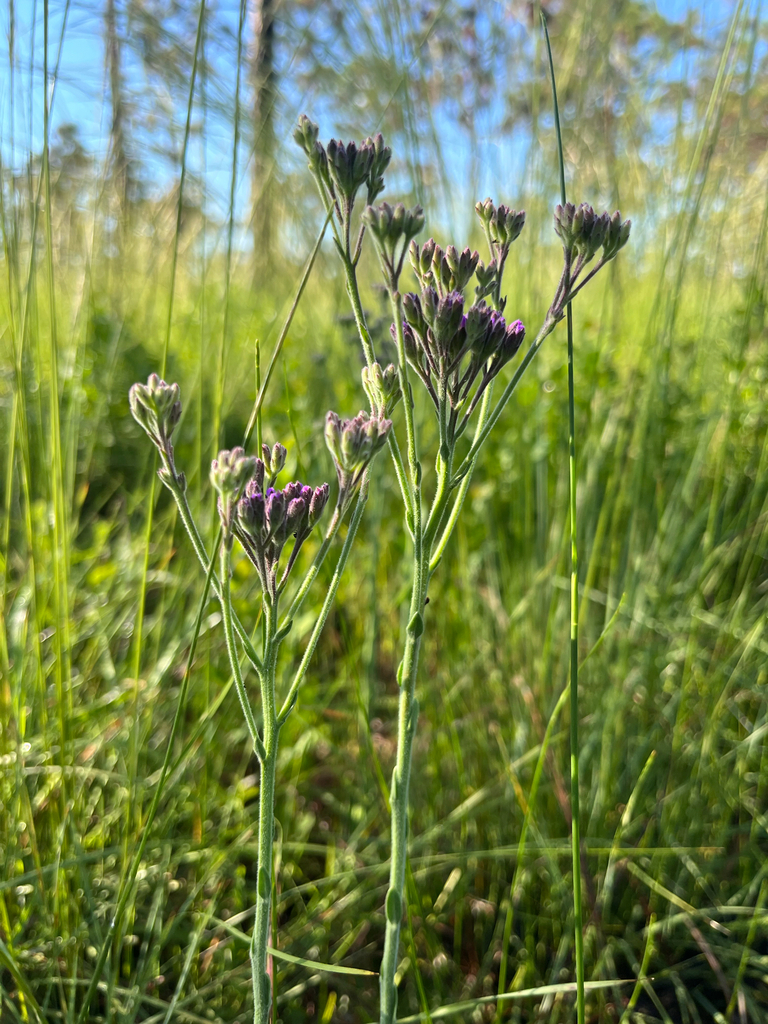
Carphephorus carnosus, the Pineland Chaffhead, is a late-summer and fall wildflower of the wet pine flatwoods and savannas of peninsular Florida. It is endemic to Florida per the Atlas of Florida Plants, and USDA PLANTS also records it only from Florida. From a low rosette of smooth, fleshy leaves it sends up slender, branched stems 1 to 2 feet tall topped with flat clusters of bright purple to lavender flower heads.
It belongs to the aster family (Asteraceae) and to a small genus of chaffheads that is entirely restricted to the southeastern Coastal Plain. Like its relatives the blazing stars, its flower heads contain only small tubular disk flowers, no petal-like rays, and they are a magnet for butterflies and bees in the fall.
Pineland chaffhead is not state-listed, but it is restricted to a single state and to fire-maintained wet flatwoods, a habitat that has shrunk considerably. It is rarely sold. Gardeners who want it should look for nursery-propagated plants or seed from a reputable Florida native nursery and never collect from the wild.
Identification
Florida has several chaffheads and close relatives with purple flowers in late summer, and they can be confusing. Pineland chaffhead’s smooth, fleshy basal leaves and smooth stems are the best clues.
Basal Leaves
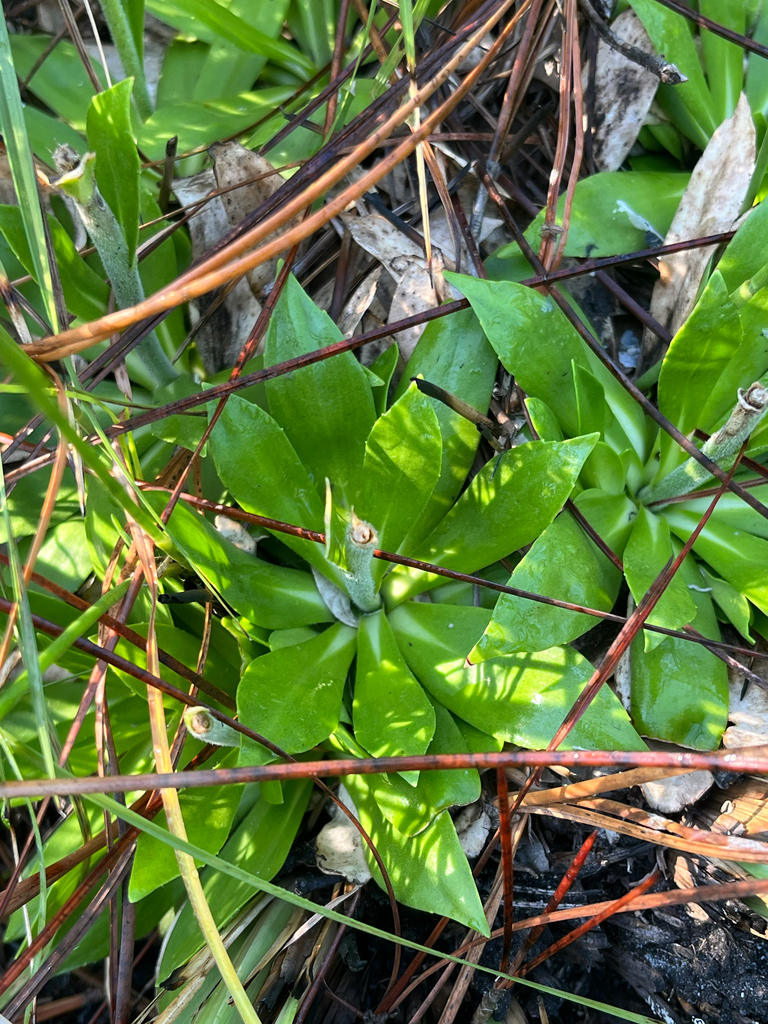
Plants grow from a short rootstock and form a flat rosette of basal leaves. The leaves are oblanceolate to spoon-shaped, about 2 to 6 inches long, thick and somewhat fleshy (the meaning of carnosus), smooth and bright green, often with a slight waxy sheen. The rosette persists through much of the year and is the plant’s most visible form outside the flowering season.
Stems & Stem Leaves
In summer the plant sends up one or a few slender, upright flowering stems, usually 1 to 2 feet tall. The stems are smooth or nearly so, with small, narrow leaves that become progressively smaller toward the top and lie close to the stem. Hairy stems point to a different chaffhead, such as C. corymbosus or C. paniculatus.
Flowers
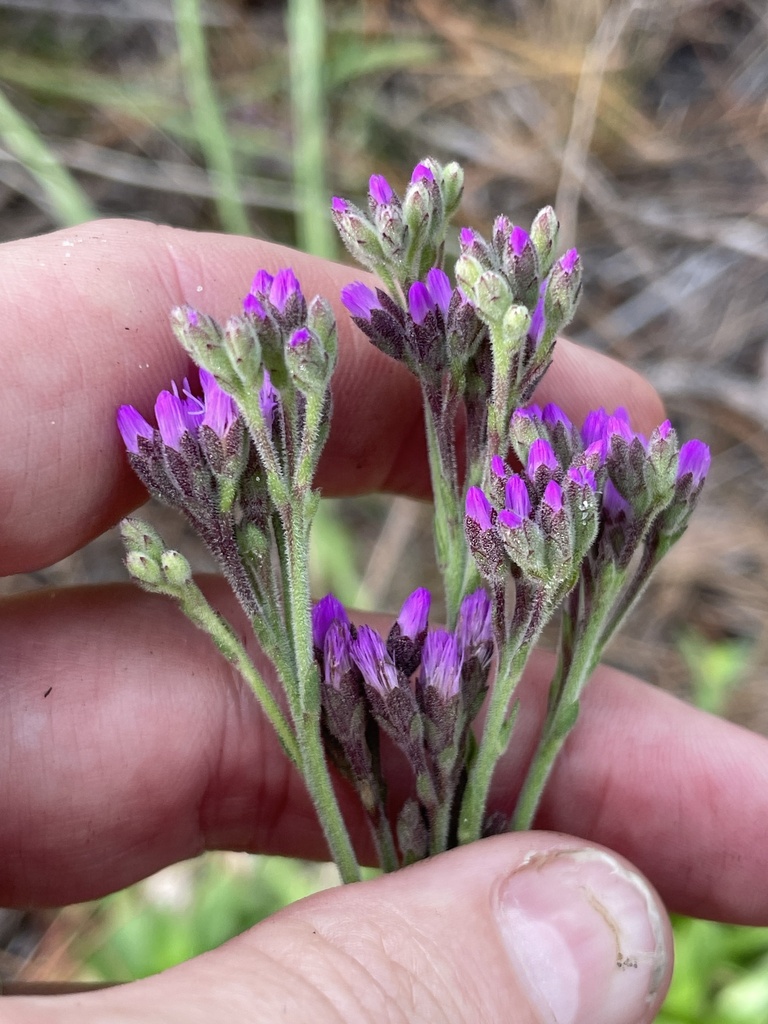
The stems branch near the top into a loose, flat-topped or slightly rounded cluster (corymb) of small flower heads, each about ⅓ to ½ inch across. Each head contains a dozen or more tubular florets that are bright purple to lavender, occasionally whitish, with long, protruding style branches that give the cluster a fuzzy look. The heads are surrounded by overlapping green bracts. Flowering is mainly July through October; observations in Florida peak from August to October.
Fruit & Seeds
The fruits are small, ribbed achenes (cypselae) topped with a ring of tawny bristles (pappus). The “chaff” of the common name refers to the small, dry scales (chaff) mixed among the florets on the flower head’s base, a feature that separates chaffheads from the blazing stars. Dry seed heads remain on the stems into winter.
Quick Facts
| Scientific Name | Carphephorus carnosus (syn. Litrisa carnosa) |
| Family | Asteraceae (aster family) |
| Plant Type | Herbaceous perennial wildflower with a basal rosette |
| Mature Height | 1–2 ft in flower |
| Mature Spread | 6–12 in |
| Growth Rate | Slow to moderate |
| Sun Exposure | Full sun |
| Water Needs | Moderate to high; moist to seasonally wet soil |
| Soil Type | Acidic sand and sandy peat |
| Soil pH | About 4.5–6.0 |
| Bloom Time | July–October |
| Flower Color | Bright purple to lavender, rarely whitish |
| Fall Color | None notable; flower stems turn tan |
| Fruit | Small achenes with a bristly pappus |
| Deer Resistant | Unknown; occasionally browsed |
| USDA Hardiness Zones | 9–10 |
Native Range
Pineland chaffhead is endemic to Florida per the Atlas of Florida Plants, and both USDA PLANTS and the Lady Bird Johnson Wildflower Center record it only from Florida. It occurs in the central and southern peninsula, with many recent observations from the Treasure Coast (Martin, St. Lucie and Palm Beach Counties), the Kissimmee Prairie region around Okeechobee, and central Florida flatwoods.
Its habitat is wet to mesic pine flatwoods, wet prairies and savannas, and the edges of seepage areas and depression marshes, where sandy soils are saturated in the summer wet season and dry in winter. It grows among wiregrass, saw palmetto, low shrubs and many other fall wildflowers under an open canopy of slash pine or longleaf pine. USDA lists it as a facultative wetland (FACW) plant.
It is not on Florida’s state list of endangered or threatened plants, but its range is small and its habitat is heavily affected by drainage, development, conversion to pasture and fire suppression. Populations on public conservation lands that are managed with prescribed fire are the most secure.
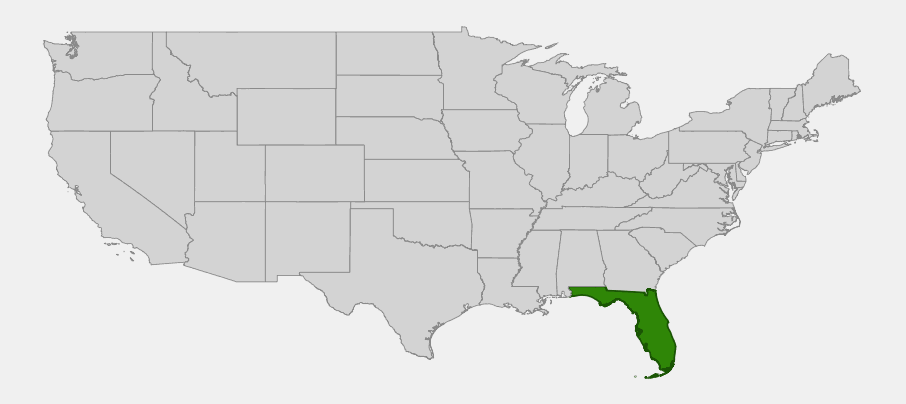
📋 Regional plant lists featuring Pineland Chaffhead: North & South Florida
Growing & Care Guide
Pineland chaffhead is rarely available and is best suited to gardeners in central and south Florida who can provide sunny, moist, acidic sand, or to land managers restoring flatwoods. Buy only nursery-propagated plants or seed from reputable Florida sources and never dig plants from the wild.
Light
Plant it in full sun. In the wild it disappears from flatwoods where fire has been excluded and shrubs have grown tall.
Soil & Water
It needs acidic, sandy soil that stays moist through the summer and may be briefly saturated, but drains well enough not to stay waterlogged for long. A low spot in a sandy yard, a rain-garden edge or a damp flatwoods-style planting works well. Water during dry spells in the first year and during long spring droughts. Avoid fertilizer and lime.
Planting Tips
Plant in groups of at least three to five so the fall flower display is noticeable. Set the plants among low grasses such as wiregrass or other bunchgrasses rather than in heavy mulch, which can smother the flat rosettes and hold too much moisture against them.
Pruning & Maintenance
Leave the flower stems standing through winter so the seed can ripen and disperse; cut them back in late winter. In a natural planting, burn or mow every year or two in winter or spring to keep competing shrubs and grasses from shading the rosettes.
Propagation
Grow it from fresh seed sown on the surface of a moist, sandy mix in fall or spring. Established clumps can also be divided carefully. Seed and plants should come from Florida native nurseries or legal, permitted collections.
Landscape Uses
- Flatwoods and wet prairie restoration: a characteristic fall wildflower of central and south Florida pine flatwoods
- Butterfly gardens: a late-season nectar source in central and south Florida
- Rain-garden edges and low spots: in sunny, acidic, seasonally moist sandy ground
- Native meadows: combined with wiregrass, blazing stars and other fall wildflowers
Wildlife & Ecological Value
In the fall, Florida’s wet flatwoods turn purple and gold with chaffheads, blazing stars and goldenrods. Pineland chaffhead is part of that display and an important nectar source for insects preparing for winter or migration.
For Pollinators
The purple flower clusters are visited by many butterflies, including skippers, sulphurs and swallowtails, and by migrating monarchs passing through Florida in fall. Bees, wasps and flower flies also visit. Because it flowers late, it helps fill the gap when summer wildflowers are finished.
For Birds
Seed-eating birds may take some of the small seeds in fall and winter, and the open flatwoods it grows in are habitat for birds such as Bachman’s sparrow, eastern meadowlark and northern bobwhite.
For Mammals
It is of limited importance to mammals. Deer occasionally browse the flowering stems.
Ecosystem Role
Pineland chaffhead is adapted to the frequent fires that maintain Florida flatwoods. Its rosettes sit low to the ground and survive quick-moving fires, and flowering often increases after a burn. Like many wet flatwoods plants, it depends on the natural seasonal rise and fall of the water table, which drainage ditches and canals have altered across much of its range.
Cultural & Historical Uses
Its classification has changed over time. It has been placed in the small genus Litrisa, which some botanists recognized for this species alone, as Litrisa carnosa. Today it is included in Carphephorus, a genus of about seven species, all native to the southeastern Coastal Plain.
The genus name comes from the Greek karphos (chaff) and phoros (bearing), referring to the chaffy scales on the receptacle of the flower heads. Related species such as vanillaleaf (Carphephorus odoratissimus) were once harvested commercially in Florida for their fragrant leaves, but there is no record of pineland chaffhead being used this way.
Today pineland chaffhead is mostly known to botanists, naturalists and land managers in Florida. It is one of many Florida endemic plants that depend on prescribed fire and natural water levels, and it is a reminder that even common-looking fall wildflowers can have very small ranges.
Frequently Asked Questions
Is pineland chaffhead endemic to Florida?
Yes. It is endemic to Florida per the Atlas of Florida Plants, and USDA PLANTS records it only from Florida. It grows mainly in the central and southern peninsula.
Is pineland chaffhead endangered?
It is not on Florida’s state list of endangered or threatened plants, but its range is small and its wet flatwoods habitat has declined. Buy only nursery-propagated plants and never collect from the wild.
How is it different from blazing stars?
Blazing stars (Liatris) usually have flower heads arranged in long spikes and lack chaffy scales on the flower base. Chaffheads have flat-topped clusters of heads and dry chaff mixed among the florets. Pineland chaffhead also has distinctive smooth, fleshy basal leaves.
Where can I buy pineland chaffhead?
It is rarely available. Check Florida native nurseries and native seed suppliers, especially in central and south Florida.
When does pineland chaffhead bloom?
Mainly from July through October, with peak flowering in late summer and early fall. It often flowers more heavily after a winter or spring fire.

Looking for a nursery that carries Pineland Chaffhead?
Browse our native plant nursery directory: Florida