
Littlewoman (Salvia serotina)
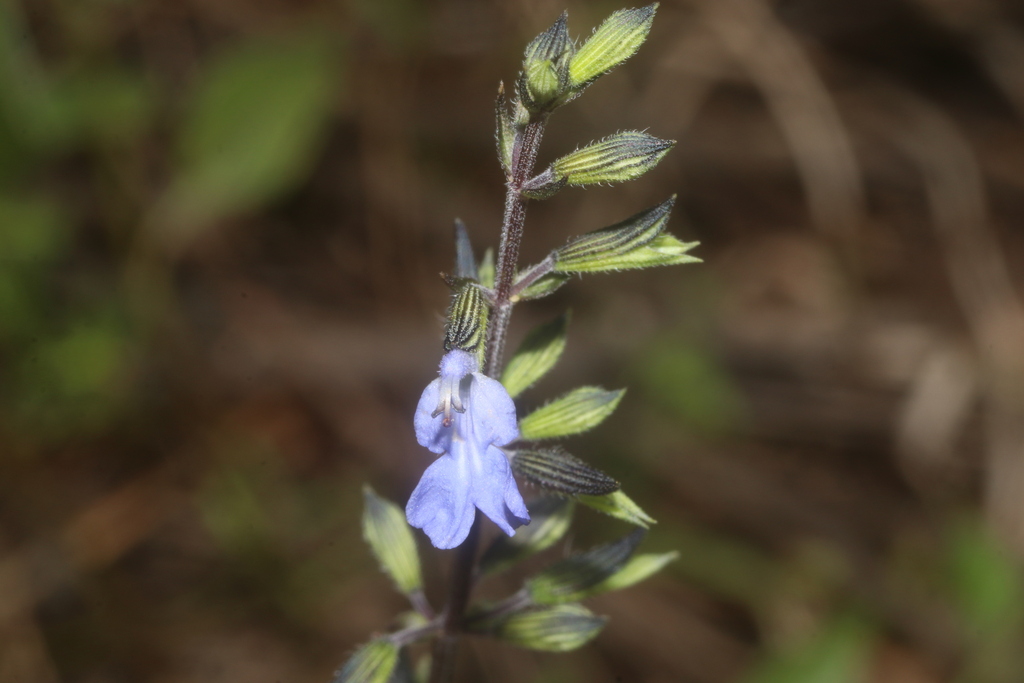
Salvia serotina, known as Littlewoman or little woman sage, is a small native sage in the mint family (Lamiaceae). It is a low, sprawling to bushy herb, usually under 18 inches tall, with small, aromatic, scallop-edged leaves and tiny pale blue and white two-lipped flowers that appear a few at a time over a long season. In the United States it is native to Florida, Puerto Rico and the U.S. Virgin Islands, and its wider range covers Bermuda, the West Indies, and Mexico south to Panama.
It is worth being honest about this plant: littlewoman is not a showy garden sage. Its flowers are only about a quarter inch long, its stems sprawl, and it often grows along roadsides, field edges and other disturbed ground, where most people would take it for a weed. Roger Hammer’s Everglades Wildflowers describes it as a plant of moist ground that also grows as a weed in cultivated fields.
For native plant enthusiasts in south and central Florida, though, it has a place. It is a true native that blooms for much of the year, attracts small bees, and fills in shady, moist corners of naturalistic gardens without any care. This guide covers how to identify it, where it grows, what to expect if you grow it, and its modest value for wildlife.
Identification
Littlewoman is easy to overlook. Look for a small, aromatic, sprawling mint with square stems, scalloped ovate leaves, and tiny blue-and-white sage flowers above hairy, often dark-striped calyces.
Stems & Habit
Plants are short-lived perennials, sometimes behaving as annuals, with square, finely hairy stems that trail along the ground or form a loose, bushy mound up to about 16 to 18 inches tall. The base may become slightly woody, which is why USDA describes it as a forb or subshrub. Stems often root or sprawl through neighboring vegetation.
Leaves
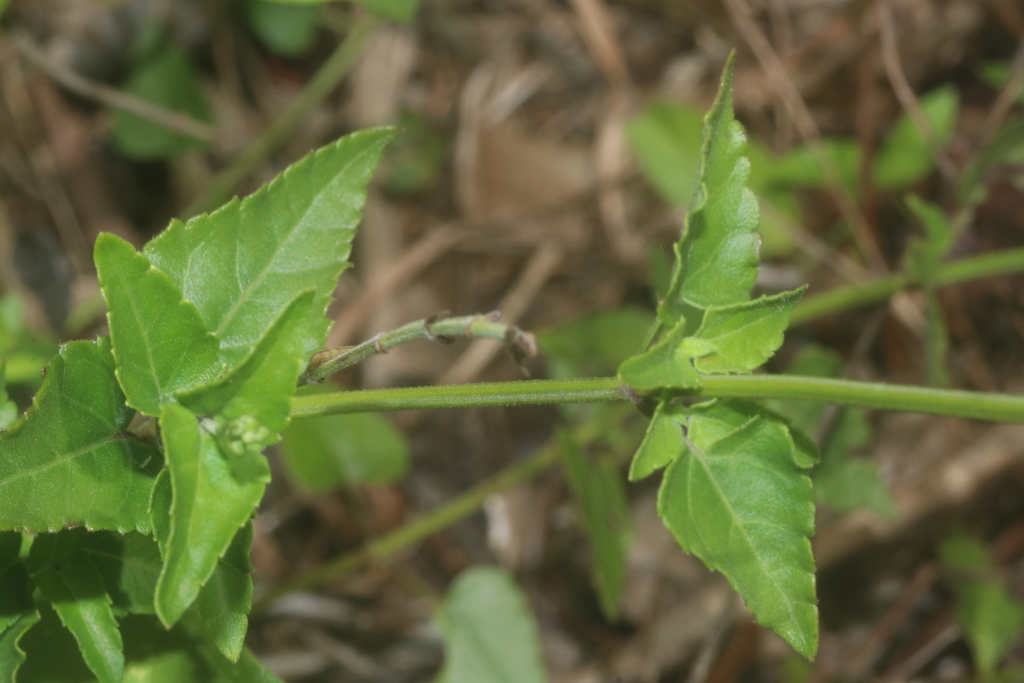
Leaves are opposite, broadly ovate to somewhat triangular, about ½ to 1½ inches long and ⅜ to ¾ inch wide, with scalloped (crenate) to toothed edges and a short stalk. They are aromatic when crushed, with the typical sage scent, and are thin and bright green.
Flowers
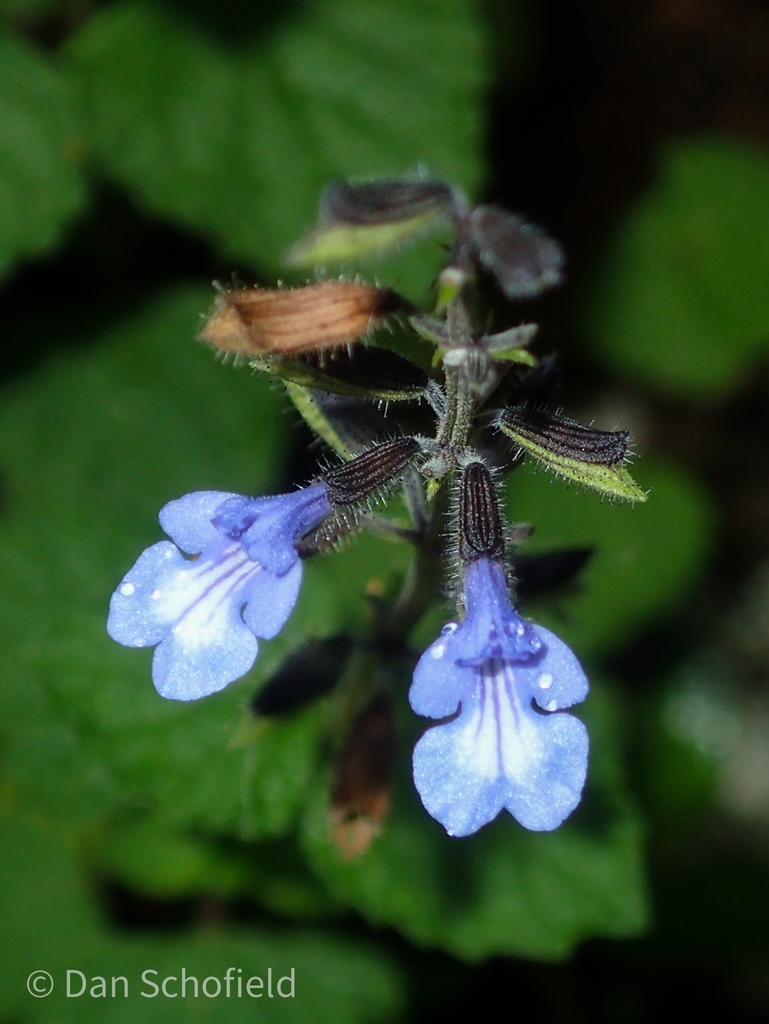
The flowers are carried in loose, slender spikes at the stem tips, in small whorls spaced along the stalk. Each flower is small, roughly ¼ inch long, with a pale blue to lavender upper lip and a broader, white-centered lower lip. The tubular calyx is hairy and ribbed, often with dark stripes, and stays on the stem after the flower drops. Plants can flower in almost any month in south Florida; USDA and the Lady Bird Johnson Wildflower Center list bloom from March through November.
Fruit & Seeds
Each flower can produce up to four small nutlets inside the persistent calyx. The seeds fall close to the parent plant, which is why littlewoman often appears in small patches in disturbed soil.
Similar Species
Several other small blue-flowered sages and mints grow in Florida, including the native creeping sage (Salvia misella), and some are easily confused with littlewoman. If an exact identification matters, compare the calyx and leaf details with the Atlas of Florida Plants or a regional flora.
Quick Facts
| Scientific Name | Salvia serotina L. |
| Family | Lamiaceae (mint family) |
| Plant Type | Short-lived herbaceous perennial or subshrub; sometimes annual |
| Mature Height | 6–18 in |
| Mature Spread | 1–2 ft (sprawling) |
| Growth Rate | Fast |
| Sun Exposure | Partial shade to full sun |
| Water Needs | Moderate; moist soil preferred |
| Soil Type | Sandy, loamy or limestone-based soils; tolerates disturbed ground |
| Soil pH | About 6.0–8.0 (slightly acidic to alkaline) |
| Bloom Time | Nearly year-round in south Florida (about March–November) |
| Flower Color | Pale blue to lavender with a white lower lip |
| Fall Color | None |
| Fruit | Four small nutlets in a persistent calyx |
| Deer Resistant | Generally; aromatic sage foliage is seldom browsed |
| USDA Hardiness Zones | 10–11 (frost-tender; may persist farther north from seed) |
Native Range
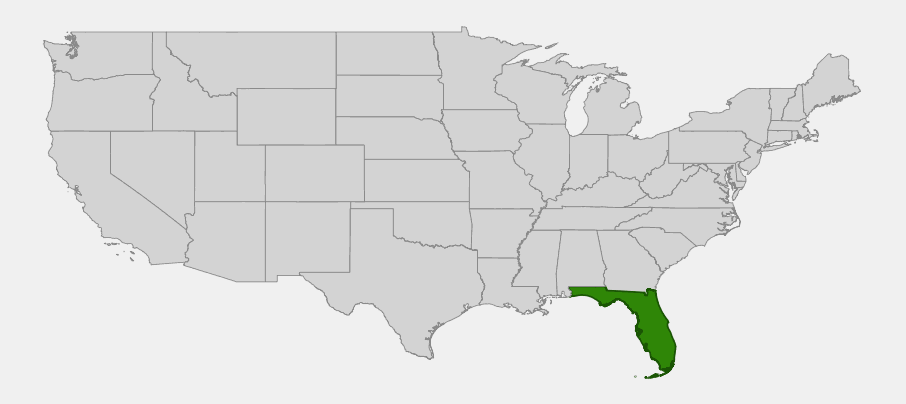
In the United States, littlewoman is native to Florida, Puerto Rico and the U.S. Virgin Islands, according to USDA PLANTS. The Atlas of Florida Plants also lists it as native in Florida. Outside the U.S. it grows in Bermuda, throughout much of the West Indies, and from Mexico south through Central America to Panama.
In Florida it is a plant of the warm southern part of the state, including the Everglades region, where Roger Hammer includes it among the wildflowers of the historic Everglades. Typical sites are the edges of coastal scrub and hammocks, moist shaded ground, roadsides, trail edges and old fields. The Lady Bird Johnson Wildflower Center lists its habitat as coastal scrub, roadsides and other disturbed sites.
Because it is small and weedy in habit, littlewoman is easily overlooked. Its tolerance of disturbed soil means it often turns up in yards and along paths, sometimes far from natural habitat.
📋 Regional plant lists featuring Littlewoman: North & South Florida
Growing & Care Guide
Set your expectations before planting littlewoman. It is a small, informal plant valued by native plant enthusiasts and for wildlife gardens, not a showpiece. It is rarely sold, but some south Florida native nurseries carry it occasionally, and it often appears on its own in shady, moist corners. If you want a showier native sage for the same conditions, scarlet sage (Salvia coccinea) is a better choice; littlewoman works best as a filler or groundcover alongside it.
Light
It grows in partial shade to full sun. In south Florida it does best in light shade at the edge of a hammock or under high trees, where the soil stays moist. In hot, dry, full sun it stays smaller and may die back.
Soil & Water
Littlewoman is not fussy about soil. It grows in sand, loam and the shallow limestone soils of south Florida. It prefers moist conditions and benefits from watering during long dry spells, but it does not need rich soil or fertilizer.
Planting Tips
Plant it where its small flowers can be seen up close, such as along a path, at the front of a shady bed, or between stepping stones. Because it sprawls and self-seeds, it suits informal, naturalistic plantings better than neat borders. Space plants about 12 inches apart.
Pruning & Maintenance
Shear it back lightly if it becomes leggy or straggly; it regrows quickly. Pull unwanted seedlings where they are not wanted. It is short-lived, so allow a few plants to set seed if you want it to persist.
Propagation
Grow it from seed sown on the surface of moist soil, or from stem cuttings, which root easily in moist conditions. Plants often self-sow in gardens.
Landscape Uses
- Wildlife and pollinator gardens: small bees visit the flowers through much of the year
- Shady, moist groundcover: fills in under high trees and at hammock edges
- Bare-soil fillers: covers small patches of bare, disturbed soil in shady beds
- Naturalistic plantings: a low filler among larger native wildflowers
- Native plant collections: an interesting, little-known native sage for enthusiasts
Wildlife & Ecological Value
Littlewoman is a small plant with modest but real value for wildlife, mostly as a long-season source of nectar for small insects.
For Pollinators
The small flowers are visited mainly by small native bees, such as sweat bees, and by other small insects. Its long flowering season means it offers some nectar in months when fewer plants are blooming in south Florida.
For Birds
Littlewoman is not a significant food plant for birds. Ground-feeding birds may eat a few nutlets, and the insects it supports are food for small songbirds.
For Mammals
Its aromatic foliage is seldom browsed. It has little direct importance for mammals.
Ecosystem Role
Littlewoman is a quick colonizer of disturbed, moist ground and hammock edges, where it covers bare soil and provides nectar. It is one of the native species that can fill gaps in disturbed sites and yards that would otherwise go to exotic weeds.
Cultural & Historical Uses
Carl Linnaeus named Salvia serotina in the eighteenth century. The species name serotina means “late” in Latin. The genus name Salvia comes from the Latin salvere, “to be well,” a reference to the medicinal reputation of the common Old World sage.
The origin of the common name “littlewoman” is not well documented. It is the name used by USDA PLANTS and the Atlas of Florida Plants.
There is little recorded use of littlewoman by people. Its main importance today is as one of Florida’s lesser-known native sages, of interest to botanists, native plant gardeners and anyone curious about the small wildflowers of south Florida roadsides and hammock edges. This page does not recommend any medicinal use.
Frequently Asked Questions
Is littlewoman a good garden plant?
It is a modest plant. The flowers are tiny and the plant sprawls and self-seeds, so it looks weedy to many people. It is best for native wildlife gardens, shady groundcover, or collections. For a showier native sage, plant scarlet sage (Salvia coccinea).
Is littlewoman native to Florida?
Yes. USDA PLANTS lists it as native in Florida, Puerto Rico and the U.S. Virgin Islands, and the Atlas of Florida Plants lists it as native in Florida.
Where can I buy littlewoman?
It is rarely sold. Check with south Florida native plant nurseries, or let it stay if it appears on its own in your yard.
Will littlewoman take over my garden?
It self-seeds and can spread in moist, disturbed soil, but it is small, shallow-rooted and easy to pull. It is not considered invasive.
Does littlewoman attract pollinators?
Yes, on a small scale. Small bees and other small insects visit its flowers through much of the year.

Looking for a nursery that carries Littlewoman?
Browse our native plant nursery directory: Florida