
Skyblue Clustervine (Jacquemontia pentanthos)
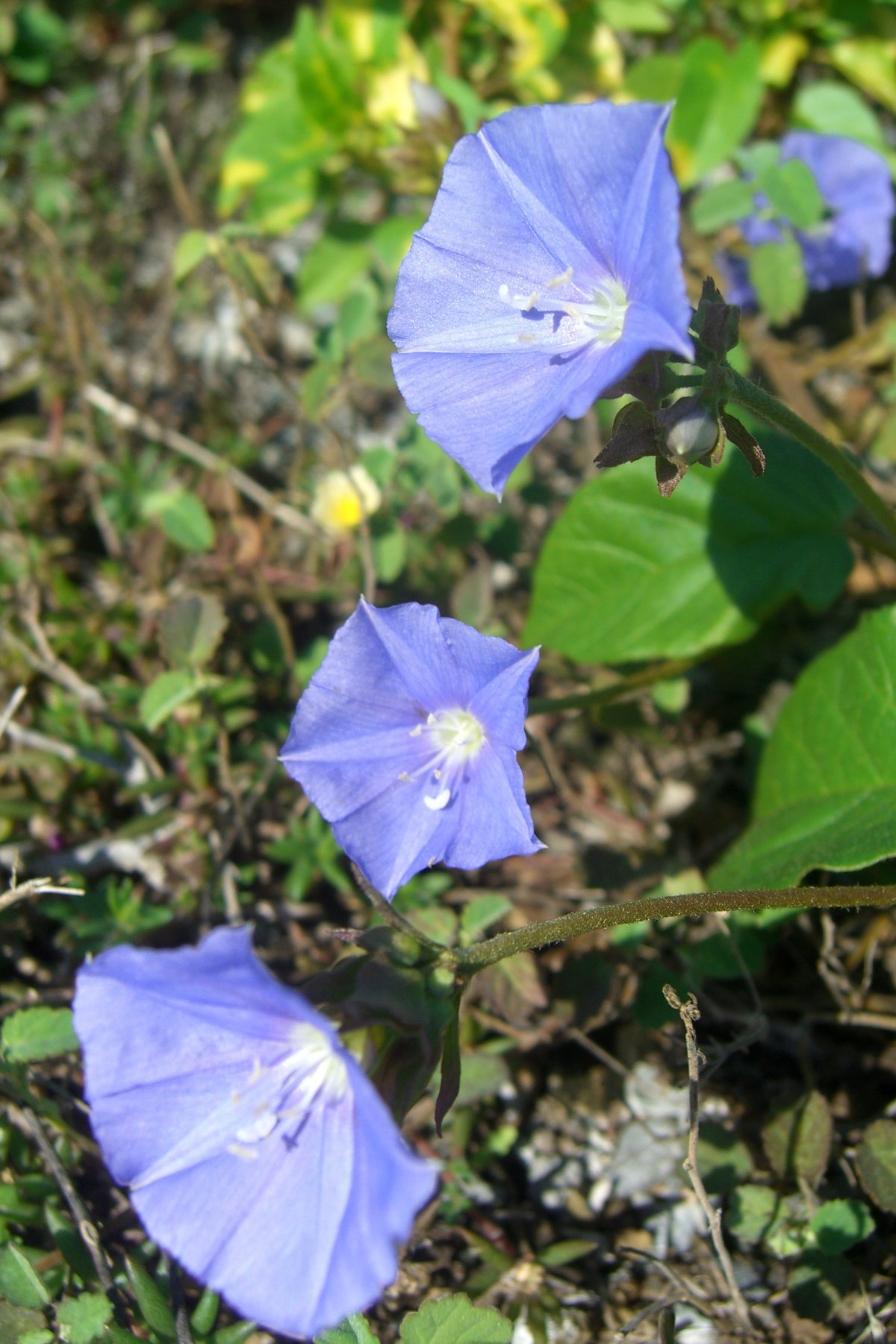
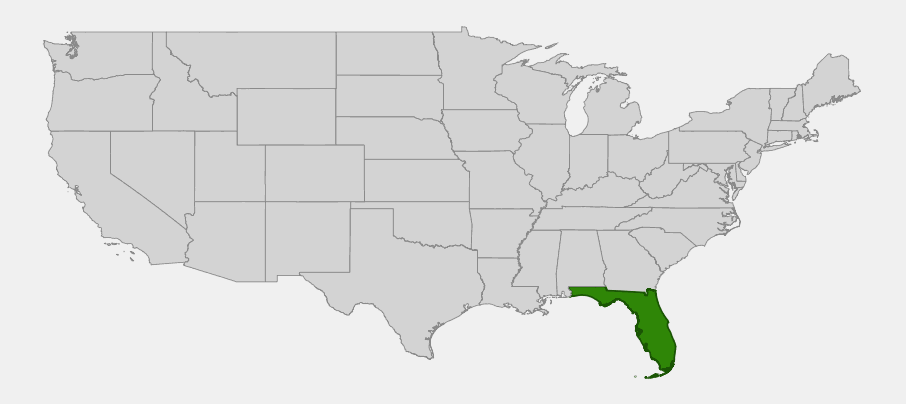
Jacquemontia pentanthos, the Skyblue Clustervine, is a slender, twining evergreen vine of the morning glory family (Convolvulaceae) with clusters of small, sky-blue flowers. In the United States it is native only to south Florida, where it grows at the sunny edges of coastal hammocks, in coastal strand and in pine rocklands, mainly in Miami-Dade County and the Florida Keys. Its wider native range covers the West Indies (including Puerto Rico and the U.S. Virgin Islands), Mexico, Central America and northern South America.
Skyblue clustervine is listed as Endangered by the state of Florida in the FDACS Regulated Plant Index. Many of its south Florida populations were lost when coastal hammocks and pine rocklands were cleared for development. Fortunately it is easy to propagate, and native plant nurseries in south Florida grow it from seed and cuttings. Gardeners should buy only nursery-propagated plants and should never dig or collect plants or seeds from the wild.
In a garden the vine is a delight: it blooms mostly in fall, winter and spring, when many other plants are resting, and covers fences and shrubs with flowers that are a clear sky blue with a white throat. USDA PLANTS notes that it is introduced, not native, in Hawaii, where it is grown as an ornamental. This guide covers how to identify it, where it grows and how to grow it responsibly.
Identification
Skyblue clustervine is a small-flowered relative of the morning glories. It can be told from other blue-flowered vines in south Florida by its small (about 1-inch) sky-blue flowers in clusters, its fuzzy stems and leaves, and its slender, twining growth from a woody base.
Stems & Growth Habit
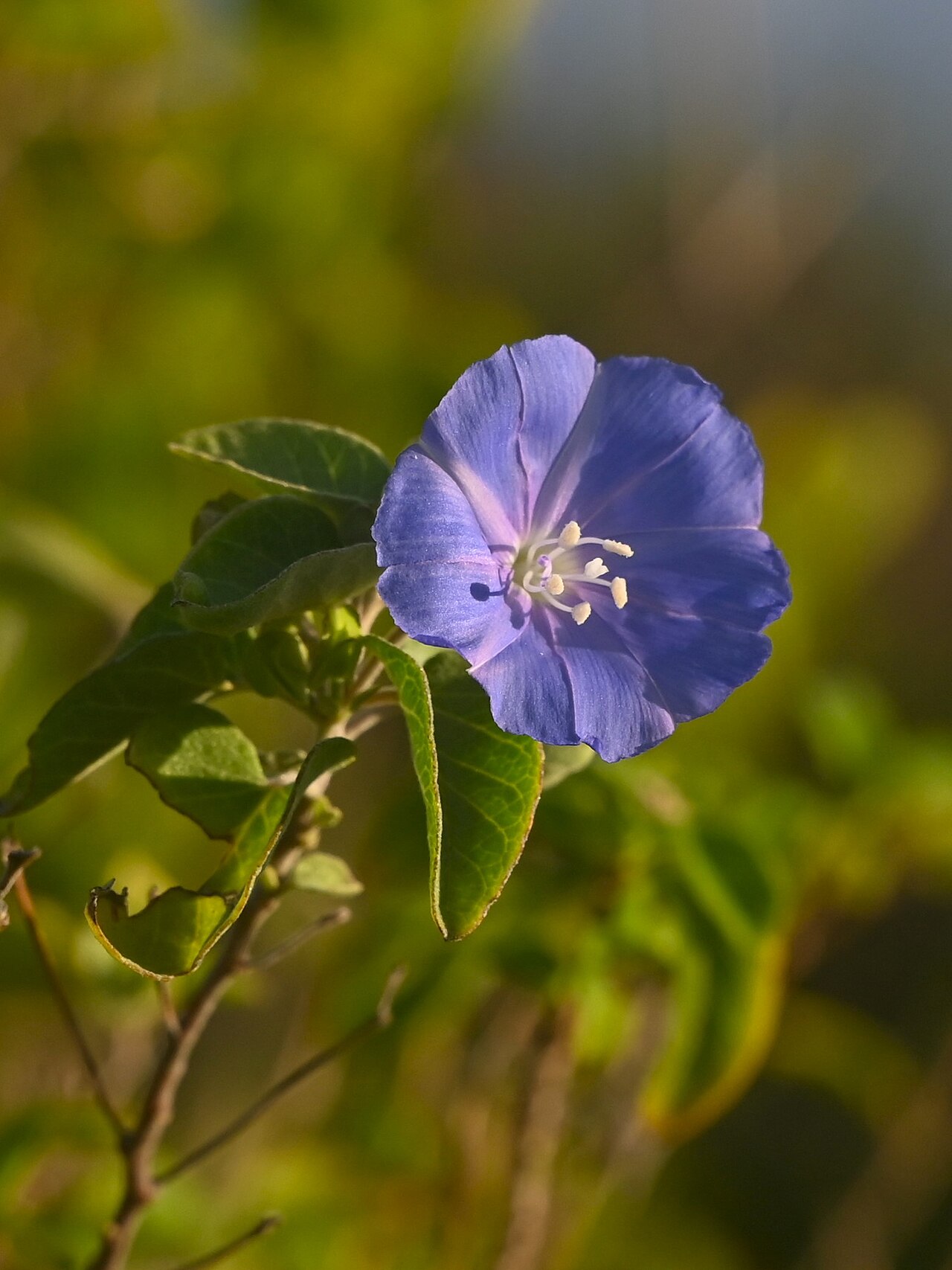
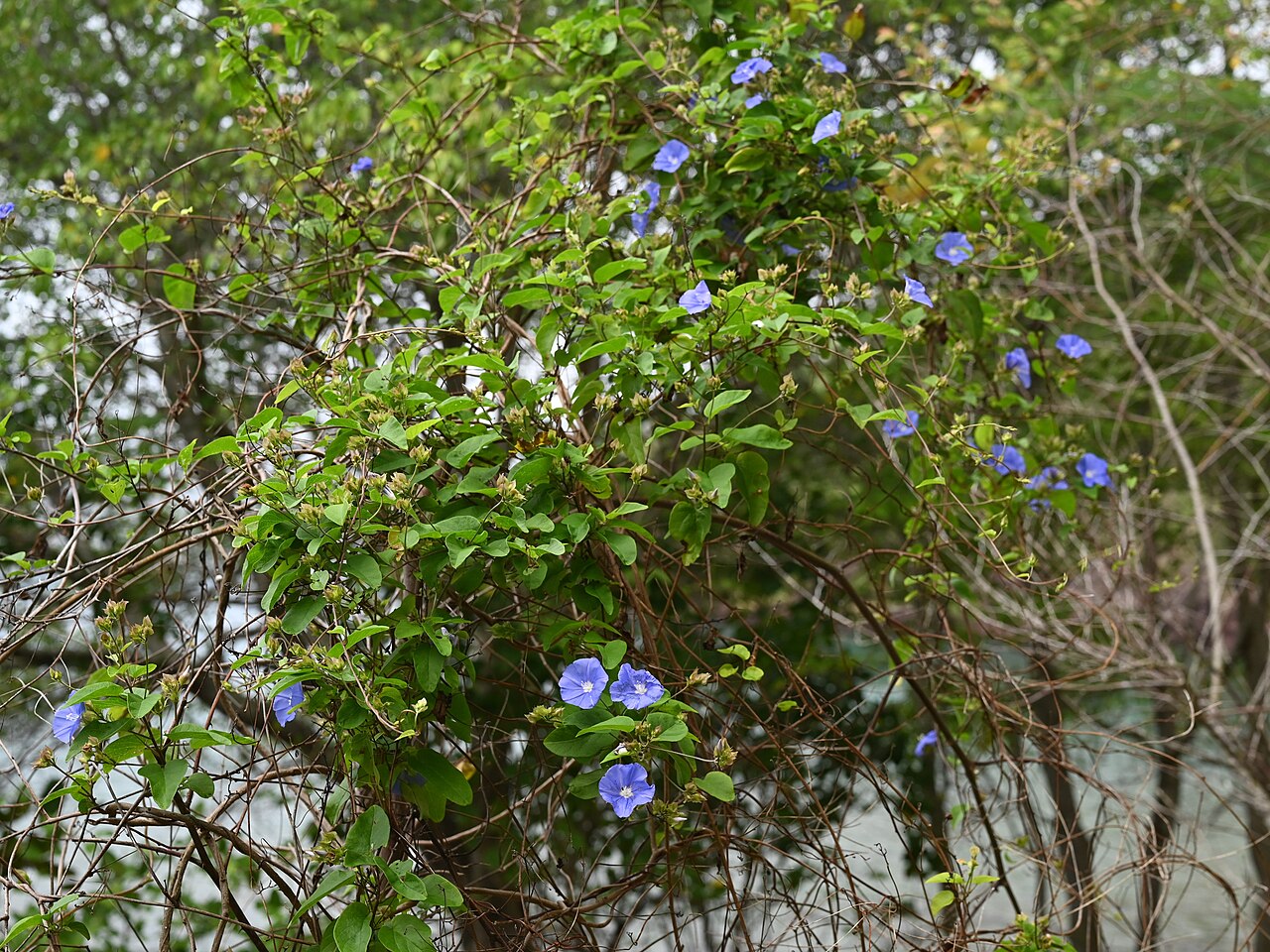
Several slender stems grow from a woody perennial base (caudex). New growth is green and herbaceous, and older stems become woody, brown and rope-like, sometimes twisting around each other. The vine climbs by twining and typically reaches about 10 feet, scrambling over shrubs, fences and small trees. Stems and young leaves are covered with tiny star-shaped hairs, which give them a slightly fuzzy, gray-green look.
Leaves
The leaves are alternate, simple, ovate to lance-shaped, about 1 to 3 inches long, with a pointed tip and a rounded to slightly heart-shaped base. They are soft and finely hairy, especially underneath, and remain on the plant all year in frost-free climates.
Flowers
The flowers are funnel-shaped, about ¾ to 1 inch across, sky blue to violet-blue with a white center and five faint, paler bands that form a star across the open flower. They are borne in loose, long-stalked clusters from the leaf axils, which is the source of the name “clustervine.” Each flower opens in the morning and closes later in the day. Plants may flower in any month, but the main bloom is in fall, winter and spring.
Fruit & Seeds
After flowering, small round capsules about a quarter inch across form, surrounded by the persistent sepals. When dry they split open to release a few small, brown seeds. Seeds are produced freely on healthy plants, and nursery growers use them for propagation.
Quick Facts
| Scientific Name | Jacquemontia pentanthos (Jacq.) G. Don (syn. Jacquemontia canescens, J. violacea, Convolvulus pentanthos) |
| Family | Convolvulaceae (morning glory family) |
| Plant Type | Evergreen perennial twining vine |
| Mature Height | To about 10 ft (vine length) |
| Mature Spread | 3–6 ft on a support |
| Growth Rate | Moderate to fast |
| Sun Exposure | Full sun to partial shade |
| Water Needs | Low to moderate; drought tolerant once established |
| Soil Type | Well-drained sand, limestone or rocky soil |
| Soil pH | About 6.5–8.5 (tolerates alkaline limestone soils) |
| Bloom Time | Mainly fall through spring; sporadically all year |
| Flower Color | Sky blue to violet-blue with a white center |
| Fall Color | None; evergreen |
| Fruit | Small round capsule with a few brown seeds |
| Deer Resistant | Unknown; occasionally browsed |
| USDA Hardiness Zones | 10–11 |
Native Range
In the continental United States, skyblue clustervine is native only to Florida, where USDA PLANTS lists it as native. The Atlas of Florida Plants records it from south Florida, mainly Miami-Dade County and the Florida Keys (Monroe County). It is also native in Puerto Rico and the U.S. Virgin Islands. Beyond U.S. territory it ranges through the West Indies, Mexico, Central America and northern South America. USDA records it as introduced in Hawaii, where it is a garden plant and not part of the native flora.
In Florida it grows in sunny or lightly shaded sites: the edges and clearings of coastal and rockland hammocks, coastal strand and the moist edges of pine rocklands, typically on limestone or sandy soils near the coast. The Lady Bird Johnson Wildflower Center describes its Florida habitat as moist areas of pine rocklands and sunny, wet openings in rocky hammocks.
Skyblue clustervine is listed as Endangered by the state of Florida (FDACS Regulated Plant Index). Its pine rockland and coastal hammock habitats have been heavily reduced by urban development in Miami-Dade County and the Keys, and the remaining wild populations are small and scattered. Planting nursery-grown plants in gardens within its range is a good way to enjoy and support it, but wild plants and seeds should be left in place.
📋 Regional plant lists featuring Skyblue Clustervine: North & South Florida
Growing & Care Guide
Skyblue clustervine is one of the easiest native vines for south Florida gardens, and it is widely grown by native plant nurseries in the region. Because it is listed as Endangered by the state of Florida, always buy nursery-propagated plants from reputable native nurseries, and never dig plants or collect seed from wild populations.
Light
It flowers best in full sun to light shade. In deeper shade it grows but blooms sparsely.
Soil & Water
Plant it in well-drained soil: sand, rocky limestone or a sandy garden soil. It tolerates alkaline soils and some salt air, but it should not be planted in poorly drained spots. Water regularly until established. After that it is drought tolerant and needs extra water only in long dry spells. Avoid heavy fertilizing, which encourages leafy growth over flowers.
Planting Tips
Give it a support: a fence, trellis, arbor, mailbox post or a sturdy shrub. It can also be allowed to sprawl as a loose groundcover on a sunny slope. Plant it anywhere frost-free (zones 10 and 11). In zone 9 it can be grown in a protected spot or a container that can be moved during freezes.
Pruning & Maintenance
Trim lightly as needed to keep it in bounds or to remove tangled old stems. It is not aggressive, but older plants can become woody at the base and leafy at the top, so occasional pruning encourages fresh growth and flowers. Frost damages it; cut back damaged stems after the danger of cold has passed.
Propagation
Nursery growers propagate it from seed and from stem cuttings. Seeds germinate readily when sown in a well-drained mix, and nicking the hard seed coat can speed germination. Softwood or semi-hardwood cuttings root fairly easily in warm weather. Use seed or cuttings only from garden or nursery plants, not from wild populations.
Landscape Uses
- Fences, trellises and arbors: a light, non-aggressive vine with long-season blue flowers
- Butterfly gardens: attracts butterflies, bees and other pollinators through the dry season
- Coastal and xeric gardens: tolerates sun, drought, alkaline soil and some salt air
- Containers and hanging baskets: grows well in large pots in frost-free climates or with winter protection
- Habitat restoration: in coastal hammock edges and pine rockland restorations within its native range, using propagated stock
Wildlife & Ecological Value
Skyblue clustervine flowers most heavily in the dry season, when nectar can be scarce in south Florida, making it a valuable plant for pollinators.
For Pollinators
The flowers are visited by many bees, including small native bees, as well as butterflies such as sulphurs, hairstreaks and skippers. Its long flowering season and winter peak are especially useful for pollinators that remain active year-round in south Florida.
For Birds
The vine provides cover and perching sites for small birds where it grows over shrubs and fences. Insects visiting the flowers and foliage are food for warblers and other insect-eating birds, including winter migrants.
For Mammals
It has little direct value for mammals, though small animals may shelter in dense tangles of older vines.
Ecosystem Role
As a native vine of hammock edges and pine rocklands, it helps fill the sunny gaps at forest edges and adds nectar resources to these diverse tropical plant communities. Its decline reflects the loss of those habitats in south Florida.
Cultural & Historical Uses
The species was first described by the Austrian botanist Nikolaus Joseph von Jacquin in the 18th century as Convolvulus pentanthos, and George Don moved it to Jacquemontia in the 1830s. The genus honors Victor Jacquemont (1801–1832), a French naturalist and geologist who traveled and collected plants in India. The epithet pentanthos means “five-flowered,” probably referring to the small clusters of flowers.
The plant has been grown as an ornamental in tropical gardens around the world, often under the name Jacquemontia violacea. It is grown as a garden climber far outside its native range, including in Hawaii, where USDA records it as introduced, and in India and other parts of tropical Asia.
In Florida, native plant enthusiasts have embraced it as an alternative to non-native ornamental vines. Because it is easy to propagate and is listed as Endangered in the state, growing nursery-raised plants is a way to keep it in cultivation while protecting the remaining wild populations.
Frequently Asked Questions
Is skyblue clustervine endangered?
It is listed as Endangered by the state of Florida in the FDACS Regulated Plant Index, mainly because of the loss of its coastal hammock and pine rockland habitats. It is common in parts of its range outside the U.S. Buy only nursery-propagated plants, and never collect from the wild.
Is it invasive like some morning glories?
No. In Florida it is a native, well-behaved vine that does not spread aggressively. It grows to about 10 feet and is easy to keep in bounds with light pruning.
When does skyblue clustervine bloom?
It can flower in any month in south Florida, but blooming is heaviest in fall, winter and spring.
Can I grow it outside south Florida?
It is frost-sensitive and best in zones 10 and 11. Farther north it can be grown in a container and protected from freezing temperatures.
How is it different from beach clustervine?
Beach clustervine (Jacquemontia reclinata) is a different, very rare species of south Florida coastal dunes, with white or pale pink flowers. It is federally listed as endangered. Skyblue clustervine has blue flowers and grows in hammock edges and pine rocklands.

Looking for a nursery that carries Skyblue Clustervine?
Browse our native plant nursery directory: Florida