
Forked Bluecurls (Trichostema dichotomum)
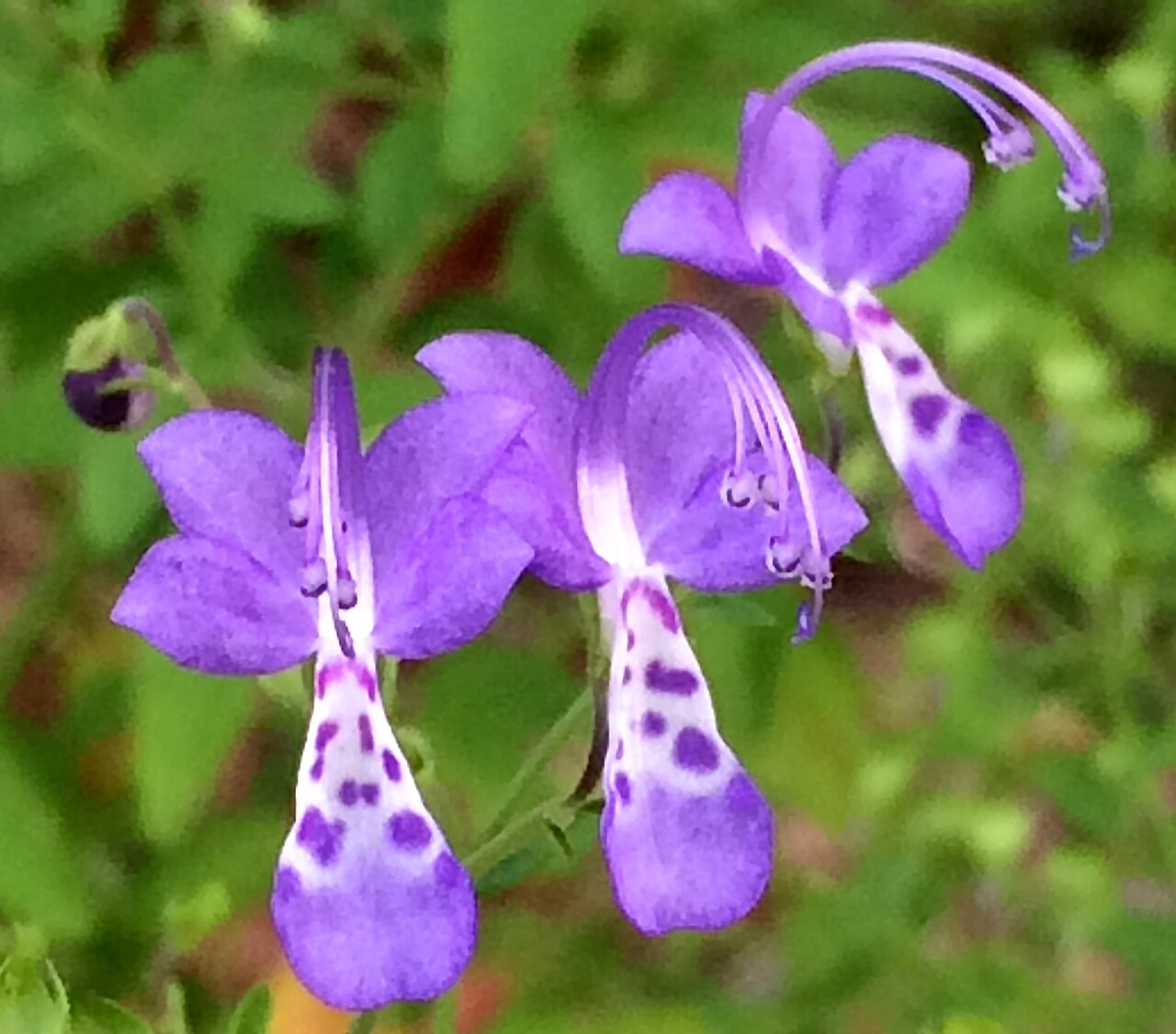
Trichostema dichotomum, Forked Bluecurls, is a small, aromatic annual of the mint family (Lamiaceae) that brightens dry, sandy ground in late summer and fall. Its bushy, repeatedly forking stems, usually 6 inches to 2 feet tall, carry dozens of small violet-blue flowers, each with four long stamens that arch up and over the flower in a graceful curl. Those curled stamens give the plant its common name and its genus name, from the Greek trichos (hair) and stema (stamen).
Forked bluecurls is a plant of sandhills, open pine and oak woods, old fields, sandy roadsides, glades and other sunny, dry, nutrient-poor places. The Lady Bird Johnson Wildflower Center describes its habitat as dry, open, sandy or sterile sites. The whole plant is covered in fine, sticky glandular hairs and has a pleasant, slightly lemony or balsam-like scent when brushed.
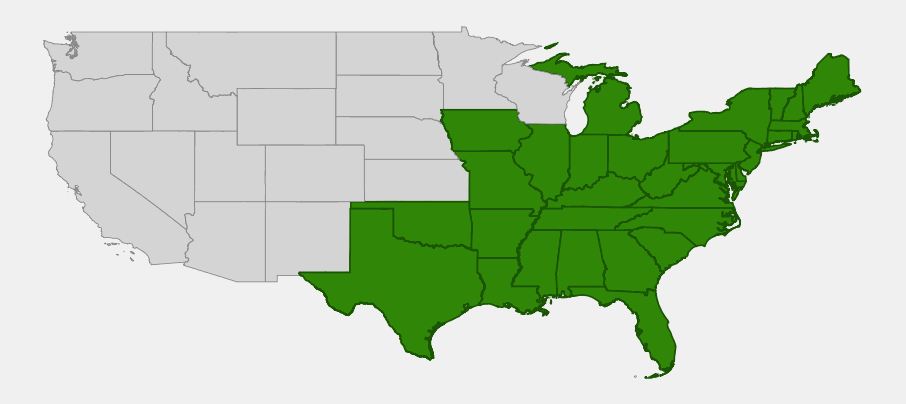
It is widespread in eastern North America, from southern Maine and Ontario south to Florida and west to eastern Texas, Missouri and Michigan. Though each flower lasts only part of a day, the plant blooms for weeks and is a favorite of native bees. The Xerces Society notes it as having special value to native bees. This guide covers identification, range, growing it from seed, and its role in sandy, fire-maintained habitats.
Identification
Out of flower, forked bluecurls looks like a small, many-branched weed. In flower, the arching, curled stamens are unmistakable. In Florida and the Southeast it can be confused only with other bluecurls, especially narrowleaf bluecurls.
Stems & Habit
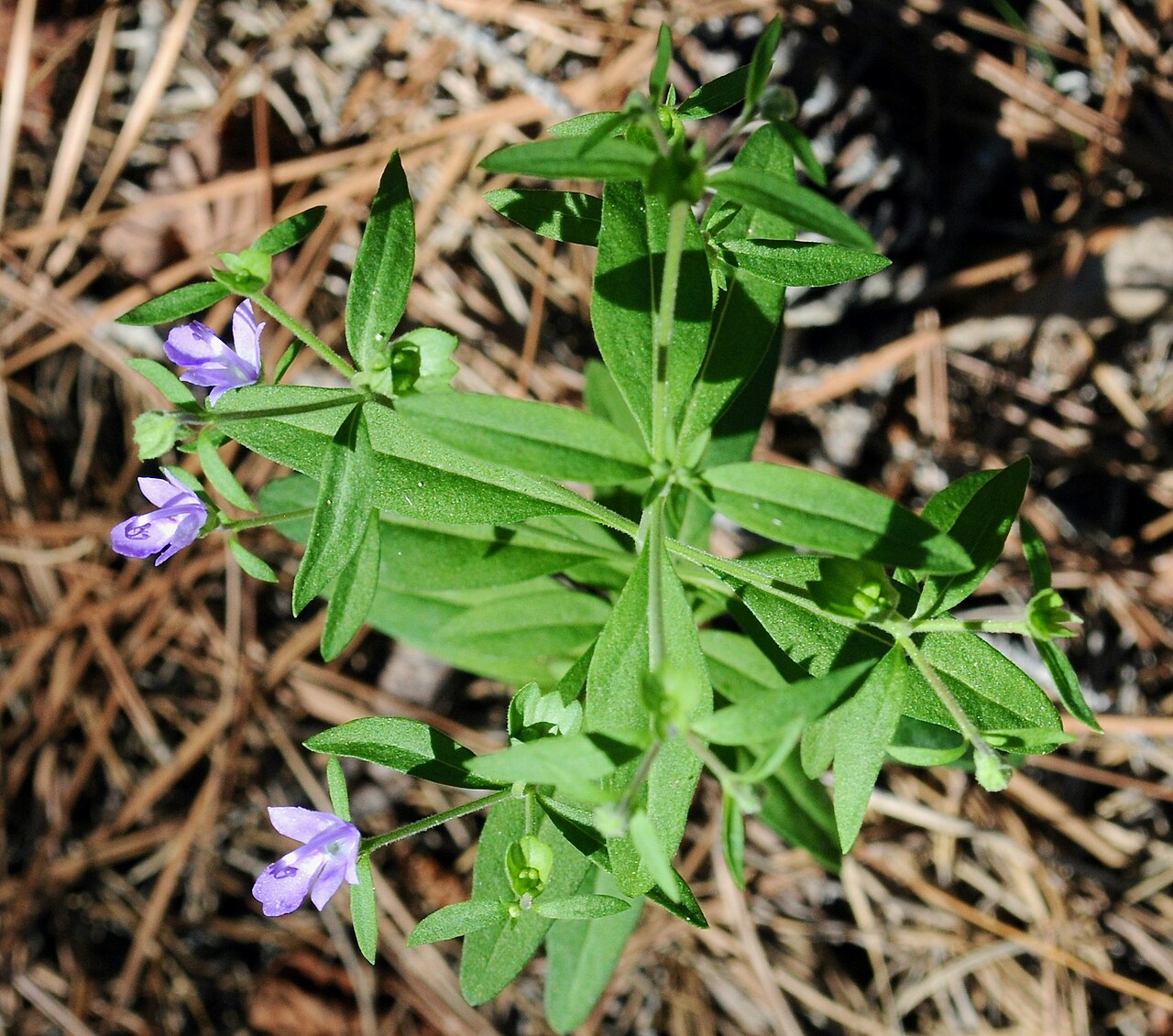
Forked bluecurls is an annual that germinates in early summer. It grows from a single main stem that branches repeatedly in pairs (dichotomously, which is the meaning of the species name), producing a rounded, bushy plant. Stems are square, as in most of the mint family, and covered with soft, glandular hairs that feel slightly sticky. Most plants are 6 inches to 2 feet tall, occasionally taller in good soil.
Leaves
The leaves are opposite, simple, oblong to lance-shaped, about ¾ to 2½ inches long, with smooth (untoothed) edges and short stalks. They are finely hairy and aromatic when crushed. The lower leaves often drop by flowering time, so the upper branches look airy.
Flowers
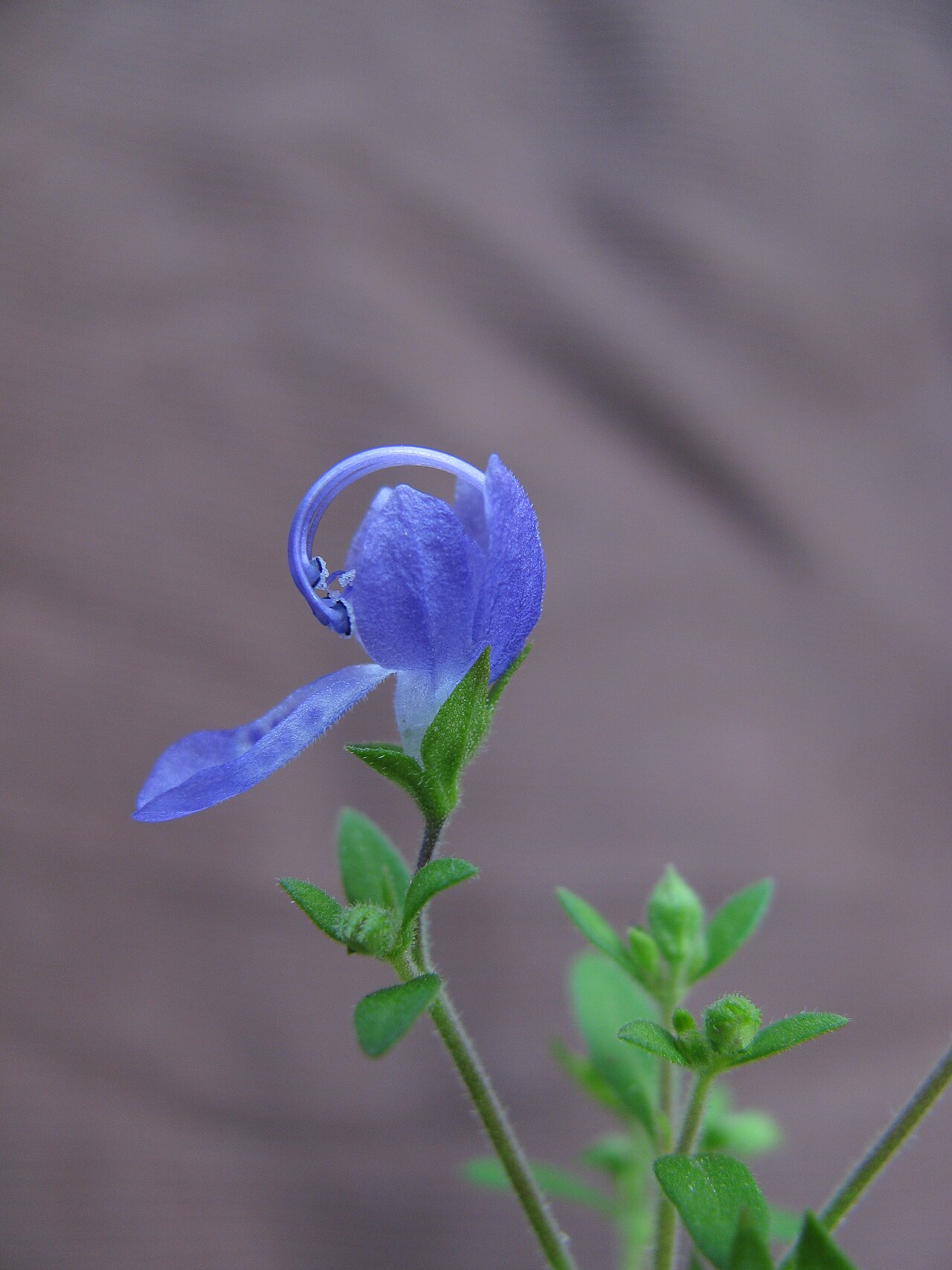
Flowers are borne one to a few at the ends of short branches and in the upper leaf axils. Each flower is about ¼ to ½ inch long, two-lipped and usually blue to violet. The broad lower lip points downward and is often white with violet spots in the center. The four very long stamens and the style arch upward from the throat and curl back over the top of the flower in a smooth arc, reaching well beyond the petals.
Each flower opens in the morning and drops its corolla and stamens by afternoon, but new flowers open daily for many weeks. The Lady Bird Johnson Wildflower Center lists bloom from August to October, and in the far South some plants keep flowering later into fall.
Fruit & Seeds
After flowering, the calyx enlarges and turns so that it holds four small, rough, net-veined nutlets. The seed drops near the parent plant, and new seedlings appear the following summer.
Similar Species
Narrowleaf bluecurls (Trichostema setaceum), also found in the Southeast, has very narrow, linear leaves. Woolly bluecurls (T. lanatum) is a woolly, purple-flowered shrub of California and is not found in the East.
Quick Facts
| Scientific Name | Trichostema dichotomum L. |
| Family | Lamiaceae (mint family) |
| Plant Type | Annual herbaceous wildflower |
| Mature Height | 6 in–2 ft |
| Mature Spread | 6–18 in |
| Growth Rate | Fast |
| Sun Exposure | Full sun to light shade |
| Water Needs | Low; dry, well-drained soil |
| Soil Type | Sand, sandy loam, gravel or thin rocky soil |
| Soil pH | Acidic to neutral (about 4.5–7.0) |
| Bloom Time | August–October (later in the far South) |
| Flower Color | Blue to violet; lower lip often white with violet spots |
| Fall Color | Stems and leaves often turn reddish in fall |
| Fruit | Four small nutlets held in the persistent calyx |
| Deer Resistant | Generally; aromatic foliage is seldom browsed |
| USDA Hardiness Zones | Annual; grows in zones 4–10 |
Native Range
Forked bluecurls has a broad range in eastern North America. USDA PLANTS and the Lady Bird Johnson Wildflower Center record it from 31 states and the District of Columbia: from Maine, Vermont and New Hampshire south through New England, New York, New Jersey and Pennsylvania to the Carolinas, Georgia and Florida, west through the Gulf states to Louisiana and eastern Texas, and north through Arkansas, Oklahoma, Missouri, Iowa, Illinois, Indiana, Ohio and Michigan. In Canada it grows in southern Ontario and Quebec.
It is most common on the Atlantic and Gulf Coastal Plain, where sandy soils are widespread, and in sandy and rocky areas of the Appalachians and Ozarks. In Florida it occurs through much of the state in sandhills, scrubby flatwoods, dry pinelands and sandy roadsides. In the North it is more local, found in sand plains, pine barrens, rocky outcrops and dry, open woods.
Like many plants of sandy, open habitats, it benefits from fire and other disturbances that remove leaf litter and expose bare soil. It often appears in abundance in the summer after a prescribed burn or along freshly graded roadsides, then becomes less common as vegetation thickens.
📋 Regional plant lists featuring Forked Bluecurls: North & South Florida · Alabama, Georgia & Mississippi · North & South Carolina · Maryland, Virginia & West Virginia · Kentucky & Tennessee · Arkansas, Louisiana, Eastern Oklahoma & Eastern Texas · Illinois, Iowa & Missouri · Ohio & Indiana · Michigan, Wisconsin & Eastern Minnesota · New York, Pennsylvania & Northern New Jersey · Delaware, Southern New Jersey & Long Island · Connecticut, Massachusetts & Rhode Island · New Hampshire, Maine & Vermont
Growing & Care Guide
Forked bluecurls is easy to grow from seed in a sunny, sandy spot, and because it is an annual it is only occasionally sold as a potted plant, by some Florida and Southeastern native nurseries. Seed from native seed suppliers or wildflower mixes for dry, sandy sites is the more common source. Once established, it reseeds on its own and returns each year in open, sandy ground.
Light
Full sun is best; it tolerates light shade from open pine or oak canopies. In heavier shade plants become lanky and flower poorly.
Soil & Water
It thrives in poor, dry, well-drained sand or gravel and does not need rich soil. Avoid fertilizer and heavy mulch, which favor competing plants and prevent reseeding. Once seedlings are established it needs no watering except in prolonged drought.
Planting Tips
Sow seed on the surface of bare, sandy soil in late fall or early spring and press it in lightly; it needs light to germinate. Keep the soil lightly moist until seedlings appear in late spring or early summer. Leave some open patches of bare sand in your meadow or garden so it can reseed.
Pruning & Maintenance
No pruning is needed. Leave the dry plants standing through fall so the nutlets can fall and reseed. In late winter, rake lightly or mow to open the ground for new seedlings, imitating the effect of fire in its natural habitat.
Propagation
Grow it only from seed. Collect the small nutlets from your own plants in late fall, after the calyces turn brown, and sow them where you want plants to grow. It does not transplant well once it is large.
Landscape Uses
- Sandy meadows and dry gardens: fills open, sunny gaps with late-season blue flowers
- Pollinator gardens: a long-blooming fall nectar source for native bees
- Sandhill and pine barrens restoration: within its native range, seeded after fire or soil disturbance
- Rock and gravel gardens: in thin, dry, well-drained soil
- Roadside and right-of-way plantings: tolerates poor sand and periodic mowing after seeding
Wildlife & Ecological Value
Forked bluecurls blooms in late summer and fall, when many solitary bees are still active and need dependable nectar.
For Pollinators
The Xerces Society notes that forked bluecurls has special value to native bees. Bees landing on the broad lower lip are brushed on the back by the arching stamens and style, which deposit and pick up pollen. Researchers in northern Florida have recorded visits from sweat bees (Augochloropsis metallica, Lasioglossum species), the common eastern bumblebee (Bombus impatiens) and long-horned bees (Melissodes bimaculatus), and it has been reported as an important nectar source for Caupolicana electa, a large, fast-flying bee of Southeastern sandhills.
For Birds
The small nutlets may be eaten by ground-feeding birds such as sparrows and quail. The open sandhill and pineland habitats it shares support northern bobwhite, Bachman’s sparrows and other birds of open, fire-maintained landscapes.
For Mammals
The aromatic, sticky foliage is seldom eaten by deer or rabbits.
Ecosystem Role
As a fast-growing annual of bare sand, forked bluecurls is one of the first plants to bloom on disturbed or recently burned ground. It helps cover open soil and supplies late-season nectar until the perennial grasses and wildflowers fill in.
Cultural & Historical Uses
Carl Linnaeus named Trichostema dichotomum in 1753, from specimens sent from eastern North America. The genus name refers to the long, hair-like stamens, and the species name to the repeatedly forking branches.
Bluecurls has few recorded uses. The aromatic foliage of related plants was used in folk remedies, but forked bluecurls itself is known mainly as a wildflower. Its scent, sometimes described as resembling turpentine or balsam, has earned related species the name vinegar weed in the West.
Forked bluecurls is a familiar sight for naturalists who walk sandy trails in late summer, and its delicate curled stamens make it a favorite subject for close-up photography. It is increasingly included in native seed mixes for dry, sandy restoration sites in the eastern United States.
Frequently Asked Questions
Is forked bluecurls an annual or perennial?
It is an annual. Plants germinate in early summer, bloom from late summer into fall, set seed and die. It returns each year from seed if there is open, sandy ground nearby.
Why are the flowers only open in the morning?
Each flower opens in the morning and drops its petals and stamens by afternoon. The plant makes up for this by producing new flowers every day for several weeks.
Where does forked bluecurls grow best?
In full sun on dry, sandy or gravelly, low-fertility soil, such as sandhills, pine barrens, old fields and sandy roadsides.
Is forked bluecurls good for pollinators?
Yes. The Xerces Society notes it as having special value to native bees, and it supplies nectar in late summer and fall when many other plants have finished blooming.
How do I grow forked bluecurls?
Sow seed on bare, sandy soil in late fall or early spring and keep it lightly moist until seedlings appear. After that it needs little care and will reseed itself.

Looking for a nursery that carries Forked Bluecurls?
Browse our native plant nursery directory: Alabama & Arkansas · Connecticut, Delaware, Florida & Georgia · Illinois, Indiana & Iowa · Kentucky, Louisiana, Maine, Maryland, Massachusetts, Michigan, Mississippi & Missouri · New Hampshire, New Jersey, New York, North Carolina, Ohio & Oklahoma · Pennsylvania, Rhode Island, South Carolina, Tennessee, Texas, Vermont & Virginia · West Virginia