
Matabuey (Goetzea elegans)
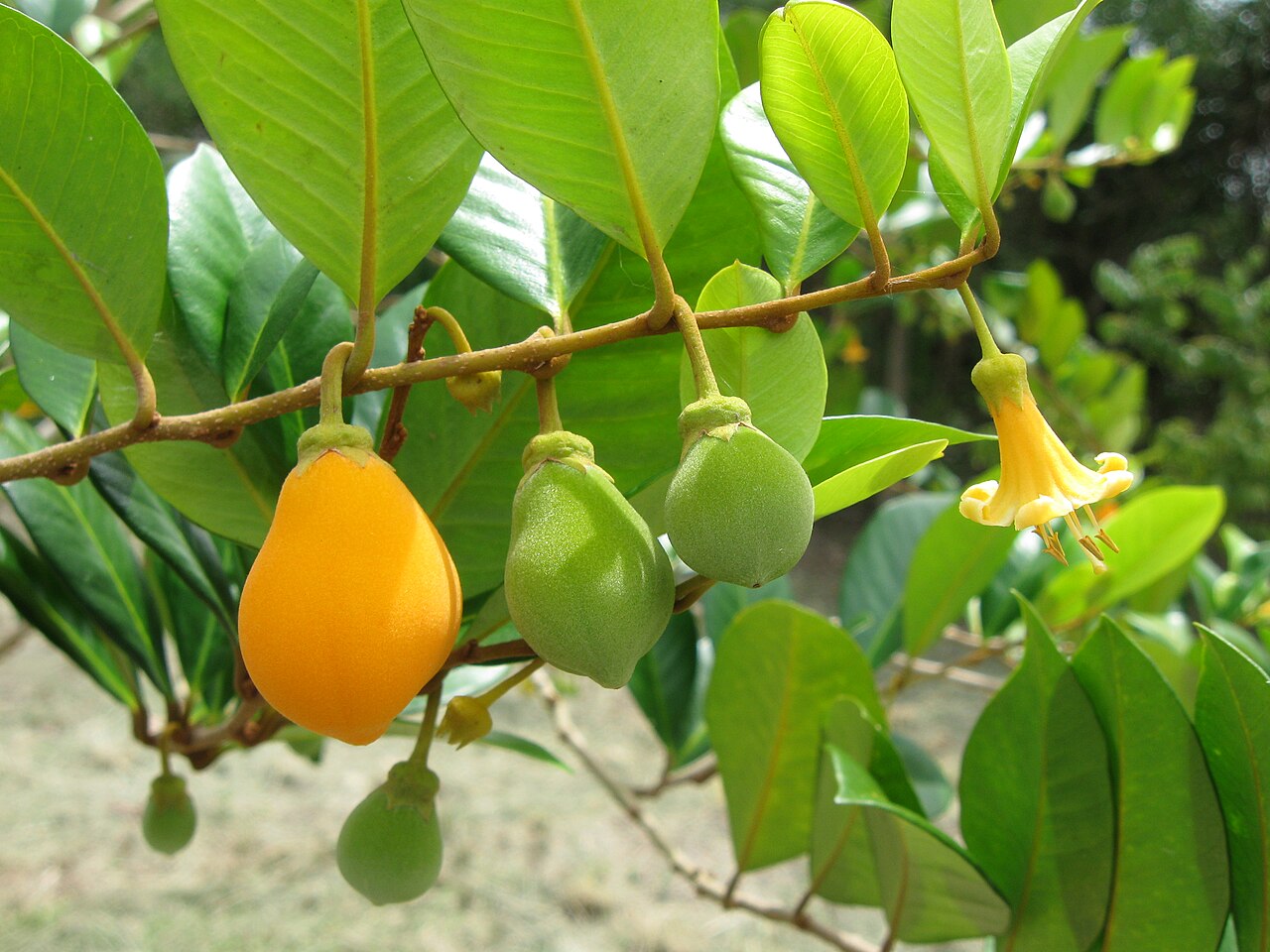
Goetzea elegans, known in Puerto Rico as Matabuey (also written mata buey, the name USDA PLANTS uses) or manzanilla, and in English as beautiful goetzea, is a small evergreen tree found nowhere in the world but Puerto Rico. It belongs to the nightshade family (Solanaceae) and has glossy leaves, hanging yellow-orange trumpet flowers and bright orange fruits. The Spanish name means “ox-killer,” suggesting that the plant may be poisonous to livestock.
Matabuey is federally listed as endangered under the U.S. Endangered Species Act. When the U.S. Fish and Wildlife Service listed it in 1985, fewer than 50 wild trees were known, from three sites in the northern karst region. Today the Service recognizes 16 natural populations, in Isabela and Quebradillas on the northwest coast, in Fajardo and on Vieques, with roughly 1,700 trees in all. Most grow on private land along wooded creeks and ravines.
Thanks to decades of nursery work, matabuey is now one of the most widely planted endangered trees in Puerto Rico. If you want to grow one, buy or adopt only nursery-propagated plants from a native nursery or conservation program, and never collect seeds, seedlings or cuttings from wild trees. Every planted tree helps, since the species needs cross-pollination between different plants to set seed.
Identification
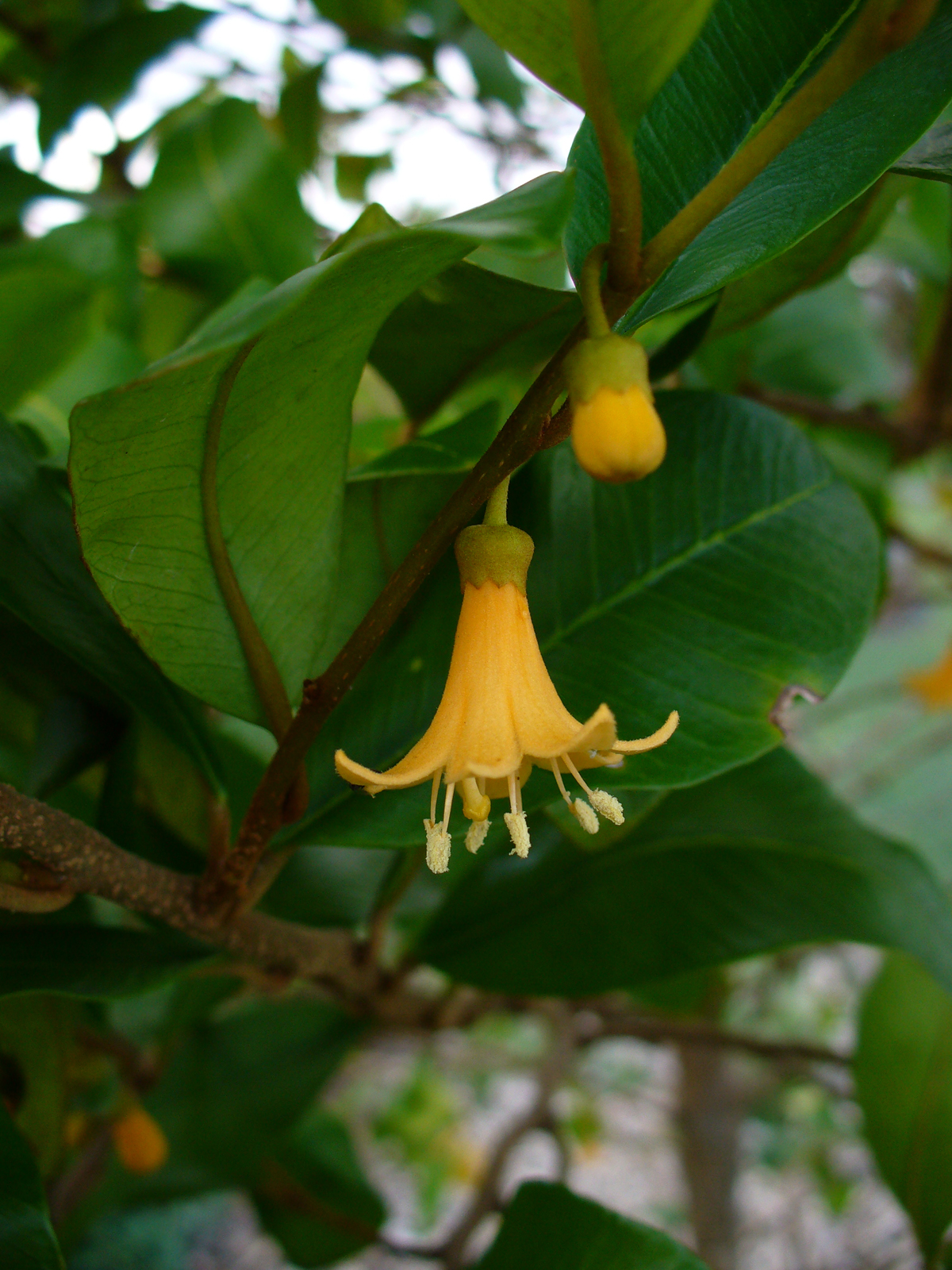
Matabuey is a small tree with simple, glossy green leaves, long-stalked yellow-orange flowers shaped like funnels and round orange berries. In the wild it grows in clusters along the bottoms and banks of shaded ravines in limestone country.
Form & Bark
This is a small to medium evergreen tree or large shrub, usually under 30 feet (9 m) tall. Trees in the wild range from about 3 to 33 feet tall. The bark is gray and fairly smooth, becoming patchy with lichens on older stems.
Leaves
The leaves are simple, alternate, glossy green and oval, with smooth edges. They are relatively thin and broad, a sign that matabuey is adapted to moist rather than dry habitats, unlike its closest relatives in the Antilles, which have narrow, spiny leaves and grow in very dry places.
Flowers
The flowers are the showiest feature. They hang singly on long stalks and have a conspicuous yellow-orange, funnel-shaped corolla with flared lobes. Flowers and fruits at different stages are often on the tree at the same time.
Fruit
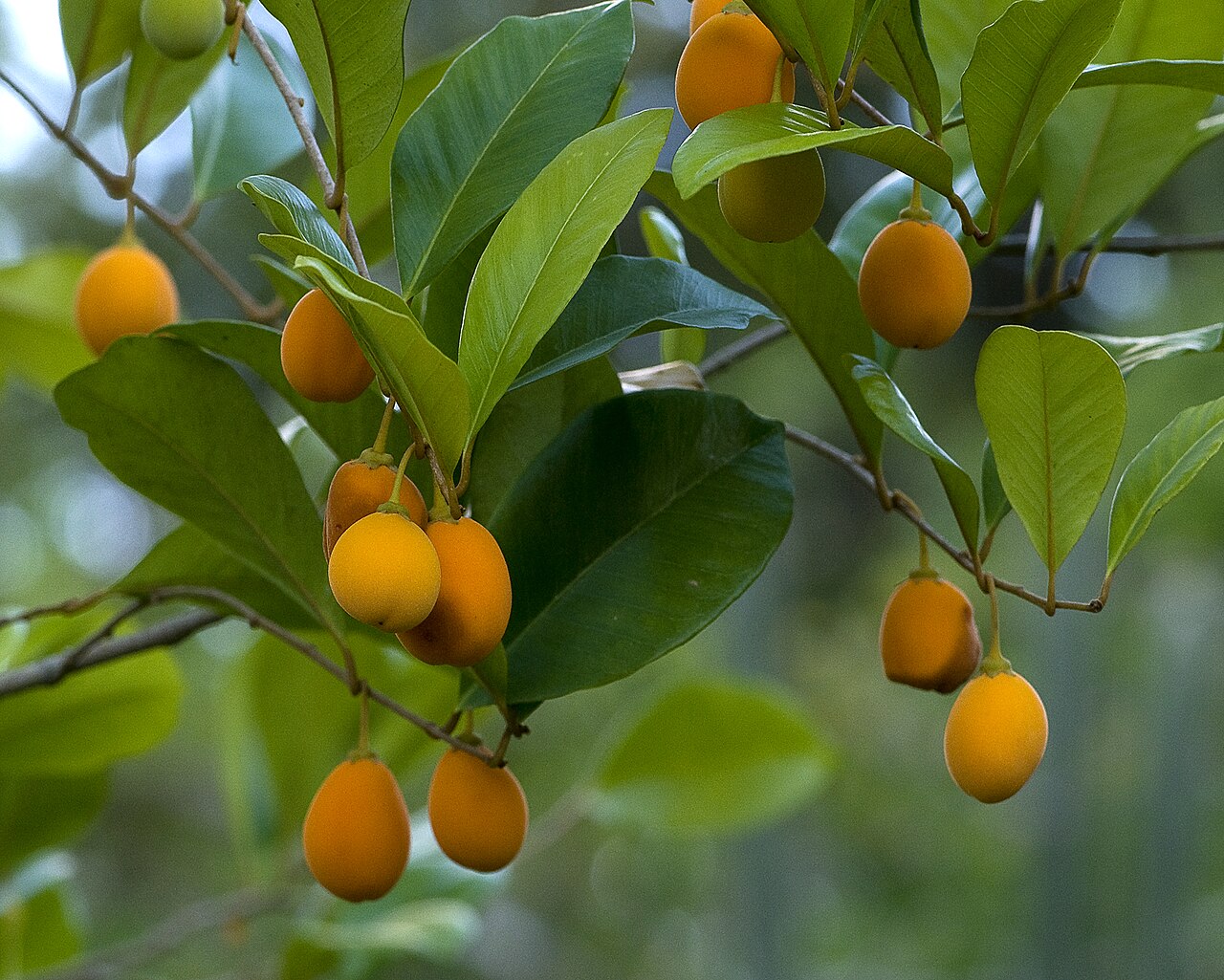
The fruit is a round to slightly egg-shaped, glossy berry up to about 1 inch (2.5 cm) long. It is green when young and ripens bright yellow-orange. The seeds are dispersed by birds and other animals that eat the fruit.
Quick Facts
| Scientific Name | Goetzea elegans Wydler |
| Family | Solanaceae (nightshade family) |
| Plant Type | Small evergreen tree or large shrub |
| Mature Height | 10–30 ft |
| Mature Spread | 10–15 ft |
| Growth Rate | Moderate |
| Sun Exposure | Partial shade to full sun |
| Water Needs | Moderate; native to moist forest ravines |
| Soil Type | Well-drained limestone-derived soils; adaptable in cultivation |
| Soil pH | Neutral to alkaline |
| Bloom Time | Intermittent; flowers and fruit often present together |
| Flower Color | Yellow-orange |
| Fall Color | None; evergreen |
| Fruit | Round orange berry, up to 1 in; possibly toxic |
| Deer Resistant | Not rated (no deer in Puerto Rico) |
| USDA Hardiness Zones | Frost-free tropics only (about zones 10b–12) |
Native Range
Matabuey is endemic to Puerto Rico; USDA PLANTS lists it as native in Puerto Rico, and the Smithsonian’s Flora of the West Indies treats it as a Puerto Rican endemic. It was historically known from Quebradillas, the foothills of the Luquillo Mountains in Río Grande and Canóvanas, and the Cambalache forest in Arecibo, but by 1981 it had disappeared from the Río Grande, Canóvanas and Arecibo sites.
According to the U.S. Fish and Wildlife Service, there are now 16 known natural populations: five in Isabela and five in Quebradillas in the northern karst, one in Fajardo and five on Vieques. In the karst, matabuey grows within the subtropical moist forest life zone at about 65 to 490 feet (20–150 m) elevation, mostly along the bottoms and banks of wooded creeks and ravines, at the foot of the steep limestone hills called mogotes and around sinkholes. The Quebrada Bellaca population in Quebradillas is one of the largest, and the Vieques populations also grow along creeks.
Since the 1990s, partners including the Puerto Rico Department of Natural and Environmental Resources, the Puerto Rico Botanical Garden, Para La Naturaleza (the Puerto Rico Conservation Trust) and Ciudadanos del Karso have propagated matabuey and planted it in forests, parks, refuges and private conservation lands across the island. About 1,400 nursery-raised trees were planted between 2019 and 2023 alone, although their long-term survival has not been fully assessed.
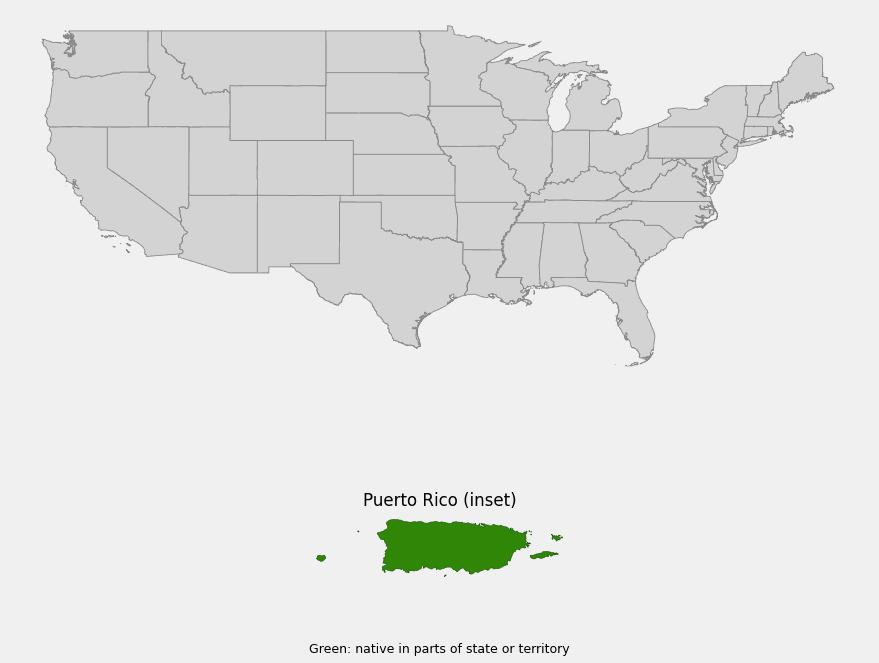
📋 Regional plant lists featuring Matabuey: Puerto Rico
Growing & Care Guide
Matabuey is a handsome small tree for gardens, schools and reforestation projects in Puerto Rico, and planting it is one of the most direct ways to help an endangered native species. Conservation groups and nurseries on the island have grown it for years and sometimes give seedlings away for outreach plantings. Always start from nursery-propagated plants; never take anything from wild trees.
Light
In the wild matabuey grows mostly in the partial shade of wooded ravines, though it also survives in full sun. In gardens, partial shade or morning sun with afternoon shade suits it well, especially while it is young.
Soil & Water
Its natural habitat is moist limestone country, along creeks and at the foot of limestone hills. Give it well-drained soil that stays evenly moist, and water young trees during dry spells. Its thin leaves show that it is not adapted to strong drought.
Planting Tips
Buy or adopt only nursery-propagated trees, and keep a record of where your plant came from. Because matabuey needs pollen from a different plant to set seed, planting several trees from different sources near each other gives them the best chance of fruiting. Keep competing weeds and vines away from young trees; at one planting site, removing smothering vegetation was recommended so the trees could grow freely.
Pruning & Maintenance
Little pruning is needed. Remove dead or storm-damaged branches and keep vines off the canopy. Since the name “ox-killer” suggests the plant may be toxic, keep livestock away from it and do not eat the fruit.
Propagation
Matabuey has been successfully propagated from both seed and cuttings in conservation nurseries, and the Puerto Rico Botanical Garden reported producing more than 800 plants by 2007. Para La Naturaleza collected over 1,300 seeds between 2019 and 2022 and raised more than 1,500 plants. Propagation of a federally listed plant is best left to these programs; collecting from the wild is prohibited.
Landscape Uses
- Conservation plantings: helps the recovery of a federally endangered Puerto Rican tree
- Shady gardens: glossy evergreen foliage with yellow-orange flowers
- Ravine and stream buffers: suits moist, shaded creek banks in limestone areas
- Schools and public grounds: a striking tree with an important conservation story
- Wildlife food: orange fruits eaten by birds and other animals
Wildlife & Ecological Value
Matabuey is part of the forest of shaded ravines and creek banks in Puerto Rico’s karst, a habitat it shares with other rare species such as the threatened palma de manaca.
For Pollinators
Matabuey is mainly self-incompatible: a flower needs pollen from another plant to produce seed. Its showy, tubular flowers suggest animal pollinators, but which species visit and pollinate them in the wild has not been well documented. Small, scattered populations with few flowering trees are one reason it produces few seedlings in the wild.
For Birds
The bright orange berries are eaten by birds, which spread the seeds. In wild populations seedlings are often found near the parent tree, at the edge of its canopy.
For Mammals
Other animals also eat the fruit and help disperse seeds. Seeds are probably also eaten by both native and introduced animals, although the U.S. Fish and Wildlife Service does not consider this a significant threat.
Ecosystem Role
Matabuey is one of a small group of Caribbean trees in the nightshade family whose closest relatives grow in Brazil and the Amazon. It adds diversity to the understory and lower canopy of moist karst ravines and to the creek-side forests of Vieques.
Cultural & Historical Uses
Swiss botanist Heinrich Wydler described matabuey from material he collected in Puerto Rico in 1827. It belongs to a small group of Antillean genera that, together with two South American genera, form a distinctive branch of the nightshade family; its closest relative is the Cuban genus Espadaea.
Matabuey was listed as endangered by the U.S. Fish and Wildlife Service on April 19, 1985. A recovery plan followed in 1987 and was amended in 2019. Recovery goals include protecting the natural populations in the Guajataca gorge, Fajardo and Vieques and establishing new populations on protected land.
The tree has become a symbol of community conservation in Puerto Rico. Volunteers, botanical gardens and conservation groups have planted it at sites from the Puerto Rico Zoo to the Mata de Plátano reserve in Arecibo and the Río Abajo forest, and the Service has worked with private landowners to plant it on farms and conservation lands.
Frequently Asked Questions
Is matabuey endangered?
Yes. It is federally listed as endangered under the U.S. Endangered Species Act (since 1985). About 1,700 wild trees are known in 16 populations in Isabela, Quebradillas, Fajardo and Vieques, mostly on private land.
What does “matabuey” mean?
It means “ox-killer” in Spanish, which suggests the plant is poisonous to livestock. Treat the plant as potentially toxic and do not eat the fruit.
Can I plant matabuey in my yard?
Yes, if you get a nursery-propagated plant from a native nursery or a conservation program. Plant it in partial shade with moist, well-drained soil. Never collect plants, seeds or cuttings from the wild.
Why are wild matabuey trees producing so few seedlings?
The species is mainly self-incompatible and needs pollen from a different plant to set seed. With small, scattered populations, many trees do not get cross-pollinated. Habitat loss, invasive plants and hurricanes add to the pressure.
What other rare native trees grow in Puerto Rico’s limestone areas?
Other native trees of limestone areas include palo de rosa, an endangered tree of limestone hills, and West Indian satinwood (aceitillo), along with the manaca palm of shaded ravines.

Looking for a nursery that carries Matabuey?
Our nursery directory does not yet include Puerto Rico. Browse the native plant nursery directory by state: Alabama–Arkansas · California · Colorado–Hawaii · Idaho–Kansas · Kentucky–Montana · Nebraska–Oklahoma · Oregon · Pennsylvania–Virginia · Washington · West Virginia–Wyoming