
Palo de Rosa (Ottoschulzia rhodoxylon)
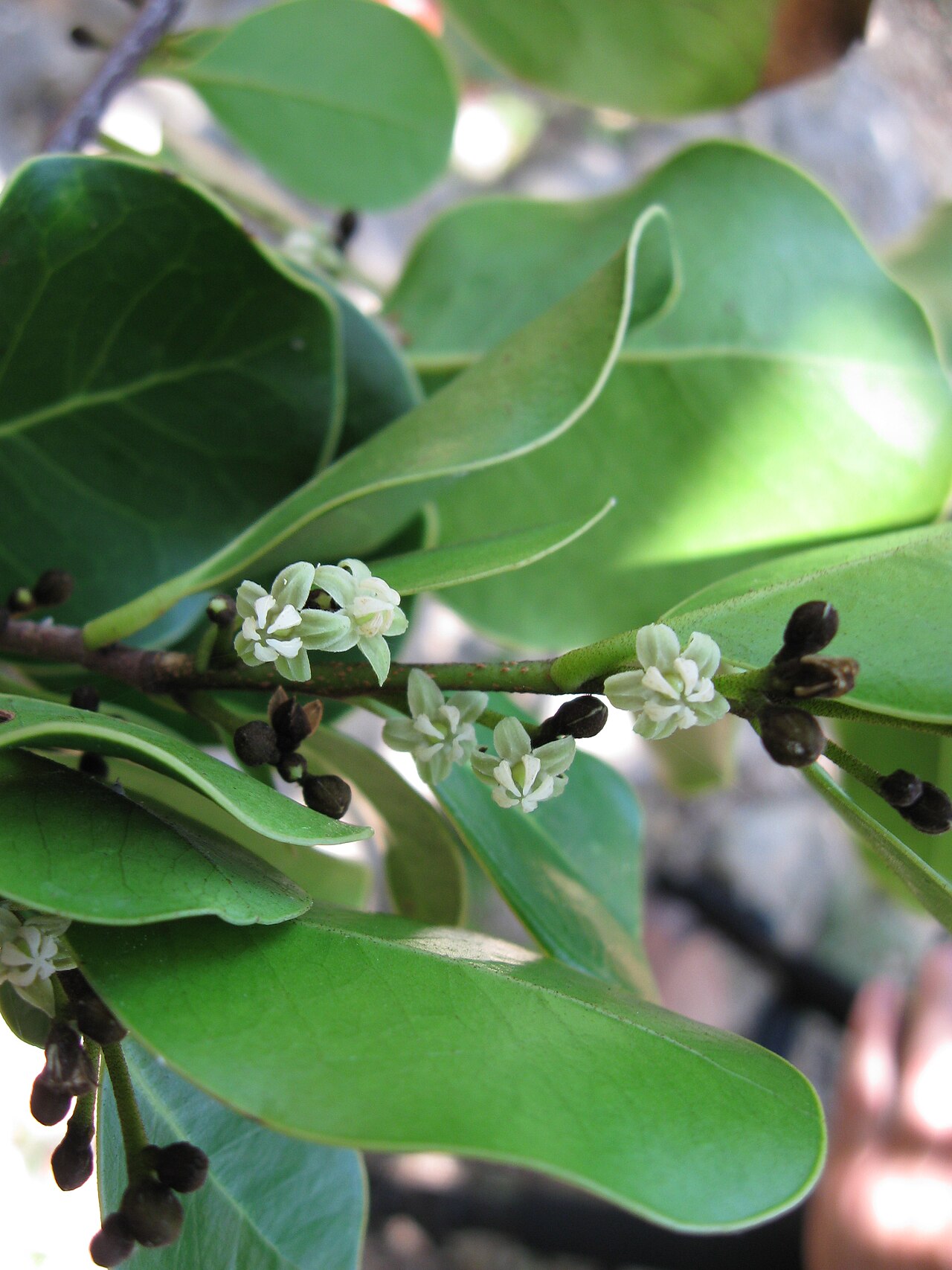
Ottoschulzia rhodoxylon, known in Puerto Rico as palo de rosa and listed by USDA as pincho palo de rosa, is one of the rarest trees in the Caribbean. It is an evergreen tree with thick, glossy, oval leaves and small, creamy, cup-shaped flowers, and it grows naturally only in Puerto Rico and Hispaniola. Its name means “rosewood” in Spanish, and the scientific name rhodoxylon says the same thing in Greek (rhodon, rose, and xylon, wood).
Palo de rosa is listed as Endangered under the U.S. Endangered Species Act. When it was listed in 1990, only nine individual trees were known in Puerto Rico. Its known sites include Guánica Commonwealth Forest on the dry southwest coast and a location near Bayamón in the northern karst, with a single tree also reported from Maricao Commonwealth Forest. Clearing of forest for agriculture and development is the main reason it became so rare.
This page describes palo de rosa so that people can recognize and protect it. It is not a plant to collect: never dig, cut or take seed or cuttings from wild trees, and buy plants only if they are nursery-propagated through authorized conservation programs. Under the Endangered Species Act it is illegal to remove or damage listed plants on federal land or to sell them across state lines without a permit, and Puerto Rico’s own regulations also protect rare and endangered species.
Identification
Palo de rosa is an inconspicuous tree that can be mistaken for many other dry-forest evergreens. Its leaves, small cup-shaped flowers and dark purple fruit are the best clues; confirmation should come from a botanist.
Form & Trunk
It grows into a tree up to about 49 feet (15 m) tall with a trunk up to about 16 inches in diameter, although most trees in the dry forest are smaller and shrubbier. The wood is hard and rose-tinted, which gives the tree its common name.
Leaves
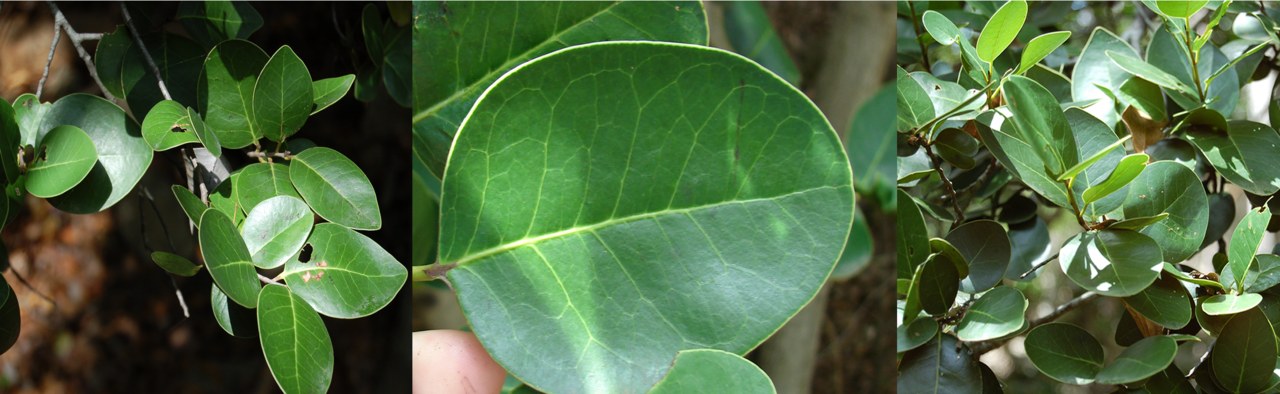
The leaves are alternate, simple, elliptic to ovate or nearly round, and thick and leathery. They are glossy dark green above with a narrow, slightly whitish margin, which is a useful field mark. The tree is evergreen.
Flowers
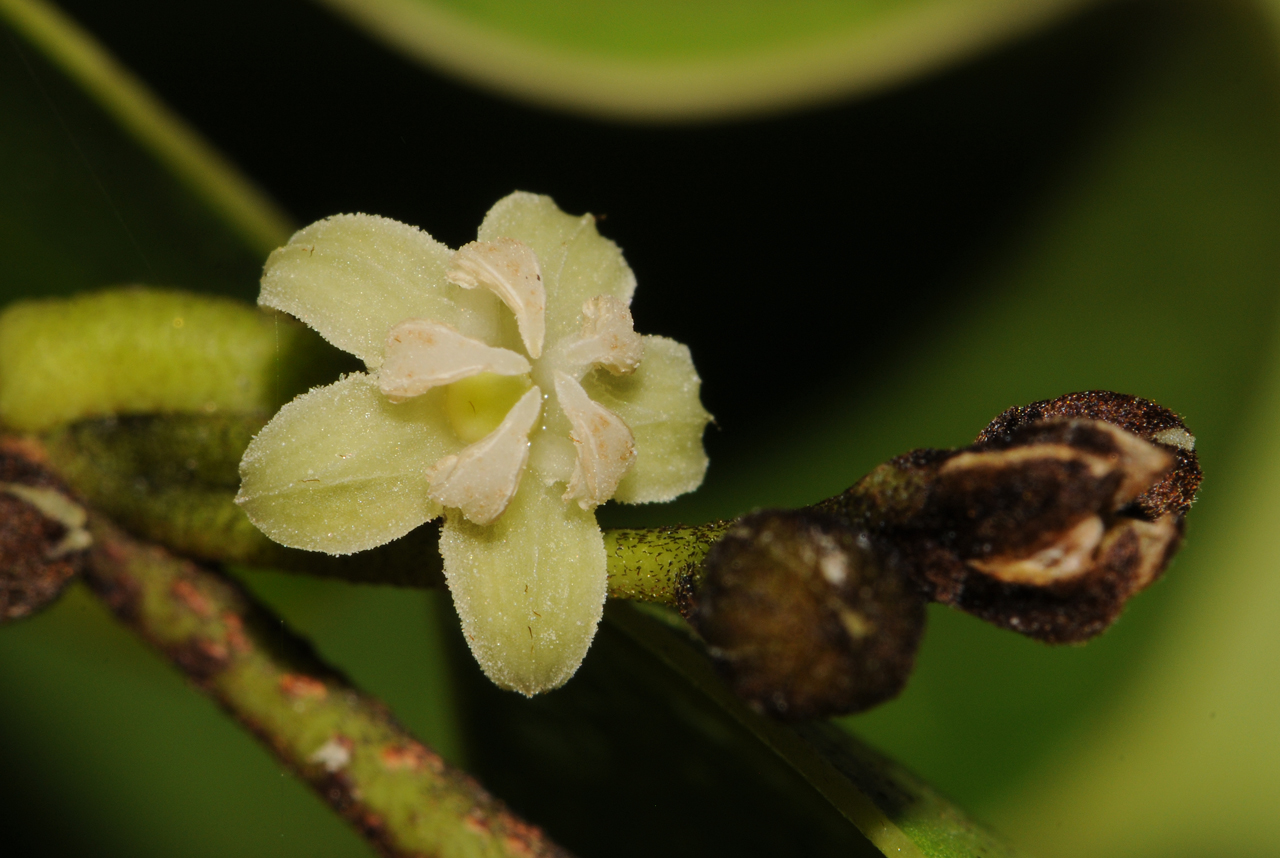
The flowers are small and pale cream to yellow-green. Each has five sepals joined at the base and a short, cup-shaped corolla with five spreading lobes. They grow in small clusters along the twigs, opening from dark, rounded buds.
Fruit & Seeds
The fruit is a smooth, oval drupe about 1 inch long and nearly as wide, with a thin skin that turns dark purple when ripe. It usually holds a single seed.
Quick Facts
| Scientific Name | Ottoschulzia rhodoxylon (Urb.) Urb. |
| Family | Icacinaceae |
| Plant Type | Evergreen tree; federally Endangered |
| Mature Height | Up to about 49 ft (15 m); often smaller |
| Mature Spread | 10–25 ft |
| Growth Rate | Slow |
| Sun Exposure | Partial shade to full sun |
| Water Needs | Low to moderate; adapted to seasonally dry forest |
| Soil Type | Well-drained limestone-derived soils |
| Soil pH | Neutral to alkaline (limestone) |
| Bloom Time | Variable; not well documented |
| Flower Color | Cream to pale yellow-green |
| Fall Color | None; evergreen |
| Fruit | Oval drupe about 1 in long, dark purple when ripe |
| Deer Resistant | Not a concern in Puerto Rico, which has no native deer |
| USDA Hardiness Zones | 10b–12; frost-sensitive |
Native Range
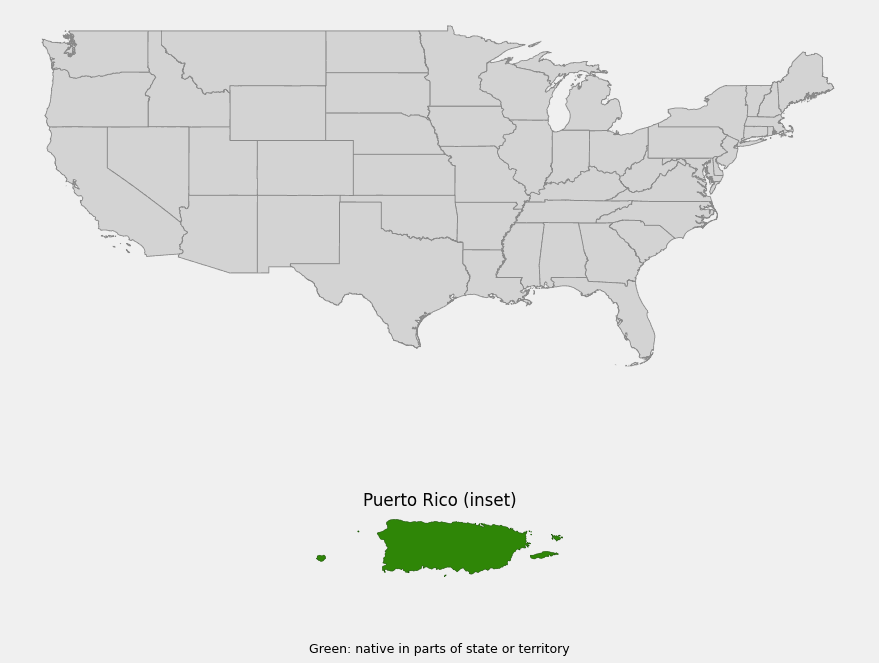
Palo de rosa is native only to Puerto Rico and Hispaniola, where it is known from the Dominican Republic. USDA PLANTS lists it as native in Puerto Rico, and the Smithsonian’s Flora of the West Indies records it as a West Indian endemic found in Puerto Rico, the Dominican Republic and Haiti.
In Puerto Rico it grows in dry and moist limestone forests. Guánica Commonwealth Forest, a UNESCO biosphere reserve and one of the best-preserved subtropical dry forests in the Caribbean, holds some of its known trees. Other trees grow in the northern karst belt near Bayamón, among the haystack hills (mogotes) that rise from the coastal plain, and a single tree has been reported from Maricao Commonwealth Forest in the western mountains.
Because so few trees remain and they are scattered among a few sites, each population is vulnerable to clearing, fire, hurricanes and poor reproduction. Protecting the remaining forests of the south coast and the northern karst is essential for the species’ survival.
📋 Regional plant lists featuring Palo de Rosa: Puerto Rico
Growing & Care Guide
Palo de rosa is not available in the ordinary nursery trade, and home gardeners should not try to obtain it from the wild. The information below is for conservation plantings carried out with authorized, nursery-propagated material.
Light
In the wild it grows in the partly shaded understory and canopy of dry and limestone forests. Young plants in restoration sites usually benefit from some shade, while established trees tolerate more sun.
Soil & Water
It is adapted to well-drained, often thin soils over limestone, with a long dry season. Avoid heavy, waterlogged soils. Water newly planted trees through their first dry season.
Planting Tips
Plant only nursery-propagated trees from authorized conservation programs, within its native range in suitable dry or limestone forest, and in coordination with the U.S. Fish and Wildlife Service or the Puerto Rico Department of Natural and Environmental Resources. Record and report planting locations so they can be monitored.
Pruning & Maintenance
Little pruning is needed. Protect young trees from fire, competing invasive grasses and vines, and accidental clearing.
Propagation
Propagation is carried out by conservation nurseries working under permits. Never collect seeds, cuttings or plants from wild trees: with so few individuals left, every fruit matters for natural regeneration.
Landscape Uses
- Conservation plantings: reintroduction and augmentation of wild populations under recovery programs
- Botanical garden collections: ex situ conservation of genetic diversity
- Dry forest restoration: as part of authorized restoration of limestone dry forest in southern Puerto Rico
- Karst forest restoration: in protected karst forests of the north coast
- Education: a flagship for Puerto Rico’s rare native trees and the importance of protecting remaining forest
Wildlife & Ecological Value
Little has been published on palo de rosa’s interactions with wildlife, but its flowers and fleshy fruit suggest roles similar to those of other dry-forest trees.
For Pollinators
The small, cup-shaped flowers are probably visited by bees and other small insects, as are those of many dry-forest trees, though its pollinators have not been well studied.
For Birds
The fleshy, dark purple fruit is the type commonly eaten by birds, which may help disperse the seeds.
For Mammals
No important mammal interactions have been documented. Fruit-eating bats eat many similar fruits in Puerto Rico’s forests.
Ecosystem Role
Palo de rosa is part of the unique tree flora of Puerto Rico’s limestone forests, which hold many rare and endemic plants. With so few individuals left, the species has little ecological weight today, but its survival is an indicator of how well the island’s remaining dry and karst forests are protected.
Cultural & Historical Uses
The genus Ottoschulzia honors the German botanist Otto Eugen Schulz, and the species was described by Ignatz Urban, author of the multivolume Symbolae Antillanae on the plants of the West Indies. The species name and the Spanish common name both refer to the rose-colored wood.
Palo de rosa was listed as Endangered by the U.S. Fish and Wildlife Service in 1990, at a time when only nine trees were known in Puerto Rico. It is one of dozens of Puerto Rican plants protected under the Endangered Species Act, many of them trees of the dry south coast and the northern karst.
The places where palo de rosa survives are themselves protected landscapes. Guánica Commonwealth Forest was designated a UNESCO biosphere reserve in 1981, and the northern karst region holds many of the island’s rare species. Supporting the protection of these forests is the most important thing people can do for palo de rosa.
Frequently Asked Questions
Is palo de rosa endangered?
Yes. It is listed as Endangered under the U.S. Endangered Species Act. Only nine trees were known in Puerto Rico when it was listed in 1990.
Where does palo de rosa grow?
In Puerto Rico it is known from Guánica Commonwealth Forest, a site near Bayamón in the northern karst, and a single tree reported in Maricao Commonwealth Forest. It also grows in the Dominican Republic.
Can I plant palo de rosa in my garden?
Only nursery-propagated plants from authorized conservation programs should ever be planted, and they are rarely available. Never collect plants, seed or cuttings from the wild.
Why is it called palo de rosa?
“Palo de rosa” means rosewood, referring to its rose-tinted wood. The scientific name rhodoxylon also means “rose wood” in Greek.
How can I help protect palo de rosa?
Support the protection of Guánica Forest and the northern karst, report suspected trees to the U.S. Fish and Wildlife Service Caribbean Ecological Services Field Office or the Puerto Rico Department of Natural and Environmental Resources, and never disturb wild plants.

Looking for a nursery that carries Palo de Rosa?
Our nursery directory does not yet include Puerto Rico. Browse the native plant nursery directory by state: Alabama–Arkansas · California · Colorado–Hawaii · Idaho–Kansas · Kentucky–Montana · Nebraska–Oklahoma · Oregon · Pennsylvania–Virginia · Washington · West Virginia–Wyoming