
Golden Dewdrop (Duranta erecta)
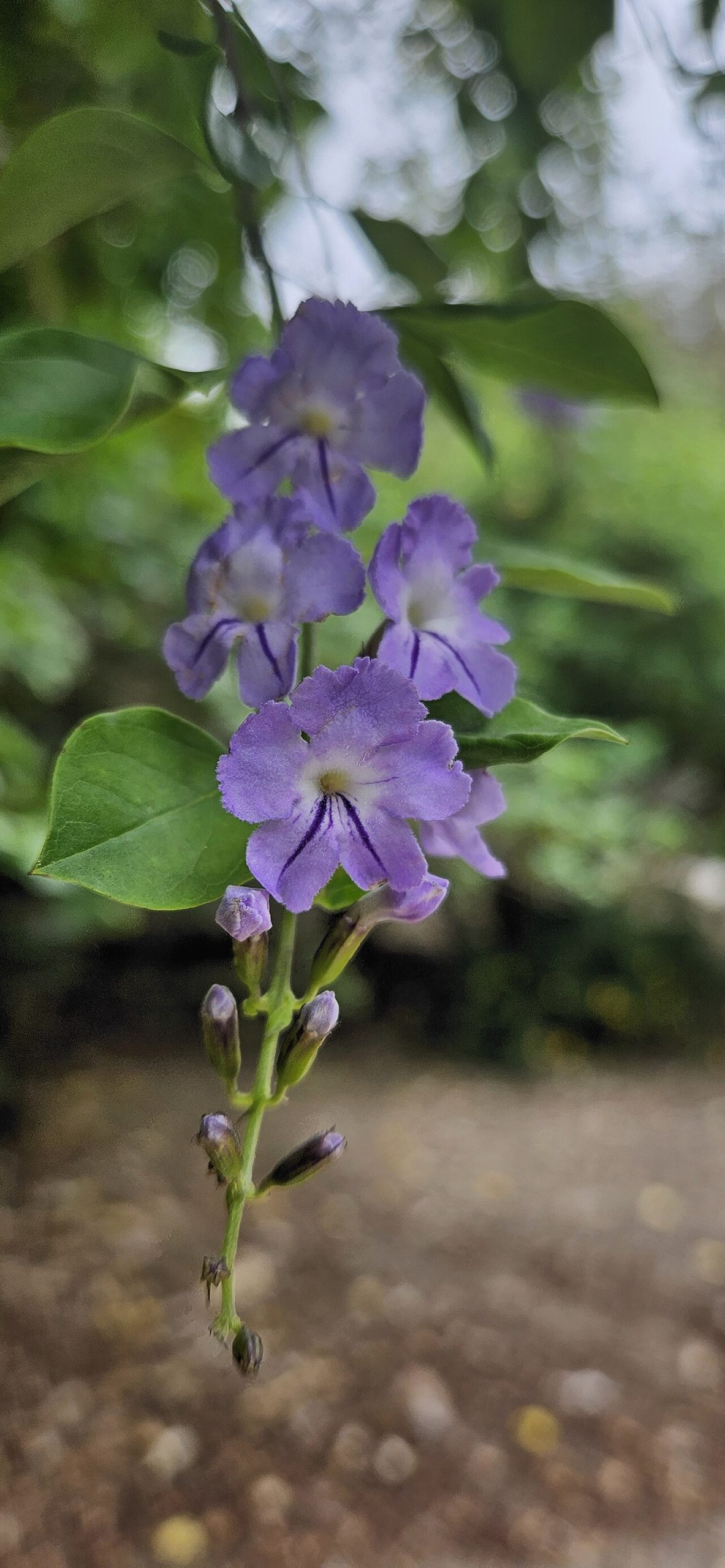
Duranta erecta, the golden dewdrop (USDA PLANTS: golden dewdrops), is a fast-growing shrub or small tree of the verbena family that is known in Puerto Rico as azotacaballo, cuentas de oro and lila. Other English names include pigeon berry and skyflower. It carries hanging sprays of small lavender-blue flowers for much of the year, followed by long clusters of glossy golden-orange berries, the “golden dewdrops” of its name.
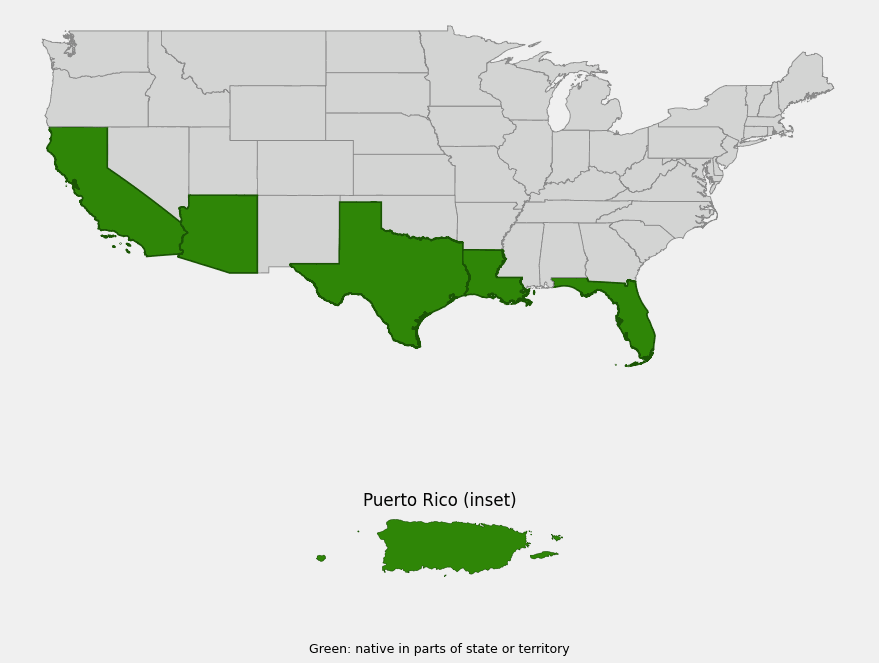
The species is native to the American tropics, from Mexico and the Caribbean south to Brazil and Argentina. USDA PLANTS lists it as native in Puerto Rico and the U.S. Virgin Islands, and as native in the lower 48 states, where it records the plant from Florida, Texas, Louisiana, Arizona and California. Whether those mainland populations are truly native is debated, and the Atlas of Florida Plants treats it as not native in Florida. It is also widely known by the synonym Duranta repens.
In Puerto Rican gardens golden dewdrop is a dependable, sun-loving shrub for hedges, screens and butterfly gardens. Two cautions belong up front: the berries and leaves are toxic to people and pets, and the plant has become an invasive weed in Hawaii and many other tropical regions where it is not native. This guide covers identification, range, care and those cautions.
Identification
Golden dewdrop is easy to recognize when in flower or fruit: drooping clusters of small lavender-blue flowers and, often on the same branch, hanging strings of round golden berries.
Form & Size
A sprawling, many-stemmed shrub or, less often, a small tree up to about 6 m (20 ft) tall, spreading about as wide. Branches tend to arch and droop, especially under the weight of fruit. Young plants can grow up to half a meter (about 1½ ft) a year.
Stems & Thorns
Mature plants often bear sharp thorns in the leaf axils; these are frequently absent on young plants. The thorns are worth remembering when placing the shrub near paths or using it as a hedge.
Leaves
Leaves are opposite, simple, light green, elliptic to ovate or obovate, up to about 7.5 cm (3 in) long and 3.5 cm (1⅜ in) wide, on short stalks. Margins are smooth or carry a few irregular teeth toward the tip.
Flowers
Small, tubular, five-lobed flowers in light blue, lavender or sometimes white, often with darker violet streaks, are borne in racemes 5 to 22 cm (2 to 9 in) long at the branch tips and in the leaf axils. The clusters are usually curved or hanging. In the tropics flowering is long and repeated; in cooler areas it is heaviest in summer.
Fruit
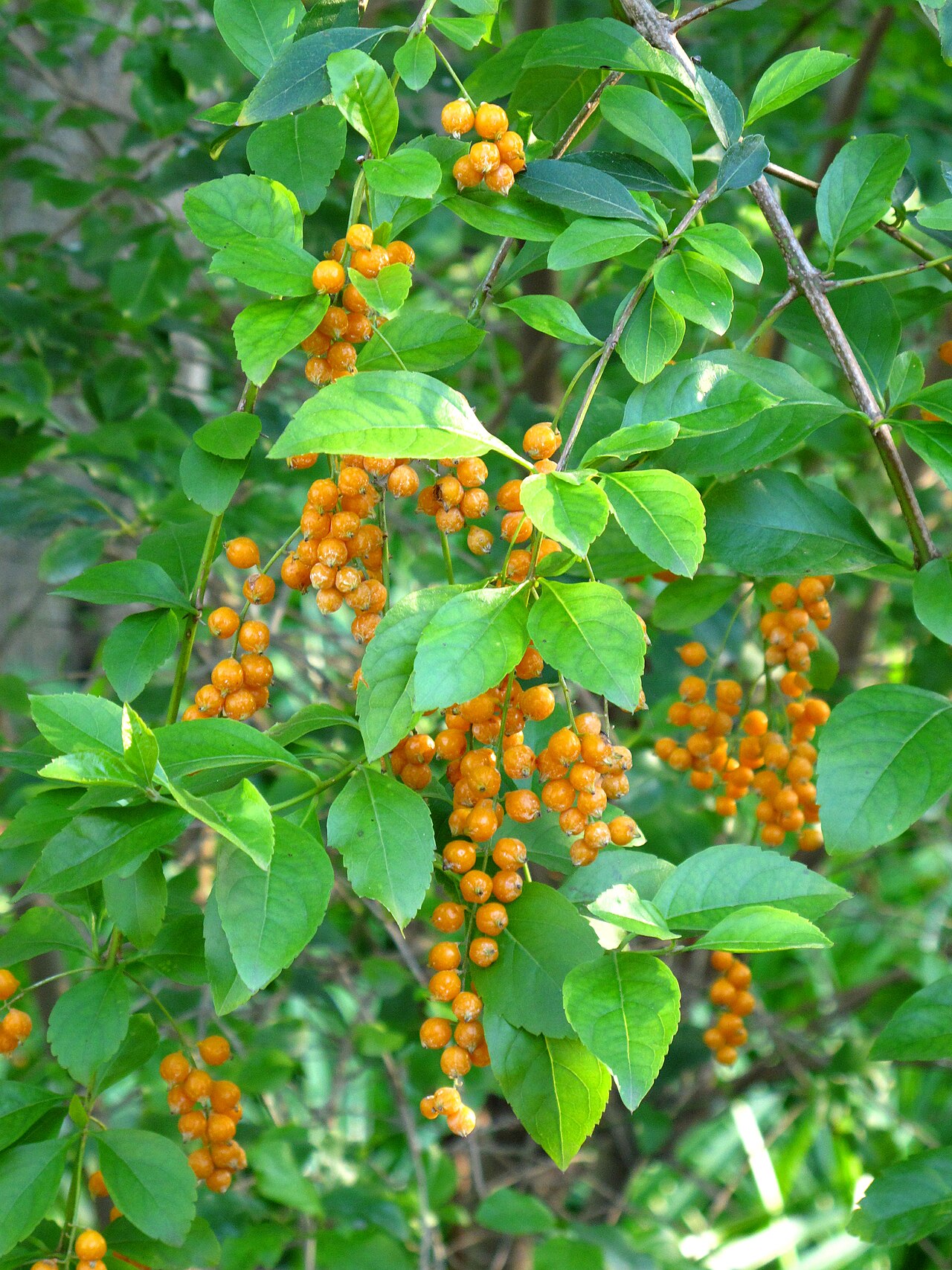
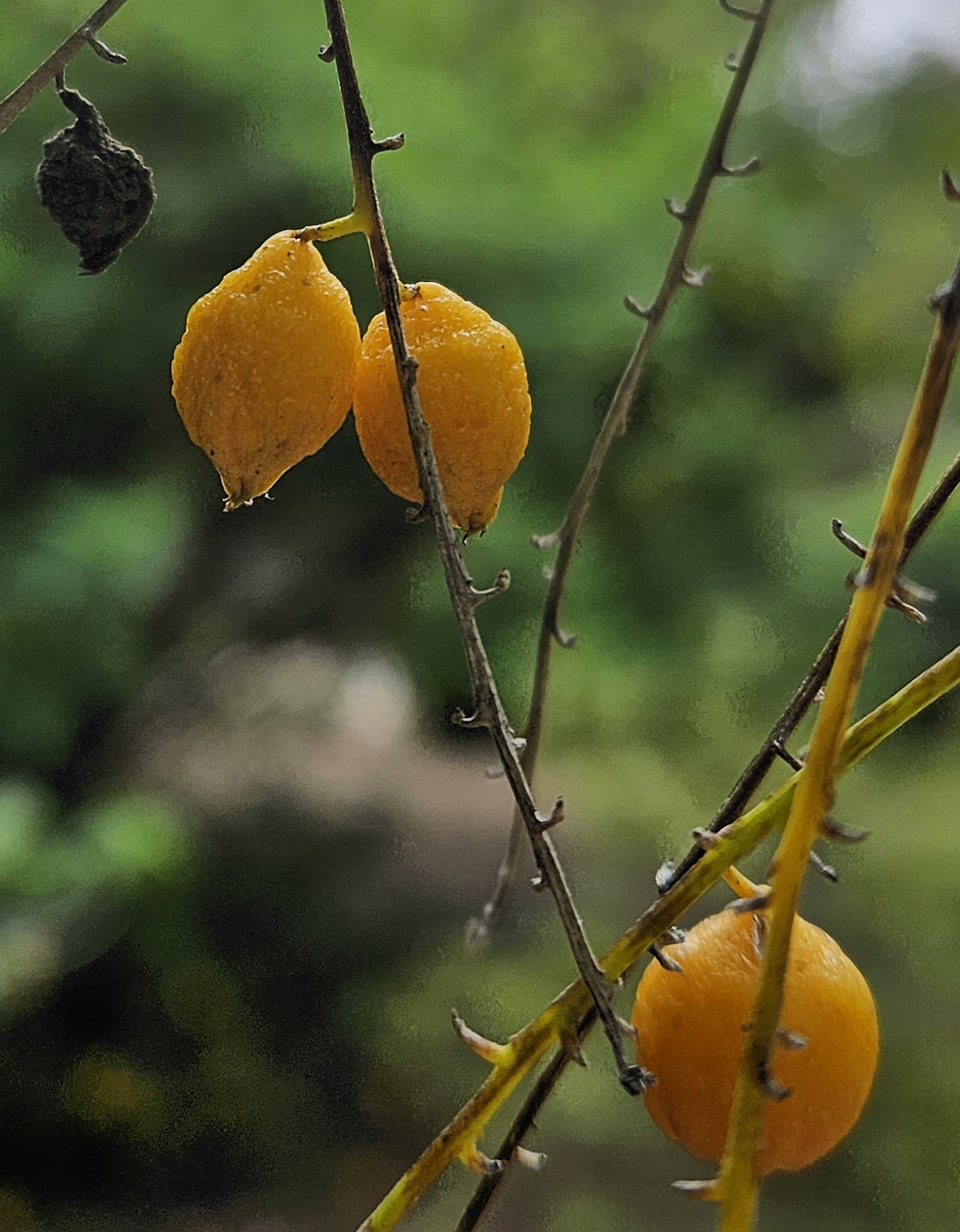
The fruit is a round, glossy, yellow to orange berry-like drupe up to about 11 mm (⅜ in) across, tightly wrapped in the enlarged calyx, which ends in a short twisted beak. Each fruit holds several seeds. Fruits hang in long clusters and persist for weeks.
Similar Species
Many garden selections exist, including variegated, gold-leaved and white-flowered cultivars, so leaf color varies in cultivation. Native shrubs with similar wildlife value in Puerto Rico and Florida include firebush (Hamelia patens), which has red-orange tubular flowers and black fruit, and fiddlewood (Citharexylum spinosum), a verbena-family relative with fragrant white flowers.
Quick Facts
| Scientific Name | Duranta erecta L. |
| Family | Verbenaceae (verbena family) |
| Plant Type | Evergreen shrub or small tree |
| Mature Height | 6–20 ft (2–6 m) |
| Mature Spread | 6–20 ft (2–6 m), about as wide as tall |
| Growth Rate | Fast (up to about 1½ ft per year when young) |
| Sun Exposure | Full sun to part shade; flowers best in full sun |
| Water Needs | Moderate; drought tolerant once established |
| Soil Type | Sandy, rocky or loamy soils; well drained |
| Soil pH | Acid to alkaline (adaptable) |
| Bloom Time | Much of the year in the tropics; mainly summer elsewhere |
| Flower Color | Light blue to lavender, sometimes white |
| Fall Color | None; evergreen |
| Fruit | Golden-orange berries about ⅜ in, in hanging clusters; toxic |
| Deer Resistant | Not applicable in Puerto Rico |
| USDA Hardiness Zones | 9–13 (frost-tender; may die back in a freeze) |
Native Range
Golden dewdrop is native to the Americas, from Mexico and the Caribbean south to Brazil and Argentina. USDA PLANTS (symbol DUER) lists it as native in Puerto Rico and the U.S. Virgin Islands, and also on Navassa Island. In the wild it commonly grows in rocky or sandy coastal areas in full sun, and in moister, disturbed sites inland, from near sea level to about 1,100 m (3,600 ft).
For the mainland, USDA PLANTS gives the lower 48 a status of native and records the species from Florida, Texas, Louisiana, Arizona and California; those states are shaded on the map on that basis. Other sources disagree. The Atlas of Florida Plants treats Florida populations as not native, and iNaturalist treats plants in Texas and California as introduced. There has long been debate about whether golden dewdrop is native anywhere in the southern United States or only escaped from gardens, so Florida and mainland gardeners should not regard it as a local native.
Golden dewdrop has been planted in tropical and subtropical gardens worldwide and has naturalized widely. It has become an invasive species in Hawaii, where USDA PLANTS lists it as introduced, as well as in Australia, South Asia, China, South Africa, Fiji and French Polynesia. Birds spread the seeds into forest edges and disturbed land, so plant it with care outside its native range.
📋 Regional plant lists featuring Golden Dewdrop: Puerto Rico
Growing & Care Guide
Golden dewdrop is one of the easiest flowering shrubs for warm gardens. In Puerto Rico it is a native choice for sunny hedges and butterfly gardens. Elsewhere, weigh its invasive record before planting, and everywhere keep children and pets away from the berries.
Light
Full sun gives the most flowers and fruit. It tolerates part shade, but becomes leggier and blooms less.
Soil & Water
Adaptable to most well-drained soils, including sandy coastal soils and rocky limestone. Water regularly until established; afterward it handles dry spells well, though it flowers more with occasional deep watering in long droughts. Avoid waterlogged sites.
Planting Tips
Space plants 4 to 6 ft apart for a hedge, or give a single shrub room to arch to its full width. Because older stems carry sharp thorns, keep it back from walkways and play areas. Do not plant it where small children or pets play, since the fruit is poisonous.
Pruning & Maintenance
Golden dewdrop grows fast and tolerates heavy pruning, so it can be kept as a clipped hedge or trimmed after flowering to keep it compact. Hard pruning reduces fruiting, which is useful where fruit is a concern for pets or where seedlings are unwanted. Wear gloves to avoid the thorns. Pull seedlings that appear in beds or nearby natural areas.
Propagation
Grows easily from seed and roots readily from semi-hardwood cuttings. In Puerto Rico, propagating from local plants keeps the native island stock in your garden; outside the native range, avoid spreading it.
Landscape Uses
- Butterfly and hummingbird gardens: long-blooming lavender flowers attract butterflies and hummingbirds
- Hedges and screens: fast, dense, tolerant of heavy pruning
- Bird food (with caution): songbirds eat the berries without ill effect; the berries are toxic to people and pets
- Coastal and dry gardens in Puerto Rico: handles sun, sandy soil and dry spells once established
- Ornamental shrub: showy flowers and golden fruit together for much of the year
Wildlife & Ecological Value
In its native range golden dewdrop is a busy wildlife plant, offering nectar and fruit over a long season.
For Pollinators
The tubular lavender flowers attract butterflies and are also visited by hummingbirds. Because the shrub blooms over a long period in frost-free climates, it provides a steady nectar source in Puerto Rican gardens.
For Birds
Songbirds eat the golden berries without ill effects and disperse the seeds. That is a benefit within the native range and the reason the plant spreads into wild areas where it has been introduced.
For Mammals
The leaves and unripe berries are toxic and have killed dogs and cats. The plant is not a food source for mammals and should be kept away from pets and livestock.
Ecosystem Role
In the Caribbean, golden dewdrop is a shrub of sunny coastal thickets and disturbed ground, where it supplies flowers for insects and fruit for birds. Outside the Americas the same qualities, fast growth and bird-dispersed seed, have made it invasive, forming thickets in Hawaii, Australia, South Africa and other regions.
Cultural & Historical Uses
The genus honors Castore Durante, an Italian physician and botanist of the Renaissance. Erecta is Latin for upright, while the widely used synonym repens means creeping; the latter name was originally used for smaller-leaved forms. In older literature the plant also appears as Duranta plumieri. In Puerto Rico it goes by azotacaballo, cuentas de oro (gold beads, for the fruit) and lila (for the lilac flowers).
Toxicity: the leaves and unripe berries contain saponin glycosides and other compounds and are toxic. They are confirmed to have killed dogs and cats. Documented human cases are few, and many of the alarming reports of child deaths seem to trace back to a single presumed poisoning of a young boy in Australia in 1895, but the fruit should be treated as poisonous. Teach children not to eat the berries and keep pets from chewing the plant.
Golden dewdrop has been grown in tropical gardens around the world for its long show of flowers and fruit, and many cultivars have been selected, such as ‘Alba’, ‘Aurea’, ‘Gold Mound’, ‘Geisha Girl’, ‘Sapphire Showers’ and ‘Variegata’. In Mexico, leaf preparations have been used in traditional medicine, but given the plant’s toxicity it should not be used at home.
Frequently Asked Questions
Is golden dewdrop native to Puerto Rico?
Yes. USDA PLANTS lists Duranta erecta as native in Puerto Rico and the U.S. Virgin Islands, and the species is native throughout the Caribbean and from Mexico to South America. In Puerto Rico it is called azotacaballo, cuentas de oro or lila.
Is golden dewdrop native to Florida?
Sources disagree. USDA PLANTS lists the lower 48 as native and records it from Florida, but the Atlas of Florida Plants treats it as not native in Florida. Florida gardeners looking for a native butterfly shrub can choose firebush or wild coffee instead.
Are golden dewdrop berries poisonous?
Yes. The leaves and unripe berries are toxic and have killed dogs and cats. Birds eat the fruit safely, but people and pets should not. Keep the plant away from areas where children and pets play.
Is golden dewdrop invasive?
Outside its native range, yes, in many places. It is listed as invasive in Hawaii, Australia, South Asia, China, South Africa, Fiji and French Polynesia, because birds spread the seeds into natural areas. Within Puerto Rico and the Caribbean it is a native plant.
How do I keep golden dewdrop compact?
Prune it after flowering, or shear it as a hedge. It grows quickly and recovers well from hard pruning. Wear gloves, as older stems have sharp thorns.

Looking for a nursery that carries Golden Dewdrop?
Our nursery directory does not yet include Puerto Rico. Browse the native plant nursery directory by state: Alabama–Arkansas · California · Colorado–Hawaii · Idaho–Kansas · Kentucky–Montana · Nebraska–Oklahoma · Oregon · Pennsylvania–Virginia · Washington · West Virginia–Wyoming