
Tievine (Ipomoea cordatotriloba)
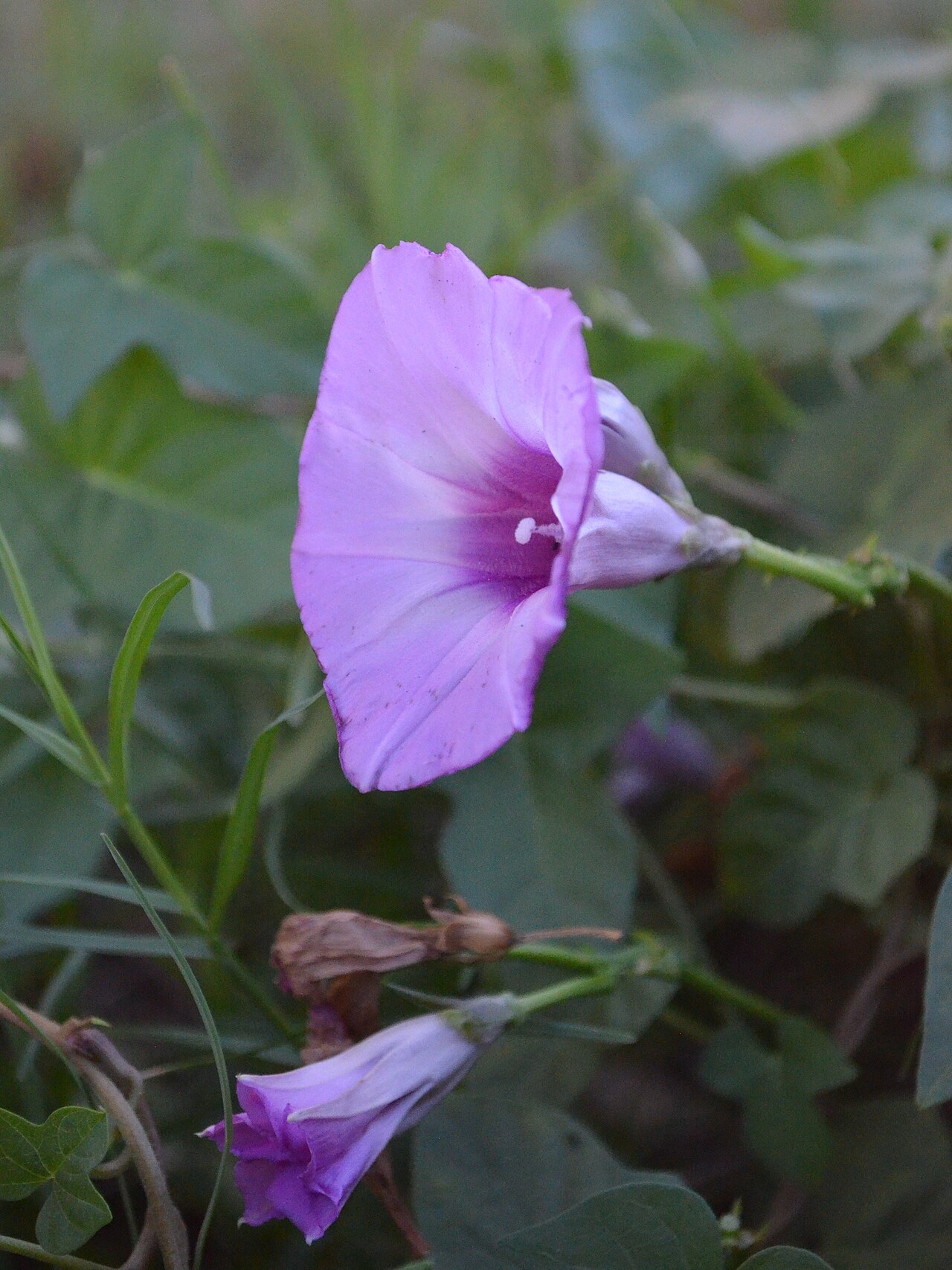
Ipomoea cordatotriloba, known as Tievine or tie-vine, is a native perennial morning glory of the American Southeast. Its slender, twining stems clamber over fences, shrubs and tall grasses for 6 to 15 feet, with leaves that vary from heart-shaped to deeply three-lobed, sometimes on the same plant. From midsummer into fall it opens funnel-shaped flowers about 1½ to 2 inches across, lavender-pink to rose with a darker purple-magenta throat. It belongs to the morning glory family (Convolvulaceae).
Tievine grows in sunny, open places: roadsides and fencerows, old fields, thickets, woodland edges, coastal hammock margins and pine flatwoods. Each flower opens in the morning and closes by afternoon, but the vines bloom over a long season, from about July to October, and through much of the year in south Florida. The flowers are an important source of nectar and pollen for native bees, including specialist bees that collect pollen only from morning glories.
The name “tievine” describes the way its tough stems tie and tangle other plants together. That same vigor means tievine can be a weed in crop fields and gardens, and it is best suited to wild, informal spaces, fences and meadow edges where it has room to roam. This guide covers how to identify it, its native range, how to grow and manage it, and its role in wildlife habitat.
Identification
Several pink-flowered morning glories grow in the Southeast, both native and introduced. Tievine is recognized by its variable heart-shaped to three-lobed leaves, mid-sized pink flowers with a dark throat, and hairy seed capsules.
Stems & Roots
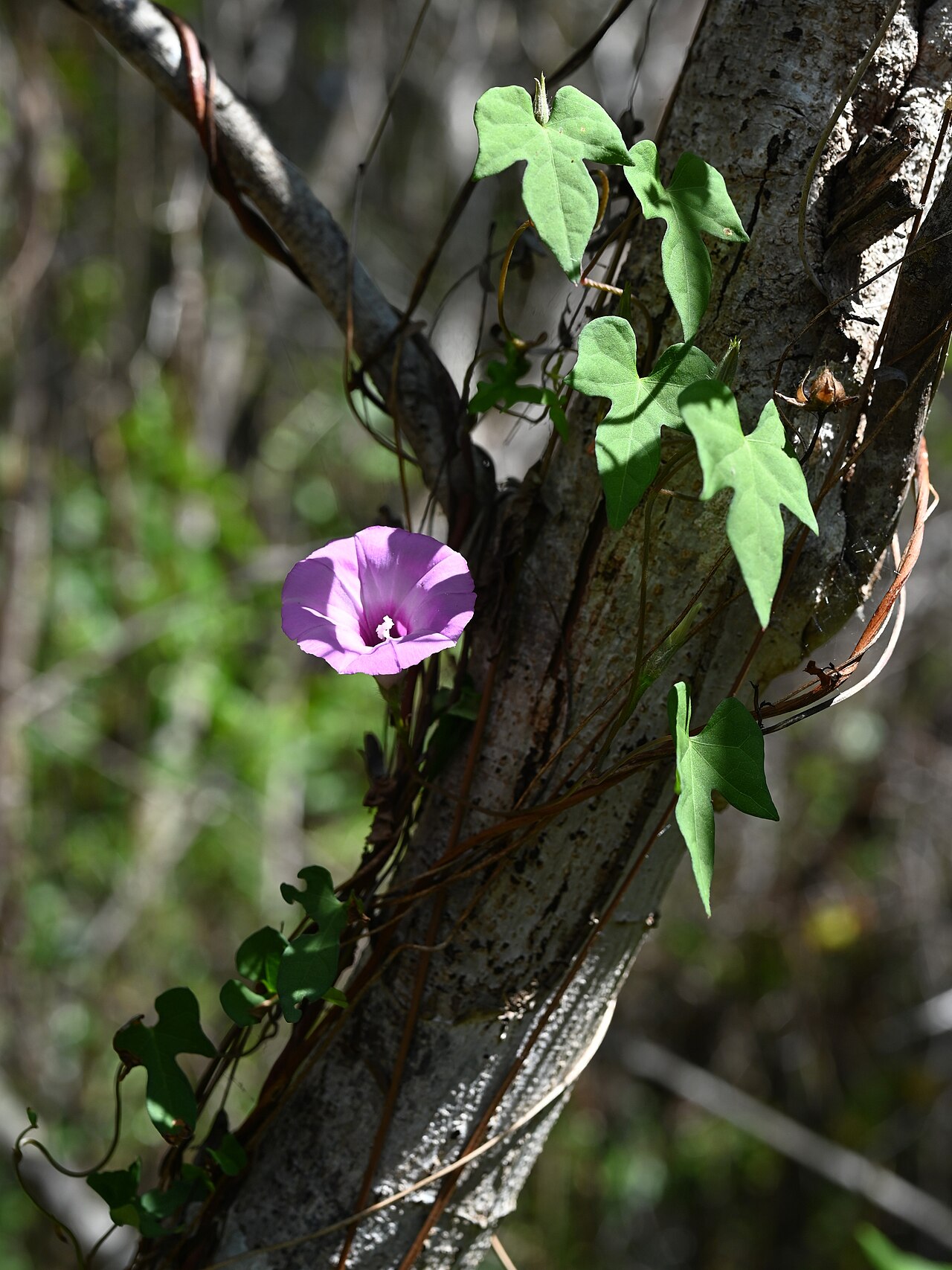
Tievine is a herbaceous perennial that grows from a woody, sometimes thickened taproot. Its stems are thin, twining counterclockwise around supports, smooth or sparsely hairy, and often 6 to 15 feet long by the end of summer. Without anything to climb, the stems trail across the ground and over low vegetation. In frost-prone areas the stems die back in winter and resprout from the root in spring.
Leaves
The leaves are alternate, on long stalks, and 1½ to 4 inches long. Their shape is very variable: some are simply heart-shaped, others have three (rarely five) pointed lobes, and lobed and unlobed leaves often appear on the same vine. The species name cordatotriloba, “heart-shaped and three-lobed,” refers to this mix.
Flowers
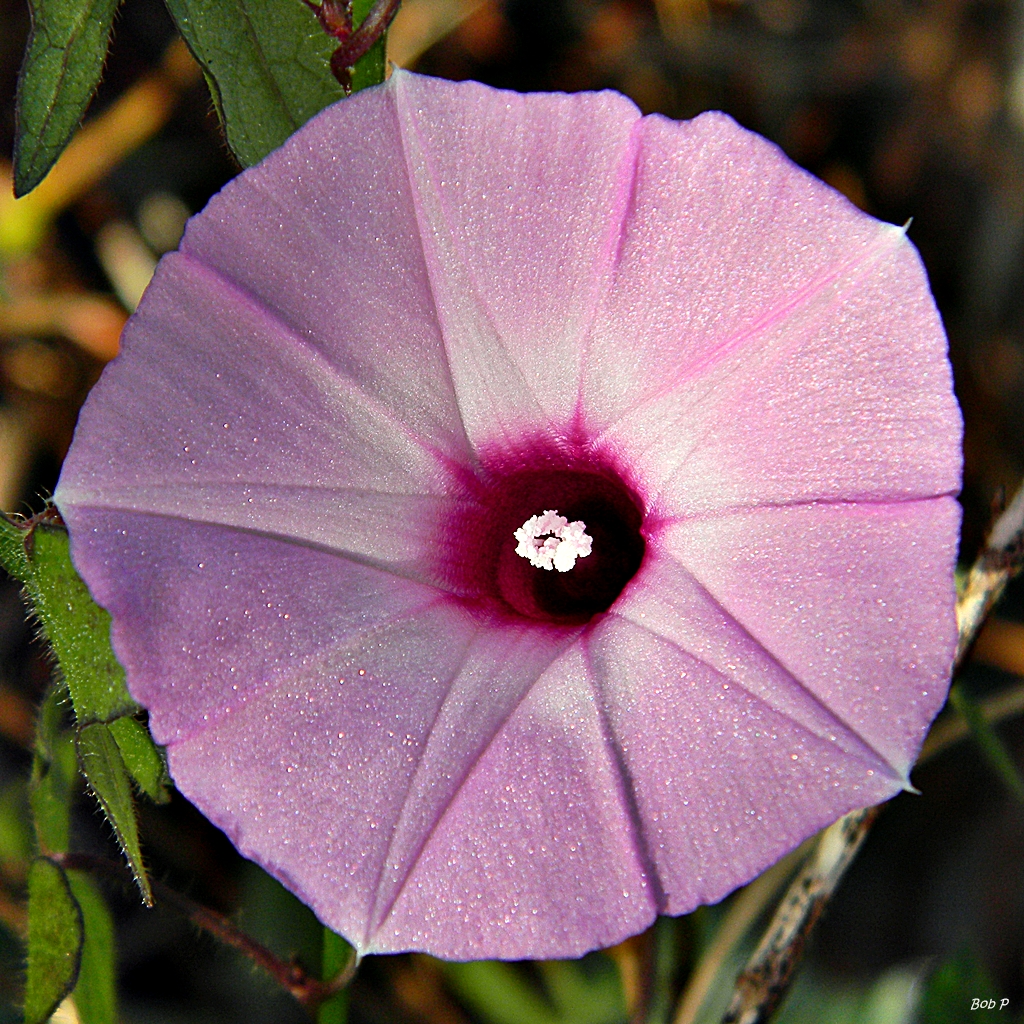
Flowers grow singly or in small clusters of two to several on stalks from the leaf axils. Each is funnel-shaped, about 1½ to 2 inches long and wide, with a five-sided, pleated rim. The color is lavender-pink to rosy purple, with a darker magenta or purple throat; white-flowered plants are rare. The sepals are oval and pointed, with hairy edges. Flowers open in early morning and wither by mid-afternoon.
Fruit & Seeds
After flowering, each blossom forms a small, round capsule about ⅓ inch across, covered in fine hairs, which splits to release up to four dark brown seeds. The hairy capsules are a useful identification feature and gave rise to the older synonym Ipomoea trichocarpa, meaning “hairy-fruited morning glory.”
Look-alikes
The introduced ivyleaf morning glory (Ipomoea hederacea) and tall morning glory (I. purpurea) are annuals with larger, often blue or deep purple flowers and very hairy stems and sepals. Native wild potato vine (I. pandurata) has larger white flowers with a purple throat. Small-flowered pink morning glories such as I. lacunosa and I. triloba have flowers under an inch long.
Quick Facts
| Scientific Name | Ipomoea cordatotriloba (syn. Ipomoea trichocarpa) |
| Family | Convolvulaceae (morning glory family) |
| Plant Type | Herbaceous perennial twining vine |
| Mature Height | Stems 6–15 ft long, climbing or trailing |
| Mature Spread | 6–15 ft |
| Growth Rate | Fast |
| Sun Exposure | Full sun to light shade |
| Water Needs | Low to medium; drought tolerant once established |
| Soil Type | Sandy, loamy or clay soils; tolerates poor, disturbed soil |
| Soil pH | About 5.5–8.0 |
| Bloom Time | July–October (much of the year in south Florida) |
| Flower Color | Lavender-pink to rose-purple with a darker throat |
| Fall Color | None; stems die back after frost |
| Fruit | Small round hairy capsule with up to 4 seeds |
| Deer Resistant | No; deer browse the leaves and stems |
| USDA Hardiness Zones | 7–11 |
Native Range
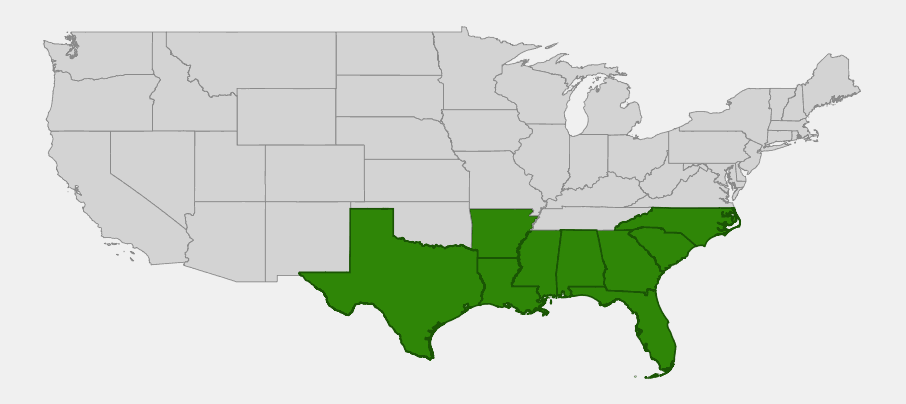
Tievine is native to the southeastern United States. USDA PLANTS lists it as native in nine states: North Carolina, South Carolina, Georgia, Florida, Alabama, Mississippi, Louisiana, Arkansas and Texas. Beyond the United States it extends south into Mexico and parts of the Caribbean.
It is most common on the Gulf and South Atlantic Coastal Plain, where it grows throughout Florida, along the coast from the Carolinas to Texas, and in the river valleys and old fields of the interior. In Texas it occurs from the eastern forests to central Texas and the coastal plain, and a variety sometimes called var. torreyana grows in parts of Texas. Toward its northern limits in North Carolina and Arkansas it is less common and found mostly in the coastal plain and lowlands.
Tievine thrives on disturbed, open ground and is often found along roadsides, fencerows, railroads, field margins and the edges of woods and pinelands. It is also a common weed of crop fields in parts of the South. In natural areas it grows in sandy pinelands, coastal scrub and hammock edges, where frequent fires or storms keep the canopy open.
📋 Regional plant lists featuring Tievine: Alabama, Georgia & Mississippi · North & South Florida
Growing & Care Guide
Tievine is easy to grow in sunny spots within its native range, and it needs almost no care. The main thing to plan for is its vigor: it climbs over anything nearby, reseeds, and returns each year from a deep root. Plant it where it can roam on a fence, trellis or meadow edge, not among small perennials or vegetable crops.
Light
Full sun gives the most flowers. It tolerates light shade along woodland edges but blooms less there.
Soil & Water
It is not fussy about soil and grows in sand, loam or clay, including poor and disturbed soil. Average moisture is ideal, but once established it tolerates summer drought well thanks to its deep root. Avoid fertilizer, which mainly produces more leaves and stems.
Planting Tips
Sow seed or set out young plants in spring after the soil has warmed. Provide a fence, trellis, chain-link, or a shrub border it can climb. A single plant can cover several feet of fence in one season. Keep it away from vegetable gardens and small perennials, which it can smother.
Pruning & Maintenance
Cut the vines back if they start to cover plants you want to keep. In fall or winter, cut the dead stems to the ground. To limit spreading, remove the seed capsules before they ripen, or pull seedlings while they are small; established plants have deep roots and are hard to remove completely.
Propagation
Grow it from seed. The hard seed coat germinates faster if you nick it with a file or soak the seeds overnight in warm water before sowing. Sow ½ inch deep in warm soil. Seedlings grow quickly and can flower in their first year. Plants can also be started from stem cuttings in summer.
Landscape Uses
- Fences and trellises: quick summer cover for chain-link, rail fences and arbors
- Pollinator and wildlife gardens: long-season nectar and pollen for native bees, including morning-glory specialists
- Meadows and field edges: a native climber for informal, sunny areas
- Coastal and sandy sites: tolerates sand, heat and drought
- Naturalized areas: useful where a vigorous native vine is welcome
Wildlife & Ecological Value
Tievine is a common roadside plant, but its long flowering season and specialized relationships with insects make it more valuable than it looks.
For Pollinators
The flowers are visited by many bees, including bumblebees, carpenter bees, sweat bees and leafcutter bees. Several native bees are morning-glory specialists that collect pollen only from Ipomoea flowers, such as the morning glory bee (Melitoma taurea), whose activity is timed to the early morning opening of the flowers. Skippers and other butterflies also take nectar.
For Birds
Birds rarely eat the hard seeds, but the dense tangles of vines over fences and shrubs offer cover for small birds, and the insects that feed on the foliage are food for birds raising young.
For Mammals
Deer and rabbits browse the leaves and tender stems. The seeds should be treated as toxic to people and pets; see below.
Ecosystem Role
Tievine is a host plant for several leaf-feeding insects that specialize on morning glories, including tortoise beetles, such as the golden tortoise beetle, and the caterpillars of several small moths. As a fast-growing native vine of disturbed ground, it quickly covers bare soil after clearing or storms.
Cultural & Historical Uses
Tievine was first illustrated in the early eighteenth century by the German botanist Johann Jacob Dillenius, whose illustration of a plant grown from Carolina seed later served as the type of Convolvulus carolinus. The plant was renamed several times, and for many years American botanists called it Ipomoea trichocarpa. Today the accepted name is Ipomoea cordatotriloba. The genus name Ipomoea comes from Greek words meaning “worm-like,” for the twining stems.
Safety note: the seeds of many morning glories contain alkaloids that can cause nausea, vomiting and other serious symptoms if eaten. Tievine is not well studied, so treat its seeds as toxic and do not eat any part of the plant. Keep seeds away from children and pets. Tievine is a relative of the sweet potato (Ipomoea batatas), but its roots are not edible.
In agriculture, tievine is better known as a weed than as a wildflower. Its twining stems wrap around cotton, soybeans and other crops and can tangle harvesting equipment. In gardens and natural areas, however, it is a cheerful native vine that offers late-season color and supports native bees.
Frequently Asked Questions
Is tievine a native plant?
Yes. Tievine is native to the southeastern United States, from North Carolina and Arkansas south to Florida and Texas, and it extends into Mexico and the Caribbean.
Is tievine invasive?
It is native, so it is not invasive in the ecological sense, but it can be weedy. It climbs aggressively, reseeds and resprouts from a deep root, and it is a problem weed in some crop fields. In gardens, plant it where it has room or keep it in check.
Is tievine poisonous?
The seeds of many morning glories contain toxic alkaloids. Treat tievine seeds as toxic, do not eat any part of the plant, and keep the seeds away from children and pets.
What is the difference between tievine and common morning glory?
Common or tall morning glory (Ipomoea purpurea) is an introduced annual with larger purple, blue or pink flowers and very hairy stems. Tievine is a native perennial with smaller lavender-pink flowers with a dark throat and leaves that are heart-shaped or three-lobed.
When does tievine bloom?
Mostly from July to October. In south Florida and other frost-free areas it can bloom much of the year. Each flower lasts only one morning.

Looking for a nursery that carries Tievine?
Browse our native plant nursery directory: Alabama & Arkansas · Florida & Georgia · Louisiana & Mississippi · North Carolina · South Carolina & Texas