
Showy Orchis (Galearis spectabilis)
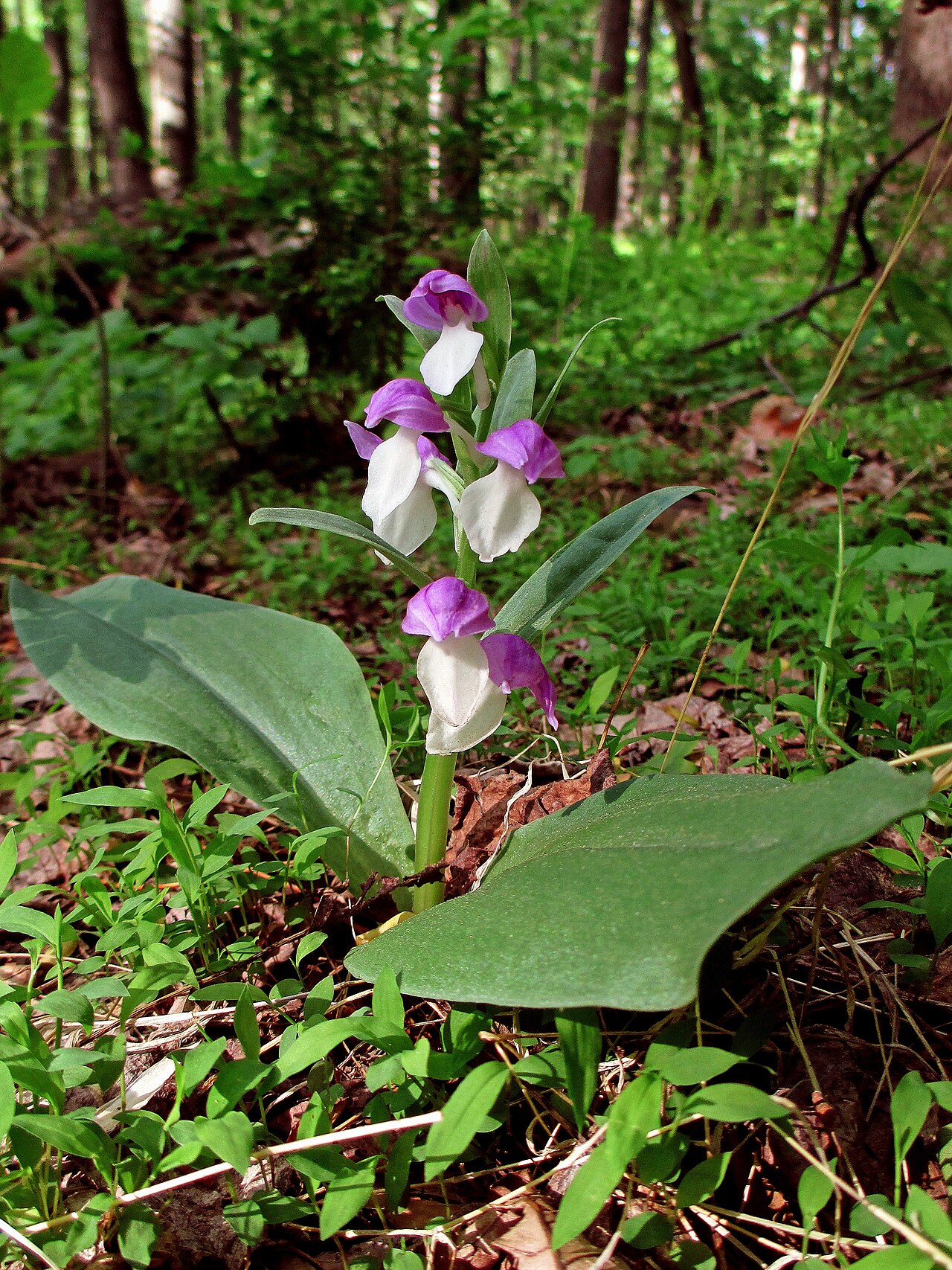
Galearis spectabilis, known as Showy Orchis or showy orchid, is one of the earliest and most charming native orchids of eastern woodlands. In spring, a pair of broad, glossy green leaves lies at the base of a short stalk carrying 2 to 12 two-toned flowers: a lavender to pink-purple hood above a clean white lip. The whole plant is usually only 4 to 8 inches tall, so it is easy to miss among the spring wildflowers until you are right beside it.
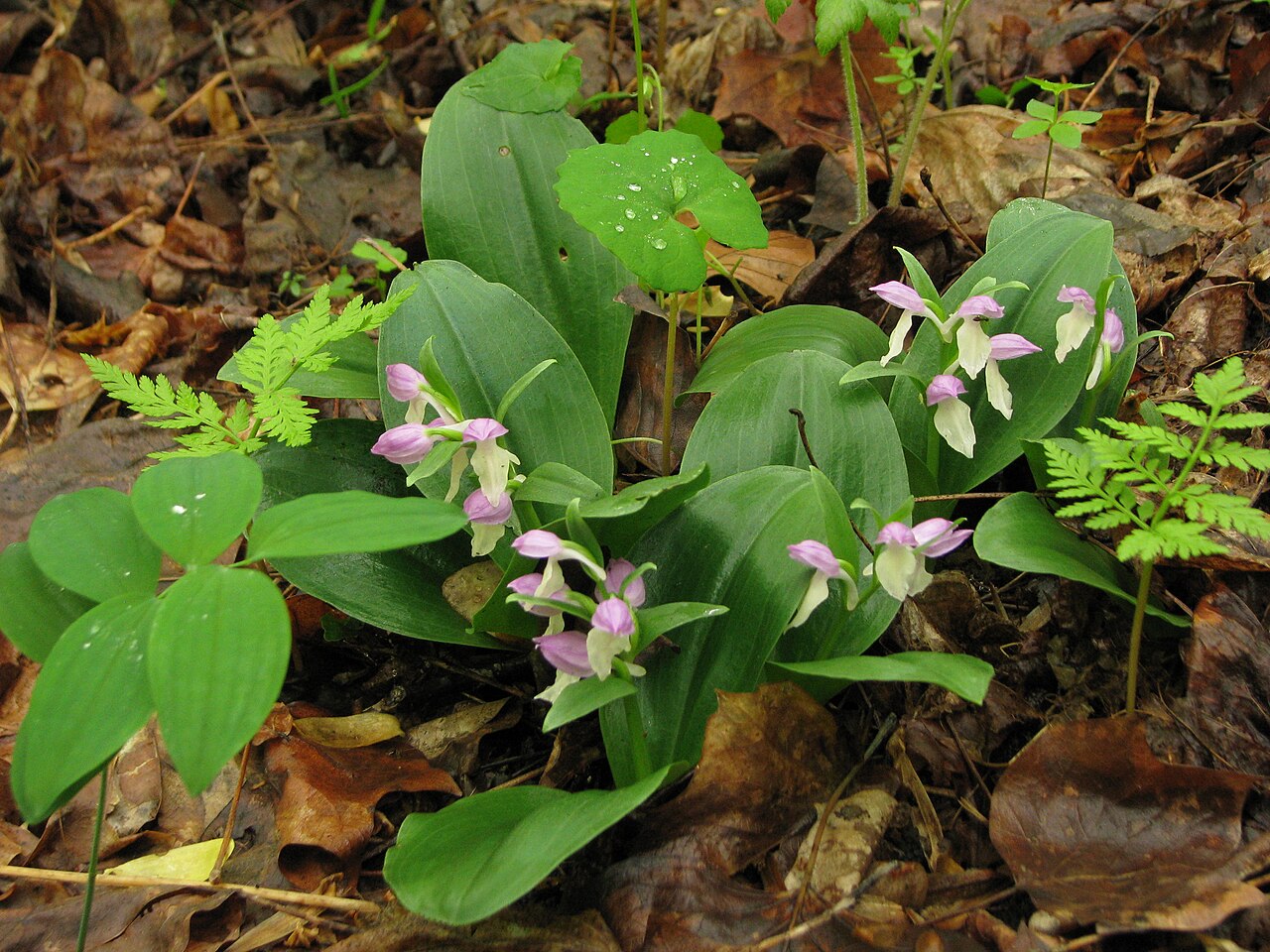
Showy orchis belongs to the orchid family (Orchidaceae). It grows from a short, fleshy rhizome with thick roots and depends on soil fungi throughout its life. It is a plant of rich, moist deciduous forests, often on slopes, ravines and stream terraces, where it blooms in April and May alongside trilliums, bloodroot and wild ginger. Its leaves usually last through the summer under the forest canopy.
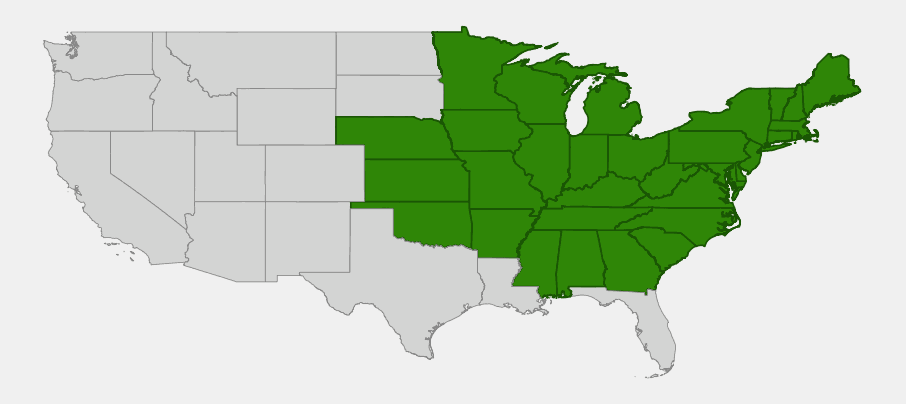
It ranges across much of the eastern United States from Maine and Minnesota south to Georgia, Alabama and Mississippi and west to Kansas, Nebraska and Oklahoma, and into southern Canada. It is the eastern orchid most people see first, but it is never abundant, and it should never be dug from the wild. This guide explains how to identify it and how to protect it.
Identification
Showy orchis is easy to identify in bloom. No other eastern woodland wildflower combines two large, shiny basal leaves with a short spike of purple-and-white orchid flowers. Out of bloom, the leaves alone can be confused with those of a few other spring plants.
Leaves
Each plant has two (occasionally one) broad, oval to oblong leaves about 3 to 8 inches long, smooth, fleshy and glossy green. They lie near the ground or angle upward from the base of the stem. The leaves appear in early spring and usually persist into late summer.
Flowers
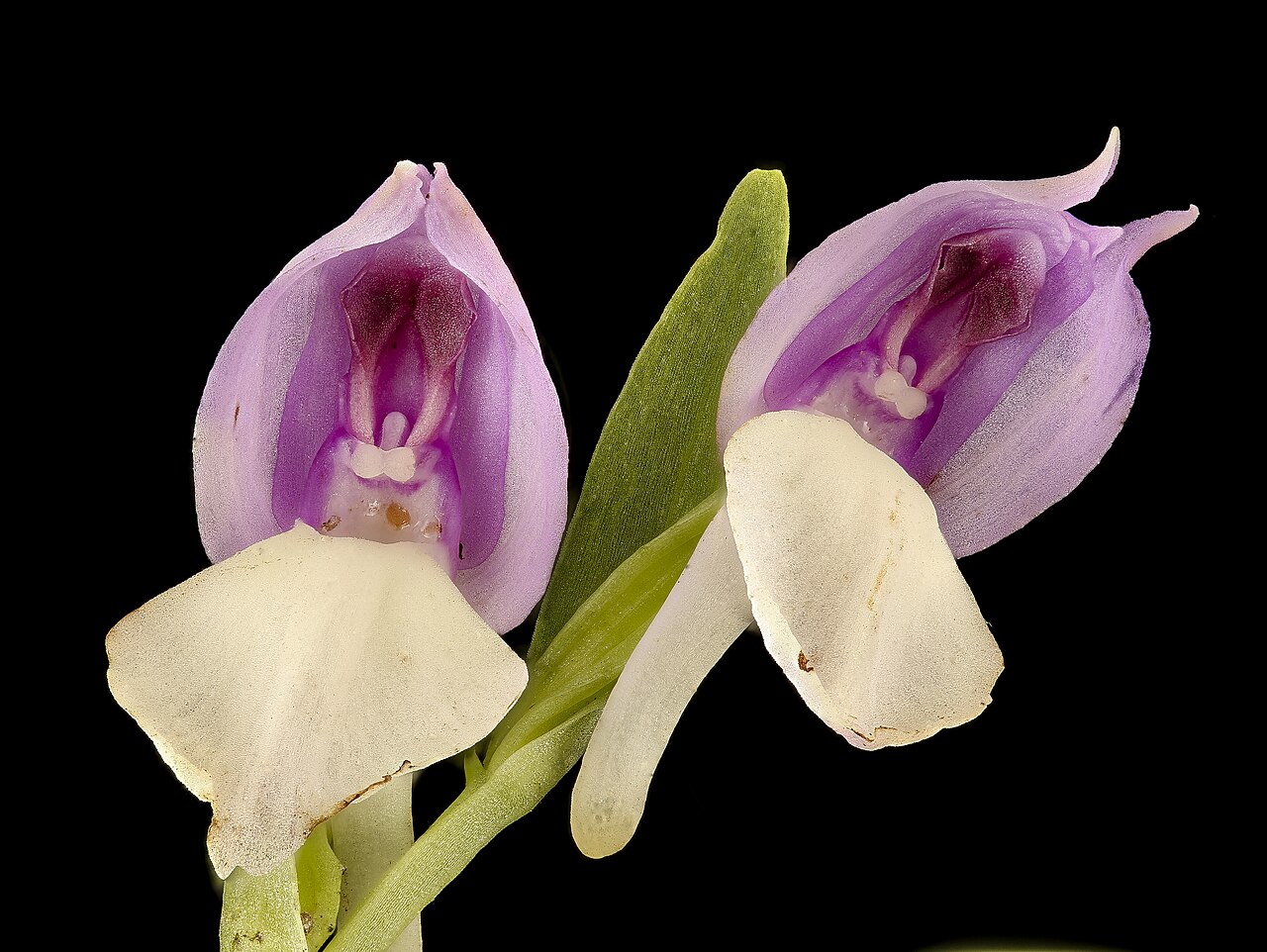
A short, thick, angled stalk 2 to 8 inches tall rises between the leaves and carries 2 to about 12 flowers, each at the base of a leaf-like green bract. The flowers are about an inch long. The three sepals and two petals form a lavender, pink or magenta hood (the galea that gives the genus its name) over the column. The lip is white, broad and slightly wavy, and it leads back to a thick spur that holds nectar. Rare forms have all-white or all-pink flowers. Flowers open from April to early June, earlier in the South and at low elevations.
Fruit & Seeds
Pollinated flowers develop into upright, ribbed capsules about an inch long, which ripen in summer. They split to release thousands of dust-fine seeds that drift on air currents. As with all orchids, the seeds must meet a compatible soil fungus to germinate, and young plants take several years to flower.
Roots & Growth
The plant grows from a short rhizome with thick, fleshy roots. Mature plants slowly form small clumps by offshoots from the rhizome. Plants can skip flowering in poor years and persist for many years in the same spot.
Look-alikes
Out of flower, the paired leaves can resemble those of Pink Lady’s Slipper, which are pleated with strong parallel veins and hairy, or those of young Mayapple or ramps (wild leeks), which have a strong onion smell. Showy orchis leaves are smooth, shiny and fleshy, without hairs or smell.
Quick Facts
| Scientific Name | Galearis spectabilis (syn. Orchis spectabilis, Galeorchis spectabilis) |
| Family | Orchidaceae (orchid family) |
| Plant Type | Terrestrial orchid; herbaceous perennial from a rhizome |
| Mature Height | 4–8 in (occasionally to about 10 in) |
| Mature Spread | 4–8 in; slowly forms small clumps |
| Growth Rate | Slow |
| Sun Exposure | Part shade to shade |
| Water Needs | Moderate; evenly moist, well-drained soil |
| Soil Type | Rich, humusy forest loam |
| Soil pH | About 5.5–7.5 (slightly acidic to neutral) |
| Bloom Time | April–June |
| Flower Color | Lavender to magenta hood with a white lip |
| Fall Color | None; leaves usually wither by late summer |
| Fruit | Upright ribbed capsule with dust-like seeds |
| Deer Resistant | No; deer browse the plants |
| USDA Hardiness Zones | 3–8 |
Native Range
USDA PLANTS lists showy orchis as native in 32 states and the District of Columbia across the eastern half of the country: from Maine, Vermont and New York west through the Great Lakes states to Minnesota, Iowa, Nebraska and Kansas, and south to Georgia, Alabama, Mississippi, Arkansas and Oklahoma. In Canada it grows in Ontario, Quebec and New Brunswick.
It is most frequent in the Appalachians and the hilly, forested parts of the Ohio Valley, Northeast and upper Midwest. Toward the Coastal Plain and the western prairie edge it becomes scattered and is often limited to ravines and stream valleys with rich soil. It is uncommon to rare in several states at the edges of its range.
Its habitat is mature, moist deciduous and mixed forest: rich, often limestone-influenced soils on slopes, coves, ravine bottoms, stream terraces and the edges of seeps. It grows under maples, beech, basswood, tulip tree and oaks, usually in part to full shade. It disappears where forests are cleared, grazed or invaded by dense non-native shrubs.
📋 Regional plant lists featuring Showy Orchis: New York, Pennsylvania & Northern New Jersey · Ohio & Indiana · Michigan, Wisconsin & Eastern Minnesota · Kentucky & Tennessee · Nebraska, Kansas & Eastern Colorado · Connecticut, Massachusetts & Rhode Island · New Hampshire, Maine & Vermont · Maryland, Virginia & West Virginia · Delaware, Southern New Jersey & Long Island · Illinois, Iowa & Missouri · Alabama, Georgia & Mississippi
Growing & Care Guide
Showy orchis can be grown in a shady woodland garden, but only from nursery-propagated plants, and even then it is slow and particular. Wild plants should never be dug: orchids depend on soil fungi and almost never survive transplanting, and digging damages populations that are already scattered. If you have it on your property, the most important thing is to protect the forest it grows in.
Light
Part shade to full shade under deciduous trees. It gets most of its sun in early spring before the canopy closes. Avoid hot afternoon sun.
Soil & Water
It needs rich, loose, humusy woodland soil that stays evenly moist but drains well; slightly acidic to neutral soil works best. Mulch with shredded leaves to imitate the forest floor. Water in dry spells during spring and early summer. Do not use chemical fertilizers.
Planting Tips
Plant propagated plants in spring or early fall with the growing bud about an inch below the surface. Choose a spot among other spring wildflowers and ferns where it will not be disturbed. Mark it, because the plant disappears after its leaves wither.
Pruning & Maintenance
No pruning is needed. Let leaves wither naturally. Keep slugs in check in spring, as they eat young shoots and flowers, and protect plants from deer with fencing if needed. Remove invasive groundcovers and shrubs, such as garlic mustard and bush honeysuckles, which crowd it out.
Propagation
In the garden, established clumps very slowly produce offshoots, which can be separated when dormant. Seed propagation requires laboratory culture, which a few specialist nurseries use. Leave wild plants and their seeds in place.
Landscape Uses
- Woodland gardens: a small, choice spring orchid for shady beds with rich soil, using propagated plants
- Wildflower walks: one of the most recognizable native orchids of eastern spring woods
- Forest stewardship: a sign of rich, intact deciduous forest worth protecting
- Native bee and butterfly food: early nectar for queen bumblebees and other long-tongued insects
- Photography: striking two-toned flowers in April and May
Wildlife & Ecological Value
Unlike many orchids that deceive their visitors, showy orchis offers real nectar, and it is an early spring food source for bumblebees in the forest.
For Pollinators
The main pollinators are bumblebee queens, which emerge in early spring and visit the flowers for the nectar held in the spur. As a bee probes for nectar, the orchid’s pollen packets (pollinia) stick to its head and are carried to the next flower. Other long-tongued bees, butterflies and moths also visit.
For Birds
Birds make little direct use of it. It grows in forest habitats that support many breeding songbirds, such as wood thrushes and ovenbirds.
For Mammals
White-tailed deer browse the leaves and flower stalks, and heavy deer browsing is one reason the plant has declined in some areas. Slugs also feed on it.
Ecosystem Role
Like other orchids it depends on soil fungi for germination and nutrition, linking it to the underground fungal networks of the forest floor. It is part of the spring wildflower community of rich hardwood forests, where it blooms and fills its leaves with energy before the tree canopy closes.
Cultural & Historical Uses
Linnaeus described the plant in 1753 as Orchis spectabilis, placing it in the same genus as many European orchids. It was later moved to Galearis, a name that refers to the hood (Latin galea, a helmet). The species name spectabilis means “showy” or “remarkable.” Older field guides may list it as Orchis spectabilis.
For generations of wildflower lovers in the eastern United States, showy orchis has been one of the treats of a spring walk in rich woods, often found among trilliums and bloodroot. It is popular with wildflower photographers and appears on many state lists of protected or rare plants at the edges of its range.
Collection for gardens, deer overbrowsing, forest clearing and invasive plants have all reduced populations in some areas. Native plant societies and orchid conservation groups encourage people to enjoy it in place, to buy only propagated plants, and to support the protection of old, rich hardwood forests.
Frequently Asked Questions
Can I grow showy orchis in my garden?
Yes, in a shady woodland garden with rich, moist, well-drained soil, but only from nursery-propagated plants. It is slow and can be difficult. Never dig plants from the wild; they rarely survive and digging harms wild populations.
When does showy orchis bloom?
From April to early June, depending on latitude and elevation. It usually blooms with trilliums, wild geraniums and other mid-spring wildflowers.
Is showy orchis rare?
It is widespread but rarely abundant, and it is considered rare or protected in some states, especially at the edges of its range. Habitat loss, deer browsing and collection are the main threats.
What pollinates showy orchis?
Mainly bumblebee queens in early spring, which feed on nectar in the flower’s spur and carry away pollen packets. Other long-tongued bees, butterflies and moths also visit.
Does showy orchis come in other colors?
Most plants have a lavender to magenta hood and a white lip, but rare forms have all-white or all-pink flowers.

Looking for a nursery that carries Showy Orchis?
Browse our native plant nursery directory: Alabama & Arkansas · Connecticut, Delaware & Georgia · Illinois, Indiana, Iowa & Kansas · Kentucky, Maine, Maryland, Massachusetts, Michigan, Minnesota, Mississippi & Missouri · Nebraska, New Hampshire, New Jersey, New York, North Carolina, Ohio & Oklahoma · Pennsylvania, Rhode Island, South Carolina, Tennessee, Vermont & Virginia · West Virginia & Wisconsin