
Desert Calico (Loeseliastrum matthewsii)
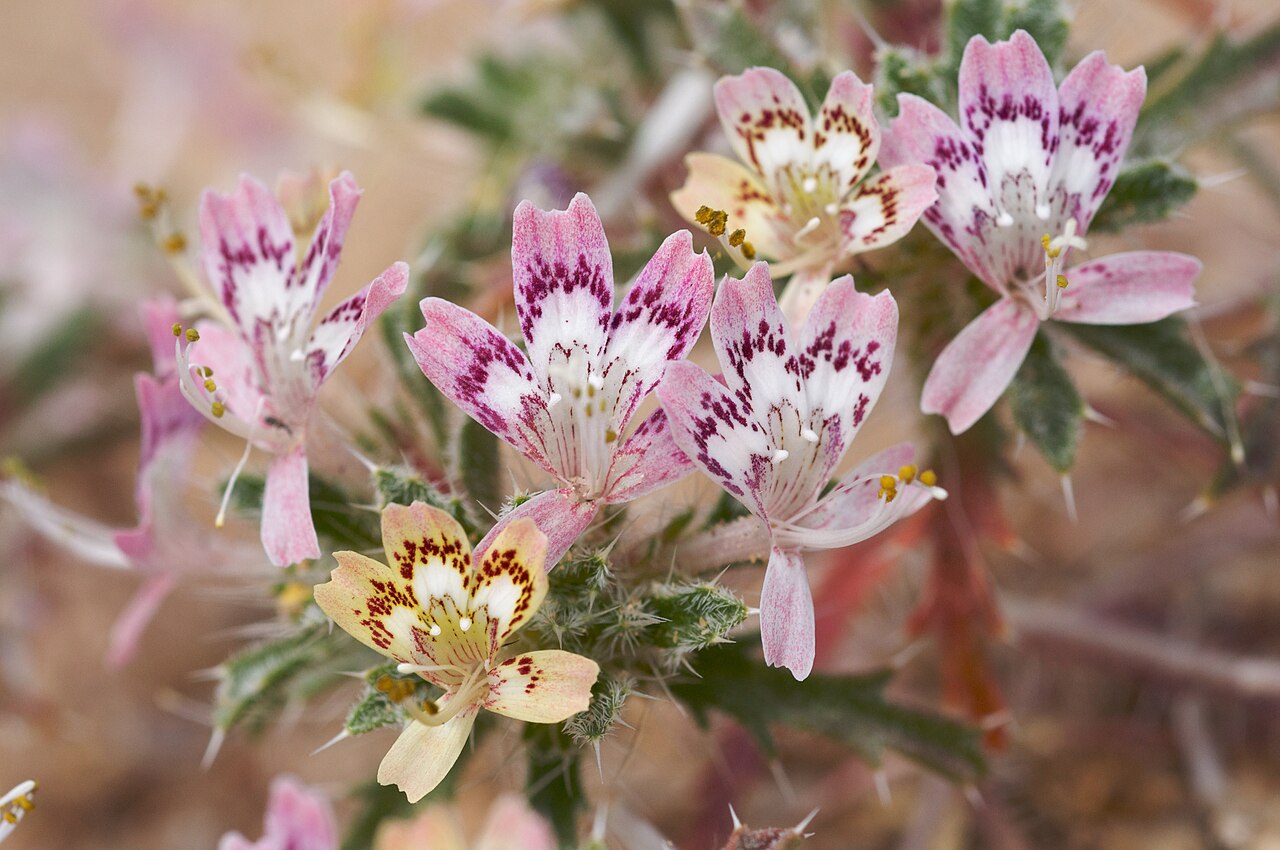
Loeseliastrum matthewsii, known as Desert Calico, is a tiny spring annual in the phlox family (Polemoniaceae). It forms low tufts or small mats only an inch or two tall, with stiff, bristle-toothed leaves, and in a good wildflower year it covers sandy and gravelly desert flats with pink to rose-purple flowers. Each flower has a white center decorated with wavy, dark red marks, the “calico” pattern that gives the plant its common name.
Desert calico is native to the Mojave and Colorado deserts of southeastern California, the Owens Valley and the edge of the Great Basin, and southern and western Nevada, with records reaching northwestern Arizona and northern Baja California. It grows on open sandy and gravelly flats, washes, alluvial fans and rocky slopes, often in creosote bush scrub and Joshua tree woodland.
Like many desert annuals, it appears only after good winter rains and can be abundant one spring and almost absent the next. It is a plant to look for on the ground, not in the nursery: kneel down and the flowers reward a close look, and they are a favorite of desert photographers in parks such as Joshua Tree, Death Valley and Red Rock Canyon.
Identification
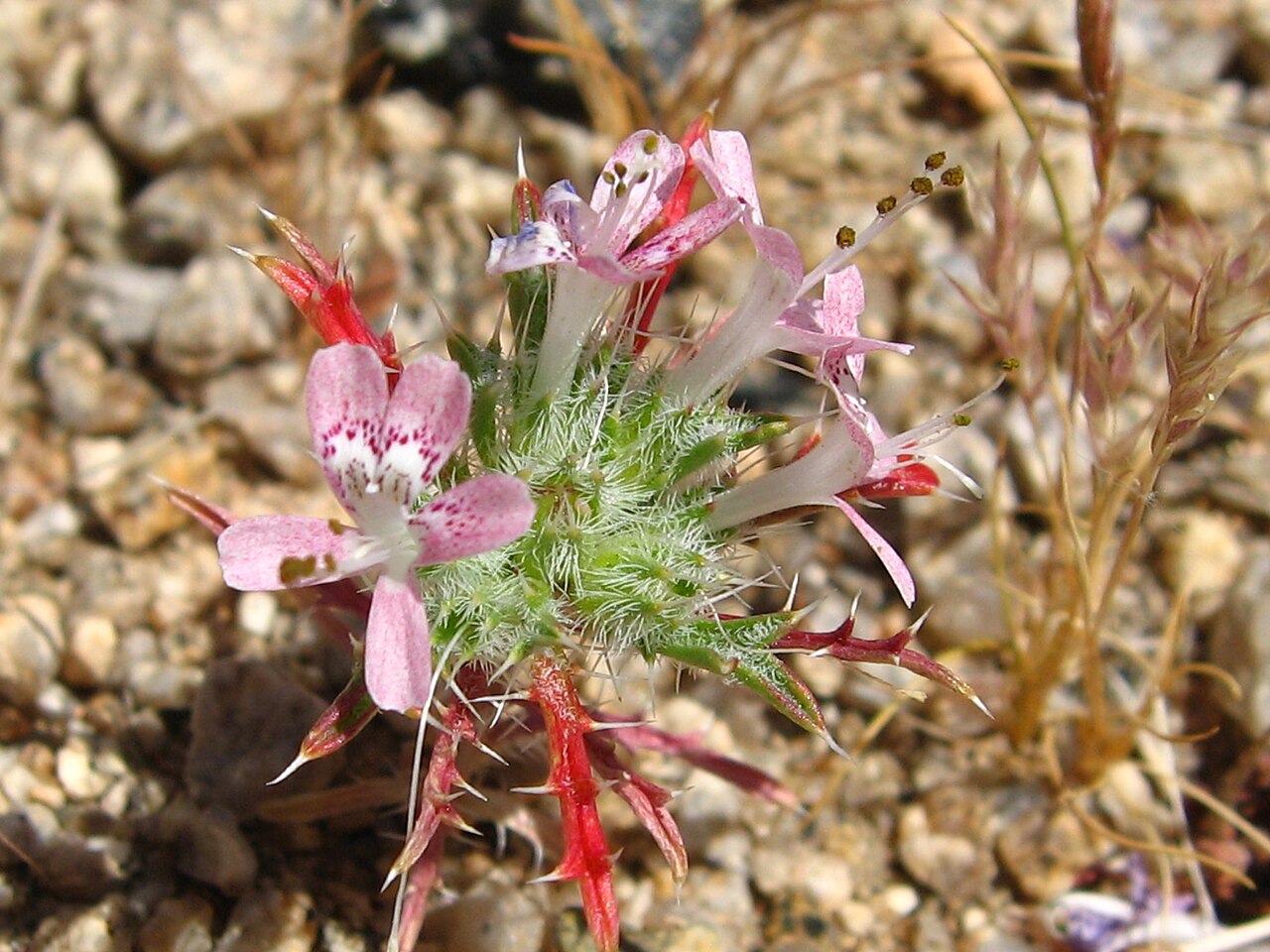
Look for a very low, bristly tuft with pink flowers that look two-lipped, with a white throat painted with dark red arches or spots. The whole plant usually fits in the palm of a hand.
Growth Habit
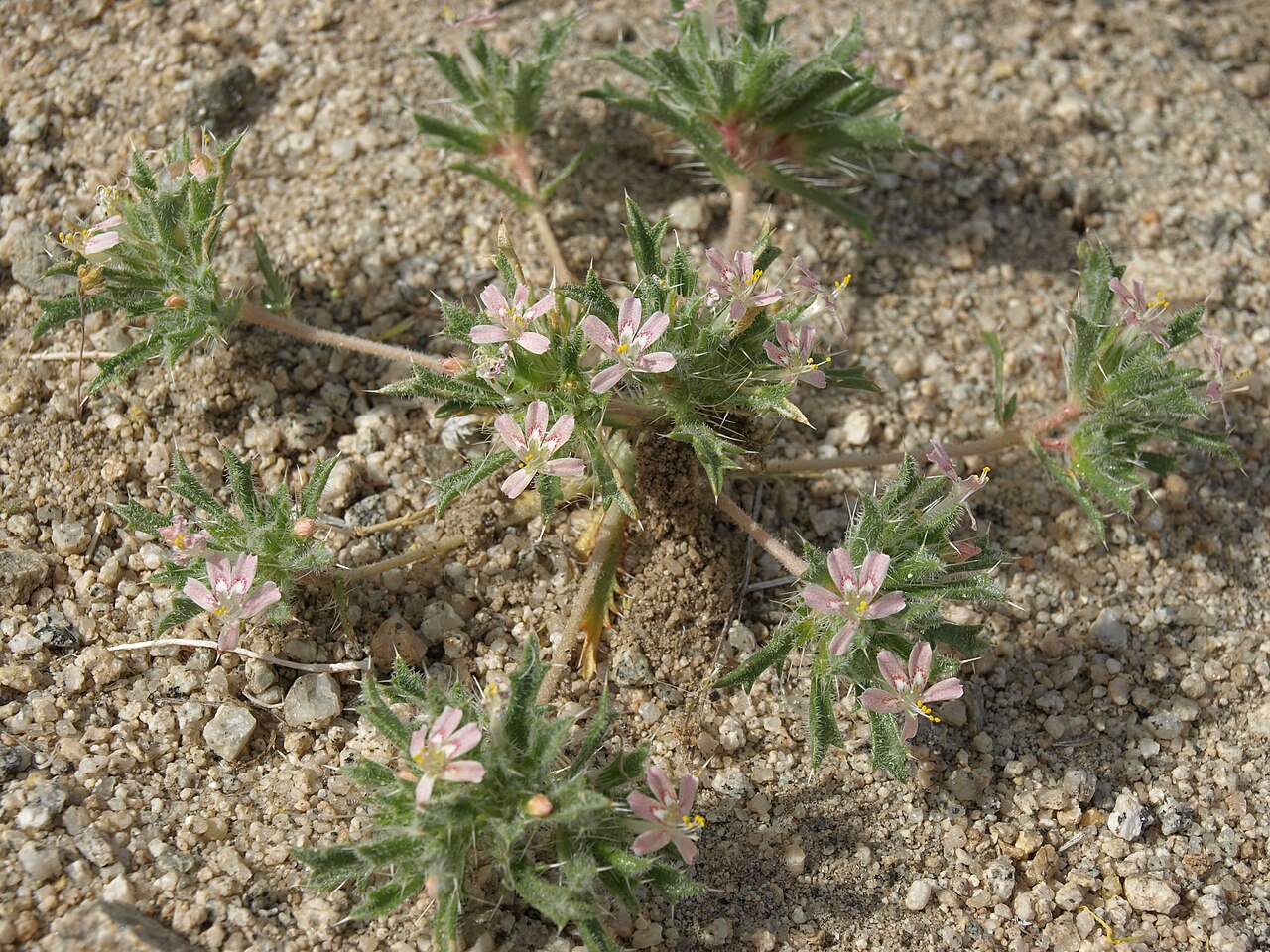
Desert calico is an annual that sprouts after winter rain, blooms and sets seed within a few months. It branches from the base into short, spreading stems, forming a tuft or loose mat usually 1 to 3 inches tall and 2 to 6 inches across. In dry years plants may be only a single tiny rosette with a few flowers; in wet years they can form wide, flower-covered cushions.
Leaves
The leaves are narrow, about 1/2 to 1 1/4 inches long, and divided toward the tip into a few sharp teeth that end in white bristles. They are crowded along the stems and around the flowers, giving the plant a prickly, bristly look, although the bristles are not stiff enough to hurt.
Flowers
The flowers are about 1/2 to 3/4 inch long and tucked among the upper leaves. The corolla is pink, rose or lavender (occasionally pale or yellowish) and noticeably irregular: the upper lobes are larger and marked at the base with white and with wavy, dark red to maroon arches and dots, while the lower lobes are plainer and bend downward. The stamens and style stick out of the flower. Flowering runs from March to June depending on elevation and rainfall.
Fruit & Seeds
The fruit is a small, three-chambered capsule hidden among the bristly bracts. It splits to release a few tiny seeds, which can stay dormant in the soil for years until a wet winter triggers germination.
Look-alikes
Schott’s calico (Loeseliastrum schottii) of the Colorado Desert and Arizona has paler, lavender to whitish flowers with a smaller purple patch and a more regular shape. Bristly langloisia (Langloisia setosissima) has very bristly leaves and lavender flowers with an even, symmetrical corolla. Other small pink desert annuals, such as Bigelow’s monkeyflower and purple mat (Nama demissa), lack the bristle-tipped leaf teeth and the calico markings.
Quick Facts
| Scientific Name | Loeseliastrum matthewsii |
| Family | Polemoniaceae (phlox family) |
| Plant Type | Low, tufted spring annual |
| Mature Height | 1–3 in |
| Mature Spread | 2–6 in |
| Growth Rate | Fast (completes its life cycle in one spring) |
| Sun Exposure | Full sun |
| Water Needs | Very low; depends on winter rain |
| Soil Type | Sandy, gravelly or rocky, very well drained |
| Soil pH | Neutral to alkaline (about 7.0–8.5) |
| Bloom Time | March–June |
| Flower Color | Pink to rose-purple with a white center and dark red markings |
| Fall Color | None (annual) |
| Fruit | Small three-chambered capsule |
| Deer Resistant | Unknown; rarely browsed because of its tiny size and bristly leaves |
| USDA Hardiness Zones | Annual; grows in desert climates of about zones 7–10 |
Native Range
Desert calico is a plant of the Mojave Desert and nearby deserts. USDA PLANTS lists it as native in California and Nevada. The Lady Bird Johnson Wildflower Center describes its range as southern California northeast to northwestern Arizona and south into Mexico, where it reaches northern Baja California. It is not found in Canada.
In California it grows through the Mojave Desert, the Colorado Desert portion of the Sonoran Desert, the Owens Valley and the desert slopes of the southern Sierra Nevada, the White and Inyo Mountains and the desert edges of the Transverse and Peninsular Ranges. In Nevada it occurs in the southern and western parts of the state, in the Mojave Desert and along the transition to the Great Basin.
It grows on open, sandy and gravelly flats, washes, alluvial fans, desert pavement and rocky slopes, from low desert valleys up to around 5,500 feet. It is common in creosote bush scrub and Joshua tree woodland, often in the open spaces between shrubs.
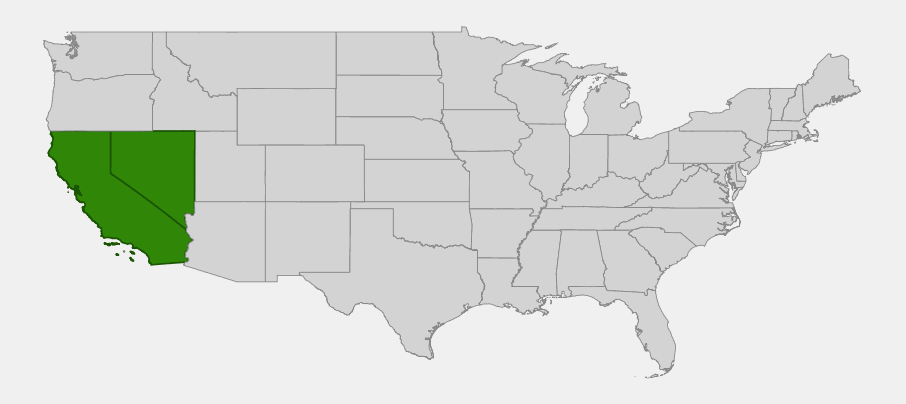
📋 Regional plant lists featuring Desert Calico: California & Nevada
Growing & Care Guide
Desert calico is a wildflower of desert wildlands rather than a garden plant, and plants or seed are rarely offered for sale. It can be tried in a desert garden from responsibly sourced seed, but only where its natural conditions can be matched. Never dig plants or strip seed from wild populations, and do not collect in national parks, preserves or other protected land.
Light
Full sun all day. It grows in open, unshaded ground between shrubs and will not tolerate shade.
Soil & Water
It needs coarse, sandy or gravelly soil that drains instantly, with no added compost or fertilizer. In the desert it depends entirely on winter rain; in a garden, a few deep waterings in winter imitate a good rainy season. Summer water is not needed, because the plant dies after it sets seed.
Planting Tips
Scatter seed on the surface of a sandy or gravelly bed in late fall, just before the winter rains, and press it in lightly. Do not cover it deeply. Germination is often uneven, and some seed may wait for a later year. Plant it near the front of a rock or gravel garden, where its tiny flowers can be seen.
Pruning & Maintenance
No pruning is needed. Keep weeds, especially non-native grasses such as red brome and Mediterranean grass, away from the planting, since they crowd out small desert annuals. Leave the dry plants in place in summer so seed can fall back to the soil.
Propagation
Desert calico is grown only from seed. Seeds of many desert annuals germinate best after cool, wet conditions in winter, and a share of each crop stays dormant. Sow outdoors in fall rather than starting plants in pots, because seedlings resent transplanting.
Landscape Uses
- Desert wildflower gardens: a tiny, jewel-like annual for sandy or gravelly beds
- Rock and gravel gardens: fits between stones where the flowers can be seen up close
- Pollinator plantings: early spring flowers for native bees in desert gardens
- Restoration: part of the native annual flora of creosote bush scrub
- Wildflower viewing: a favorite of photographers in desert parks after wet winters
Wildlife & Ecological Value
Small as it is, desert calico is part of the spring annual bloom that feeds desert insects, birds and small mammals after a wet winter.
For Pollinators
The flowers are visited by native bees, bee flies and other small insects that work the spring desert bloom. The dark red marks on the upper lobes act as nectar guides that lead visitors toward the center of the flower.
For Birds
The tiny seeds fall to the ground, where they join the seed bank eaten by ground-feeding desert birds such as sparrows and quail.
For Mammals
Kangaroo rats, pocket mice and harvester ants gather and store the seeds of desert annuals, and small mammals may nibble the young plants in spring.
Ecosystem Role
Desert calico fills the open spaces between shrubs in a wet spring, and its seeds rebuild the soil seed bank for drier years. Annuals like it are an important part of desert plant diversity, and they are especially threatened where invasive annual grasses spread and fuel fires.
Cultural & Historical Uses
The genus name Loeseliastrum means “resembling Loeselia,” a related genus named for the seventeenth-century Prussian botanist Johann Loesel. The species name honors Washington Matthews, a U.S. Army surgeon and ethnographer who worked in the Southwest in the 1800s.
Desert calico and its relative Schott’s calico were long placed in the genus Langloisia, and older field guides and floras may list it as Langloisia matthewsii. They were moved to their own genus because of differences in their flowers and leaves.
The common name compares the flower’s painted white center, with its wavy red marks, to printed calico fabric. In a good year the flowers are so thick in places like Joshua Tree National Park and the Mojave National Preserve that they tint the ground pink.
Frequently Asked Questions
Why is it called desert calico?
The white center of each pink flower is marked with wavy, dark red arches and dots that look like the printed pattern on calico fabric.
When does desert calico bloom?
From March to June, depending on elevation and on how much rain fell during the winter. In dry years it may barely bloom at all.
Can I grow desert calico in my garden?
Only in a desert garden with very sandy or gravelly soil and full sun, from seed sown in fall. Seed is rarely sold, and wild plants and seed should never be collected, especially on protected land.
Is desert calico a perennial?
No. It is an annual that germinates after winter rain, blooms in spring and dies after setting seed. Its seeds can wait in the soil for years.
Where can I see desert calico?
On sandy and gravelly flats in the Mojave and Colorado deserts of California and southern Nevada, including Joshua Tree and Death Valley National Parks, Red Rock Canyon and the Owens Valley.

Looking for a nursery that carries Desert Calico?
Browse our native plant nursery directory: California · Nevada

