
Tiehm’s Buckwheat (Eriogonum tiehmii)
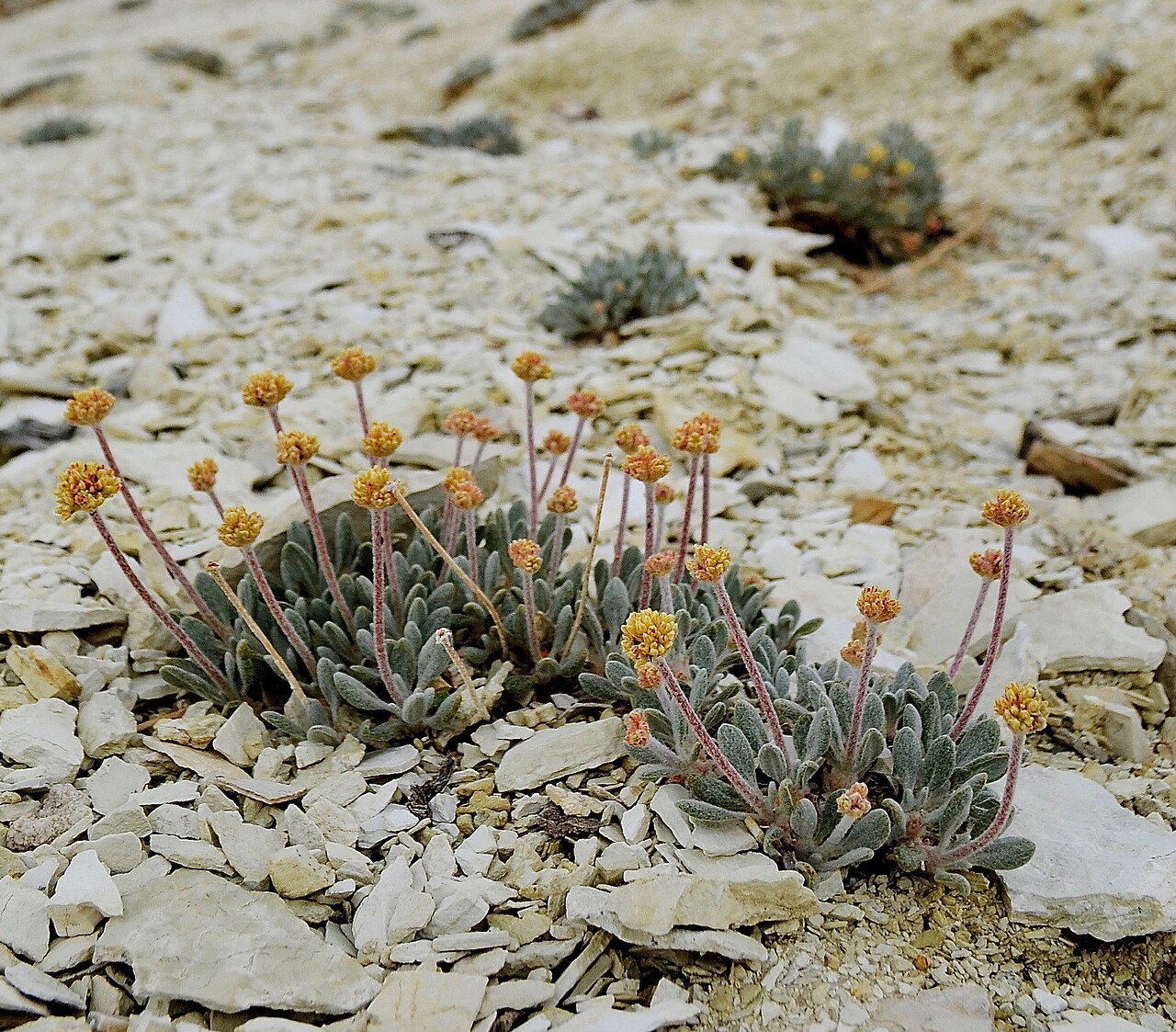
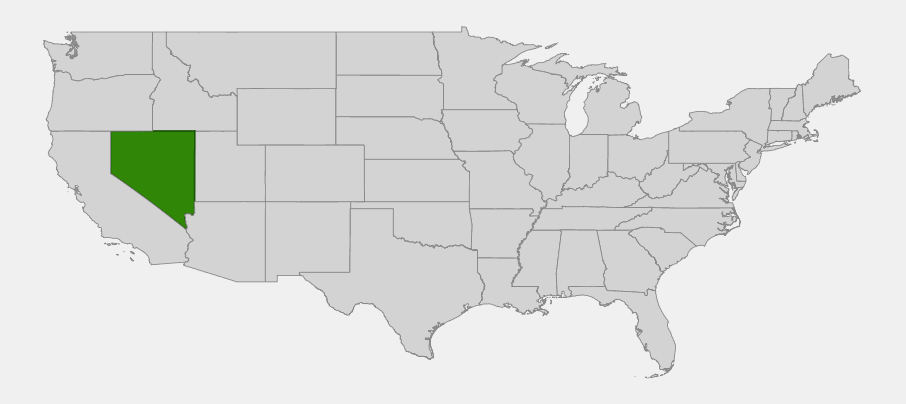
Eriogonum tiehmii, Tiehm’s Buckwheat, is one of the rarest plants in North America. It is a small, mat-forming perennial wildflower that grows in only one place on Earth: a few barren, mineral-rich hillsides at Rhyolite Ridge in the Silver Peak Range of Esmeralda County, Nevada, covering only about 10 acres of occupied habitat.
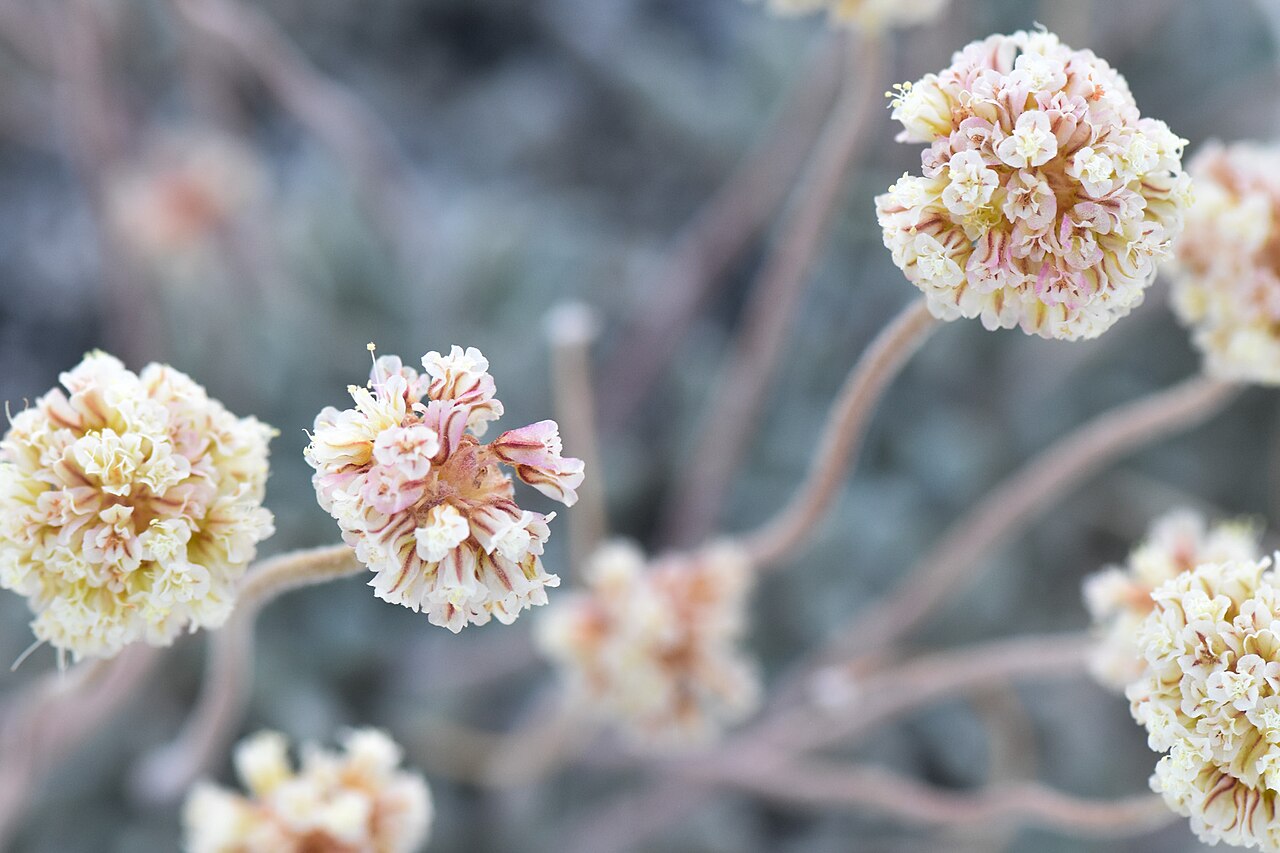
It has silvery-gray, woolly leaves in low cushions and, in early summer, round heads of tiny cream to pale yellow flowers that often turn pinkish with age. The soils where it grows are unusual, rich in clay, lithium and boron, and the plant appears to be closely adapted to them.
Tiehm’s buckwheat was listed as endangered under the U.S. Endangered Species Act in 2022, with critical habitat designated around its population. Its habitat overlaps a large lithium and boron deposit, which made it a national symbol of the tension between conservation and clean-energy mining. This page is an identification and appreciation guide. The plant must never be dug, collected or disturbed.
Identification
Tiehm’s buckwheat is a low, cushion-forming buckwheat with gray-woolly leaves and long, leafless stalks topped by single round heads of small flowers.
Leaves & Form
It forms low mats about 4 to 12 inches across from a woody base. The leaves are clustered at the base, oval to elliptic, about ½ to ¾ inch long and ¼ inch wide, and densely covered with white to gray woolly hairs on both surfaces, though the upper surface may become greener with age.
Flowers
In early summer, slender, leafless flowering stalks rise 2 to 6 inches above the mat. Each ends in a single, round head made up of many tiny flowers, cream to pale yellow when fresh and often aging to pink, rust or reddish-brown. Like other wild buckwheats, the flowers have six petal-like tepals.
Fruit
The fruit is a tiny, three-angled achene, typical of the buckwheat family.
Look-alikes
Several other cushion buckwheats grow in the Great Basin, such as Sulfur Buckwheat, which has umbrella-like flower clusters on branched stalks. Tiehm’s buckwheat is identified mainly by its single round heads on leafless stalks, its very woolly leaves and its location: it grows nowhere else but Rhyolite Ridge.
Quick Facts
| Scientific Name | Eriogonum tiehmii Reveal |
| Family | Polygonaceae (buckwheat family) |
| Plant Type | Cushion-forming perennial; federally endangered Nevada endemic |
| Mature Height | 2–6 in (in flower) |
| Mature Spread | 4–12 in |
| Growth Rate | Slow |
| Sun Exposure | Full sun |
| Water Needs | Very low; arid |
| Soil Type | Dry clay and shale rich in lithium and boron |
| Soil pH | Alkaline |
| Bloom Time | Early summer (about June–July) |
| Flower Color | Cream to pale yellow, aging pink to rust |
| Fall Color | None |
| Fruit | Tiny three-angled achene |
| Deer Resistant | Unknown; protected species |
| USDA Hardiness Zones | Not applicable; not cultivated |
Native Range
Tiehm’s buckwheat is endemic to Nevada and is known from a single area at Rhyolite Ridge in the Silver Peak Range of Esmeralda County, in the western Great Basin. USDA PLANTS lists it in Nevada only. Its few subpopulations lie within a range of about three square miles, and the plants themselves occupy roughly 10 acres.
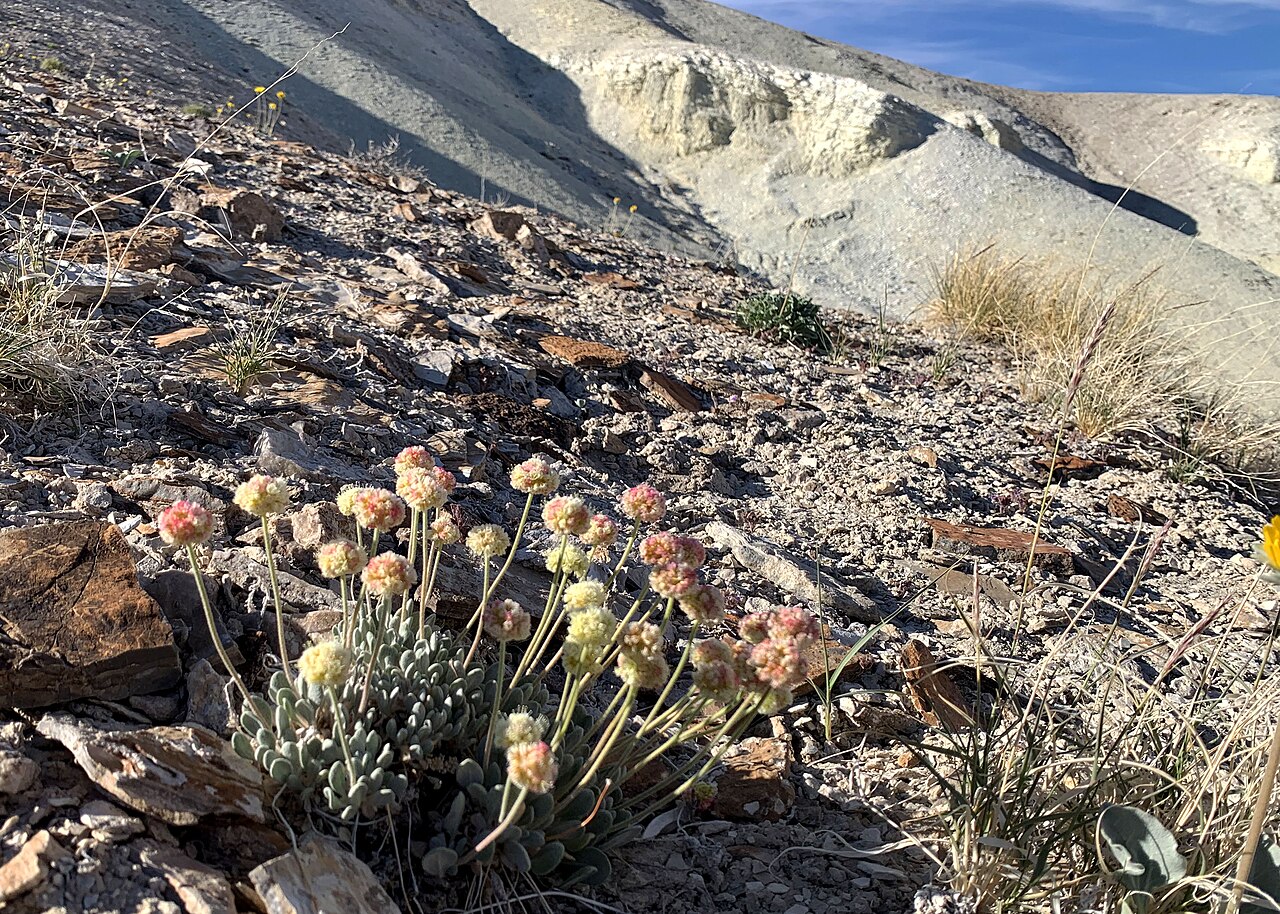
It grows on dry, open, sparsely vegetated hillsides at about 6,000 feet, on light-colored clay and shale soils derived from ancient lake sediments. These soils are rich in lithium and boron and support few other plants, which may give the buckwheat a refuge from competition.
In 2020, a large share of the population was damaged in a short time, and researchers concluded that rodents, possibly seeking moisture during a dry year, were the main cause. Other threats include mining and exploration, road building, invasive plants and climate change. Federal agencies designated critical habitat around the population when the species was listed.
📋 Regional plant lists featuring Tiehm’s Buckwheat: California & Nevada
Can You Grow It?
Tiehm’s buckwheat cannot be grown in home gardens. It is a federally endangered species with a single wild population, and it is not sold by any nursery. Collecting plants, seeds or soil is illegal and could push it closer to extinction. University researchers have grown it under permit to study its needs, and experiments suggest it does poorly on soils other than its own. Gardeners who love buckwheats can grow common native species such as Sulfur Buckwheat instead.
Light
In the wild it grows in full sun on open, sparsely vegetated slopes.
Soil & Water
It is adapted to dry clay and shale soils high in lithium and boron and to the arid climate of the western Great Basin, where most moisture falls as winter snow and spring rain.
Planting Tips
No home planting is possible or permitted. Any propagation is done only by researchers and conservation programs.
Pruning & Maintenance
In the wild it needs no care beyond protection from disturbance, off-road vehicles and other damage to its habitat.
Propagation
Seed banking and research propagation under permit by conservation institutions help safeguard the species. Never collect seeds or plants.
Where to See It
- Public lands: the population is on federal land in the Silver Peak Range; any visit should stay on existing roads and never disturb plants or soil
- Photos and virtual visits: U.S. Fish and Wildlife Service and conservation groups share photos of the plant and its habitat
- Botanic garden research: conservation programs study and safeguard the species
- Native alternatives: grow common Great Basin buckwheats at home
Wildlife & Ecological Value
Tiehm’s buckwheat is part of a small, specialized plant community on unusual soils in the western Great Basin.
For Pollinators
Its flowers are visited by a variety of native insects, including small bees, wasps, flies and beetles. Wild buckwheats in general are important nectar sources and host plants for many butterflies and moths.
For Birds
Its tiny seeds may be eaten by ground-feeding birds.
For Mammals
Small mammals such as ground squirrels and other rodents feed on the plants, especially in drought, and they caused heavy damage to the population in 2020.
Ecosystem Role
As one of very few plants able to grow on its mineral-rich soils, it helps hold the clay slopes and supports the insects that depend on it. Its fate is closely watched as an example of how rare species can be affected by mineral development.
Cultural & Historical Uses
The botanist James L. Reveal, a leading expert on wild buckwheats, described Eriogonum tiehmii in 1985. He named it for Arnold “Jerry” Tiehm, a botanist who first collected it in 1983 while exploring Nevada.
Its habitat sits on top of a lithium and boron deposit that a mining company proposed to develop. Conservation groups petitioned for federal protection, and the species was listed as endangered in 2022. The case became a widely reported example of the conflict between protecting biodiversity and supplying minerals for batteries and electric vehicles.
Wild buckwheats (Eriogonum) are one of the most diverse plant groups in the western United States, with many species found only in a single mountain range or on a single soil type, and Nevada is especially rich in rare, endemic buckwheats.
Frequently Asked Questions
Why is Tiehm’s buckwheat endangered?
It grows in only one small area in Nevada, and its habitat is threatened by mining and exploration, roads, invasive plants, rodent damage and climate change.
Where does Tiehm’s buckwheat grow?
Only at Rhyolite Ridge in the Silver Peak Range, Esmeralda County, Nevada, on dry, mineral-rich clay hillsides at about 6,000 feet.
Can I grow Tiehm’s buckwheat?
No. It is federally endangered, not sold by nurseries, and appears to need its own unusual soils. Grow a common native buckwheat instead.
What does Tiehm’s buckwheat have to do with lithium?
It grows on soils rich in lithium and boron, directly over a deposit proposed for mining. Its protection has been at the center of debate over lithium mining for batteries.
Who was Tiehm’s buckwheat named for?
Arnold “Jerry” Tiehm, the botanist who first collected it in 1983. James Reveal described the species in 1985.

Looking for a nursery that carries Tiehm’s Buckwheat?
Browse our native plant nursery directory: Nevada

