
Nelson’s Horsenettle (Solanum nelsonii)
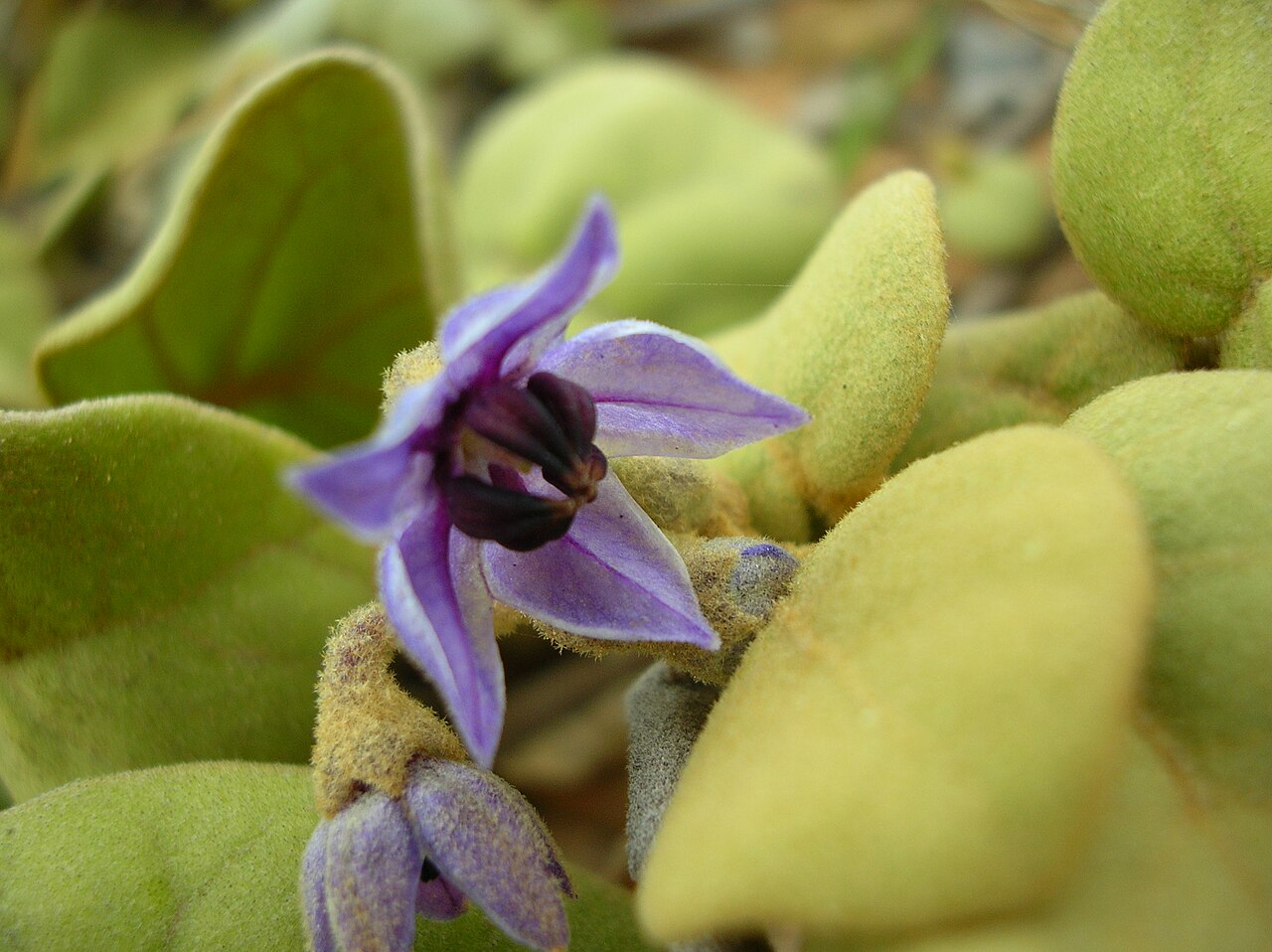
Solanum nelsonii, known in Hawaiian as pōpolo and in English as Nelson’s Horsenettle, is a low, sprawling shrub of the nightshade family that is found only in the Hawaiian Islands, including the low atolls of the Northwestern Hawaiian Islands such as Midway, Laysan and Nihoa. It grows right at the coast, in sand dunes, coral rubble and windswept coastal scrub.
It is a handsome plant: thick, rounded leaves covered in soft gray-green hairs, pale lavender to white star-shaped flowers and round, glossy black berries. Unlike many of its mainland relatives called horsenettles, it has no spines. Its silvery foliage, salt tolerance and low, mounding habit have made it a favorite groundcover in Hawaiian native coastal gardens.
Pōpolo is also rare. It was listed as an endangered species by the U.S. Fish and Wildlife Service in 2016, and wild populations survive at a limited number of coastal sites. Like other nightshades, its leaves and berries contain toxic alkaloids and should not be eaten. This guide covers how to identify it, where it grows, how to grow nursery-propagated plants and its place in Hawaiian coastal ecosystems.
Identification
Nelson’s horsenettle is a spineless, sprawling coastal shrub with velvety gray-green, rounded leaves, pale purple to white flowers and black berries.
Growth Form
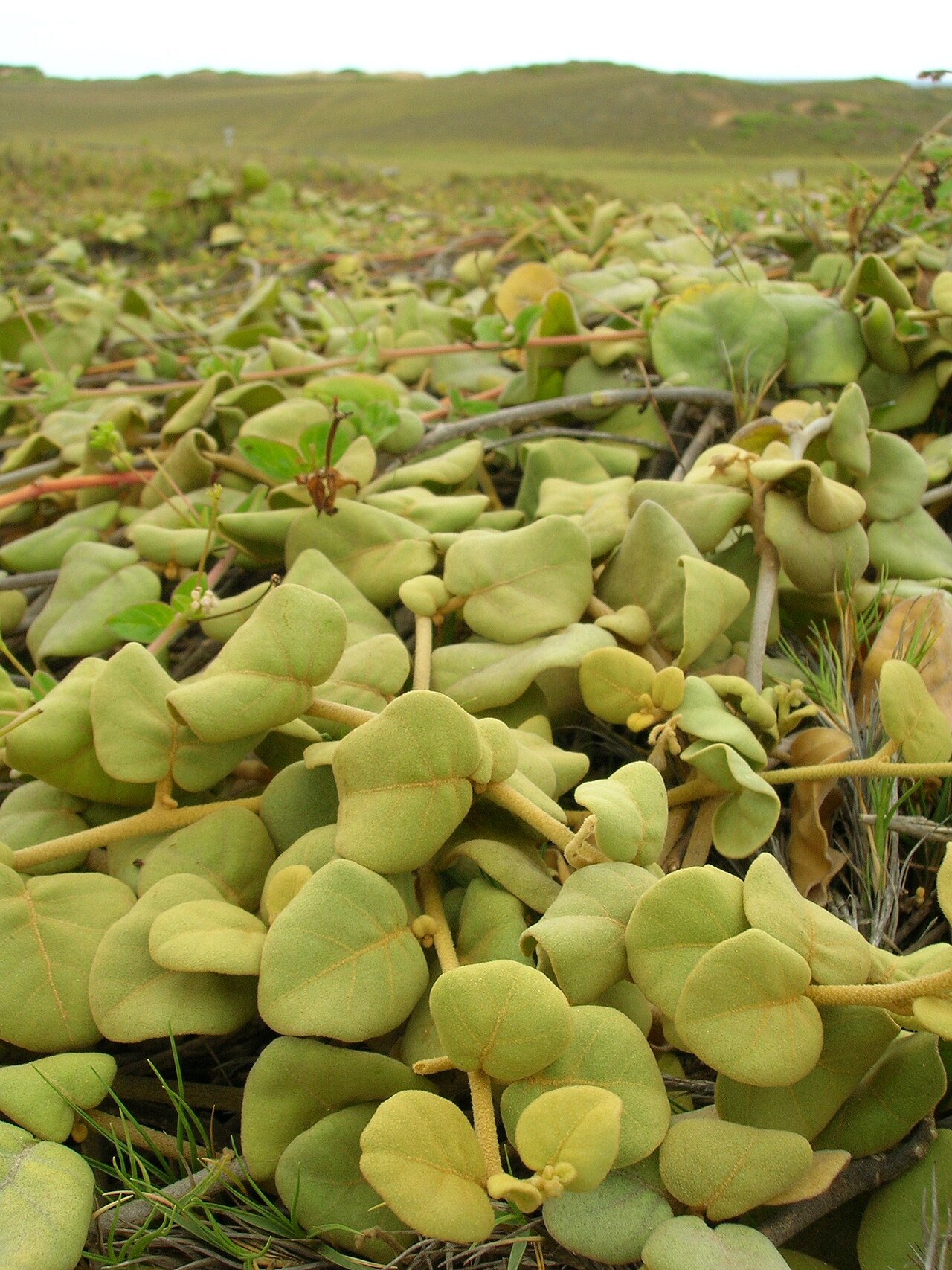
It is a sprawling to trailing, partly woody shrub, usually under about 3 feet tall, that forms mounds or mats up to about 5 feet across. On exposed dunes it can hug the sand as a low mat, while in more sheltered spots it grows as a loose, upright shrub. The stems become woody at the base with age, and the young stems are densely hairy and without spines.
Leaves
The alternate leaves are thick, broadly oval to nearly round, usually about 1 to 3 inches long, with smooth (untoothed) edges. They are densely covered with short, branched hairs, which give them a soft, velvety gray-green look and help the plant cope with salt spray, wind and strong sun.
Flowers
The flowers are about ¾ inch across, with a five-pointed, star-shaped corolla that is white tinged with lavender to pale purple, and a cone of dark yellow-brown to purplish anthers in the center. They are borne in small clusters near the stem tips, and in Hawaii’s mild climate plants can flower through much of the year.
Fruit & Look-alikes
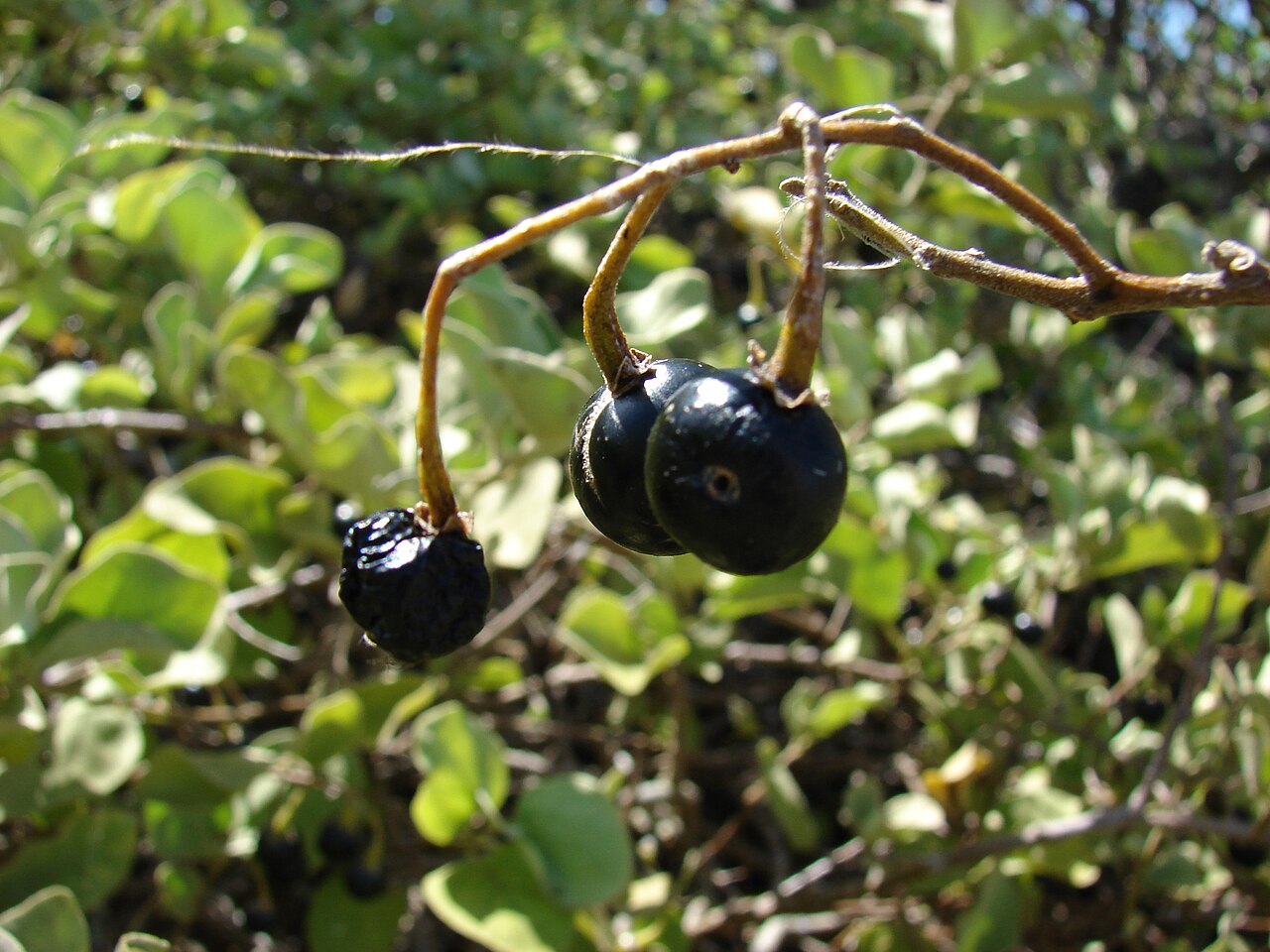
The fruit is a round berry about ½ inch across that ripens from green to glossy black, with many small seeds. Hawaiians also call the much more common glossy nightshade (Solanum americanum) “pōpolo,” but that plant is a thin-leaved, green, upright herb with small white flowers. The mainland Western Horsenettle and other horsenettles have spiny stems and yellow berries.
Quick Facts
| Scientific Name | Solanum nelsonii Dunal |
| Family | Solanaceae (nightshade family) |
| Plant Type | Sprawling evergreen shrub or subshrub |
| Mature Height | 1–3 ft |
| Mature Spread | 3–5 ft |
| Growth Rate | Moderate to fast |
| Sun Exposure | Full sun |
| Water Needs | Low; drought tolerant once established |
| Soil Type | Sand, coral rubble or other fast-draining soil |
| Soil pH | Neutral to alkaline (about 6.5–8.5) |
| Bloom Time | Much of the year |
| Flower Color | White tinged with lavender to pale purple |
| Fall Color | None; evergreen |
| Fruit | Round black berry; toxic, do not eat |
| Deer Resistant | Generally avoided by browsers (toxic foliage) |
| USDA Hardiness Zones | 10–12 |
Native Range
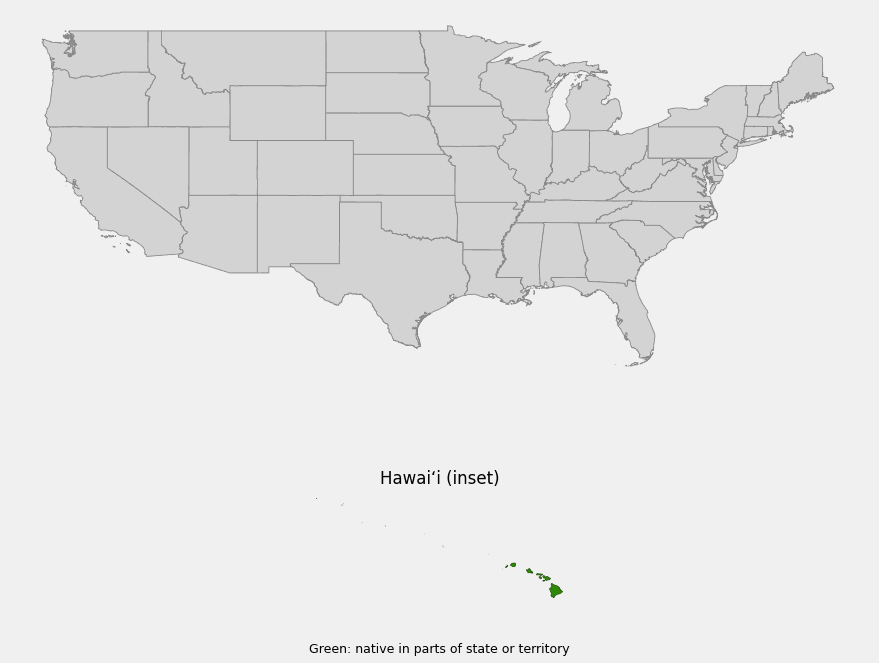
Nelson’s horsenettle is endemic to the Hawaiian archipelago. Historically it grew on several of the main islands and across the Northwestern Hawaiian Islands, from Nihoa to Laysan, Pearl and Hermes Atoll, Midway and Kure. Today natural populations are much reduced, with remaining sites on coastal dunes and shorelines of islands such as Molokaʻi (including the Moʻomomi dunes) and Hawaiʻi Island, and on protected atolls in the Northwestern Hawaiian Islands.
USDA PLANTS also lists records for Midway, which is administered as a U.S. Minor Outlying Island but is biologically part of the Hawaiian chain. The map shows only Hawaii, the one state where it is native.
It is a plant of the immediate coast: sand dunes, beach strands, coral rubble flats and low coastal shrubland, usually from sea level to a few hundred feet. It tolerates salt spray, strong winds, intense sun and long dry spells. Habitat loss, grazing by goats and deer, invasive plants and coastal development are the main reasons for its decline.
📋 Regional plant lists featuring Nelson’s Horsenettle: Hawaii
Growing & Care Guide
Pōpolo is one of the easiest native Hawaiian coastal plants to grow, and nursery-propagated plants are offered by native plant nurseries in Hawaii. Because it is a federally endangered species, buy only nursery-propagated plants and never collect plants, cuttings or seeds from the wild. Outside Hawaii it can only be grown in frost-free climates (zones 10–12) or in containers. Toxicity note: like most Solanum species, its leaves and berries (especially unripe ones) contain solanine-type glycoalkaloids that are toxic if eaten. Plant it away from areas where small children or pets may graze on the berries.
Light
Full sun is best. In shade it becomes leggy and flowers less.
Soil & Water
Give it sandy, rocky or other fast-draining soil; it is well adapted to coral sand and tolerates alkaline, salty conditions. Water regularly until established, then only during long dry spells. Overwatering and heavy, poorly drained soil are the most common causes of failure.
Planting Tips
Plant 3 to 4 feet apart as a groundcover, on a sunny bank, in a coastal rock garden or at the front of a native border. It also does well in large containers, and has been grown on a small trellis as a scrambling “upright vine”.
Pruning & Maintenance
Trim back long, sprawling stems to keep it compact, and cut out older woody stems to renew the plant. Watch for whiteflies, mealybugs and mites, which are common on nightshades in Hawaii, and for ants that tend them.
Propagation
It grows readily from fresh seed cleaned from ripe black berries, and from stem cuttings. Wear gloves when cleaning the berries.
Landscape Uses
- Coastal native gardens: silvery, salt-tolerant groundcover for sandy sites
- Dune and shoreline restoration: used in Hawaiian coastal and Northwestern Hawaiian Islands restoration projects
- Xeriscapes and rock gardens: low water once established
- Containers: compact accent plant for sunny lanais in frost-free areas
Wildlife & Ecological Value
Pōpolo is part of the low, salt-tolerant plant community that holds Hawaii’s coastal dunes and atolls together.
For Pollinators
Like other nightshades, its flowers release pollen through small pores in the anthers and are best pollinated by bees that “buzz” them. In Hawaii, native yellow-faced bees (Hylaeus) are among the insects that visit native coastal flowers such as these.
For Birds
Native birds historically ate the berries and spread the seeds; on the Northwestern Hawaiian Islands, seabird colonies nest among dense mats of pōpolo and other low coastal plants.
For Mammals
The toxic foliage is not a preferred food, but introduced goats and deer can still damage plants by browsing and trampling. Hawaii has only one native land mammal, the Hawaiian hoary bat, which does not feed on it.
Ecosystem Role
Its sprawling stems and dense foliage help stabilize sand and coral rubble against wind and waves, and provide shade and cover for seabird nests and coastal invertebrates. It is used in restoration work on islands such as Laysan and Midway, where weeds are being replaced with native vegetation.
Cultural & Historical Uses
The species was described in 1852 by the French botanist Michel Félix Dunal. The name nelsonii is often misspelled nelsoni, and several varieties described in the 20th century are no longer recognized.
The Hawaiian name pōpolo is shared by several dark-fruited plants, including the common glossy nightshade, which Hawaiians used as an important medicinal plant. Names and uses for the different pōpolo should not be confused, and none of them should be eaten without expert knowledge.
In 2016 the U.S. Fish and Wildlife Service listed Solanum nelsonii as endangered, one of dozens of Hawaiian plants and animals listed together that year. Native plant nurseries and conservation groups now grow it widely for gardens and habitat restoration, which helps keep the species in cultivation.
Frequently Asked Questions
Is Nelson’s horsenettle (pōpolo) poisonous?
Yes. Like most plants in the genus Solanum, its leaves and berries contain toxic glycoalkaloids. Do not eat any part of it, and keep children and pets away from the berries.
Is Solanum nelsonii endangered?
Yes. It was listed as endangered under the U.S. Endangered Species Act in 2016. Grow only nursery-propagated plants, and never collect from wild populations.
Where does Nelson’s horsenettle grow?
Only in the Hawaiian Islands, including the Northwestern Hawaiian Islands, on coastal sand dunes, coral rubble and beach strand.
How do I grow pōpolo?
Plant it in full sun in sandy, fast-draining soil, water until established, then water sparingly. It is hardy only in frost-free climates (zones 10–12).
Does it have spines like other horsenettles?
No. Despite the English name, Solanum nelsonii is spineless, with soft, velvety gray-green leaves.

Looking for a nursery that carries Nelson’s Horsenettle?
Browse our native plant nursery directory: Hawaii

