
Royal Hala Pepe (Dracaena halapepe)
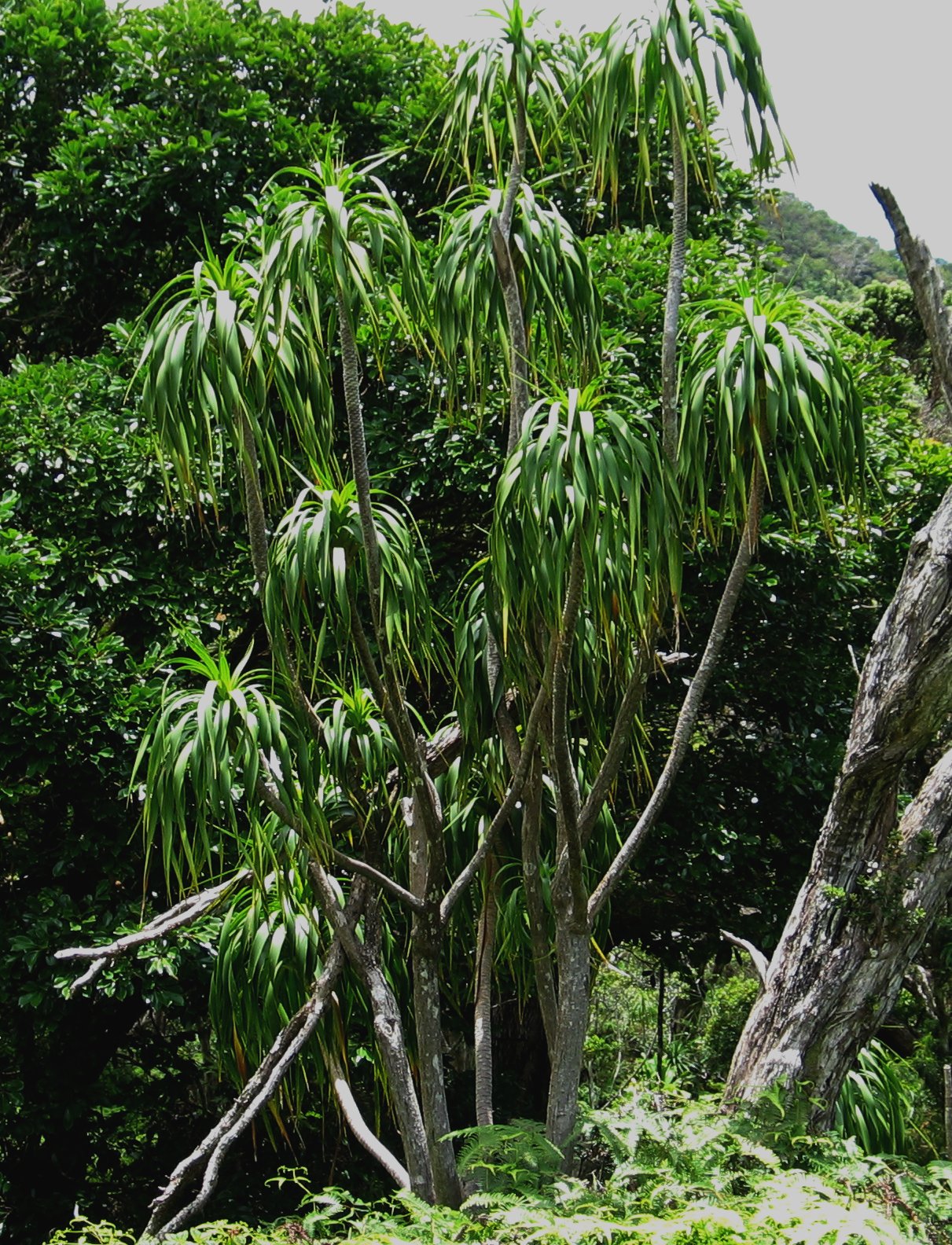
Royal hala pepe (Dracaena halapepe), called hala pepe or leʻie in Hawaiian and also known as Oʻahu hala pepe, is a striking small tree with fountains of long, narrow, drooping leaves at the tips of its branches. It is endemic to the island of Oʻahu, where it grows in dry and mesic forests of the Waiʻanae and Koʻolau mountains.
Botanists have placed the Hawaiian hala pepe in several genera. USDA PLANTS lists this species as Pleomele halapepe, Native Plants Hawaiʻi uses Chrysodracon halapepe, and iNaturalist and Plants of the World Online now include it in Dracaena, the same genus as the familiar dragon trees and corn plants. All three names refer to the same Oʻahu species. It is one of six endemic Hawaiian hala pepe, including the Maui Hala Pepe (Dracaena auwahiensis), which is a different species.
Royal hala pepe is not federally listed, but it is rare and considered imperiled, with wild populations reduced by habitat loss, fire and invasive species. It is slow-growing but easy to grow in dry, sunny gardens in Hawaiʻi, where its architectural form makes it a prized native accent plant. This guide covers how to recognize it, where it grows, how to grow it, and its cultural importance.
Identification
Hala pepe means “baby hala,” after the resemblance of its leaf tufts to those of the Hala tree. Royal hala pepe is the Oʻahu species, known for its graceful drooping leaves.
Trunk & Growth Habit
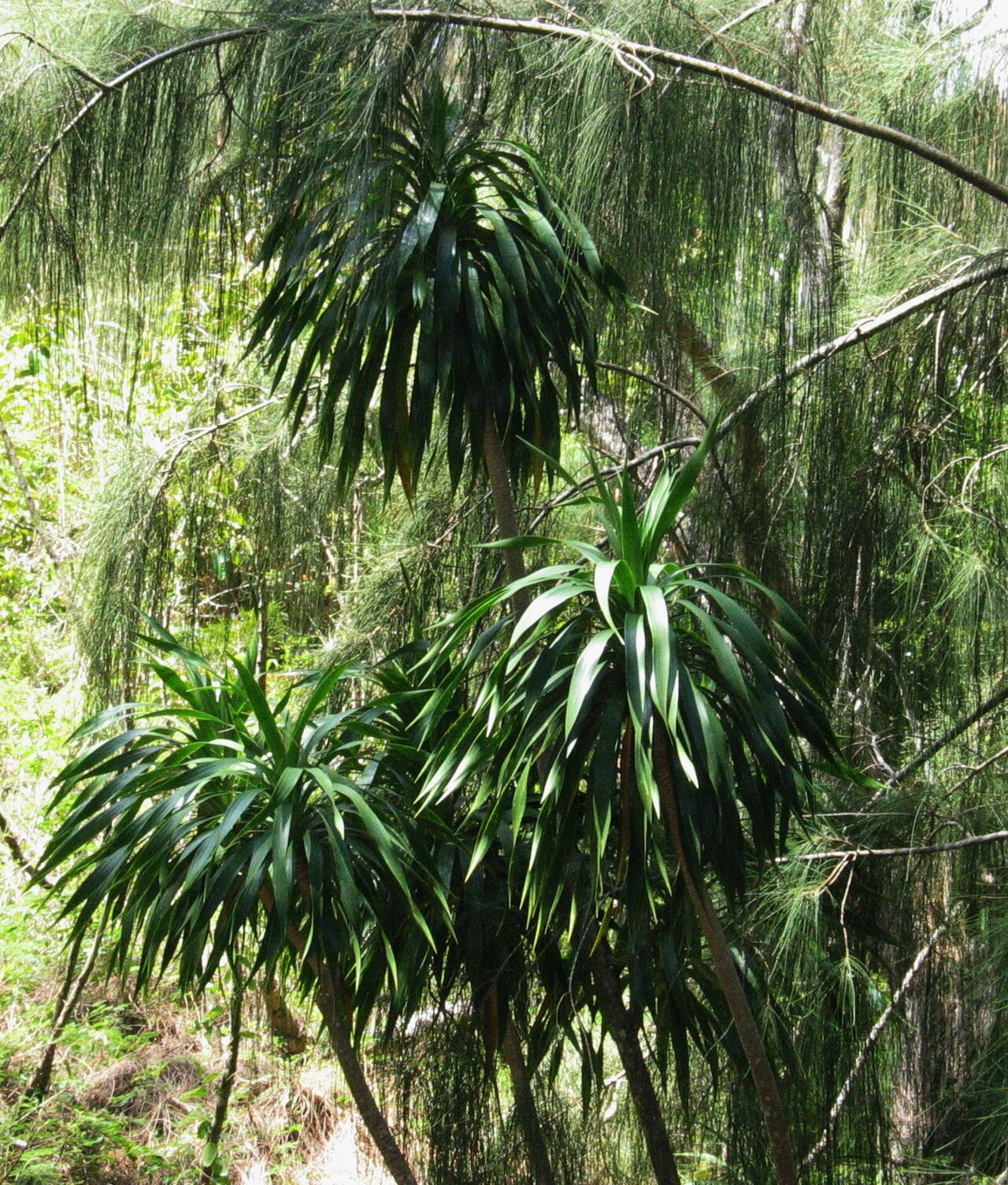
Royal hala pepe is a small tree, usually 15 to 30 feet tall, with one or several gray, slender trunks that branch sparingly toward the top. Each branch ends in a dense tuft of leaves, giving the tree a candelabra-like or palm-like silhouette. Young plants are a single unbranched rosette.
Leaves
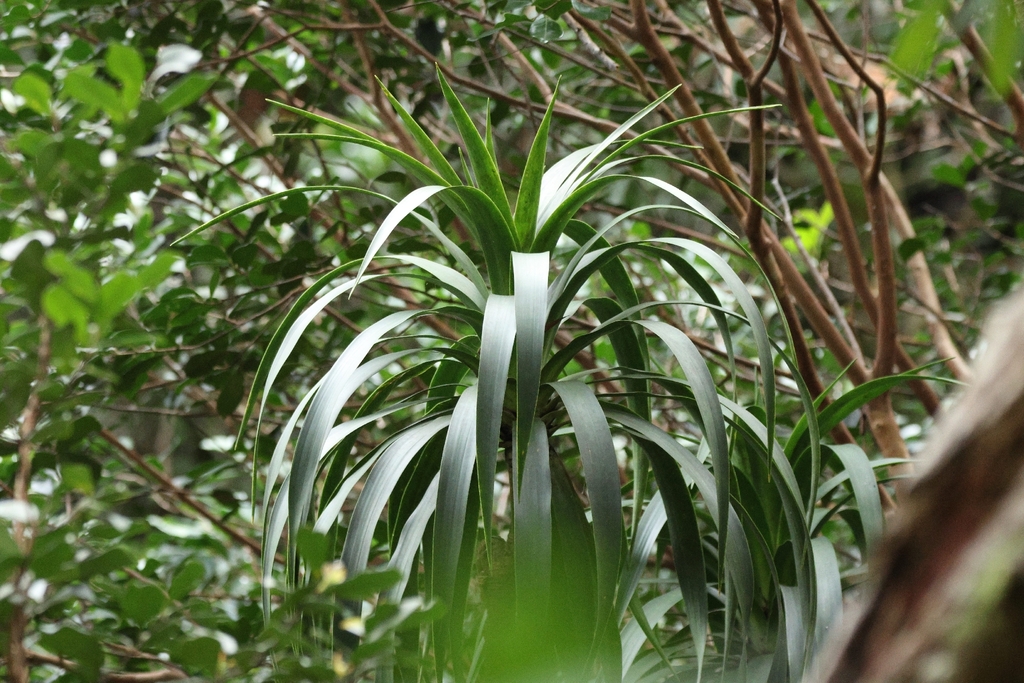
The leaves are long, narrow and strap-shaped, often a foot or more long and narrow, crowded in spirals at the branch tips. They are dark to medium green and arch outward and then droop, forming a fountain-like rosette. Old leaves fall cleanly, leaving ring-like scars on the stems.
Flowers
This species flowers rarely, and flowering specimens have been collected only a few times. When it blooms, it produces large branched clusters of tubular, pale yellow flowers from the center of a leaf tuft. The yellow flowers distinguish the Hawaiian hala pepe from most other dracaenas, which have white, green or purplish flowers.
Fruit
The fruits are small, round berries that ripen red, each with one to a few seeds. Because flowering is so infrequent, fruit is seldom seen.
Similar Species
Other Hawaiian hala pepe have shorter, broader or stiffer leaves and grow on other islands. The introduced corn plant (Dracaena fragrans) and other ornamental dracaenas have broader leaves and white flowers. Hala (Pandanus tectorius) has spiny-edged leaves and stilt roots.
Quick Facts
| Scientific Name | Dracaena halapepe; syn. Pleomele halapepe H. St. John (USDA), Chrysodracon halapepe |
| Family | Asparagaceae (asparagus family) |
| Plant Type | Small evergreen tree; endemic to Oʻahu |
| Mature Height | 15–30 ft |
| Mature Spread | 6–15 ft |
| Growth Rate | Slow |
| Sun Exposure | Full sun to part sun |
| Water Needs | Low; drought tolerant once established |
| Soil Type | Well-drained cinder, rocky or organic soils |
| Soil pH | About 5.5–7.0 |
| Bloom Time | Rarely flowers; irregular |
| Flower Color | Pale yellow |
| Fall Color | None; evergreen |
| Fruit | Small red berries (rarely produced) |
| Deer Resistant | Unknown; seedlings damaged by goats and pigs |
| USDA Hardiness Zones | 10b–12 |
Native Range
Royal hala pepe is endemic to Oʻahu, and USDA PLANTS records it only from Hawaiʻi. It grows mainly on the leeward slopes of the Waiʻanae Mountains and also in scattered sites in the Koʻolau Mountains, including ridges on the windward and North Shore sides.
It grows in dry forest, coastal mesic forest and diverse mixed mesic forest, usually on slopes and ridges from about 590 to 2,000 feet elevation. Typical companions include ʻŌhiʻa Lehua, Lama, ʻAlaheʻe and Naio.
The species is not listed under the federal Endangered Species Act, but it is rare and considered imperiled. Its forests have been reduced by development, fire, feral goats and pigs, and invasive plants that crowd out native seedlings. Because it rarely flowers, natural regeneration is slow.
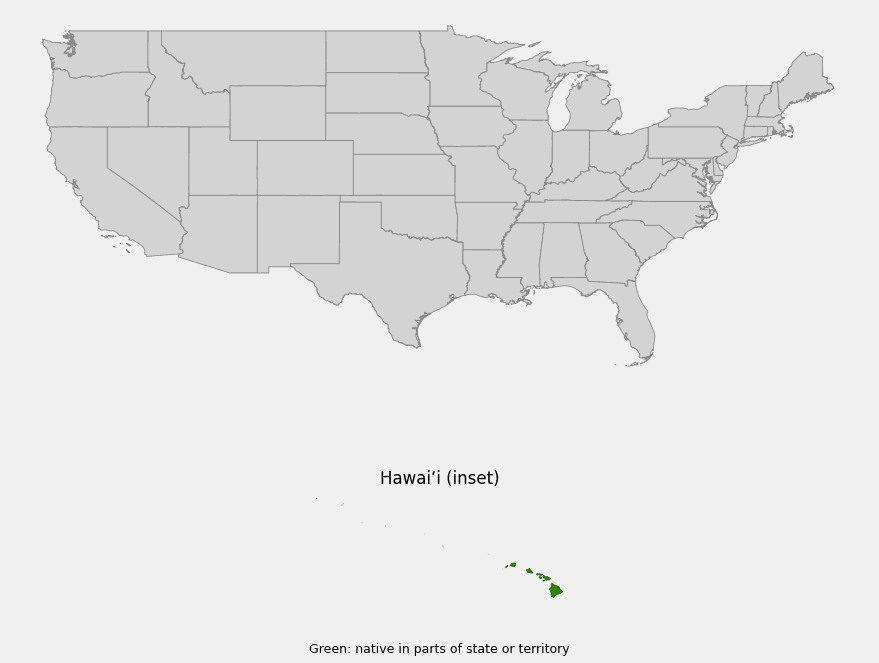
📋 Regional plant lists featuring Royal Hala Pepe: Hawaii
Growing & Care Guide
Royal hala pepe is slow-growing but easy to care for in warm, sunny gardens in Hawaiʻi. Buy only nursery-propagated plants from a Hawaiʻi native plant nursery, and never dig plants or collect seed from the wild. Hawaiʻi restricts bringing plants in from other states, so local nursery stock is the way to go.
Light
Plant in full sun for the most compact, attractive form. It also grows in partial sun, as it sometimes does in the wild, but plants in shade stretch and lean toward the light.
Soil & Water
Royal hala pepe needs well-drained soil and does well in cinder and rocky soils as well as soils with organic matter. Water regularly while it establishes, then sparingly; it tolerates drought and wind. Soggy soil can cause root rot.
Planting Tips
Use it as an accent or specimen plant where its silhouette can be seen, such as near an entry, in a rock garden or among low native shrubs. It grows slowly, so it also works in a large container for many years. Give it a sheltered spot when young.
Pruning & Maintenance
No pruning is needed except to remove dead lower leaves and any spent flower or fruit stalks. A light feeding with a balanced slow-release fertilizer two or three times a year is enough.
Propagation
Seed is the usual method when it is available, but because this species flowers so rarely, seed is scarce. Sow cleaned seed fresh in a well-drained mix. Nurseries also propagate hala pepe from stem cuttings. Leave propagation from wild plants to licensed conservation programs.
Landscape Uses
- Accent and specimen plant: a sculptural, palm-like native tree for small gardens
- Dry native gardens: drought-tolerant once established
- Containers: slow growth suits large pots for years
- Lei and cultural plantings: leaves and flowers are used in lei
- Restoration plantings: part of Oʻahu dry and mesic forest restoration
Wildlife & Ecological Value
Royal hala pepe is part of the distinctive dry and mesic forests of Oʻahu, which are home to many rare plants and animals found nowhere else.
For Pollinators
The tubular yellow flowers, when they appear, offer nectar. In the past, native nectar-feeding birds likely visited hala pepe flowers, along with insects.
For Birds
The red berries are eaten by birds, which disperse the seeds. Forest birds also forage for insects among the leaf tufts.
For Mammals
Hawaiʻi’s only native land mammal, the Hawaiian hoary bat, forages for insects over Oʻahu’s forests. Feral goats and pigs damage seedlings and young plants.
Ecosystem Role
As a canopy and subcanopy tree of dry and mesic forest, royal hala pepe adds structure and shade, and its leaf tufts shelter native insects and snails.
Cultural & Historical Uses
Hala pepe held a special place in hula. It was associated with Laka, the goddess of hula, and its branches were placed on the kuahu, the altar in the hālau hula. Today the leaves and flowers are still used in lei.
Early Hawaiians also used hala pepe leaves in baths and steam baths to treat chills, headaches and fever.
The species was described by Harold St. John, who studied the Hawaiian hala pepe in detail, as Pleomele halapepe. The former genus name Pleomele comes from Greek words for “many apples,” for the many fruits on the large flower clusters, and Chrysodracon means “golden dragon,” after the yellow flowers.
Frequently Asked Questions
Is royal hala pepe the same as hala pepe?
Hala pepe is the Hawaiian name for all six native Dracaena (Pleomele) species. Royal hala pepe, Dracaena halapepe, is the Oʻahu species. Other islands have their own hala pepe species.
Is royal hala pepe endangered?
It is not federally listed, but it is rare and considered imperiled in the wild. Buy only nursery-propagated plants and never collect from the wild.
Why are there three scientific names?
USDA lists it as Pleomele halapepe, some Hawaiian sources use Chrysodracon halapepe, and recent DNA-based classifications place it in Dracaena. They are the same plant.
Is royal hala pepe easy to grow?
Yes, in warm, sunny gardens with well-drained soil. It is slow-growing and needs little water once established, but it will not tolerate frost.
Does royal hala pepe flower?
Rarely. This species flowers much less often than other hala pepe, and flowering trees have been recorded only a few times. Its main garden appeal is its fountain of leaves.

Looking for a nursery that carries Royal Hala Pepe?
Browse our native plant nursery directory: Hawaii

