
Are Automatic Weed Pullers Effective? We Put Them to the Test: Results from Our Hands-On Trials
We independently select all products and services. If you click through links we provide, Plant Native may earn a commission with no extra cost to you.
Last updated: November 13, 2026
Weeds are the bane of any gardener’s existence, constantly competing with desired plants for nutrients, water, and sunlight.
Traditional weed removal methods like hand-pulling or chemical herbicides can be time-consuming, labor-intensive, or potentially harmful to the environment.
Automatic weed pullers have emerged as a potential solution, promising to make weed removal easier and more efficient.
These devices come in various designs, from handheld tools to larger wheeled machines. They typically use mechanical action to grip and extract weeds, roots and all, without the need for chemicals or excessive manual labor.
Some models are battery-powered, while others rely on manual operation with improved leverage.
When considering an automatic weed puller, it’s important to pay attention to factors such as the types of weeds it can handle, the soil conditions it works best in, and its ease of use.
The durability of the device, its power source, and its ability to remove weeds without damaging surrounding plants are also crucial considerations.
We tested several automatic weed pullers to determine their effectiveness in real-world gardening scenarios.
Best Automatic Weed Pullers
We’ve tested a range of automatic weed pullers to determine their effectiveness in the garden. Our rigorous evaluations considered factors like ease of use, weed removal success rate, and durability. The following list represents our top picks for gardeners looking to tackle weeds efficiently.
Our top pick

- Allows upright weeding without bending
- Effective push-twist-pull action
- Durable steel construction
Cons
- Still leaves small holes in the lawn
- Learning curve for proper technique
- Limited effectiveness on smaller weeds
The easy-eject middle grip lets you drop pulled weeds without bending over, and the three sharp pins grip roots firmly while leaving smaller holes than wider claw heads. It is better suited to established weeds than tiny seedlings. When you weigh all the factors, this one rises above the rest.
Best portable option
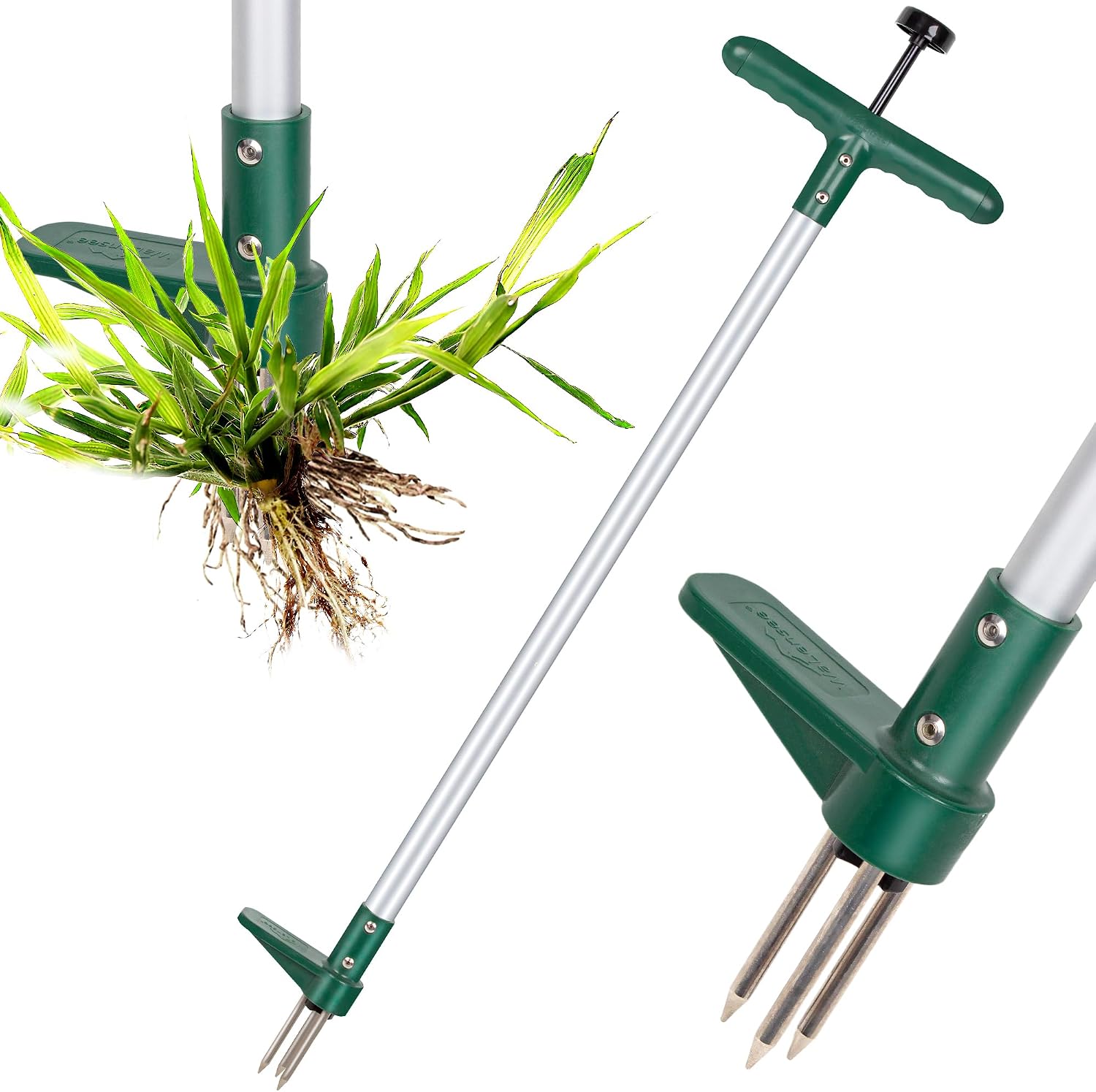
- Light at about 16 ounces, easy to carry around the yard
- Three 2.75-inch stainless steel claws grip roots
- Foot pedal adds force for soil penetration
Cons
- Soil should be moist before use
- Not suited to gravelly soil
- 39-inch handle may feel short for tall users
The Walensee weeder pairs a 39-inch handle with a foot pedal and three steel claws: push the tines in around the weed, tilt, and pull it out root and all. Keep the soil moist and avoid gravelly ground for the best results. Light enough to take anywhere without compromising on quality.
Best for gardens

- Eliminates bending and kneeling
- Removes weeds with roots intact
- Durable construction for long-term use
Cons
- Less effective on hard or rocky soil
- Requires manual removal of pulled weeds
- May struggle with extremely large weeds
The 4-claw head works best on softer, slightly damp soil and may struggle on hard clay or rocky ground, so use it after watering or rainfall when the ground is softer. For this particular need, it’s the clear frontrunner.
Best UV-resistant option

- Eliminates bending and kneeling
- Effectively removes weeds with roots
- Sturdy materials resist warping, rust, and UV degradation
Cons
- May struggle with very large weeds
- Requires some physical effort
- Can leave small holes in lawn
The Fiskars Deluxe Stand-Up Weed Puller is a long-running favorite among gardeners: its four serrated stainless steel claws grip weeds firmly to pull them out root and all, and it is backed by a lifetime warranty. For harder or clay-heavy soil, water the area 30–60 minutes before use. It holds its ground admirably.
Buying Guide
When shopping for an automatic weed puller, there are several key factors to consider:
Compatibility
We recommend checking which types of weeds and soil the device can handle. Some models work best on specific weed varieties or soil conditions.
Power Source
Consider whether you prefer a battery-operated, corded electric, or manual model. Each has pros and cons in terms of portability and runtime.
Capacity
Look at how many weeds the device can extract before needing to be emptied. A larger capacity means less frequent interruptions during use.
Ease of Use
We suggest prioritizing models with ergonomic designs and intuitive controls. This can greatly impact your experience, especially for longer weed-pulling sessions.
Durability
Check the materials used in construction. Metal components often offer better longevity than plastic ones.
Warranty
A good warranty can provide peace of mind. We recommend comparing warranty terms across different models.
Price
While it’s tempting to opt for the cheapest option, investing in a higher-quality model may save money in the long run.
| Feature | Why It Matters |
|---|---|
| Compatibility | Ensures effectiveness on your specific weeds |
| Power Source | Affects portability and runtime |
| Capacity | Determines frequency of emptying |
| Ease of Use | Impacts user comfort and efficiency |
| Durability | Influences product lifespan |
| Warranty | Provides protection for your investment |
| Price | Balances cost with features and quality |
By carefully considering these factors, we can choose an automatic weed puller that best suits our needs and garden conditions.
We independently select all products and services. If you click through links we provide, Plant Native may earn a commission with no extra cost to you. As an Amazon Associate I earn from qualifying purchases.
Solid article.