Benefits of Planting Native Joe Pye Weed for Sustainable Wildlife Gardens
Last updated: September 15, 2026
Native Joe Pye Weed, or Eupatorium maculatum (sometimes called Eutrochium maculatum), brings a bunch of ecological and visual perks to gardens. Its tall stems and those bold pink flower clusters pull in pollinators, helping local biodiversity get a real boost.
When you plant Joe Pye Weed, you’re building a natural habitat for bees, butterflies, and other helpful insects.
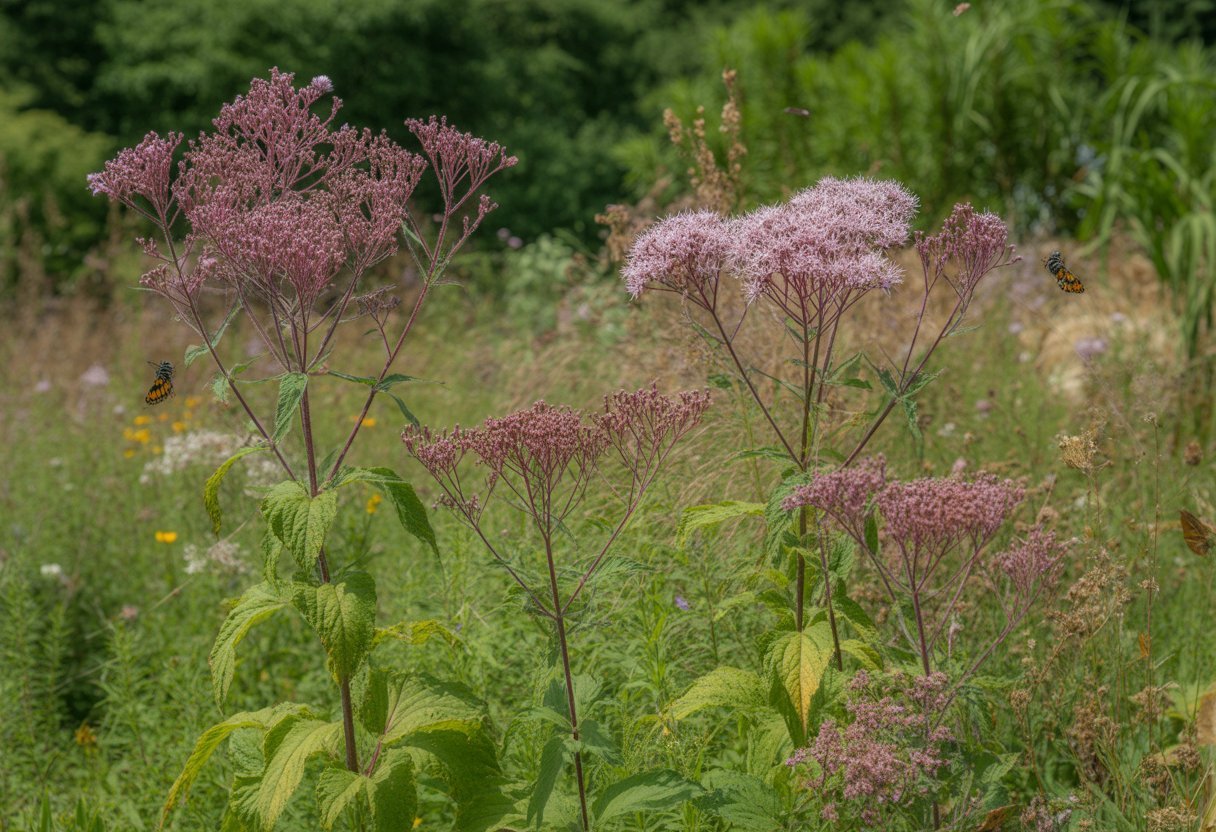
This perennial loves moist soil and adapts to lots of different settings, so it’s pretty tough. Its height and color grab attention, and being native means it fits right in—no worries about it turning invasive.
Gardeners can count on Joe Pye Weed to help stabilize soil and support wildlife. If you want a native plant that’s both practical and easy on the eyes, this one’s a winner.
Ecological Benefits of Planting Native Joe Pye Weed
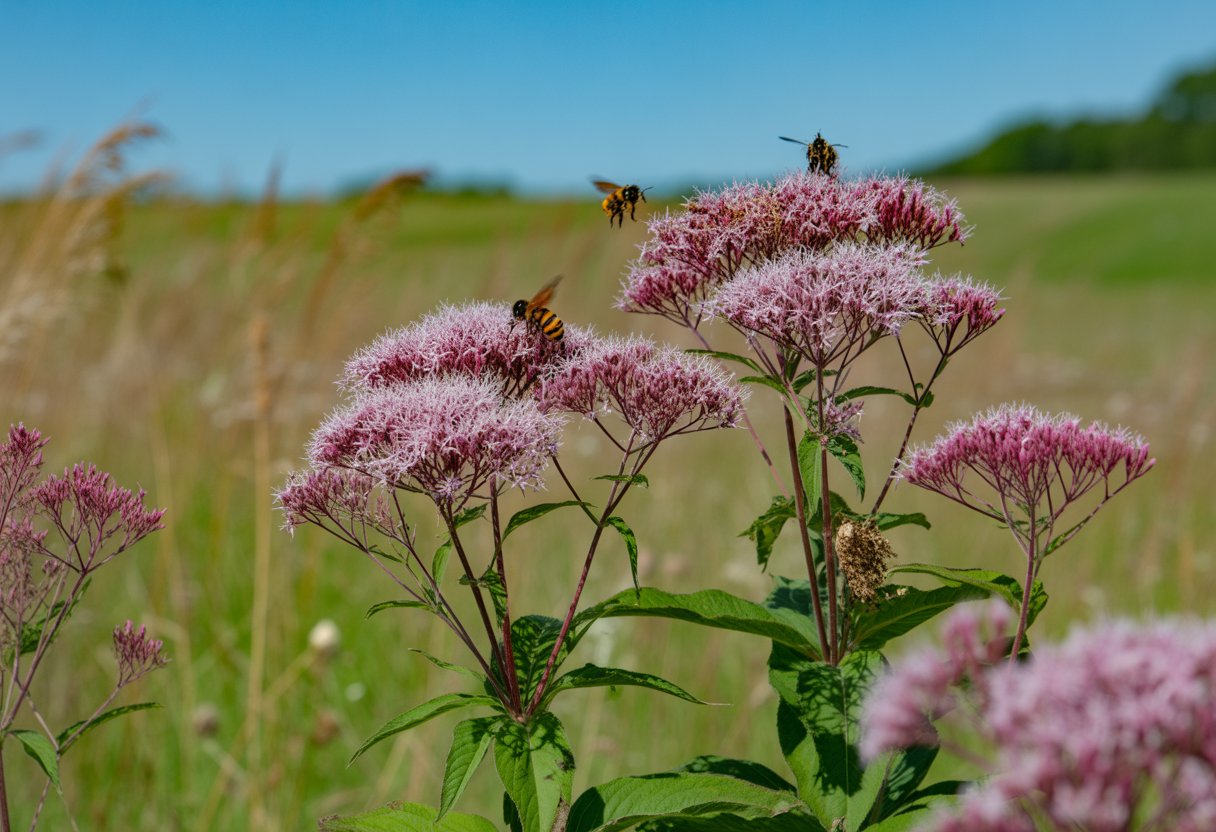
When you plant native Joe Pye Weed, you’re giving a real boost to essential species and strengthening local habitats. Its traits make it a solid resource for both food and shelter.
Attracts Pollinators
Joe Pye Weed (Eupatorium or Eutrochium) puts out clusters of nectar-rich flowers from mid to late summer. Bees, butterflies, and moths can’t seem to resist those blooms.
Native bees especially benefit from the steady nectar supply, which helps their populations thrive. Butterflies—monarchs, for example—rely on Joe Pye Weed for food during migration and breeding.
This plant brings more pollinator diversity to gardens and wild spots. That, in turn, helps other flowering plants survive thanks to good pollination.
Supports Local Wildlife
Joe Pye Weed acts as both host plant and food source for many insects, not just pollinators. Caterpillars from several moth species munch on its leaves, supporting the entire butterfly and moth lifecycle.
Its dense growth gives small mammals and birds a bit of shelter. Birds often eat the insects that thrive on Joe Pye Weed, so it quietly keeps the food web humming along.
Strengthens Native Ecosystems
Since it’s native, Joe Pye Weed just fits—no disruption, no drama. Its deep roots help hold soil in place and keep moisture where it should be.
You’ll often see it stabilizing riparian zones and wetlands, thanks to its love of moist soils. It can hold its own against invasive plants, which means native plant communities have a better shot at thriving.
Ornamental Value in the Garden
Joe Pye Weed’s got a look you can’t ignore—unique flower heads, cool color variations, and a size that makes a statement. It adds texture, height, and those punchy hues that just pop in any garden.
Striking Flower Heads and Bloom Color
Eutrochium maculatum grows big, rounded flower heads made up of loads of tiny blossoms. These dense umbels catch the eye, even from across the yard.
You’ll see colors from bright pink to lavender, sometimes even softer pastels. That range means you can work it into just about any garden palette, whether you like things bold or subtle.
Spotted Joe Pye Weed’s blooms look delicate up close but are pretty bold overall. Their detailed structure adds some real depth to garden beds.
Extended Bloom Time
Joe Pye Weed starts blooming in mid-summer and keeps it going into early fall. That’s a long run of color compared to most native plants.
Pollinators get a reliable food source across seasons, and your garden stays interesting during those in-between times. Since it blooms later than spring plants, it fills in those awkward gaps when not much else is happening.
Impressive Height and Structure
This perennial usually hits between 4 and 7 feet tall. That’s some serious vertical interest for garden beds.
Its sturdy, sometimes spotted stems give gardens a strong, architectural vibe. The airy branching pattern stands out but doesn’t crowd out neighbors.
Joe Pye Weed works well as a background or anchor in naturalistic plantings. It’s got presence without being overwhelming.
Environmental Tolerance and Versatile Growing Conditions
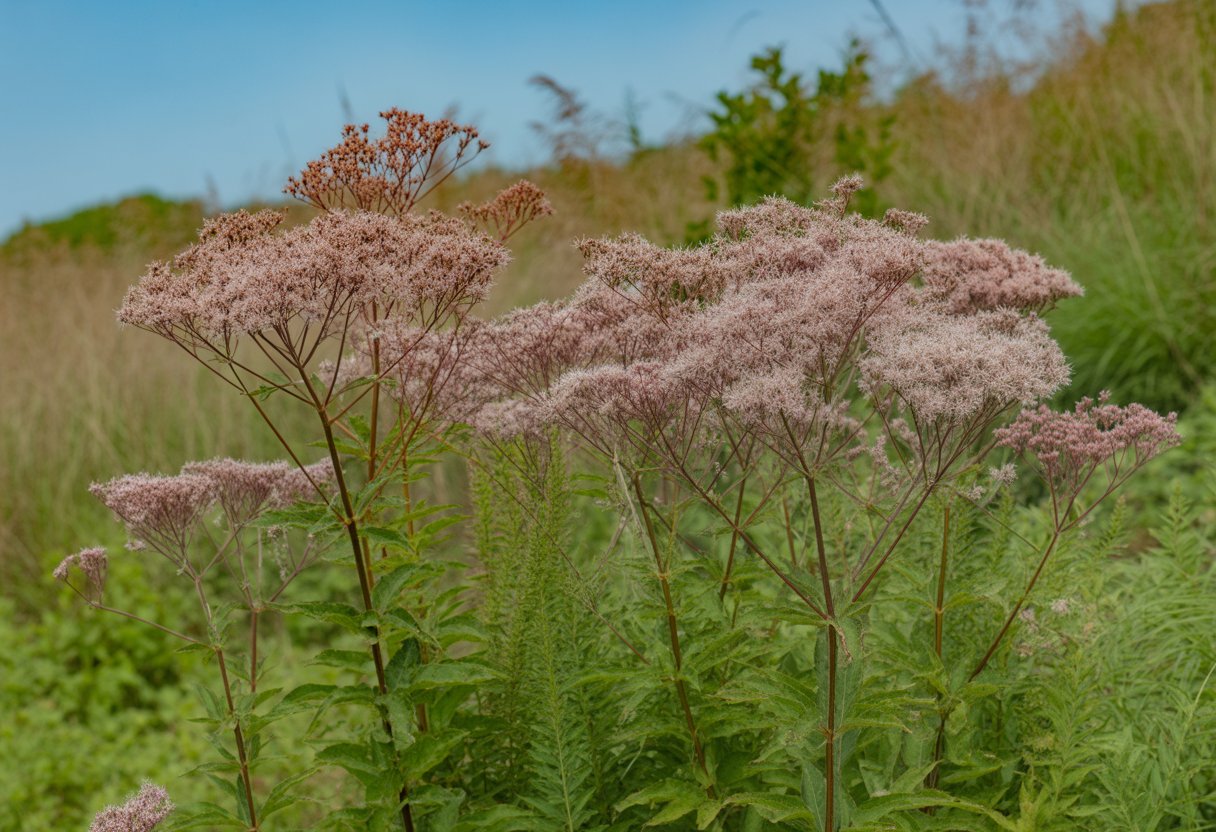
Joe Pye Weed (Eutrochium fistulosum) doesn’t fuss much about where it grows. It copes with different soils, moisture levels, sun, and even root conditions, making it perfect for spots from moist woods to pond edges.
Soil Adaptability
Sweet Joe Pye Weed does well in loam, clay, or sand. It prefers rich soil but can handle less-than-ideal spots too.
Well-drained soil is best, but it can manage the occasional flood. You’ll find it along streambanks and in moist woods, thanks to its flexibility.
It likes some organic matter but doesn’t demand heavy fertilizing. That’s a relief, honestly.
Moisture Preferences
Eutrochium fistulosum likes its soil moist and thrives near water—ponds, wetlands, you name it. Once established, it can survive short dry spells.
Don’t expect it to love drought, though. Keeping the soil evenly moist helps it look its best.
Sun Exposure and Hardiness
Give it full sun for sturdy stems and lots of flowers. It’ll still grow in partial shade, but you may see fewer blooms and taller, leggier plants.
Joe Pye Weed grows well in USDA zones 4 to 9. That’s a pretty big range, so it can handle cold winters and hot summers alike.
Spacing and Root System
You’ll want to space these plants 2 to 3 feet apart—crowding them leads to weak growth and more disease. Their fibrous, deep roots help them anchor in all sorts of soils.
These roots also help stabilize soil, especially where erosion is a problem. It’s a nice bonus.
Historical and Medicinal Uses
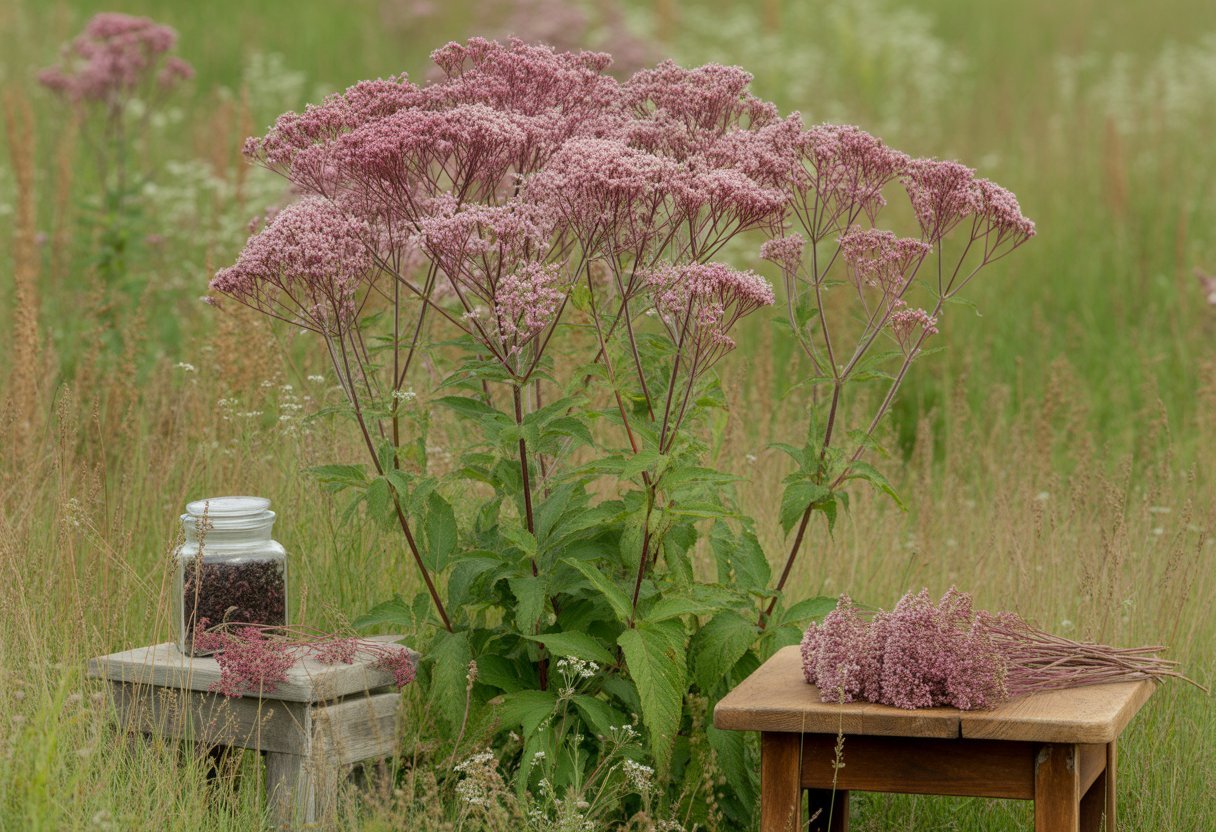
Joe Pye Weed has a pretty long history as a traditional remedy, mostly for inflammation and urinary issues. Its medicinal uses connect to several species and have been explored in different regions.
Traditional Native Medicine
Native American tribes turned to Joe Pye Weed to handle rheumatism and urinary troubles. They’d brew the leaves into tea to ease kidney and bladder discomfort or reduce fluid retention.
Thanks to its diuretic properties, it was valued for flushing toxins and treating edema. The plant’s name actually comes from Indigenous healers who knew how effective it could be.
Decoctions made from Joe Pye Weed became a staple in native medicine, showing just how long people have trusted this plant.
Botanical Synonyms and Species Variants
Joe Pye weed goes by the scientific name Eutrochium fistulosum. You might also see it labeled as Eupatorium purpureum or Eupatorium maculatum.
These different names mostly come from changes in plant classification over the years. They usually point to plants that act pretty similarly, especially when it comes to medicinal uses.
It’s worth paying attention to these variants if you’re trying to identify the plant or use it for herbal remedies. Different species can have subtle differences in their active compounds.