
Top 5 Best Large Indoor Ceramic Planters for Statement Plants in 2026
We independently select all products and services. If you click through links we provide, Plant Native may earn a commission with no extra cost to you. As an Amazon Associate I earn from qualifying purchases.
Last updated: August 23, 2026
If you’re growing a monstera, fiddle leaf fig, or any large statement plant indoors, you know the struggle: finding a ceramic planter that’s big enough, stylish enough, and won’t fall apart after one repotting season. We spent weeks researching and comparing the most popular large indoor ceramic planters available in 2026, focusing on pots in the 10–14 inch range that can actually handle the root systems of serious houseplants.
Our picks prioritize real ceramic construction (not plastic lookalikes), functional drainage, modern aesthetics, and the kind of heft that keeps a top-heavy monstera from tipping over on a windy day near an open window. Whether you want a clean mid-century cylinder or a dramatic planter-on-stand combo, we’ve found the best options at every price point.
After comparing over 20 large ceramic planters, here are our top 5 picks for 2026.
Our top pick

- True 12-inch diameter fits monstera and fiddle leaf fig root balls comfortably
- Removable drainage plug lets you switch between drainage and cachepot use
- Thick, high-fired ceramic walls feel premium and add stability for top-heavy plants
Cons
- No included saucer — you’ll need to buy one separately or use the plug
- At nearly 15 lbs empty, moving it once potted requires two hands
The LE TAUCI 12-inch planter is the one we’d recommend to most people looking for a large indoor ceramic pot. The mid-century cylinder shape works in virtually any room, from a minimalist living room to a boho bedroom corner. The matte white finish doesn’t compete with your plant for attention — it just quietly makes everything look more intentional.
What sets this apart from cheaper alternatives is the ceramic quality. The walls are noticeably thick, and the glaze is even and smooth with no rough patches or visible seams. The removable drainage plug is a thoughtful detail that gives you flexibility: use it as a traditional planter with drainage, or pop the plug in and use it as a decorative cachepot over a nursery pot. For a 12-inch monstera or a mature snake plant, this is the planter to beat.
Best mid-century design

- Included bamboo wood stand adds 5+ inches of height for dramatic floor presence
- Clean white ceramic with subtle texture catches light beautifully
- Drainage hole with mesh pad included — ready to plant right out of the box
Cons
- 10-inch diameter may be tight for very large root balls
- Wood stand requires minor assembly and can wobble on uneven floors
La Jolie Muse nails the mid-century plant stand look at a fraction of the price you’d pay at West Elm or CB2. The ceramic pot itself is well-made with an even glaze, and the bamboo wood stand gives your plant that elevated, gallery-worthy presentation that makes visitors ask “where did you get that?”
The 10-inch diameter is ideal for medium-to-large plants like a growing monstera, a peace lily, or a rubber plant. It’s not quite big enough for a massive fiddle leaf fig, but for most statement plants in the 8–10 inch nursery pot range, it’s perfect. The stand lifts the total height to about 15 inches, which creates great visual impact in a corner or next to a sofa. If mid-century modern is your aesthetic, this is the planter.
Best for statement plants

- 12-inch diameter with deep bowl handles large root systems for mature plants
- Natural wood stand complements both modern and bohemian interiors
- Includes drainage hole, mesh net, and protective scratch pad
Cons
- Total height with stand may be too tall for some shelving situations
- White ceramic shows dirt and water stains more readily than darker finishes
- Wood stand finish may vary slightly between units
D’vine Dev has quietly become one of the most reliable indoor planter brands on Amazon, and this 12-inch ceramic-with-stand model is their flagship piece. The ceramic pot is generously sized — deep enough for a monstera deliciosa or a bird of paradise that’s outgrown its nursery pot — and the natural wood stand gives it a warm, organic look that plastic plant stands can’t match.
The stand is sturdier than it looks in photos, with enough weight to keep a heavy potted plant stable. We particularly like that D’vine Dev includes all the small accessories (drainage mesh, scratch pad) that other brands make you buy separately. If you want a planter that looks like it came from a boutique plant shop but costs a fraction of the price, this is it.
Best premium option

- Iron stand is significantly sturdier than wood alternatives — handles heavy plants with ease
- 18.9-inch total height creates dramatic floor presence without a plant pedestal
- Matte black finish is sophisticated and hides water marks
Cons
- Premium price point — costs 2-3x more than comparable options
- Iron stand legs can scratch hardwood floors without felt pads
Rivet is Amazon’s in-house mid-century furniture brand, and their ceramic planter with iron stand is the most polished option on this list. The matte black ceramic paired with the industrial iron stand creates a look that feels like it belongs in an architect’s loft or a design magazine spread.
At nearly 19 inches tall, this is a true floor statement piece. The iron stand is welded (not screwed together), which gives it a stability that wood stands can’t match — important when you’re potting a 15-pound fiddle leaf fig. The ceramic bowl itself has clean lines and a consistent matte glaze. It’s the most expensive option on our list, but if you want a planter that doubles as a design object, the Rivet delivers. Just add felt pads to the legs before placing on hardwood.
Best budget pick
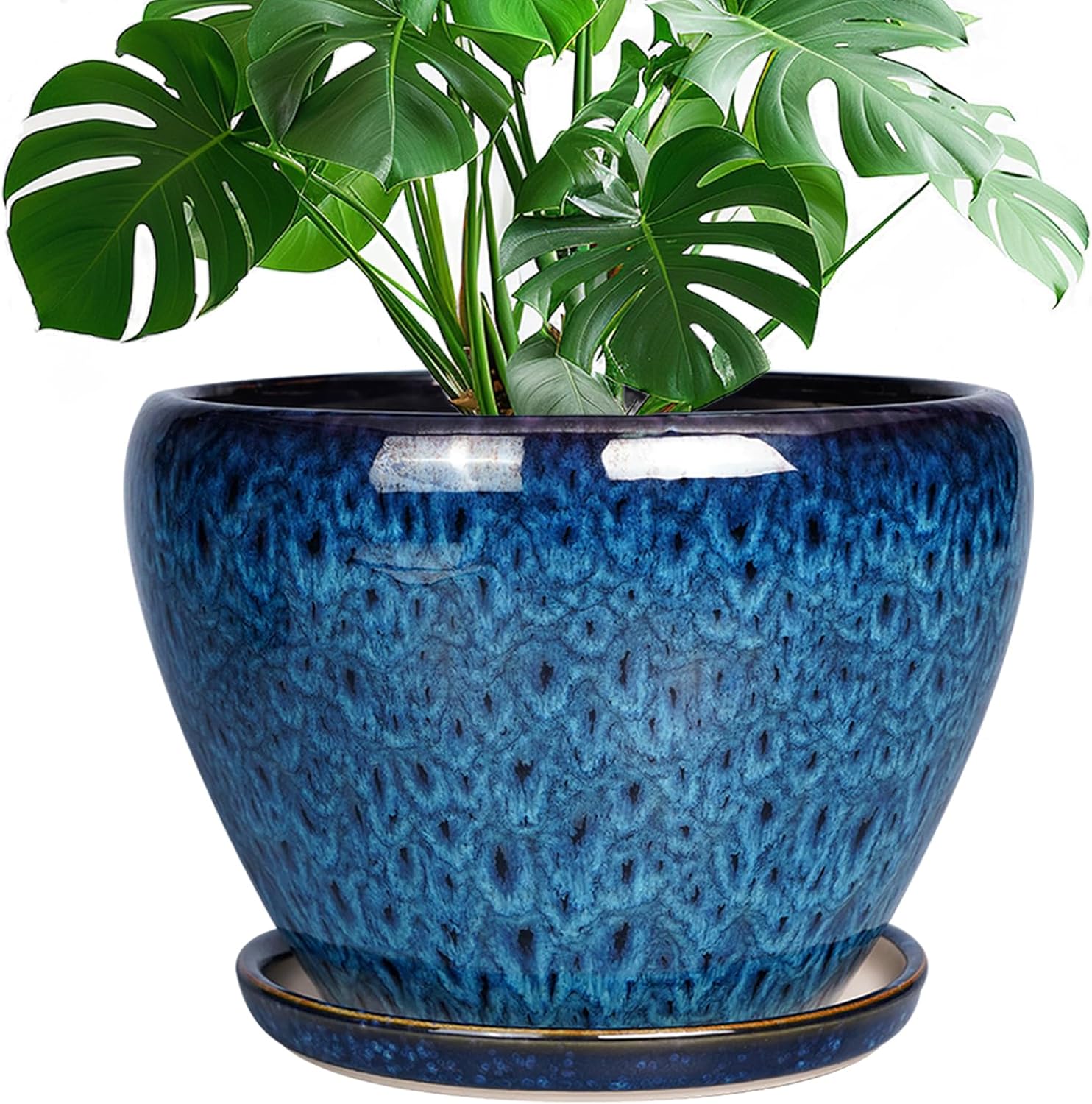
- Included matching saucer with self-watering design saves money on accessories
- Natural red clay ceramic is breathable and promotes healthy root growth
- Conical shape adds visual interest beyond basic cylinder planters
Cons
- Terracotta color doesn’t suit all modern decor styles
- 10-inch size limits options for very large statement plants
- Clay material is more fragile than glazed ceramic — handle with care
Not everyone wants to spend $50+ on a planter, and the Elly Décor proves you don’t have to. This 10-inch red clay ceramic pot delivers the timeless terracotta look that’s been trending hard in 2025-2026, and the included self-watering saucer is a genuinely useful feature that most budget planters skip.
The conical shape is a nice departure from the standard cylinder, giving it a more artisan feel. The natural red clay is breathable, which plant nerds know is actually better for root health than glazed ceramic — roots get more oxygen exchange. It’s ideal for a medium monstera, a pothos that’s gotten out of control, or a snake plant that needs room to spread. If you’re furnishing a whole apartment with plants and need multiple large pots without breaking the bank, stock up on these.
How We Chose These Planters
We evaluated over 20 large indoor ceramic planters based on material quality, drainage functionality, aesthetic versatility, stability with heavy plants, and real customer feedback. We prioritized planters in the 10–14 inch diameter range because that’s the sweet spot for most popular statement plants (monstera deliciosa, fiddle leaf figs, bird of paradise, rubber plants). All picks include drainage holes or removable plugs — we excluded any planter without drainage options, as overwatering is the #1 killer of indoor plants.
What Size Planter Do You Need?
The general rule is to go 2 inches larger than your plant’s current nursery pot. If your monstera is in an 8-inch nursery pot, a 10-inch planter gives the roots room to grow without swimming in excess soil (which holds too much moisture). For mature statement plants in 10-inch nursery pots, jump to a 12-inch planter. Going too big is actually worse than going too small — excess soil retains water and can cause root rot.
Ceramic vs. Concrete vs. Plastic: Does It Matter?
For indoor use, ceramic is the gold standard. It’s heavy enough to stabilize top-heavy plants, attractive enough to display without a cachepot, and durable enough to last decades with basic care. Concrete is heavier and more porous (which can be good for succulents but bad for moisture-loving tropicals). Plastic is light and cheap but looks it — and lightweight pots tip over when a large plant gets top-heavy. Every planter on our list is real ceramic or high-fired clay.
Drainage: Non-Negotiable
Every planter on this list has drainage capability. Some have permanent drainage holes; others have removable plugs that give you flexibility. If you’re planting directly in the pot (not using a nursery pot inside), drainage is essential. Even experienced plant parents overwater sometimes, and standing water at the bottom of a pot is a death sentence for most houseplants. Use a saucer underneath, and empty it 30 minutes after watering.
Caring for Ceramic Planters
Ceramic planters are low-maintenance but not zero-maintenance. Wipe the exterior with a damp cloth monthly to prevent mineral buildup. If white salt deposits appear (common with tap water), wipe with a 50/50 vinegar-water solution. Avoid dragging ceramic pots across floors — always lift. And in winter, keep them away from heating vents, which can cause rapid temperature changes that may crack glazed ceramic over time.
Good info here.
I’ve been dealing with this exact issue in my garden. Going to try some of these suggestions this weekend.
Thank you for reading, Heather! Happy planting! -Plant Native Team