Top 5 Best Raised Garden Bed Kits for Small Backyards in 2026
We independently select all products and services. If you click through links we provide, Plant Native may earn a commission with no extra cost to you. As an Amazon Associate I earn from qualifying purchases.
Last updated: August 23, 2026
Whether you’re working with a compact patio, a narrow side yard, or a modest backyard, a raised garden bed kit can transform even the smallest outdoor space into a productive growing area. Raised beds offer better drainage, improved soil control, and easier maintenance compared to in-ground gardening — making them ideal for small-space growers.
After researching dozens of raised garden bed kits available in 2026, we tested and compared options ranging from heavy-duty galvanized steel to elevated wooden planters. We evaluated each based on durability, ease of assembly, footprint efficiency, soil depth, and overall value for small backyards.
Below are our five top picks — each suited to a different small-backyard scenario, from the weekend vegetable gardener to the apartment dweller with a tiny balcony.
Our top pick

- 24-inch depth provides ample room for root vegetables like carrots and potatoes
- Heavy-duty reinforced panels resist bowing even when fully loaded with wet soil
- Tool-assisted assembly with pre-drilled holes takes under 30 minutes
Cons
- 8×4-foot footprint may be tight for very small patios (consider cutting the modular panels)
- Galvanized steel can get hot in direct summer sun, potentially warming soil edges
The GarveeTech 8×4×2 is our top pick because it strikes the perfect balance between growing space and backyard footprint. The 2-foot depth means you don’t need existing good soil underneath — fill it entirely with your own mix and grow everything from lettuce to tomatoes. The corrugated galvanized steel panels are rated to last 20+ years without rusting, and the modular design means you can reconfigure or expand later.
Assembly is genuinely straightforward. The panels come pre-drilled with a bolt-together system that doesn’t require power tools, though a cordless drill speeds things up. The included greenhouse cover is a nice bonus for extending your season in spring and fall. At this price point, you’re getting commercial-grade durability in a residential package.
Best elevated bed

- 32-inch standing height eliminates back strain and is wheelchair-accessible
- Locking caster wheels let you reposition to chase sunlight or shelter from storms
- Built-in drainage liner prevents waterlogging while keeping soil contained
Cons
- Smaller soil volume limits you to shallow-rooted crops like herbs, greens, and strawberries
- Wood requires occasional sealing or staining to prevent weathering over 3-5 years
The GarveeHome elevated planter is the clear winner for anyone who finds ground-level gardening uncomfortable. At 32 inches tall, you can tend your herbs and salad greens while standing — a game-changer for older gardeners or anyone with mobility issues. The rolling wheels are surprisingly sturdy and lock securely, letting you move the entire bed to follow the sun across a small patio.
The 48×24-inch footprint is compact enough for a balcony or deck, and the natural wood construction looks significantly more attractive than bare metal options. Just note that the soil depth is shallower than ground-level beds, so stick to herbs, lettuce, peppers, and other shallow-rooted plants. For tomatoes or root vegetables, pair this with a deeper ground-level bed.
Best modular design

- 12 different shape configurations (oval, round, rectangular) from a single panel kit
- 17-inch depth is sufficient for most vegetables including tomatoes and peppers
- Premium galvanized steel with rounded safety edges won’t snag clothes or skin
Cons
- More panels and hardware means longer assembly time (45-60 minutes)
- Larger configurations may exceed small-backyard footprints — measure first
- No included cover or liner
OLLE has built a cult following among raised bed gardeners, and the 12-in-1 kit shows why. Instead of committing to a fixed rectangle, you get panels that snap together into oval, round, L-shaped, or long narrow configurations. This is perfect if your small backyard has an unusual layout — maybe an L-shaped patio or a narrow strip along a fence.
The steel quality is noticeably thicker than budget competitors, and OLLE’s signature rounded top edges are a genuine safety feature if you have kids or pets running around. The 17-inch depth handles most vegetable crops comfortably. Our main gripe is assembly complexity — with 12 configurations possible, the instructions require careful reading. But once built, this bed is rock-solid and should easily last 15-20 years.
Best budget pick

- Excellent value — often under $80 for a full 6×3-foot bed with 2-foot depth
- Open-base design allows deep root penetration into existing ground soil
- Available in multiple colors (green, beige, gray) to match your backyard aesthetic
Cons
- Thinner gauge steel than OLLE or GarveeTech — panels can flex under heavy soil load
- No reinforcement braces included; you may want to add stakes for a fully loaded bed
Best Choice Products consistently delivers solid garden products at accessible prices, and their 6×3×2 raised bed is no exception. The 6×3-foot footprint is actually ideal for small backyards — large enough to grow a meaningful vegetable garden but compact enough to leave room for a table, grill, or kids’ play area.
The 2-foot depth is generous for the price point, giving you enough room for most crops. The galvanized steel won’t match the thickness of premium brands, but at roughly half the price, it’s hard to complain. We recommend adding a couple of wooden stakes or rebar on the long sides if you’re filling with heavy, wet soil. This is the bed we’d recommend to anyone trying raised bed gardening for the first time without a big investment.
Best for balconies & tiny spaces
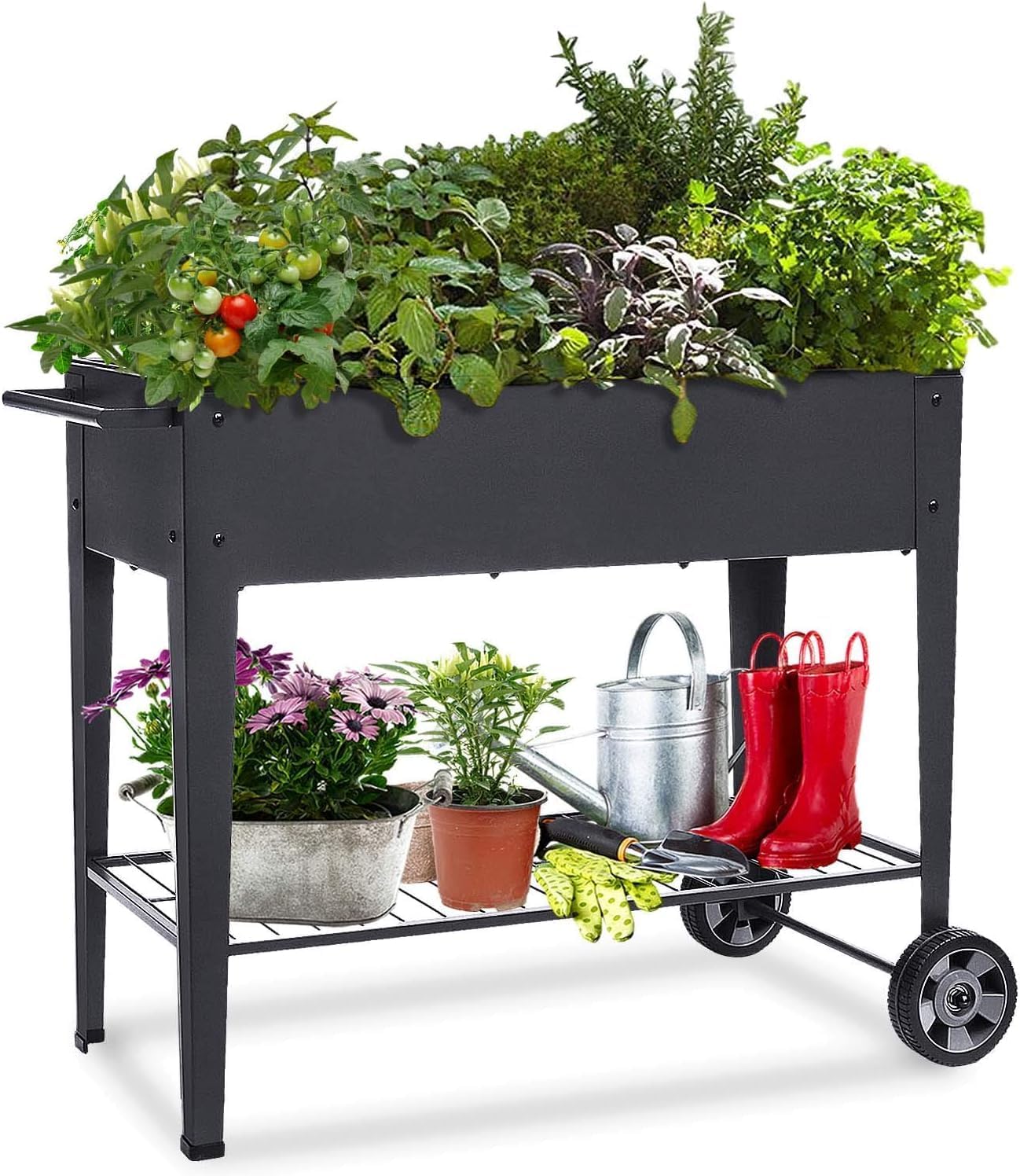
- Ultra-compact footprint fits balconies, stoops, and narrow side yards
- Elevated design with drainage holes keeps plants healthy without ground contact
- Very affordable — one of the cheapest elevated bed options available
Cons
- Galvanized steel construction is thin — handle with care during assembly
- Limited soil depth restricts you to herbs, small greens, and flowers
- Legs can wobble on uneven surfaces without shims
The FOYUEE planter has earned over 10,000 Amazon reviews for good reason — it’s the go-to elevated garden bed for apartment dwellers and renters. The footprint is small enough to fit on most balconies, and the elevated design means no bending, no ground contact, and no permanent modifications to your rental space.
At this price point, don’t expect heavy-duty construction. The galvanized steel is thinner than ground-level beds, and the legs benefit from being placed on a flat, hard surface. But for growing a kitchen herb garden, some salad greens, or a few strawberry plants, it’s ideal. Many customers buy two or three and line them up along a balcony railing for a surprisingly productive micro-garden.
Raised Garden Bed Buyer’s Guide for Small Backyards
What Material Should You Choose?
Galvanized steel is the most popular choice in 2026 for good reason: it’s rust-resistant, lasts 15-20+ years, doesn’t rot, and won’t leach chemicals into your soil. It does conduct heat, which can warm soil edges in summer — a minor concern in most climates. Wood (cedar or treated lumber) looks more natural and insulates soil better, but requires maintenance and typically lasts 5-10 years. For small backyards, galvanized steel’s zero-maintenance longevity usually wins.
How Deep Should Your Raised Bed Be?
For most vegetables, 12-18 inches of soil depth is sufficient. Root vegetables like carrots and parsnips prefer 18-24 inches. If you’re placing your bed on concrete or a hard surface (no ground contact), go with at least 18 inches. If it’s on soil, even 12 inches works well since roots can extend downward. Our top pick’s 24-inch depth gives you maximum flexibility.
Elevated vs. Ground-Level: Which Is Right for You?
Elevated beds (on legs) are best for balconies, decks, patios, and gardeners with mobility issues. They hold less soil and limit you to shallower-rooted crops, but they’re portable and require no ground preparation. Ground-level beds offer more growing volume, support deeper-rooted plants, and are more stable — but they’re permanent installations that need relatively level ground.
How Much Soil Will You Need?
A common surprise for first-time raised bed buyers: soil is expensive. An 8×4×2-foot bed needs roughly 64 cubic feet (about 2.4 cubic yards) of soil mix. At typical prices, that’s $150-300 in soil alone. For small backyards, a 6×3 or 4×4 bed keeps soil costs manageable while still providing meaningful growing space. Use the formula: length × width × depth (all in feet) = cubic feet needed.
Maximizing a Small Backyard
With limited space, consider these strategies: use vertical growing (trellises attached to your raised bed for cucumbers, beans, and peas), practice succession planting (replant as crops finish), and try square foot gardening (intensive planting in a grid pattern). A single 4×8-foot raised bed using square foot gardening techniques can produce a remarkable amount of food for a family of two.