
Inaba-shidare Japanese Maple (Acer palmatum ‘Inaba-shidare’)
Last updated: November 3, 2026
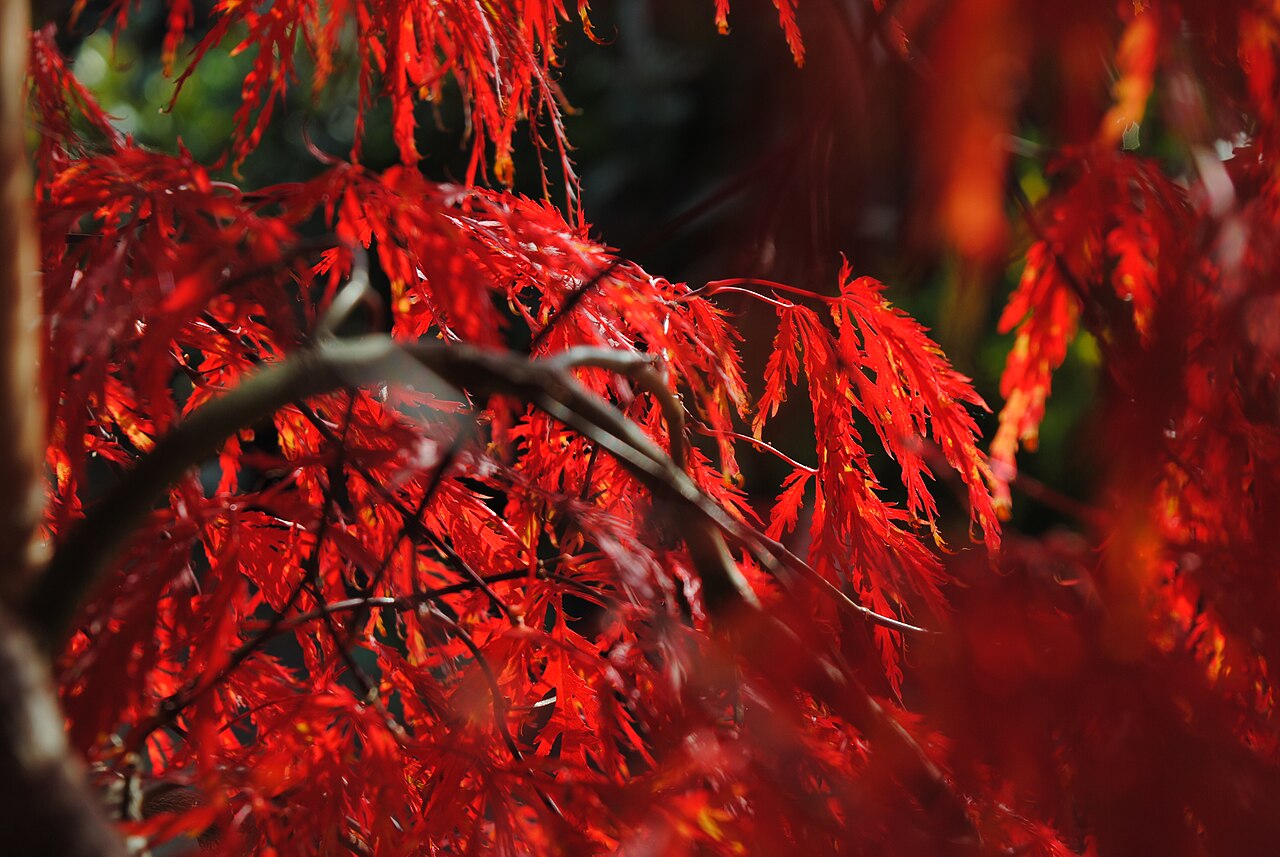
Acer palmatum ‘Inaba-shidare’ (also written ‘Inaba Shidare’), the Inaba-shidare Japanese Maple, is a classic red weeping laceleaf cultivar prized as one of the largest and most vigorous members of its group. Its name translates roughly to “Inaba weeping,” a traditional Japanese cultivar designation, and it has been grown in Japan and the West for generations as a dependable, long-lived red-leaf accent.
Gardeners choose ‘Inaba-shidare’ when they want the deep red-purple color and cascading form of a classic weeping Japanese maple, but in a plant that grows noticeably larger and more vigorously than most red dissectum cultivars, which tend to stay compact. Its finely cut leaves hold their reddish-purple color well through summer heat, resisting the fade to bronze-green that affects many red cutleaf cultivars, and then flare into brilliant crimson-scarlet in fall.
Japanese maple (Acer palmatum) is not native to North America; it is native to Japan, Korea, and eastern China. It is not on federal noxious weed lists, but in parts of the eastern United States, especially the Mid-Atlantic, the species can self-seed into forest edges. Weeping dissectum cultivars like ‘Inaba-shidare’ set relatively little seed compared with upright, seedling-grown maples, but gardeners near natural areas should still avoid planting at the woodland edge and remove any volunteer seedlings they find.
Identification
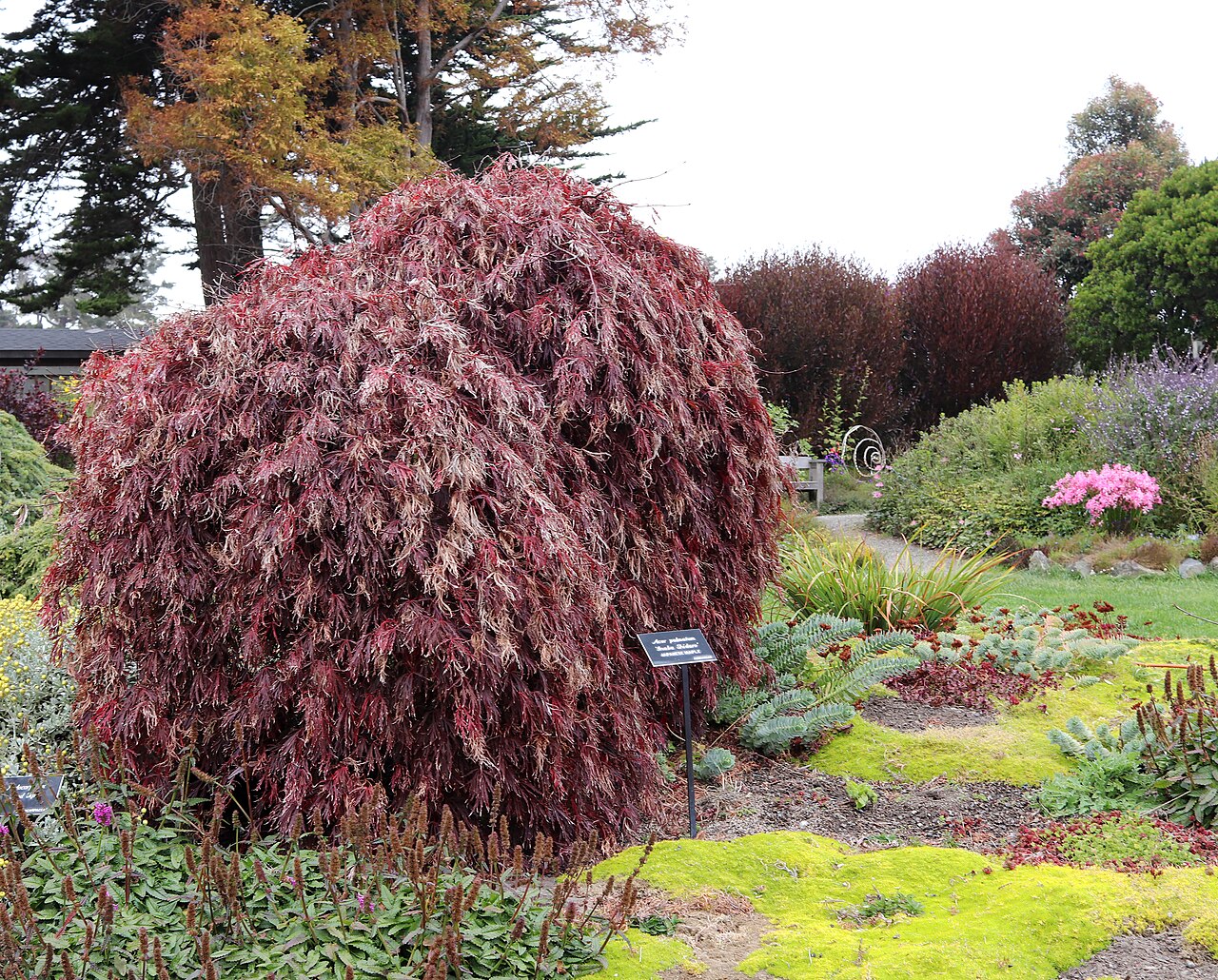
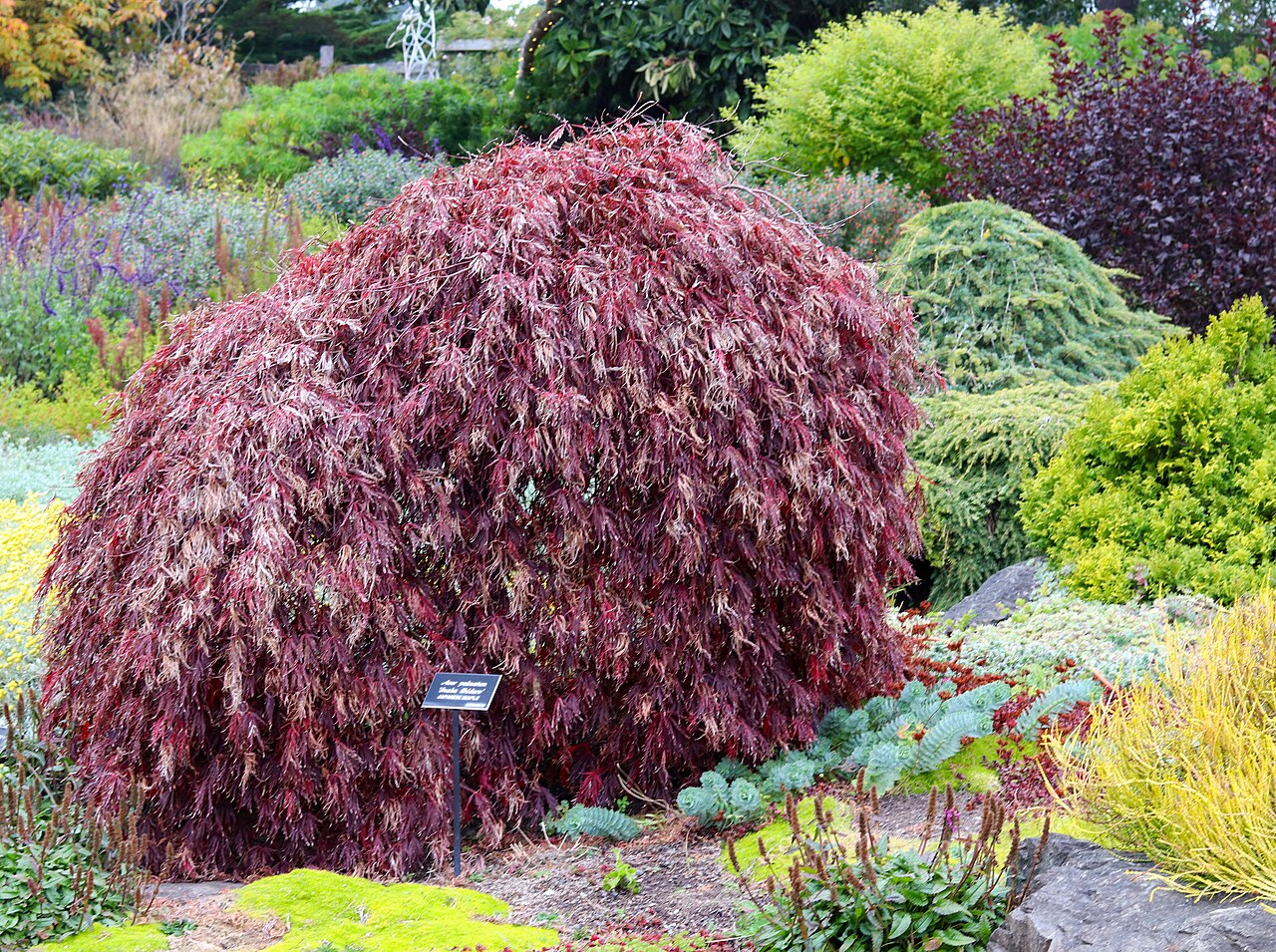
‘Inaba-shidare’ grows as a broad, cascading mound or small weeping tree, usually wider than it is tall at maturity, with branches that arch outward and down in overlapping layers.
Bark & Stems
Young twigs are reddish to purplish-brown, aging to a smooth gray-brown bark on older wood. Because it is a grafted weeping form, the graft union is typically visible low on the main stem, with the true weeping branches cascading from above it.
Leaves
Leaves are palmate and deeply dissected into narrow, serrated lobes, emerging deep red-purple in spring and generally holding that color better through summer heat than many other red dissectum selections, a trait that helps distinguish ‘Inaba-shidare’ from cultivars that fade to green or bronze by midsummer. In fall the foliage turns a vivid crimson to scarlet before dropping.
Flowers & Fruit
Small reddish-purple flowers open in spring, mostly hidden beneath emerging foliage. They give way to small winged samaras that are reddish when young, maturing to tan; they are not grown for ornamental fruit effect.
Quick Facts
| Scientific Name | Acer palmatum ‘Inaba-shidare’ |
| Cultivar | ‘Inaba-shidare’ (syn. ‘Inaba Shidare’) |
| Family | Sapindaceae (maple) |
| Plant Type | Deciduous weeping shrub/small tree |
| Native to North America | No — introduced from Japan, Korea and eastern China |
| Mature Height | 8–10 ft (sources vary; among the larger red dissectums) |
| Mature Spread | 10–12 ft |
| Growth Rate | Moderate (more vigorous than most red dissectum cultivars) |
| Sun Exposure | Full Sun to Part Sun (best color in several hours of sun; afternoon shade in hot climates) |
| Water Needs | Average, consistent moisture; not drought tolerant when young |
| Soil Type | Rich, well-drained loam |
| Soil pH | Slightly acidic to neutral (about 5.5–7.0) |
| Bloom Time | April – May (inconspicuous) |
| Leaf / Fall Color | Red-purple spring–summer, holding color well in heat; crimson-scarlet in fall |
| Fruit | Small reddish winged samaras; not ornamentally significant |
| Deer Resistant | Mostly (occasional browsing reported) |
| USDA Hardiness Zones | 5–8 |
| Invasive Status | Not federally listed; species seedlings occasionally escape in parts of the eastern US — plant away from woodland edges |
Origin & Where It Grows
The species Acer palmatum is native to the forested mountains and hills of Japan, the Korean peninsula, and parts of eastern China, where centuries of selection by Japanese horticulturists produced hundreds of distinct garden cultivars, including many weeping, dissected-leaf forms. ‘Inaba-shidare’ is one of these traditional Japanese selections, long grown in Japanese gardens before being introduced into Western nursery collections.
Once established in Western horticulture, ‘Inaba-shidare’ became a benchmark red weeping maple because of its combination of strong color, vigorous size, and reliable performance, and it remains one of the more widely available red dissectum cultivars in the American nursery trade today.
In the United States, ‘Inaba-shidare’ grows best across the temperate zones of the Pacific Northwest, mid-Atlantic, Appalachians, and upper South. Its larger size makes it a good choice where a bolder weeping specimen is wanted rather than a small accent plant; in the hottest parts of the South and Southwest it benefits from afternoon shade and consistent irrigation.
Growing & Care Guide
Light
‘Inaba-shidare’ generally needs more sun than green cultivars to hold its best red-purple color — several hours of direct sun, with afternoon shade in regions with intense summer heat. In too much shade the foliage can shift toward a duller green-bronze.
Soil & Water
Plant in rich, well-drained soil and keep moisture consistent; like other Japanese maples it dislikes both waterlogged roots and extended drought, and the fine leaf margins will scorch under either stress. Mulching the root zone helps moderate soil temperature and moisture swings.
Planting Tips
Because ‘Inaba-shidare’ grows larger than many weeping cultivars, give it more room — a mature specimen can spread 10 feet or more. Set the graft union above grade, choose a site sheltered from strong wind, and stake young plants loosely for the first season or two if trained with an upright leader.
Pruning & Maintenance
Prune in late winter while dormant, removing dead, crossing, or overly congested branches and lightly thinning to maintain an open, layered silhouette. Because it is more vigorous than most red dissectums, ‘Inaba-shidare’ may need slightly more regular structural pruning in its first decade to keep a graceful shape.
Propagation
‘Inaba-shidare’ comes true only from grafting or rooted cuttings taken from a verified plant, and is typically propagated by grafting onto Acer palmatum seedling rootstock. Seedlings grown from its samaras will not reproduce the cultivar’s color or weeping habit.
Landscape Uses
- Larger specimen planting where a bold weeping red accent is wanted
- Focal point beside a patio, pond, or entry courtyard
- Contrast plant against light-colored walls, gravel, or evergreens
- Trained as a small weeping standard over a path or bench
- Container growing while young, moved to the ground as it matures
Wildlife & Ecological Value
As an Asian species, ‘Inaba-shidare’ hosts far fewer native insects than North American maples, which have co-evolved with local moths, butterflies, and other herbivores over a much longer span. Its small spring flowers provide limited nectar and pollen for generalist bees, and its dense, layered branching offers some shelter for small birds, but it is best regarded as an ornamental specimen rather than a habitat planting. Gardeners prioritizing wildlife value should favor a native maple alongside or instead of it.
Native Alternatives
For a similarly graceful, red-toned, or fine-textured native alternative, consider:
- Vine maple (Acer circinatum) — a native shrub/small tree with a loose, often weeping form and vivid fall color.
- Red maple (Acer rubrum) — the quintessential native red-fall-color maple, for gardeners wanting a larger shade tree.
- Rocky Mountain maple (Acer glabrum) — a smaller western native maple with good fall color.
- Bigtooth maple (Acer grandidentatum) — drought-tolerant interior-West native with strong red-orange fall color.
- Fringetree (Chionanthus virginicus) — a native small tree offering fine texture and fragrant spring bloom as an alternative accent.
History & Uses
‘Inaba-shidare’ descends from the long tradition of Japanese maple cultivation in Japan, where weeping, dissected forms were selected and refined for centuries as garden specimens, often placed beside ponds, stone lanterns, and viewing paths in classical gardens. Its combination of strong color and notable vigor made it a standout among red weeping forms once it reached Western collections, and it has remained a staple offering among specialty maple nurseries ever since.
Today ‘Inaba-shidare’ is grown exclusively as an ornamental landscape and container plant; it has no significant food, medicinal, or timber use. Its appeal is purely aesthetic — a long-lived, colorful, sculptural plant for gardens with the space to let it spread.
Frequently Asked Questions
Is Inaba-shidare Japanese Maple native to the United States?
No. It is a cultivar of Acer palmatum, native to Japan, Korea, and eastern China. It is an introduced ornamental and is not considered federally invasive.
How big does Inaba-shidare get compared with other red weeping maples?
It is one of the larger, more vigorous red dissectum cultivars, typically reaching about 8 to 10 feet tall and 10 to 12 feet wide at maturity, larger than many compact weeping red maples.
Why does Inaba-shidare hold its red color better than some other cultivars?
It is noted for retaining a deeper red-purple color through summer heat better than many other red dissectum selections, which can fade toward bronze-green; it still colors best with several hours of sun.
Can I grow a true Inaba-shidare from the seeds of my tree?
No. Seedlings will not reproduce the cultivar’s color or weeping form reliably; true ‘Inaba-shidare’ plants are propagated by grafting or cuttings from an existing plant.
Is Inaba-shidare Japanese Maple invasive?
No, it is not listed as invasive. The species can seed into disturbed woodland edges in parts of the eastern US, but weeping, low-branching cultivars like this one produce comparatively little seed; removing stray species seedlings near wild areas is still good practice.

