
Moonfire Japanese Maple (Acer palmatum ‘Moonfire’)
Last updated: November 3, 2026
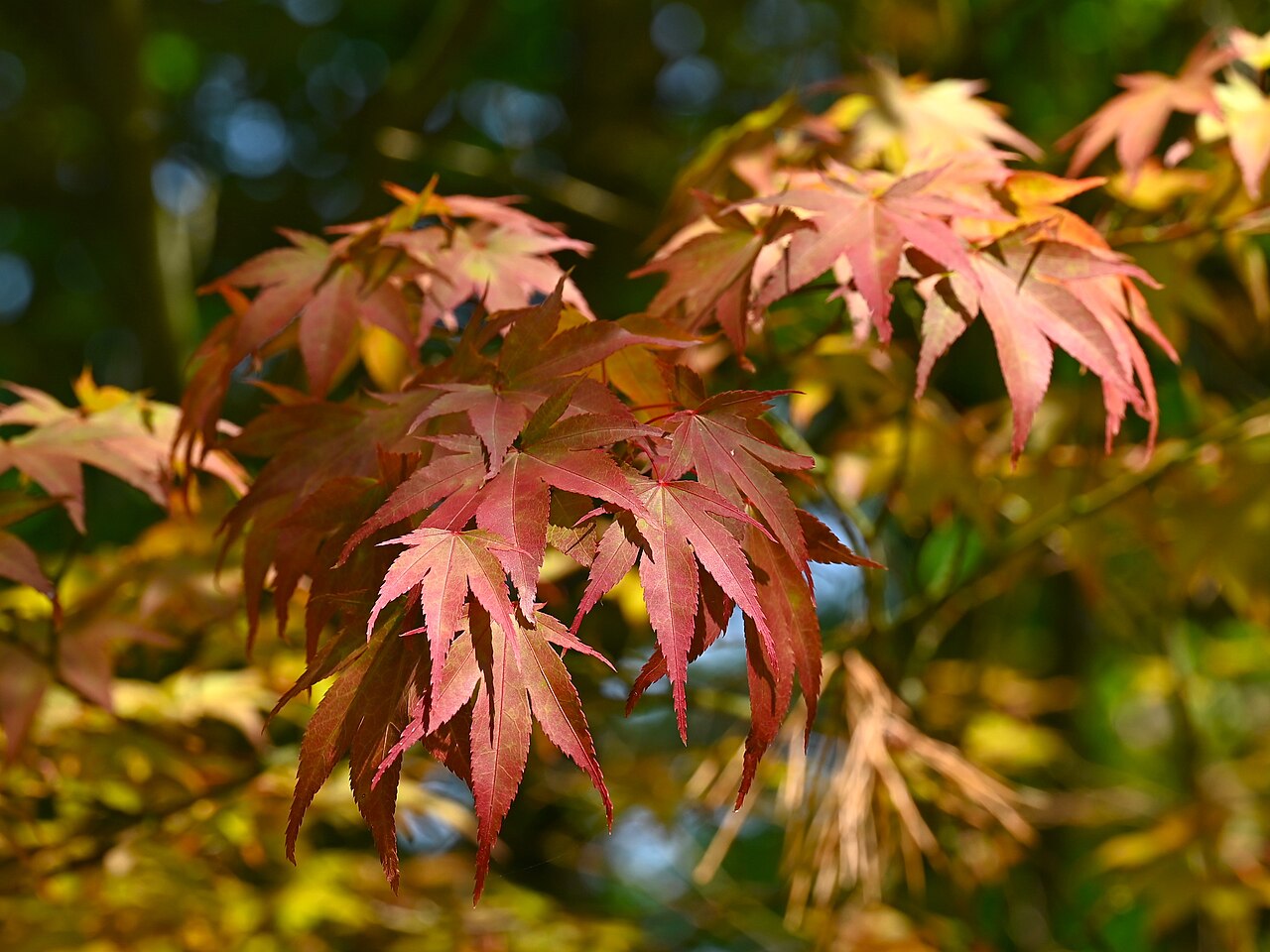
Acer palmatum ‘Moonfire’, the Moonfire Japanese Maple, is an upright, red-leaved cultivar grown for foliage that darkens to a near-black burgundy through the growing season, with an almost opalescent sheen that several nurseries single out as its signature trait. It is often described alongside ‘Bloodgood‘ as a dependable, dark-red landscape maple, but growers consistently note that Moonfire grows faster and holds its deep color better in part shade than most other red-leaf cultivars.
Sources disagree notably on mature size: some retailers list Moonfire as reaching “well over 25 feet,” a few describe a landscape height closer to 15 feet, and at least one specialty grower reports a ten-year-old tree at only about 8 feet. That spread likely reflects real differences in growing conditions, measurement age, and how aggressively a given tree has been pruned, since Moonfire is consistently described as a relatively fast grower for a red Japanese maple. Buyers should treat any single size figure as approximate and ask local growers what to expect in their climate.
Japanese maple (Acer palmatum) is not native to North America — it is native to Japan, Korea and eastern China — and Moonfire is an introduced, cultivated selection of that species. It is not on any federal noxious weed list, but in parts of the eastern United States, especially the Mid-Atlantic, seedlings of red- and green-leaved Japanese maples occasionally escape cultivation into forest understories. Plant Moonfire away from natural woodland edges and remove any volunteer seedlings nearby; as a full-size, seed-fertile cultivar, it can produce viable seed.
Identification
Moonfire grows as a single- or multi-trunked small tree with an upright, somewhat vase-shaped crown. Its distinctly dark, almost black-red bark and twisting branch habit are useful winter identification clues that set it apart from greener-barked red cultivars.
Bark & Stems
Young stems and even the trunk take on a notably dark, near-black cast compared with the more typical gray-brown bark of most Japanese maple cultivars, and branches often curve and twist upward as the tree matures, giving bare winter specimens a distinctive silhouette.
Leaves
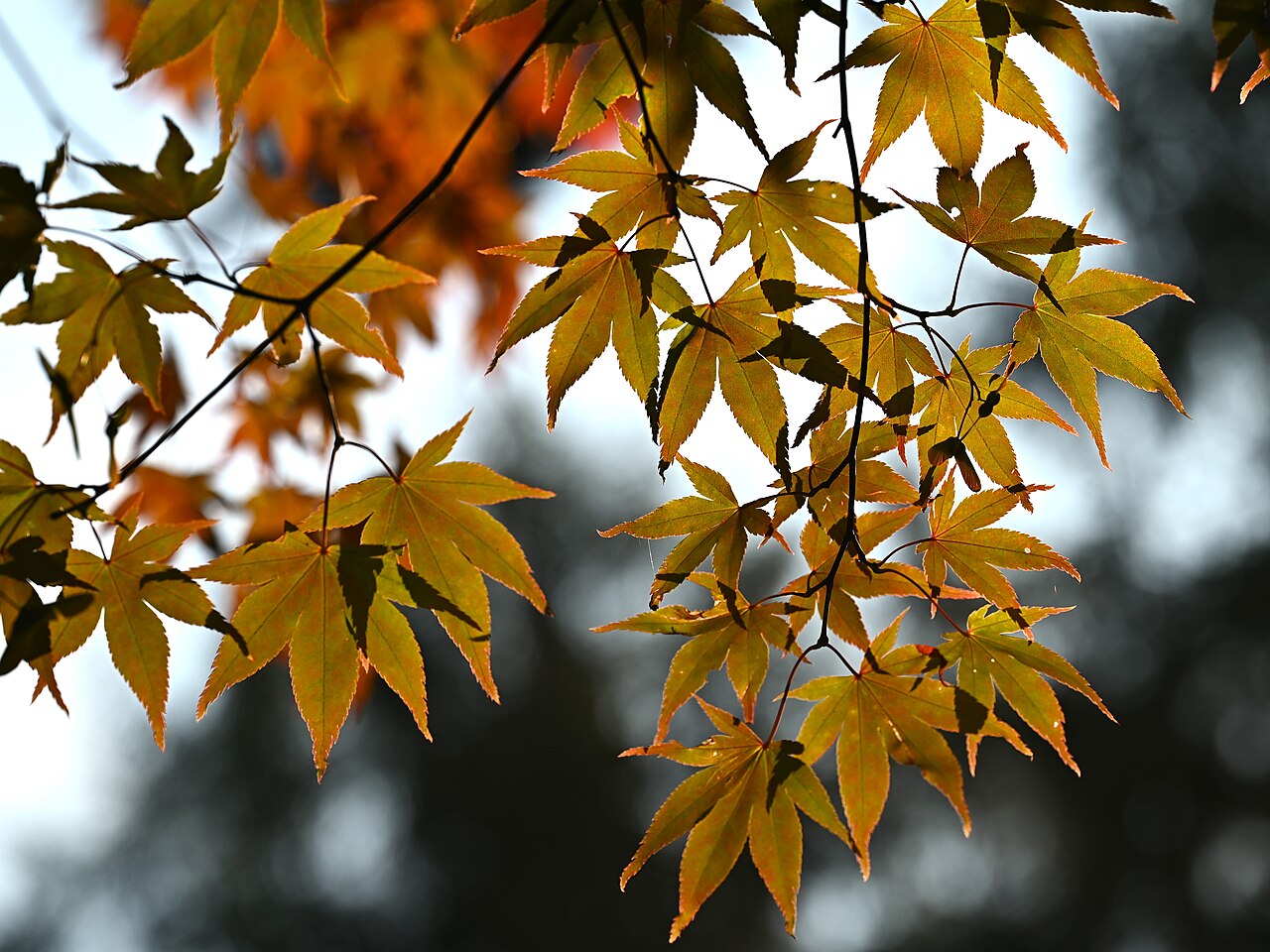
Leaves are palmate with five to seven lobes, emerging deep red in spring and darkening through the season to a very dark red that several growers describe as “almost black,” sometimes with a faint iridescent or opalescent quality in the right light. Unlike many red cultivars that fade or green out in shade, Moonfire is noted for holding its dark color reasonably well even with reduced sun.
Flowers
Small, inconspicuous reddish flowers open in spring in loose clusters, mostly hidden among the emerging leaves; they are wind- and insect-pollinated.
Fruit & Seeds
Flowers are followed by the typical paired, winged maple samaras, reddish when young and brown and papery by fall. Moonfire sets fertile seed, so volunteer seedlings can appear nearby; most will not match the parent’s dark color.
Quick Facts
| Scientific Name | Acer palmatum ‘Moonfire’ |
| Cultivar | ‘Moonfire’ |
| Family | Sapindaceae (Maple) |
| Plant Type | Deciduous small tree |
| Native to North America | No — introduced; species native to Japan, Korea and eastern China |
| Mature Height | Sources vary widely, roughly 15–20 ft typical, with reports ranging from about 8 ft to over 25 ft depending on age and site |
| Mature Spread | 10–15 ft (estimated, proportionate to height) |
| Growth Rate | Fast for a red-leaf Japanese maple cultivar |
| Sun Exposure | Full sun for best color; tolerates part shade better than most red cultivars |
| Water Needs | Average, consistent moisture; some drought tolerance once established |
| Soil Type | Rich, well-drained loam; dislikes soggy or compacted soil |
| Soil pH | Slightly acidic (about 5.5–6.5); tolerates close to neutral |
| Bloom Time | Spring (April–May), inconspicuous |
| Leaf / Fall Color | Dark red deepening to near-black burgundy in summer; blazing red in fall |
| Fruit | Red-tinged winged samaras, summer into fall |
| Deer Resistant | Mostly — occasional light browsing reported |
| USDA Hardiness Zones | 5–8 |
| Invasive Status | Not federally listed; watch for and remove escaped seedlings near wild areas in parts of the eastern U.S. |
Origin & Where It Grows
Acer palmatum, the species Moonfire belongs to, is native to woodlands and mountain slopes of Japan, South Korea and parts of eastern China, where it grows as an understory and edge tree. Centuries of selective breeding in Japan produced hundreds of named cultivars, including many dark-red forms grouped informally as the Atropurpureum type, from which modern selections like Moonfire descend.
Moonfire is a more recent nursery-trade introduction promoted for combining a faster growth rate with dark, long-lasting color and better shade tolerance than many older red cultivars; as with many trademarked or patented maple selections, detailed public records of its exact breeding origin are limited, so this summary relies on consistent retailer descriptions rather than a single definitive source.
In the U.S., Moonfire performs well across USDA zones 5 through 8 — similar territory to other upright red Japanese maple cultivars, including the Pacific Northwest, Mid-Atlantic, Ohio Valley and upper South. Afternoon shade is worth providing in the hottest parts of its range to prevent leaf scorch, and winter protection or a sheltered site helps at the cold edge of zone 5.
Growing & Care Guide
Light
Moonfire colors darkest in full sun, but it is one of the better red cultivars for holding color in part shade, which makes it a useful option for sites that don’t get all-day direct sun. Afternoon shade in hot-summer climates still helps protect leaves from scorch.
Soil & Water
Plant in rich, well-drained soil; like most Japanese maples, Moonfire does not tolerate wet feet, so amend heavy clay or plant on a slight mound. Water regularly through the first two to three seasons; established trees tolerate short dry spells but perform best with consistent moisture, especially given their relatively fast growth rate.
Planting Tips
Plant in spring or fall at the same depth as the nursery container, and mulch 2 to 3 inches deep, keeping mulch away from the trunk. Because Moonfire can put on size quickly, allow extra room when siting it relative to walkways, structures and other plantings.
Pruning & Maintenance
Prune during late fall through winter dormancy to limit sap bleeding, thinning crossing or crowded branches to maintain the upright form and show off the dark bark. Given its faster growth, Moonfire may need more frequent structural pruning in its early years than slower cultivars.
Propagation
Moonfire is propagated by grafting onto seedling rootstock, which is the reliable way to reproduce its dark color and growth habit. Seedlings grown from its own seed are variable and typically do not match the parent, so buy grafted, named plants for true Moonfire characteristics.
Landscape Uses
- Specimen tree where its near-black foliage can contrast with lighter-colored plantings or hardscape
- Partly shaded beds where many red cultivars lose color but Moonfire holds up better
- Faster-establishing accent for gardeners who want quicker results than slower-growing red cultivars provide
- Winter interest planting, since the dark, twisting bark stands out once leaves drop
- Companion planting with light-foliaged shrubs or chartreuse perennials for color contrast
Wildlife & Ecological Value
Moonfire offers modest wildlife value compared with native maples such as red maple or sugar maple, which host large numbers of native moth and butterfly caterpillars. Its small spring flowers attract some pollinating insects, and squirrels and birds occasionally eat the seeds, but few native insect species are adapted to use Acer palmatum as a host plant. Treat it as an ornamental accent and pair it with native trees and shrubs elsewhere on the property to support local food webs.
Native Alternatives
For gardeners who want dark foliage color or a fast-growing small native tree, consider:
- Red maple (Acer rubrum) — a widespread, fast-growing native with brilliant red fall color, though it grows much larger than Moonfire
- Vine maple (Acer circinatum) — a Pacific Northwest native with a graceful, multi-stemmed form that tolerates shade well
- Rocky Mountain maple (Acer glabrum) — a small native maple suited to western gardens
- Bigtooth maple (Acer grandidentatum) — a drought-tolerant native with strong orange-red fall color
- Red buckeye (Aesculus pavia) — not a maple, but a native small tree with striking red spring flowers for color-focused plantings
History & Uses
Acer palmatum has been cultivated in Japan for well over a thousand years, with dark-red (Atropurpureum-type) seedlings and selections prized for centuries as some of the most dramatic forms of the species. Newer cultivars like Moonfire continue that tradition, aiming to combine the darkest possible leaf color with practical improvements such as faster establishment and better shade tolerance.
Moonfire has built its reputation primarily through the specialty Japanese maple nursery trade, where growers and collectors value it for the combination of near-black summer foliage and relatively quick growth compared with older dark-red selections. It remains more of a specialty-nursery offering than a big-box garden center staple.
Beyond ornamental landscaping, Moonfire has no significant food, medicinal or commercial timber uses; its value is almost entirely as a garden specimen.
Frequently Asked Questions
Is Moonfire Japanese maple native to the United States?
No. Acer palmatum is native to Japan, Korea and eastern China. Moonfire is a cultivated selection of that introduced species, not a North American native plant.
How big does a Moonfire Japanese maple get?
Sources disagree substantially, with figures ranging from about 8 feet at ten years from one specialty grower to “well over 25 feet” from another retailer; a working estimate for a mature landscape specimen is roughly 15 to 20 feet, but actual size depends heavily on climate, pruning and age.
Does Moonfire Japanese maple hold its color in shade?
It is often described as holding its dark red color better in part shade than most other red-leaf Japanese maple cultivars, though full sun still produces the deepest, near-black tones.
How fast does Moonfire Japanese maple grow?
Multiple growers describe it as a relatively fast grower for a red-leaf Japanese maple cultivar, which is part of why size estimates vary so much between young nursery stock and older landscape specimens.
Is Moonfire Japanese maple invasive?
It is not on federal or most state noxious-weed lists, but as an introduced species it can set viable seed, and in parts of the eastern U.S. Japanese maple seedlings occasionally escape into wooded areas. Plant away from natural woodland edges and pull any volunteer seedlings you notice.

