Aiaka / Aʻiaʻi (Streblus pendulinus)
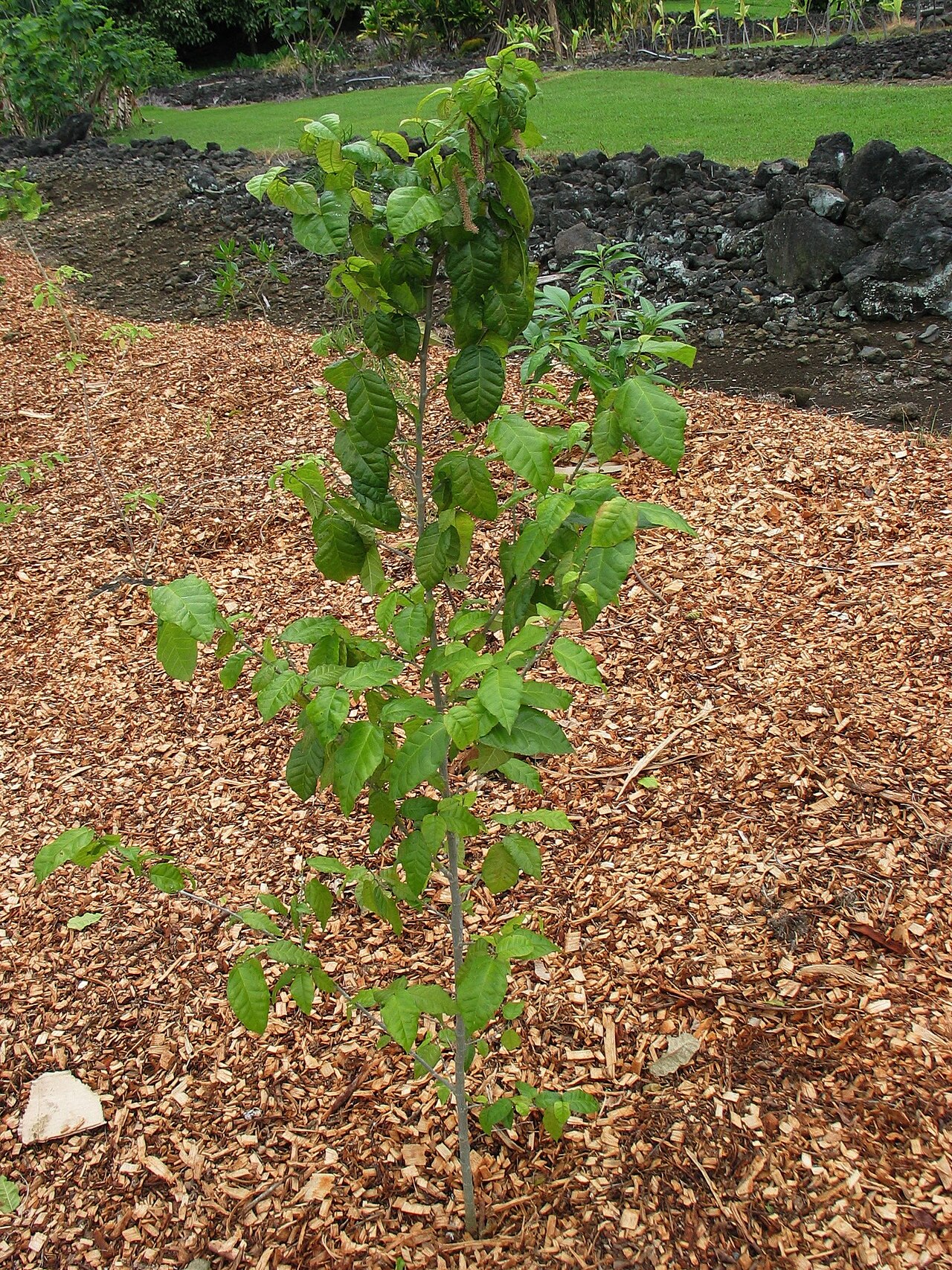
Streblus pendulinus is a native Hawaiian tree known as Aiaka or Aʻiaʻi, and sometimes as Hawaiʻi roughbush. It is a member of the mulberry family, Moraceae, and one of the more widely distributed native trees in the islands, found on Kauaʻi, Oʻahu, Molokaʻi, Lānaʻi, Maui, and Hawaiʻi Island. Unlike many of Hawaiʻi’s single-island endemics, this species is also native well beyond the islands, occurring across a huge swath of the Pacific and Australia, which likely explains why it remains relatively common where suitable habitat survives.
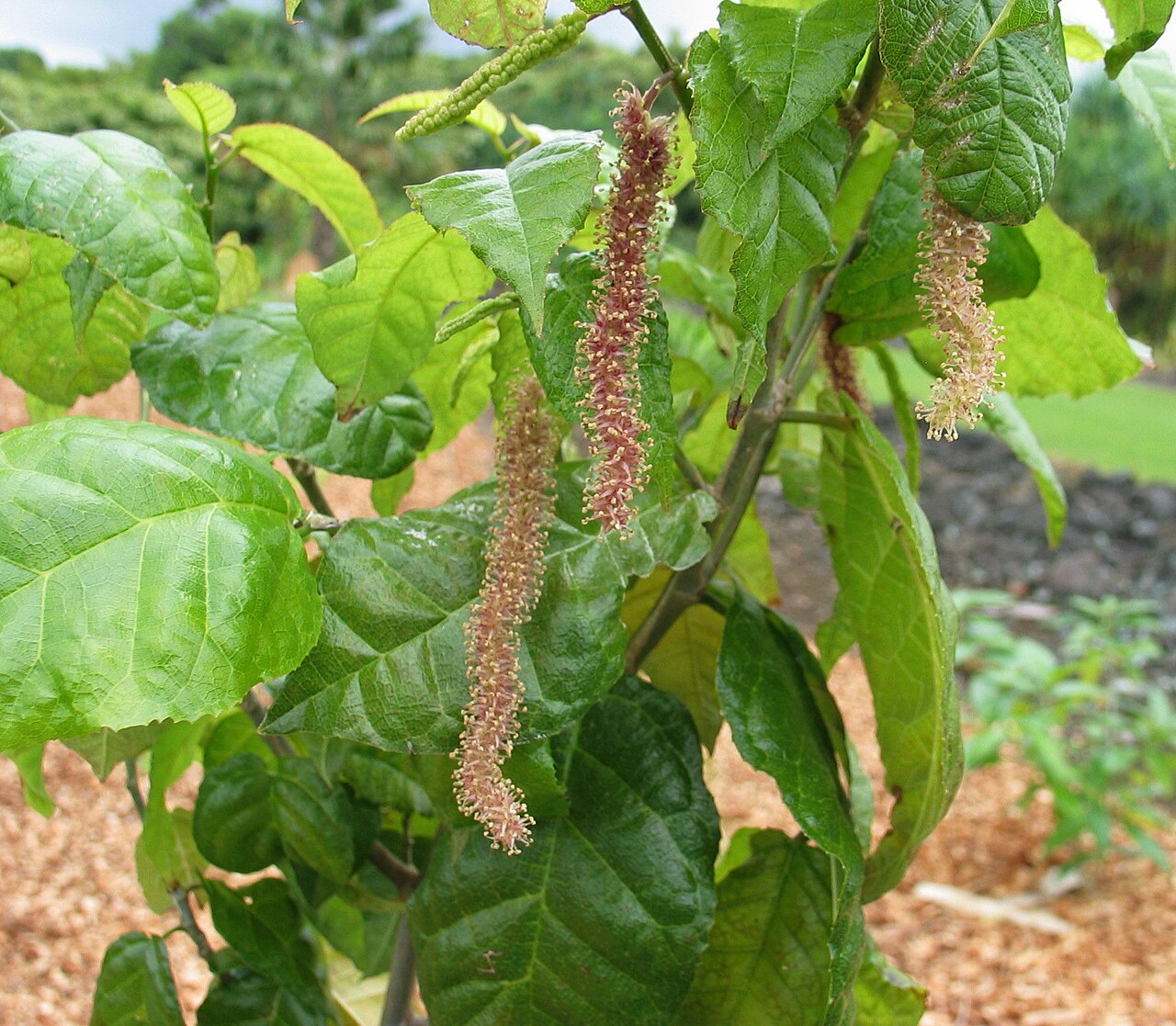
In the garden, Aiaka is an easygoing small to medium tree with handsome, glossy, serrated foliage and unusual fuzzy, catkin-like male flower spikes that dangle from the branches. It stays modest in cultivated settings even though it can occasionally grow much larger in undisturbed native forest.
Despite being a widespread species ranked of Least Concern globally, Aiaka is still underused in Hawaiʻi landscaping and restoration plantings relative to how adaptable it is. Native plant growers who have worked with it note that while mature trees are tough, young plants can be surprisingly fussy about transplanting, so patience and good aftercare matter more than with many other native Hawaiian trees.
Identification
Aiaka is usually a large shrub or small to medium tree, most often seen in the 10 to 40 foot range in Hawaiʻi, though it can rarely grow much larger — up to about 100 feet tall with a trunk 16 inches across in the most favorable wild conditions elsewhere in its Pacific range. The bark is pale gray, often marked with lines of small raised pustules, and the tree has a milky sap typical of the mulberry family.
Leaves
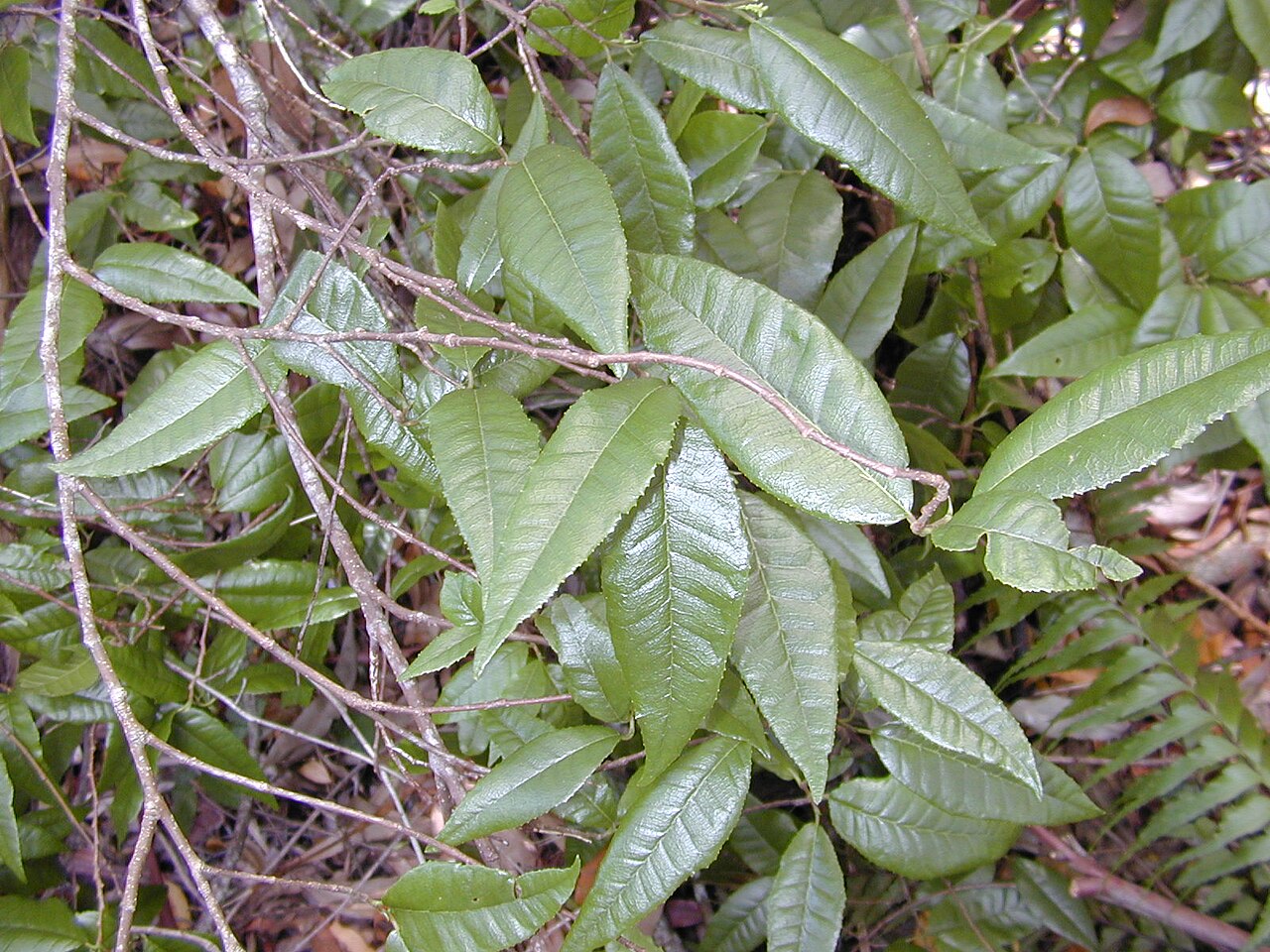
Leaves are thin, alternate, and simple, 2 to 3 inches long with a long pointed tip and finely toothed margins. The upper surface is glossy and mid to dark green, while the underside is paler green and hairy, with the leaf veins more prominent below than above.
Flowers
Aiaka is usually dioecious, with separate male and female plants, though it can occasionally be bisexual. Male flowers are small, yellowish-white, and packed densely along slender, drooping, catkin-like spikes, giving flowering branches a distinctive fuzzy, tasseled look. Female flowers are less conspicuous, borne in small greenish clusters or short spikes. Flowering can occur over an extended period, roughly September through May.
Fruit
The fruit is a small yellow berry, about 1/8 to 1/4 inch long, maturing from roughly January through May. Each berry contains a single small, round, pale seed about 1/8 inch across.
Quick Facts
| Scientific Name | Streblus pendulinus |
| Family | Moraceae (Mulberry) |
| Plant Type | Shrub / Small to Medium Tree |
| Mature Height | 10–40 ft typical (rarely to ~100 ft) |
| Growth Rate | Slow, especially while young |
| Sun Exposure | Full sun to part shade |
| Water Needs | Moderate |
| Soil Type | Well-drained volcanic soils |
| Bloom Time | September–May |
| Fruit | Small yellow berry, ripens Jan.–May |
| Conservation Status | Least Concern (IUCN); widespread Pacific species |
| USDA Hardiness Zones | 10–12 |
Native Range
Within the United States, Aiaka is native only to Hawaiʻi, where it is found on Kauaʻi, Oʻahu, Molokaʻi, Lānaʻi, Maui, and Hawaiʻi Island — a broader distribution than most Hawaiian endemic trees. It is not native to the continental United States. Beyond Hawaiʻi, the species occurs naturally across a wide stretch of the Pacific and Australia, including eastern Australia (New South Wales and Queensland), New Guinea, the Caroline and Mariana Islands, Norfolk Island, New Caledonia, Vanuatu, Fiji, and the Tubuai Islands.
In Hawaiʻi, Aiaka grows primarily in mesic forest, but it also turns up in the wetter portions of dry forest and the drier portions of wet forest, giving it a somewhat flexible niche compared to native trees restricted to a single moisture regime. This adaptability has made it a useful species in dryland forest restoration projects such as the long-running effort at Auwahi on Maui, where it grows alongside other native dry-forest trees.
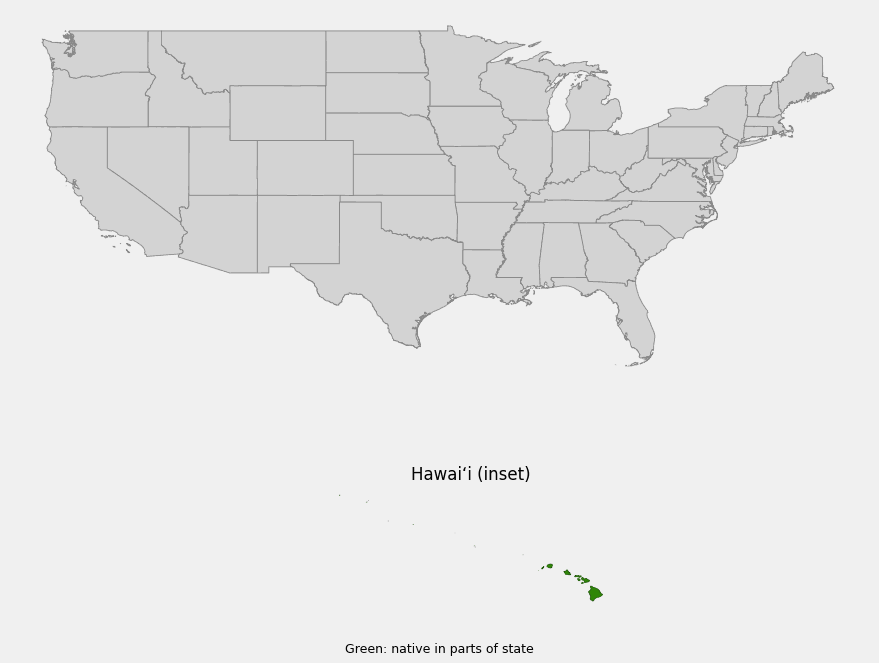
📋 Regional plant lists featuring Aiaka: Hawaii
Growing & Care Guide
Aiaka is a forgiving tree once established, but growers who have worked with it report that young plants can be slow to settle in and are best given extra patience and consistent aftercare during their first year or two in the ground.
Light
Give it full sun to partial shade; its native mesic forest habitat ranges from fairly open to lightly shaded, so it tolerates a range of light conditions reasonably well.
Soil & Water
Plant in well-drained volcanic soil and water regularly while young. Mature trees handle Hawaiʻi’s typical mesic-forest moisture pattern — more rain than a true dryland species needs, but not the heavy, constant rainfall of true wet forest.
Planting Tips
Expect slower establishment than many native Hawaiian trees; some growers who have raised Aiaka from seed or cuttings for years in containers have struggled to get young plants to survive their first season after transplanting into the garden or a restoration site. Give new plantings consistent water, some protection from strong wind and sun while small, and realistic expectations about the timeline to establishment.
Pruning & Maintenance
Minimal pruning is needed; remove dead or damaged wood as it appears. Because the species is dioecious, a planting with only one sex present will not set fruit even though it may still flower.
Landscape Uses
- Mesic forest restoration plantings across multiple Hawaiian islands
- Dryland forest recovery projects such as those on leeward Maui, where it tolerates drier conditions than true wet-forest natives
- Native hedgerow or screen planting, given its dense, glossy foliage
- Native plant collections showcasing lesser-known Hawaiian forest trees
Wildlife & Ecological Value
Aiaka’s small yellow berries provide food for native and introduced birds where fruiting trees grow, and as a component of mesic and dry forest, the species adds structural and floral diversity that supports a range of forest insects, particularly during its extended September-to-May bloom period when male trees are covered in flower spikes.
Ecosystem Role
Because it tolerates a wider range of moisture conditions than many Hawaiian natives, Aiaka serves as a useful transitional species in restoration plantings that span the boundary between dry and mesic forest types, such as the Auwahi dryland forest restoration area on Maui. Its relatively wide natural distribution across the main Hawaiian Islands also makes it a valuable genetic link between forest restoration sites on different islands.
Cultural & Historical Uses
Aiaka is less documented in historical Hawaiian ethnobotany than many other native trees, and much of what is known about growing and caring for it in modern cultivation has only recently been documented by native plant growers working directly with the species — a reminder of how much remains to be learned even about a relatively widespread native Hawaiian tree. Its Australian and Pacific populations, long known under names such as whalebone tree, axe-handle wood, and handlewood, point to historical use of its wood for tool handles and similar purposes in other parts of its range, though this is not a documented traditional use within Hawaiʻi itself.
Taxonomically, Aiaka has moved between genera over time. For decades it has been listed in the United States under the name Streblus pendulinus, the treatment still used by USDA PLANTS, while a 2024 revision placed the species in the genus Paratrophis as Paratrophis pendulina. Gardeners are likely to encounter both names in nursery catalogs and references. It is one of several lesser-known native trees profiled in our broader look at native canopy trees of Hawaiʻi.
Frequently Asked Questions
Is Aiaka the same as Aʻiaʻi?
Yes. Aʻiaʻi is the more commonly used Hawaiian name for Streblus pendulinus today, while “Aiaka” is an alternate spelling encountered in some older references; both refer to the same species.
Is Aiaka rare or endangered?
No. Unlike many single-island Hawaiian endemics, Aiaka is ranked Least Concern by the IUCN and is native across most of the main Hawaiian Islands as well as a wide swath of the Pacific and Australia, making it one of the more secure native Hawaiian trees.
Why do growers say Aiaka is hard to establish if it’s not rare?
Being common in the wild doesn’t always translate to easy cultivation. Growers who have raised Aiaka for years in containers report that young plants can struggle after transplanting into gardens or restoration sites, so extra care during the first year or two in the ground matters more than with many other native trees.
What do the flowers look like?
Male plants produce distinctive drooping, fuzzy, catkin-like spikes packed with small yellowish-white flowers, quite different from the showier blossoms of many ornamental natives. Female flowers are much smaller and less conspicuous, in short green clusters.
Does Aiaka need wet rainforest conditions to thrive?
No. It is adaptable to mesic forest as well as the wetter end of dry forest and the drier end of wet forest, making it more flexible about moisture than many Hawaiian native trees restricted to a single forest type.

Looking for a nursery that carries Aiaka?
Browse our native plant nursery directory: Hawaii