ʻAkoko (Euphorbia olowaluana)
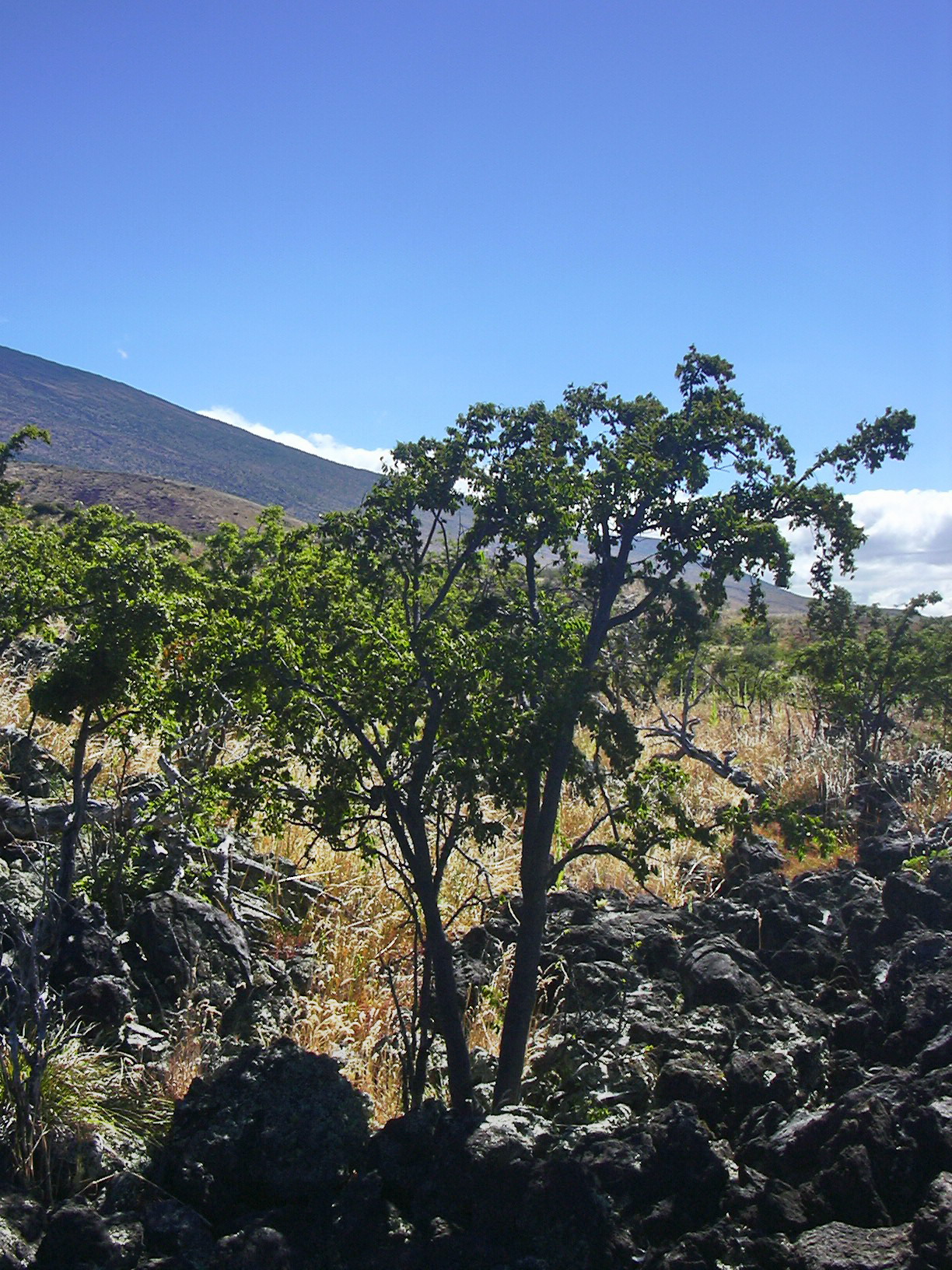
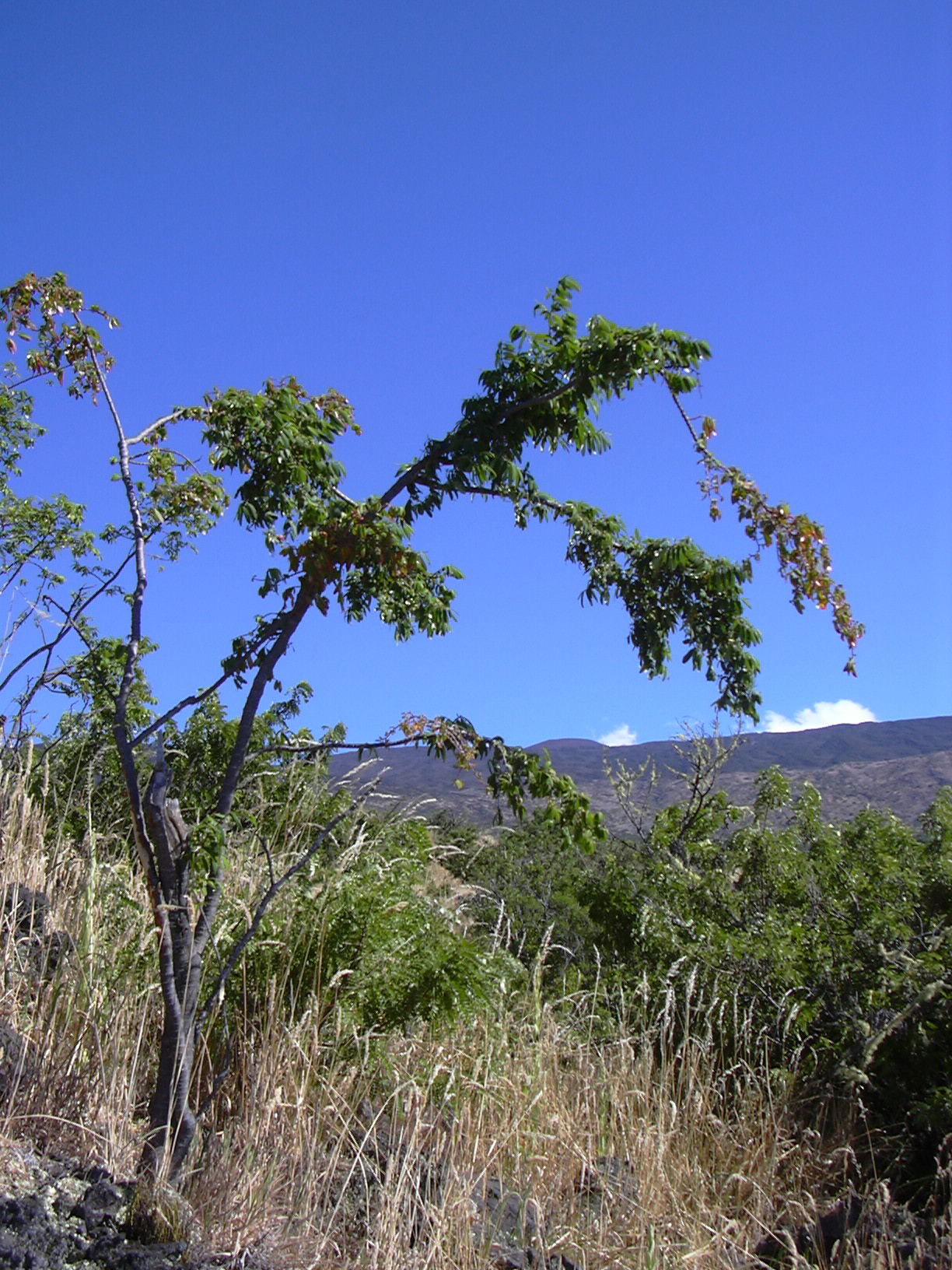
Euphorbia olowaluana, known in Hawaiian as ʻAkoko (also spelled Akoko, and historically called Koko or Kōkōmālei), is one of the most unusual members of its genus in the islands. While most Hawaiian ʻakoko are low, spreading shrubs or small sub-shrubs, this species grows into an actual tree — possibly the tallest member of its entire former genus, Chamaesyce, anywhere in the world, with some individuals reaching nearly 30 feet.
Like other euphorbias, ʻAkoko bleeds a conspicuous white, milky latex whenever a stem or leaf is cut or bruised, a trait shared by only a handful of Hawaiian native plants. The species takes its name from Olowalu on West Maui, one of the places where early botanists documented it, though it is also found on Hawaiʻi Island.
ʻAkoko is a quietly important species ecologically: its small flower clusters are a critical food source for several of Hawaiʻi’s native yellow-faced bees (Hylaeus), a genus so closely tied to this plant that one species was named Hylaeus akoko after it. Most of these bees are themselves rare and at risk, making healthy stands of ʻAkoko disproportionately important for Hawaiian insect conservation relative to the tree’s modest profile in most native plant gardens.
Identification
ʻAkoko is a small tree or, at higher elevations, a shrub, depending on growing conditions. Below about 1,150 feet elevation it typically grows as a tree to roughly 25 feet tall with a trunk around 12 inches in diameter; above about 2,300 feet it more often takes a shrub form. Exceptional individuals can reach nearly 30 feet, making this arguably the largest-growing species in the group of Hawaiian euphorbias once classified under the genus Chamaesyce.
Bark & Stems
The trunk and branches are woody, with branches ranging from hairless (glabrous) to lightly hairy (pilose), especially near the nodes. Every part of the plant produces a noticeable flow of white, milky latex when cut or bruised — a useful and immediate identification clue, since few other Hawaiian trees share this trait.
Leaves
Leaves are opposite and arranged in two neat vertical rows (distichous) along the stem, elliptic to lance-shaped and occasionally nearly linear, about 0.8 to 2.75 inches long and 0.15 to 0.6 inch wide. The surfaces are hairless to lightly hairy, with entire (untoothed) margins and a pointed, often small-tipped (mucronulate) leaf apex.
Flowers
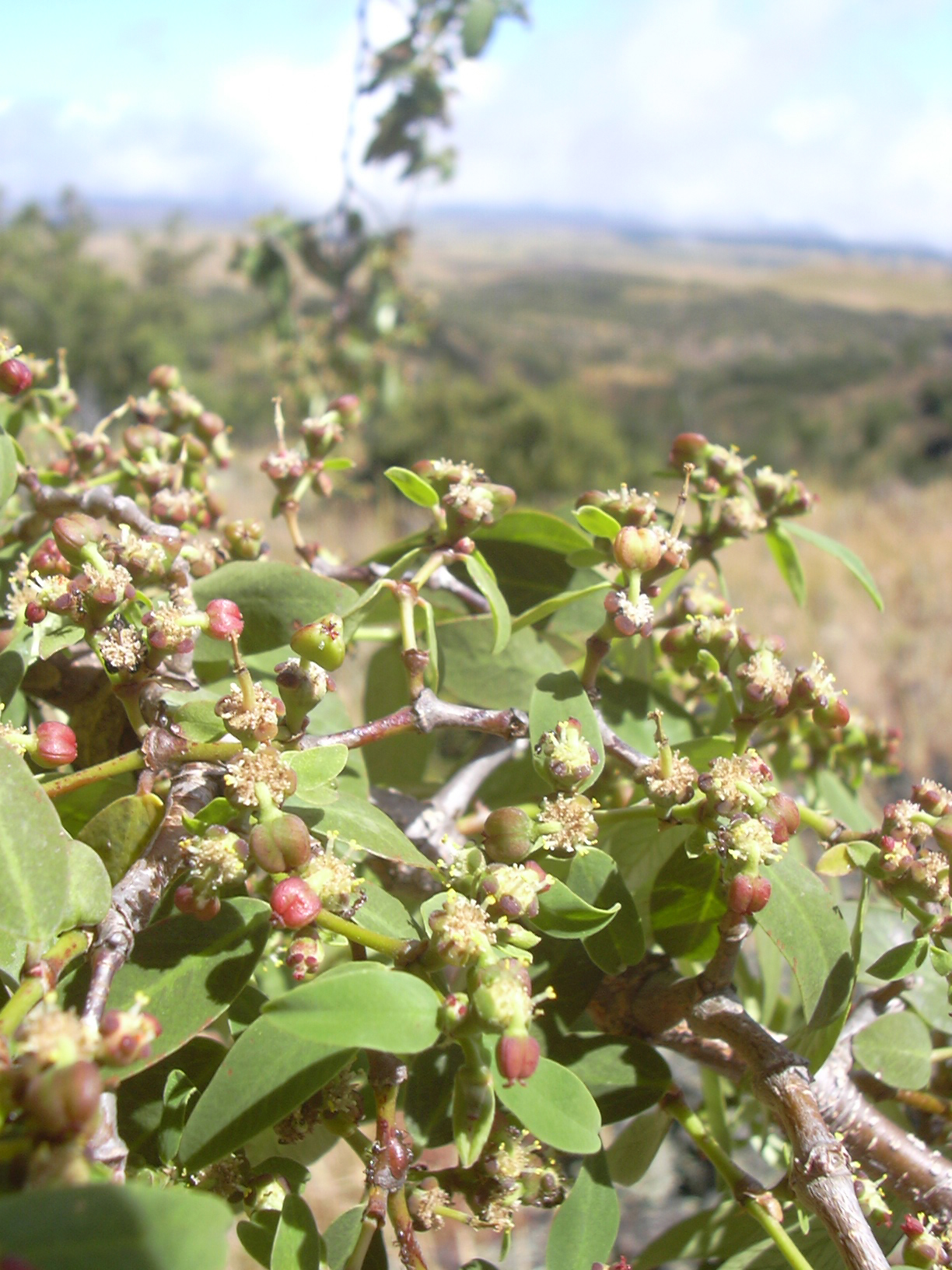
Like all euphorbias, ʻAkoko bears its true flowers in small, highly reduced clusters called cyathia rather than conventional petaled blooms. These tiny reddish and cream-colored flower clusters appear in abundance along the branch tips and, though individually inconspicuous, collectively provide essential pollen and nectar for several species of native Hawaiian yellow-faced bees.
Quick Facts
| Scientific Name | Euphorbia olowaluana |
| Family | Euphorbiaceae (Spurge) |
| Plant Type | Small Tree (lower elevation) / Shrub (higher elevation) |
| Mature Height | Up to ~25–30 ft as a tree; shrubby above ~2,300 ft |
| Growth Rate | Slow |
| Sun Exposure | Full sun |
| Water Needs | Low; drought tolerant once established |
| Soil Type | Well-drained, rocky volcanic soils |
| Sap | White, milky latex; irritant to skin and eyes |
| Conservation Status | Not federally listed; habitat declining from grazing and fire |
| USDA Hardiness Zones | 10b–11 |
Native Range
ʻAkoko is endemic to Hawaiʻi, found on western Maui and on Hawaiʻi Island, including dry slopes near Mauna Kea such as the Puʻu Mali area. It is not native to any other Hawaiian island or to the continental United States. Historically the species occupied a remarkably wide elevational range, from roughly sea level up to about 9,200 feet, though it has become less common across much of that range as dry forest habitat has been lost.
ʻAkoko grows in scattered stands within dry, open forest and shrubland, often rooted directly in broken lava rock. Grazing by cattle and feral ungulates, conversion of dry forest to pastureland, and the resulting invasion of fire-prone introduced grasses have all contributed to the decline of this habitat type, which is now considered one of the most threatened ecosystems in Hawaiʻi.
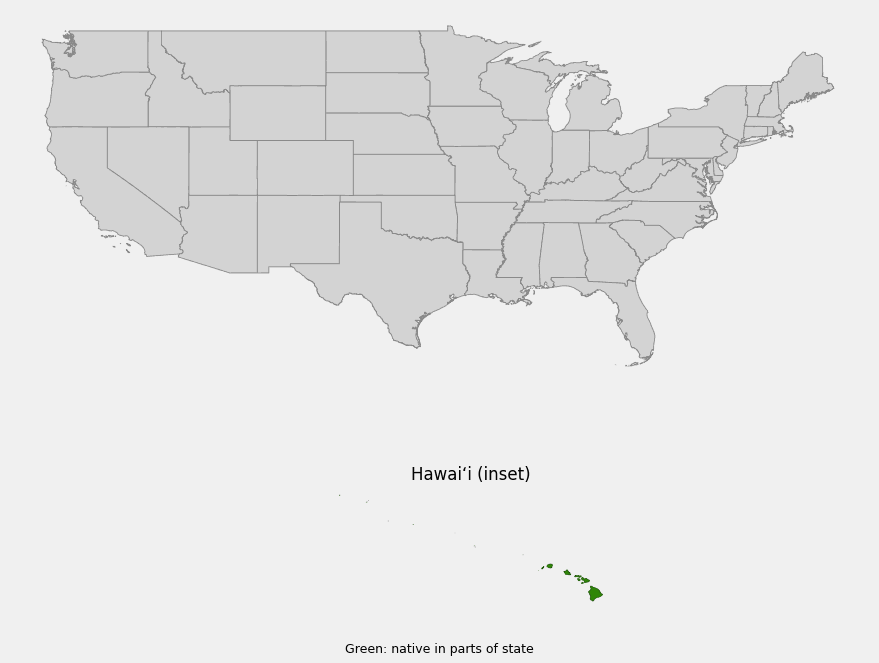
📋 Regional plant lists featuring ʻAkoko: Hawaii
Growing & Care Guide
ʻAkoko is well suited to dry, sunny gardens on Maui or Hawaiʻi Island that mimic its native lava-rock habitat, and it rewards growers with a genuinely tree-like form rarely seen among Hawaiian euphorbias.
Light
Give it full sun, matching the open, exposed dry forest and shrubland where it naturally grows.
Soil & Water
Well-drained, rocky volcanic soil is essential, and established plants are notably drought tolerant, reflecting their origin in some of Hawaiʻi’s driest native plant communities. Young plants need regular water to establish a strong root system before conditions can be allowed to dry out between waterings.
Planting Tips
Choose an open, sunny site with excellent drainage, ideally among rocky or lava-derived soils similar to its native habitat. Because dry forest habitat has been so reduced by grazing and fire, garden and restoration plantings of ʻAkoko help support both the plant and the rare native bees that depend on it.
Pruning & Maintenance
Prune only to remove dead or damaged wood, and always wear gloves and eye protection when cutting this plant, since the milky latex sap is an irritant. Avoid planting it where children or pets might break stems and contact the sap.
Landscape Uses
- Dry forest restoration plantings on Maui and Hawaiʻi Island
- Pollinator gardens supporting native Hawaiian yellow-faced bees (Hylaeus spp.)
- Specimen tree for xeriscape or lava-rock landscaping
- Native plant collections showcasing Hawaiʻi’s unusual tree-form euphorbias
Wildlife & Ecological Value
ʻAkoko’s small flower clusters are a critical nectar and pollen source for at least five species of native Hawaiian yellow-faced bees in the genus Hylaeus, most of which are themselves extremely rare or endangered. The tie between plant and pollinator is close enough that one bee species, Hylaeus akoko, was named directly after this tree, underscoring how much of Hawaiʻi’s remaining native bee diversity depends on healthy stands of ʻakoko and its relatives.
Ecosystem Role
As one of the largest-growing members of its group within Hawaiian dry forest, ʻAkoko provides structure and habitat in an ecosystem type that has been drastically reduced by grazing, agricultural conversion, and the fires fueled by invasive grasses that follow disturbance. Restoration plantings that include ʻAkoko alongside associates like māmane and ʻaʻaliʻi aim to rebuild both plant community structure and the pollinator relationships that depend on it.
Cultural & Historical Uses
ʻAkoko is one of several native Hawaiian euphorbias historically known by the related names koko and kōkōmālei, reflecting the plant’s conspicuous milky sap — “koko” means blood in Hawaiian, an evocative name for the bleeding latex rather than a reference to any food or medicinal use. Early Hawaiian naturalists and, later, Western botanists documented the species in dry forest on West Maui near Olowalu, the valley for which the species is named, as well as on Hawaiʻi Island.
Today ʻAkoko is better known among conservationists for its role as a keystone food source for rare native bees than for any traditional practical use, and it stands alongside other imperiled dry forest species discussed in our guide to Hawaiʻi’s rare native flowering trees as an example of how much of the islands’ native insect life depends on specific, often overlooked host plants.
Frequently Asked Questions
Is ʻAkoko sap dangerous?
The white, milky latex is an irritant to skin and especially to eyes, as with most euphorbias. Wear gloves when pruning, avoid rubbing your eyes after handling the plant, and wash any sap contact promptly. It is not documented as a food plant and should not be ingested.
Why does this euphorbia grow as a tree when most ʻakoko are shrubs?
At lower elevations, generally below about 1,150 feet, Euphorbia olowaluana develops a true tree form up to roughly 25 to 30 feet tall, likely the tallest-growing member of its former genus group anywhere. At higher elevations, above about 2,300 feet, it more typically grows as a shrub, showing a clear elevational shift in growth form.
What pollinates ʻAkoko?
Its small flower clusters are an important food source for several native Hawaiian yellow-faced bees in the genus Hylaeus, including one species, Hylaeus akoko, named specifically for its close association with this plant.
Is ʻAkoko endangered?
It is not currently federally listed, but the dry forest habitat it depends on has been significantly reduced by grazing, conversion to pastureland, and increased wildfire risk from invasive grasses, so populations are considered to be in decline across much of the plant’s historic range.
Can I grow ʻAkoko outside of Maui or Hawaiʻi Island?
Within Hawaiʻi, it is best suited to dry, sunny conditions similar to its native lava-rock habitat. Outside Hawaiʻi, it needs a frost-free, drought-tolerant landscape setting to succeed and is rarely available commercially.

Looking for a nursery that carries ʻAkoko?
Browse our native plant nursery directory: Hawaii